|
|
ABEL GRIMMER - THE LOST CASTLE - PAGE 6
|
Great
Britain Ruled by
Germany |
Demonic Masonic
|
- The Stuart era ended in 1714 with the death of Queen Anne, and the subsequent Hanoverian dynasty continued the policies of British rule in America.
- The tensions that grew out of this relationship ultimately contributed to the
American Revolution.
-
King George III is primarily known for losing the American colonies
because he ruled the monarchy during the
revolution.
- While initially popular, his reign became defined by the escalating conflict over British policies and the colonies' demands for self-governance.
- He is famously portrayed as a tyrant in the Declaration of Independence, though historical perspective suggests many of the accusations were exaggerations used for wartime propaganda
(according to the British).
House of
Hanover
1714
- 1901
Germany |
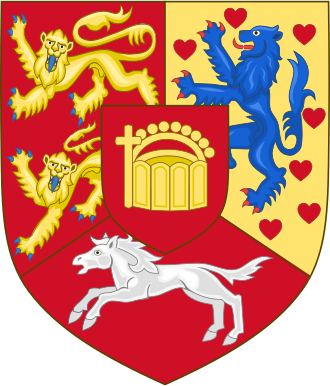
Sodacan, CC BY-SA 3.0 , via Wikimedia Commons
Royal Arms of
the_Kingdom of
Hanover |
-The House of Hanover is a German royal house with roots tracing back to the 17th-century.
- Its members, known as Hanoverians, ruled Hanover, Great Britain, Ireland, and the British Empire at various times during the 17th to 20th centuries.
- In 1714 George I, prince-elector of Hanover and a descendant of King James VI and I, assumed the throne of Great Britain and Ireland, marking the beginning of Hanoverian rule over the British Empire.
- At the end of this line, Queen Victoria's death in 1901, the throne of the United Kingdom passed to her eldest son Edward VII, a member of the House of Saxe-Coburg and Gotha, through his father Albert, Prince Consort.
The formal name of the house was the "House of Brunswick-Lüneburg, Hanover line." (Wikipedia)
|
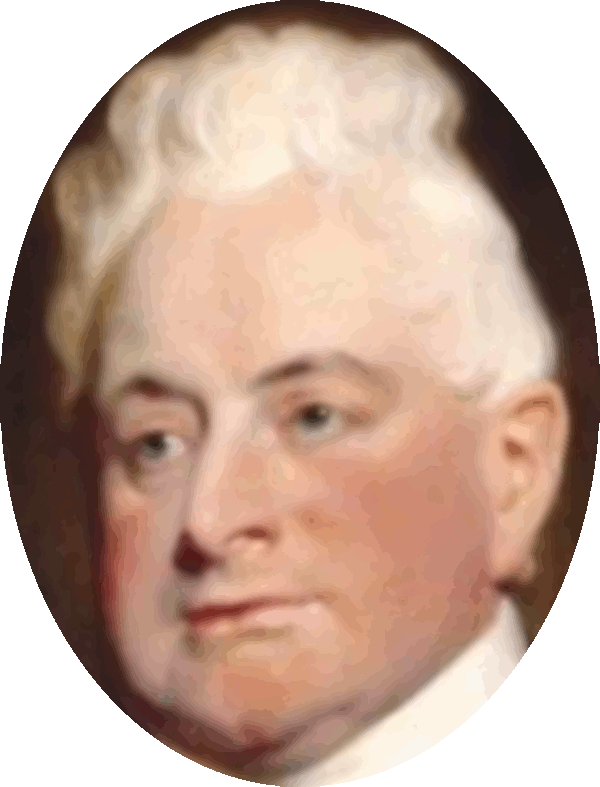
King George I of Great Britain
1714 - 1727

House of Hanover |
.jpg)
Godfrey Kneller, Public domain, via Wikimedia Commons
c. 1714 |
- George I was King of Great Britain and Ireland from August
1, 1714, and ruler of the Electorate of Hanover within the Holy Roman Empire from January
23, 1698, until his death on June 11, 1727.
- He was the first British monarch of the House of Hanover.
- Born
in Hanover as George Louis/Ludwig (1660-1727) on May 28, 1660, he
was the son of Ernest Augustus and Sophia of Hanover.
-
Sophia, Electress of Hanover, had died 2 months before Queen
Anne's death in August 1714.
- Her eldest son, George, Elector of Hanover, inherited the throne under the Act of Settlement of 1701.
- However, there were some 50 Roman Catholic relatives with stronger claims.
George I gained the throne after several royal deaths and a newly established accession order intended to secure a Protestant monarchy.
(encyclopediavirginia.org)
|
War horse |
- The Great Northern War from 1700–1721 largely predated George I's accession to the throne, he was involved in its later stages.
- His primary goal was to secure the Swedish-controlled duchies of Bremen and Verden for his German territory.
-
During his reign, George I's England was involved in King George's War
from 1744–1748, which was the North American part of the larger
War of the Austrian Succession.
- The conflict
pitted the British against France and was characterized by border raids and the notable, though ultimately temporary, capture of the French fortress of Louisbourg by British colonial forces.
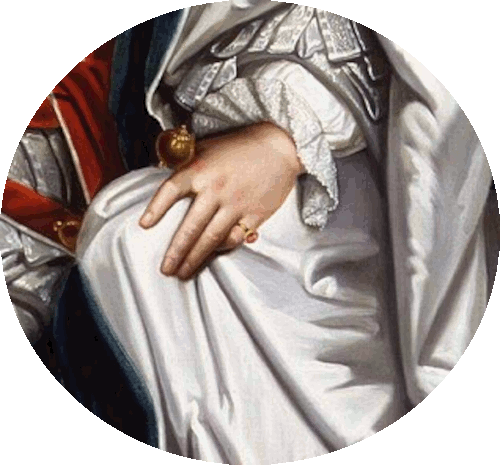
Masonic hand |
- Additionally, George I participated in the War of Jenkins' Ear
from 1739–1748, a conflict with Spain that later escalated into the
War of the Austrian Succession.
- This was a conflict between Britain and Spain that began over a dispute about maritime trade and smuggling.
- It is considered to be the precursor to the larger European conflict.
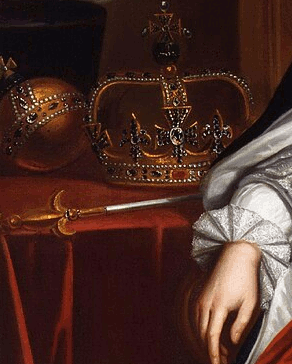
Masonic hand sign
|
-
George I never fully learned to speak English and instead conducted government affairs mostly in French and his native German.
- His frequent trips to Hanover, as well as his controversial treatment of his ex-wife, caused many to scorn the foreign king.
- In the colonies, however, his reign was more applauded.
- Although the development of the British constitution
by 1714 ensured that George I had little direct involvement
in Virginia affairs.
|
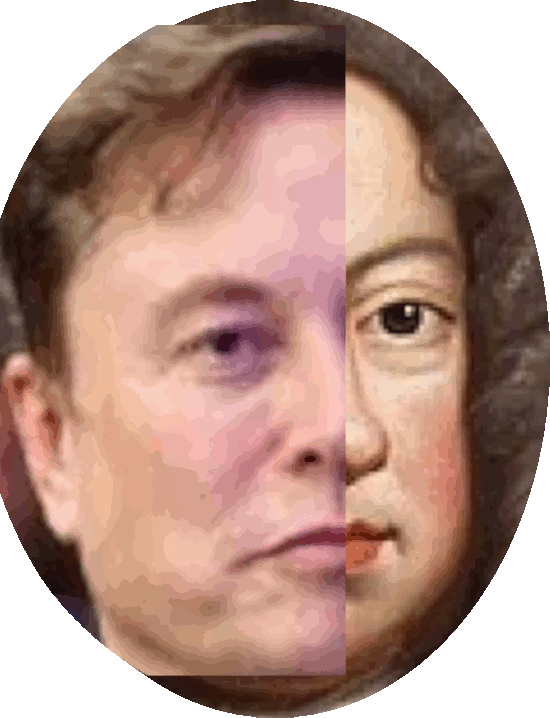
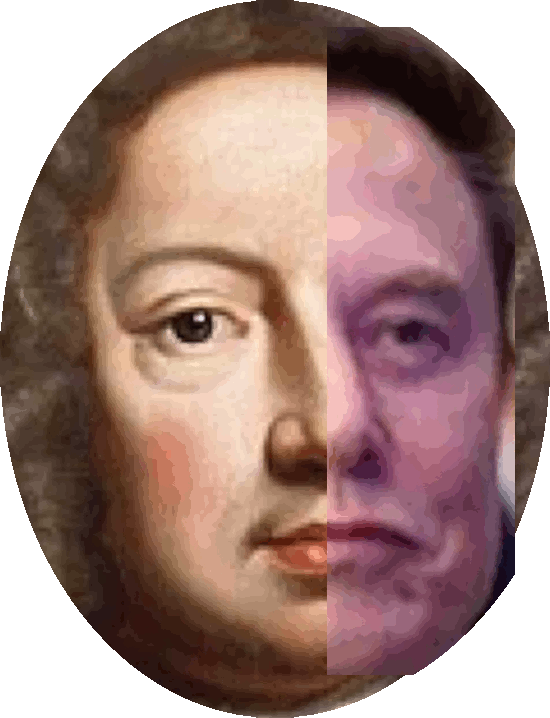
King George I as Musk |
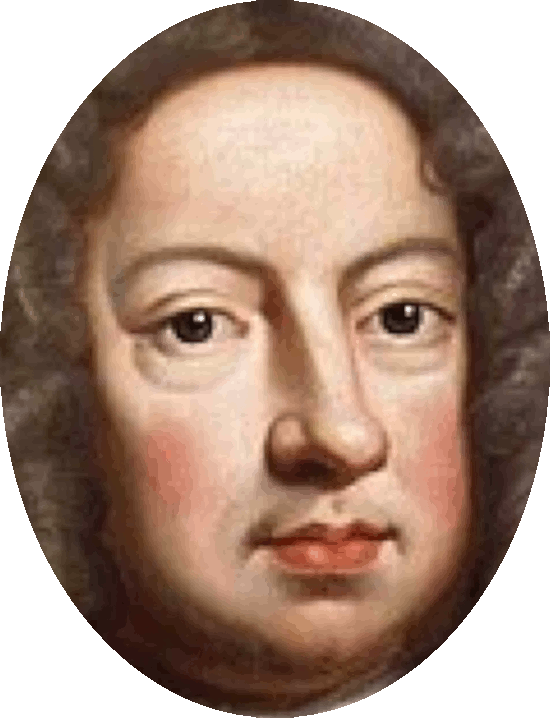 |
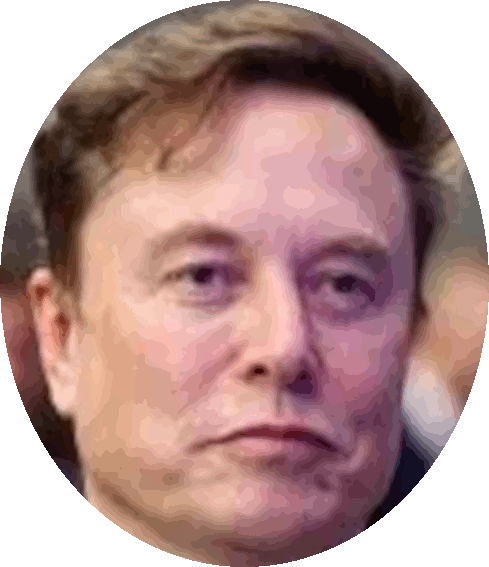 |
George Louis
1660-1727
5/28
7/11
monarch |
Elon Reeve Musk
1971
6/28
Chief thief |
 |
 |
|
The eyes have it |
- George I spent almost 13 years on the throne during several defining developments in the colony’s history.
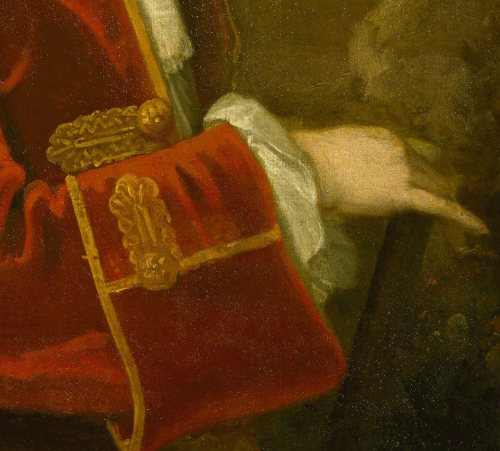
Pinky
Masonic hand sign |
- Following the succession of George I in 1714, the
arrangement of a commission of lords of the Treasury (as
opposed to a single lord high treasurer) became permanent.
- For the next 3 years, the government was headed by
Charles Townshend, 2nd Viscount Townshend, who was appointed
Secretary of State for the Northern Department.
-
Subsequently, Lords Stanhope and Sunderland ran the
government jointly.
|
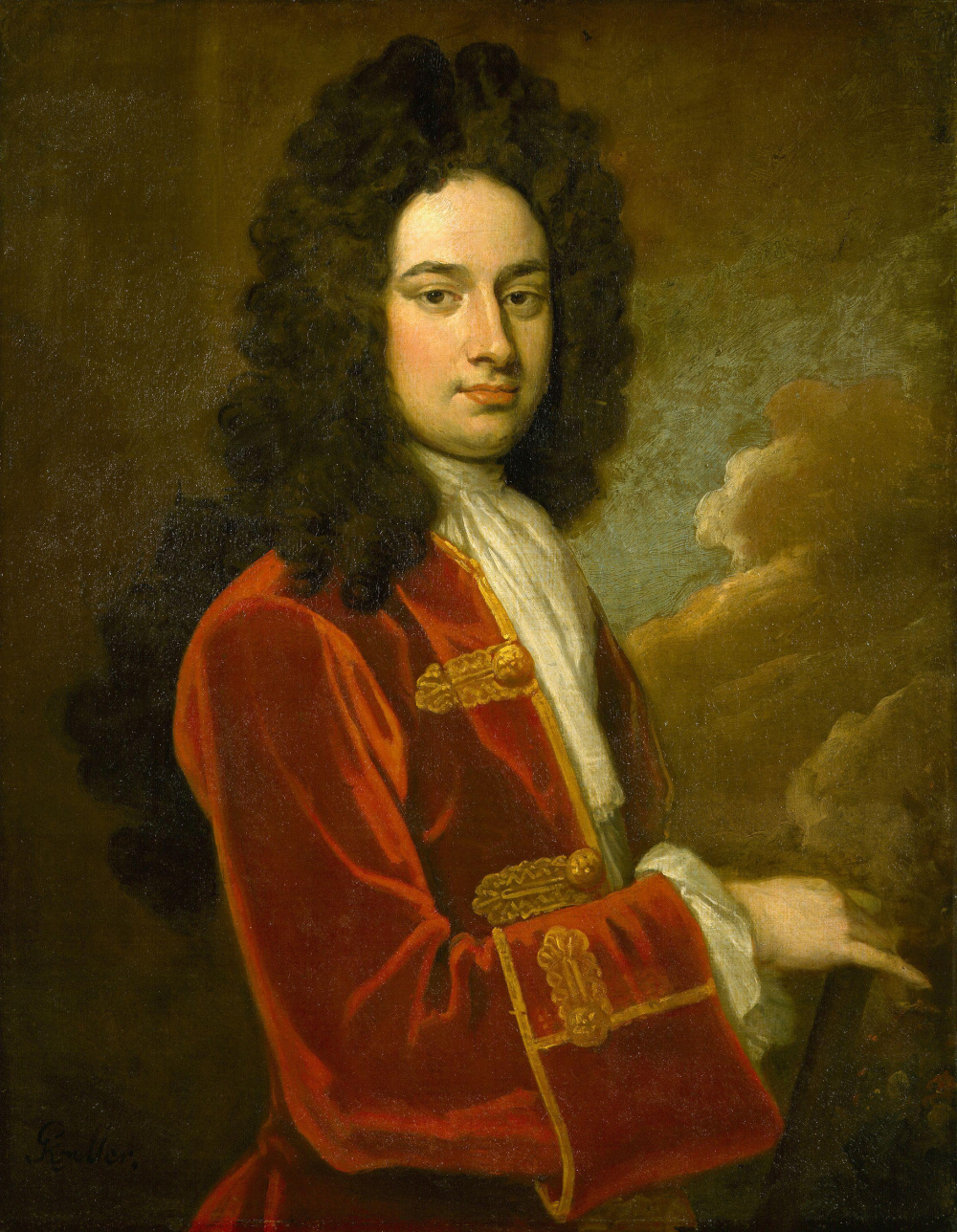
Charles
Townshend, 2nd
Viscount Townshend |
.jpg)
Godfrey Kneller, Public domain, via Wikimedia Commons
Masonic hand sign |
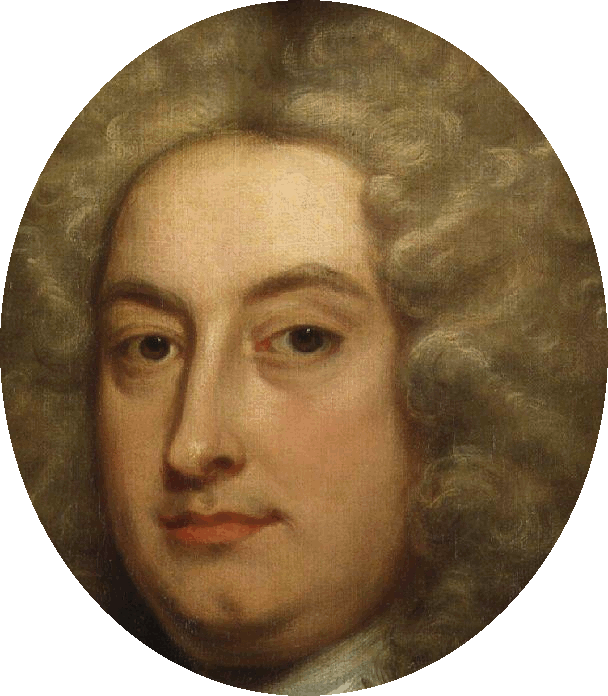
- Charles Townshend, 2nd Viscount Townshend, KG PC FRS (1674-1738) was a British Whig statesman.
- From 1714 to 1717, and again from 1721 to 1730, he served as Secretary of State for the Northern Department
(New York, Vermont, and Québec).
- Townshend directed British foreign policy in close collaboration with his brother-in-law, prime minister Robert Walpole.
- He was often known as Turnip Townshend because of his strong interest in farming field turnips and his role in the British Agricultural Revolution.
|
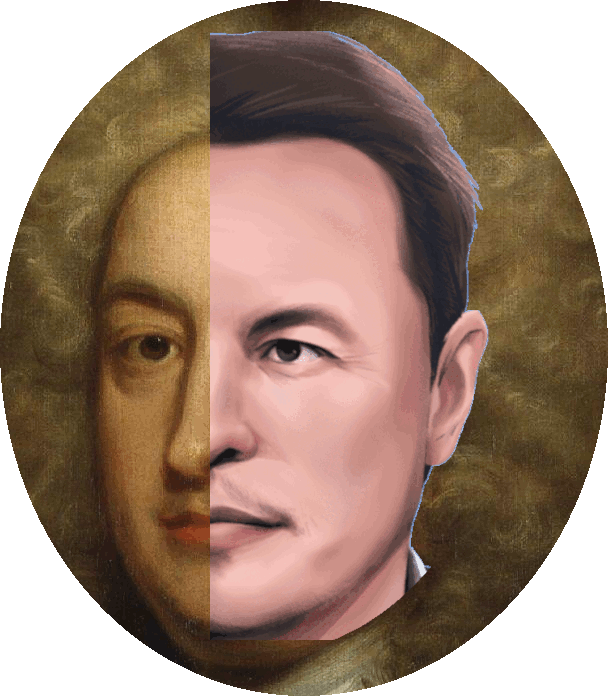
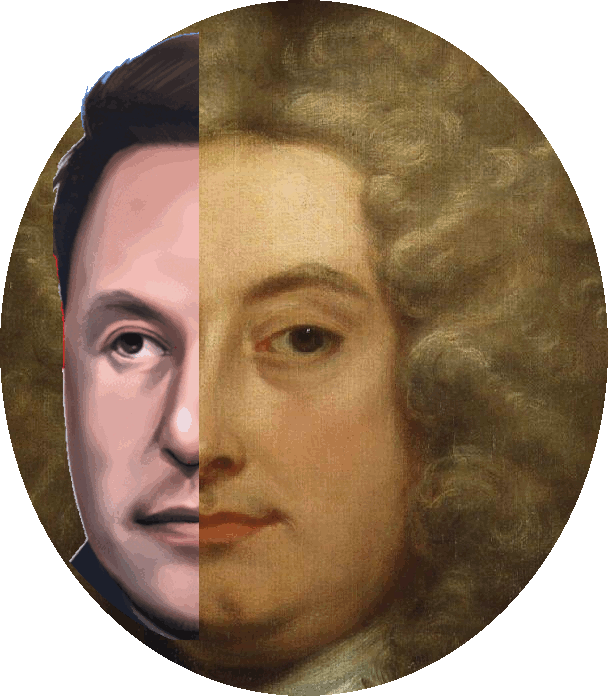
Charles Townshend as Musk |
 |
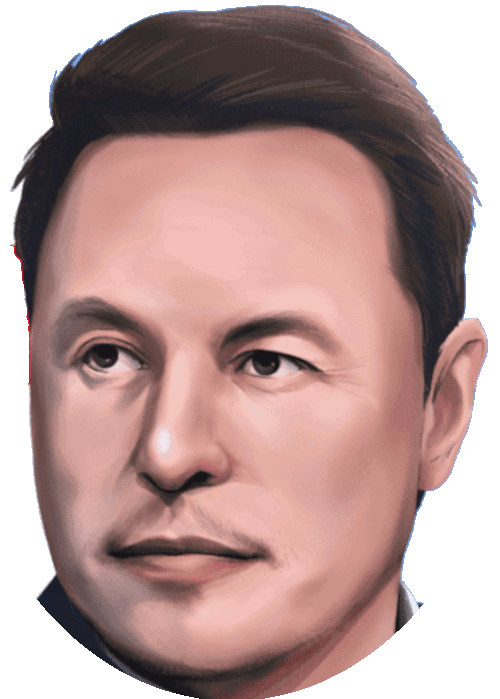 |
Charles Townshend
1674-1738
4/18
6/21
Statesman |
Elon Reeve Musk
1971
6/28
Chief thief |
 |
 |
|
Turnip Townshend |
- He was the statesman behind the infamous
Townshend Acts and is remembered for his political failures in taxing American colonies, particularly his misjudgment that colonists would accept indirect taxes after rejecting direct ones, leading to boycotts, unrest (like the Boston Massacre), and escalating tensions that fueled the American Revolution.
- Townshend's aggressive pursuit of colonial revenue through duties on goods like glass, paper, lead, and tea ultimately failed to raise significant money but succeeded in uniting colonists in opposition, damaging British-colonial relations.
The Townshend Acts were a series of British laws passed in 1767, named for Chancellor Charles Townshend, designed to raise revenue from the American colonies to pay for colonial officials and assert Parliament's right to tax them, imposing duties on imported glass, lead, paint, paper, and tea. Colonists vehemently protested these indirect taxes, viewing them as "taxation without representation," leading to widespread boycotts, smuggling, and heightened tensions that fueled the American Revolution, particularly after increased enforcement and the use of general search warrants (writs of assistance).
(Assistant)
|
|
James
Stanhope, 1st Earl
Stanhope |
Godfrey Kneller, Public domain, via Wikimedia Commons
Masonic hand sign |
- James Stanhope, 1st Earl Stanhope, PC (1673-1721) was a British Army officer and Whig politician who effectively served as Chief Minister between 1717 and 1721.
- He was also the last Chancellor of the Exchequer to sit in the House of Lords.
- He was the first British Governor of Minorca, which he captured from the Spanish in 1708.
- In 1710, Stanhope commanded the British contingent of the Allied Army which occupied Madrid, having won a decisive victory at the Battle of Zaragoza.
- Having then evacuated the Spanish capital, Stanhope's rearguard on the retreat to Barcelona were overwhelmed and forced to surrender at Brihuega.
|
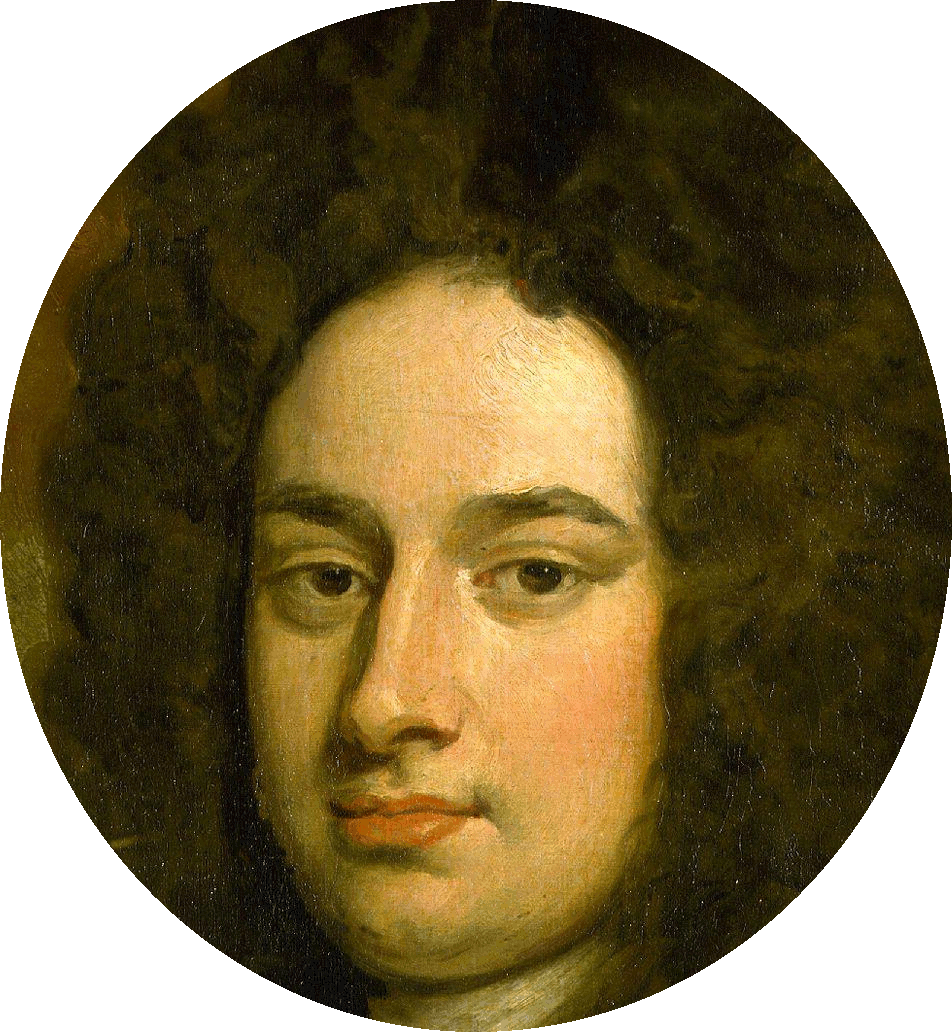
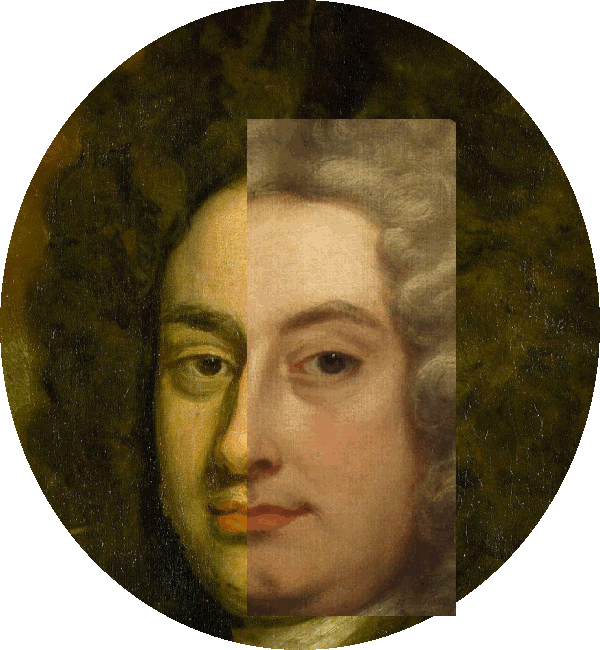
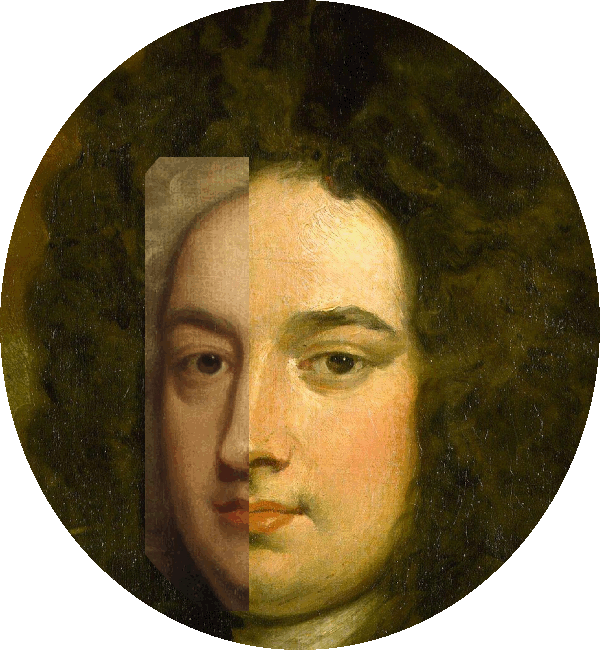
James Stanhope as
Charles Townshend |
 |
|
James Stanhope
1673-1721
? 2/5
Chief minister |
Charles Townshend
1674-1738
4/18
6/21
Statesman |
 |
 |
|
Lost hope |
- Stanhope was a key figure in early 18th-century politics,
his attempt to save his friend Richard Steele from expulsion
from the House of Commons was a political loss for him.
- Lords Stanhope and Sunderland ran the government
jointly, with Stanhope managing foreign affairs and Sunderland domestic.
|
Charles
Spencer, 3rd Earl of
Sunderland |
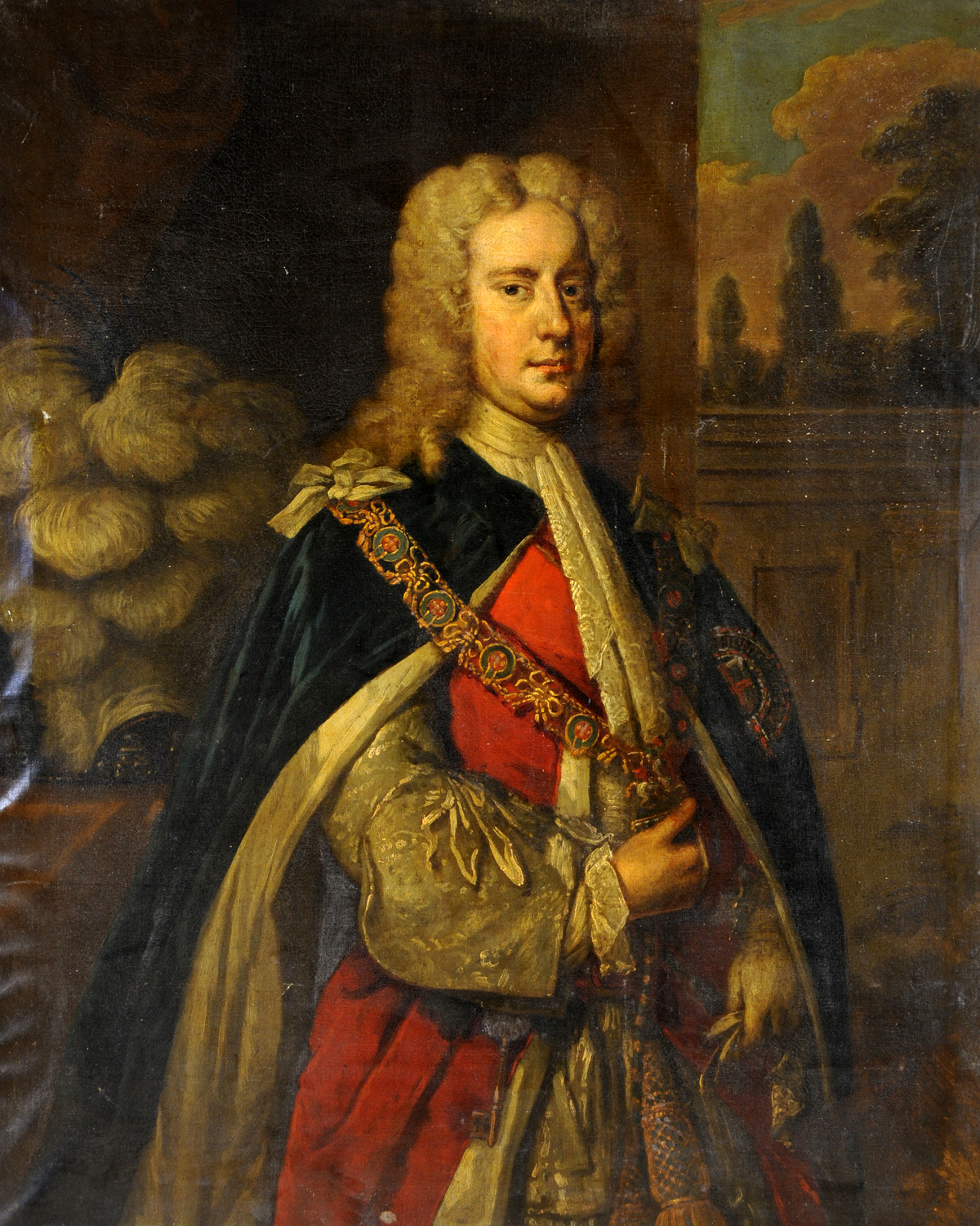
Godfrey Kneller, Public domain, via Wikimedia Commons
Masonic hidden hand sign |
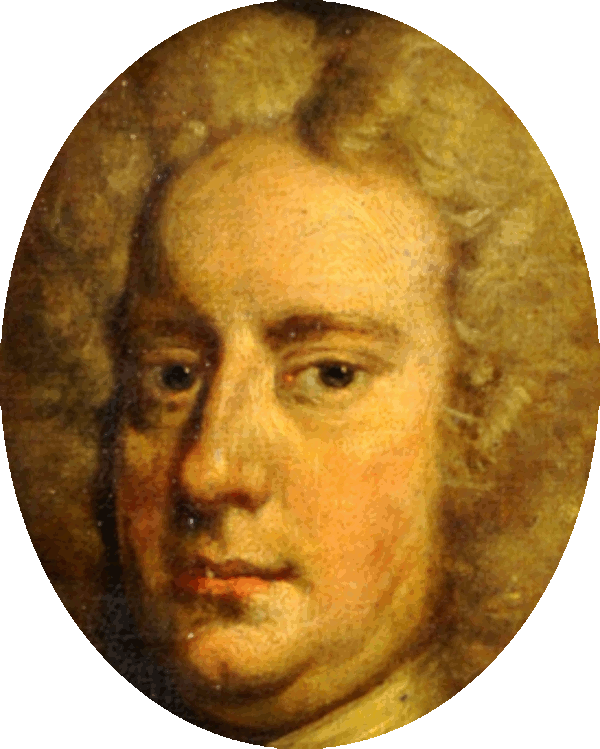
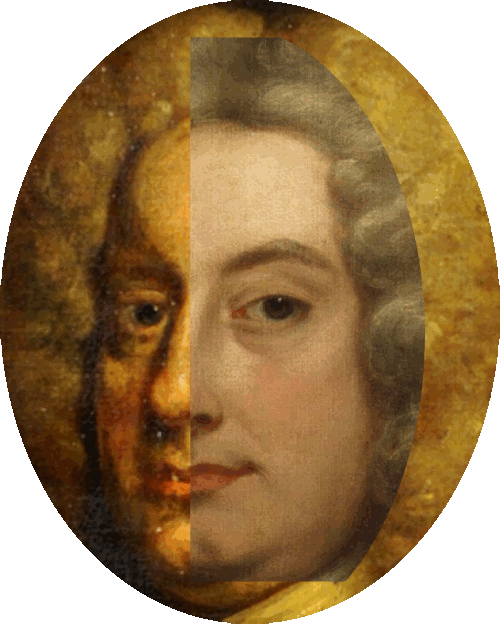
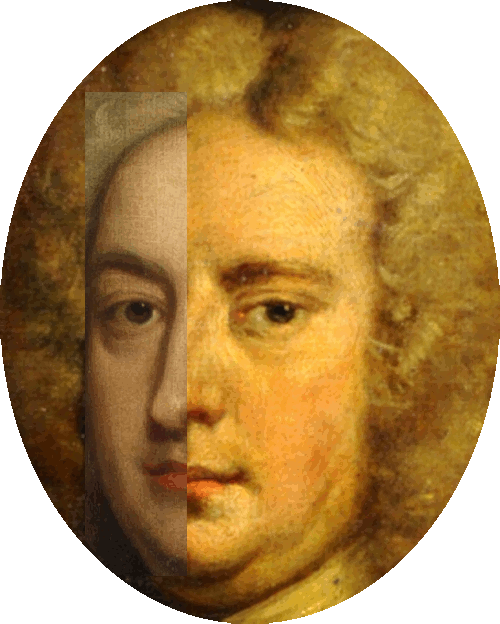
- Charles Spencer, 3rd Earl of Sunderland, KG, PC (1675-1722), styled as Lord Spencer from 1688 to 1702, was a British politician from the Spencer family.
- He served as Lord Lieutenant of Ireland from 1714–1717, Lord Privy Seal
from 1715–1716, Lord President of the Council from 1718–1719 and First Lord of the Treasury
from 1718–1721.
- He is an ancestor of both Winston Churchill and Diana, Princess of Wales, and through her, the current heir to the British throne, William, Prince of Wales.
|
Charles Spencer as
Charles Townshend |
 |
|
Charles Spencer
(1675-1722
4/23 4/19
Chief minister |
Charles Townshend
1674-1738
4/18
6/21
Statesman |
 |
 |
|
South Sea Bubble |
- Sunderland
(Spencer) was a key figure in the 1720 South Sea crisis, accused of taking bribes and distributing shares to secure political favor, which discredited him and ended his effective premiership.
- A powerful Whig leader, he served Queen Anne and George I, holding high offices like Secretary of State and First Lord of the Treasury, but the South Sea affair forced him into a less prominent role.
1st Prime
Minister of Great Britain
1721-1742
Sir
Robert Walpole, 1st
Earl of Oxford |

Studio of Jean-Baptiste van Loo, Public domain, via Wikimedia Commons
Masonic hand sign |
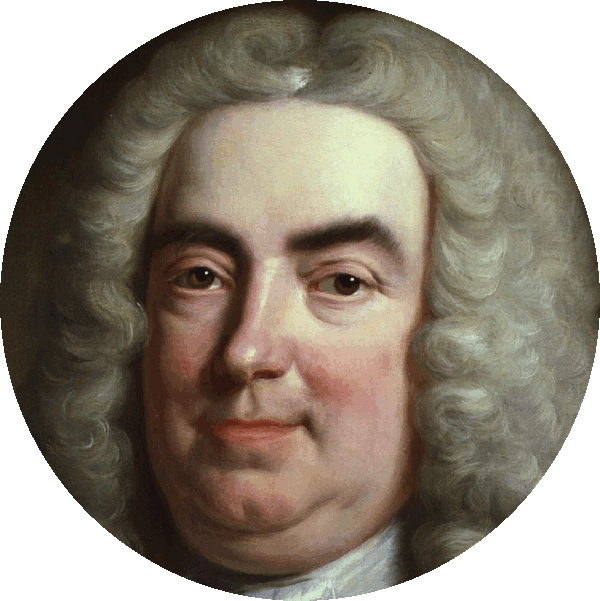
- Sir Robert Walpole, 1st Earl of Oxford (1676-1745) was a
British Whig Statesman and generally regarded as the first
Prime Minister of Great Britain, serving from 1721 to 1742.
- His dominance was dubbed the 'Robinocracy' and he holds the
record as the longest serving British prime minister.
-
Walpole is often criticized for fostering political corruption and patronage, enriching himself and his allies through office-trading and bribery, which fueled public resentment and the Excise Crisis.
- The Excise Bill of 1733 was a proposal by the British government of Robert Walpole to impose an excise tax on a variety of products.
- While praised for peace and financial stability, Walpole's
'wise and salutary neglect' policy towards colonies allowed
them to grow independent, contributing to future revolutionary
sentiment, and his reluctance to wage war ultimately ended in
the avoidable conflict with Spain in 1739.
|
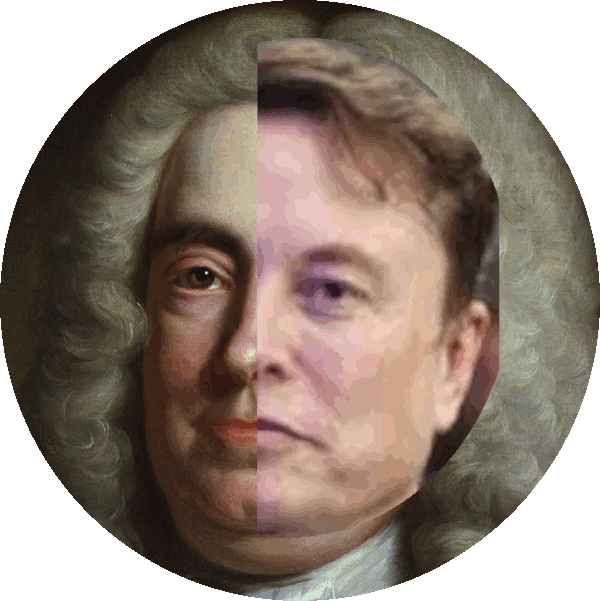
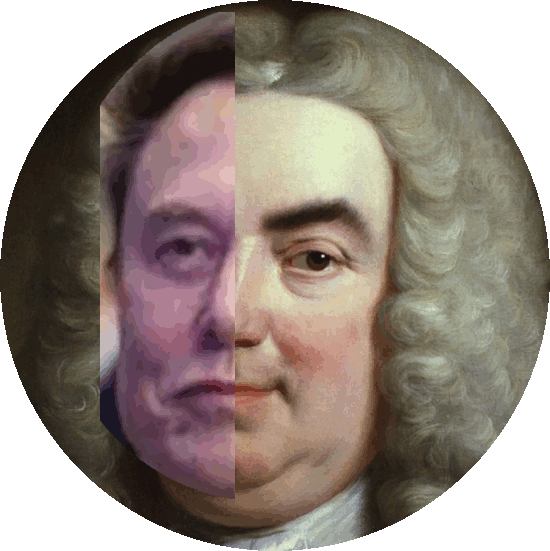
Robert Walpole as Elon Musk |
 |
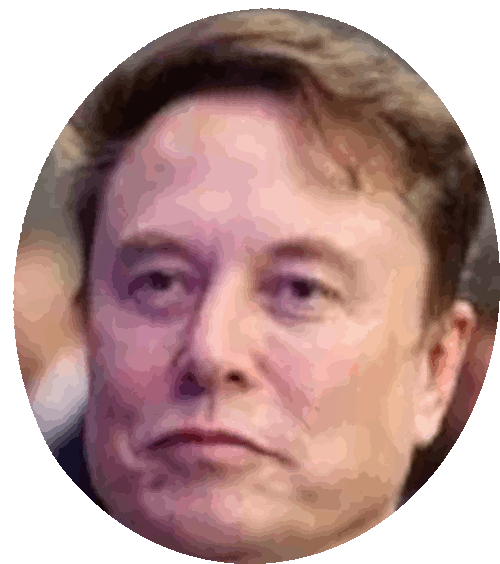 |
Robert Walpole
1676-1745
8/26 3/18
Prime Minister
|
Elon Reeve Musk
1971
6/28
Chief thief |
 |
 |
1st Prime Minister
Cock Robin |
-
Walpole's failure to maintain a policy of avoiding military conflict eventually led to his fall from power.
- Despite his personal disapproval, Walpole declared war on Spain in 1739, a move that signaled the end of his long reign of peace.
- The nursery rhyme
'Who Killed Cock Robin?' may allude to the fall of Walpole, who carried the popular nickname
Cock Robin.
- Walpole used government positions, lucrative contracts, and honors to secure loyalty, creating a system of bribery (venality) that became infamous, as depicted in caricatures.
- While stabilizing finances initially, his era normalized large national debts and interest payments, a feature that would grow in later periods.
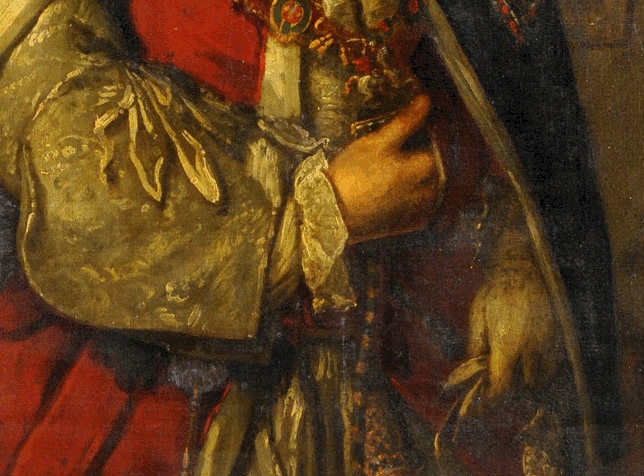
Hidden hand |
- The transformation from indentured servitude to slavery as the primary source of plantation labor
occurred.
- Also, a shift from sweet-scented to Oronoco tobacco as the dominant tobacco crop, and the beginning of what historians have called the
'golden age' of Virginia politics.
- All of these developments can be attributed to the broader policies and people George I had at least a modest role in promoting.
- Historians often cite the peaceful royal succession following his sudden death in 1727 as his most significant legacy.
King George II of Great Britain
1727
- 1760
House of Hanover |
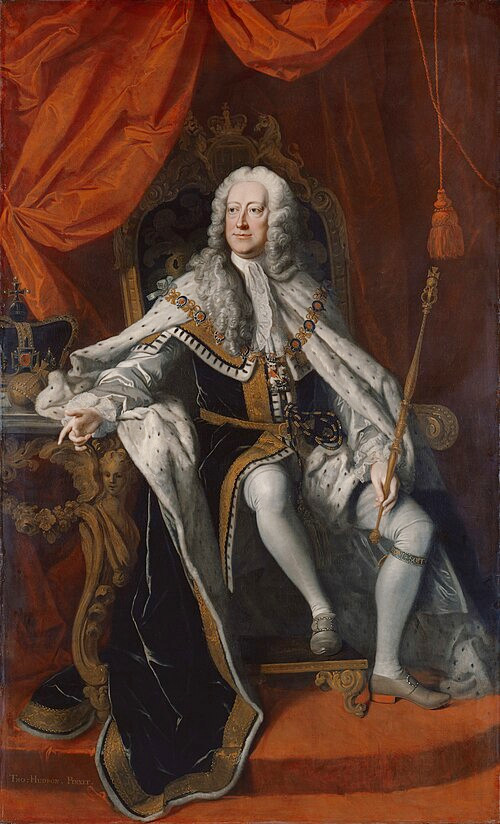
Thomas Hudson, Public domain, via Wikimedia Commons
c. 1744 |
- George II was King of Great Britain and Ireland, Duke of Brunswick-Lüneburg (Hanover) and a prince-elector of the Holy Roman Empire from June
11, 1727, until his death on October 25, 1760.
-
Born as George Augustus Stuart (1683-1760) in November 1683, he was
the son of George I of Great Britain and Sophia Dorothea of Celle.
- Following the succession of George I, Charles Townshend and Robert Walpole were
invited to form the next government.
- From that point, the holder of the office of first lord also usually (albeit unofficially) held the status of prime minister.
War horse |
- During the reign of George II, England was involved in several conflicts, including the
War of the Austrian Succession from 1740–1748, which included the North American theater known as King George's War.
- His reign also saw the War of Jenkins' Ear from 1739–1748 against Spain,
which was a conflict fought primarily against Spain in the Caribbean and South America.
- In the Battle of Dettingen in 1743, George II personally led British and Hanoverian troops, which was the last time a British king led his army on the field
and he was instrumental in achieving a victory after a tactical French blunder.
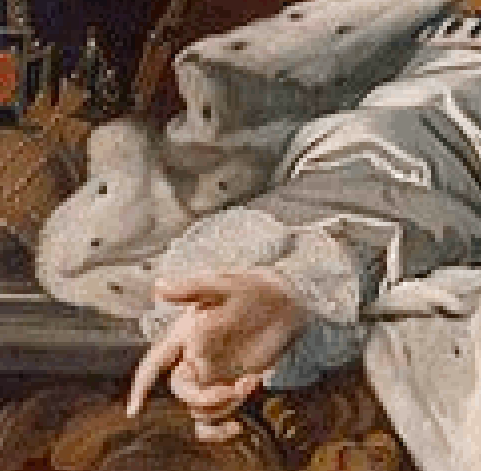
Masonic hand sign |
- The Jacobite Rebellion of 1745, was a challenge to the Hanoverian dynasty by Jacobite supporters of the Stuart claimant, Prince Charles.
- The rebellion was crushed by British forces led by the Duke of Cumberland at the
Battle of Culloden in 1746.
- George II also
oversaw the beginning of the
Seven Years' War from 1756–1763.
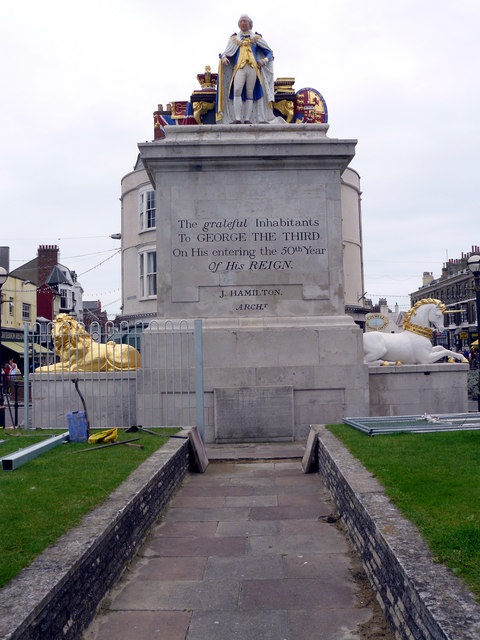
Chris Talbot / Weymouth - King George III Memorial
King's Statue |
- After losing America, George, II moved on and created The Acts of Union 1800
which unified Great Britain and Ireland into the United Kingdom of Great Britain and Ireland, with George as its king.
- He was concurrently duke and prince-elector of Hanover, in the Holy Roman Empire before becoming King of Hanover on October
12, 1814.
- George II was the first monarch of the House of
Hanover who was born in Great Britain, spoke English as his
first language, and never visited Hanover.
|
The House of Hanover was a German royal house that
ruled Great Britain from 1714 to 1901, beginning with
George I and ending with Queen Victoria. The dynasty
came to the British throne because of the Act of
Settlement of 1701, which barred Catholic heirs, and
ruled through six monarchs, overseeing events like the
American Revolution and the peak of the British
Empire. The British and Hanoverian crowns diverged in
1837 due to Salic law in Hanover, which barred Queen
Victoria from inheriting the Hanoverian throne, though
her uncle took it instead. (Assistant)
|
|
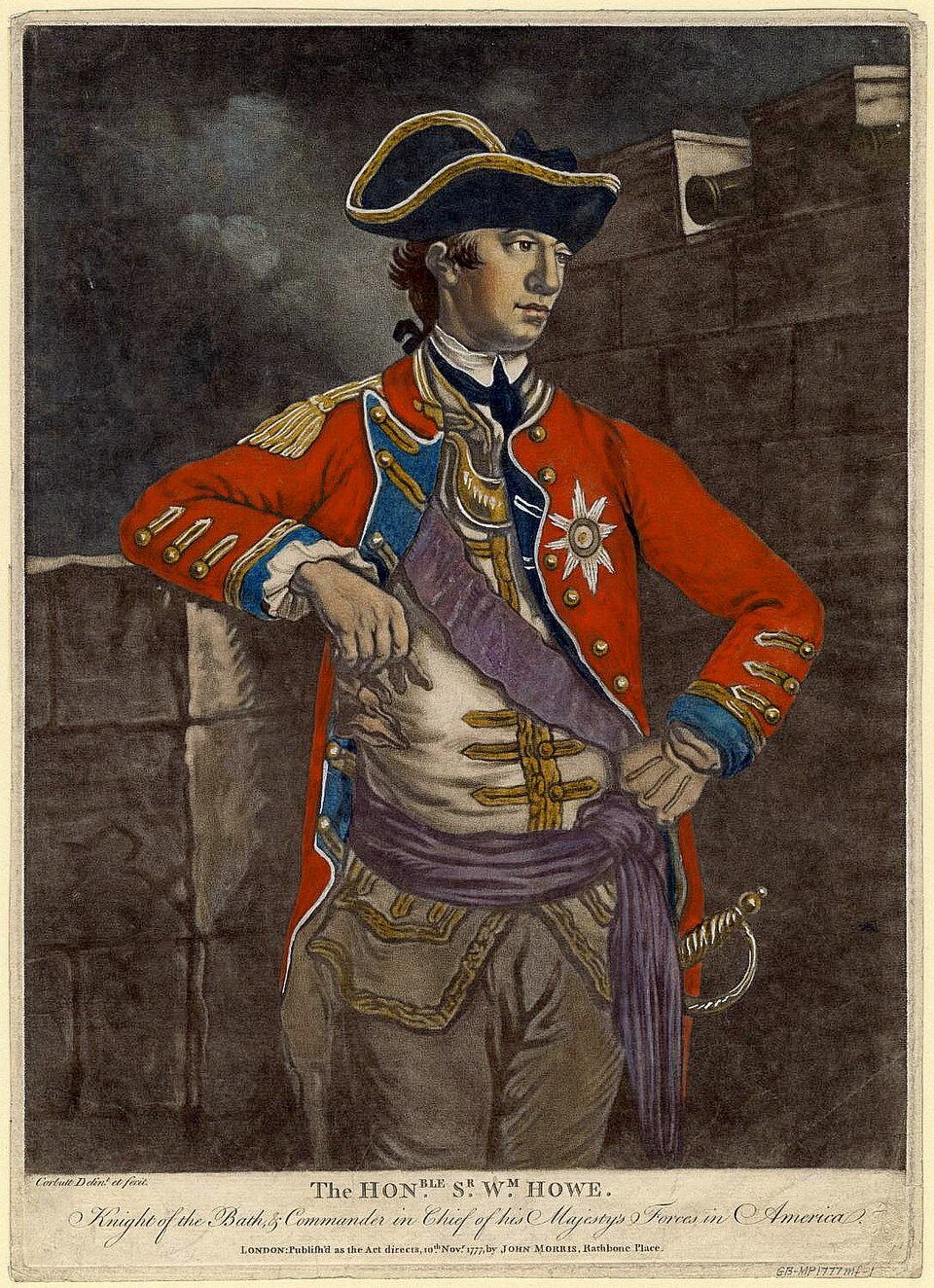
Richard Purcell aka Charles Corbutt (ca 1736-ca 1766), Public domain, via Wikimedia Commons
General William
Howe |
- The Seven Years' War introduced
General William Howe (1729-1814) to America, and did much to raise his reputation.
- Promoted to the rank of major in 1756, he joined the
newly formed 58th (Rutlandshire) Regiment of Foot in February
1757, and was promoted to lieutenant colonel in December of
that year.
|
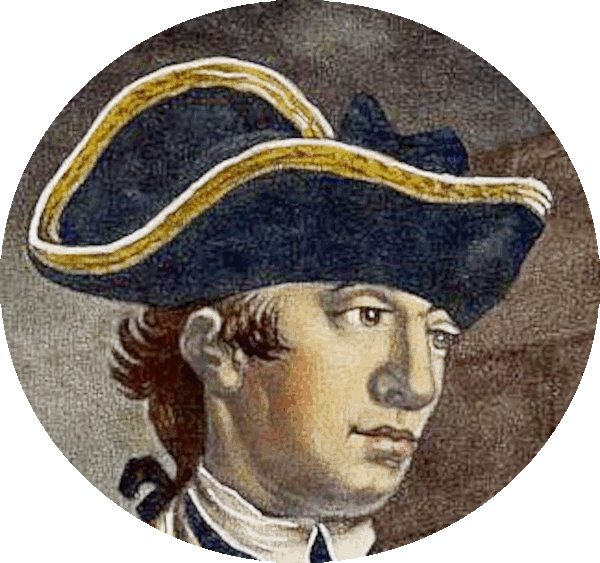
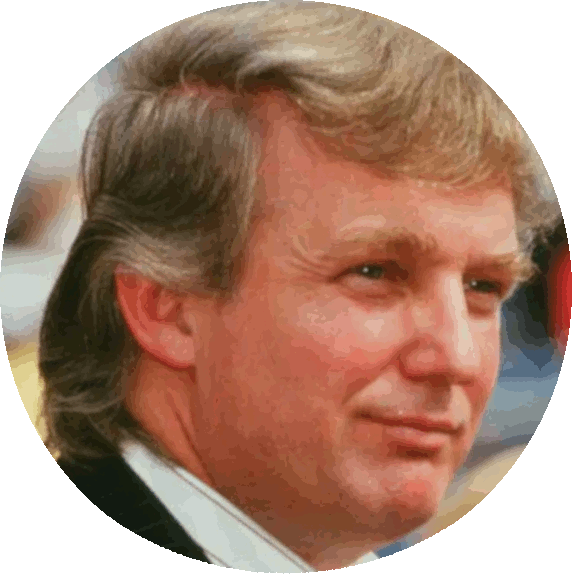
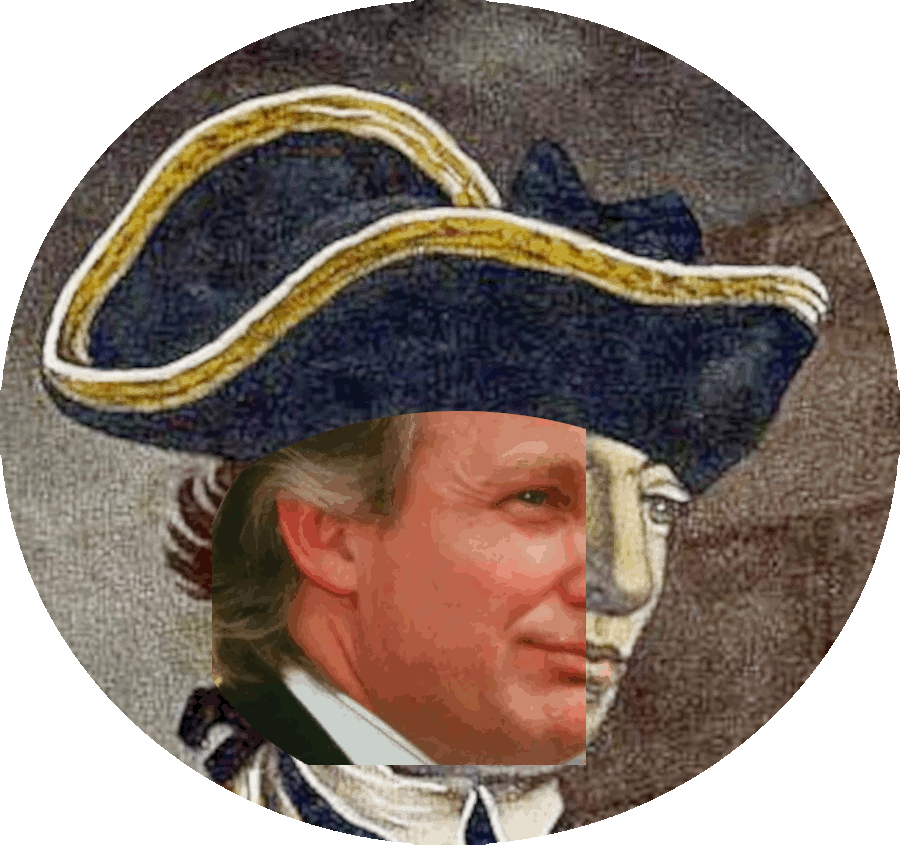
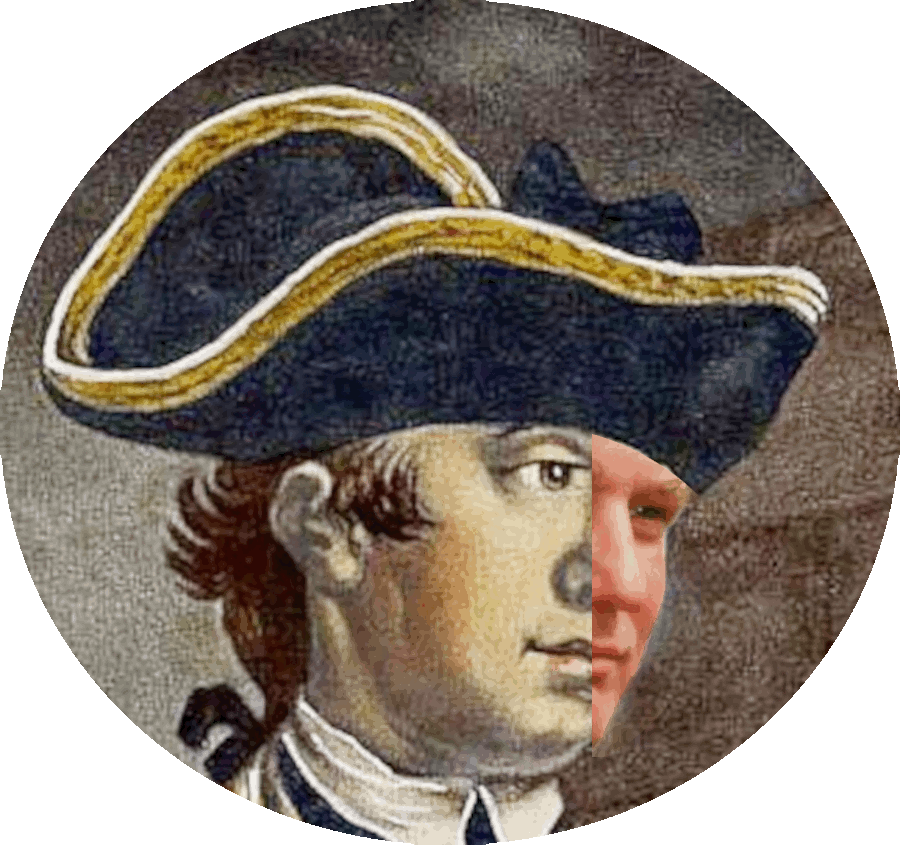
General William Howe as Trump |
 |
 |
William Howe
1729-1814
8/10
7/12
General |
Donald John Trump
1946
6/14 |
 |
 |
|
A hat to die for (Paul Revere would be envious) |
-
General William Howe was born in England, the
3rd son of Emanuel Howe, 2nd Viscount Howe, and Charlotte, the daughter of Sophia von Kielmansegg, Countess of Leinster and Darlington, an acknowledged illegitimate half-sister of King George I.
- His father was a politician, who served as Governor of Barbados where he died in 1735.
- William's eldest brother, General George Howe, was killed just before the 1758
Battle of Carillon at Fort Ticonderoga.
- Another brother, Admiral Richard Howe, rose to become one of Britain's leading naval commanders. |
|
The Paoli Massacre of September 1777, where a British force under his command, led by Major General Charles Grey, launched a surprise bayonet attack on an American camp in Pennsylvania. While Howe was the commanding general,
the attack, which occurred at Paoli, resulted in fifty-three American casualties and seventy-one prisoners, with claims that the British took no prisoners and granted no quarter. (battlefields.org)
|
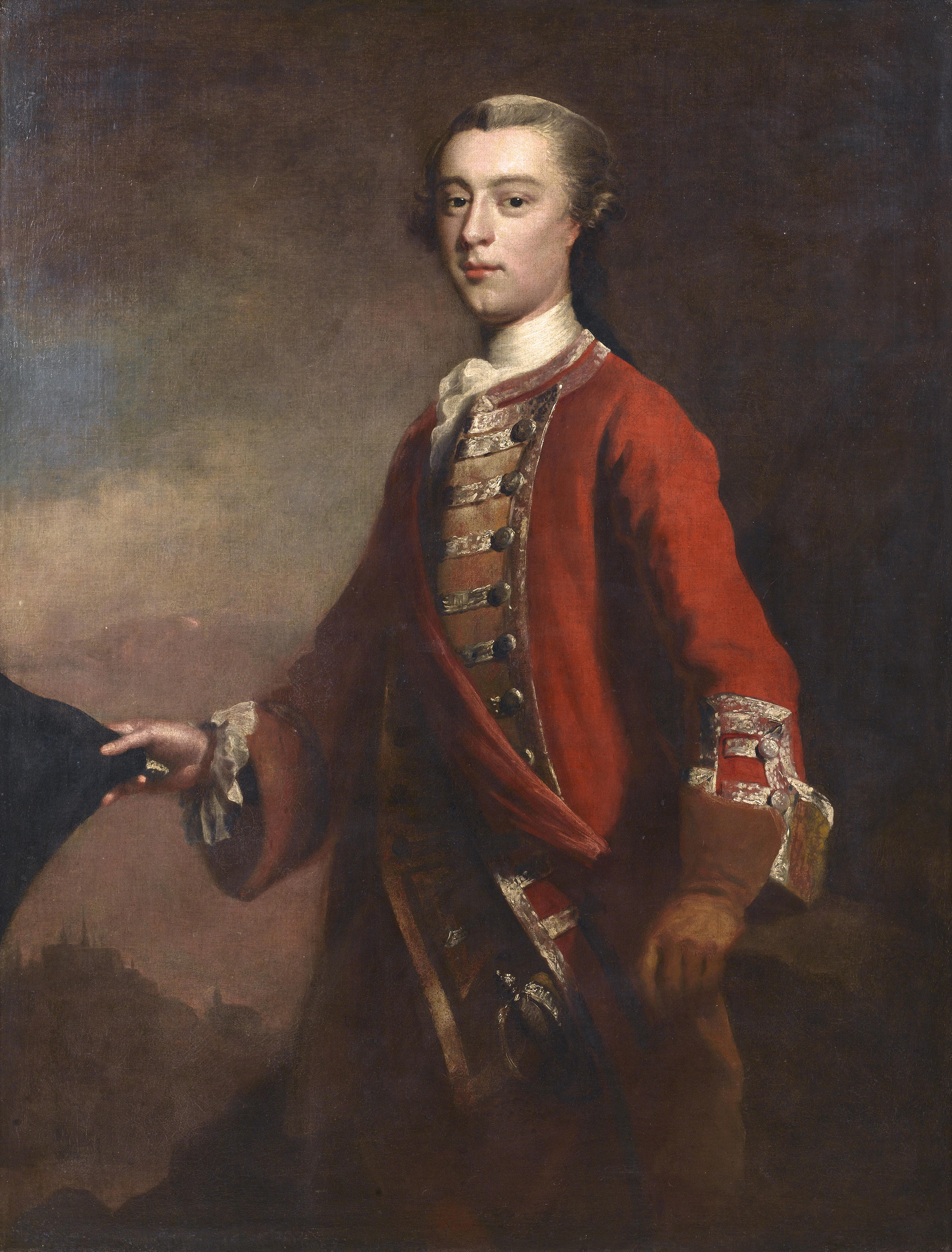
Attributed to Joseph Highmore, Public domain, via Wikimedia Commons
Major-General James
Wolfe in 1750 |
- General Howe also commanded the regiment at the Siege of Louisbourg in 1758, leading an amphibious landing under heavy enemy fire.
- This action won the attackers a flanking position and earned Howe a commendation from Major-General James Wolfe (1727-1759).
|
The British victory at Louisbourg was pivotal. Although the long siege made an attack on Quebec the same year impracticable, British-occupied Louisbourg both cut off French reinforcements to Canada and provided a springboard for the French and Indian War campaigns of 1759. (Assistant)
|
|
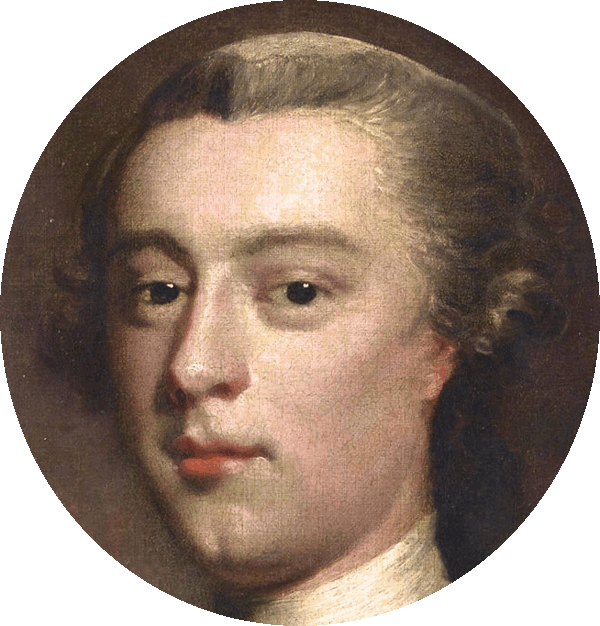
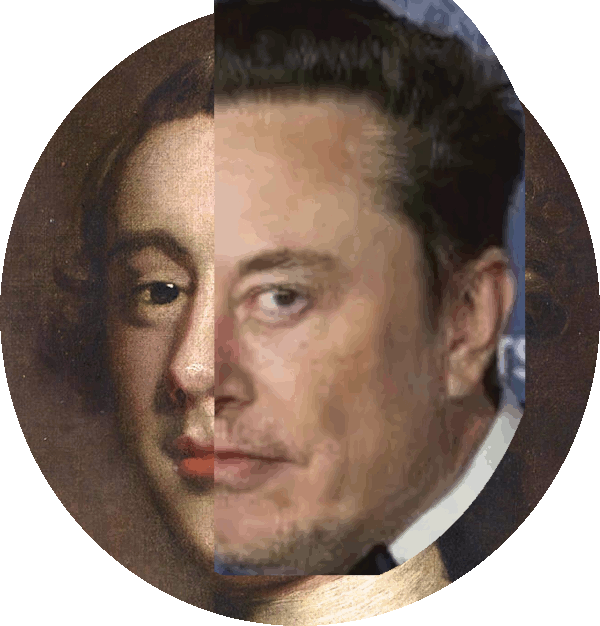
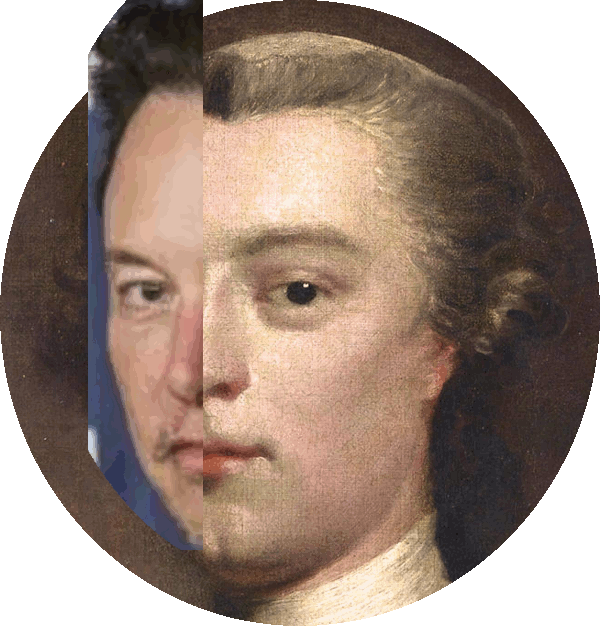
Major-General James Wolfe as Musk |
 |
 |
William Howe
1729-1814
8/10
7/12
General |
Elon Reeve Musk
1971
6/28
Chief thief |
 |
 |
|
Quebec |
- Major-General James Wolfe (1727-1759) was a British Army officer known for his training reforms and, as a major general, remembered chiefly for his victory in 1759 over the French at the
Battle of the Plains of Abraham in Quebec.
- Wolfe's part in the taking of Quebec in 1759 earned him lasting fame, and he became an icon of Britain's victory in the
Seven Years' War and subsequent territorial expansion.
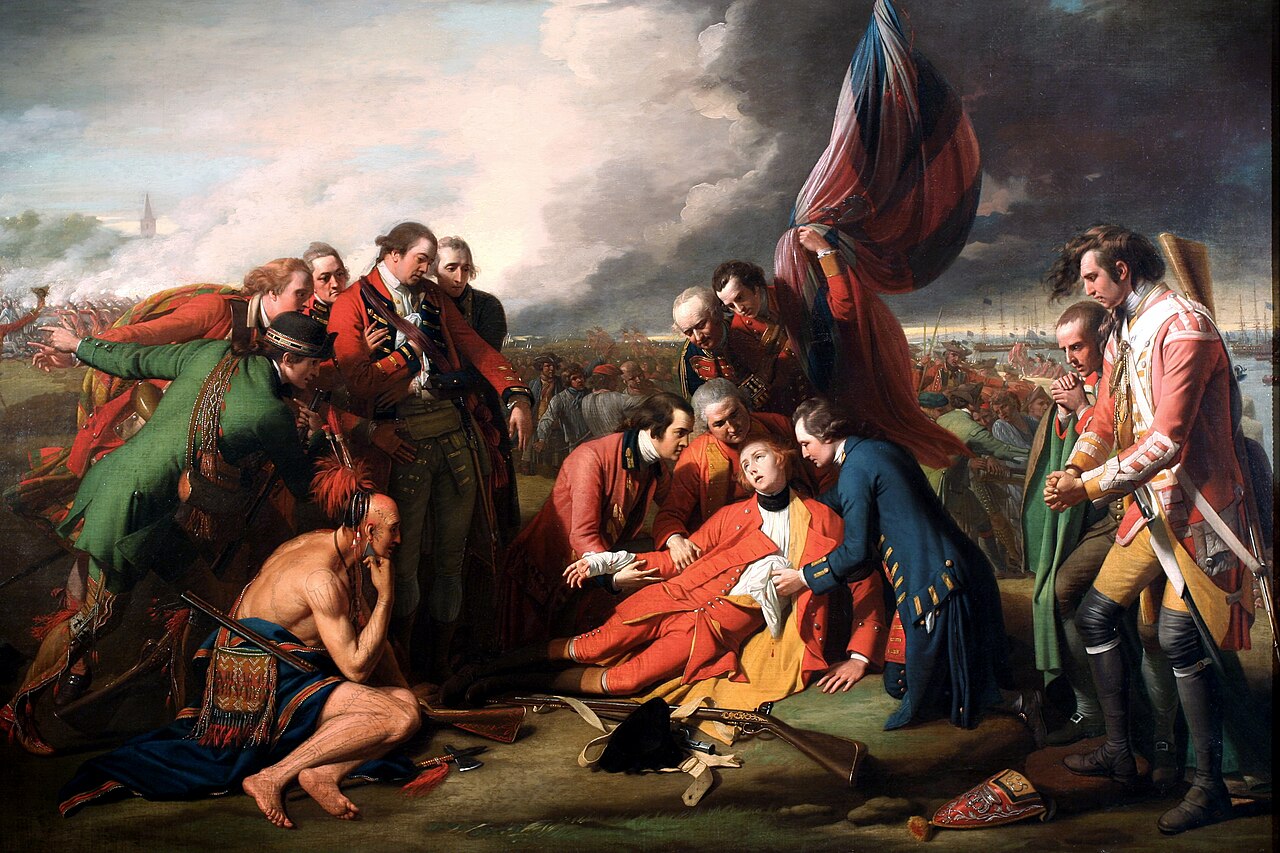
Benjamin West, Public domain, via Wikimedia Commons
The Death of General Wolfe
- 1770 |
- Wolfe was depicted in the painting The Death of General Wolfe, which became famous around the world.
|
Around 1738, the family moved to Greenwich, in north-west Kent. From his earliest years, Wolfe was destined for a military career, entering his father's 1st Marine regiment as a volunteer at the age of thirteen. (Wikipedia)
|
|
|
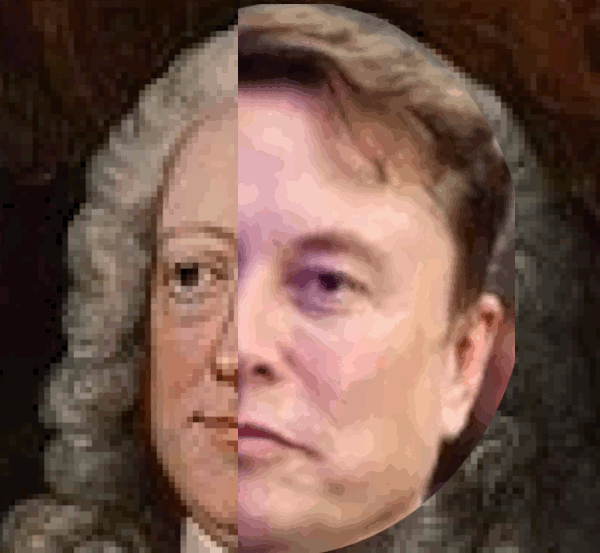
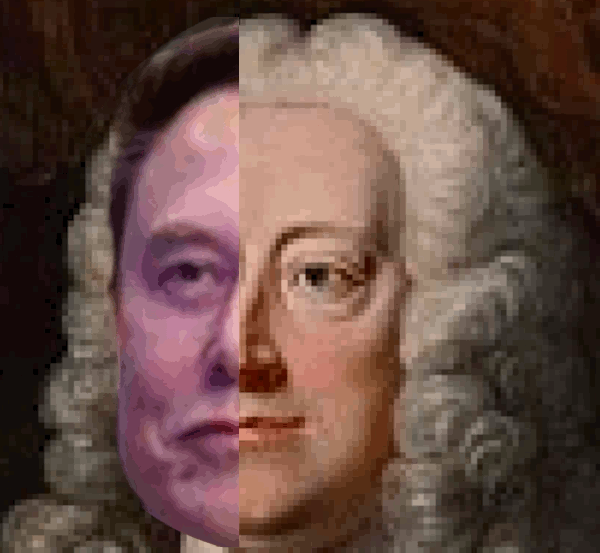
George II as Elon Musk |
 |
|
George II
1683-1760
9/11
10/26
monarch |
Elon Reeve Musk
1971
6/28
Chief thief |
 |
 |
|
English as his first language |
- The British, under General William Howe, captured New York City in 1776
although this was started by George II who had died in 1760, so his son, King George III, was on the throne at the time of the capture.
- The British occupied the city until their evacuation on November 25, 1783.
2nd Prime
Minister of Great Britain
1742-1743
Spencer
Compton, 1st Earl of
Wilmington |
.jpg)
Godfrey Kneller, Public domain, via Wikimedia Commons
Masonic hand sign |
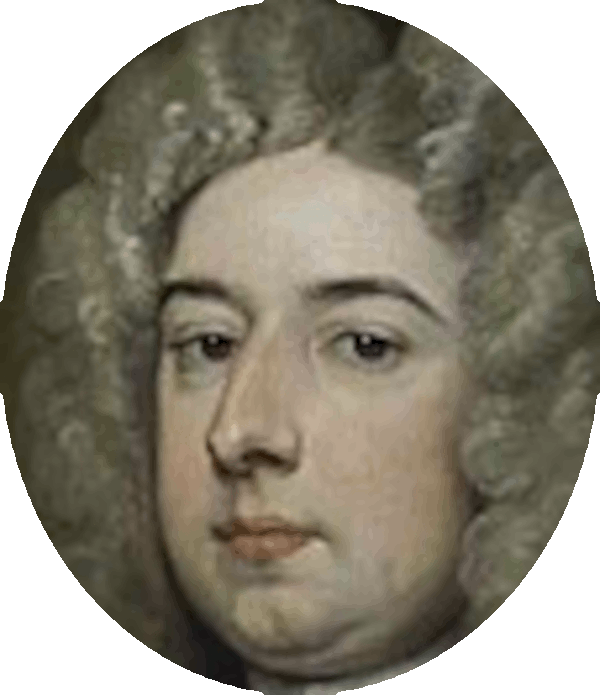
- Spencer Compton, 1st Earl of Wilmington (1673-1743) was a British Whig statesman who served continuously in government from 1715 until his death in 1743.
- He sat in the English and British House of Commons between 1698 and 1728, and was then raised to the peerage and sat in the House of Lords.
- He served as prime minister of Great Britain from 1742 until his death in 1743.
- He is considered to have been Britain's second prime minister, after Robert Walpole, but worked closely with the Secretary of State, Lord Carteret, in order to secure the support of the various factions making up the government.
|
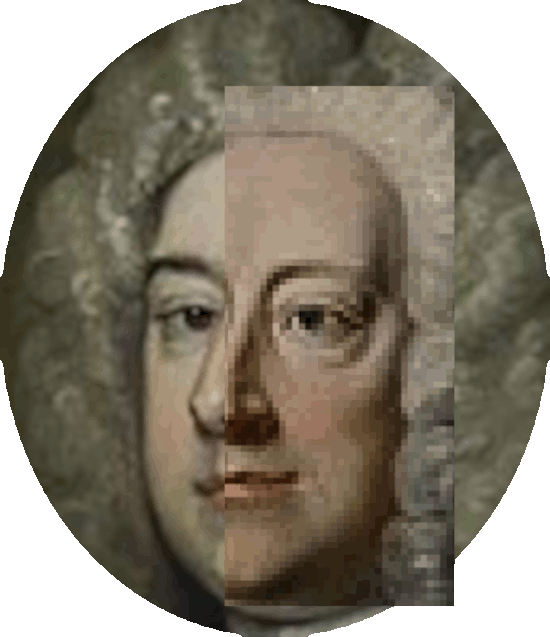
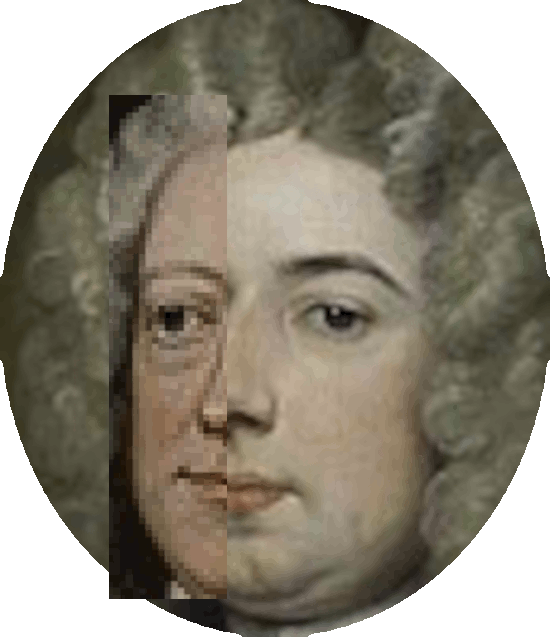
Spencer Compton as George II |
 |
|
Spencer Compton
1673-1743
? 7/2
Prime Minister
|
George II
1683-1760
9/11
10/26
monarch |
 |
 |
2nd Prime Minister
Poor leader
'George IIs Favourite Nonentity' |
- He led Britain during the early stages of the War of the Austrian Succession, though his government was heavily influenced by others, particularly Lord Carteret.
- Wilmington's time in office was short and undistinguished and he was a poor leader.
3rd Prime
Minister of Great Britain
1743-1754
Henry
Pelham |
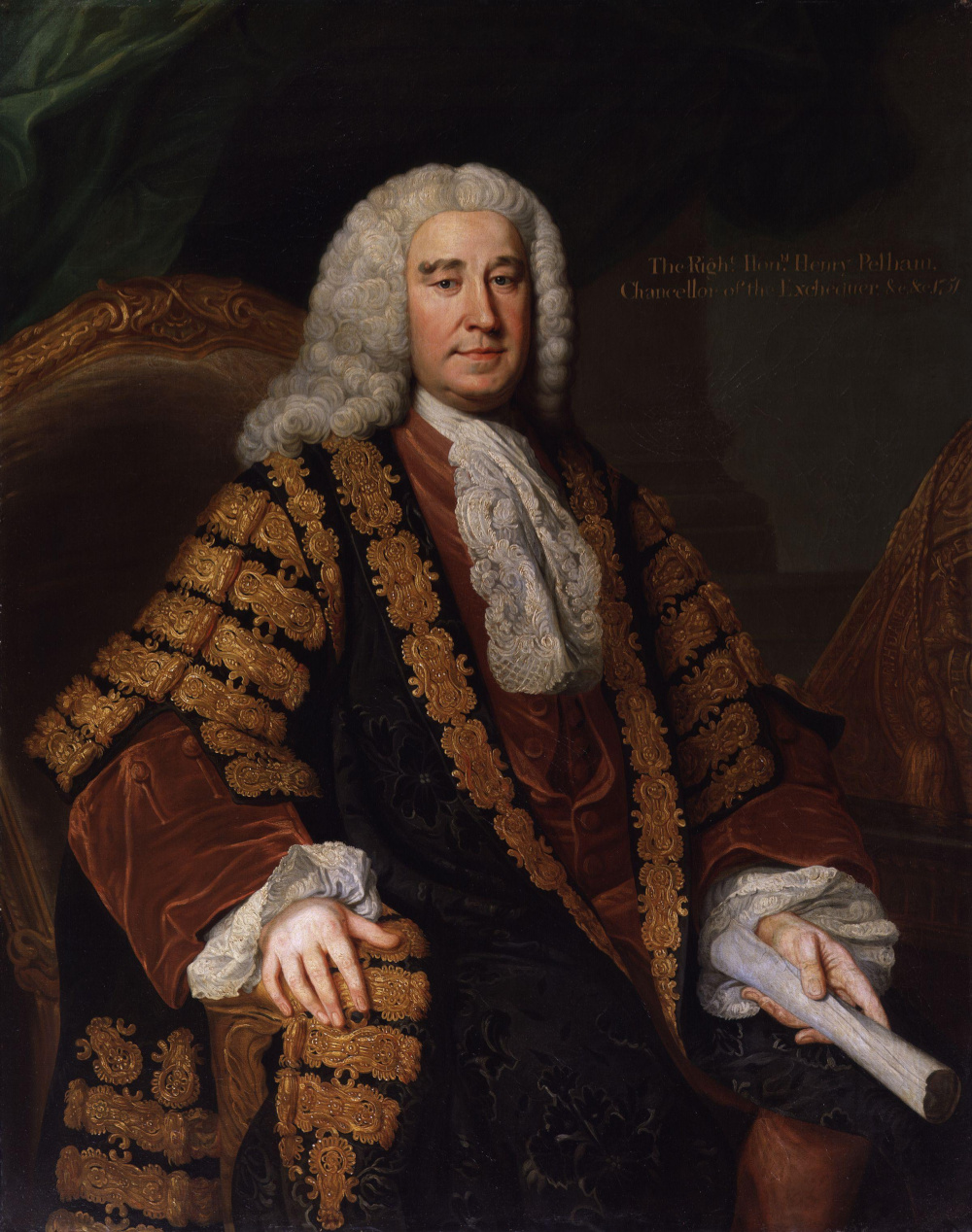
William Hoare, Public domain, via Wikimedia Commons
Masonic hand sign |
- Henry Pelham (1694-1754) was a British Whig statesman who served as Prime Minister of Great Britain from 1743 until his death in 1754.
- He was the younger brother of Thomas Pelham-Holles, 1st Duke of Newcastle, who served in Pelham's government and succeeded him as prime minister.
- Pelham is generally considered to have been Britain's 3rd prime minister, after Robert Walpole and the Earl of Wilmington.
|
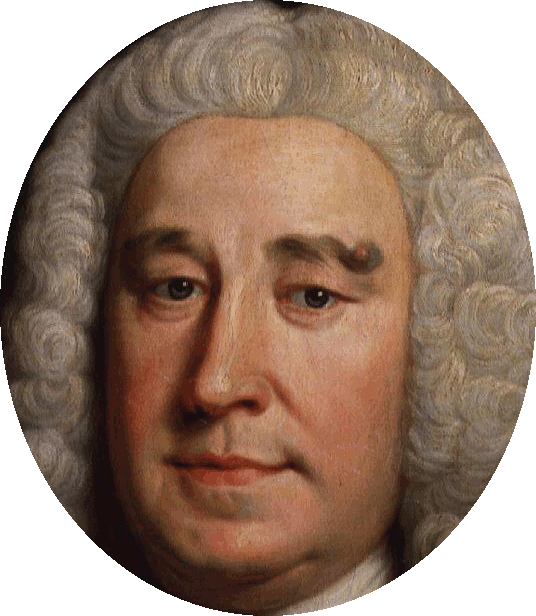
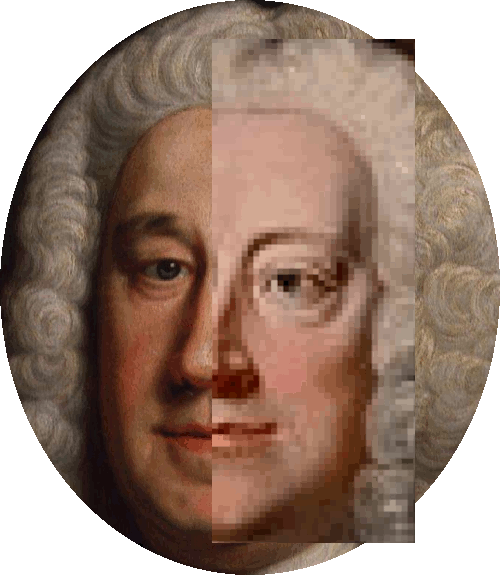
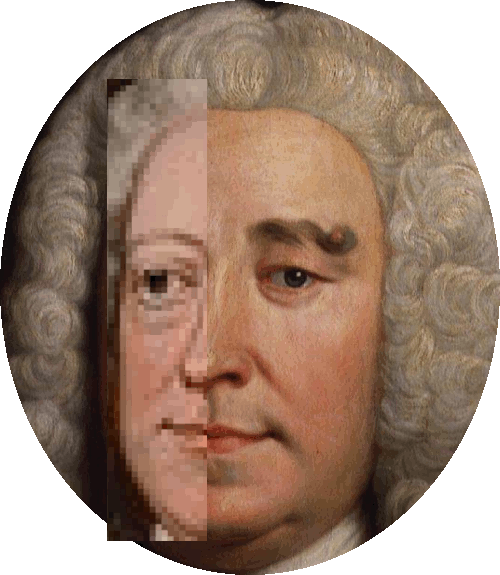
Henry Pelham as George II |
 |
|
Henry Pelham
1694-1754
9/25 3/6
Prime Minister
|
George II
1683-1760
9/11
10/26
monarch |
 |
 |
3rd Prime Minister
King Henry the Ninth |
- Pelham, as a key Walpole figure, faced immense public backlash defending Robert Walpole's unpopular excise tax plan, a major political storm he survived but highlighted deep public mistrust.
- He had to find the resources to fund the War of the Austrian succession
and was always very mindful of the costs of war and diplomacy.
4th Prime
Minister of Great Britain
1754-1756
Thomas
Pelham-Holles, 1st
Duke of Newcastle
upon Tyne |
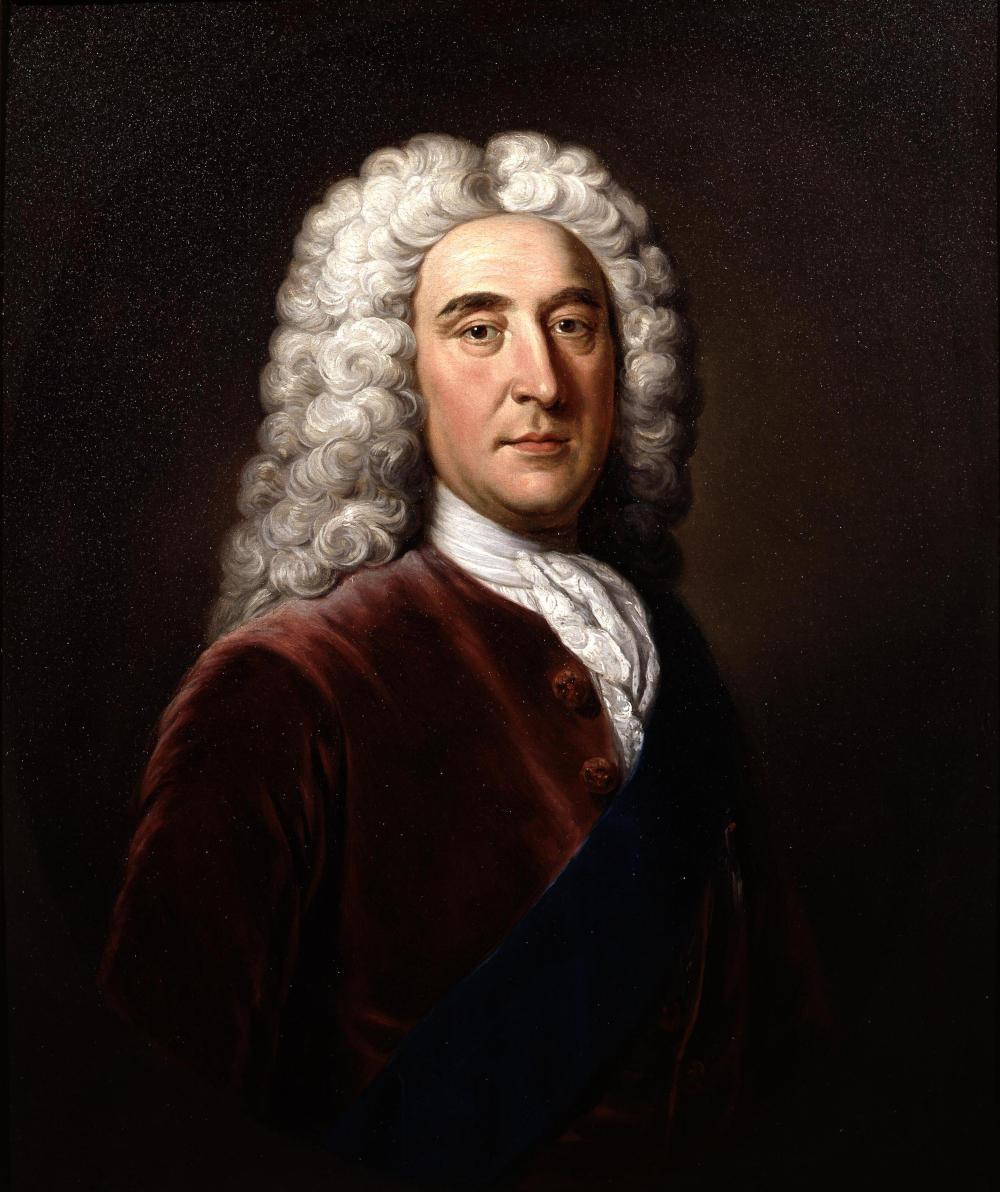
William Hoare, Public domain, via Wikimedia Commons
Thomas Pelham-Holles |
- Thomas Pelham-Holles, 1st Duke of Newcastle upon Tyne, 1st
Duke of Newcastle-under-Lyne (1693-1768) was an English Whig statesman who served as Prime Minister of Great Britain, and whose official life extended throughout the Whig supremacy of the 18th-century.
- He is commonly known as the Duke of Newcastle and was a protégé of Robert Walpole, he served under him for more than 20 years until 1742.
- He held power with his brother, prime minister Henry Pelham, until 1754
and then served as a Secretary of State continuously for 30 years and dominated British foreign policy.
|
Thomas Pelham-Holles as Henry Pelham |
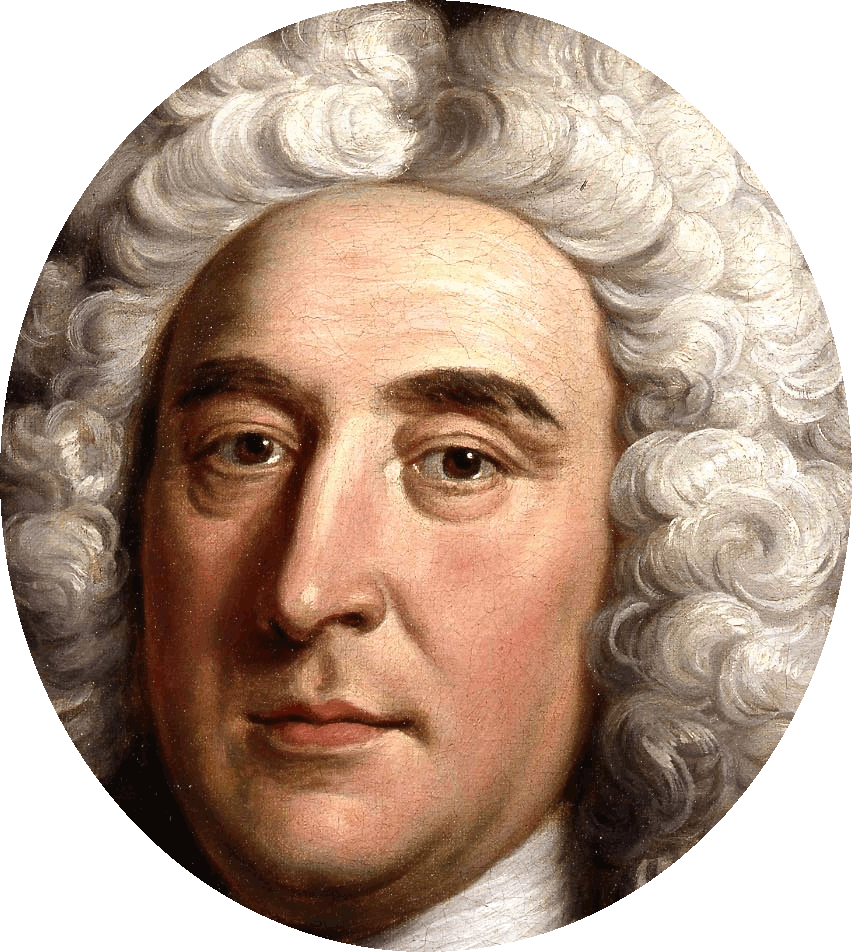 |
|
Thomas Pelham-Holles
1693-1768
7/21
11/17
4th Prime Minister
|
Henry Pelham
1694-1754
9/25 3/6
3rd Prime Minister |
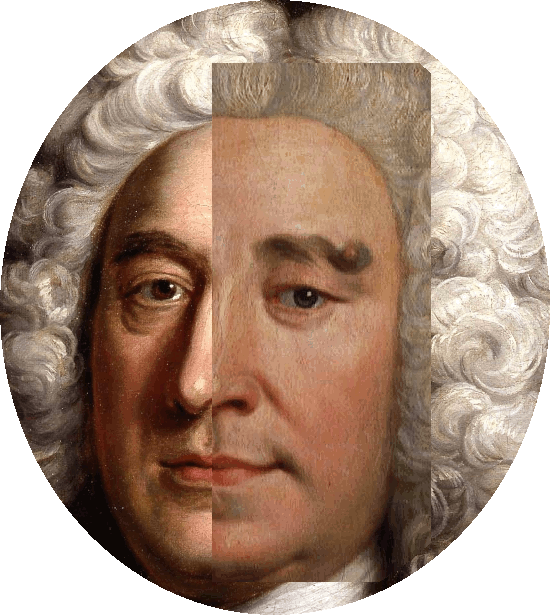 |
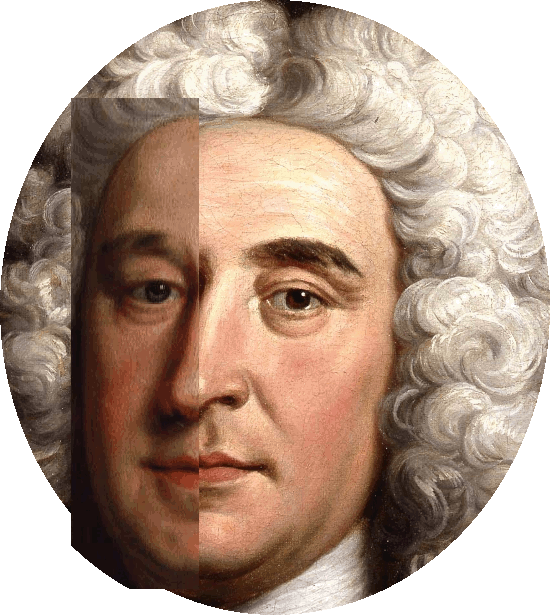 |
4th Prime Minister
Hubble-Bubble
Weak buffoon |
-
Jacobite Risings (1715): Early in his career, he and his brother raised troops against the Pretender and were rewarded with titles.
- After his brother, Henry Pelham's death, Newcastle was prime minister for
6 years in two separate periods.
- While his first premiership was not particularly notable, Newcastle precipitated the
Seven Years' War, and his weak diplomacy cost him his premiership.
- Notorious for his fussiness and fretfulness, his petty jealousies, his reluctance to accept responsibility for his actions, and his inability to pursue any political objective to his own satisfaction or to the nation's profit.
- Many modern historians have depicted him as the epitome of unredeemed mediocrity and as a veritable buffoon in office.
5th Prime
Minister of Great Britain
1756-1757
William
Cavendish, 4th Duke
of Devonshire |
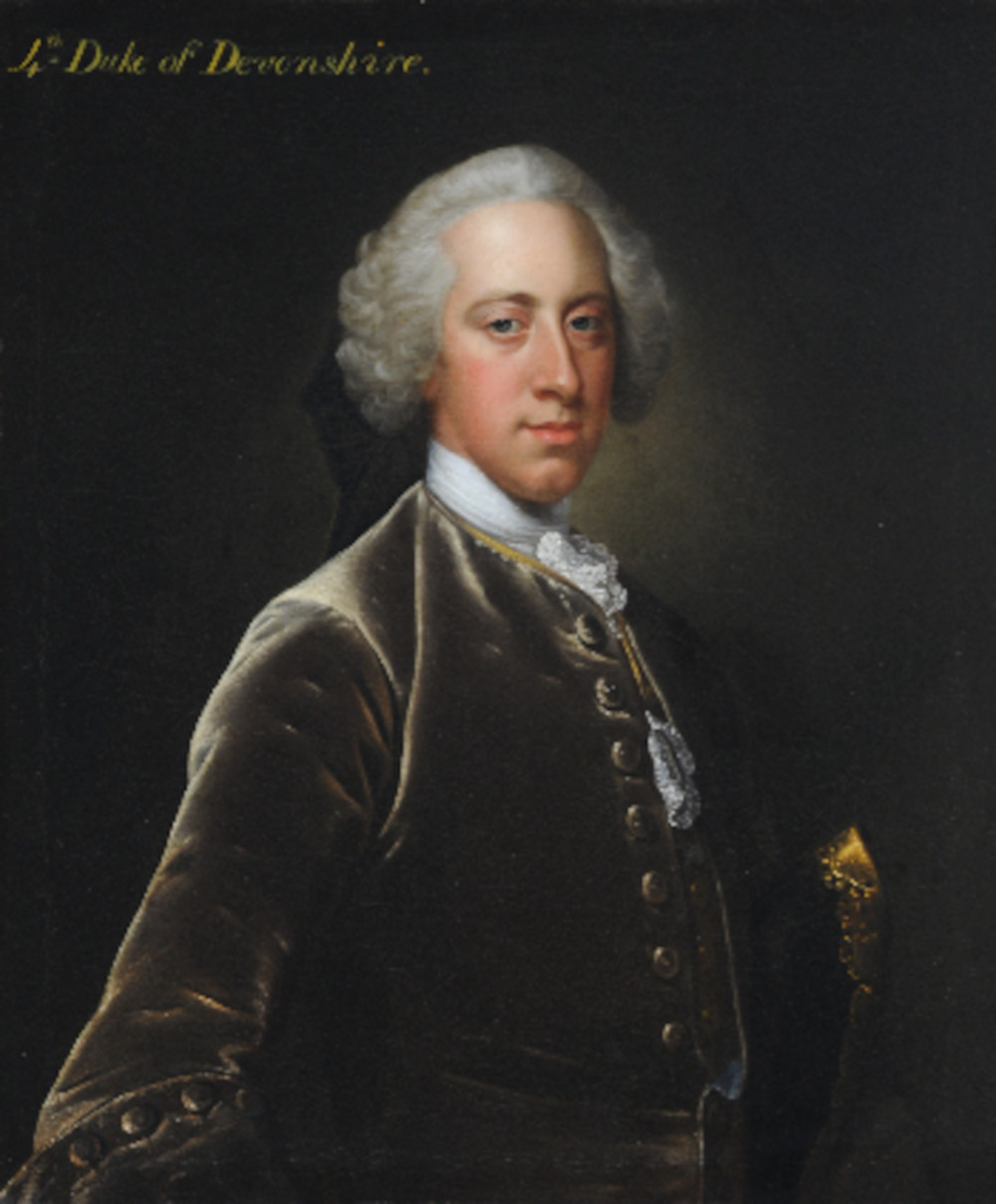
Thomas Hudson, Public domain, via Wikimedia Commons
|
- William Cavendish, 4th Duke of Devonshire (1720-1764),
styled Lord Cavendish before 1729, and Marquess of Hartington
between 1729 and 1755, was a British Whig statesman and
nobleman who was briefly nominal Prime Minister of Great
Britain.
- He was the first son of William Cavendish, 3rd Duke of Devonshire and his wife, Catherine (née Hoskins).
- He is also a great-great-great-great-great-grandfather of King Charles III through the king's maternal great-grandmother, Cecilia Bowes-Lyon, Countess of Strathmore and Kinghorne.
|
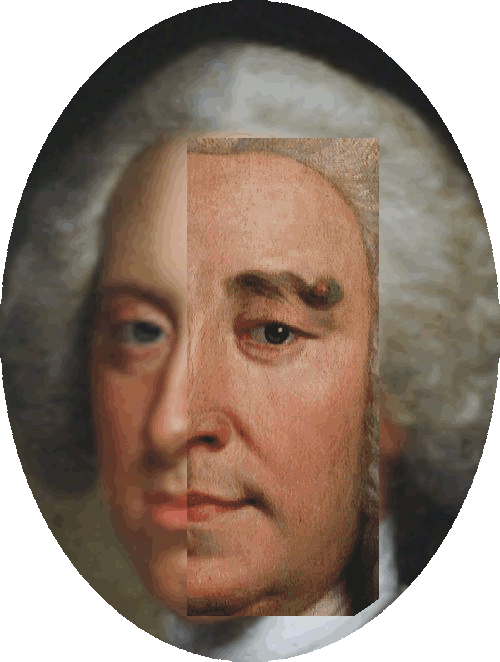
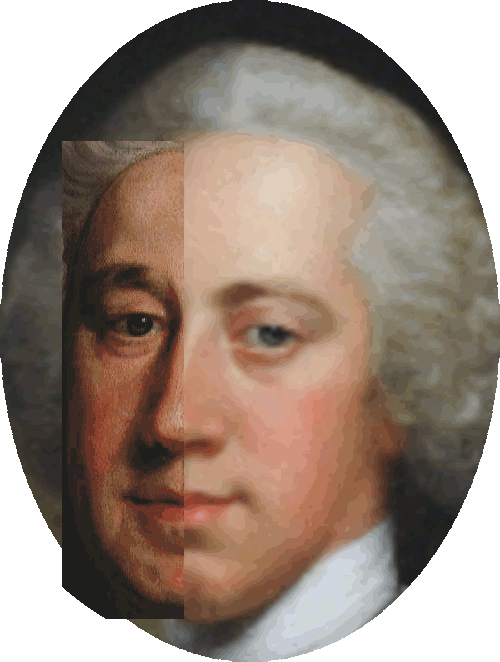
William Cavendish as
Henry Pelham |
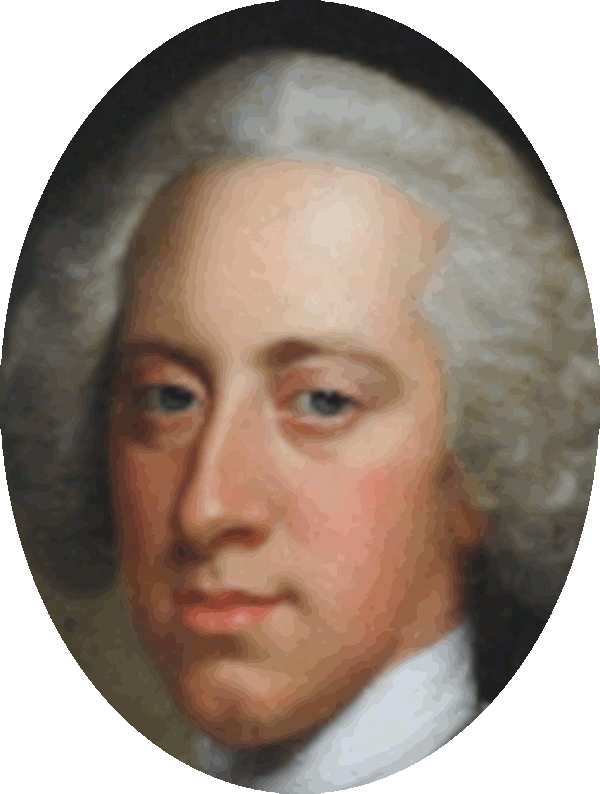 |
|
William Cavendish
1720-1764
5/8
10/2
Prime Minister
|
Henry Pelham
1694-1754
9/25 3/6
Prime Minister |
 |
 |
5th Prime Minister
Deleted |
- He became a stop-gap Prime Minister to manage Britain's affairs during the Seven Years' War.
- In October 1762, George III suspected that Devonshire and Thomas Pelham-Holles, 1st Duke of Newcastle, were plotting against him.
- He had mistaken a visit by Devonshire as a tender of resignation, but George refused to see him in person.
- Four days later, George III personally struck out Devonshire's name from the list of Privy Councillors.
- The administration was eventually brought down for a
variety of reasons including the opposition of George II and
the alleged mishandling of the trial and execution of
Admiral John Byng.
6th Prime Minister of Great Britain
1757-1762 |
|
Thomas Pelham-Holles as Henry Pelham |
|
|
|
Thomas Pelham-Holles
1693-1768
7/21
11/17
Prime Minister
|
Henry Pelham
1694-1754
9/25 3/6
Prime Minister |
|
|
|
6th Prime Minister
Weak buffoon |
- Many modern historians have depicted him as the epitome of
unredeemed mediocrity and as a veritable buffoon in office
so he was appointed a 2nd time.
King George
III of the Great
Britain
1760 -
1820
House of Hanover |
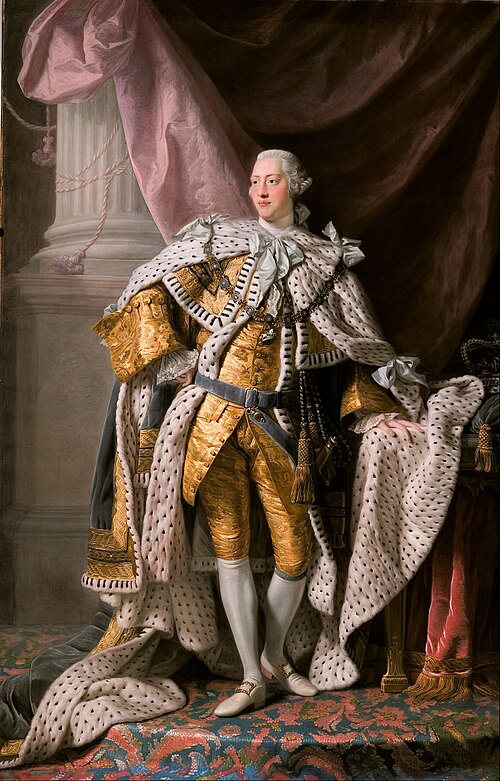
Allan Ramsay, Public domain, via Wikimedia Commons
Coronation Robes
-
1762
Hidden hand |
- King George III was the King of Great Britain and
Ireland from October 25, 1760, until his death in 1820.
-
Born George William Frederick (1738-1820) and was the first son of Frederick, Prince of Wales, and Princess Augusta of Saxe-Gotha.
- He succeeded to the throne on George IIs death in 1760.
- The following year, he married Princess Charlotte of Mecklenburg-Strelitz, with whom he had 15 children.
War horse |
- During the reign of George III, England was involved in several major wars, including the
Seven Years' War and he ascended the throne in 1760, near the end of this global conflict, which was already underway.
- Britain emerged victorious, defeating France and becoming the dominant power in North America and India.
- The American War of Independence
from 1775-1783 ended with the British defeat at Yorktown.
-
This was followed by the War of 1812 where the United States and Britain
were in conflict and which began and ended during George IIIs reign, though he was largely incapacitated by illness during
the final years.
- His reign saw Britain become the dominant European power after the
Seven Years' War, followed by the loss of its American colonies, and finally, the defeat of Napoleon at the
Battle of Waterloo in 1815.
,_by_Jean-Étienne_Liotard.jpg)
Jean-Étienne Liotard, Public domain, via Wikimedia Commons
George, Prince of Wales, at 16 years old c. 1754
|
- George was born at Norfolk House in St James' Square, London, on June
4, 1738.
- Born 2 months prematurely, he was thought unlikely to survive.
- King George II disliked Prince Frederick and took little interest in his grandchildren.
- However, in 1751, Frederick died unexpectedly from a lung injury at the age of 44, and his son George became heir apparent to the throne and inherited his father's title of Duke of Edinburgh.
- The King now took more interest in his grandson and
created him Prince of Wales 3 weeks later.
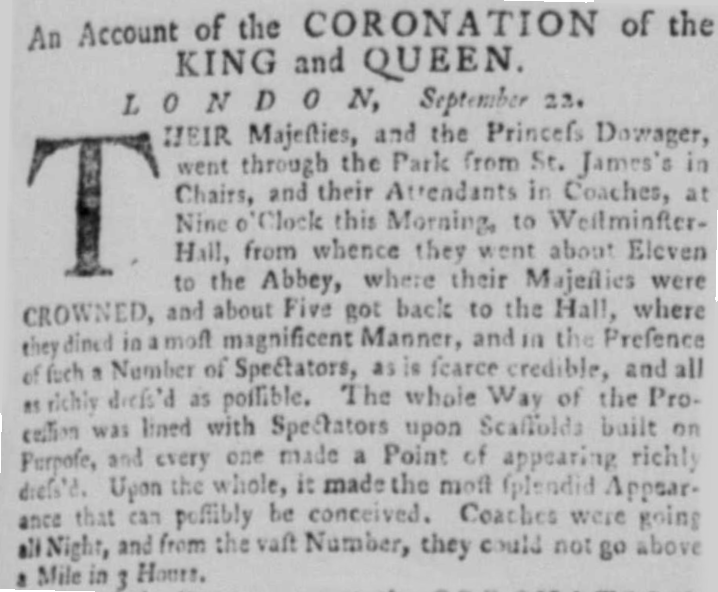
Land Gazette -
December 10, 1761
Coronation of
King George III |
-
On the death of his grandfather, George II, George ascended to the throne on October
25, 1760 at the age of 22.
- He was yet to be married so he inquired
of Lord Bute of suitable Protestant German princesses to be his wife and consort.
- In July 1761, it was decided that the King would marry the 17-year-old Princess Charlotte of Mecklenburg-Strelitz, who lacked interest in political affairs much to George's favor.
|
William Boyce c. 1745 |
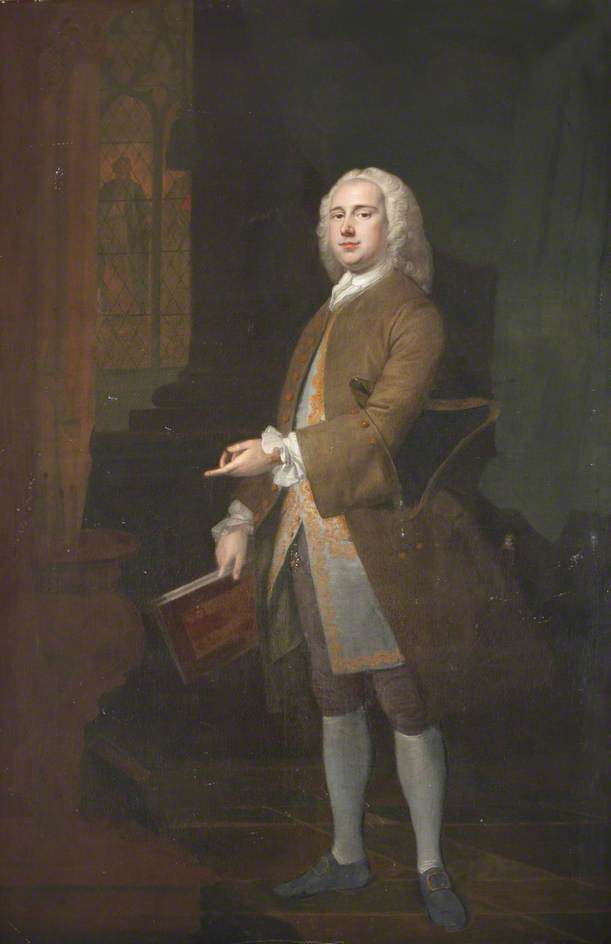
Thomas Hudson, Public domain, via Wikimedia Commons
Masonic hand sign |
- The coronation of George III and his wife Charlotte as king and queen of Great Britain and Ireland took place at Westminster Abbey, London, on September
22, 1761.
- The coronation was budgeted at £9,430 although some sources give a figure of around £70,000
($1.47 million USD today).
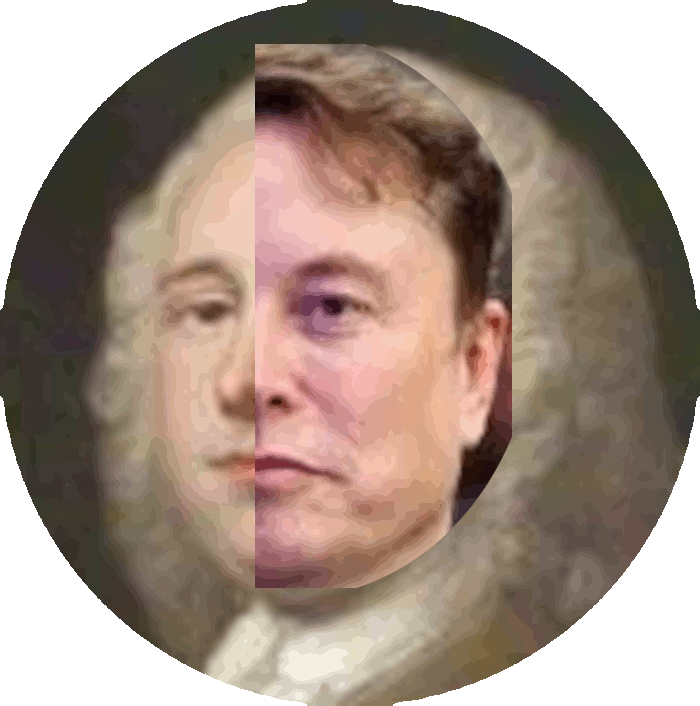
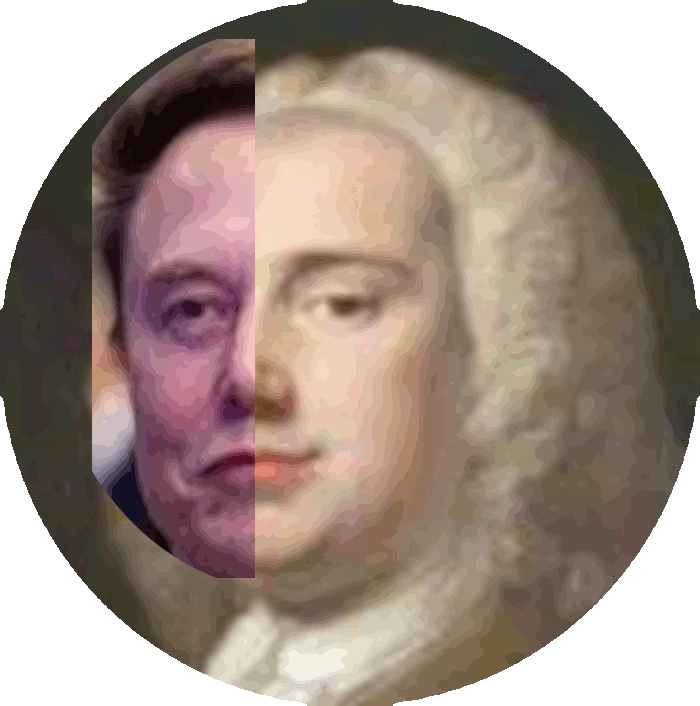
- William Boyce (1711–1779) was the Master of the King's Music and the composer of most of the 1761 coronation music.
|
William Boyce as Elon Musk |
 |
 |
William Boyce
1711-1779
9/11
2/7
Composer |
Elon Reeve Musk
1971
6/28 |
 |
 |
|
He wrote the songs |
- As Master of the King's Musick Boyce had the responsibility of writing music for royal occasions including funerals, weddings and coronations.
- However, Boyce refused to make a new setting of Zadok the Priest for the coronation of George III and Charlotte in 1761 on the grounds that Handel's setting of the anthem was unsurpassable.
- As a result, Handel's setting has been played at every
subsequent British coronation.
- George IIIs coronation is the only one recorded where a single musician wrote nearly all the music, Boyce having composed a total of
8 anthems specifically for the event.
|
Zadok the Priest (HWV 258) is a British anthem that was composed by George Frideric Handel for the coronation of George II in 1727. Alongside The King Shall Rejoice, My Heart is Inditing, and Let Thy Hand Be Strengthened, Zadok the Priest is one of Handel's coronation anthems. One of Handel's best-known works, Zadok the Priest has been sung prior to the anointing of the sovereign at the coronation of every British monarch since its composition and has become recognized as a British patriotic anthem. (Wikipedia)
|
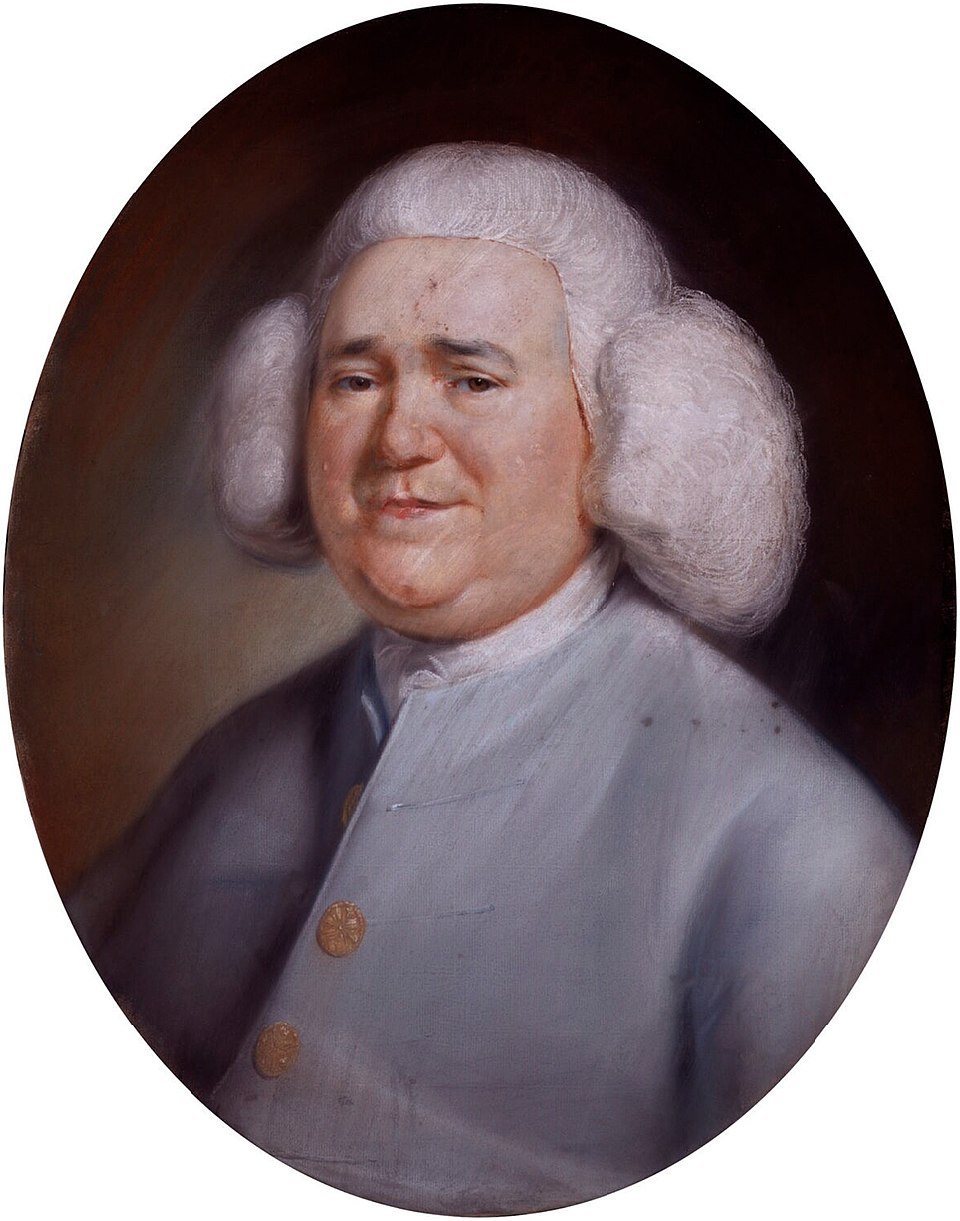
John Russell, Public domain, via Wikimedia Commons
William Boyce
1776 |
- By the year 1758, Boyce's deafness had increased to such an extent that he was unable to continue in his organist posts.
- He gave up teaching and retired in Kensington, and devoted himself to editing the collection of church music which bears his name.
- This led to Boyce editing works by the likes of William Byrd and Henry Purcell.
- Many of the pieces in the collection are still used in Anglican services today.
|
Take the last train to Clarksville
No, I must hang up the phone
I can't hear you in this
Noisy railroad station all alone
I'm feeling low
Oh no no no, oh no no no
And I don't know if I'm ever coming home, oh
(Tommy Boyce and Bobby
Hart)
|
|
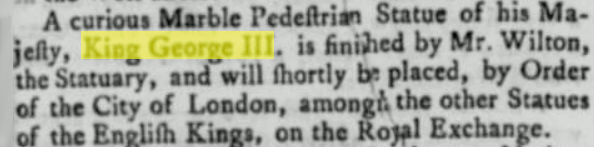
Annapolis Maryland
Gazette - May 3, 1764
Curious Marble
Pedestrian Statue of
King George III
|
-
A second 'Marble Pedestal Statue of King George III' refers to a specific gilded lead equestrian statue in New York City that was pulled down by colonists in 1776 after the
Declaration of Independence was read.
- There is
another statue of George III at Somerset House, formally
titled George III and the River Thames, which depicts King
George III and Neptune or Father Thames and is located in the
quadrangle of Somerset House in London, England.
- The
sculptor was John Bacon, and the statue was erected between 1778 and 1789.
-
George III loved statues, and had others, such as the King's Statue in
Weymouth, England, that was installed in 1809.
Chris Talbot / Weymouth - King George III Memorial
King's Statue |
- After losing America, George III, moved on and created The Acts of Union 1800
which unified Great Britain and Ireland into the United Kingdom of Great Britain and Ireland, with George as its king.
- He was concurrently duke and prince-elector of Hanover, in the Holy Roman Empire before becoming King of Hanover on October
12, 1814.
- He was the first monarch of the House of
Hanover who was born in Great Britain, spoke English as his
first language, and never visited Hanover.

Two step
|
- George IIIs life and reign were marked by a series of military conflicts involving his kingdoms, much of the rest of Europe, and places farther afield in Africa, the Americas and Asia.
- After having successfully captured New York City in 1776, British military planners organized two expeditions to divide the
13 colonies and, they hoped, decisively end the rebellion.
- One expedition was to take control of the Hudson River by a descent from Quebec, while the other was targeted at the colonial capital, Philadelphia.
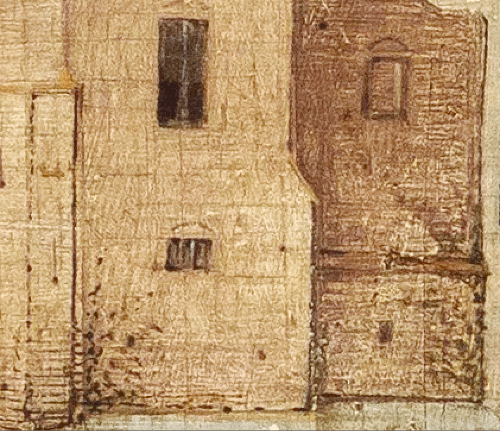
Brooklyn |
- On August 27, 1776, British troops under General William Howe
(1729-1814) attacked American forces commanded by George Washington in the
Battle of Brooklyn.
- Assailed from three sides, Washington and the main body of the Americans escaped across the East River to Manhattan and then fled north, ultimately crossing the Hudson River, then known as the North River, to New Jersey.
|
General William Howe |
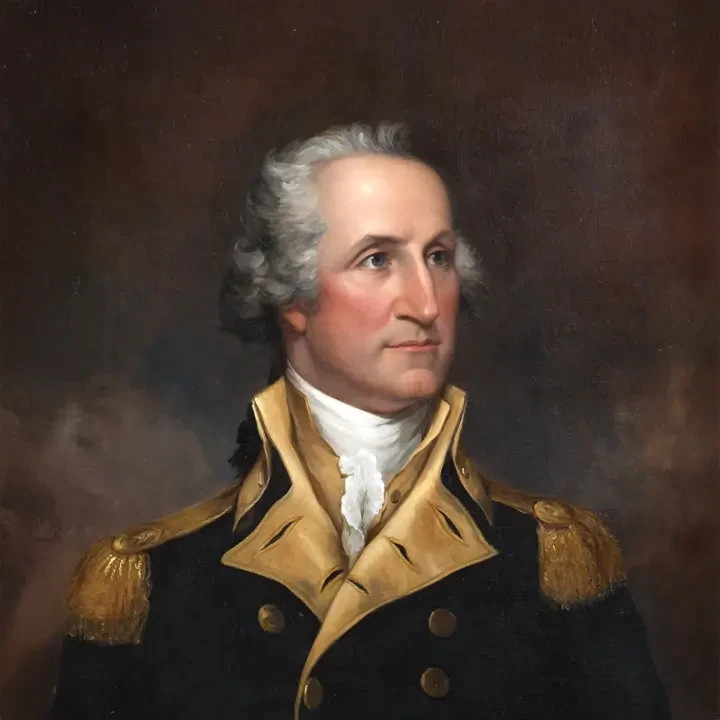
Public Domain
|
- Howe was the British Commander-in-Chief from 1775-1778).
- He took command after Thomas Gage and led British forces in major campaigns.
|
William Howe as George Washington |
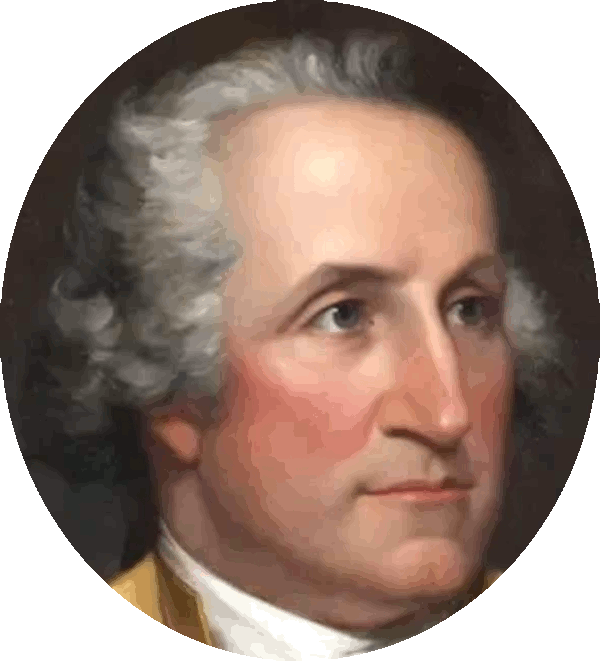 |
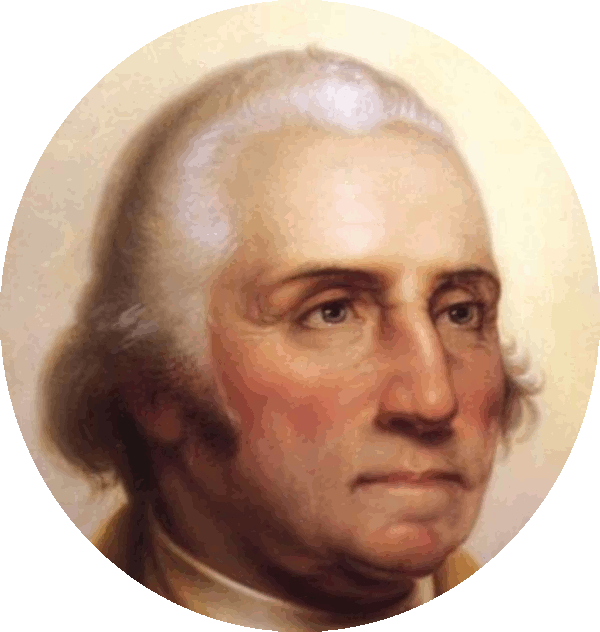 |
William Howe
1729-1814
8/10 7/12
General
|
George Washington
1732-1799
2/22 12/14
1st President |
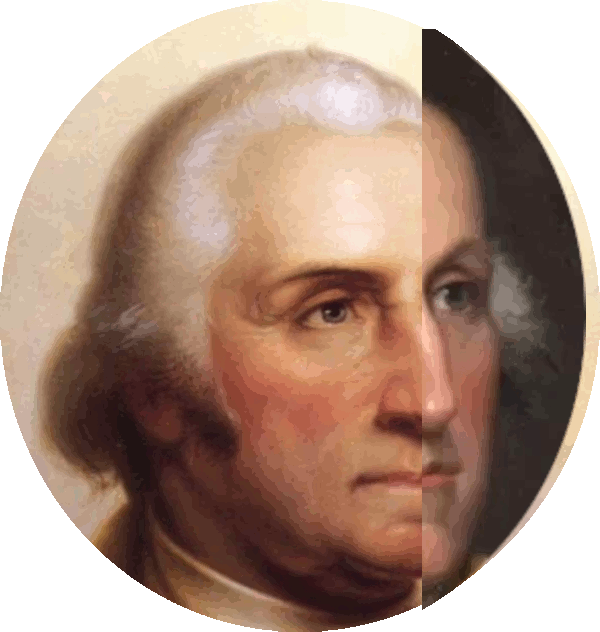 |
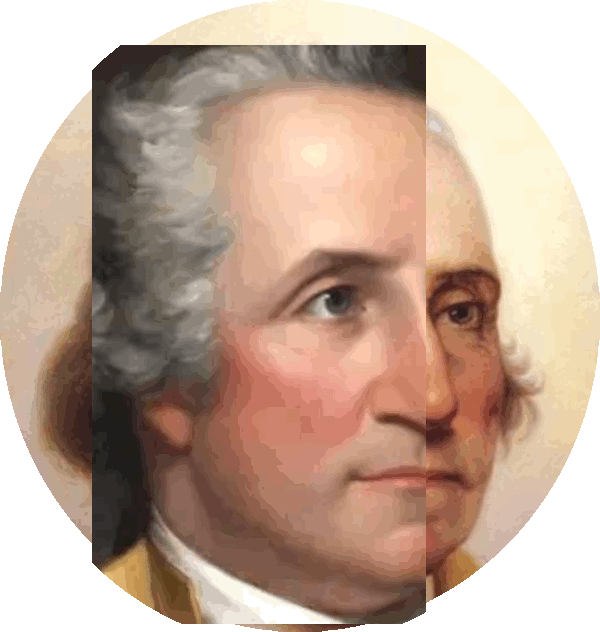 |
|
Brothers in arms |
- If Washington and his troops had been captured either in Brooklyn or Manhattan, the
American Revolution would
likely have ended soon after it began.
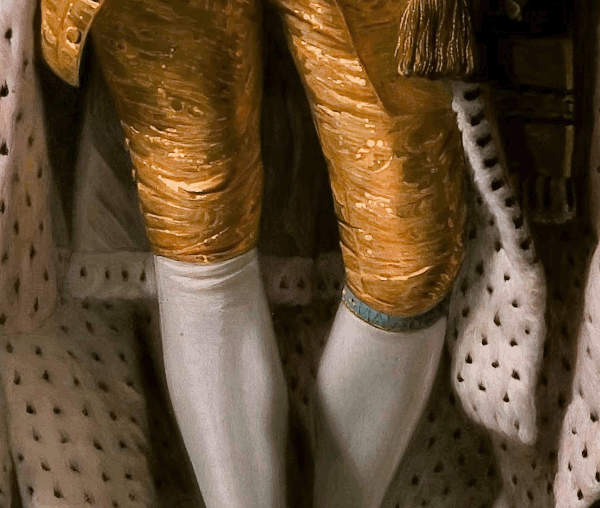
Stylish? |
- The Battle of Cooch's Bridge, also known as the
Battle
of Iron Hill, was fought on September 3, 1777, between the Continental Army and American militia and primarily German soldiers serving alongside the British Army during the
American Revolutionary War.
- It was the only significant military action during the war
on the soil of Delaware: though there were also naval
engagements off the state's coast.
- The battle took place about a week before the major Battle of Brandywine
and there are some that claim that this was the first battle
which saw the U.S. flag raised.
Cooch's Bridge in
Delaware |
- On September 3, 1777, German troops leading the British advance were met by musket fire from the U.S. light infantry in the woods on either side of the road leading toward Cooch's Bridge.
- Calling up reinforcements, they flushed the Americans out and drove them across the bridge.
Lost the colonies
for Britain |
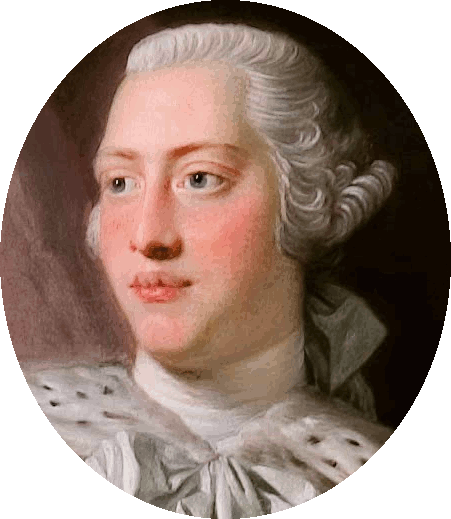
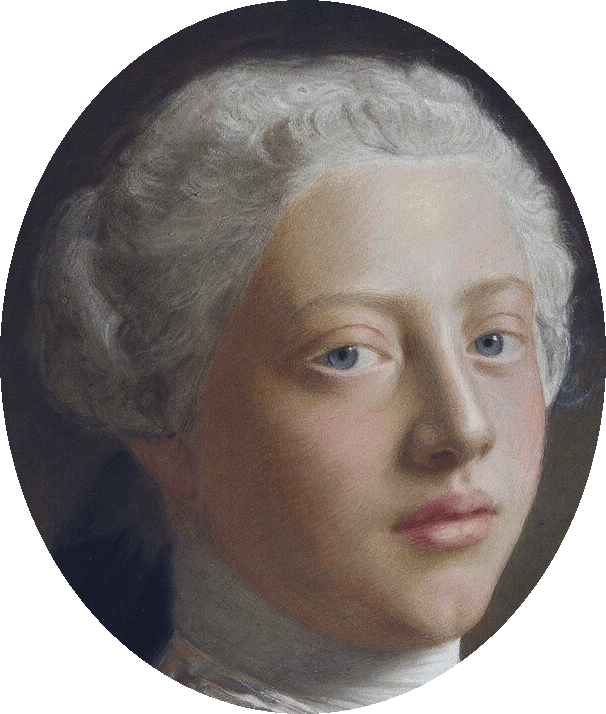
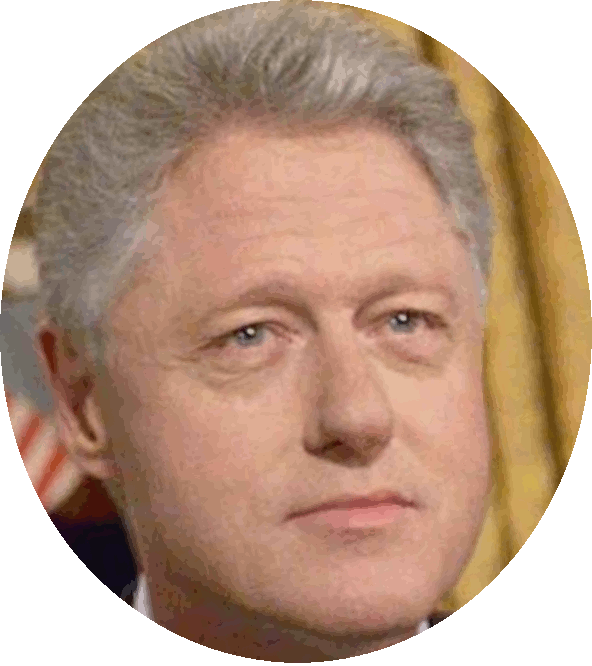
- Under George IIIs rule, Britain lost 13 of its North American colonies in the
American War of Independence.
- In 1807, the transatlantic slave trade was banned from the British Empire.
|
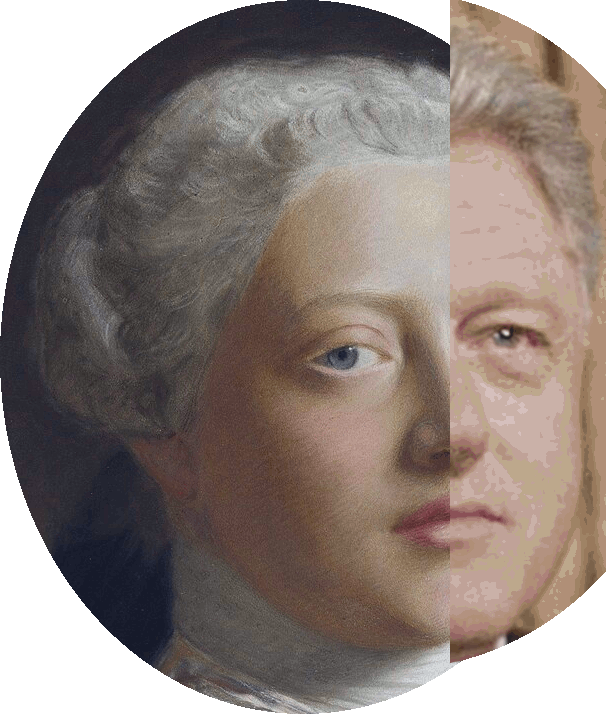
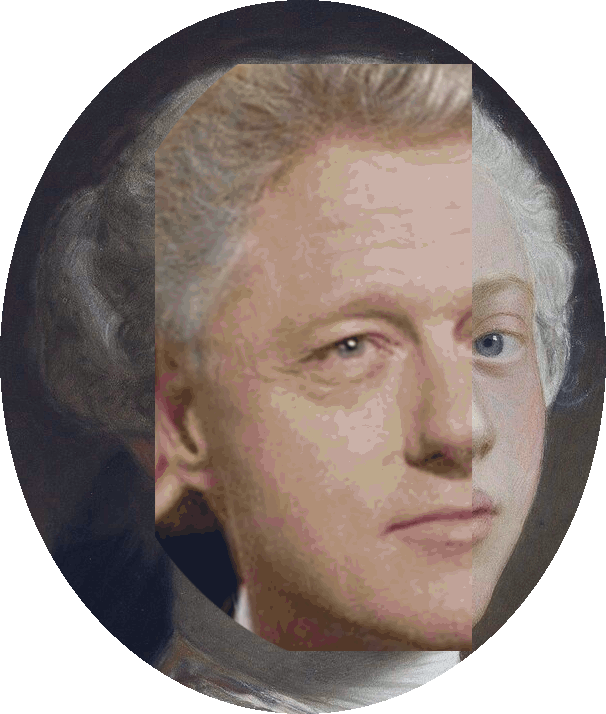
George III as Bill Clinton |
 |
 |
George William Frederick
1738-1820
6/4
1/29
King of Great Britain |
William Jefferson (Blythe III) Clinton
1946
8/19 |
 |
 |
|
42nd President |
- In the later part of his life, George III had recurrent and eventually permanent mental illness.
- The exact nature of George's illness is not known definitively, but historians and medical experts have suggested that his symptoms and behavior traits were consistent with either bipolar disorder or porphyria.
- In 1810, George suffered a final relapse, and his eldest son, George, Prince of Wales, was named Prince Regent the following year.
- George III died at age 81 in 1820, at which time the Regent
succeeded him as George IV.
|
George III reigned during much of the Georgian and Regency eras. At the time of his death, he was the longest-lived and longest-reigning British monarch, having reigned for 59 years and 96 days; he remains the longest-lived and longest-reigning male monarch in British history. (Wikipedia)
|
7th Prime
Minister of Great
Britain
1762-1763 |
|
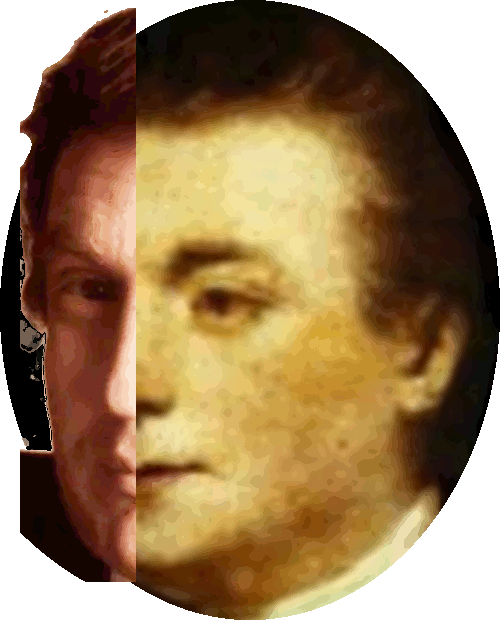
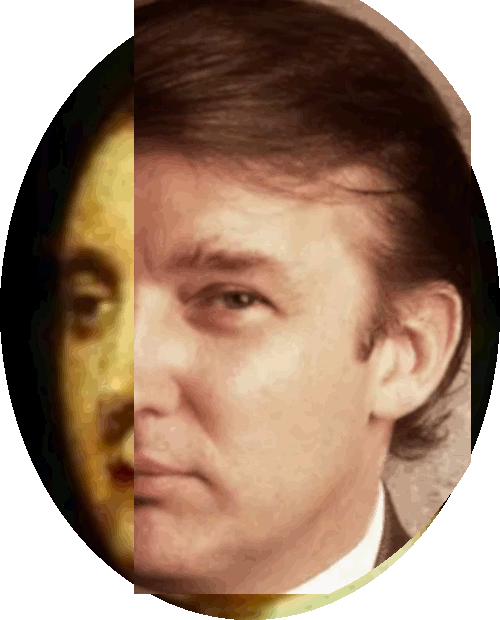
John Stuart,
3rd Earl of Bute |

Joshua Reynolds, Public domain, via Wikimedia Commons
Masonic hand sign |
-
John Stuart, 3rd Earl of Bute (1713-1792), styled Lord Mount Stuart between 1713 and 1723, was a British Tory statesman who served as the Prime Minister of Great Britain from 1762 to 1763 under George III.
- He became the first Tory to hold the position and was arguably the last important royal favorite in British politics.
- He was the first prime minister from Scotland following
the Acts of Union in 1707.
|
The Acts of Union 1707 were two laws passed by the English and Scottish Parliaments that united the Kingdom of England and the Kingdom of Scotland into a single state, the Kingdom of Great Britain, effective May 1, 1707, creating one Parliament at Westminster but preserving Scotland's distinct legal, religious, and educational systems. Driven by England's desire for stability and Scotland's economic woes (especially after the failed Darien scheme), the Acts established free trade, a single currency, and a unified succession, but allowed Scotland to keep its own laws and Presbyterian Church. (Wikipedia)
|
|
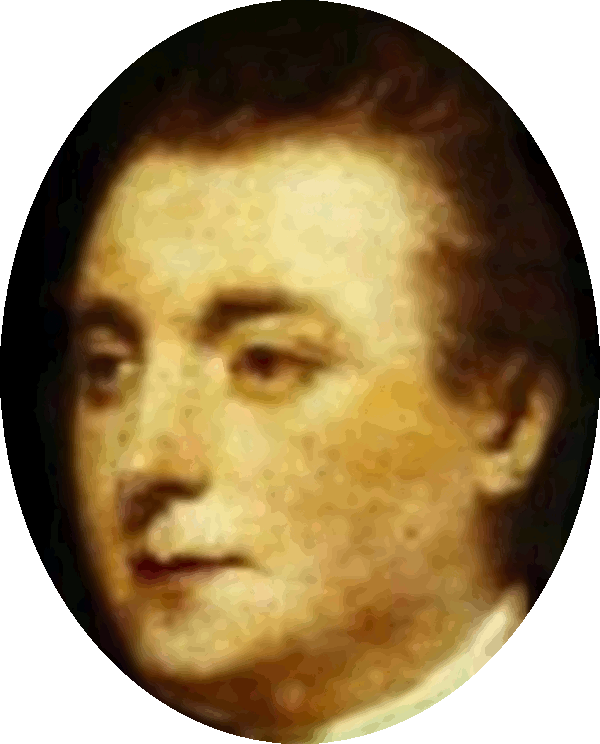
John Stuart as Donald Trump |
 |
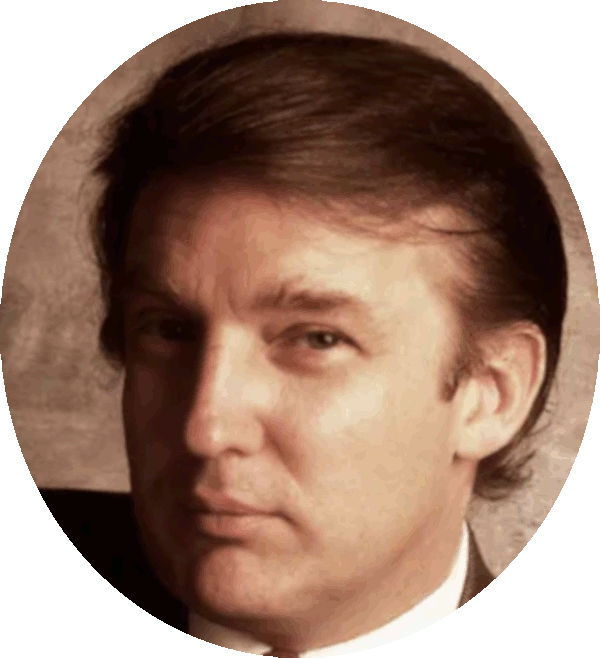 |
John Stuart
1713-1792
5/25
3/10
Prime Minister
|
Donald John Trump
1946
6/14 |
 |
 |
7th Prime Minister
Jack Boot
a real bute |
-
The 18th-century expression 'Jack Boot' meaning a stupid person originated as disparagement of Stuart's performance as prime minister.
- At the end of the Seven Years War the resulting
Treaty of Paris was unpopular because Britain gave up some gains, like fishing rights, to achieve peace, leading to accusations of betrayal.
- The Cider Tax (1763): To raise war revenue, Bute imposed a tax on cider, which was deeply unpopular and increased public resentment.
- Even after leaving office, he was accused of secretly influencing George III, contributing to later political instability and debates about royal power.
8th Prime
Minister of Great
Britain
1763-1765
George
Grenville |
_by_William_Hoare_(1707-1792).jpg)
William Hoare, Public domain, via Wikimedia Commons
Masonic hand sign |
-
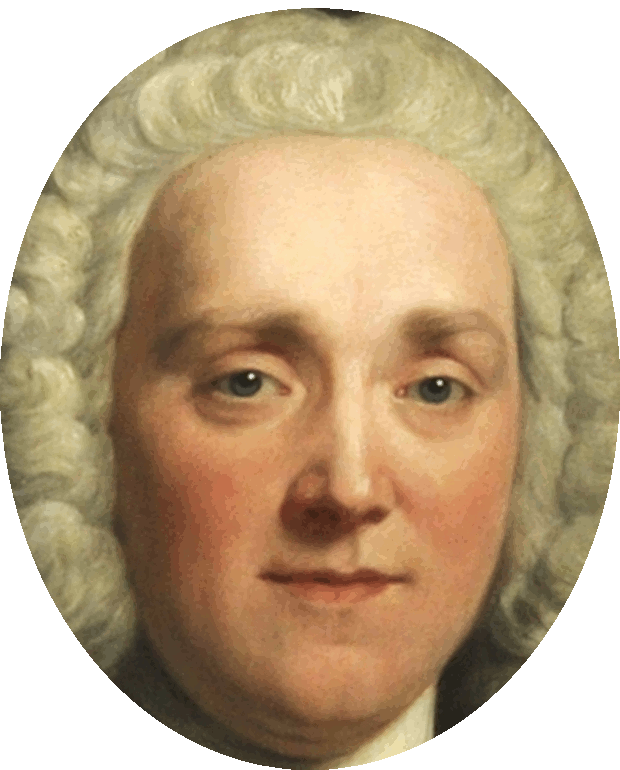
George Grenville (1712-1770) was a British Whig statesman who served as Prime Minister of Great Britain, during the early reign of the young George III.
- He served for only two years from 1763-1765, and attempted to solve the problem of the massive debt resulting from the
Seven Years' War.
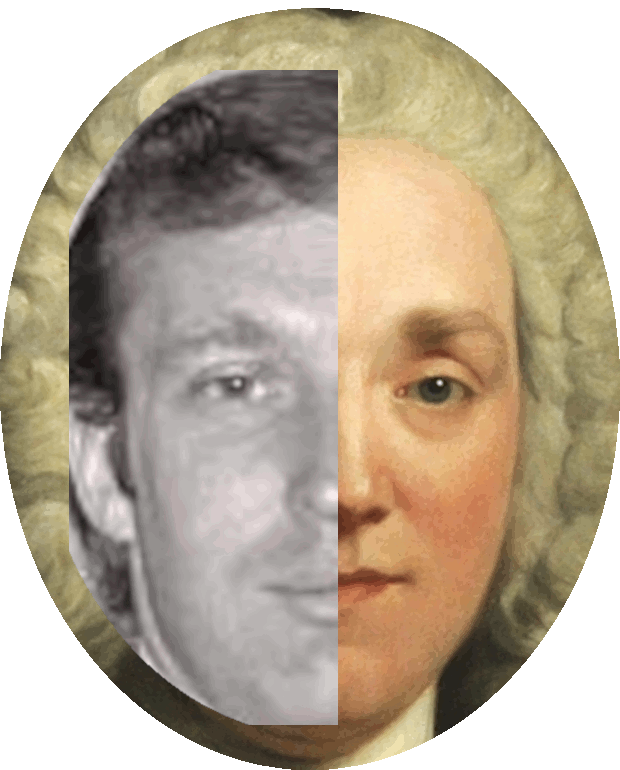
|
George Grenville as Donald Trump |
 |
 |
George Grenville
1712-1770
10/14
11/13
Prime Minister
|
Donald John Trump
1946
6/14 |
 |
 |
8th Prime Minister
Gentle Shepherd
Quartering act |
- Grenville instituted a series of measures to increase revenue to the crown, including new taxes and enforcement of collection, and sought to bring the North American colonies under tighter crown control.
- He planned to tackle massive war debts by increasing revenue, primarily through taxing the American colonies, leading to acts like the
Sugar Act (1764) and Stamp Act (1765), which sparked colonial resistance and contributed to the American Revolution before his dismissal by King George III due to disagreements.
- The king's dislike, as well as Grenville's general lack of parliamentary support, led to his dismissal in 1765, and, following negotiations conducted through the medium of the king's uncle, the Duke of Cumberland, Lord Rockingham was appointed prime minister.
9th Prime
Minister of Great
Britain
1765-1766 (1st term)
Charles
Watson-Wentworth,
2nd Marquess of
Rockingham |
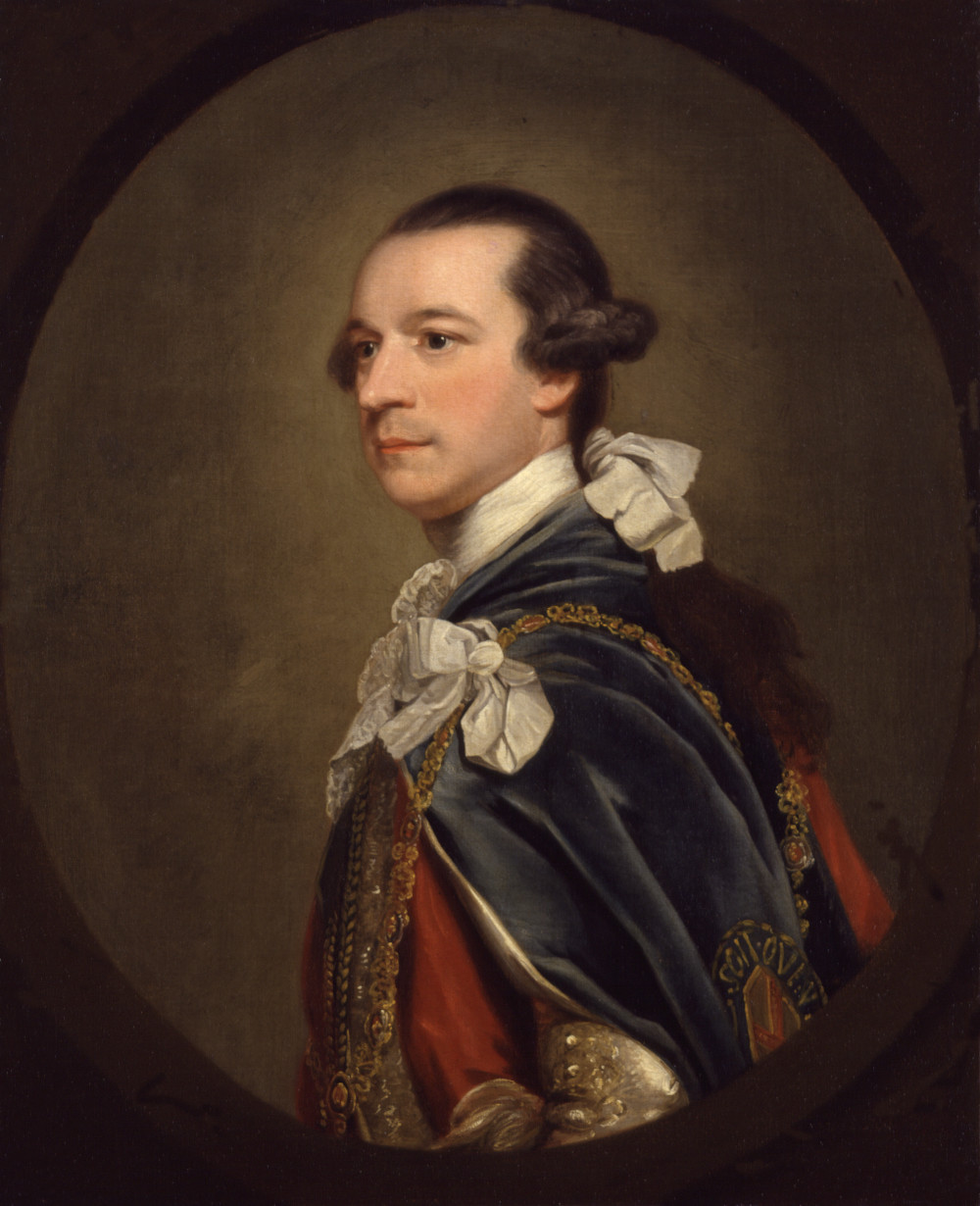
Joshua Reynolds, Public domain, via Wikimedia Commons |
-
Charles Watson-Wentworth, 2nd Marquess of Rockingham (1730-1782), styled The Honorable Charles Watson-Wentworth before 1739, Viscount Higham between 1739 and 1746, Earl of Malton between 1746 and 1750, and the Marquess of Rockingham from 1750, was a British Whig statesman and magnate, most notable for his two terms as Prime Minister of Great Britain.
- He became the patron of many Whigs, known as the Rockingham Whigs, and served as a leading Whig grandee.
- He served in only two high offices during his lifetime (prime minister and leader of the House of Lords) but was nonetheless very influential during his one and a half years of service.
|
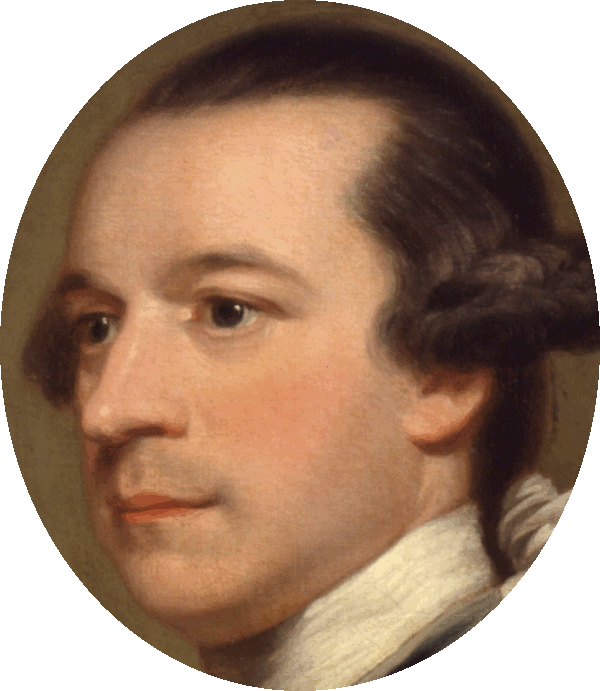
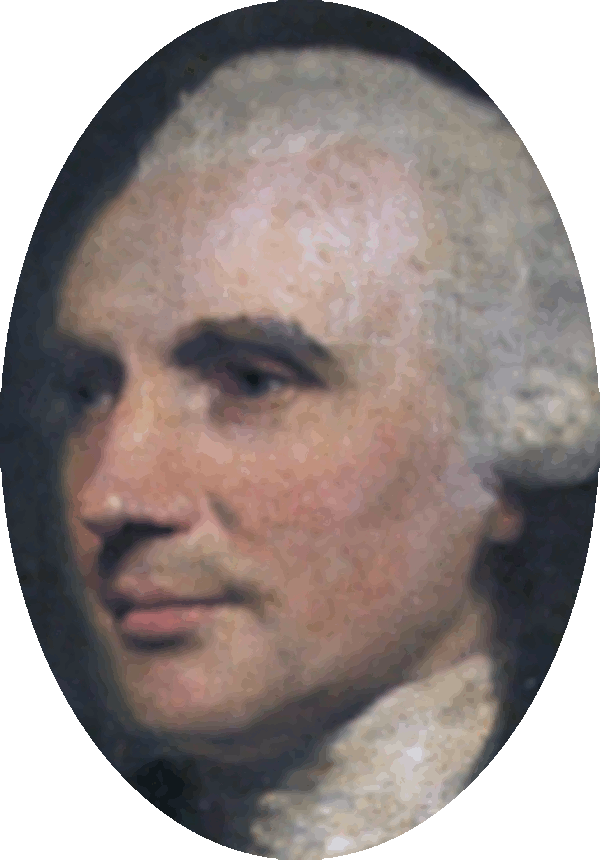
Charles Watson-Wentworth as John Stuart |
 |
 |
Charles Watson-Wentworth
1730-1782
5/13
7/1
Prime Minister
|
John Stuart
1713-1792
5/25
3/10
Prime Minister |
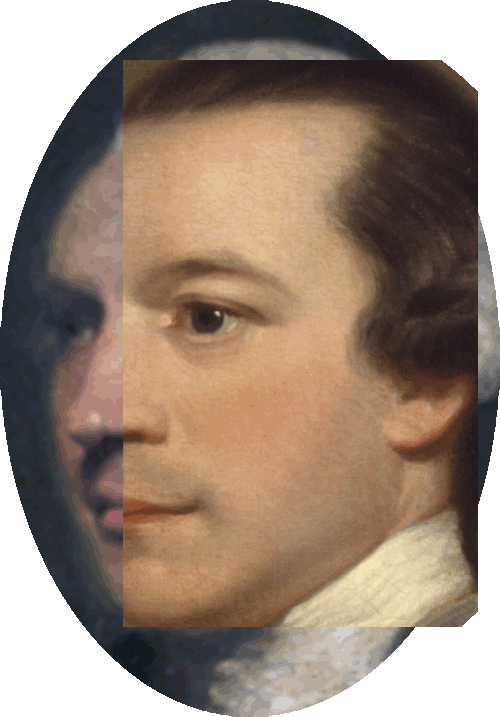 |
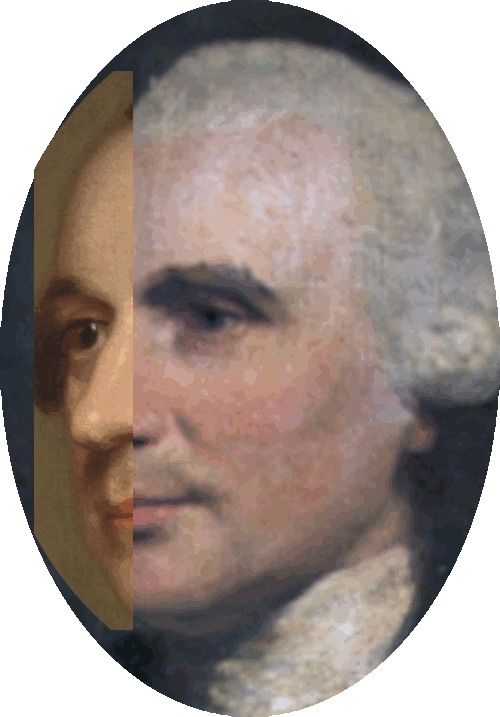 |
9th Prime Minister
Party boy |
- Rockingham passed the Declaratory Act, which stated that the British Parliament had the right to legislate for the American colonies in all cases whatsoever,
although he did repeal the Stamp Act.
- His attitude about colonial relations was direct: "I shall always consider that this country, as the parent, ought to be tender and just; and that the colonies, as children, ought to be dutiful."
- Rockingham was a fierce opponent of Britain's war against the American colonists, consistently arguing for conciliation and, eventually, independence.
- Described by some as an 'indolent politician' prone to blaming failures on court conspiracies, his leadership of the Rockingham Whigs was largely due to his immense wealth and social standing rather than his political drive or efficacy.
10th Prime
Minister of Great
Britain
1765-1766
William
Pitt, 1st Earl of
Chatham |
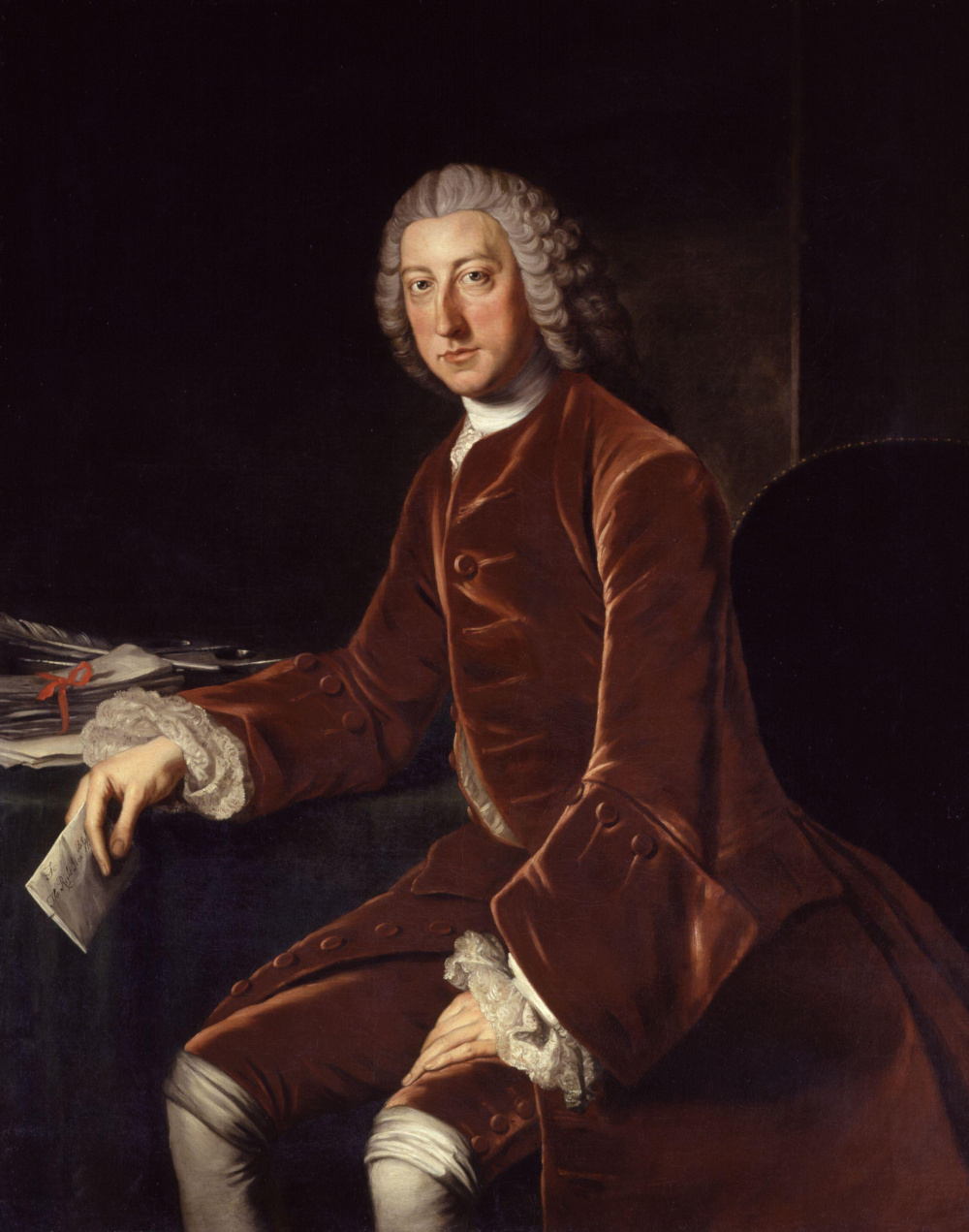
Studio of William Hoare, Public domain, via Wikimedia Commons
Masonic hand sign |
-
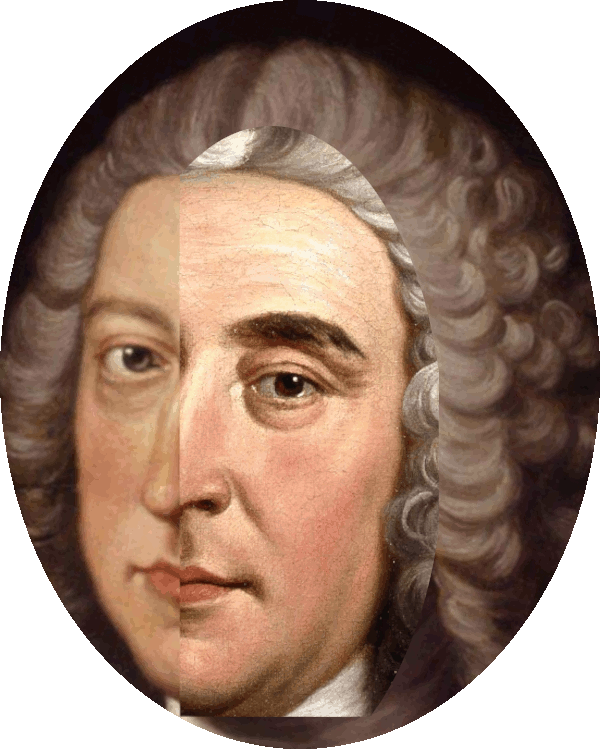
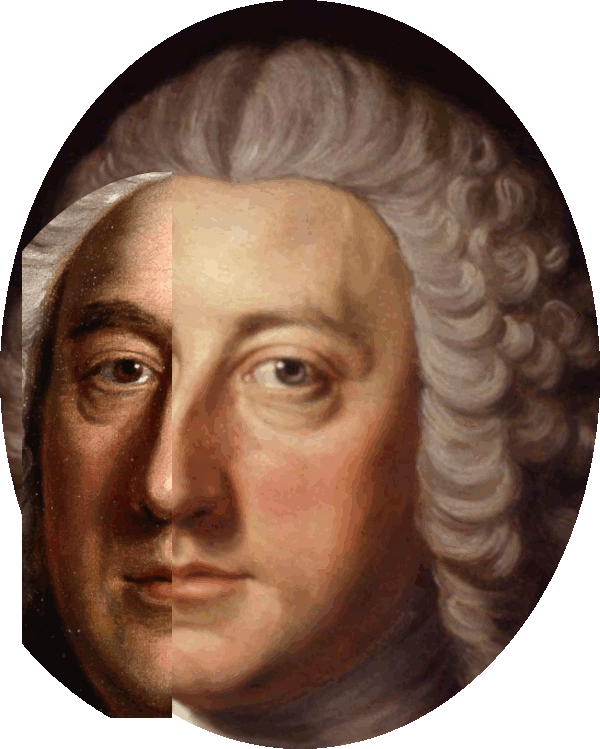
William Pitt, 1st Earl of Chatham (1708-1778) was a British Whig statesman who served as Prime Minister of Great Britain from 1766 to 1768.
- Historians call him 'Chatham' or 'Pitt the Elder' to distinguish him from his son William Pitt the Younger, who also served as prime minister.
- Pitt was also known as 'the Great Commoner' because of his long-standing refusal to accept a title until 1766.
|
William Pitt as
Thomas Pelham-Holles |
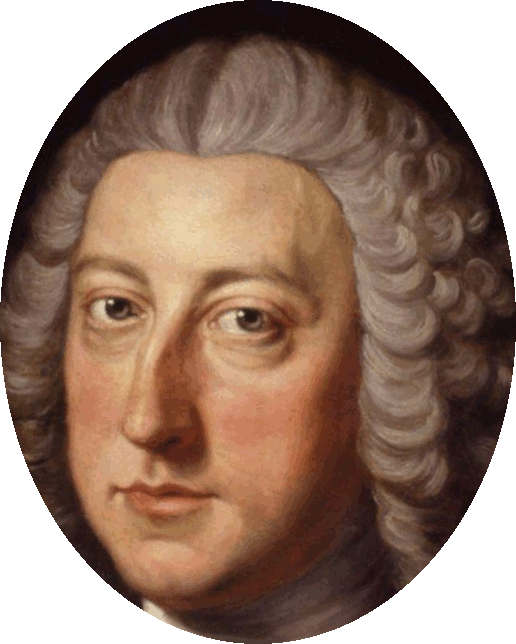 |
|
William Pitt
1708-1778
11/15
5/11
Prime Minister
|
Thomas Pelham-Holles
1693-1768
7/21
11/17
Prime Minister |
 |
 |
10th Prime Minister
The Great Commoner
Elder |
-
Pitt is best known as the wartime political leader of Britain during the
Seven Years' War, especially for his single-minded devotion to victory over France, a victory that ultimately solidified Britain's dominance over world affairs.
- He resigned in 1761 when his war policies were opposed.
11th Prime
Minister of Great
Britain
1768-1770
Augustus Henry
FitzRoy, 3rd Duke of
Grafton |
Sir Nathaniel Dance-Holland, CC BY-SA 4.0 , via Wikimedia Commons
Hidden hand |
-
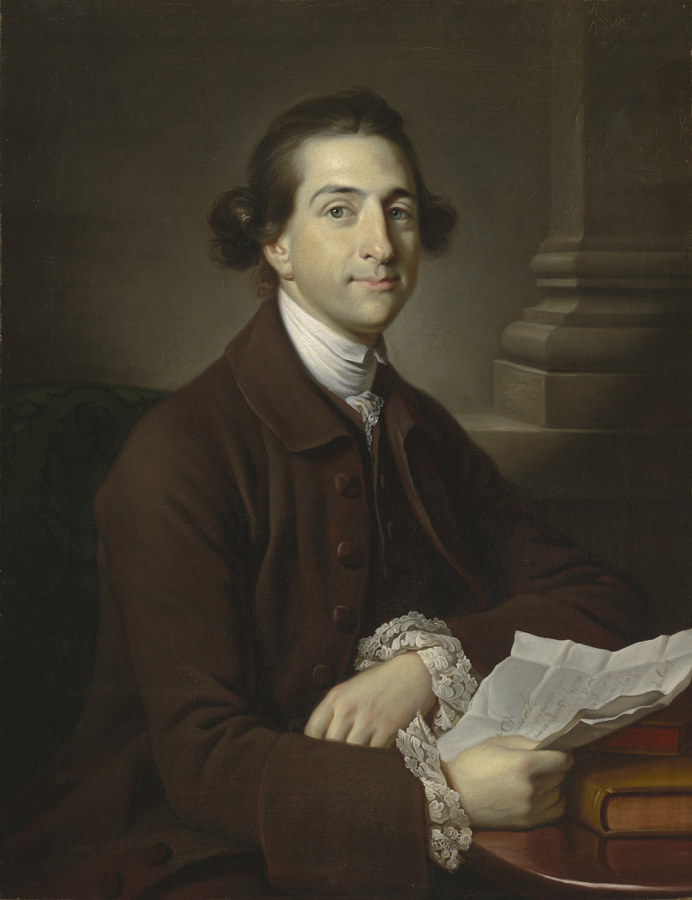
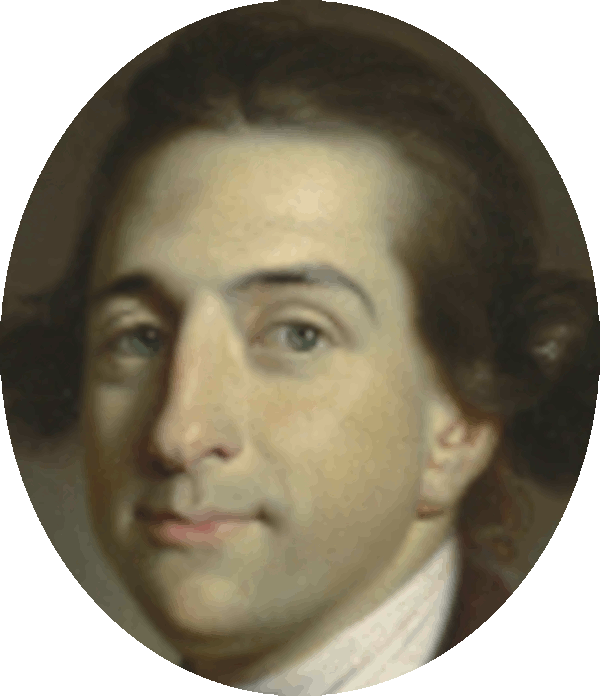
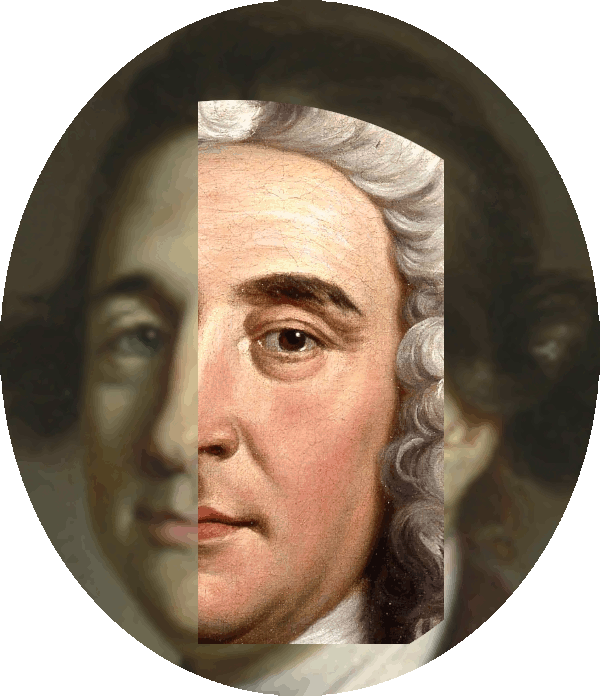
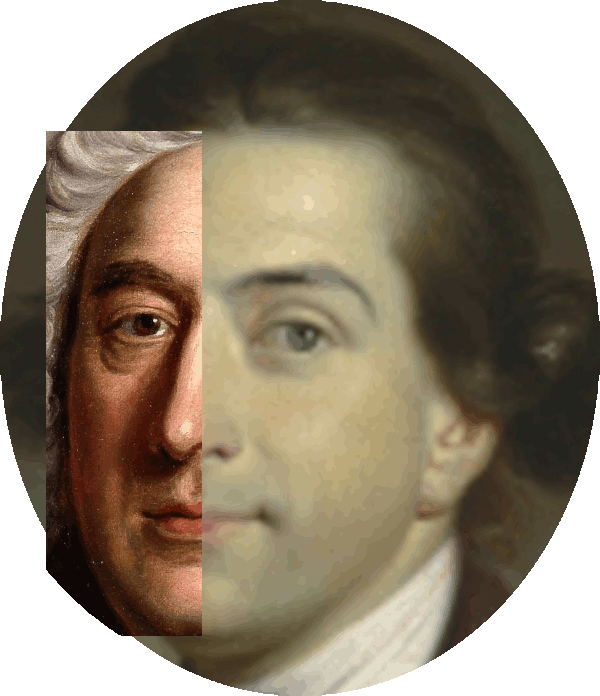
Augustus Henry FitzRoy, 3rd Duke of Grafton (1735-1811), styled Earl of Euston between 1747 and 1757, was a British Whig statesman of the Georgian era.
- He is one of a handful of dukes who have served as prime minister.
- He became prime minister in 1768 at the age of 33, leading the supporters of William Pitt, and was the youngest person to hold the office until the appointment of William Pitt the Younger 15 years later.
- However, he struggled to demonstrate an ability to counter increasing challenges to Britain's global dominance following the nation's victory in the
Seven Years' War.
-
Grafton was a Whig politician known for his aristocratic lifestyle and personal scandals, but also for his role in the Chatham ministry.
|
The Chatham ministry was a British government led by William Pitt, 1st Earl of Chatham that ruled between 1766 and 1768. Because of Pitt's former prominence before his title, it is sometimes referred to as the Pitt ministry. (Wikipedia)
|
|
Augustus Henry FitzRoy as
Thomas Pelham-Holles |
 |
|
Augustus Henry FitzRoy
1735-1811
9/28
3/14
Prime Minister
|
Thomas Pelham-Holles
1693-1768
7/21
11/17
Prime Minister |
 |
 |
11th Prime Minister
Turf Macaroni |
- His ministry struggled with escalating tensions with American colonists, particularly concerning the Townshend duties.
- His scandalous private life and love of pleasure drew criticism, though his wife's own indiscretions ironically allowed him to secure a divorce, a scandal in itself.
- FitzRoy was widely attacked for allowing France to annex Corsica, and stepped down in 1770, handing over power to Lord North.
12th Prime
Minister of Great
Britain
1770-1782
Frederick North, 2nd
Earl of Guilford |
.jpg)
Nathaniel Dance-Holland, Public domain, via Wikimedia Commons
Lord Frederick North
- 1773 |
-
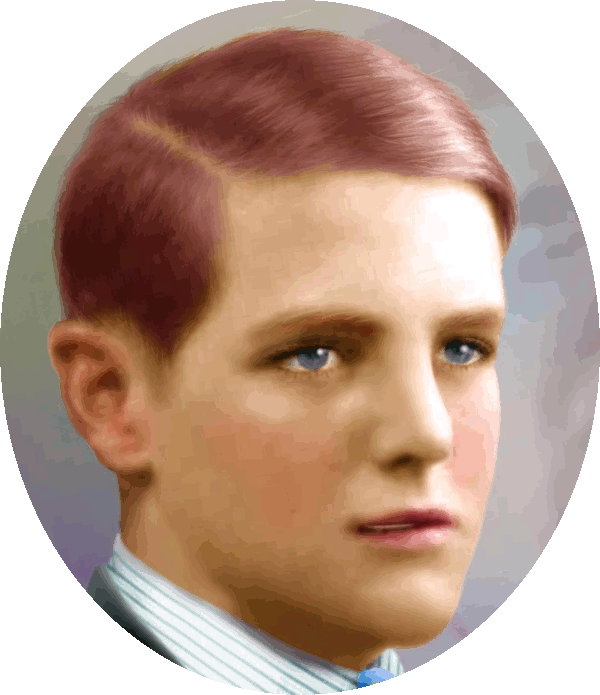
Frederick North, 2nd Earl of Guilford (1732-1792), better known by his courtesy title Lord North, which he used from 1752 to 1790, was Prime Minister of Great Britain from 1770 to 1782.
- He led the Kingdom of Great Britain through most of the American
Revolutionary War.
- He also held a number of other cabinet posts, including Home Secretary and Chancellor of the Exchequer.
- He was a Tory politician known for his parliamentary skill
but also for policies that alienated American colonists,
ultimately contributing to the loss of the colonies.
- North's reputation among historians has varied wildly, reaching its lowest point in the late 19th-century, when he was depicted as a creature of King George III and an incompetent who lost the American colonies.
|
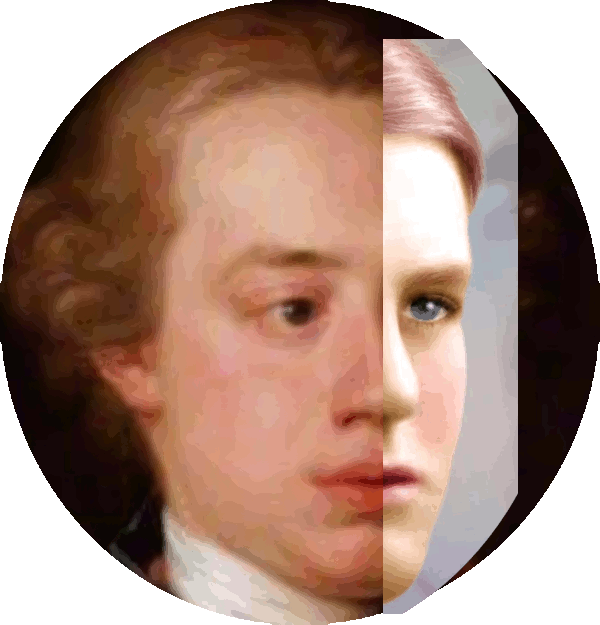
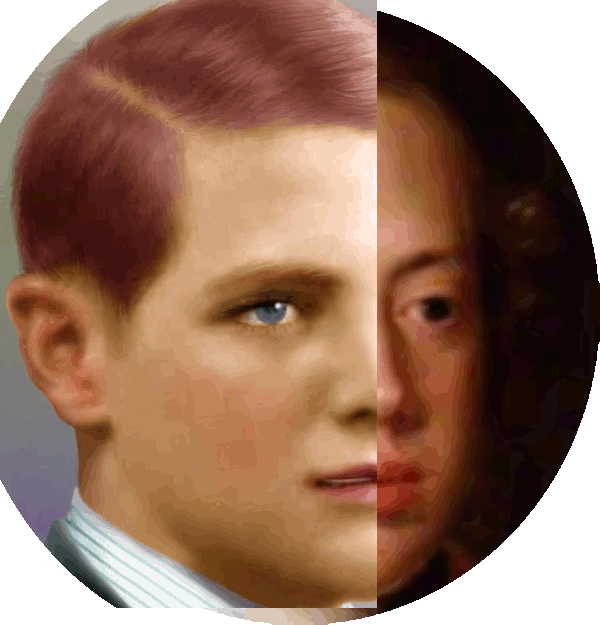
Frederick North as Winston Churchill |
 |
 |
Frederick North
1732-1792
4/13
8/5
Prime Minister |
Winston Churchill
1874-1965
11/30
1/25
Prime Minister |
 |
 |
12th Prime Minister
Boreas
North by Northwest |
- It's said that when Cornwallis surrendered at Yorktown,
Lord North took the news like a bullet to the chest, repeatedly
exclaiming; 'Oh God, it is all over.'
-
His attempts to manage colonial tensions, including the Tea Act,
which escalated into open conflict, and ultimately ending in
Britain's defeat, leading to his resignation.
- North was the second British prime minister to be forced out of office by a motion of no confidence; the first was Sir Robert Walpole in 1742.
- North resigned in disgrace on March 20, 1782, on account of the British defeat at Yorktown the year before.
|
The Tea Act of 1773 was a British
Parliament law designed to rescue the financially
struggling East India Company by giving it a monopoly
on tea sales in the American colonies, allowing it to
sell tea cheaper than smuggled tea by removing some
taxes. While intended to boost the company and subtly
get colonists to accept Parliament's right to tax (via
a remaining duty), colonists saw it as "taxation
without representation" tyranny, leading directly to
the iconic Boston Tea Party and escalating tensions
toward the American Revolution. (Wikipedia)
|
North |
- Lord North was the British Prime Minister (1770-1782) during the American Revolution, known for policies like the
Tea Act and Coercive Acts that fueled colonial rebellion, ultimately leading to American independence.
- Despite his attempts at compromise and conciliation, marking his tenure as a disastrous period for the British Empire.
13th Prime Minister of Great Britain
1782-1782
(2nd term) |
|
Charles Watson-Wentworth as John Stuart |
|
|
|
Charles Watson-Wentworth
1730-1782
5/13
7/1
Prime Minister
|
John Stuart
1713-1792
5/25
3/10
Prime Minister |
|
|
|
13th Prime Minister
Party boy |
- His second term was cut short by his sudden death from influenza at the age of 52.
14th Prime
Minister of Great
Britain
1782-1783
William
Petty Fitzmaurice,
1st Marquess of
Lansdowne |
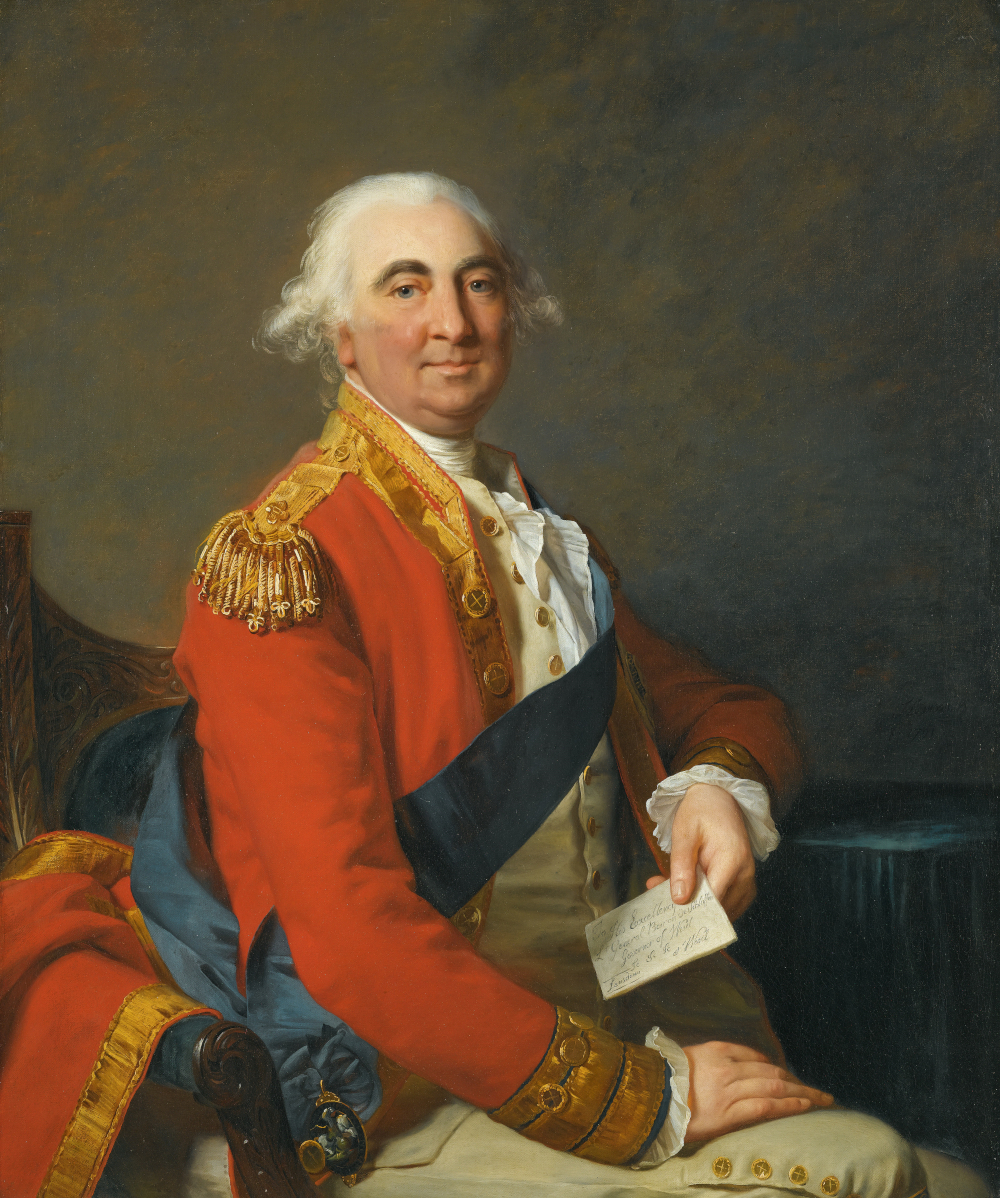
Jean-Laurent Mosnier, Public domain, via Wikimedia Commons |
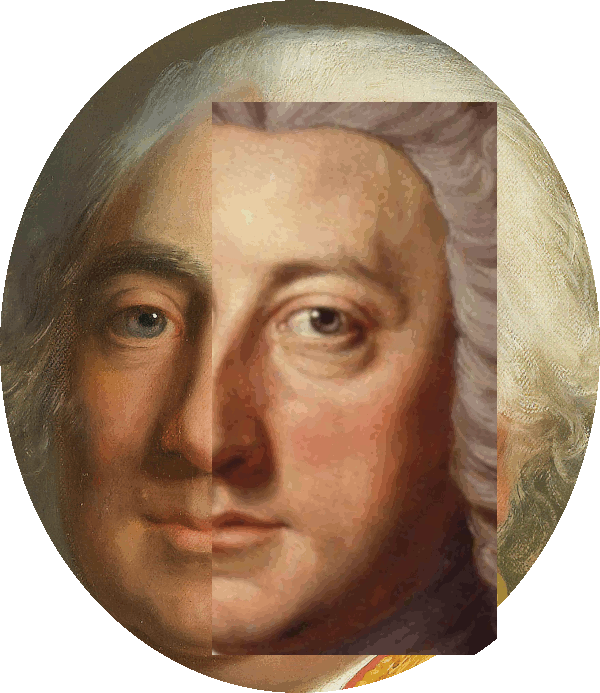
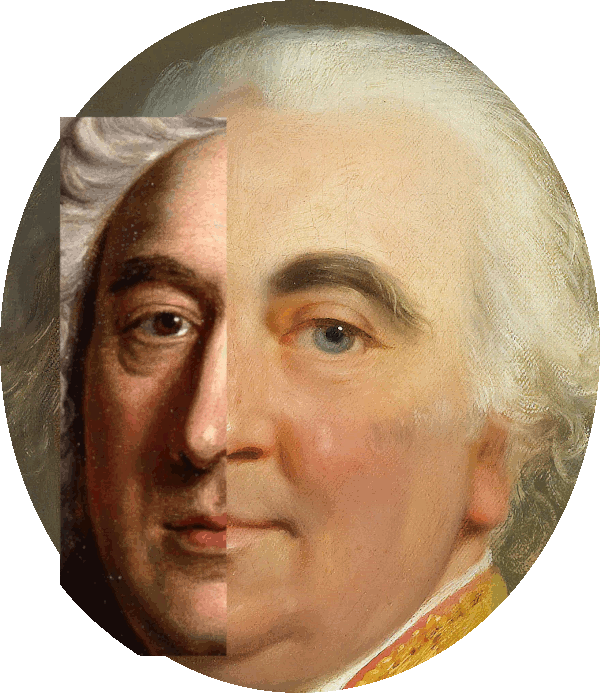
-
William Petty Fitzmaurice, 1st Marquess of Lansdowne (1737-1805), known as the Earl of Shelburne between 1761 and 1784, by which title he is generally known to history, was an Anglo-Irish Whig statesman who was the first home secretary in 1782 and then prime minister in 1782–83 during the final months of the
American War of Independence.
- He succeeded in securing peace with America via the
Treaty of Paris and this feat remains his most notable legacy.
|
The term "Treaty of Paris" refers to several historical peace agreements, most famously the 1783 treaty ending the American Revolutionary War, which recognized U.S. independence and set its boundaries. (Wikipedia)
|
|
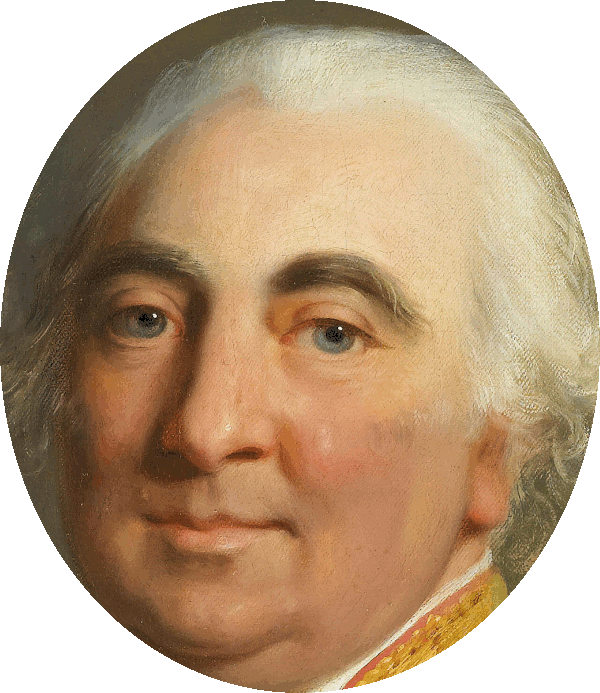
William Petty Fitzmaurice as
Thomas Pelham-Holles |
 |
|
William Petty Fitzmaurice
1737-1805
5/2
5/7
Prime Minister |
Thomas Pelham-Holles
1693-1768
7/21
11/17
Prime Minister |
 |
 |
14th Prime Minister
The Jesuit in Berkerly
Square |
-
His political career, particularly his brief 1782-1783 premiership, ended due to his aloof personality, lack of trust from colleagues, and a powerful political coalition (Fox-North) that united against him, preventing him from solidifying power despite his key role in ending the American War.
15th Prime
Minister of Great
Britain
1783-1783 (1st term)
William Henry
Cavendish-Bentinck,
3rd Duke of Portland |
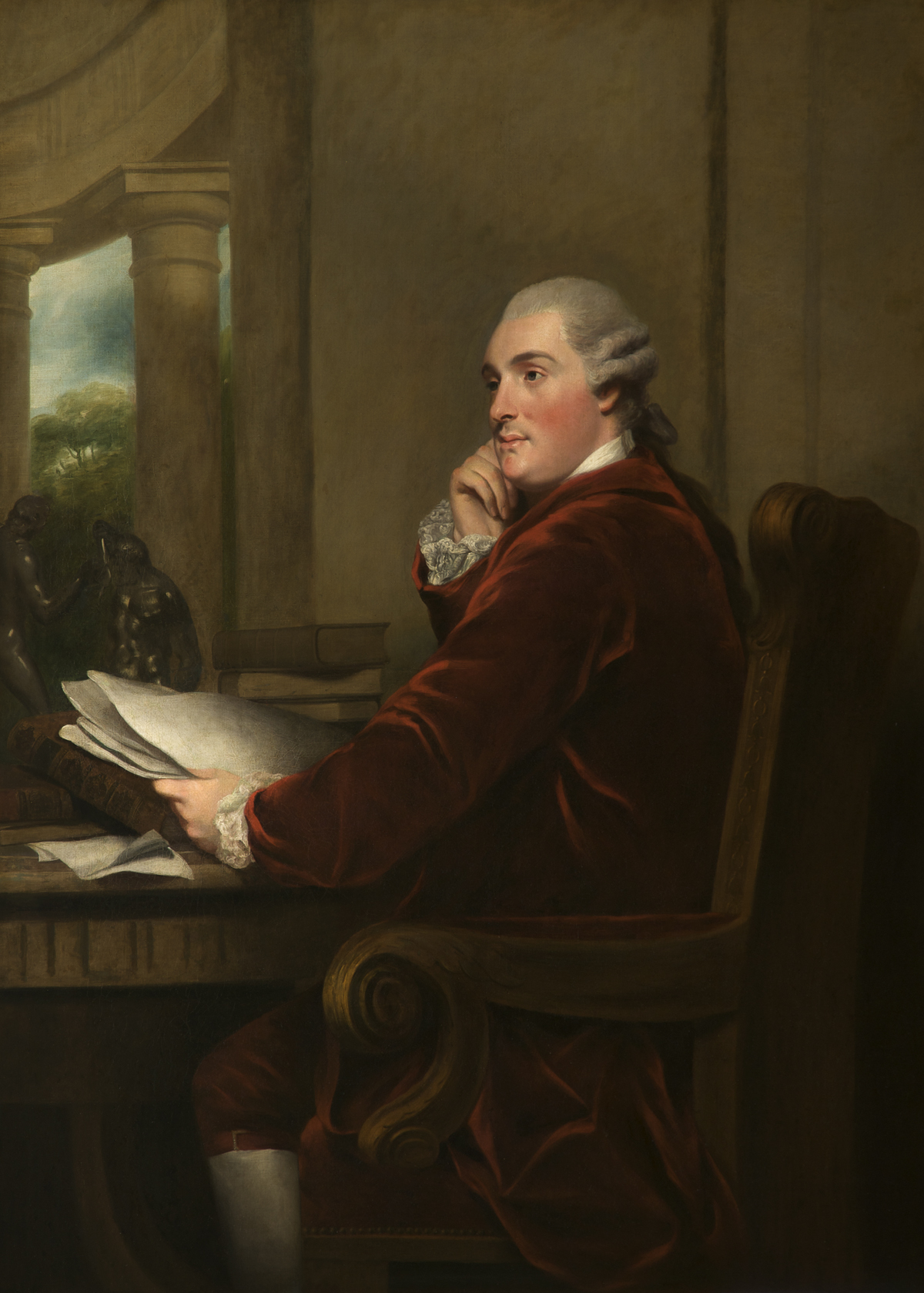
Joshua Reynolds, Public domain, via Wikimedia Commons
Masonic hand sign |
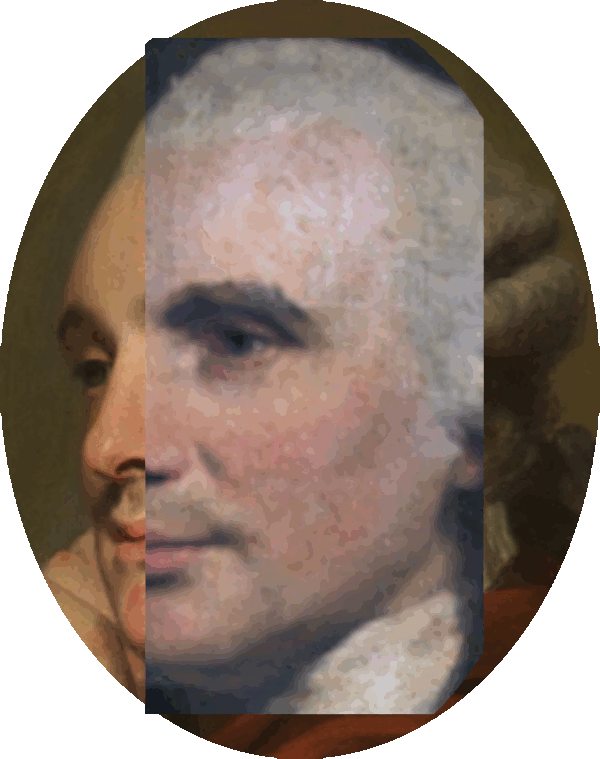
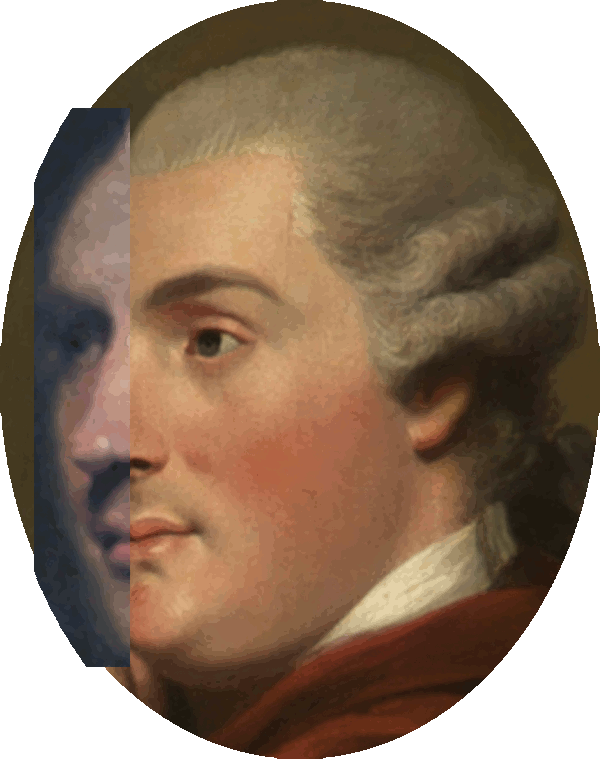
-
William Henry Cavendish-Bentinck, 3rd Duke of Portland (1738-1809) was a British Whig and then a Tory politician during the late Georgian era.
- He served as chancellor of the University of Oxford
from 1792–1809 and as Prime Minister of Great Britain in 1783 and then of the United Kingdom
from 1807–1809.
- The gap of 26 years between his two terms as prime minister is the longest of any British prime minister.
- He is also an ancestor of Queen Elizabeth II, and therefore King Charles III through his great-granddaughter Cecilia Bowes-Lyon, Countess of Strathmore and Kinghorne.
|
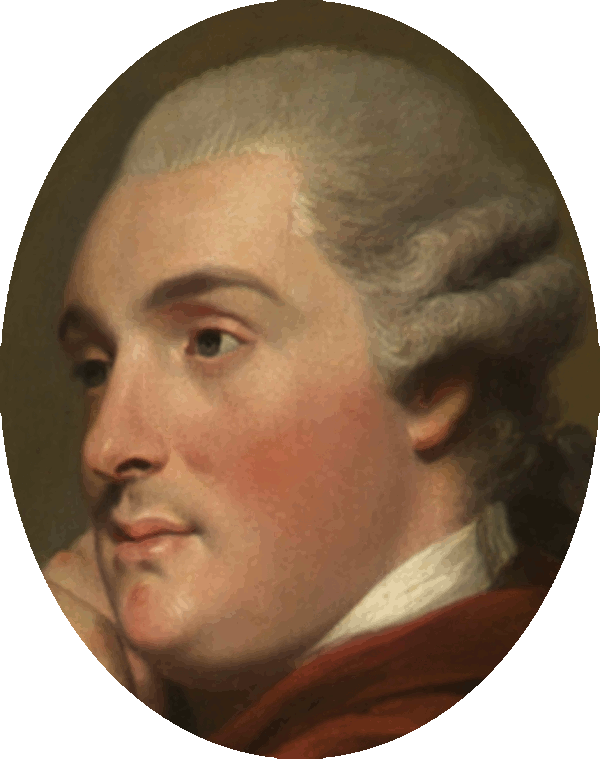
William Henry Cavendish-Bentinck as John Stuart |
 |
|
William Henry Cavendish-Bentinck
1738-1809
4/14
10/30
Prime Minister |
John Stuart
1713-1792
5/25
3/10
Prime Minister |
 |
 |
15th Prime Minister
Sicily |
-
Headed a short-lived coalition government after the American War of Independence, but resigned after his
India Bill was rejected by the King.
-
A lengthy legal dispute over land with Sir James Lowther left him nearly bankrupt from legal costs, although he eventually won the case.
16th Prime
Minister of Great
Britain
1783-1801 (1st term)
William Pitt the
Younger |
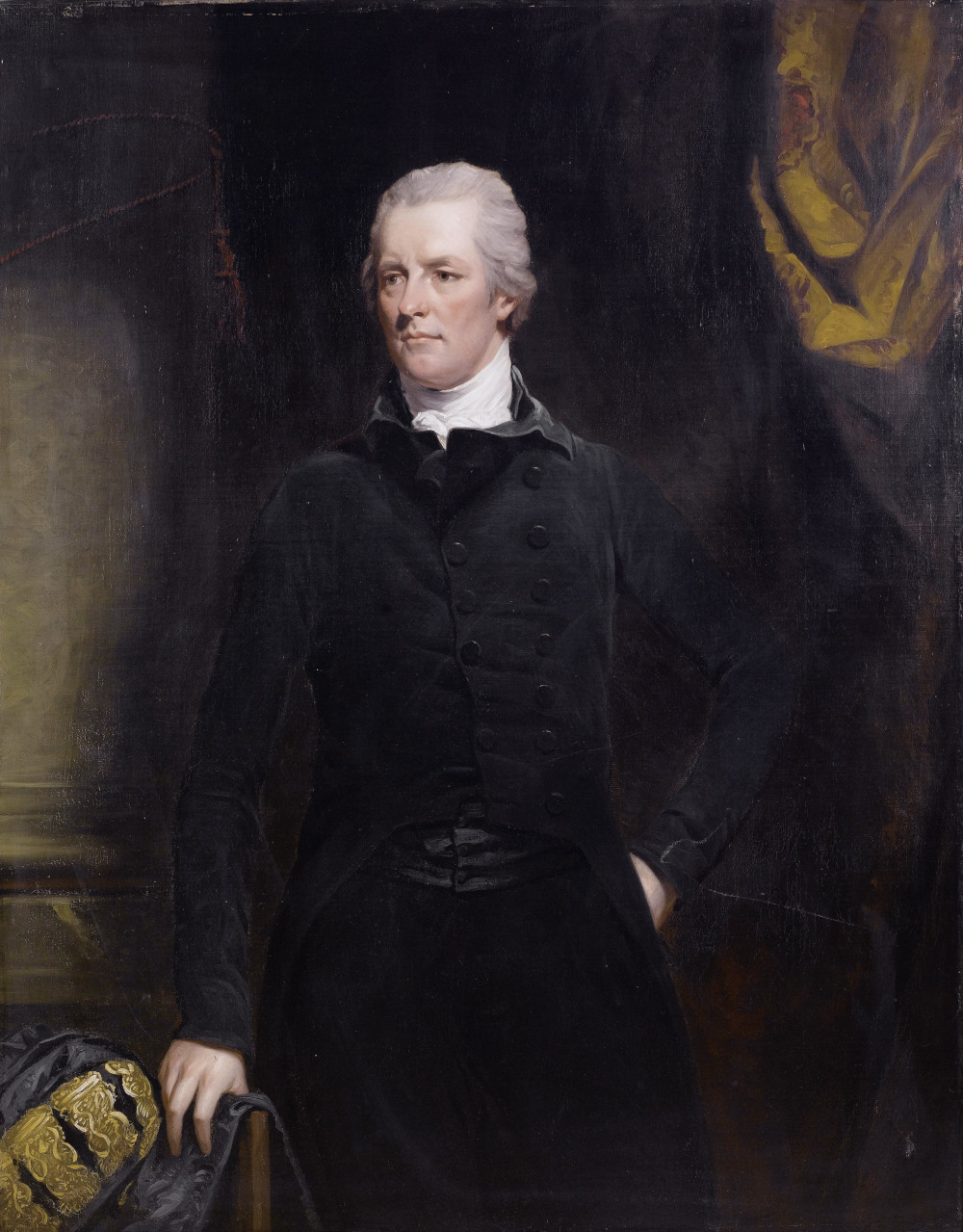
John Hoppner, Public domain, via Wikimedia Commons
Masonic hand sign |
-
William Pitt (1759-1806) was a British statesman who served as the last prime minister of Great Britain from 1783 until the
Acts of Union 1800, and the first official prime minister of the United Kingdom from January 1801.
- He left office in March 1801, but served as prime minister again from 1804 until his death.
- He was also Chancellor of the Exchequer for all his time as prime minister.
- He is known as 'Pitt the Younger' to distinguish him from his father, William Pitt the Elder, who had also previously served as prime minister.
- Pitt's premierships, which came during the reign of King George III, were dominated by major political events in Europe, including the French Revolution and the Napoleonic Wars.
- Pitt, although often referred to by historians as a Tory, or
'new Tory,' called himself an 'independent Whig' and was generally opposed to the development of a strict partisan political system.
|
The term "Treaty of Paris" refers to several historical peace agreements, most famously the 1783 treaty ending the American Revolutionary War, which recognized U.S. independence and set its boundaries. (Wikipedia)
|
|
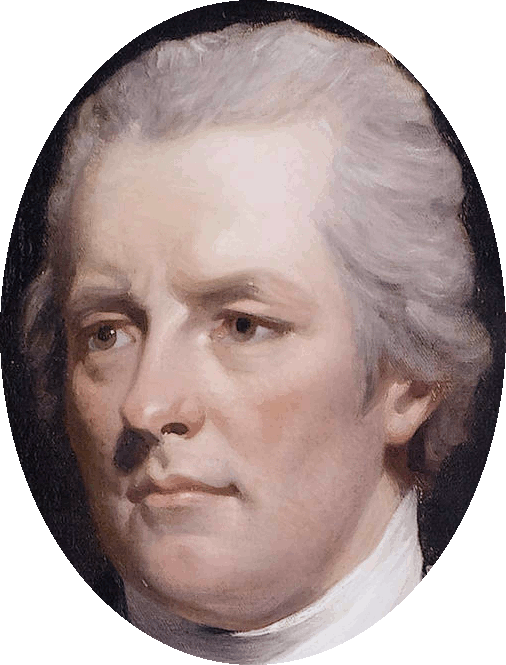
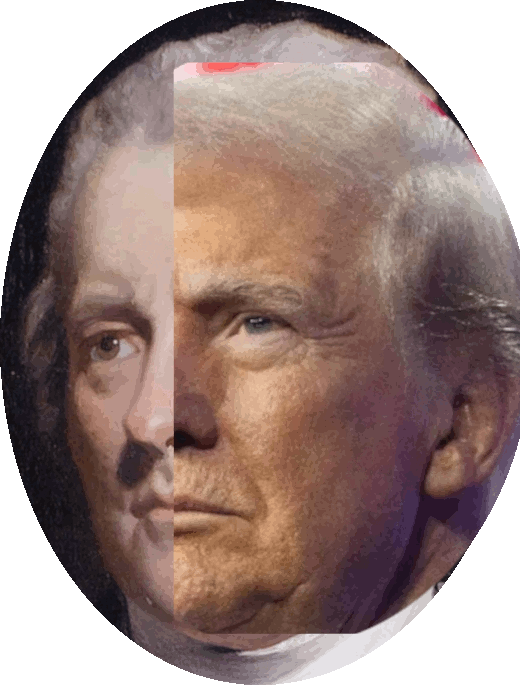
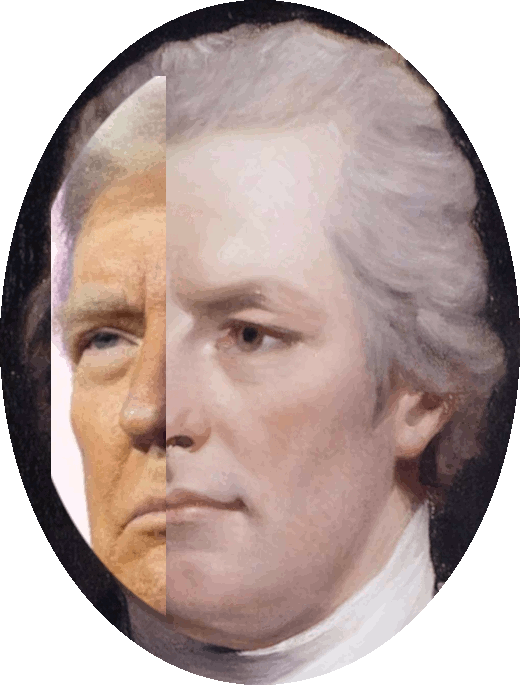
William Pitt the Younger as Donald Trump |
 |
 |
William Pitt
1759-1806
5/28
1/23
Prime Minister |
Donald John Trump
1946
6/14 |
 |
 |
16th Prime Minister
Three-bottle man |
-William Pitt the Younger's failures included his inability to pass major domestic reforms like Catholic Emancipation and parliamentary reform, the failure of coalitions against France, and his harsh wartime policies, which, despite his financial acumen and leadership, led to his resignation and significant political frustration, especially concerning Irish Catholics promised rights that weren't delivered.
- Failed to end slavery.
- He is notable for the significant gap between his two terms and for being a key leader in the transition from Whig dominance to Tory power in the late 18th and early 19th centuries.
- Such an accomplishment!!!
- He resigned in 1761 when his war policies were opposed, and returned briefly in 1766 before his failing health led to his final departure from office in 1768.
17th Prime
Minister of United
Kingdom
1801-1804
Henry
Addington, 1st
Viscount Sidmouth |
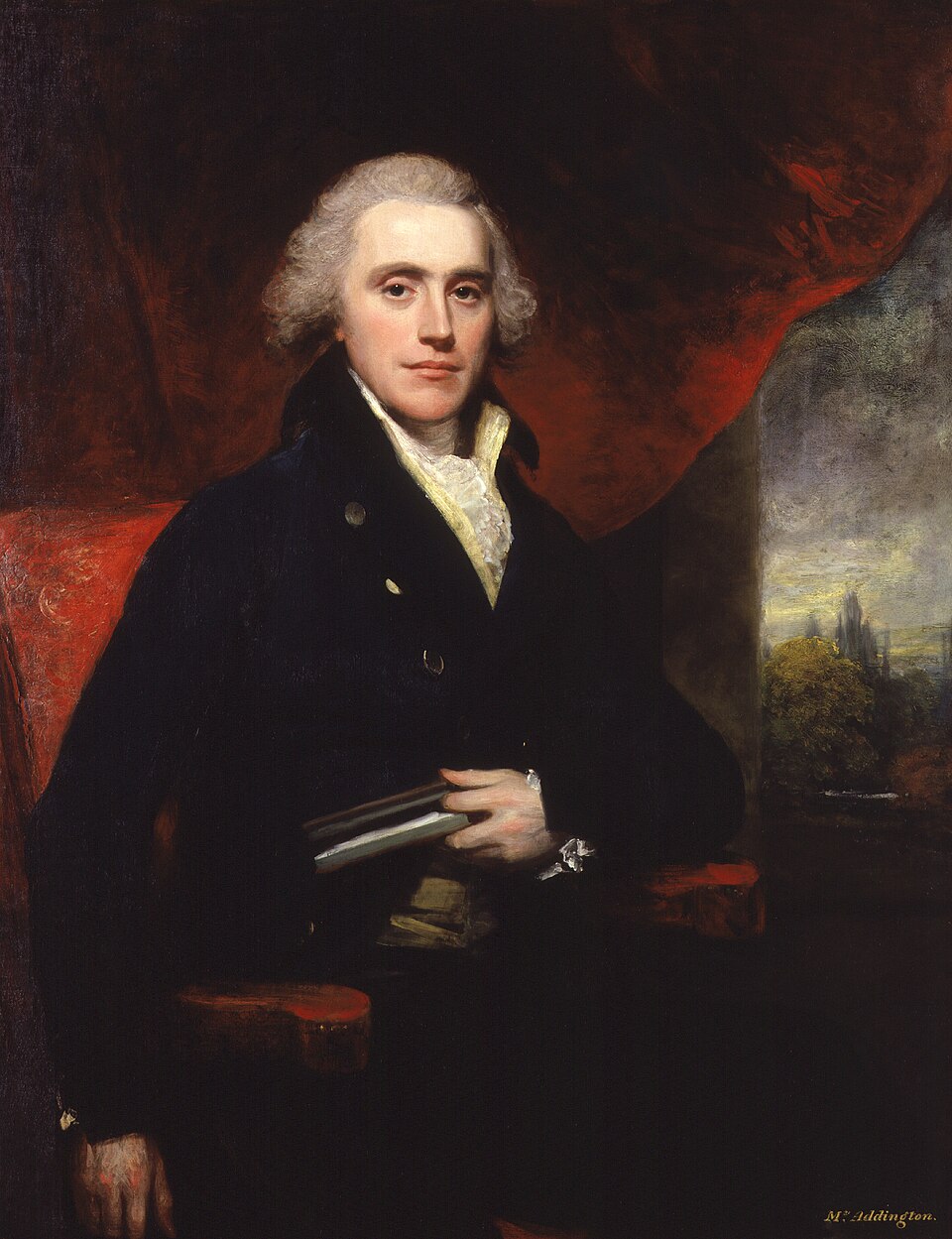
William Beechey, Public domain, via Wikimedia Commons
Masonic hand sign |
- Henry Addington, 1st Viscount Sidmouth (1757-1844) was a British Tory statesman who served as prime minister of the United Kingdom from 1801 to 1804 and as Speaker of the House of Commons from 1789 to 1801.
-
Appointed by King George III after Pitt's resignation, due to his strong Anglican and conservative stance, contrasting with Pitt's support for Catholic emancipation.
- Addington is best known for obtaining the Treaty of Amiens in 1802, an unfavorable peace with Napoleonic France which marked the end of the Second Coalition during the French Revolutionary Wars.
- When that treaty broke down, Addington resumed the war without allies.
- The short-lived peace he negotiated failed to secure lasting security for Britain, collapsing quickly and highlighting his diplomatic shortcomings.
|
The Treaty of Amiens temporarily ended hostilities
between France, the Spanish Empire, and the United
Kingdom at the end of the War of the Second Coalition.
It marked the end of the French Revolutionary Wars;
after a short peace it set the stage for the
Napoleonic Wars. Britain gave up most of its recent
conquests; France was to evacuate Naples and Egypt.
Britain retained Ceylon (Sri Lanka) and Trinidad. (Wikipedia)
|
|
Henry Addington as William Grenville |
 |
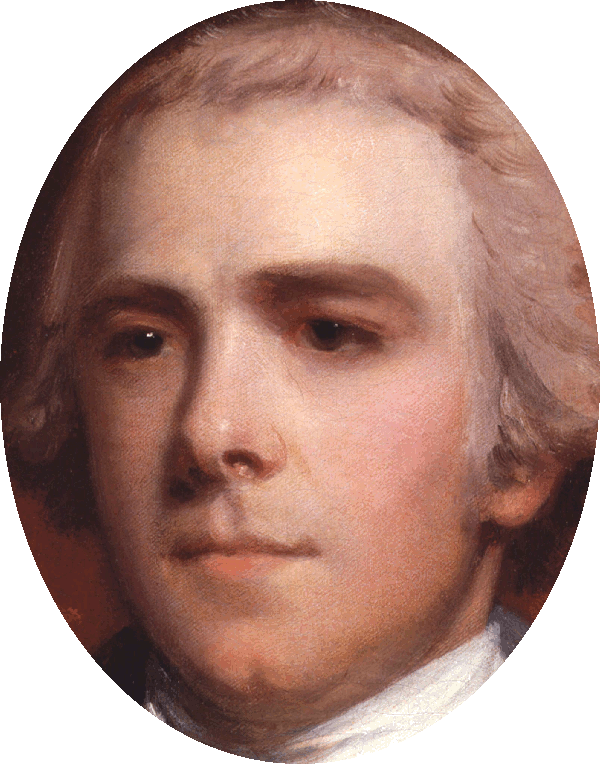 |
Henry Addington
1757-1844
4/30
2/15
Prime Minister |
William Wyndham Grenville
1759-1834
10/25
1/12
Prime Minister |
 |
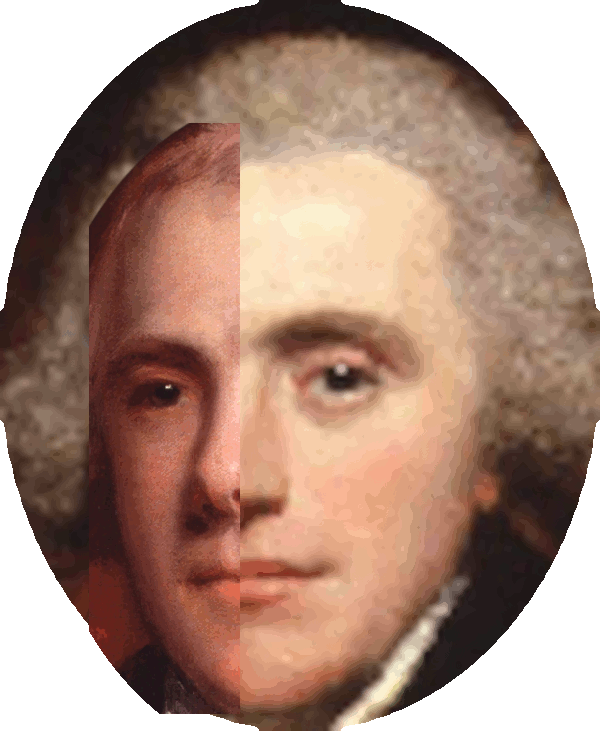 |
17th Prime Minister
The Doctor
Tax man |
- Addington conducted relatively weak defensive hostilities, ahead of what would become the
War of the Third Coalition.
- He was forced from office in favor of William Pitt the Younger, who had preceded Addington as prime minister.
- Addington is also known for his reactionary crackdown on advocates of democratic reforms during a
10-year spell as Home Secretary from 1812 to 1822.
- His speeches lacked Pitt's inspirational quality, and he struggled to manage Parliament and public opinion, especially after reintroducing income tax.
18th Prime
Minister of United
Kingdom
1804-1806 (2nd term) |
|
William Pitt the Younger as Donald Trump |
|
|
|
William Pitt
1759-1806
5/28
1/23
Prime Minister |
Donald John Trump
1946
6/14 |
|
|
|
16th Prime Minister
Three-bottle man |
-
William Pitt the Younger was a dominant British statesman who became the youngest prime minister in history at the age of 24 in 1783.
- He served two terms (1783–1801 and 1804–1806), a tenure totaling nearly 19 years, and is known for his fiscal reforms, his leadership during the
French Revolutionary and Napoleonic Wars, and the
Act of Union with Ireland.
- He reformed the tax code, lowering tariffs on easily smuggled goods to increase customs revenue and introducing Britain's first-ever income tax in 1799 to fund the war effort.
- Failed to end slavery.
19th Prime
Minister of United
Kingdom
1806-1807
William
Wyndham Grenville,
1st Baron Grenville |

John Hoppner, Public domain, via Wikimedia Commons |
- William Wyndham Grenville, 1st Baron Grenville (1759-1834) was a British Pittite Tory politician who was Prime Minister of the United Kingdom from 1806 to 1807, but was a supporter of the Whigs for the duration of the Napoleonic Wars.
- As prime minister, his most significant achievement was the abolition of the slave trade in 1807.
- However, his government failed to either make peace with France or to accomplish Catholic emancipation and it was dismissed in the same year.
|
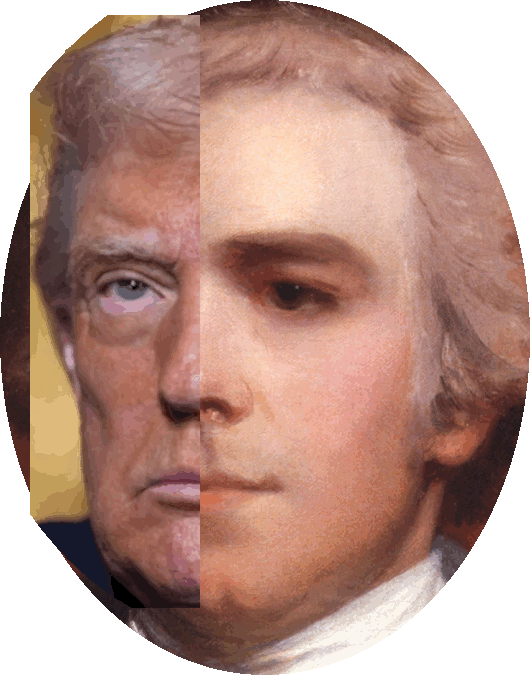
William Grenville as Donald Trump |
|
|
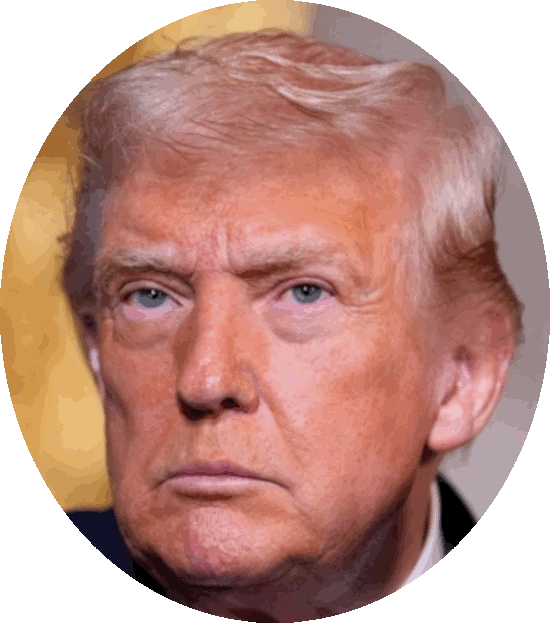 |
William Wyndham Grenville
1759-1834
10/25
1/12
Prime Minister |
Donald John Trump
1946
6/14 |
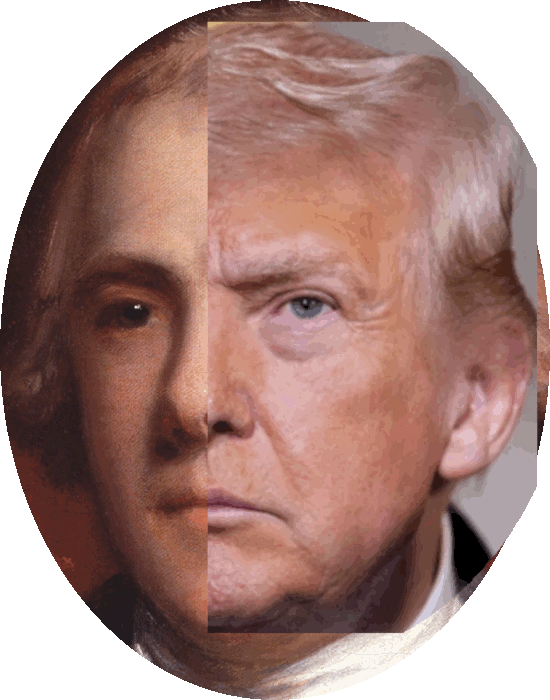 |
 |
19th Prime Minister
Bogey |
- His premiership is remembered for the significant success of passing the Abolition of the
Slave Trade Act 1807.
- His time as Prime Minister ended in stalemate and resignation over Catholic Emancipation.
20th Prime Minister of United Kingdom
1807-1809
(2nd term) |
|
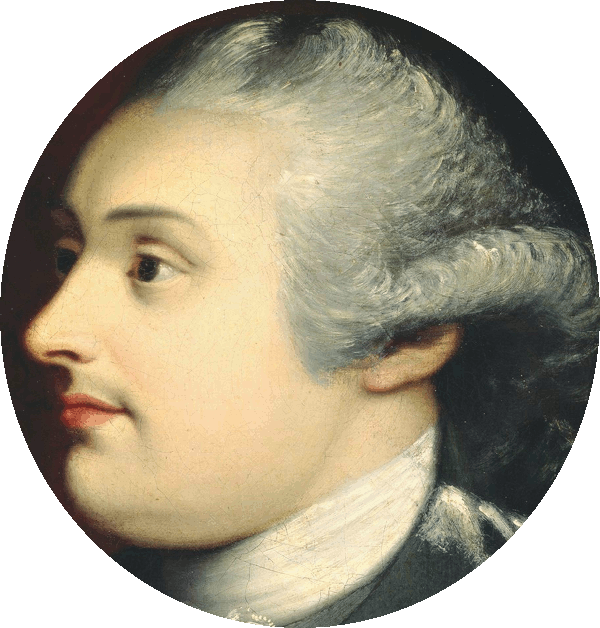
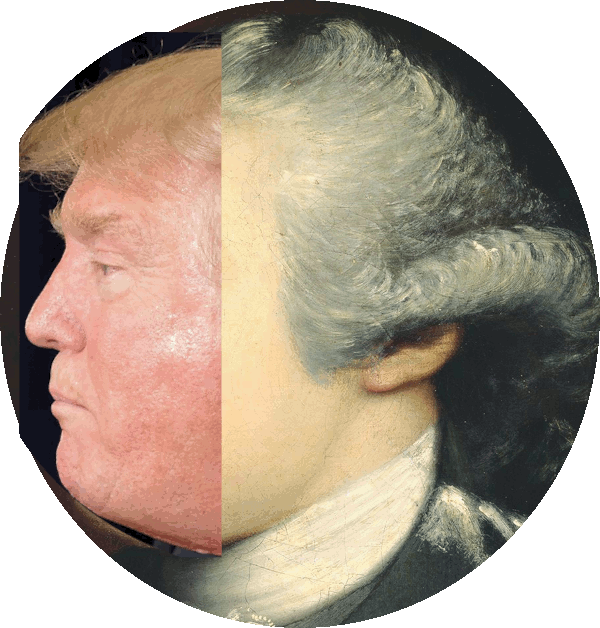
William Henry Cavendish-Bentinck as
Donald Trump |
 |
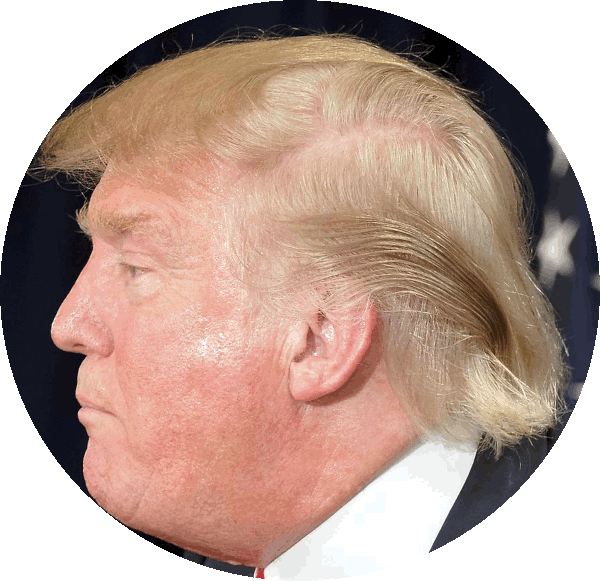 |
William Henry Cavendish-Bentinck
1738-1809
4/14
10/30
Prime Minister |
Donald John Trump
1946
6/14 |
 |
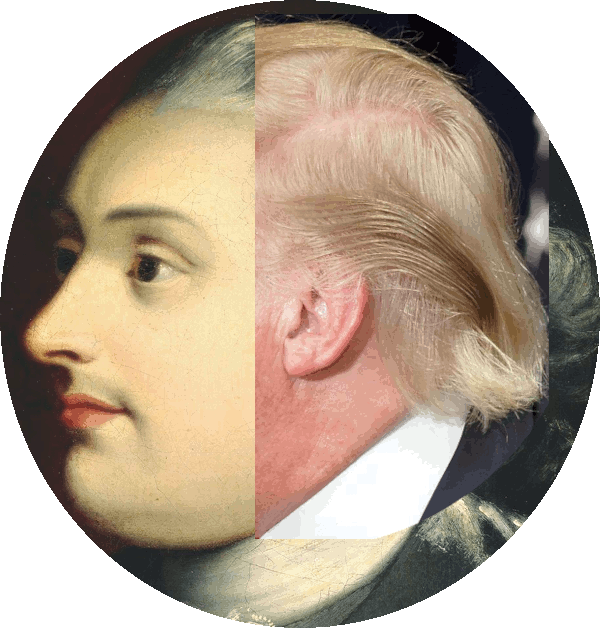 |
20th Prime Minister
Bent |
-
Bentinck engineered a liberal constitution for Sicily, but it was short-lived, abolished by King Ferdinand after Bentinck's departure, making his efforts seem futile.
- In his second premiership, his own ill health, combined with
bitter feuds between Foreign Secretary Canning and War
Secretary Castlereagh (culminating in a duel), led to his
resignation and the near-collapse of his government.
- His two terms, separated by the longest gap of any British
prime minister (24 years), were marked by political instability, and he resigned in 1809 due to ill health, dying shortly after.
21st Prime
Minister of United
Kingdom
1809-1812
Spencer
Perceval |
.jpg)
George Francis Joseph, Public domain, via Wikimedia Commons |
- Spencer Perceval (1762-1812) was a British statesman and barrister who was Prime Minister of the United Kingdom from October 1809 until his assassination in May 1812.
- The younger son of The Earl of Egmont, an Anglo-Irish earl, Perceval was educated at Harrow School and Trinity College, Cambridge.
- He studied law at Lincoln's Inn, practiced as a barrister on the Midland circuit, and in 1796 became a King's Counsel.
|
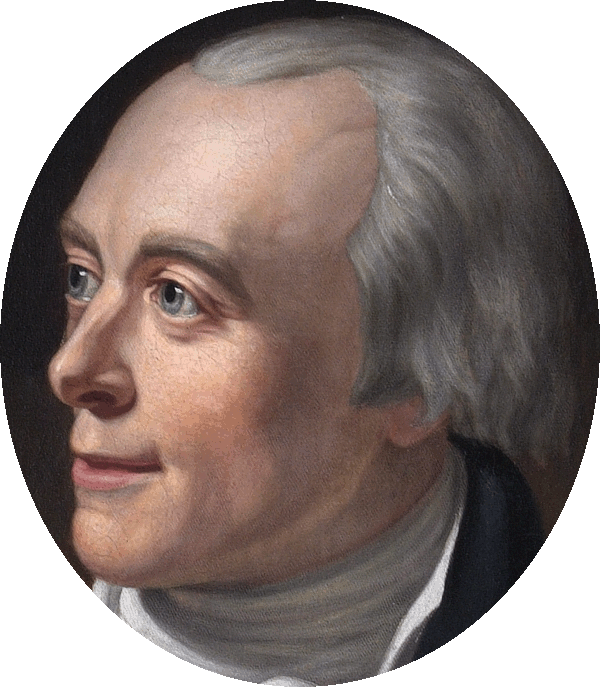
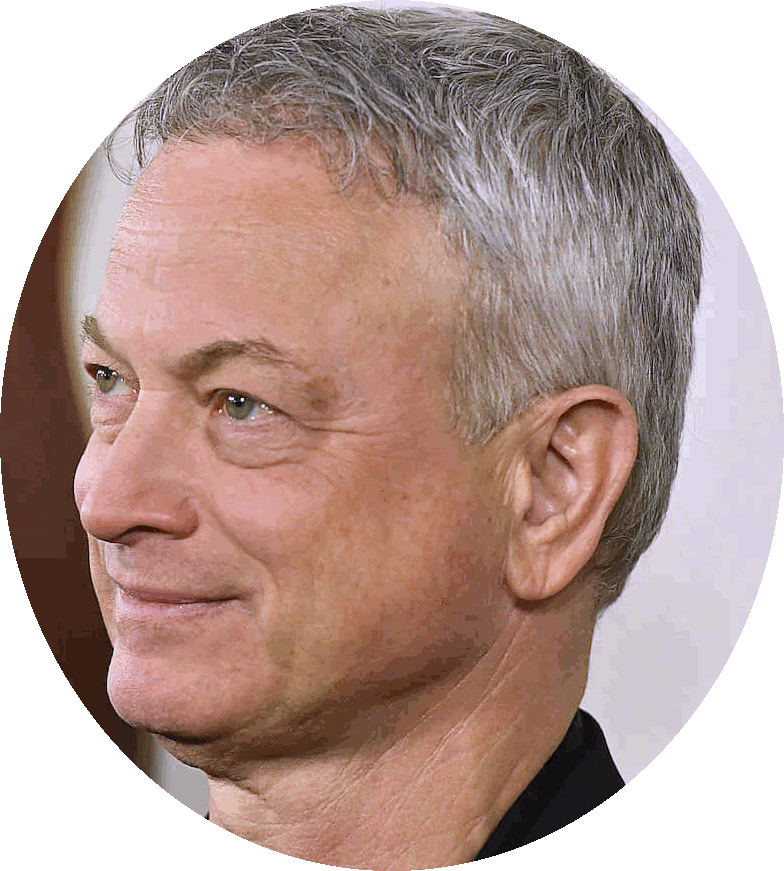
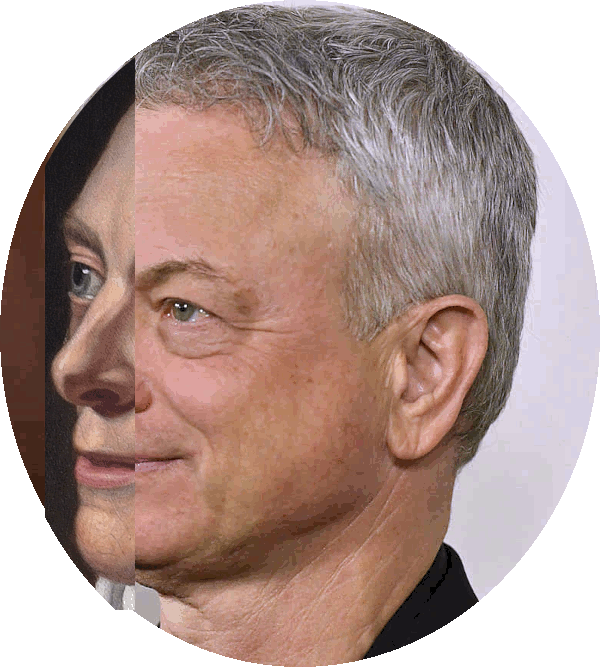
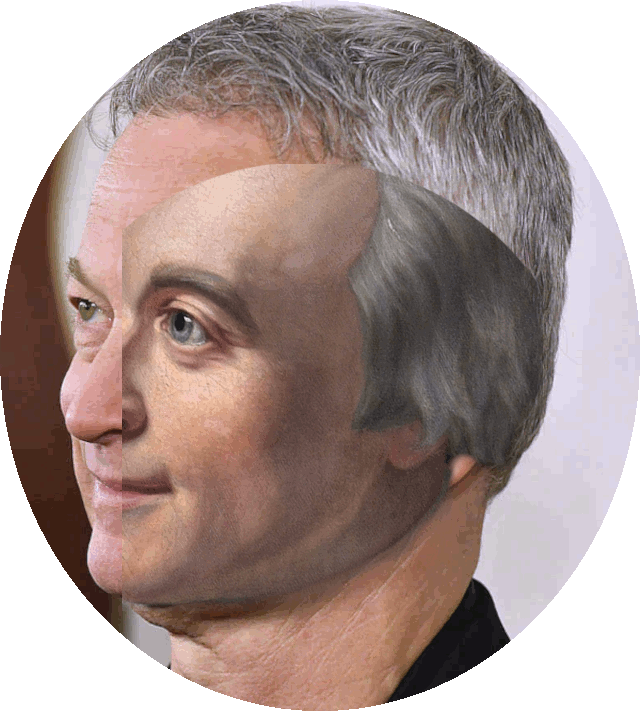
Spencer Perceval as Gary Sinise |
 |
 |
Spencer Perceval
1762-1812
11/1
5/11
Prime Minister |
Gary Alan Sinise
1955
3/17
Quit acting to play
Pope Leo |
 |
 |
21st Prime Minister
Little P.... |
- Perceval entered politics at age 33 as a member of Parliament (MP) for Northampton.
- A follower of William Pitt the Younger, Perceval always described himself as a
'friend of Mr. Pitt,' rather than a Tory.
- He was opposed to Catholic emancipation and reform of Parliament; he supported the war against Napoleon and the abolition of the Atlantic slave trade.
- He is the only British prime minister to have been assassinated, and the only solicitor-general or attorney-general to have become prime minister.
- Perceval was shot and killed in the lobby of the House of Commons on May 11, 1812.
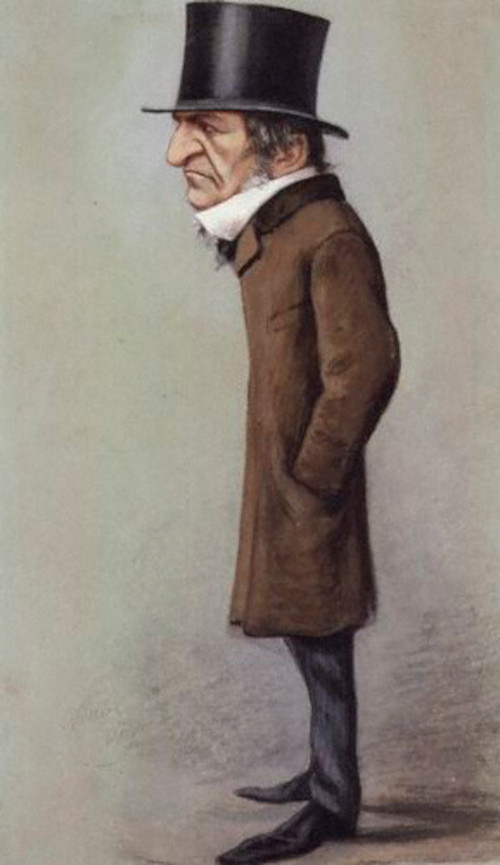
Carlo Pellegrini, Public domain, via Wikimedia Commons
William Ewart Gladstone
|
- William Ewart Gladstone (1809-1898) was a British statesman and Liberal politician, starting as Conservative
Member of Parliament (MP) for Newark and later became the leader of the Liberal Party.
- In a career lasting more than 60 years, he was Prime Minister of the United Kingdom for 12 years, spread over four non-consecutive terms (the most of any British prime minister), beginning in 1868 and ending in 1894.
|
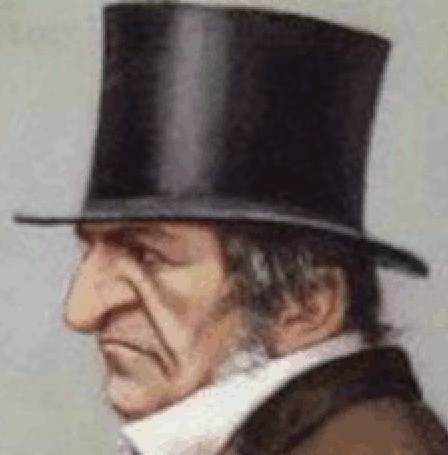
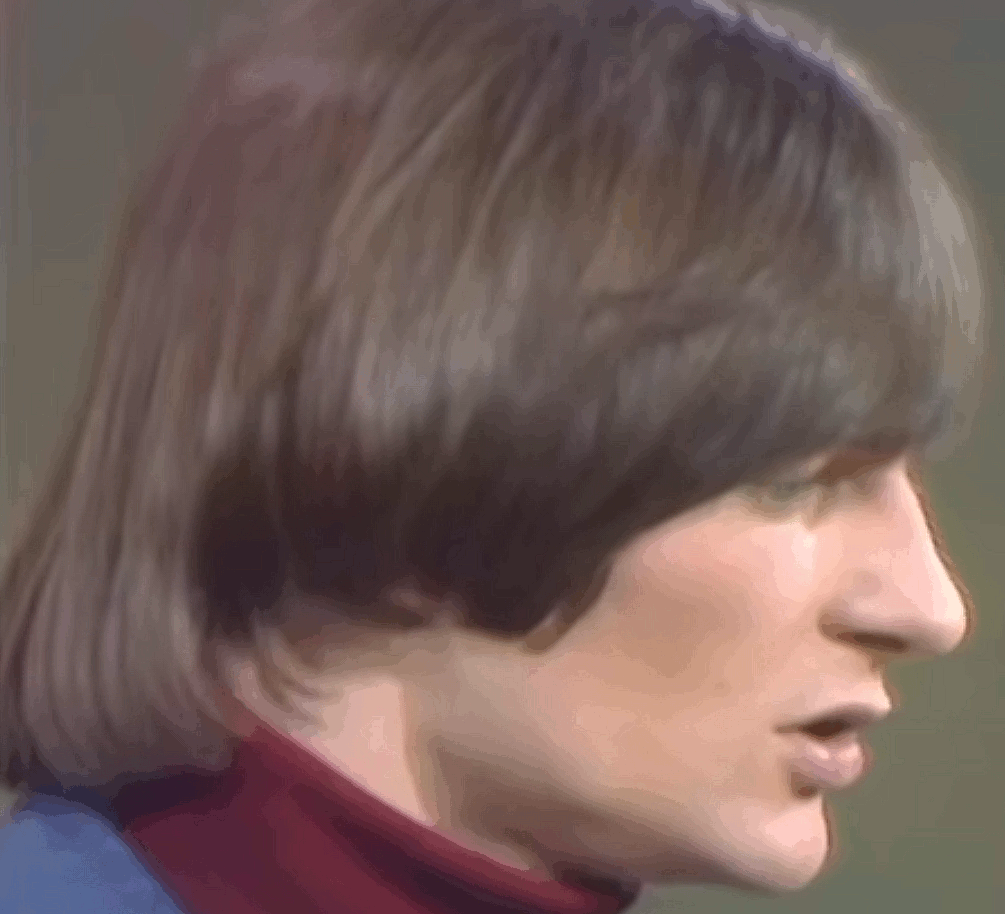
William Ewart Gladstone as Gene Clark (Byrds) |
 |
 |
William Ewart Gladstone
1809-1898
12/29
5/19 |
Harold Eugene Clark
1944-1991
11/17
5/24
Vocals guitar harmonica tambourine |
-
William Gladstone’s father, John, was an absentee landlord who never visited his estates in the Caribbean but became fabulously rich from the proceeds of slavery.
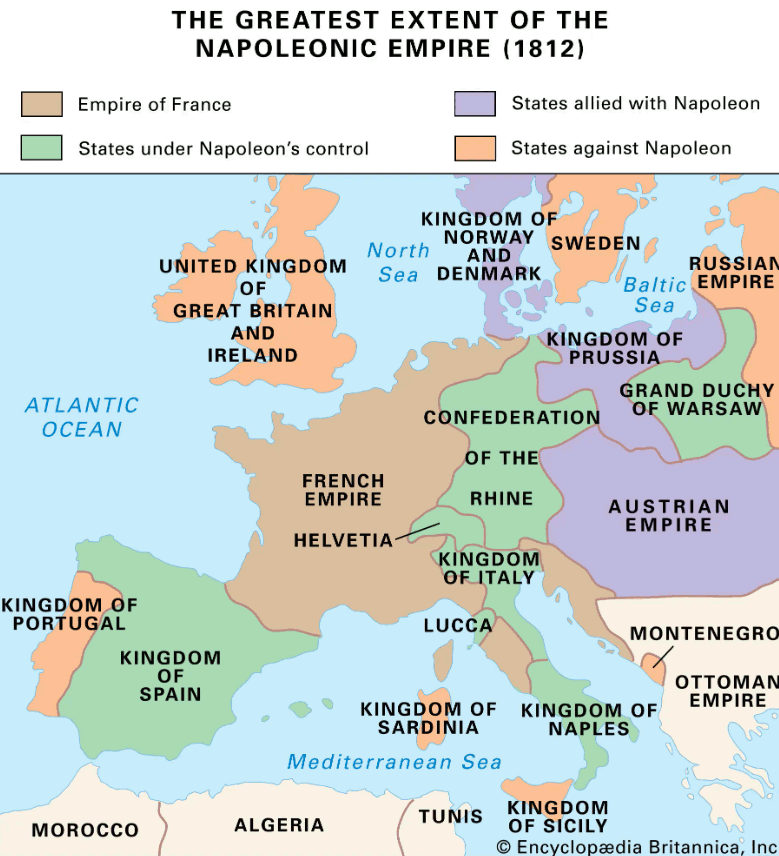
Copyright,
Encyclopedia
Britannica, Inc.
Napoleonic Wars
Greatest extent of Napoleon I's empire, 1812
|
- The Napoleonic Wars were a series of wars between Napoleonic France and shifting alliances of other European powers that produced a brief French hegemony over most of Europe.
- Along with the French Revolutionary wars, the
Napoleonic Wars constitute a 23-year period of recurrent conflict that concluded only with the
Battle of Waterloo and Napoleon’s second abdication on June 22, 1815.
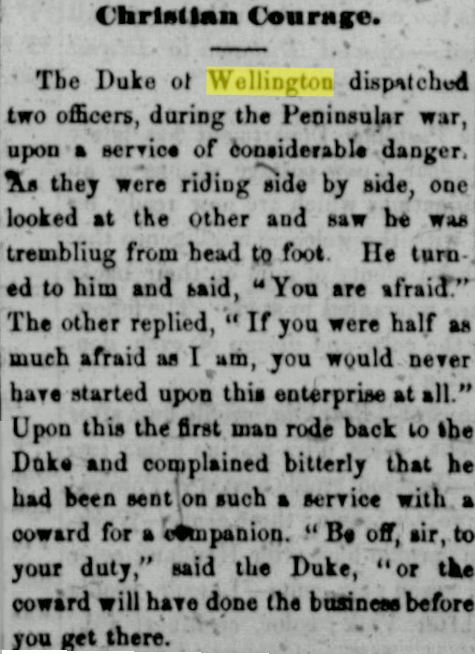
South Haven Sentinel
- May 14, 1810
|
- Arthur Wellesley was given the title Duke of Wellington in 1814, and went on to command his most celebrated campaigns in the
Napoleonic Wars, with final victory at Waterloo in 1815.
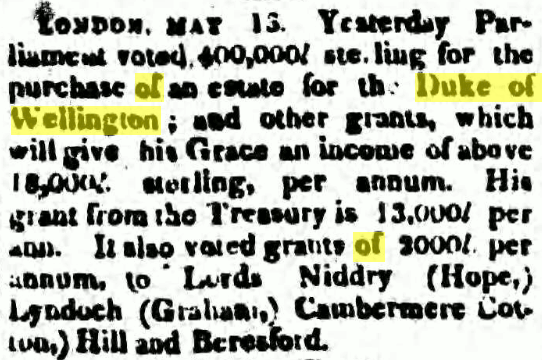
Newport Mercury
- June 25, 1814 |
- When the Duke of Wellington returned to Britain he was treated as a hero, formally honored, and presented with both an estate in Hampshire
purchased for £400,000 sterling and other grants, which gave him an income above £18,000 annually.
- He also
received another grant from the Treasury worth £13,000
annually making his annual income £31,000 (or £3,010,576
today).
- In 1815, the total amount £431,000 was worth approximately $1,757,895 USD.
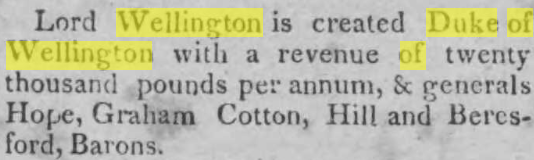
Lexington Kentucky Gazette
- July 18, 1814
£20,000 annually
|
- incidentally, the U.S. dollar has lost 95% of its value since 1815.
- This was a HUGE amount of money in 1815, something
in the order of £431,000 in 1815 is equivalent in purchasing
power to about £49,041,574 today ($64,181,443 million).
- It really paid to be a British
politician, and all for non-stop war.
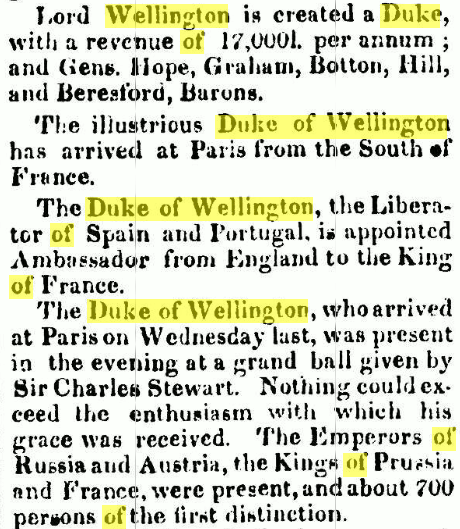
Gettysburg Adams Centinel
- July 13, 1814 |
- After the Battle of Waterloo, The Duke of Wellington became Commander in Chief of the army in occupied France until November 1818.
- He then returned to England and Parliament, and joined Lord Liverpool’s government in 1819 as Master General of the Ordnance.
- He undertook a number of diplomatic visits overseas, including a trip to Russia.
|
Nothing could exceed the enthusiasm with which his
grace was received. (Gettysburg Adams Centinel)
|
King George
IV of the United
Kingdom
1820 -
1830
House of Hanover |
_-_Royal_Collection_(RCIN_405918).jpg)
Thomas Lawrence, Public domain, via Wikimedia Commons
Coronation Robes |
-
The Act of Settlement in 1701 ensured that only Protestants could inherit the throne and designated the Protestant House of Hanover as the next in line to prevent Catholic Stuarts from reclaiming power.
- King George IV who was born George Augustus Frederick (1762-1830) was King of the United Kingdom of Great Britain and Ireland and King of Hanover from January
29, 1820, until his death in 1830.
- George IV was the
eldest child of King George III and Queen Charlotte and was
born on August 12, 1762.
- At the time of his accession to the throne, he was acting as prince regent for his father, King George III, having done so since February
5, 1811, during his father's final mental illness.
- He
died on June 26, 1830.
|
George IV (and his father, George III) suffered significant mental health issues, likely a combination of hereditary porphyria, which caused physical and mental crises, potentially exacerbated by bipolar disorder (mania/depression), and treatments like arsenic, leading to confusion, hallucinations, violent outbursts, and erratic behavior, especially as he aged and relied on opium for gout pain, ultimately impairing his rule. (Assistant)
|
|
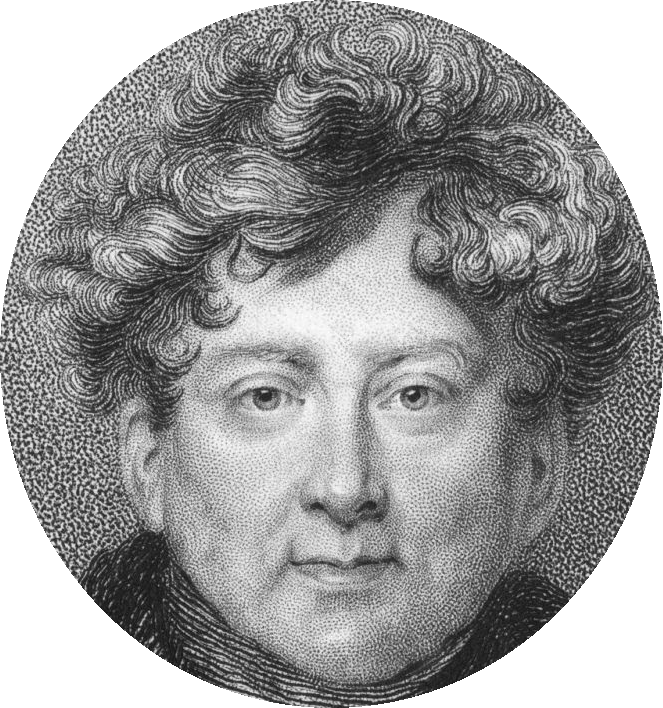
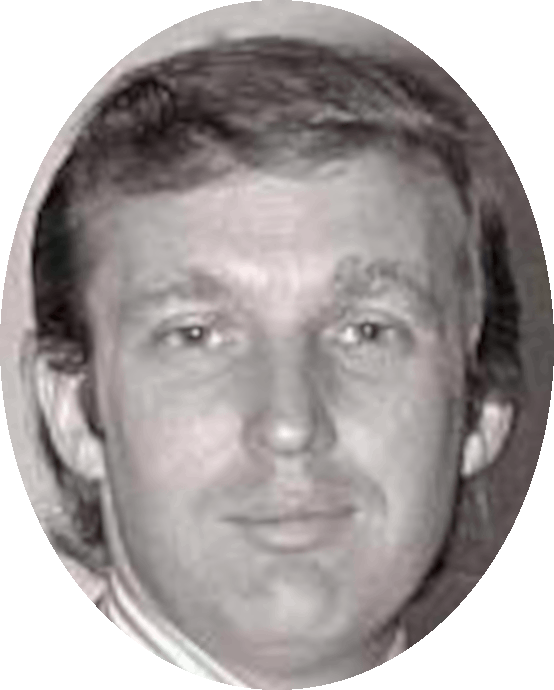
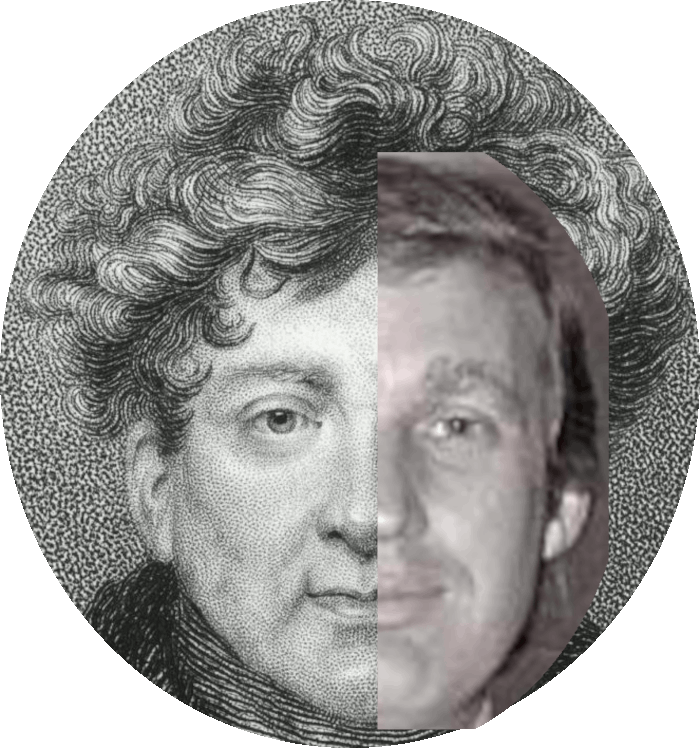
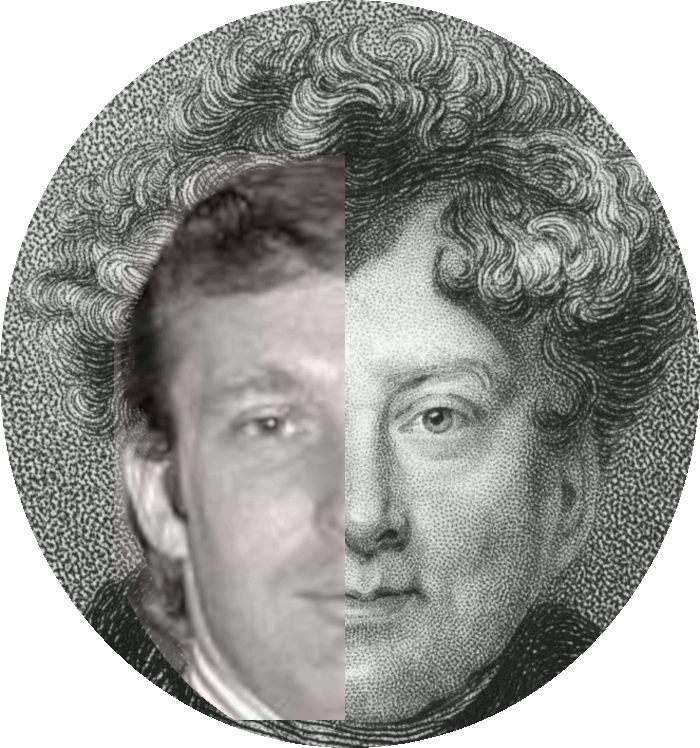
George IV as Donald Trump |
 |
 |
George Augustus Frederick
1762-1830
8/12
6/26 |
Donald Trump
1946
6/14
|
 |
 |
|
Many mistresses |
- Prince George IVs debts continued to climb, and his father
refused to aid him unless he married his cousin Princess
Caroline of Brunswick.
- In 1795, the Prince acquiesced, and they were married on April
8, 1795, at the Chapel Royal, St James' Palace.
- So
romantic!!!
- The marriage, however, was disastrous; each party was unsuited to the other.
- The two were formally separated after the birth of their
only child, Princess Charlotte, in 1796, and remained
separated thereafter.
- George was rumored to have fathered several illegitimate children.
War horse |
- King George IV wasn't known for leading new major
wars; his era, especially as Prince Regent from 1811-1820 a
period he effectively ruled during his father's insanity, overseeing the final years of the
Napoleonic Wars.
-
This was a period that was defined by Britain's decisive victory in those
wars, concluding with the defeat of Napoleon at Waterloo in 1815, a massive conflict involving Britain against France and its allies.
- His reign also saw the end of the War of 1812 (though mostly under his father/regency) and internal unrest (like the Peterloo Massacre) after those costly wars, focusing more on conservative politics and social changes than launching new major campaigns.
|
In essence, George IV inherited and presided over the conclusion of massive European wars, but his reign itself was marked more by the aftermath and domestic issues than new major wars. (Assistant)
|

Broke the bank |
- The problem of George's debts, which amounted to the
extraordinary sum of £630,000 in 1795 (equivalent to £82,215,000 today, was solved (at least temporarily) by Parliament.
- That's approximately $110,932,288 in USD today.
- Being unwilling to make an outright grant to relieve these debts, it passed the Prince of Wales Act 1795 which provided him an additional sum of £65,000 (equivalent to £8,482,000 today) per annum.
- In 1803, a further £60,000 (equivalent to £6,921,000 today) was added by the Annuity to Prince of Wales, etc.
- The Acts of 1803 and George's debts as at 1795 were finally
cleared in 1806, although the debts he had incurred since 1795
remained.
|
The British Acts of 1803 covered significant
legislation, notably the Passenger Vessels Act
(regulating emigration by setting standards and
raising costs) and the Levy en Masse Act/Additional
Forces Acts (mobilizing defense against Napoleon
through compulsory training and volunteer forces).
Other important laws included Lord Ellenborough's Act,
making certain malicious crimes (like attempted
murder, poisoning) capital felonies, and the Habeas
Corpus Act, expanding judicial review for prisoners.
(Assistant)
|
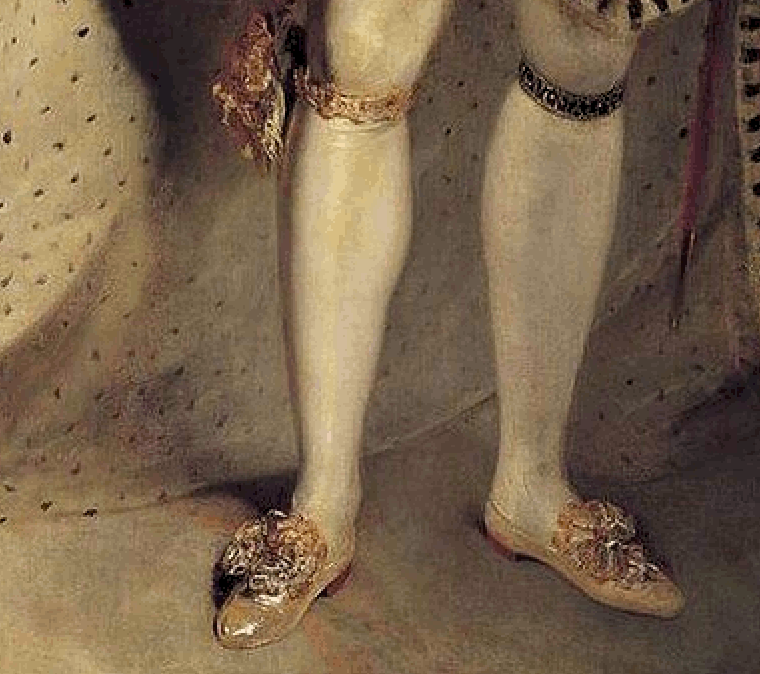
Dandy |
- In 1804, a dispute arose over the custody of Princess Charlotte, which led to her being placed in the care of the King.
- It also led to a parliamentary commission of enquiry into Princess Caroline's conduct after her husband accused her of having an illegitimate son.
- The investigation cleared Caroline of the charge but still revealed her behavior to have been extraordinarily indiscreet.
- Such hypocrisy considering he had many mistresses and
several illegitimate children (and couldn't maintain his
marriage)!
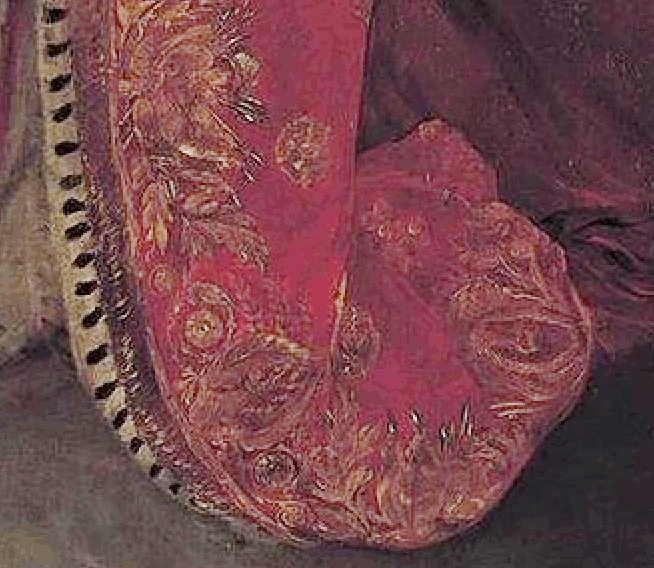
Indulgent |
- George's heavy drinking and indulgent lifestyle had taken their toll on his health by the late 1820s.
- While still Prince of Wales, he had become obese through
his huge banquets and copious consumption of alcohol, making
him the target of ridicule on the rare occasions that he
appeared in public.
- George's last years were marked by increasing physical and mental decay and withdrawal from public affairs. Privately, a senior aide to the King confided to his diary: "A more contemptible, cowardly, selfish, unfeeling dog does not exist ...
there have been good and wise kings but not many of them ... and this I believe to be one of the worst."

Overlooked |
- In 1828, after twice being overlooked in favor of Canning and Goderich, the Duke of Wellington was finally invited by King George IV to form his own government and set about forming his Cabinet.
- As Prime Minister, he was very conservative; known for his measures to repress reform, his popularity sank a little during his time in office.
- Yet one of his first achievements was overseeing Catholic emancipation in 1829, the granting of almost full civil rights to Catholics in the United Kingdom.
|
Feelings ran very high on the issue. The duke persuaded the King only by his threat of resignation. Lord Winchilsea, an opponent of the bill, claimed that by granting freedoms to Catholics Wellington “treacherously plotted the destruction of the Protestant constitution”. (gov.uk)
|
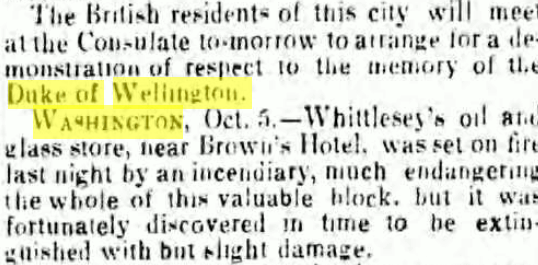
Alexandria Gazette
- October 7, 1852 |
- After fighting with Lord Winchilsea over the Catholic
emancipation in 1829, the Duke and Winchilsea fought a duel in Battersea Park in March 1829.
- They deliberately missed each other in firing, and honor was satisfied.
22nd Prime
Minister of Great
Britain
1812-1827
Robert
Banks Jenkinson, 2nd
Earl of Liverpool |
_-_Robert_Banks_Jenkinson_(1770-1828),_2nd_Earl_of_Liverpool_-_RCIN_404930_-_Royal_Collection.jpg)
Thomas Lawrence, Public domain, via Wikimedia Commons
Masonic hand sign |
- Robert Banks Jenkinson, 2nd Earl of Liverpool (1770-1828), was a British Tory statesman who served as Prime Minister of the United Kingdom from 1812 to 1827.
- Before becoming prime minister he had been foreign secretary, home secretary and secretary of state for war and the colonies.
- He held the constituency of Rye from 1790 until 1803, when he was elevated to the House of Lords, where he was Leader 1803–1806 and 1807–1827.
- Liverpool's fifteen years as prime minister saw his guiding Britain to victory in the
Napoleonic Wars and ushering in a lasting postwar peace.
- However it also produced unrest and radicalism at home.
|
Robert Banks Jenkinson as Donald Trump |
 |
 |
Robert Banks
Jenkinson
1770-1828
6/7
12/4
Prime Minister |
Donald John Trump
1946
6/14 |
 |
 |
22nd Prime Minister
Corn |
- During the first part of his premiership, repressive measures were taken to restore order at home, the
Corn Laws were introduced and income tax was
repealed. In the 1820s his leadership became more liberal, and
the period saw a reform of the criminal law and prisons.
- Stepped down in February 1827, after suffering a stroke.
|
The Corn Laws were British protectionist trade laws, primarily active from 1815 to 1846, that placed high tariffs or outright bans on imported grain (corn) to keep domestic grain prices artificially high, benefiting wealthy landowners but increasing food costs for everyone else, sparking significant public protest and debates over free trade before their eventual repeal under Prime Minister Robert Peel, marking a shift towards modern economic liberalism. (Assistant)
|
23rd Prime
Minister of Great
Britain
1827-1827
George
Canning |
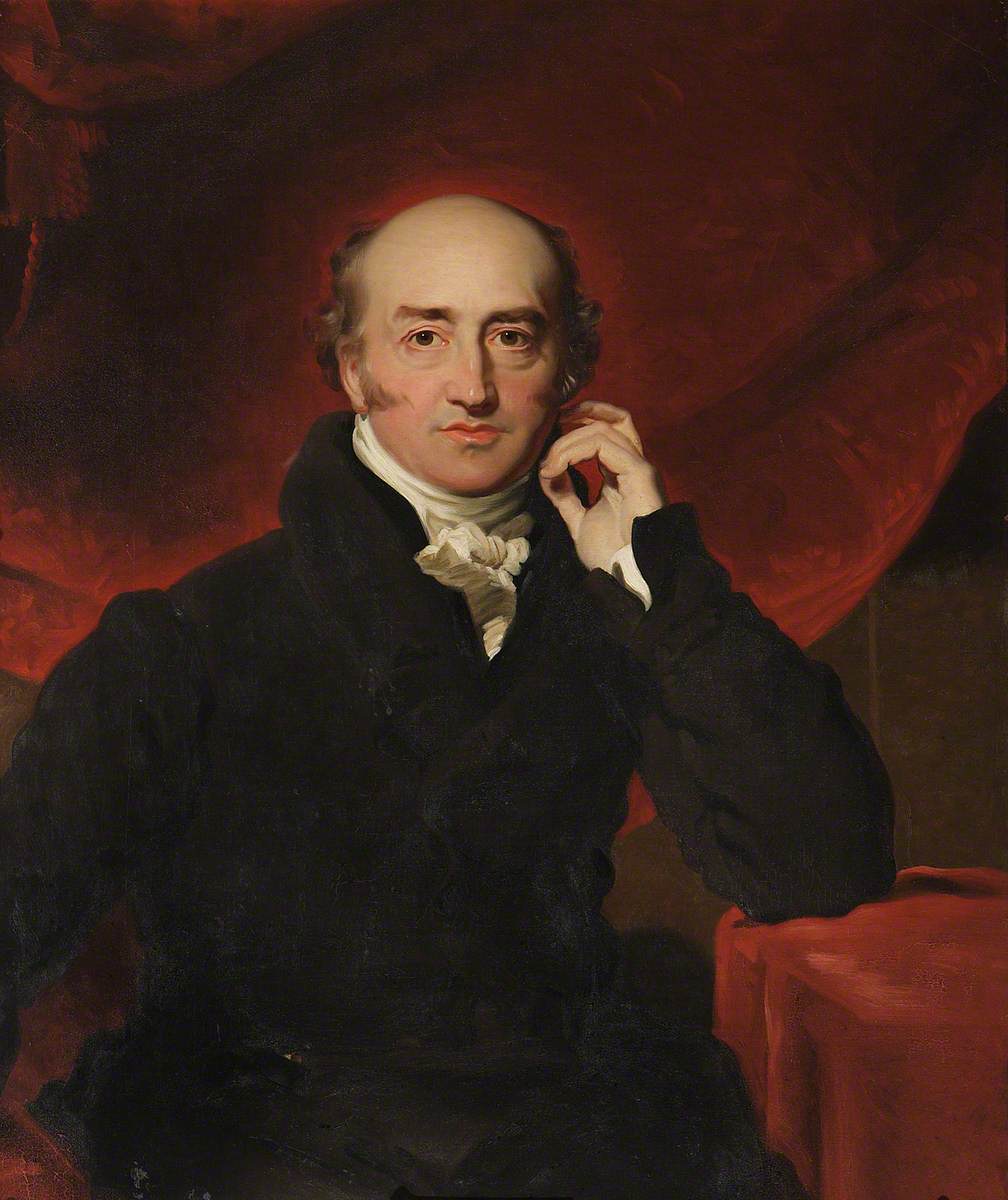
Thomas Lawrence, Public domain, via Wikimedia Commons
Masonic hand sign |
- George Canning (1770-1827) was a British Tory statesman.
- He held various senior cabinet positions under numerous prime ministers, including two important terms as foreign secretary, finally becoming Prime Minister of the United Kingdom for the last 119 days of his life, from April to August 1827.
- The son of an actress and a failed businessman and lawyer, Canning was supported financially by his uncle, Stratford Canning, which allowed him to attend Eton College and Christ Church, Oxford.
- Canning entered politics in 1793 and rose rapidly.
- He was Paymaster of the Forces from 1800–1801 and Treasurer of the Navy
from 1804–1806 under William Pitt the Younger.
- Canning was foreign secretary
from 1807–1809 under the Duke of Portland.
- Canning was the dominant figure in the cabinet and directed the
Battle of Copenhagen, the seizure of the Danish fleet in 1807 to assure Britain's naval supremacy over Napoleon.
|
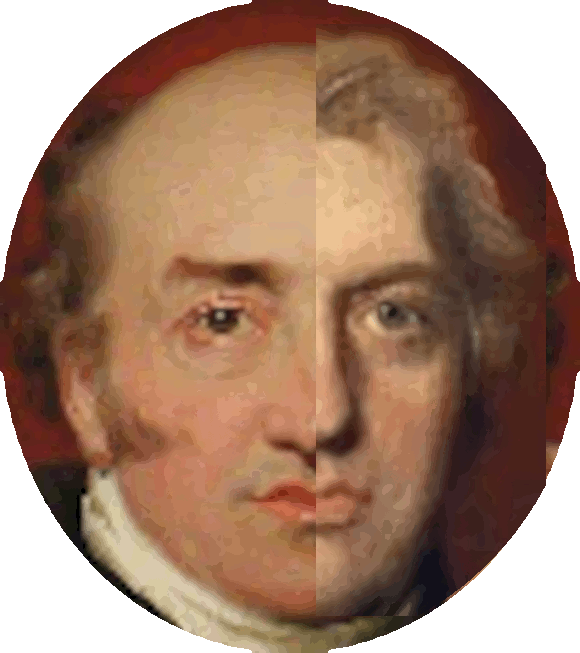
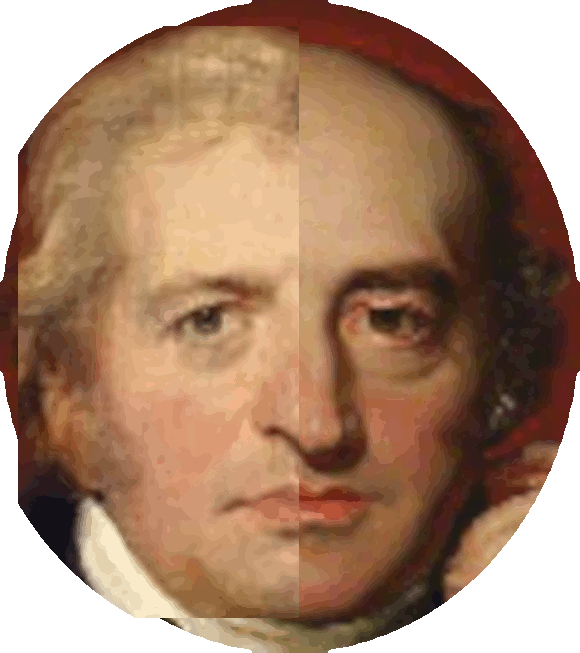
George Canning as
Robert Banks
Jenkinson |
 |
|
George Canning
1770-1827
4/11
8/8
Prime Minister |
Robert Banks
Jenkinson
1770-1828
6/7
12/4
Prime Minister |
 |
 |
23rd Prime Minister
The Zany of Debate
Acid wit |
- Years earlier, in 1809, he was wounded in a duel with his rival Lord Castlereagh and was shortly thereafter passed over as a successor to the Duke of Portland in favor of Spencer Perceval.
- He rejected overtures to serve as foreign secretary again because of Castlereagh's presence in Perceval's Cabinet and he remained out of high office until after Perceval was assassinated in 1812.
-
Canning had a reputation for his 'acid wit' and a tendency to alienate potential allies, which meant many colleagues did not trust him.
- He was a dominant personality who sometimes risked losing political supporters for personal reasons.
-
Canning served as prime minister for a mere 119 days in 1827, from April to August, becoming one of the shortest-serving PMs after succeeding Lord Liverpool, but died in office from pneumonia.
24th Prime
Minister of Great
Britain
1827-1828
Frederick John
Robinson, 1st Earl
of Ripon |

Thomas Lawrence, Public domain, via Wikimedia Commons
Masonic hand sign |
- Frederick John Robinson, 1st Earl of Ripon (1782-1859), styled The Honorable F. J. Robinson until 1827 and known between 1827 and 1833 as the Viscount Goderich, the name by which he is best known to history, was a British politician who served as Prime Minister of the United Kingdom from 1827 to 1828.
- A member of the rural landowning aristocracy, Robinson entered politics through family connections. In the House of Commons, he rose through junior ministerial ranks, achieving cabinet office in 1818 as President of the Board of Trade.
- In 1823, he was appointed Chancellor of the Exchequer, a post he held for four years.
- In 1827, he was raised to the peerage, and in the House of Lords was Leader of the House and Secretary of State for War and the Colonies.
|
Frederick John Robinson as Donald Trump |
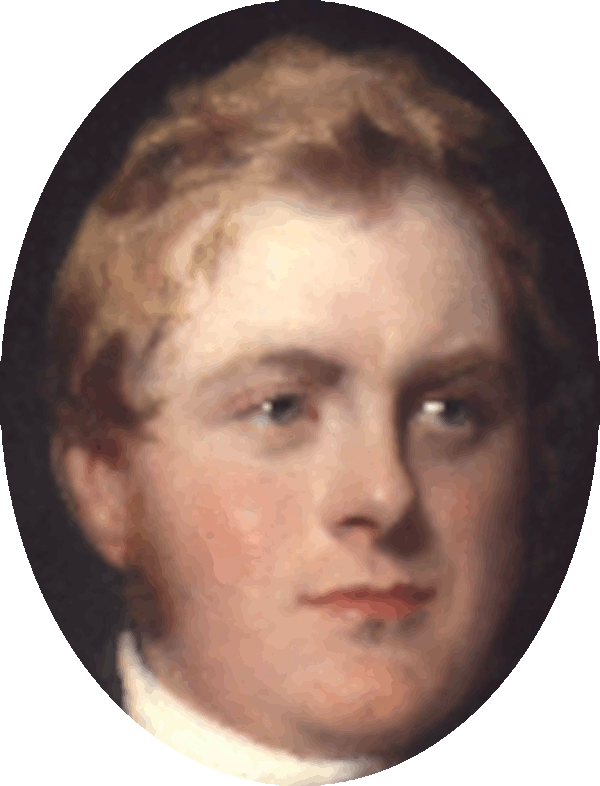 |
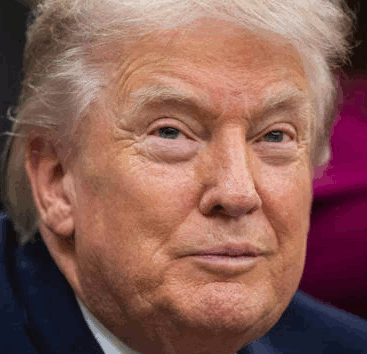 |
Frederick John Robinson
1782-1859
11/1
1/28
Prime Minister |
Donald John Trump
1946
6/14 |
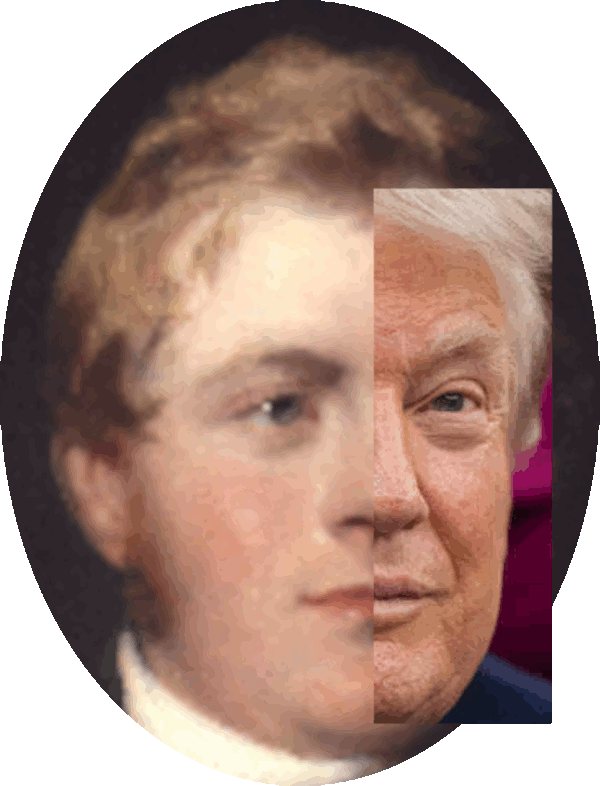 |
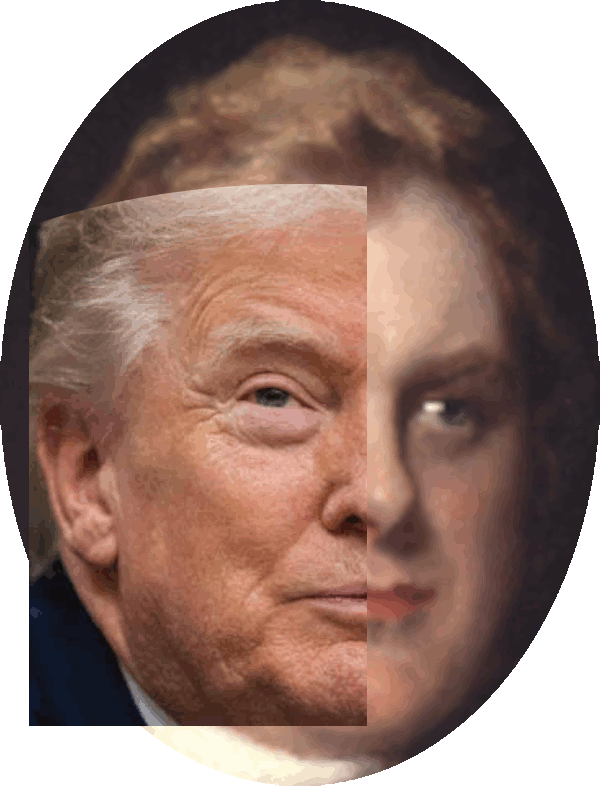 |
24th Prime Minister
Blubberer |
-He was seen as lacking the 'steel' to control his cabinet, constantly vacillating between Whig and Tory demands, satisfying neither, and proving unfit for the top job.
- His wife's severe depression added immense stress, while he himself suffered from nerves, making him appear weak and easily upset, earning him the nickname
'the Blubberer.'
- He only lasted 144 days.
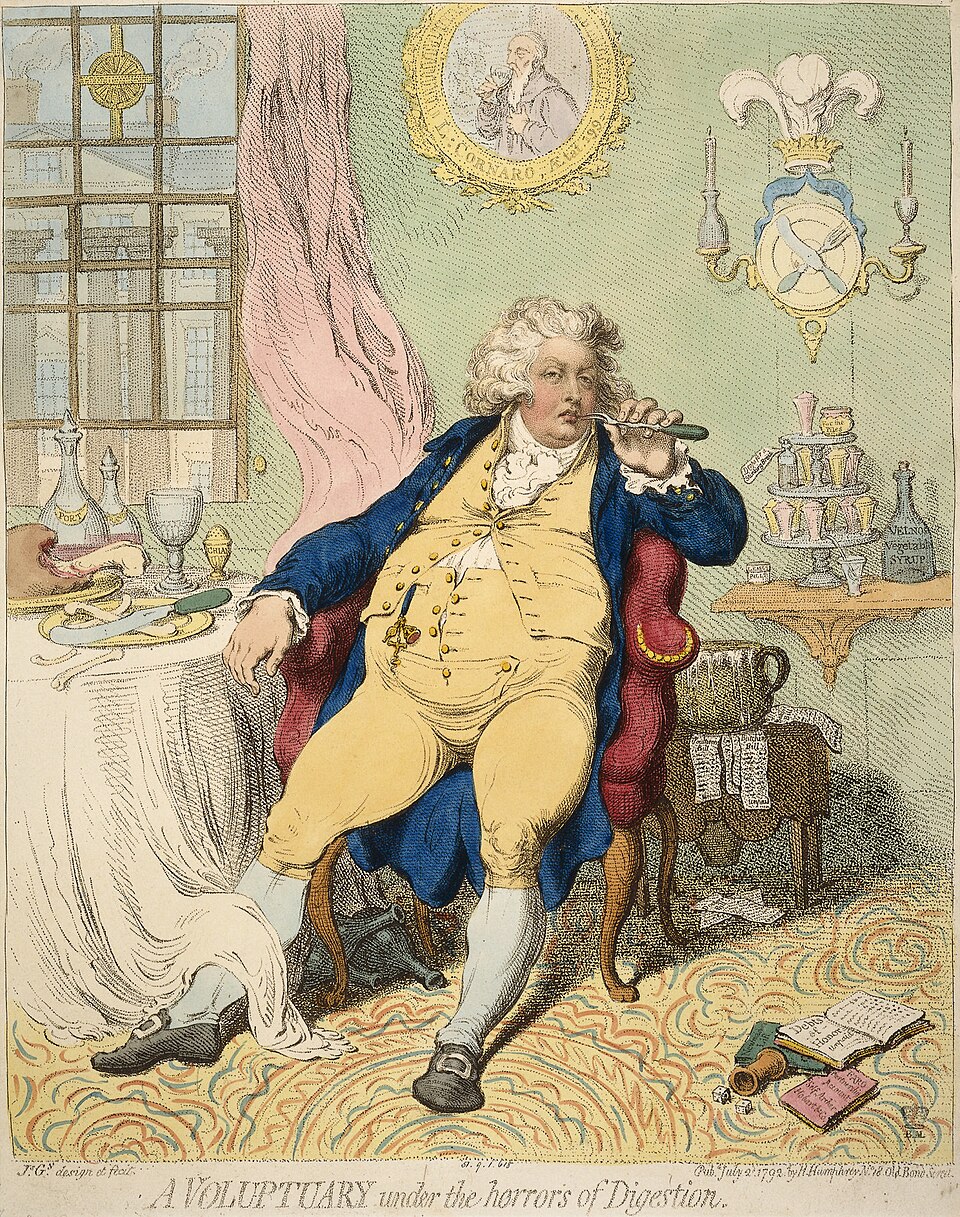
The horrors of digestion |
- Meanwhile, back at Windsor Castle, at about 3 in the morning of June 26, 1830, George awoke and passed a bowel movement, "a large evacuation mix'd with blood."
- George III died at 3:15 am.
- An autopsy conducted by his
physicians revealed he had died from upper
gastrointestinal bleeding resulting from the rupture of a
blood vessel in his stomach.
- A large tumor 'the size of an orange' was found attached to his bladder; his heart was enlarged, had heavily calcified valves and was surrounded by a large fat deposit.
- George's rule was tarnished by scandal and financial extravagance
and his ministers found his behavior selfish, unreliable and irresponsible.
King William
IV of the United
Kingdom
1830 -
1837
House of Hanover |
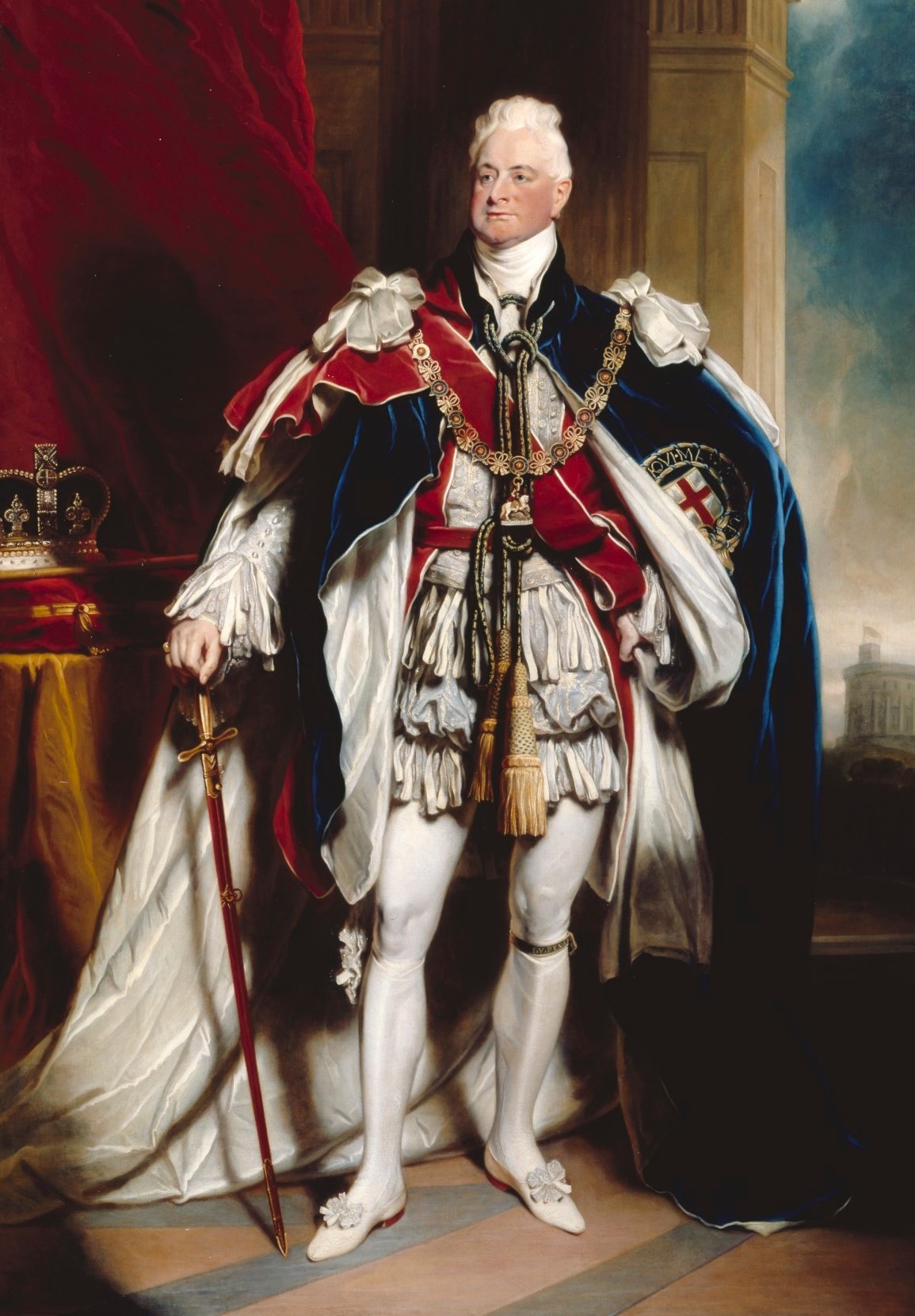
Martin Archer Shee, Public domain, via Wikimedia Commons
Coronation Robes |
- William IV was born William Henry (1765-1837) on August
21, 1765.
- He was King of the United Kingdom of Great Britain and Ireland and King of Hanover from June
26, 1830, until his death on June 20, 1837.
- The third son of George III, William succeeded his elder brother George IV, becoming the last king and penultimate monarch of the United Kingdom's House of Hanover.
War horse |
- William IV was actively involved in wars during his youth as a Royal Navy officer, serving in the
American Revolutionary War (visiting New York and surviving a kidnapping plot) and fighting in naval battles like Cape St. Vincent, earning him the nickname
'Sailor King' before his career ended in 1790.
-
In essence, William IV's war experience was primarily as a young, daring naval officer, making him a unique figure in British royal history.
William Henry
1765-1837
8/21 6/20 |
Elon Reeve Musk
1971
6/28 |
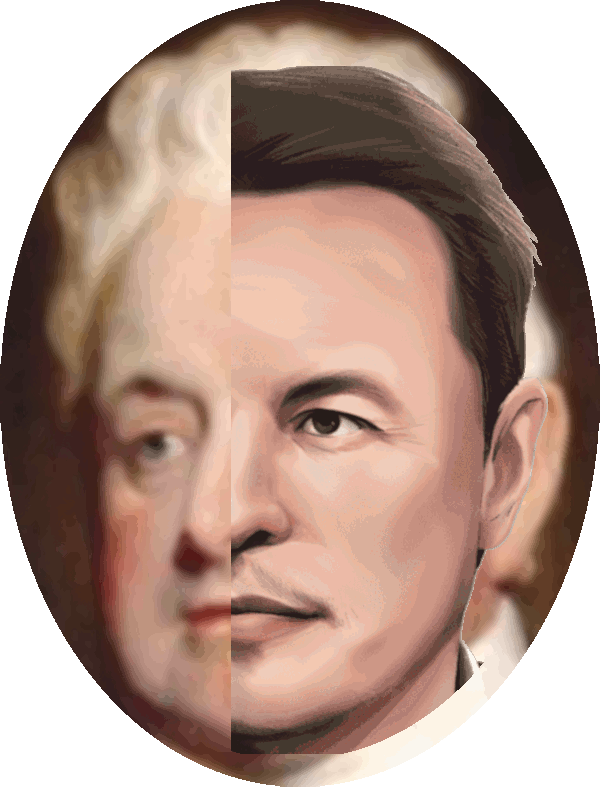 |
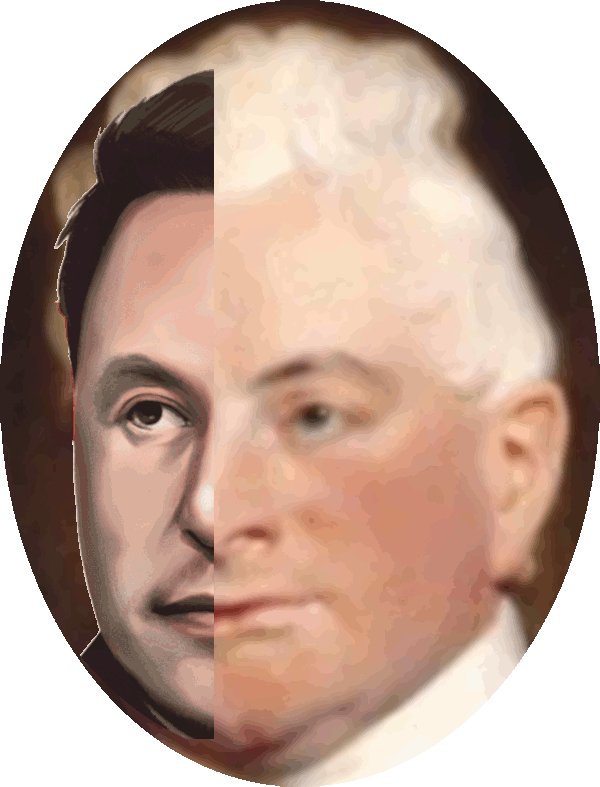 |
|
Heirless |
- William had no surviving legitimate children at the time of his death, so he was succeeded by his niece Victoria in the United Kingdom and his brother Ernest Augustus in Hanover, ending the 123-year personal union between the two countries.
|
William IV
as William Boyce |
William Henry
1765-1837
8/21 6/20 |
William Boyce
1711-1779
9/11
2/7
Composer |
 |
 |
|
The Sailor King |
- William IV had a strong sense of duty, an almost obsessive need for order and rules, and spoke his mind, often bluntly.
- King William IV died from congestive heart failure, a common natural cause for the elderly, passing away at
age 71 on June 20, 1837, at Windsor Castle, leading to the succession of his niece, Queen Victoria.
25th Prime
Minister of United
Kingdom
1828-1830
(1st term)
Arthur
Wellesley, 1st Duke
of Wellington |
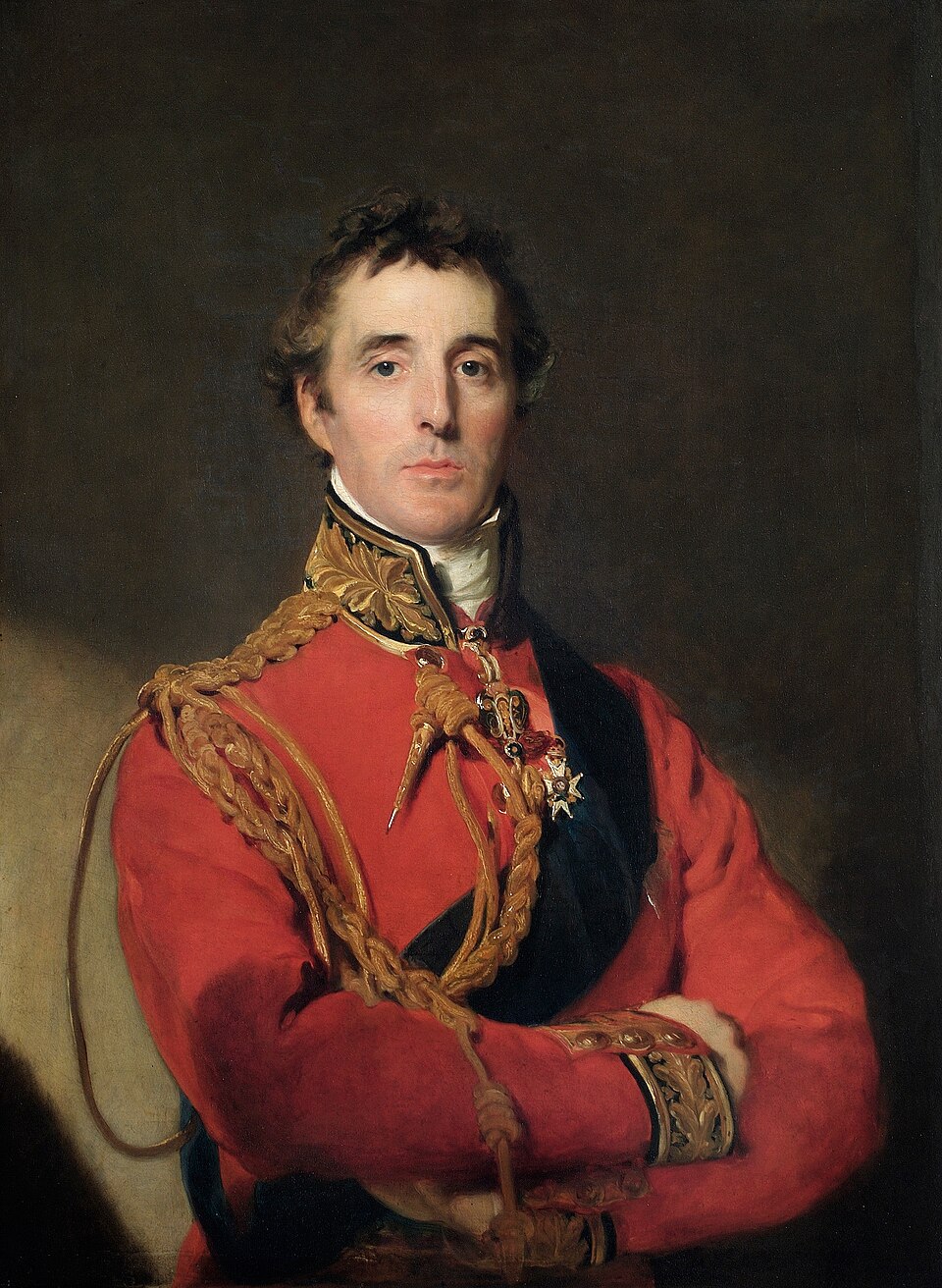
Thomas Lawrence, Public domain, via Wikimedia Commons
The Duke of
Wellington, c.1815 - upper
house
Hidden hand |
- Field Marshal Arthur Wellesley (1769-1852), 1st Duke of Wellington (né Wesley) was an Anglo-Irish British Army officer and statesman who was one of the leading military and political figures in Britain during the early 19th-century, twice serving as Prime Minister of the United Kingdom.
- He was one of the British commanders who ended the
Anglo-Mysore wars by defeating Tipu Sultan in 1799, and among those who ended the
Napoleonic Wars in a Coalition victory when the Seventh Coalition defeated Napoleon at the
Battle of Waterloo in 1815.
|
Fatherless at an early age, and neglected by his mother, he was a reserved, withdrawn child. He failed to shine at Eton, and instead attended private classes in Brussels, followed by a military school in Angers. (gov.uk)
|
|
Duke of Wellington as Trump |
 |
|
Arthur Wellesley
1769-1852
5/1
9/14
Prime Minister |
Donald John Trump
1946
6/14 |
 |
 |
25th Prime Minister
Metro police |
-
Wellington's major act in office was called the Roman Catholic Relief Act
where he removed many of the restrictions on Roman Catholicism in the United
Kingdom.
- He is famous for his major role in the Napoleonic wars.
- He fought at Flanders in 1794, and directed the campaign in India in 1796, where his elder brother was Governor General.
- Knighted for his efforts, he returned to England in 1805.
- Wellington boots are named after him.
-
Arthur Wellesley was succeeded by Sir Robert Peel.
|
Ironically, the young duke had no desire for a military career. Instead he wished to pursue his love of music. Following his mother’s wishes, however, he joined a Highland regiment. (gov.uk)
|
26th Prime
Minister of United
Kingdom
1830-1834
Charles
Grey, 2nd Earl Grey |
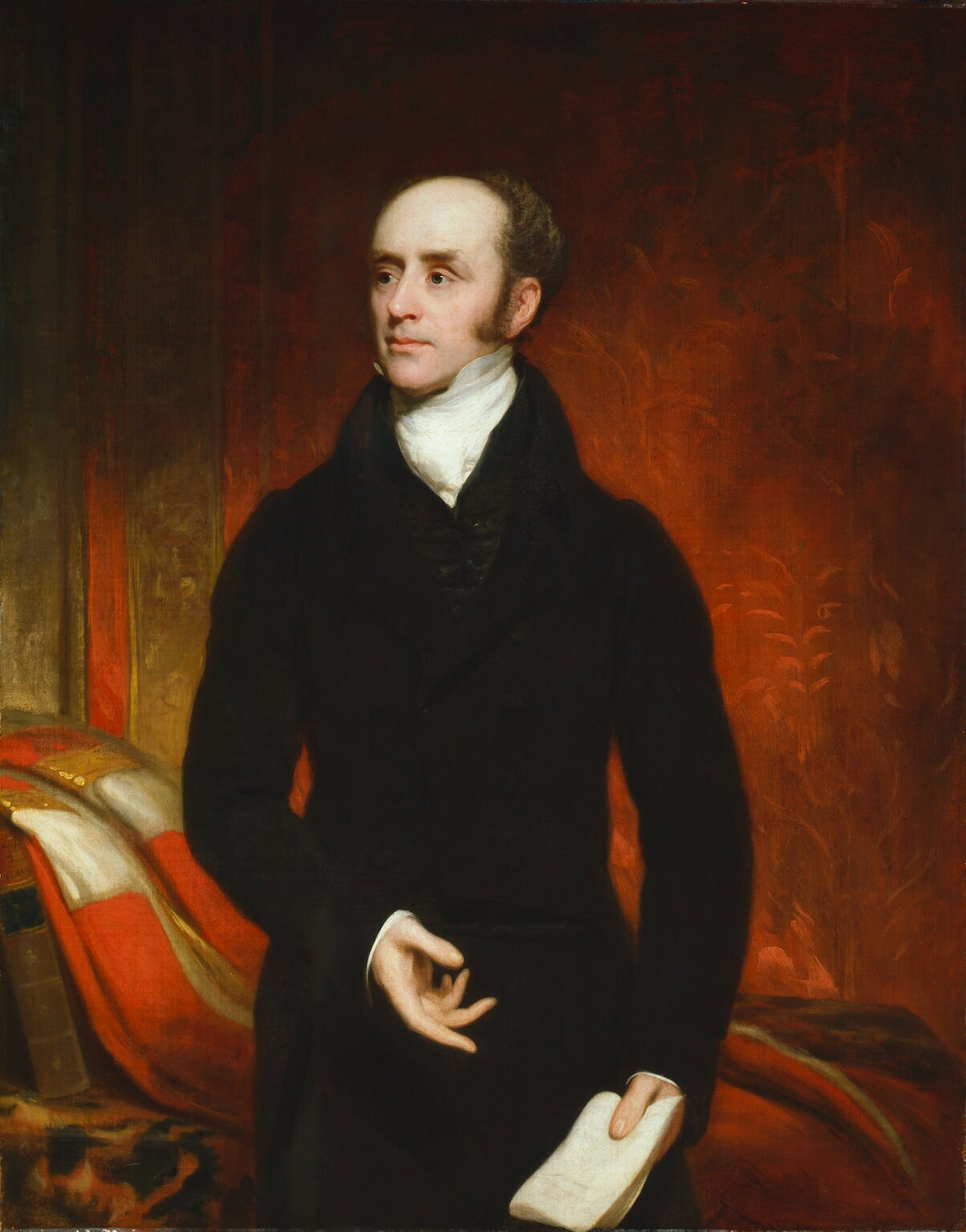
Thomas Phillips, Public domain, via Wikimedia Commons
Masonic hand |
- Charles Grey, 2nd Earl Grey (1764-1845) was a British Whig politician who served as prime minister of the United Kingdom from 1830 to 1834.
- His government enacted the Reform Acts of 1832, which expanded the electorate in the United Kingdom, and the
Slavery Abolition Act of 1833, which abolished slavery in the British Empire.
- Born into a prominent family in Northumberland, Grey was educated at Eton College and the University of Cambridge.
- While traveling in Europe on a Grand Tour, his uncle secured his election as member of parliament (MP) for Northumberland in a 1786 by-election.
- Grey joined Whig circles in London and was a long-time leader of the reform movement.
- He briefly served as First Lord of the Admiralty and as foreign secretary in the Ministry of All the Talents from 1806 to 1807 and then remained in opposition for nearly 24 years.
- He was asked to form a ministry by William IV in 1830, following the resignation of Wellington.
|
Charles Grey as Elon Musk |
 |
 |
Charles Grey
1764-1845
3/13
7/17
Prime Minister |
Elon Reeve Musk
1971
6/28
Chief thief |
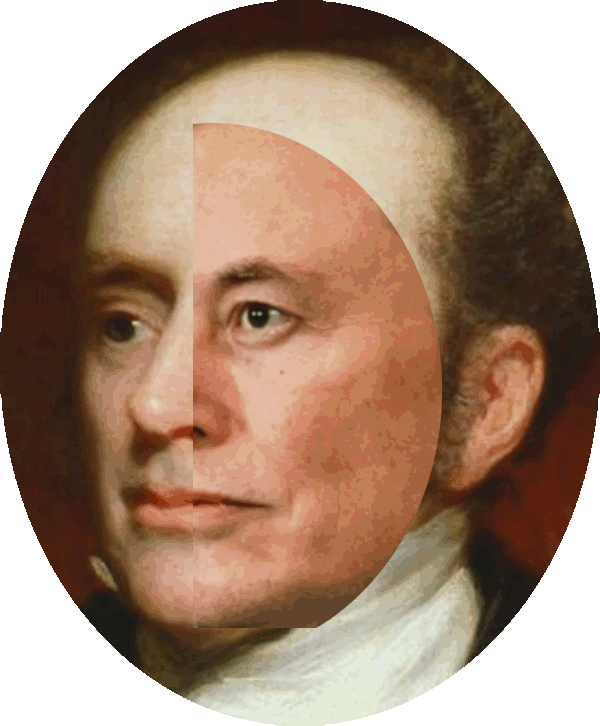 |
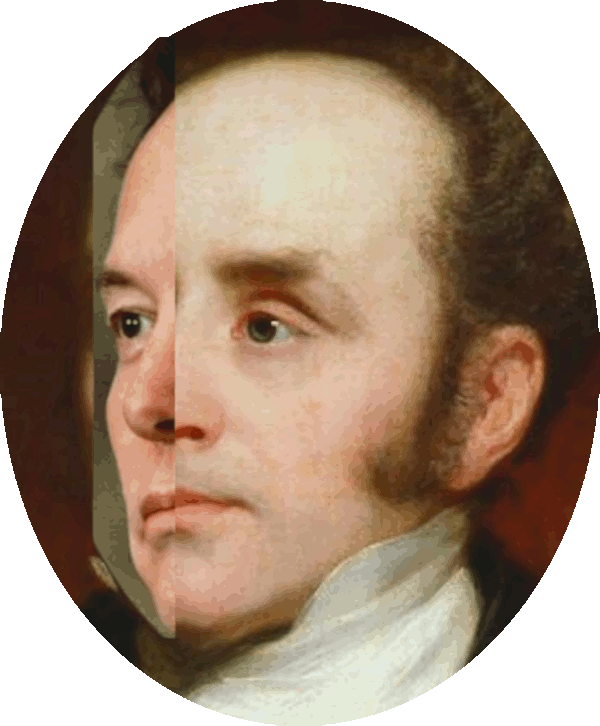 |
26th Prime Minister
Earl Grey Tea |
-
Abolition of Slavery (1833) while ending slavery, it compensated slave owners and delayed freedom for slaves with indentures, a controversial compromise.
-
Grey was famous for passing the landmark Reform Act of 1832
and modernizing the electoral system.
27th Prime
Minister of United
Kingdom
1834-1834
(1st term)
Henry
William Lamb, 2nd
Viscount Melbourne |
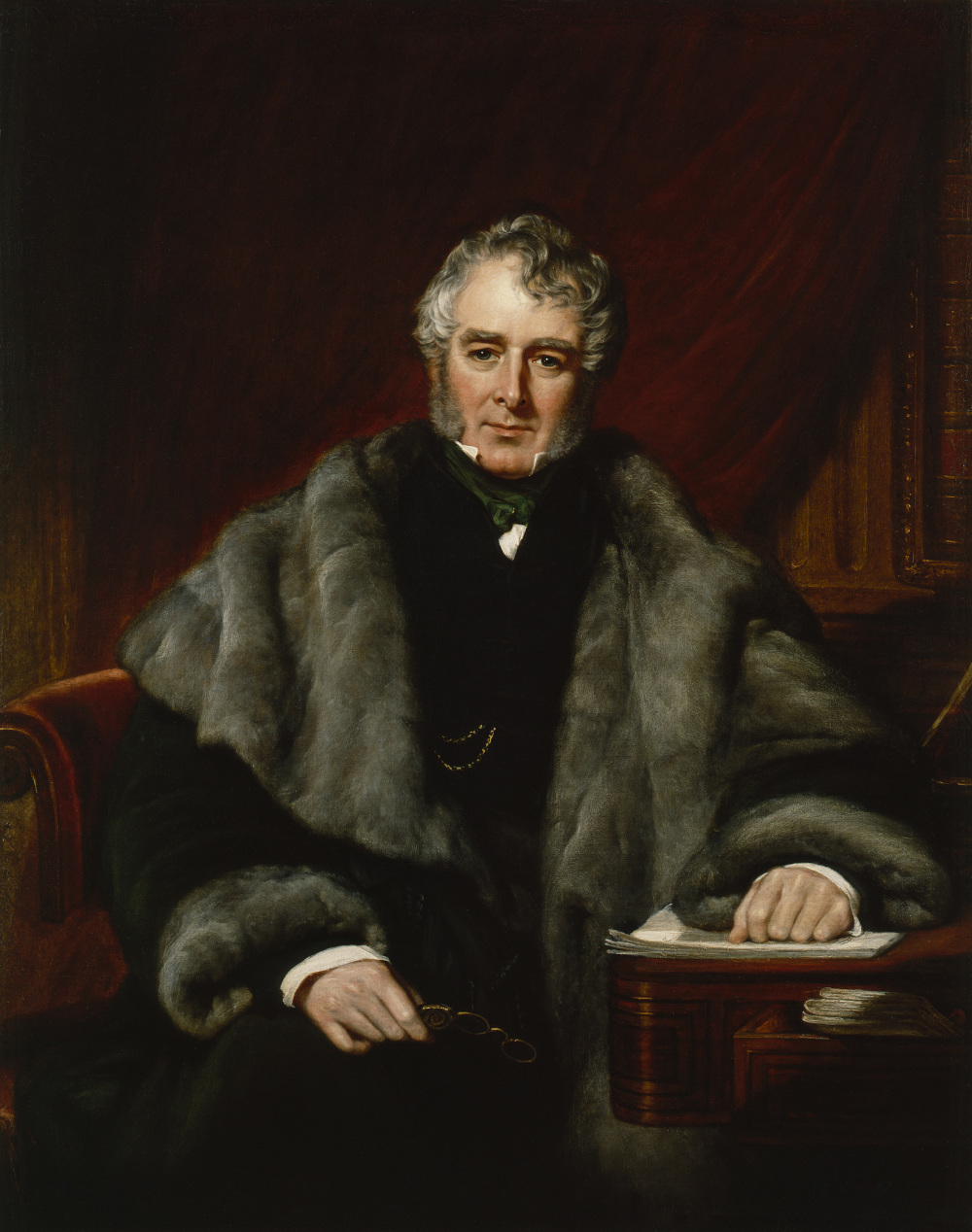
John Partridge, Public domain, via Wikimedia Commons
Masonic hand |
- Henry William Lamb, 2nd Viscount Melbourne (1779-1848), was a British Whig statesman who twice served as Prime Minister of the United Kingdom, first in 1834 and again from 1835 to 1841.
- He also held senior cabinet roles including Home Secretary
from 1830–1834 and Chief Secretary for Ireland from 1827–1828, and led the House of Lords and the Opposition during key transitions in the early Victorian era.
|
Henry William Lamb as
Hannibal Lecter |
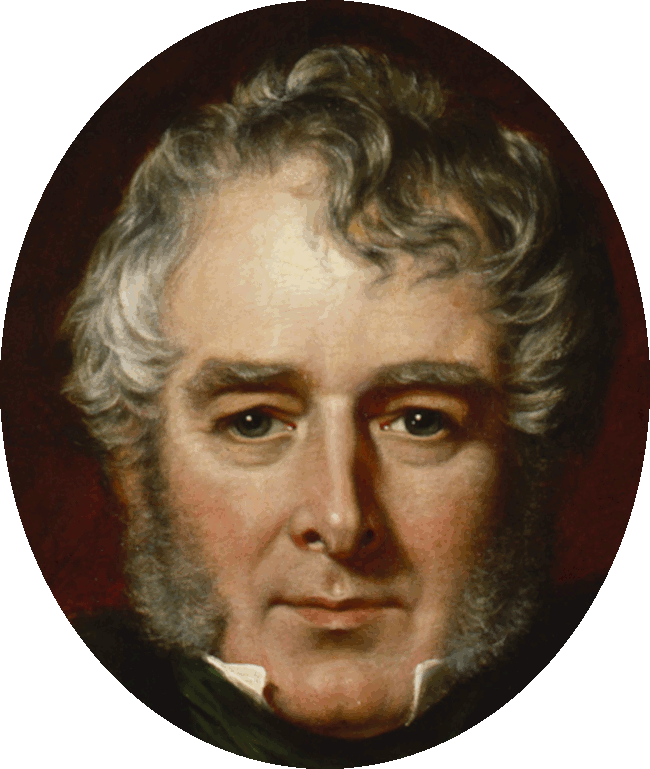 |
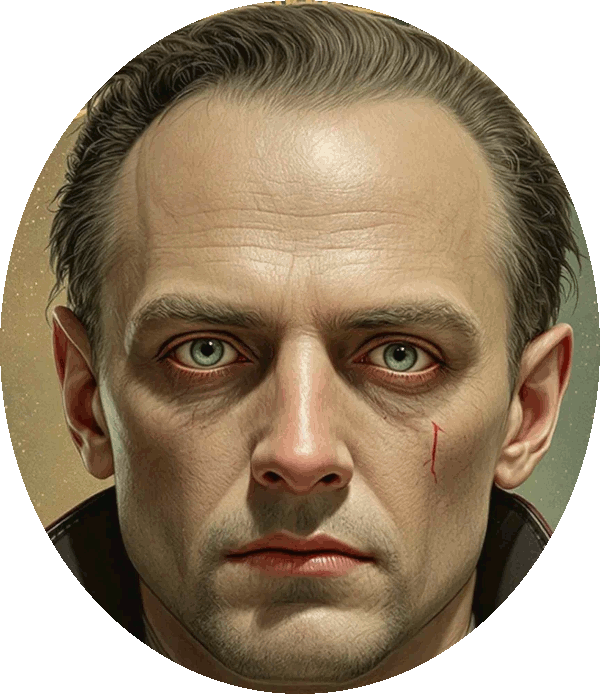 |
Henry William Lamb
1779-1848
3/15
11/24
Prime Minister |
Hannibal Lecter
|
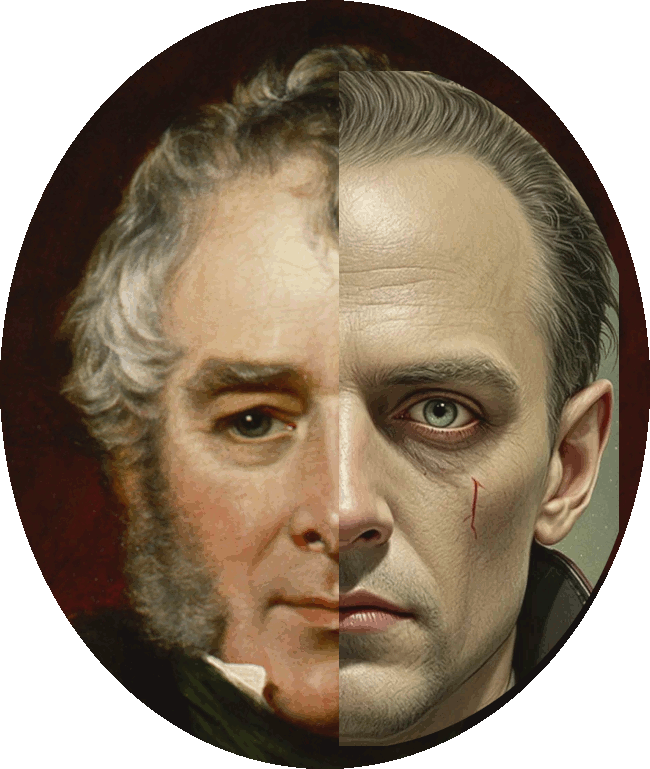 |
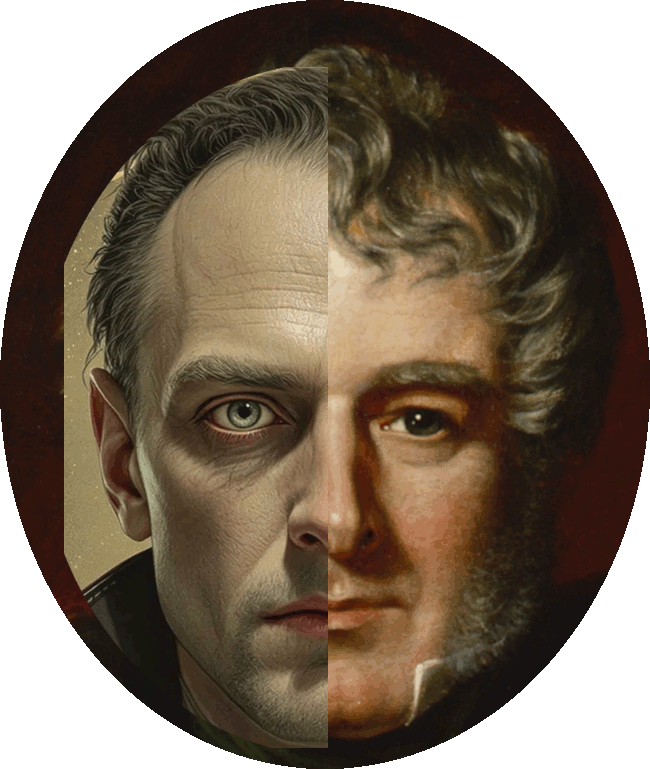 |
27th Prime Minister
Lord Byron |
- Melbourne faced blackmail and public scandal over accusations of an affair with writer Caroline Norton, though his government survived due to support from the King and Duke of Wellington.
- Social unrest grew with the rise of the Chartist movement and opposition to the new
Poor Law, creating widespread instability.
- Melbourne’s first premiership ended when he was dismissed by King William IV in November 1834, the last time a British monarch removed a sitting prime minister.
- He returned to office 5 months later and remained in power for
6 years, guiding Queen Victoria through her early reign and acting as a trusted advisor during her political initiation.
|
The British Poor Laws were a system of welfare, evolving from 16th-century English legislation (notably the Elizabethan Poor Law of 1601) to provide relief for the poor through parish-based taxes, workhouses, and outdoor relief, but became harsher under the New Poor Law of 1834, which emphasized punitive workhouses to discourage dependency, lasting until the modern welfare state emerged post-WWII.
(Assistant)
|
28th Prime
Minister of United
Kingdom
1834-1834 (2nd
term) |
|
Arthur
Wellesley, 1st Duke of Wellington |
|
|
|
Arthur Wellesley
1769-1852
5/1
9/14
Prime Minister |
Donald John Trump
1946
6/14 |
|
|
|
28th Prime Minister
Metro police |
- His strong leadership style was less popular in politics, and he resigned in 1830 due to opposition to parliamentary reform, though he remained influential in government.
29th Prime
Minister of United
Kingdom
1834-1835
(1st term)
Robert
Peel, 2nd Baronet |
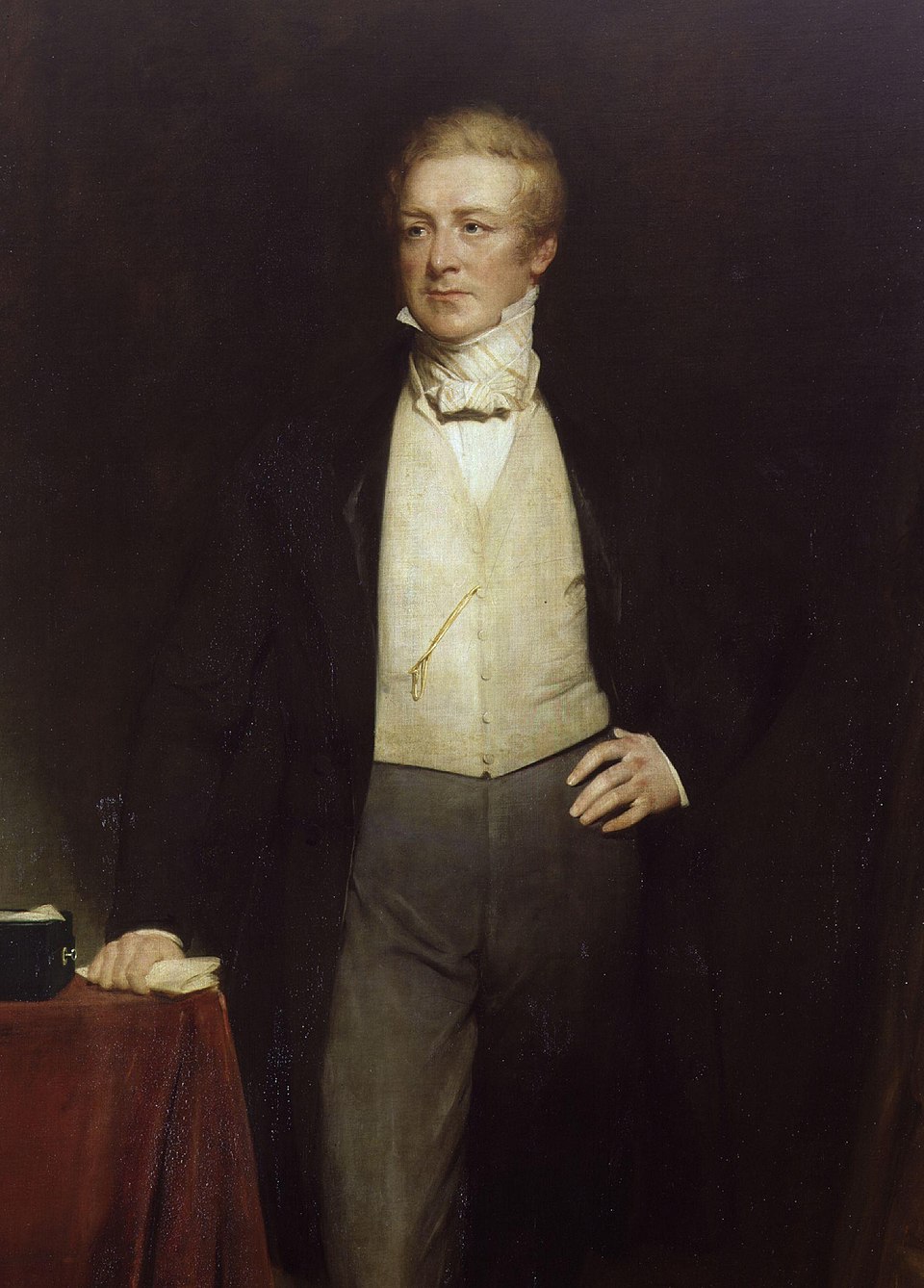
Henry William Pickersgill, Public domain, via Wikimedia Commons
Masonic hand sign
|
- Sir Robert Peel (1788-1850), 2nd Baronet, was a British Conservative statesman who twice was Prime Minister of the United Kingdom (1834–1835, 1841–1846), and simultaneously was Chancellor of the Exchequer (1834–1835).
- He previously was Home Secretary twice (1822–1827, 1828–1830).
- He is regarded as the father of modern British policing, owing to his founding of the Metropolitan Police while he was Home Secretary.
- Peel was one of the founders of the modern Conservative Party.
|
Sir Robert Peel as Trump |
 |
|
Sir Robert Peel
1788-1850
2/5 7/2
Prime Minister |
Donald John Trump
1946
6/14 |
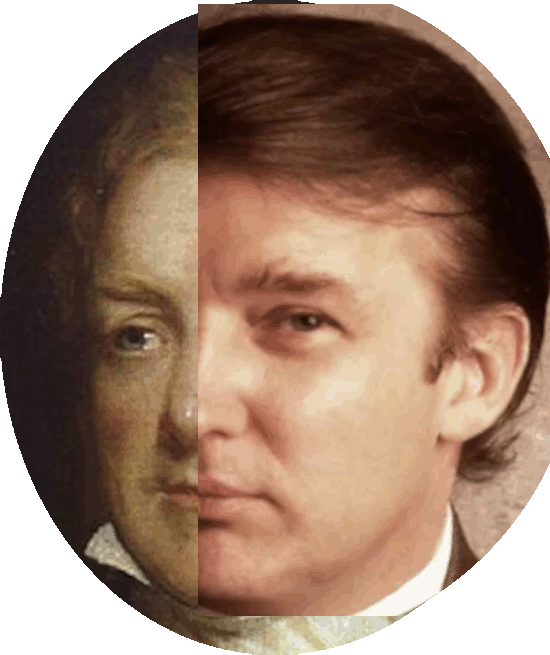 |
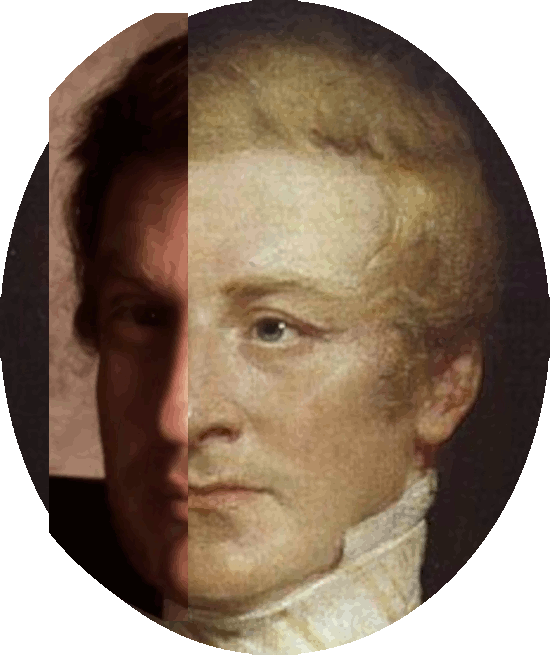 |
29th Prime Minister
Orange Peel
Metro police |
- It was in 1829 that Peel established the Metropolitan
Police Force for London based at Scotland Yard.
- The 1,000 constables employed were affectionately nicknamed 'bobbies' or, somewhat less affectionately, 'peelers.'
|
War gives the right to the conquerors to impose
any condition they please upon the vanquished.
Shakespeare,
Julius Caesar

|