|
PAST LIVES - TUDOR WIVES - ANNE OF CLEVES - PAGE 4

Morning glory |
- Anne of Cleves, also known as Anna von der Mark,
Duchess of Cleves, was the 4th wife of King Henry VIII
and is famous for surviving her short marriage and keeping her head when the union was
cut short.
- Sent to a foreign country to marry a man she
never met, rejected on arrival all because she didn't
recognize his silly 'kingly' game and because she didn't know who he was
when he broke into her room dressed in rags and kissed her
when her eyes were closed.
- Henry did this in the aftermath of being blamed for his own body's failure, impotence
and rotting corpse that filled the room with stench.
-
Anne was required to smile through the humiliation of annulment and
forced to agree that the 'problem' was hers and to accept
exile in exchange for her life, knowing what happened to a
previous wife who spoke out.
- Only to live in isolation,
separated from her family, no chance to marry again, for the
remainder of her short life.
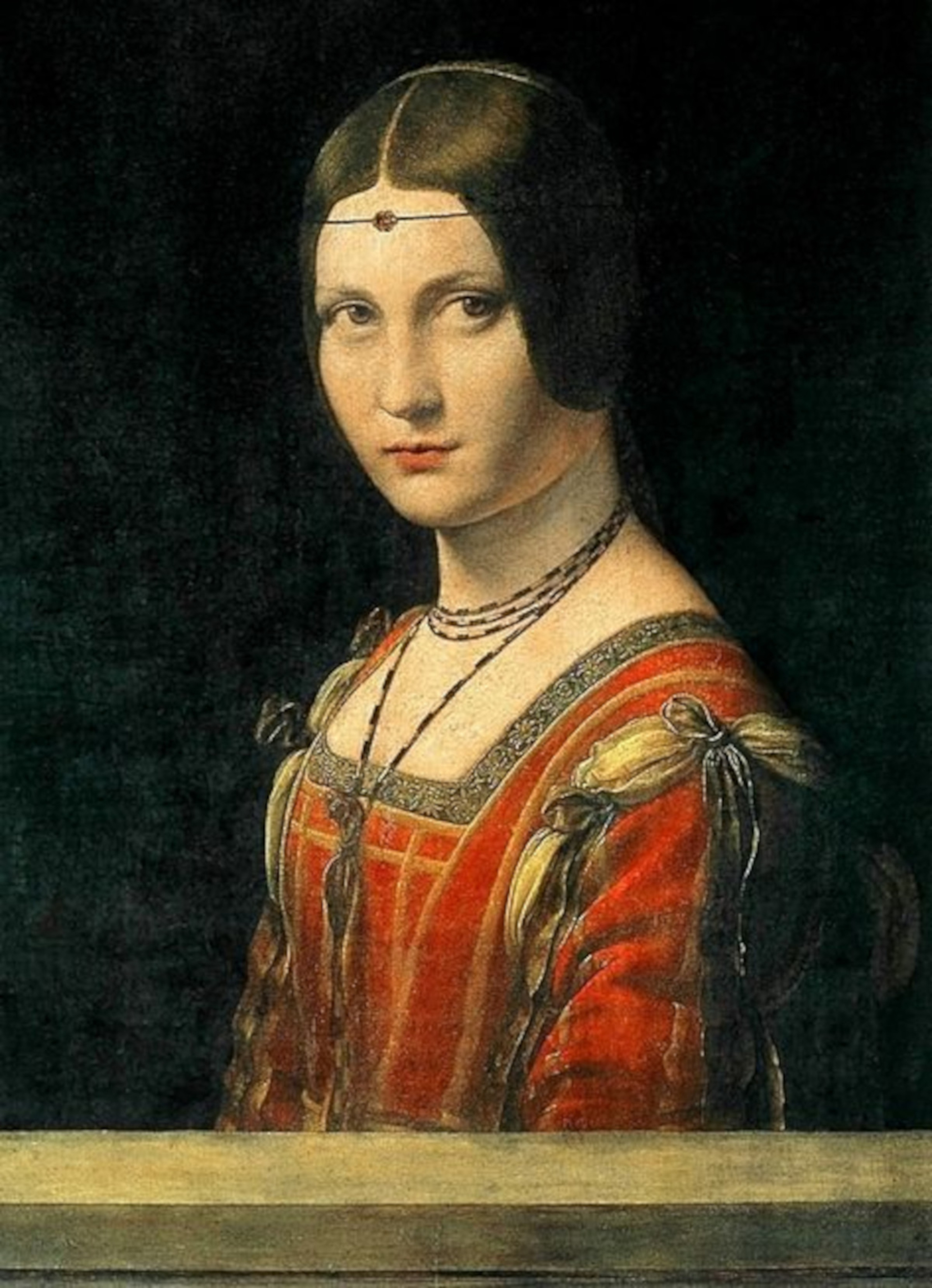
Leonardo da Vinci, Public domain, via Wikimedia
Commons
Anne of Cleves - La Belle Ferronnière |
- Anne of Cleves (1515-1557) who was called Anna von Kleve
in German was born in 1515 and died on July 16, 1557.
- She was Queen of England as the
4th wife of Henry VIII from January 6 to July 12, 1540.
- Anne was born at Schwanenburg Castle near Düsseldorf, Germany.
|
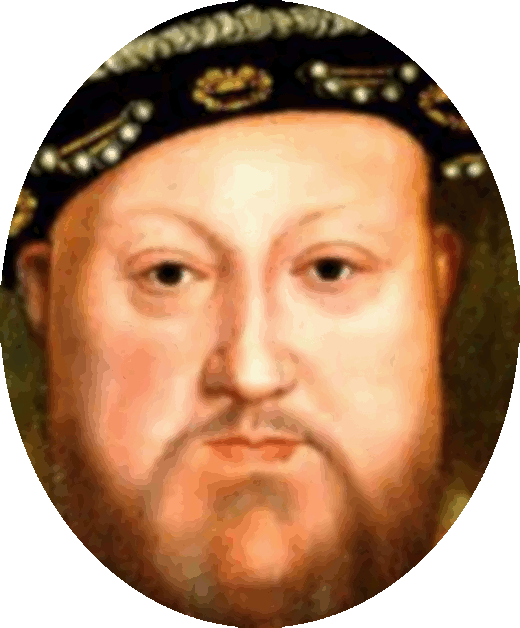
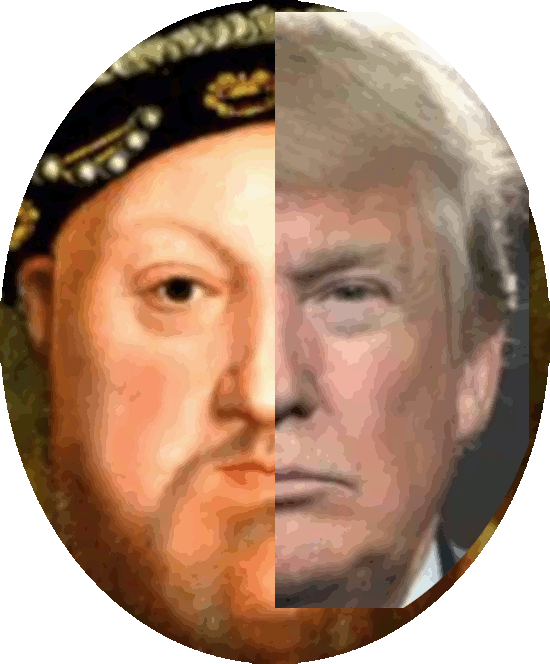
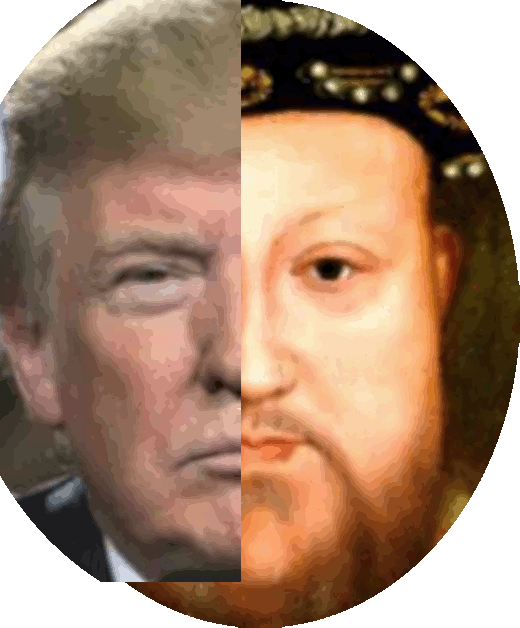
Henry VIII as Donald Trump |
 |
 |
Henry Tudor
1491-1547
6/28
1/28
King of England
|
Donald John Trump
1946
6/14
Lucifer's clone from Omega Centauri |
 |
 |
Orange man
Age 48 |
- The disastrous first meeting between Anne of Cleves and King Henry VIII
took place in Rochester.
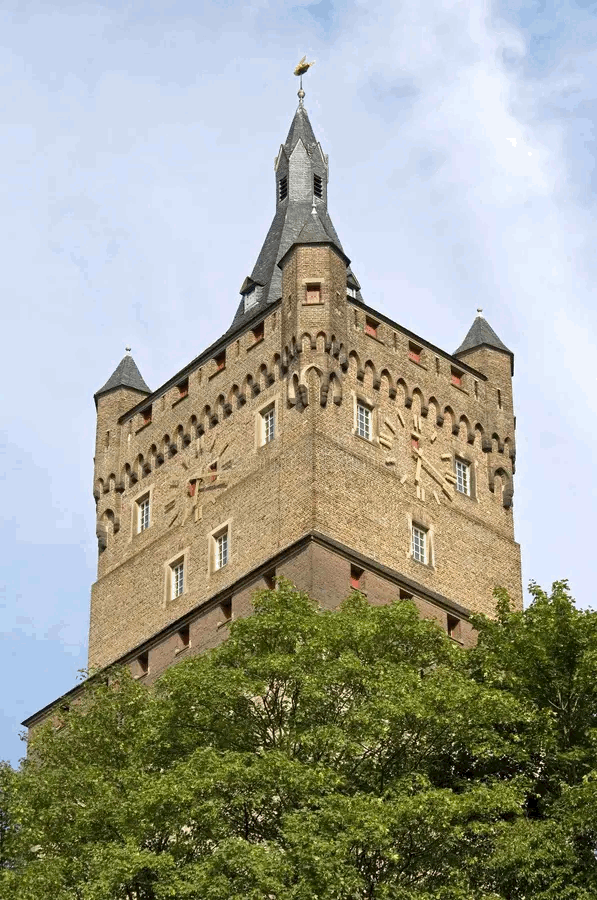
Schwanenburg Castle |
- She came from a family of many generations of strong
women who played different governing roles in their
communities.
- Unlike the British, who would only allow the
males to rule, the Germans weren't about to give away that
power to some distant family if no sons were born, the
daughters always stepped in.
- They were hard-working
people and valued their daughters as much as their sons,
unlike the rest of Europe.
- Because German woman could
often be expected to exercise full power and responsibility in
the absence of male authority figures, Anne and her sisters
received an education comparable to what males received.
-
In fact, it was an education that their English contemporaries
would have considered to be rather masculine in character.
- But at the same time, they were also taught household
management, like all young women in Europe, whether they were
Duchess or peasant.
- For German noblewomen, their
education seems to have
been much more hands on than it was for the English, French or
Spanish aristocrats.
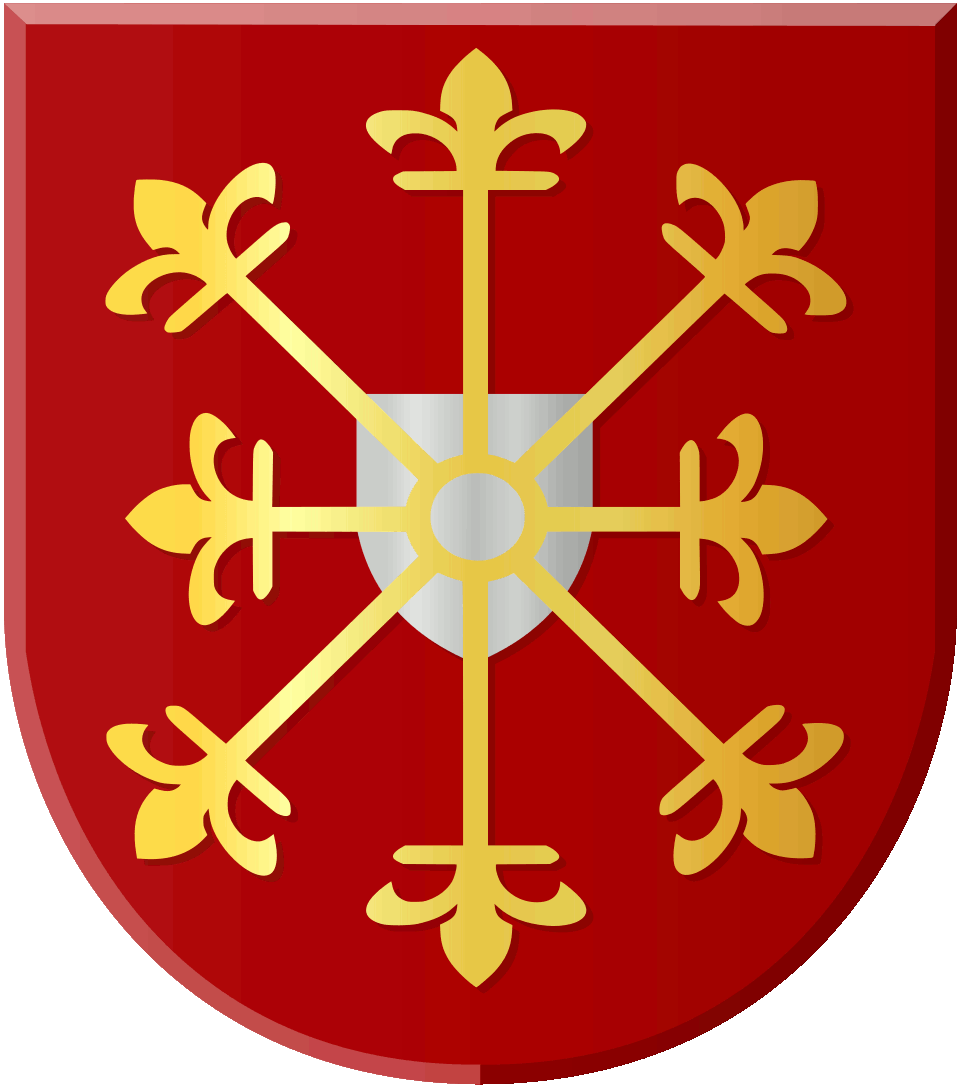
Arch, Public domain, via Wikimedia Commons
Coat-of-arms of Cleves |
- While elite women from England, Spain or France almost
never performed domestic tasks personally, German noblewomen
were frequently taught to cook, to sew, and to make clothing.
- This made a lot of sense because if a noblewoman of a large
estate didn't understand what was involved running an estate,
she could hardly be depended on to manage one properly,
-
The productivity and profitability of their daily activities
earned praise for German noblewomen, who were seen as equal
contributors to their marriages and families.
- Sometimes a
noblewoman's household economy might even yield more profit
than her lands, if shrewdly managed.

German embroidery |
- Some aristocratic European women had the opportunity
to pursue a scholarly and intellectual education, but this was
probably not the case with Anne of Cleves.
- She may have been taught to dance
and her parents ducal establishments regularly patronized
musicians of talent, but Anne was not taught to sing or play
any musical instruments.
- She was taught to read and
write, but only in German, and there is no indication that she
studied the standard academia of the Renaissance like
rhetoric, history or philosophy.
- Most of her early
education was more than likely centered around the purely
practical; literacy, estate and household management, sewing
and embroidery.
|
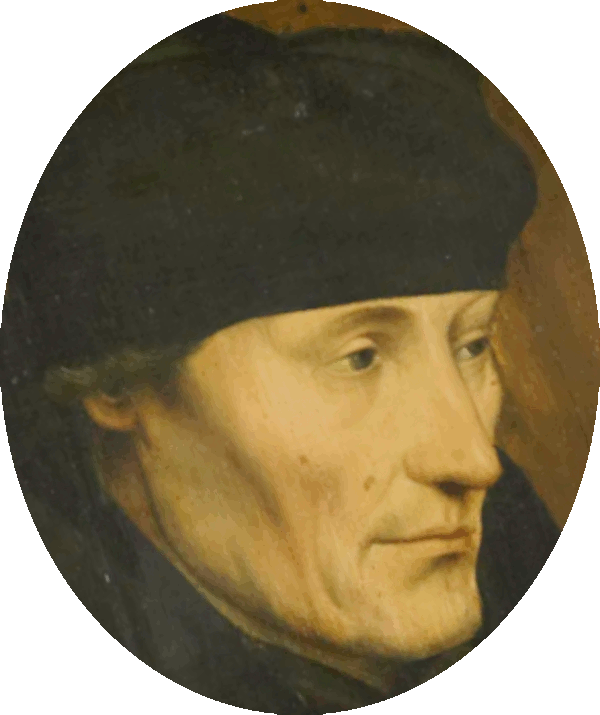
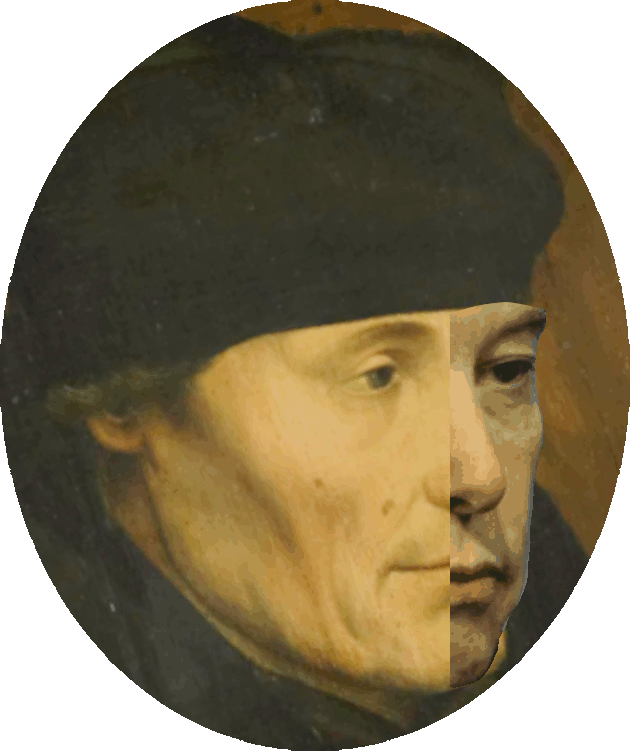
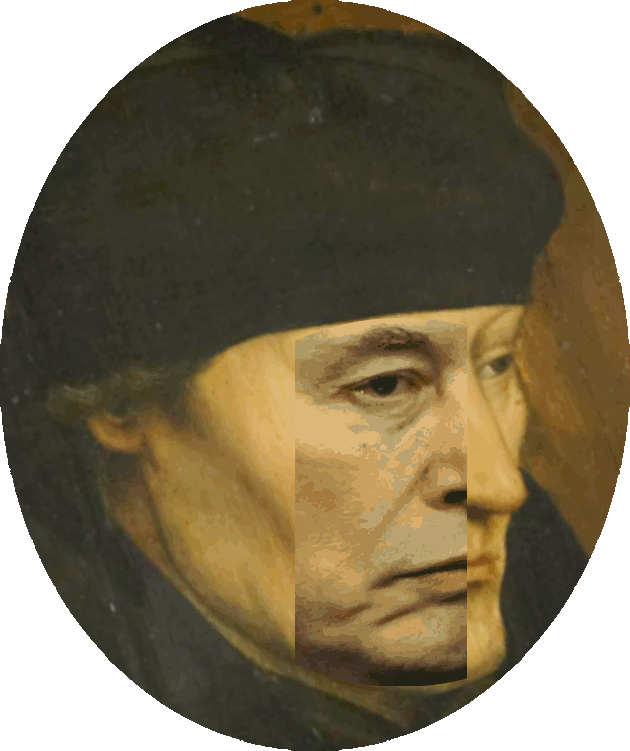
Erasmus as Elon Musk |
 |
 |
Desiderius Erasmus Roterodamus -c.1466-1536
10/28
7/12
Dutch humanist, theologian, and philosopher |
Elon Reeve Musk
1971
6/28
Satan
from Alpha Centauri
|
 |
 |
|
Razz |
- Desiderius Erasmus Roterodamus (c.1466-1536), commonly known in English as Erasmus of Rotterdam or simply Erasmus, was a Dutch humanist, theologian, and philosopher.
- He was, through his writings and translations, one of the most influential scholars of the Northern Renaissance and a major figure of Western culture.
- Like many thinkers of the 16th century, Erasmus often viewed women as naturally weaker, more emotional, or prone to vanity and deceit compared to men.
- Even when he promoted female education, he typically framed it as a way to make women better wives, mothers, and keepers of the home, rather than pushing for political or social equality.
- Learning was sometimes viewed by him as a tool to cure idleness or compensate for perceived natural shortcomings
and he heavily praised women primarily within traditional confines, as caregivers, pious workers, and dutiful providers of physical comfort to husbands.
Public Domain, via
Wikimedia Commons
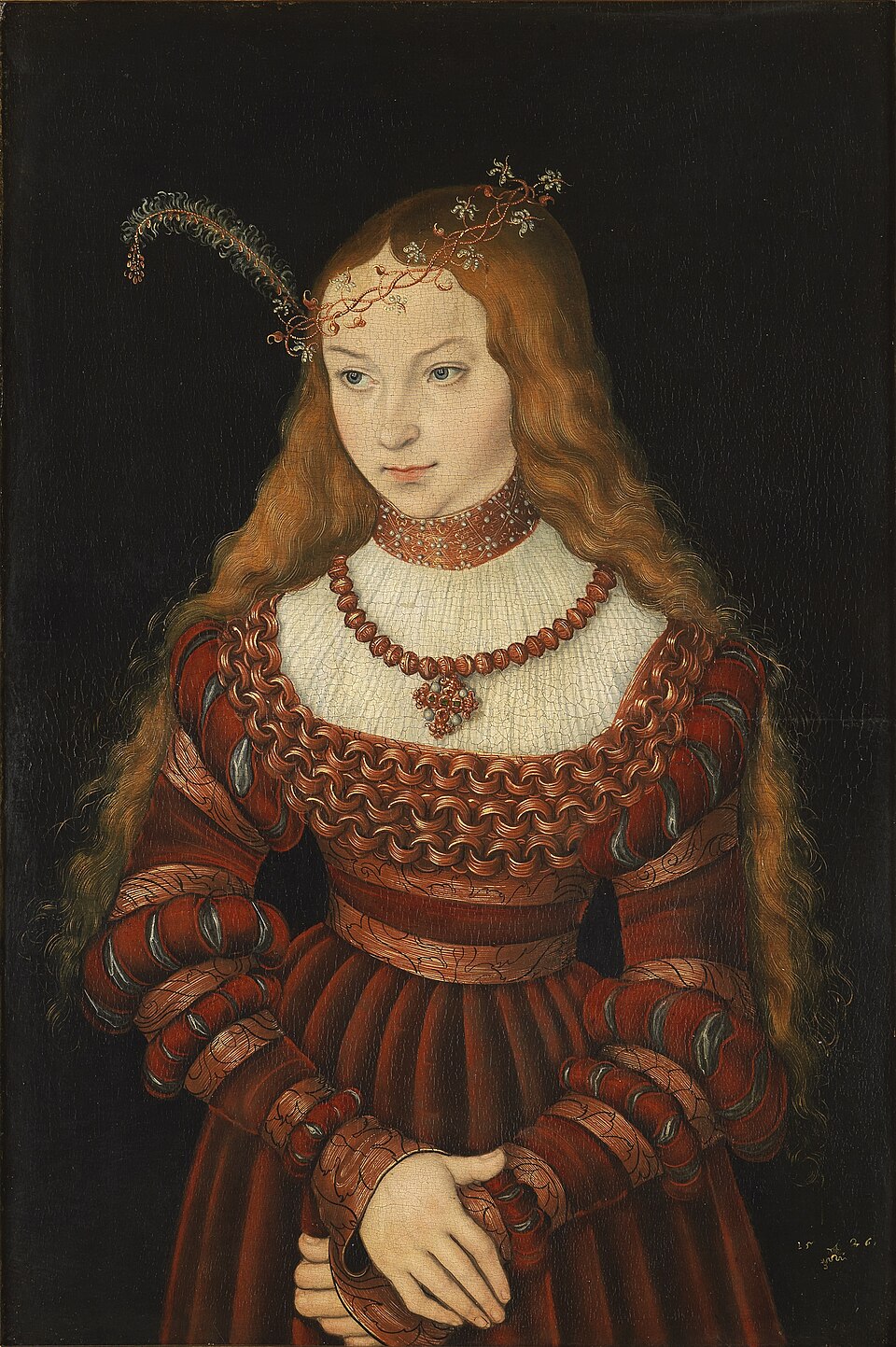
Sibylle |
- Anne's education was not necessarily because of her
gender, her father, Johann, was a friend and correspondent of
the famed Dutch philosopher Erasmus and was quite scholarly
himself.
- He did not seem to have discouraged
intellectualism in his daughters but look at the source,
Erasmus.
- Anne's older sister,
Sibylle of Cleves proved to be quite a
fierce intellectual, a friend and correspondent of Martin
Luther, and a passionate and admired Lutheran reformer.
|
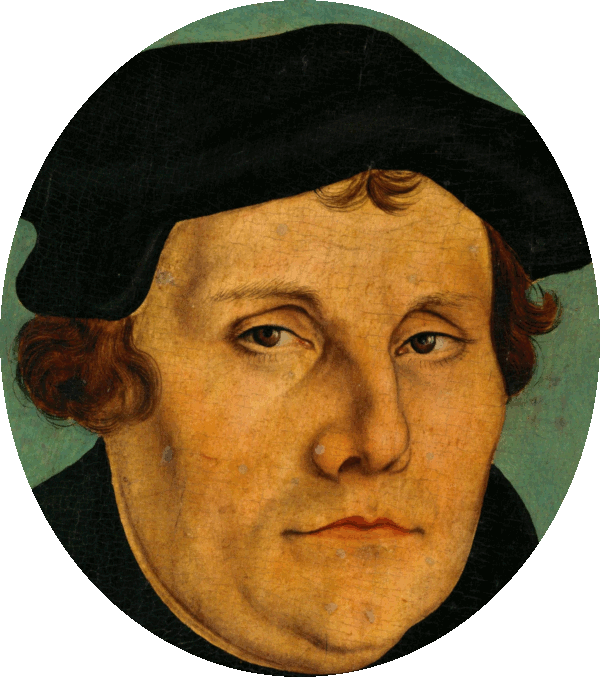
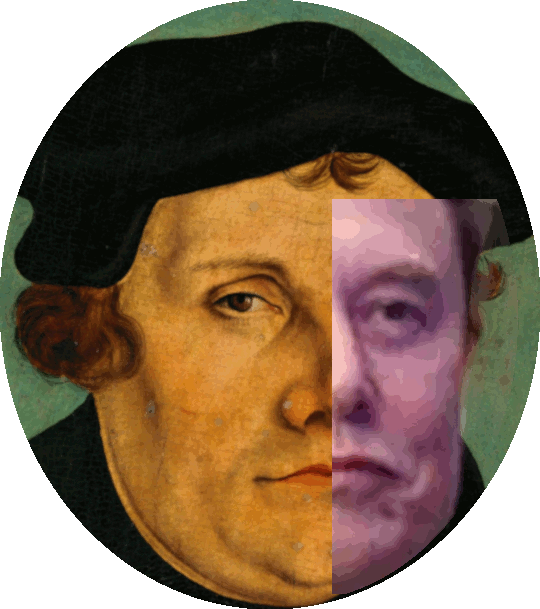
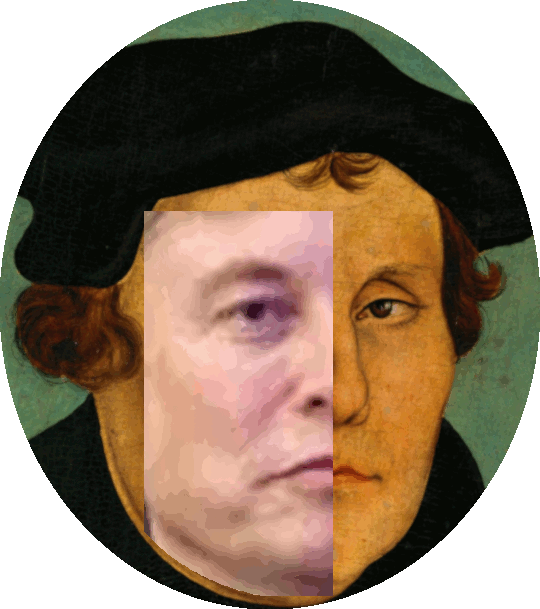
Martin Luther as Elon Musk |
 |
 |
Martin Luther
1483-1546
11/10
2/18
Priest, Theologian, Author, Hymn writer
|
Elon Reeve Musk
1971
6/28
Satan from Alpha Centauri
|
 |
 |
|
Heavy pike used to hunt boars |
-
Martin Luther (1483-1546) was a German priest, theologian, author, hymn writer, professor, and former Augustinian friar.
- Luther was the seminal figure of the Protestant Reformation, and his theological beliefs form the basis of Lutheranism
and he is considered one of the most influential figures in Western and Christian history.
- Citing the fall of Eve, Luther viewed women as physically and constitutionally weaker, asserting that they were meant to submit to male leadership in public life and marriage.
- Public ministry, civic rule, and church governance remained strictly reserved for men, limiting women's authority to the household, where they co-ruled domestic life, property, and child-rearing.
-
However,
Sibylle's religious and political leanings were
likely influenced more by her husband than by her parents.
- Sibylle was married at the age of 15 to Prince Johann
Friedrich, Elector of Saxony who was a fiercely Protestant
friend and supporter of Martin Luther, and a thorn in the side
of Holy Roman Emperor, Charles V.
|
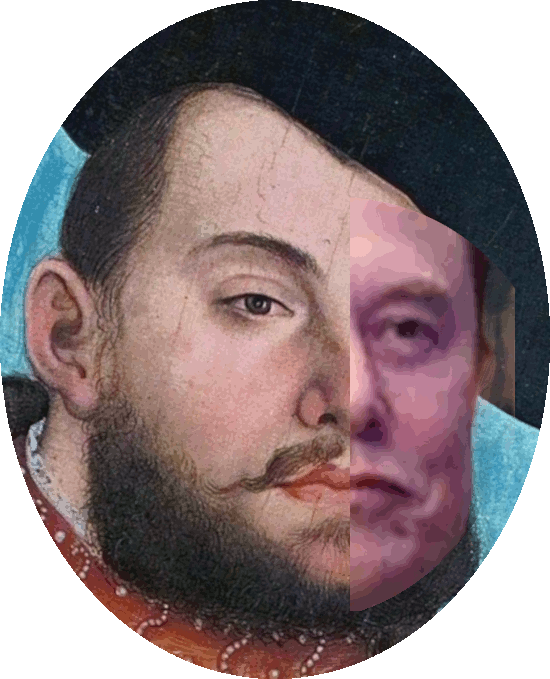
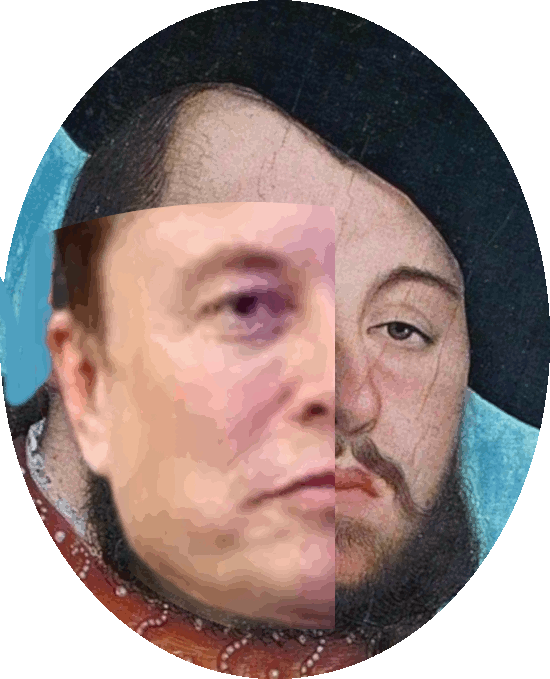
John Frederick I of Saxony as Elon Musk |
 |
|
Johann Friedrich I. von Sachsen
1503-1554
6/30
3/3
Prince-Elector and Arch-Marshal of the Holy
Roman Empire |
Elon Reeve Musk
1971
6/28
Satan
from Alpha Centauri
|
 |
 |
|
Magnanimous der Großmütige |
- John Frederick I (1503-1554) was the Prince-Elector and Arch-Marshal of the Holy Roman Empire (1532–1547) from the Ernestine branch of the Saxon ruling House of Wettin, who initially governed over the Ernestine Electorate of Saxony, centered on Saxe-Wittenberg, until he was deprived of his electoral titles and most domains by the Capitulation of Wittenberg (1547).
- He was left with the Saxon ducal title, and Ernestine possessions in Thuringia.
- Previously, he was leading the Schmalkaldic League, a military alliance of Lutheran principalities.
- As a staunch champion of the Protestant Reformation and a close ally of Martin Luther, Johann Friedrich adhered to the Lutheran idea of the
'priesthood of all believers.'
- This theology taught that men and women were spiritually equal before God and that motherhood and domestic life were holy callings,
however, this did not mean social equality; he firmly believed in the traditional patriarchal structure where men held public and legal authority.

Hans Holbein, Public domain, via Wikimedia
Commons
Anne of Cleves |
-
Anne of Cleves religious sensibilities are largely unknown,
and the religious diversity that prevailed both in Germany and
within her own family when she was growing up makes it even
more difficult to guess what her actual beliefs might have
been.
- Her mother was described as a 'strict Catholic' who
personally never wavered from her faith and her father, Duke
Johann (John III of Cleves), also remained a Catholic through the early reformation
but openly demonstrated Lutheran sympathies and religious
tolerance.
- Duchess Maria exercised a strong, strict hand in domestic and political life, and the household operated under a serious-minded, Erasmian-influenced yet conservative framework regarding female roles.
|
John III of Cleves as Elon Musk |
 |
 |
Johann III der Friedfertige
1490-1557
11/10 2/6
Founder of the United Duchies of
Jülich-Cleves-Berg |
Elon Reeve Musk
1971
6/28
Satan
from Alpha Centauri
|
 |
 |
|
John the Peaceful |
-
John III, Duke of Cleves and Count of Mark (German: ; 10 November 1490 – 6 February 1539), known as John the Peaceful, was the Lord of Ravensberg, Count of Mark, and founder of the United Duchies of Jülich-Cleves-Berg.
- John III, Duke of Cleves, the father of Anne, allegedly had 63 illegitimate half-siblings from his father, John II, who was known as
'The Babymaker.'
- Like most Renaissance princes, John III viewed his daughters' marriages primarily as tools for high-level political and religious alliances (such as arranging Anne's early betrothal into Lorraine or Sibylle's marriage into the Saxon electoral house).
- Anne's younger siblings, Wilhelm (William) and Amalia
spent a significant proportion of their adult lives at odds
with one another over religion.
|
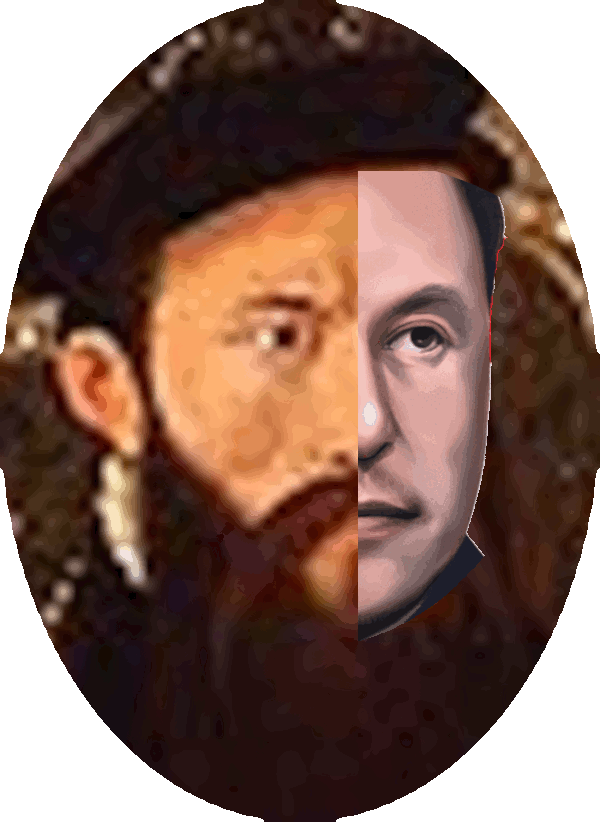
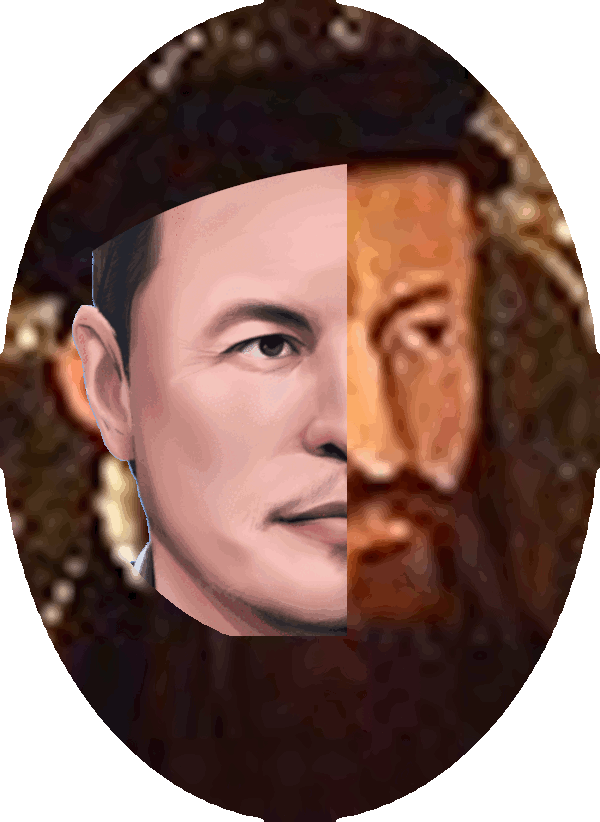
William V of Cleves as Elon Musk |
 |
 |
William, Duke of Jülich-Cleves-Berg
1516-1557
7/28 1/5
Duke of Jülich-Cleves-Berg |
Elon Reeve Musk
1971
6/28
Satan
from Alpha Centauri
|
 |
 |
Rich Reiche
Brother |
-
William of Jülich-Cleves-Berg (1539–1592), was a Duke of Jülich-Cleves-Berg.
- He was born in and died in Düsseldorf and was the only
son of John III, Duke of Jülich-Cleves-Berg, and Maria,
Duchess of Jülich-Berg.
- William took over rule of his father's estates (the Duchy of Cleves and the County of Mark) upon his death in 1539.
- Despite his mother having lived until 1543, William also became the Duke of Berg and Jülich and the Count of Ravensberg.
- Demonstrating standard dynastic coercion of the era,
he was part of early political arrangements that affected young girls; for instance, Jeanne d'Albret was forcibly betrothed/married to
him at age 12 for political leverage before it was later annulled.
- Like other Renaissance princes,
William viewed noblewomen primarily as strategic assets to forge territorial alliances and political treaties.
- This is best seen when he negotiated and signed the
marriage treaty in 1539 to marry his sister Anne to King Henry
VIII of England.
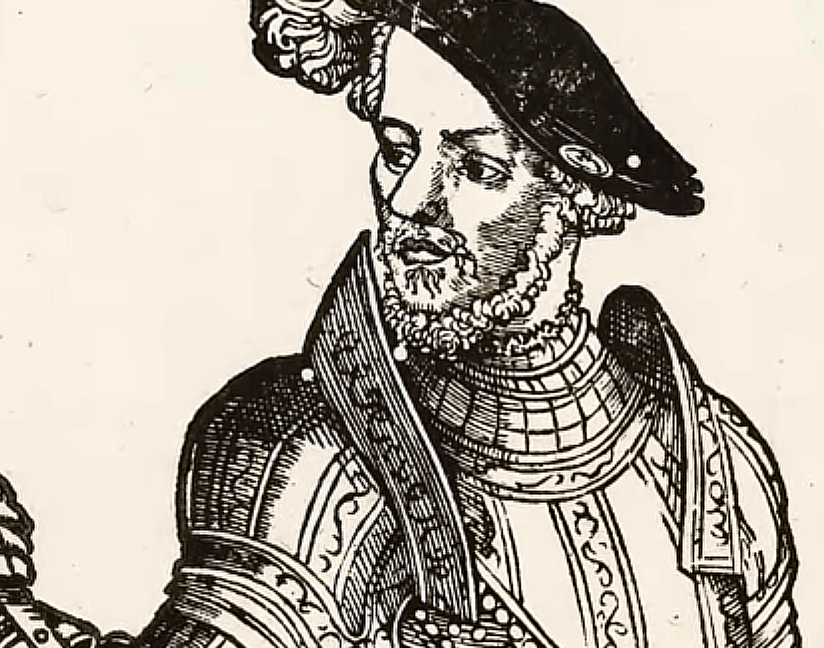
Cleves |
- William consistently maintained friendly relations
with the Protestant Schmalkaldic League, led by his
brother-in-law, the Elector of Saxony.
- Although William
himself remained a Catholic all his life and insisted that his
sons be raised Catholic as well.
- Suggestions were made for Mary Tudor to marry William, as part of political and religious maneuvers in the 1530s
but this came to nothing.
- A potential marriage treaty for Mary
was signed by Henry VIII with
William of Cleves, however, Henry saw a portrait of his sister,
Anne of Cleves, he decided that their marriage should be
the one in the treaty instead of his daughter.
- The Lutheran
sympathies of both William and his father might have been
explained by their distrust of the Holy Roman Emperor, Charles
V with which both father and son remained long engaged in a
protracted land dispute over Gelderland.
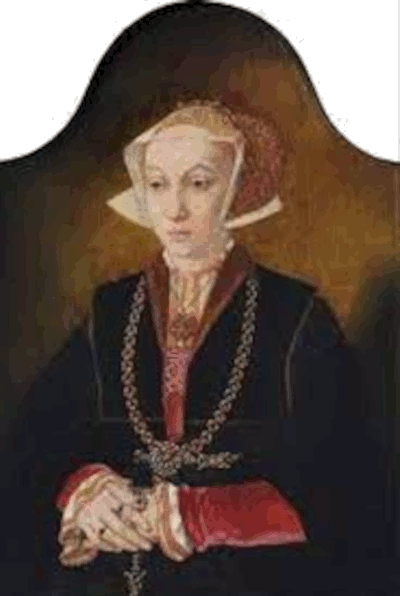
Amalia of Cleves |
- Amalia of Cleves (1517-1586) was a princess of the House of La Marck.
- The 4th and youngest child of John III, Duke of Cleves, and his wife Maria of Jülich-Berg, Amalia was born shortly after the birth of her brother William, a future Duke.
- Anne's youngest sister, Amalia, was passionately committed
to Protestant reform as her eldest sister, Sibylle.
-
Amalia never married or had children and she is believed to
have spent her elder years caring for and educating her young
nieces.
- However, brother William expressed anger at his
sister for instructing the girls in Protestant principles.
- This conflict reportedly enraged him enough to spur him to
chase and threaten Amalia with a hatchet, a debacle which was
ended by one of her servants who slammed and locked the in the
Duke's face.
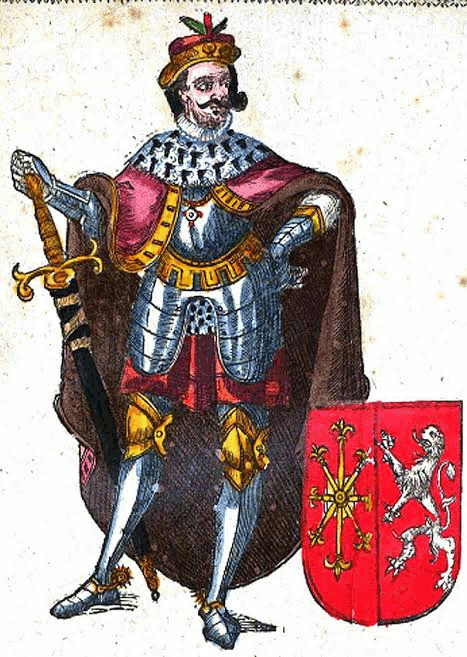
Violent mixed up
Duke of Cleves |
- Considering all of this, it is impossible to say what
Anne of Cleve's own beliefs were, but exposure to such
religious fluidity in her early life may have given her a
broad perspective and a sense of spiritual and intellectual
flexibility.
- Especially considering that religion is all
fake and made up and that there is no such thing in heaven.
- It was invented on Earth by the fallen angels to control
humanity.
- Also, considering Henry VIIIs own wishy washy
ideology about religion, he was writing laws against those who
spoke out on Catholicism while pushing Martin Luther and
Protestantism.
- Henry VIII also later almost convicted his
6th wife, Catherine
Parr, for treason and even had formal papers drawn for printing
a Catholic prayer book she had translated from Latin while she
was pushing a Protestant agenda.
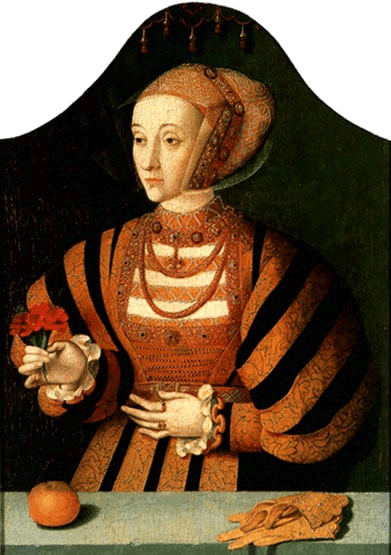
Anne of Cleves |
- Her mixed up religious background may have also taught
Anne the value of tolerance
depending on what was expected of her in any given
circumstance.
- When Anne was 11 years old, she was
betrothed to Antoine, the son of the Duke of Lorraine, an
unofficial arrangement which was nullified 7 years later.
-
Anne was not unduly distressed at the cancellation of her
betrothal, despite the fact that she was now age 18, 3 years
older than her sister Sibylle had been when she was married.
|
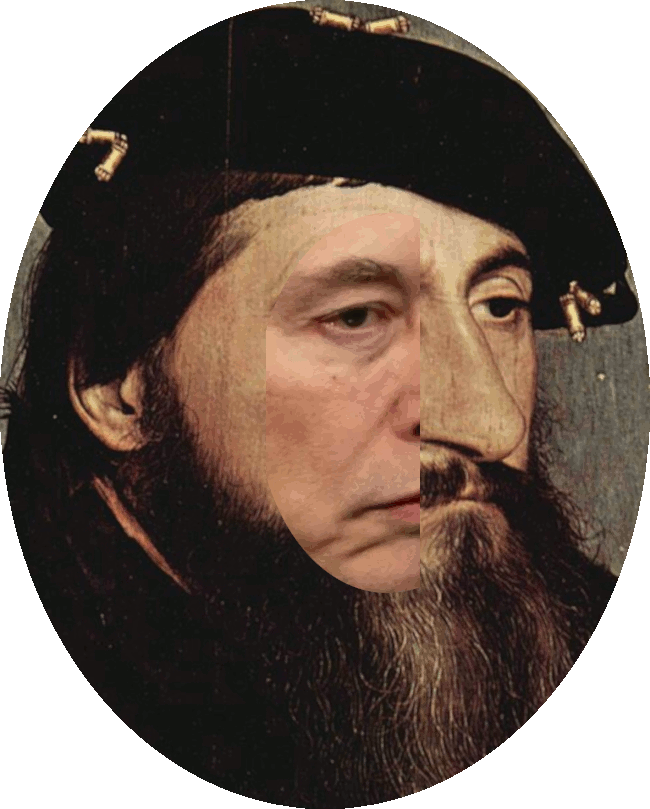
Antoine Duke of Lorraine as Elon Musk |
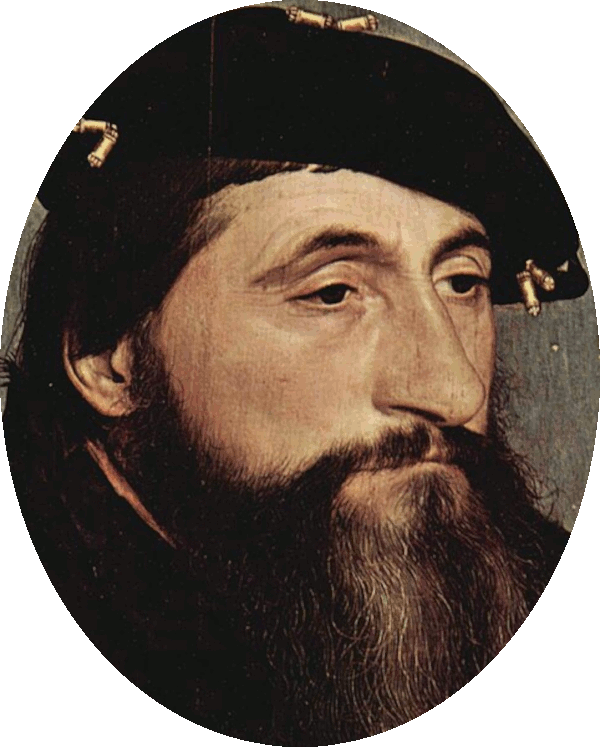 |
|
Antoine the Good
1489-1544
6/4 6/11
Duke of Lorraine |
Elon Reeve Musk
1971
6/28
Satan
from Alpha Centauri
|
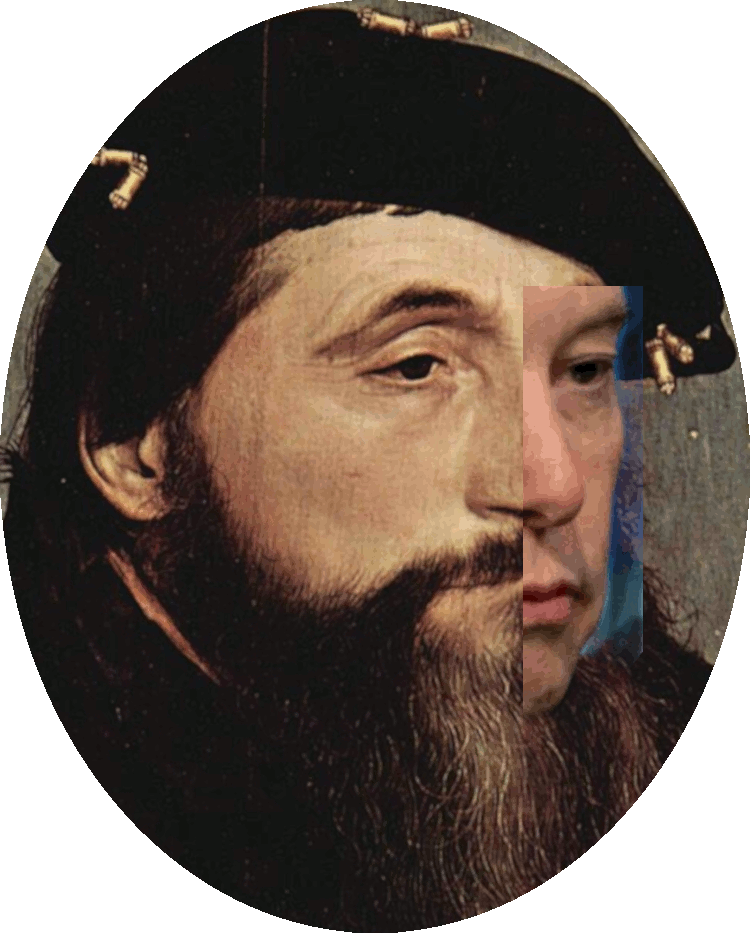 |
 |
|
The Good |
- Antoine (1489-1544), known as the Good, was Duke of Lorraine from 1508 until his death in 1544.
- Raised at the French court, Antoine would campaign in Italy twice: once under Louis XII and the other with Francis I.
- During the German Peasants' War, he would defeat two armies while retaking Saverne and Sélestat.
- Antoine succeeded in freeing Lorraine from the Holy Roman Empire with the Treaty of Nuremberg of 1542.
- In 1544, while Antoine suffered from an illness, the Duchy of Lorraine was invaded by Emperor Charles V's army on their way to attack France.
- Fleeing the Imperial armies, Antoine was taken to Bar-le-Duc where he died.
- He was betrothed to Anne of Cleves when she was age 11,
although he was 26 years older than her.
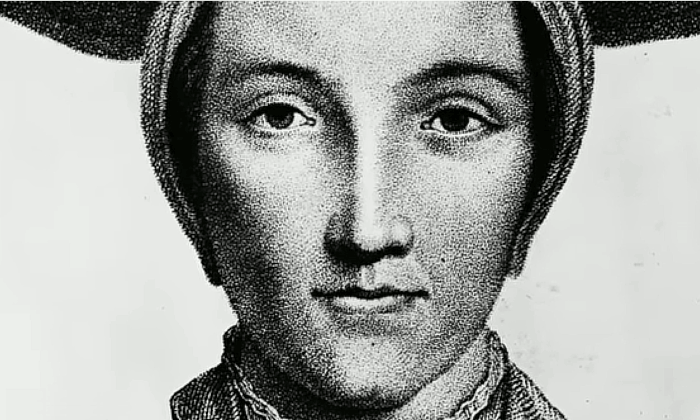
Unattached |
- Anne's attachment to her mother and to her family's
household seems to have been one of sincere contentment.
-
At the court of Cleves-Julich-Berg, morning activities were
strictly gendered; the noble men attended to political and
estate matters in the mornings, while the noble women and
their daughters attended to domestic tasks.
- The men and
women of the court then came together in the afternoons for a
formal socializing and entertainments.
- Anne's typical day
might find her embroidering and making clothing with her
mother, her younger sister, and other women in her family's
service in the Frauenzimmer, or women's room during the
mornings.
- The young women of the court were only allowed
to meet and socialize with men during the afternoon
gatherings, or at the sumptuous dinners of up to 9 courses
which were served nightly to as many as 300 guests.
Entertainment |
- Anne's family enjoyed entertaining themselves and the
court with music and theatrical entertainments.
- Hunting
was another of the family's favorite pastimes and Anne was
said to have been a fine equestrienne who loved to join the
hunt.
- In 1538, when Anne was 23, her father died, an
event which made her cling all the closer to her mother.
-
Yet, her time in Germany was growing short and both her own
future, as well as the future of her family, now rested in the
hands of her younger brother, William.
- It was in 1538
when Thomas Cromwell first made overtures to the young, new
Duke of Cleves on behalf of Henry VIII, who was now determined
to marry again.
|
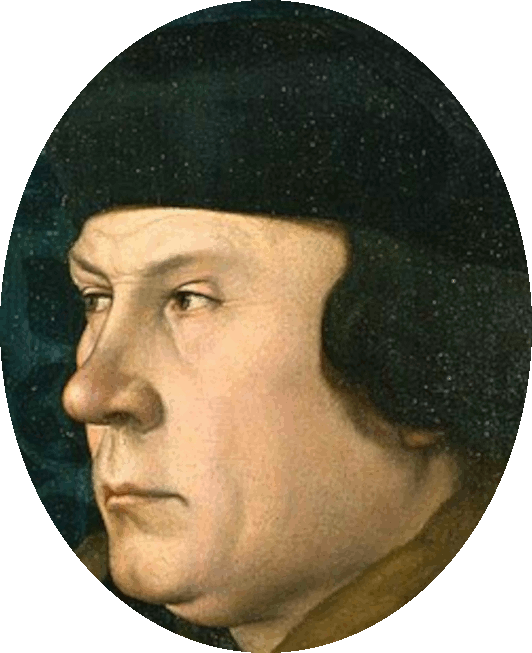
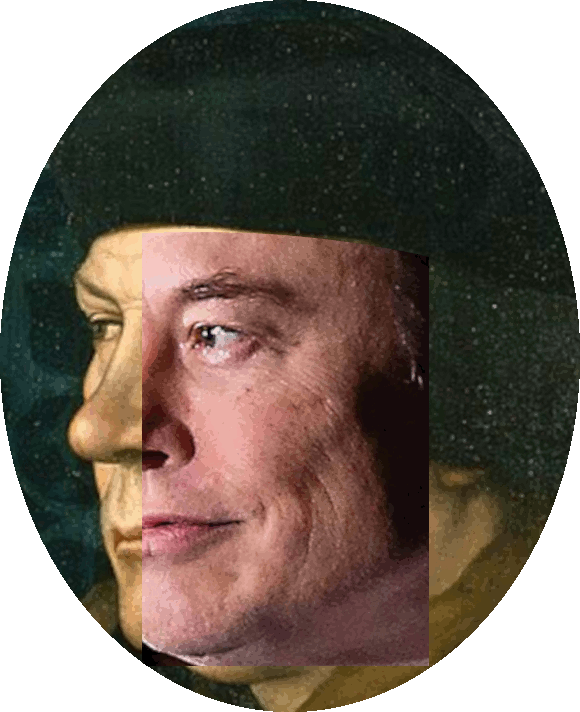
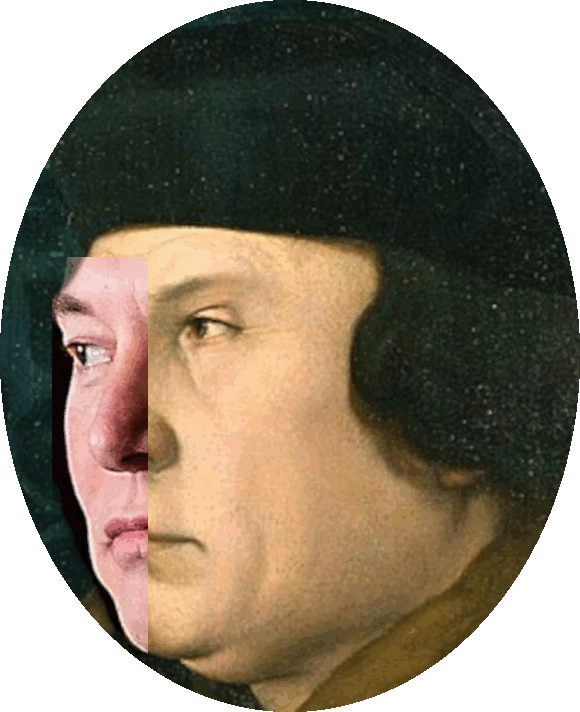
Thomas Cromwell as Elon Musk |
 |
 |
Thomas Cromwell
c.1485-1540
?
7/28
Chief minister to King Henry VIII
|
Elon Reeve Musk
1971
6/28
Satan
from Alpha Centauri
|
 |
 |
|
Cremuel |
-
Thomas Cromwell (c.1485-1540) was an English statesman and lawyer who served as chief minister to King Henry VIII from 1534 until mid-1540, at which time he was beheaded on Henry's orders, a loss the King would later regret.
- Cromwell was one of the most powerful proponents of the English Reformation.
- As the King's chief secretary, he instituted new administrative procedures that transformed the workings of government.
- He helped to engineer an annulment of the King's marriage to Catherine of Aragon so that Henry could lawfully marry Anne Boleyn.
- Now he came for Anne of Cleves.
Henry bragged about his legs
which he could
no longer see his stomach was in the way |
|
- Henry and wife (neck lace) she's
hanging by her arms.
- He had Moor blood.
- The young Duke of Cleves, William, was persuaded by
Cromwell that the support of Cleves would help Henry VIII
defend himself against the Holy Roman Emperor, Charles V,
without having to rely on the equally changeable King of
France, Francis I.
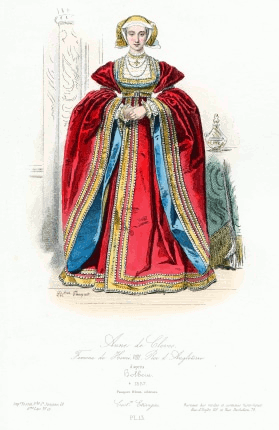
Court dress |
- Henry VIII sought to conclude the
marriage negotiations quickly and the Duke had balked for
months at Henry's request to have portraits painted of his
sisters, Anne and Amalia, and for his emissaries to visit
them in person.
- Frustrated, the English ambassadors had
only been allowed to see them in the voluminous German court
dress with their faces veiled.
- To help conclude the
marriage treaty as quickly as possible, Henry VIII finally
offered to waive Anne's dowry and offered the Duke the
generous payment of 100,000 florins instead.
- William
promptly accepted Henry's generous offer, writing that his
sister looked forward eagerly to her wedding.
- Poor
Anne, trapped by his greed.
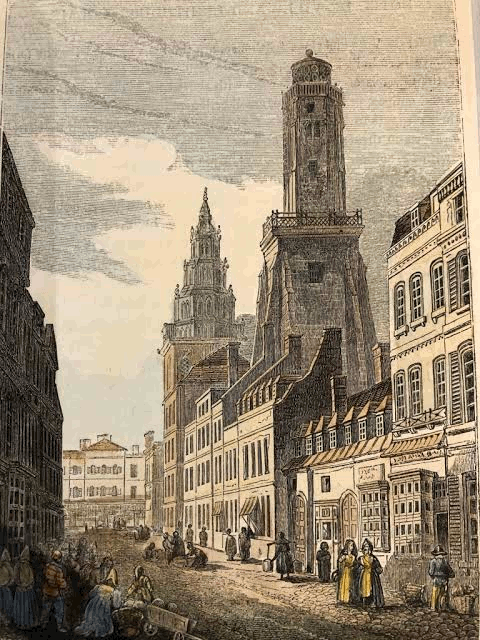
Calais |
- In November 1539, Anne departed
Germany for her overland journey to Calais.
- Calais is a major port city in northern France located in the Hauts-de-France region, sitting directly opposite Dover across the Strait of Dover as the closest French town to England.
- The multitude of nobles, attendants and servants who
traveled with her made it a long journey, which was further
delayed by bad weather on the English Channel following
their arrival in Calais, which prevented Anne for sailing
for England for 2 weeks.
- She was greeted and
entertained there in the meantime by the Earl of
Southhampton, William FitzWilliam, and the Duke of Suffolk,
Charles Brandon.
|
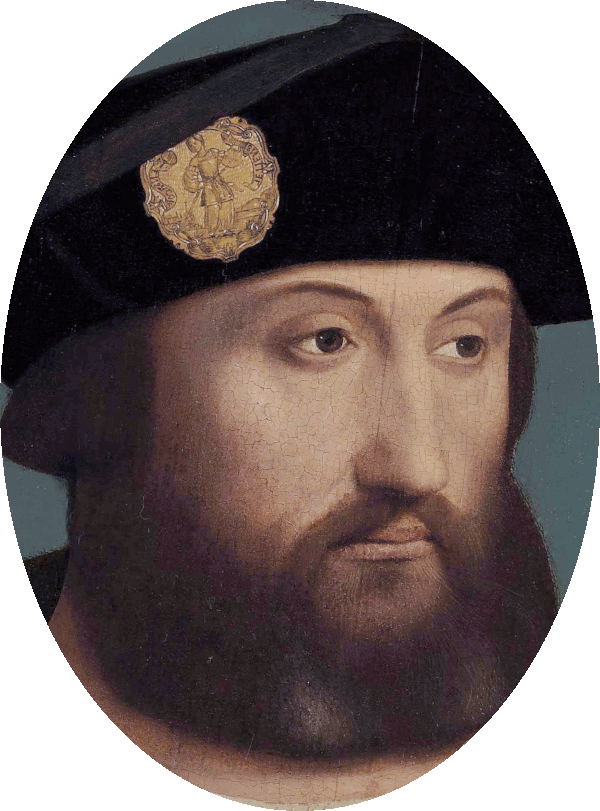
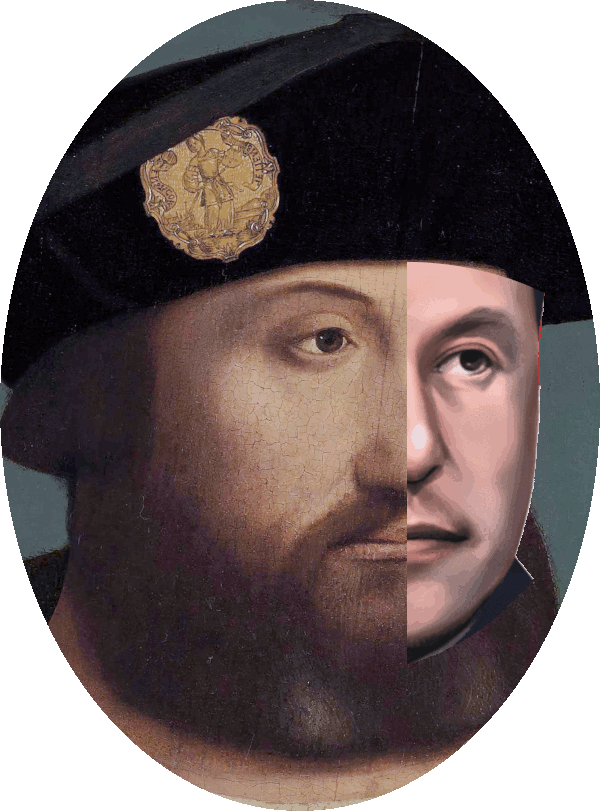
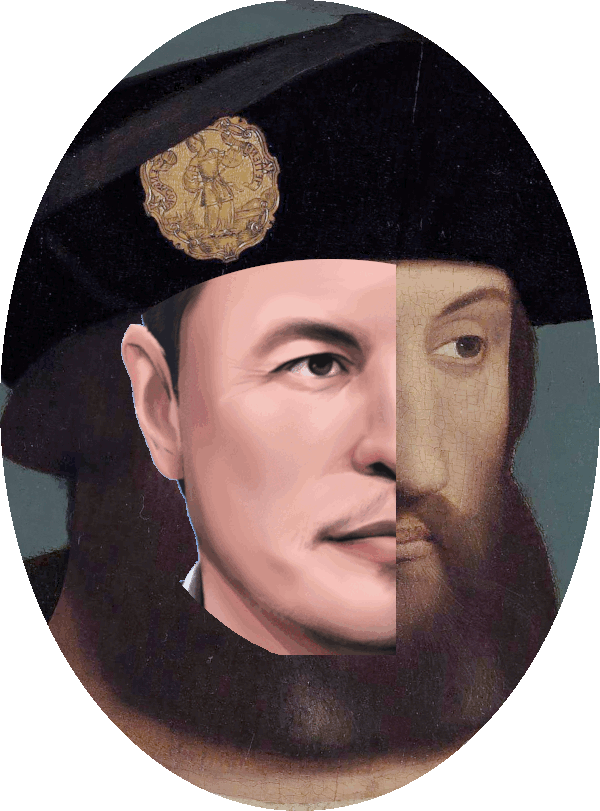
Charles Brandon as Elon Musk |
 |
|
Charles Brandon
c.1484-1545
?
8/22
English nobleman |
Elon Reeve Musk
1971
6/28
Satan from Alpha Centauri |
 |
 |
|
The 2nd King |
- Charles Brandon, 1st Duke of Suffolk (c.1484-1545) was an English military leader and courtier.
- Through his 3rd wife, Mary Tudor, he was the brother-in-law of King Henry VIII.
- Brandon led the English welcoming party that greeted and escorted Anne of Cleves upon her arrival from Calais to England in December 1539.
- Anne of Cleves traveled from Cleves to Calais, where she was received by Lord Lisle, the Deputy of Calais.
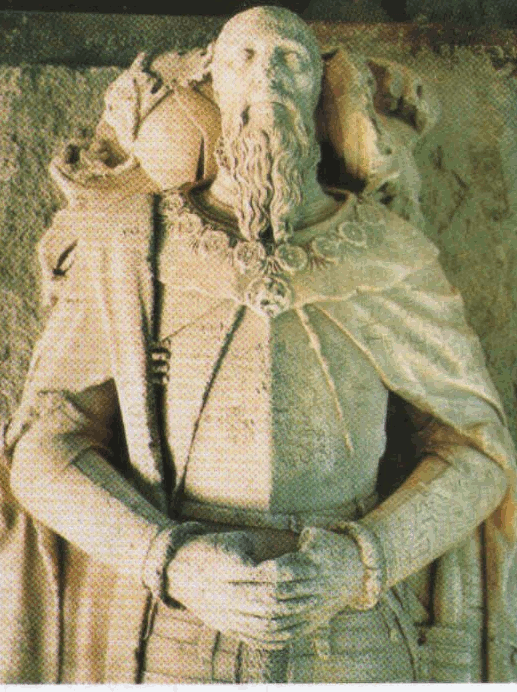
Sir Thomas Cheyne |
- After waiting out bad winter weather, she sailed across the Channel on December 27, 1539, and landed at Deal in Kent.
- Upon landing, she was met by Sir Thomas Cheyne (1485-1559), who escorted her to Deal Castle.
- Charles Brandon, along with his wife Catherine Willoughby (the Duke and Duchess of Suffolk), met and escorted Anne
of Cleves at Dover Castle after her initial stop in Deal.
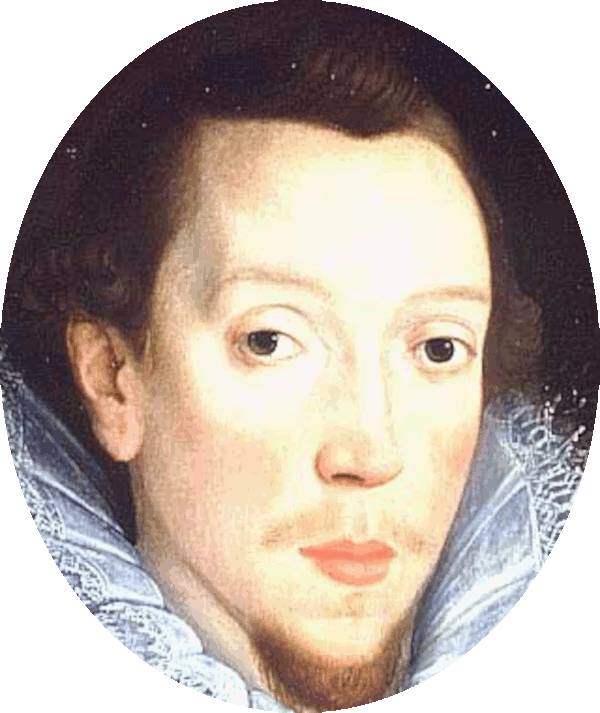
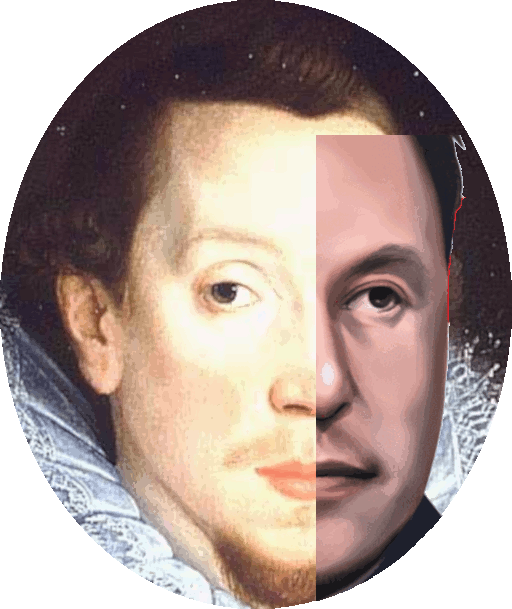
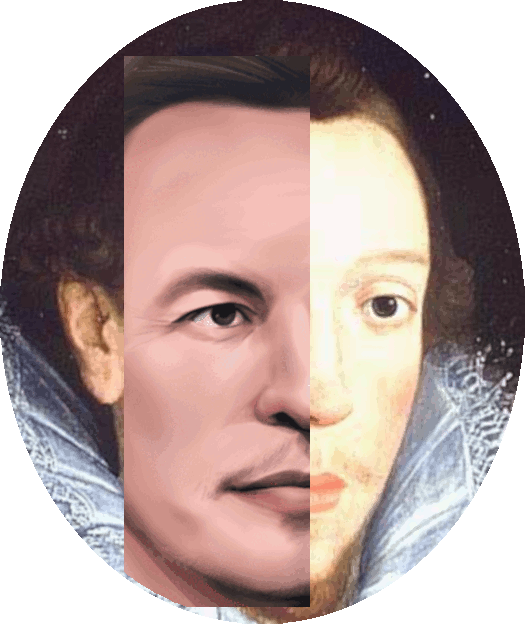
|
William FitzWilliam as Elon Musk |
 |
|
William FitzWilliam
c.1490-1542
?
10/15
1st Earl of Southampton, |
Elon Reeve Musk
1971
6/28
Satan from Alpha Centauri |
 |
 |
|
Fitz |
- William FitzWilliam, 1st Earl of Southampton
(c.1490-1542) was an English courtier and soldier.
- He was the
3rd son of Sir Thomas FitzWilliam of Aldwark and Lady Lucy Neville, daughter of John Neville, 1st Marquess of Montagu.
- FitzWilliam's father died when he was in his infancy,
and his mother remarried Sir Anthony Browne Sr.
- Probably as a result of this connection, he was chosen as a companion for Henry Tudor, Prince of Wales (later King Henry VIII of England) and brought up alongside him.
|
Sir Anthony Browne Jr. as Elon Musk |
 |
 |
Sir Anthony Browne Jr.
c.1500-1548
?
5/6
Master of the Horse |
Elon Reeve Musk
1971
6/28
Satan from Alpha Centauri |
 |
 |
|
France's
Worst Enemy |
-
Sir Anthony Browne Jr. (c.1500-1548) of Battle Abbey and Cowdray Park, both in Sussex, England, was a Member of Parliament and a courtier who served as Master of the Horse to King Henry VIII.
- He was the son and heir of Sir Anthony Browne (died 1506)
'the Elder,' Standard Bearer of England and Governor of
Queenborough Castle in Kent, by his wife Lucy Neville, a
daughter of John Neville, 1st Marquess of Montagu and Isabel
Ingoldisthorpe.
- Lucy was also the granddaughter of Richard Neville, 5th Earl of Salisbury, and the niece of Richard Neville, Earl of Warwick, the
'Kingmaker.'
- Before marrying Browne, Lucy had been the widow of Sir Thomas FitzWilliam of Aldwark, the younger Anthony was, therefore, a younger half-brother of William FitzWilliam, 1st Earl of Southampton.
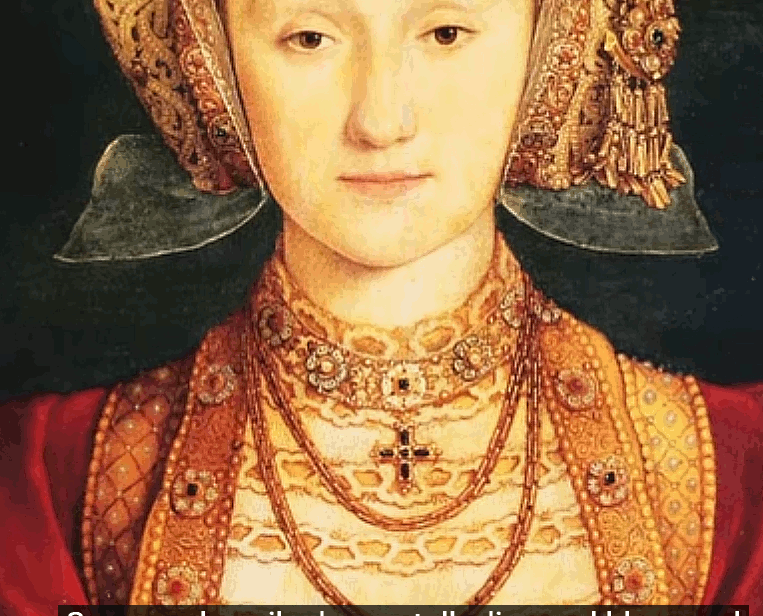
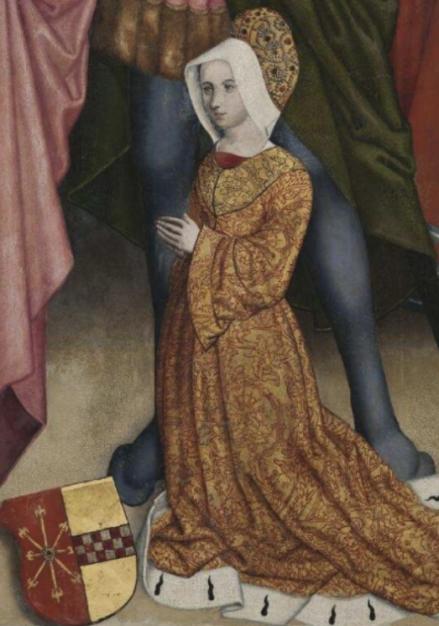
Holbein's Anne |
-
From the time she landed in England, Anne was a little less
homesick than she had been after saying goodbye to her home
and family.
- She was greeted with kindness, enthusiasm,
and admiration everywhere she and her escort stopped, with
crowds of ordinary people turning out to see her and wish
her well.
- All of Henry VIIIs nobles and ambassadors
wrote to him of her cheerful amiability and assured him that
she was lovely as the portrait painted by court painter,
Hans Holbein, suggested.
- This portrait depicted Anne in
Dutch-style dress, demure and serene with widely spaced and
heavily lidded eyes and shapely lips.
- Sources described
her as tall, slim, and blue-eyed with light blonde hair.
-
Once she arrived, for reasons, which are still not altogether clear, Henry
VIII was less than pleased with his new bride-to-be.
Public Domain, via
Wikimedia Commons
Anna von Kleves |
- Hearing that his future wife was delayed on the road, and
that his wedding could not take place by Christmas, Henry VIII
was resolved to be patient until January 6, the date chosen
for the postponement.
- Restlessness and anxiousness to
meet her proved too much for him however, and instead, on New
Year's Day, 1540, he set off to meet her earlier than
originally planned in Rochester before the official state
reception, with a small group of men wearing cloaks and bearing gifts for his intended.
-
Henry staged his entrance in a highly theatrical manner, in
disguise and something he had done for 25 years, where the
lady is expected to recognize the king by the sheer force of
his presence.
- He supposedly approached Anne with hesitation, kneeling
before her to kiss her hand.
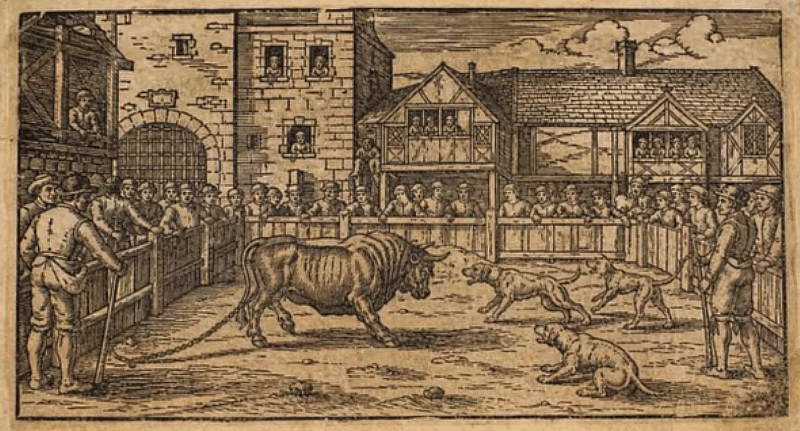
Bull baiting |
- Unfortunately, Anne was
taken aback by this behavior, not only for the sake of
modesty, but also because she had no idea who Henry was.
-
She had been standing at a window watching a bull baiting below.
- Anne had never seen his face and didn't speak English and she
was alarmed when a group of men burst through the door in her
private chamber unannounced.
-
There was no way she could have understood the mistake she had
made with his small little ego and everything in the history
books was written down 6 months later by men trying to help
the king end the marriage.
- Unfamiliar with English culture and therefore unable to
understand that Henry expected her to recognize her so-called,
'true love' through his disguise, Henry was humiliated that
Anne appeared repulsed and attempted to ignore him.
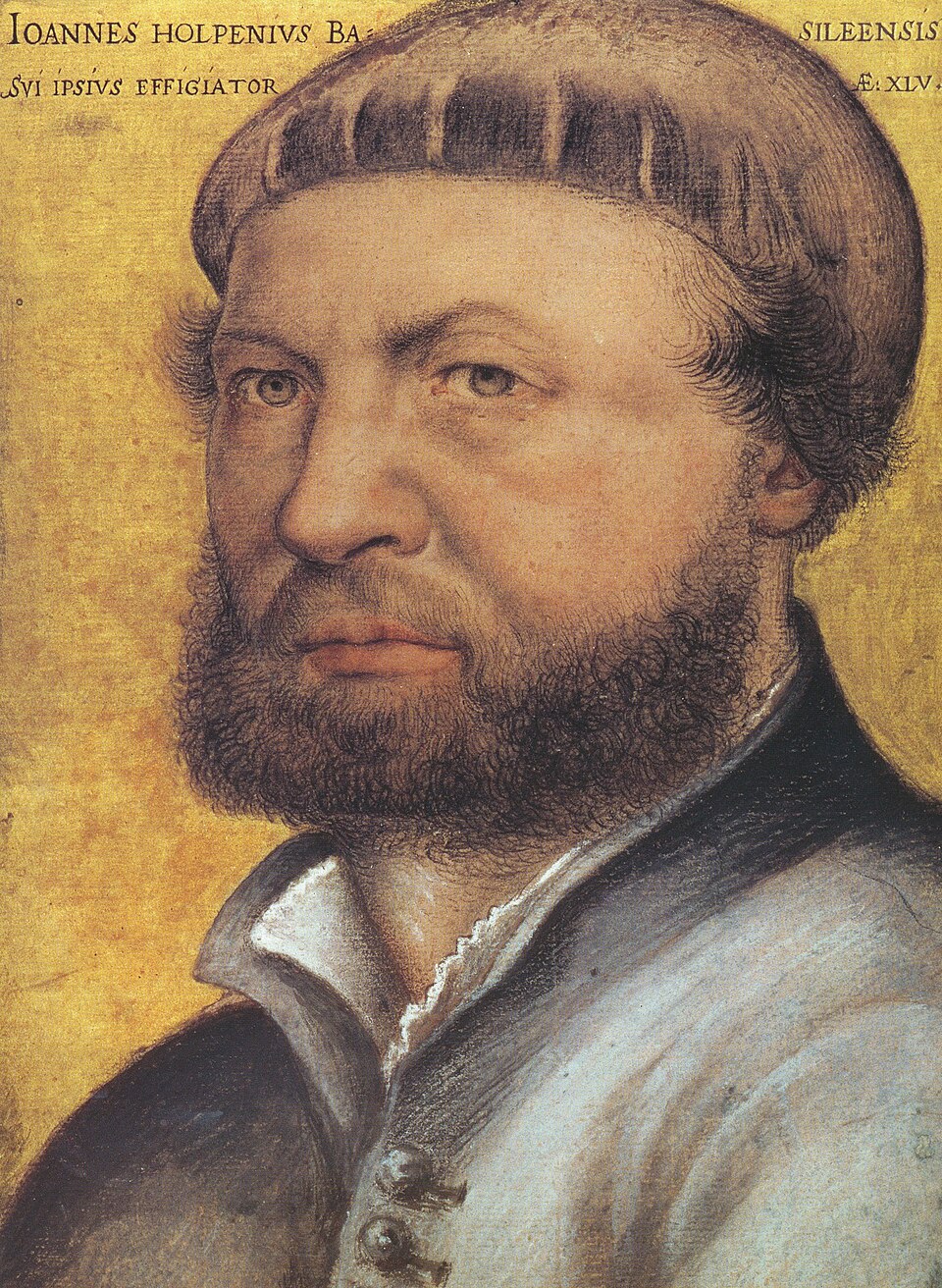
Public Domain, via
Wikimedia Commons
Hans Holbein |
- After the meeting, Henry
abruptly left the room and throwing off his disguise, he
returned in decidedly more kingly-looking coat of royal
purple.
-Deeply embarrassed, Anne bowed deeply before him
and Henry kissed her briefly before politely extricating
himself from the situation.
- But the king was loud in his
dissatisfaction as soon as he was out of earshot of his new
fiancee.
- He was so upset that he had forgotten to give
Anne the New Year's gift he had brought, a jeweled, sable fur.
- Some
of the men there recorded that they saw the king's countenance
change, he had been rejected.
- Henry returned to Greenwich incensed and he remonstrated
with courtiers who had previously reported that Anne was
pleasing, just as Henry had seemed to believe when he saw
Holbein's portrait.

Dickies |
- When Harry Met Sally.
- Sophia had a vivid dream that was given to her by the Most
High Father in an attempt to wake her out of the veil placed
over her.
- It was about Anne of Cleves, among others,
meeting Henry VIII and what an uninspirational dolt he really
was.
- People question whether Henry VIII had something
wrong with his brain, well obviously he did, he was retarded
and had bad breath which she noticed when her eyes were closed
and he gave her a big wet kiss across her face
- He
entered the scene wearing a set of used, oversized navy blue
Dickies with Dickie on his chest, that looked like they came from the bottom of
the Goodwill barrel.
- The Dickies were about 10 sizes too big for his
wimpy sunken chest and bulbous stomach.
- So to make up for
it, he had taken a 1950s style alligator belt (about 1/2 wide)
from the same barrel and had it tied around his waist,
giving the appearance of a woman's dirndl puckered skirt.

Dickie arrives by
breaking into the
room |
-
Henry's act all came from
the tradition of English kings pauper ritual when meeting a mail order bride
(only they call it a 'devotion' ritual and courtly love and
disguise).
- Devotion to them that is, nothing about the
poor trapped woman.
- Anne of Cleves was effectively a 'mail-order bride' chosen by Henry VIII primarily based on a political alliance and a flattering portrait painted by Hans Holbein the Younger.
- In medieval and Tudor court culture, there was a romantic ideal where a true lover's identity would transcend their clothing.
- A king would dress up in disguise, sometimes as a lowly squire, a messenger, or a generic traveler, and surprise his future bride.
- The romantic expectation was that true love would instantly recognize him through the power of instinct, regardless of his garments.
The Reaction: Anne, who was a conservative German noblewoman, spoke no English, and had no idea who this heavy, middle-aged stranger was, was completely horrified and repulsed. She politely but coldly pushed him away and turned to look out the window, completely ignoring him. (Assistant)
|

Dirndl skirt |
- Something definitely went wrong in Rochester and it
wasn't anything Anne did.
- While these kings hoped for a fairy-tale moment of instant connection, the reality of ambush-meeting a foreign bride while dressed like a commoner usually resulted in deep awkwardness and political embarrassment.
- All this business about him wearing a blue marble
velvet coat and
then leaving the room to return dressed in 'kingly' royal
purple robe is just BS.
- But in the end his daddy gave him another
toy and distracted the idiot and he ran off to play.
- Plus, he even had crossed-eyes
and promptly abandoned his 'bride' to move to the corner of
the garage and start toying with his '65 Ford Mustang that his
CIA daddy gave to distract him in this life (after he
destroyed the entire family).
- The automobile was a gift
to cover up the fact that he thought he would grow up and join
the CIA like his father except, turns out, he was too
incompetent and they didn't want any part of him.
- We hear that the idiot later
totaled it on Sunset Strip about '66.
The Fallout: Humiliated that his romantic fantasy
had failed and that she had not instinctively
"recognized" his royal majesty, Henry went into
another room, changed into his royal robes, and
returned. The magic was entirely gone. He instantly
took a dislike to her, famously complaining to his
ministers, "I like her not!" (Assistant)
|
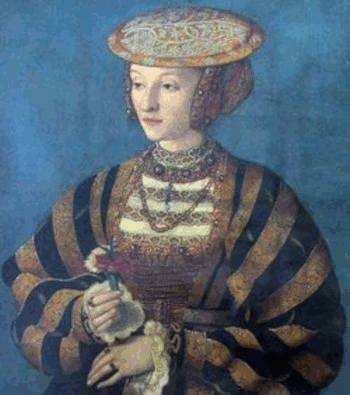
Cleves |
-
After meeting Anne of Cleves, Henry VIII complained bitterly
to Thomas Cromwell this is intended bride was 'nothing fair
as she has been reported.'
- 'I like her not!' he stated
emphatically and demanded what could be done to circumvent
the marriage.
- Unfortunately, since there seemed to be
no way to nullify his engagement without risking the anger
and enmity of Duchy of Cleves, Henry went ahead with the wedding as
planned, on January 6, 1540.
- He would spend the scant
6 months of his marriage to Anne attempting to find some
avenue to get rid of her.
- The morning after the wedding
night, Thomas Cromwell inquired of Henry, 'how he liked the
queen?'
- Henry replied that he liked her even less than
before and he declared that he had not consummated his
marriage because Anne had repulsed him.
- He claimed to
doubt her virginity because of the 'looseness of her belly
and breasts.'
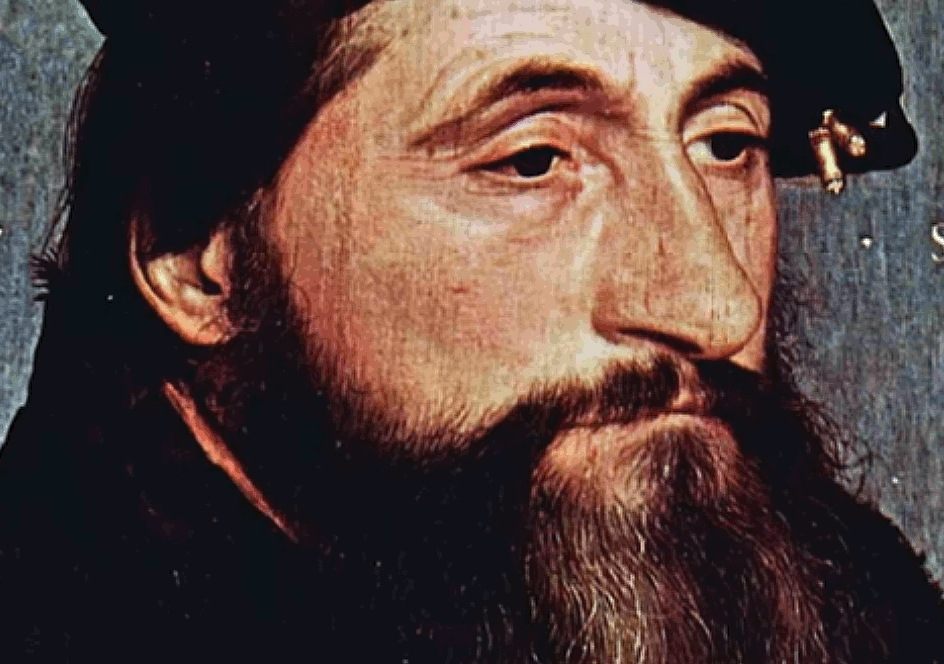
Lorraine |
-
He also spoke with his doctors, confiding that he believed
himself capable of performing
sexually, just not with Anne, and the king defended himself
from the implication that he might be impotent by claiming
that he continued to experience nocturnal emissions (wet
dreams).
-
What Henry VIII seems to have been doing is setting the
stage for an annulment based on non-consummation of the
marriage.
- Within a few weeks, he informed his Privy
Council that there must be some impediment to his marriage
because, 'God would not allow him to consummate it.'
- He
requested that Anne's previous betrothal to the son of the
Duke of Lorraine be examined once again to ascertain whether
the contract had indeed been a binding one.
- Henry's
councilors knew exactly what he expected of them.
- By
February 1540, Anne understood that something was terribly
wrong with her marriage.
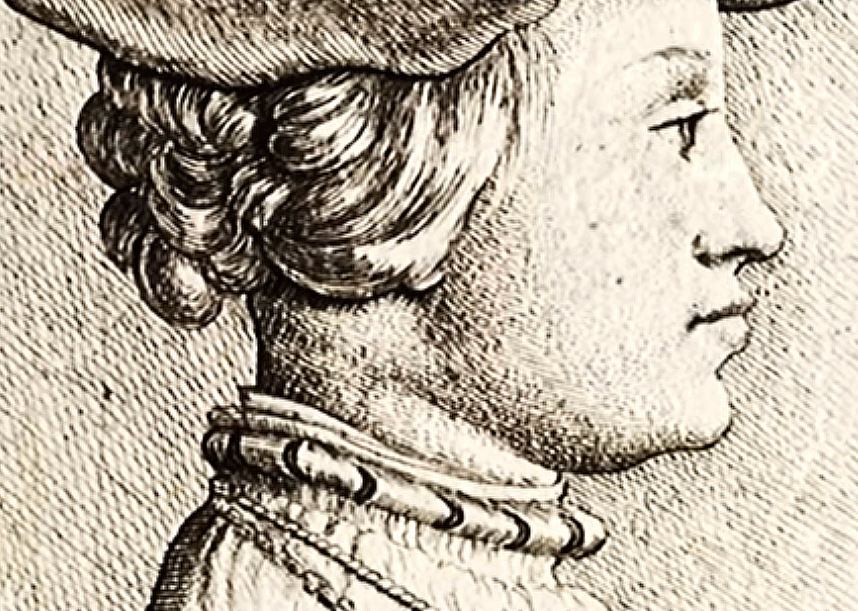
German |
- Anne tried to make herself agreeable to the king, and
Henry himself continued to dine regularly with her and share
her bed nightly so she could have no cause for complaint.
-
It is unclear how much she knew about marital relations prior
to her wedding night, but one account of a conversation
between Anne and her ladies suggests that her ignorance of sex
might have been almost total.
- Her ladies-in-waiting, no
doubt fishing for information, indicated to Anne that they
hoped she would soon be with child.
- The queen replied, 'I
know very well that I am not.'
- 'How is it possible for
you to know that, and lie every night with the king?' they
inquired and Anne again insisted that she was not with
child.
- 'I think your grace is a maid still,' said Lady
Rochford, George Boleyn's widow.
- 'How can I be a maid,'
asked Anne, 'and sleep with the king every night?'
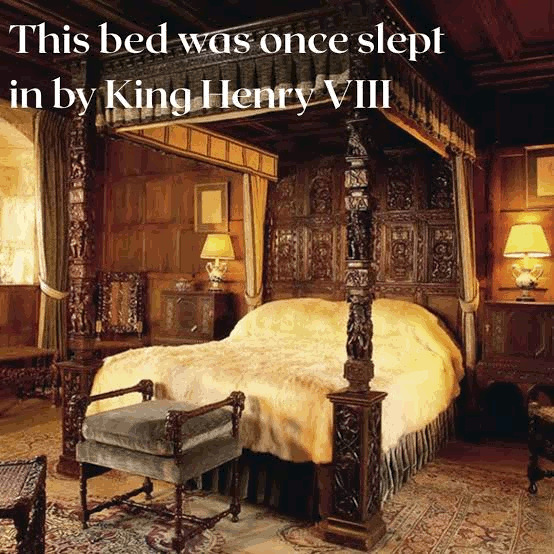
Henry slept here
that's all he did |
- 'There must be more than this,' Lady Rochford replied,
treading on dangerous ground but instead of taking offense,
Anne patiently explained, 'when the king comes to bed he
kisses me and says, 'Goodnight sweetheart.'
-
'And in the morning, he kisses me and bids me, 'farewell my
darling,' is this not enough?
- The Countess of Rutland
tried her best to make the queen understand; 'Madam, there
must be more than this, or it will be ere long before we
have a Duke of York,' in other words, a 2nd son for Henry
VIII.
- 'No,' Anne was said to have replied, 'I am
content with this, for I know no more.'
- This is a
fascinating and puzzling exchange, the meaning of which is
still unclear.
- Anne seems to imply that she was not
aware that there was anything wrong in her marriage bed.

Professional |
- But then, she may have been feigning ignorance for the
sake of her own reputation, or for Henry's.
- We do not
ultimately know whether Henry and Anne did not consummate
ther marriage.
- It is possible that Henry spoke the
truth, and that disappointment in finally meeting the new
queen was so great that he could not frame his mind toward
intimacy with her.
- However, Henry was also 48 years old
at the time of his 4th marriage and he was already twice
Anne's age and was running fat and the terrible sore on his
leg, which would eventually kill him, continued to swell,
suppurate and stink.
- Considering the state of Henry's
health in addition to his obvious disappointment with his
new wife, it is entirely possible that Henry may have been
experiencing impotence and reacting badly by blaming his new
wife.

Text |
- Whatever the truth of the matter between them, poor Anne
was ill-prepared to address it.
- She had arrived in
England, married Henry and been proclaimed queen all in the
space of a few weeks, without having yet learned much of any
English.
- This not only made it difficult for her to stay
wise to events around her, but it also prevented her from
being able to express herself to those who might have been
able to help.
- What's more, being so new at Henry's
court, she could not have known who to trust.
- Sadly for
Anne, Henry moved on quickly, and by springtime, the king
could be seen crossing the Thames regularly in the evenings,
headed for Lambeth Palace and his latest mistress,
16-year-old Catherine Howard, a niece of the Duke of
Norfolk.
- Catherine Howard was Anne's maid of honor just
a few months earlier.
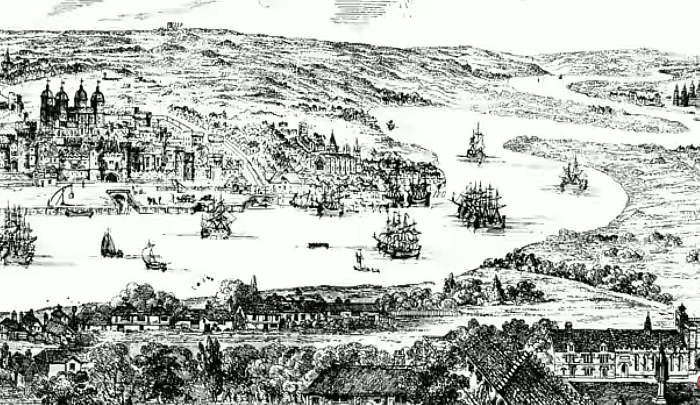
Lambeth Palace |
- Once there, grumbling and judgment heard among the people of
London regarding Henry's infidelity to his queen was
reminiscent of the sympathies which had similarly expressed
for Anne Boleyn when his affair with Jane Seymour became
known.
- On June 24, 1540, Henry sent Anne away from
court to Richmont Palace, ostensibly for her health and
safety from a plague in London.
- However, Henry's
feelings about illness were such that he surely would have
also departed the city of the risks had been real.
- Less
than 3 weeks later, Henry obtained the annulment to his
marriage based on its non-consummation and on Anne's
pre-contract to marry the son of the Duke of Lorraine.
-
The queen was presented with Henry's grounds for a divorce
on July 10; should she consent to it, Henry assured her that
she would be treated kindly and provided for.
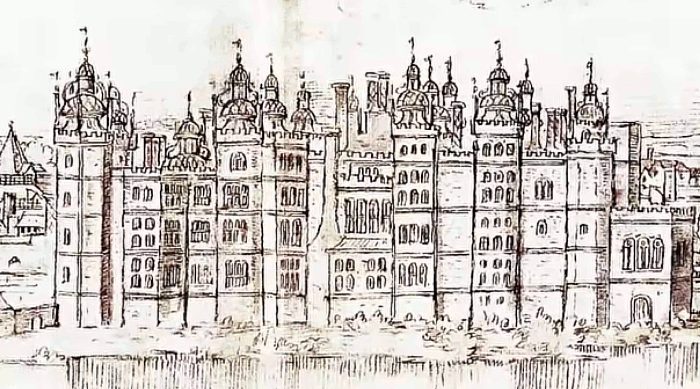
Richmont Palace |
- Anne was utterly humiliated and gave way to tears when
Henry's request for divorce was read.
- She initially
refused to heed what was asked of her and quickly summoned
the Cleves ambassador.
- Within a day, however, Anne had
calmed after she had time to think and no doubt both
embarrassment and fear had warred with one another in her
mind.
- Should she accept, she would be disgraced and
discarded.
- But should she refuse, she could not say
whether the dangerously mercurial Henry would not do her
harm.
- To her credit, Anne was quick and resolute in
making her decision, and she followed through to admiration.
- Anne accepted her divorce from Henry with grace, dignity,
and amiability, saying that she hoped that she would still
occasionally have the pleasure of his company.
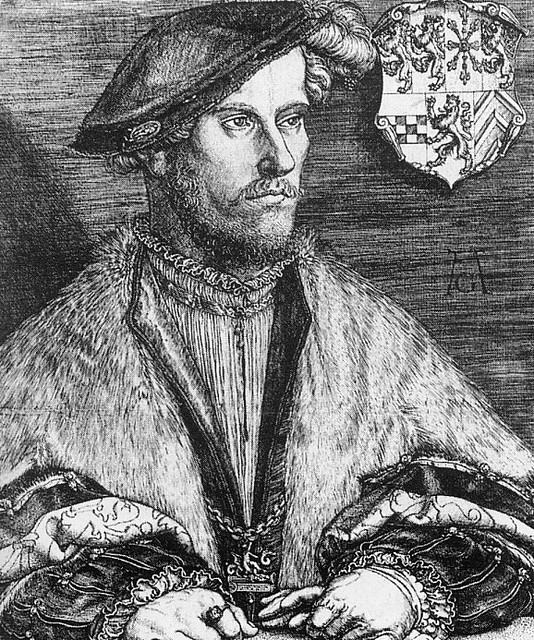
Duke Wilhelm Cleves |
- Henry was shocked because Anne had been fearful and
difficult to deal with during the weeks since he had taken
Catherine Howard for his mistress, and he had expected her
to resist, to threaten him with the outrage and vengeance of
her brother, the Duke of Cleves.
- Because she readily
gave Henry what he wanted, he was generous with her.
- On
July 12, Henry wrote to inform Anne that she was free to
return home to Germany.
- However, should she decide to remain in
England, she would receive an annual income of 4,000 pounds,
and the estates of Richmont, Bletchingly, and Hever Castle.
- Despite Henry's earlier claim following his wedding night,
he formally affirmed that Anne was still a maid, and said
she might marry again if she wished.
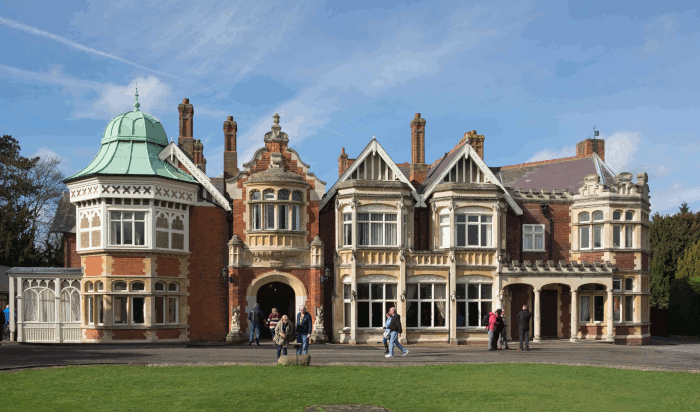
Bletchingly |
- Finally, he hoped she would be pleased to think of
herself thenceforth as the King's, 'most beloved sister,' and
assured her that she would always be welcome at court and
given precedence over all women in England, except for the
queen and Henry's own daughters.
- Apparently, Anne found this generous indeed and readily
accepted.
- In fact, she went even further by assuring
Henry that he was welcome to view any correspondence she might
thereafter have with her family in Cleves before it was sent.
- It is possible that Anne might have chosen to stay in
England out of fear.
- One puzzling account claims that the
German princess implied that her brother might do her harm if
she returned home dishonored, after all, he had already gone
after her younger sister with a hatchet.
- Her arrangements
with Henry concluded, Anne promptly wrote to her brother to
inform him of the accord she and Henry had reached and to
assure him she was happy and content to live out her life in
England.
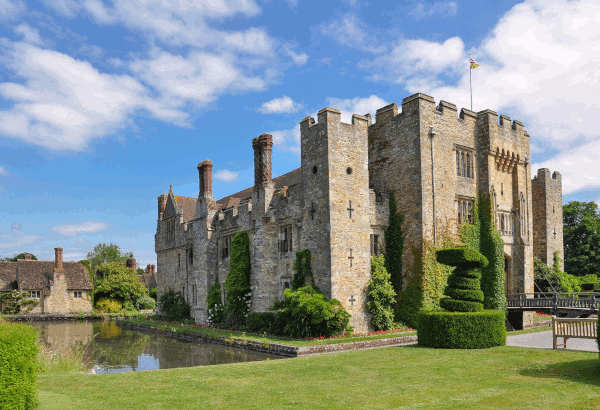
Hever Castle |
- The woman who had spent most of her life in seemingly
quiet and biddable obedience, first in the shadow of her mother
and later her brother,
and then in the shadow of the king, was now a free and
independent woman of means.
- Like the strong female rulers
who were her ancestors, Anne had found herself in control of
her own life.
- What's more, she had neither husband nor
master to tell her what to do.
- Anne lived the last 14
years of her life quite happily and comfortably on her
English estates, and was described by one chronicler as
eminently kind and generous mistress to everyone who served
her.
- She earned Henry's trust and gratitude not only for
her conformity to his will, but also for her continued devotion
to his children, for whom she had tried to be warm and loving
stepmother.
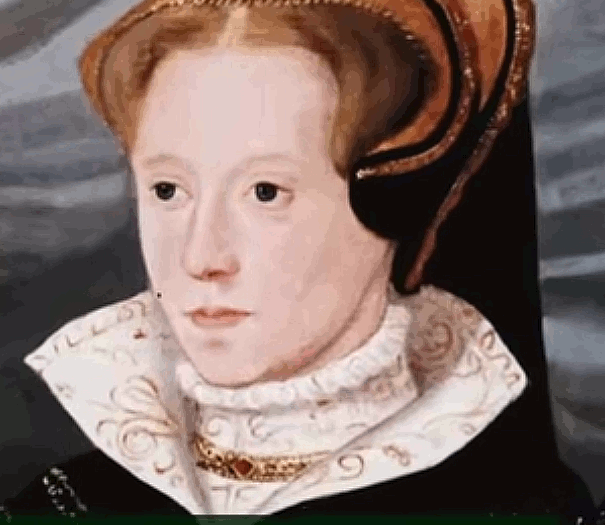
Step-daughter Mary I |
- Indeed, Anne maintained and strengthened her
relationships with Henry's children in the years following
the divorce.
- Even Lady Mary came to care and appreciate
her former stepmother in the ensuing years, despite what was
perceived as major religious differences between them.
-
Actually it is still unclear whether the denomination of her
religion made any difference to Anne at all.
- She had embraced Henry's Anglican faith without
protest upon arrival in England.
- During the short and
turbulent reigns of Edward VI and Mary I, Anne willingly
declared her religious obedience twice.
- When 9-year-old
Edward took the throne, she affirmed herself a Protestant.
- When Mary I succeeded him as queen, Anne did not hesitate
to declare herself a Roman Catholic.
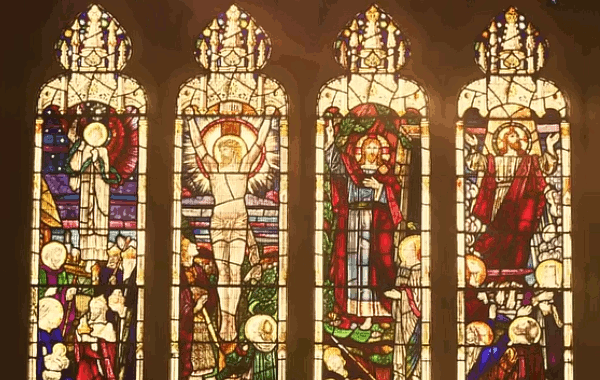
Religion |
- Perhaps she was being pragmatic, but perhaps the
religious and denomination variability she had been exposed
to in Germany, and within her own family, made her eminently
more flexible in a spiritual sense.
- Anne of Cleves
remained highly favored by Henry's children following his
death in 1547.
- She was often invited to court during
the reigns of Edward and Mary, and she walked behind her
former stepdaughter Elizabeth in Mary's coronation
procession.
- She got along well enough with Henry's last
2 wives, although one cryptic comment she made during
Henry's wedding to Catherine Parr gave the imperial
ambassador Eustace Chapuys the impression that she resented
Catherine.
|
Eustace Chapuys as Elon Musk |
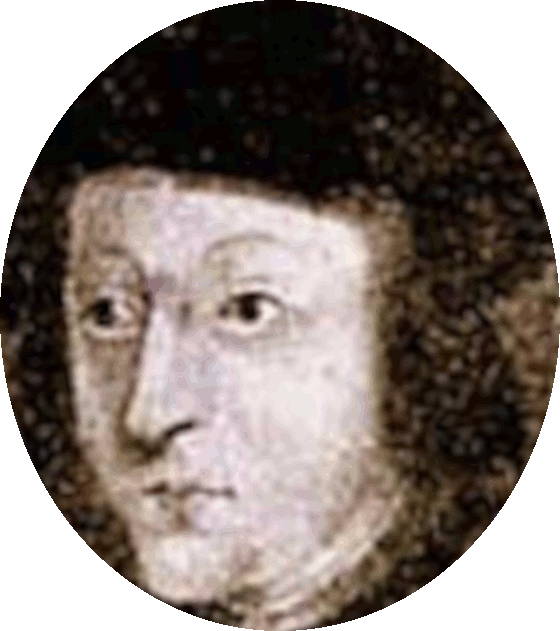 |
 |
Eustace Chapuys
1489-1556
?
1/21
Ambassador and gossip |
Elon Reeve Musk
1971
6/28
Satan from Alpha Centauri |
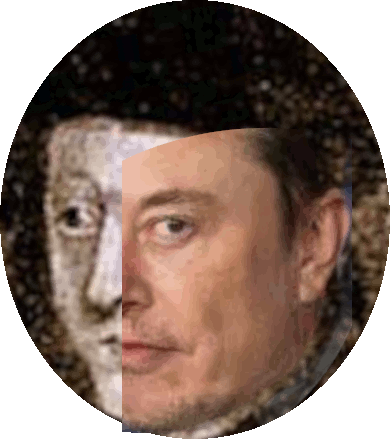 |
 |
|
Gossip Girl of the 16th-Century |
- Eustace Chapuys (1489-1556) was a Savoyard diplomat and priest who served as Imperial ambassador to England from 1529 until 1545 under Charles V.
- He is best known for the extensive and detailed correspondence he wrote about the life of the court of Henry VIII immediately preceding and during the English Reformation.
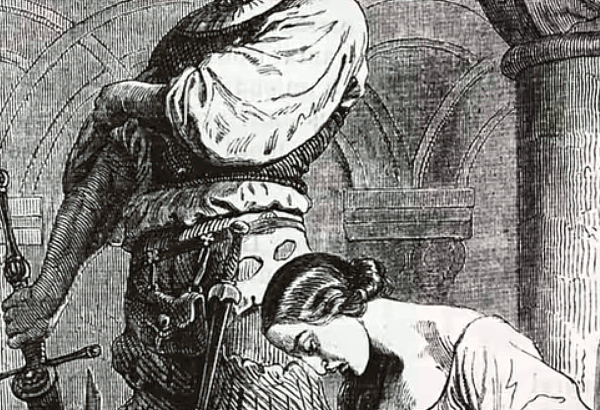
- Anne of Cleves was said to have remarked during
the 6th wedding ceremony, 'Madam Parr is taking a great
burden unto herself.'
- Chapuys
interpreted this statement as catty jealousy
from a woman whom Henry had refused to marry
a 2nd time after the execution of Catherine
Howard.
- However, it was Anne's brother,
William, who had suggested that Henry take
his sister back, not Anne.
Treason |
- It is
possible that Anne meant something entirely
different when she spoke of Madam Parr's
'great burden.'
- Perhaps she was
thinking of Henry's most recently discarded
wife, the disgraced teenage Catherine
Howard, executed for treason at only
19-years-old.
- Anne remained in royal
favor until Wyatt's Rebellion of 1554 because
Queen Mary I suspected that Anne might have
aided the rebels' cause due to Protestant
sympathies and love for her sister Elizabeth.
- As a result, Anne was no longer invited to court and
confined to her estates.
- By the spring of
1557, Anne's health had begun to decline and
she grew thinner and paler and lost her
appetite, and historians believe that she may
have been suffering the final stages of some
form of cancer.
- Anne of Cleves died on
July 16, 1557, at the age of 41 or 42.
Gravesite |
-
Despite the short duration of her marriage, she
had come to be much loved and admired by the
English people and Henry's own family.
-
She was honored with a burial in Westminster
Abbey by Queen Mary I, who chose the site for
Anne's burial herself, and ordered that vigil
be kept for her each night until her funeral
on August 4.
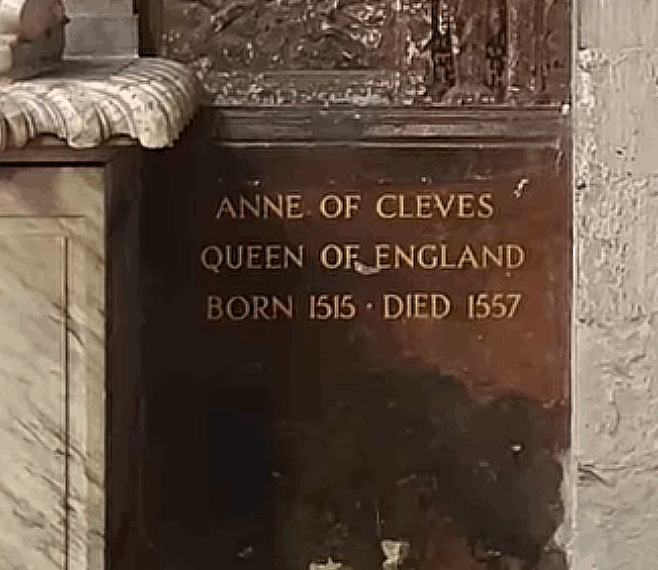
- The grave of Anne of Cleves
can be found today on the south side of the
Abbey's high altar, a plain stone slightly
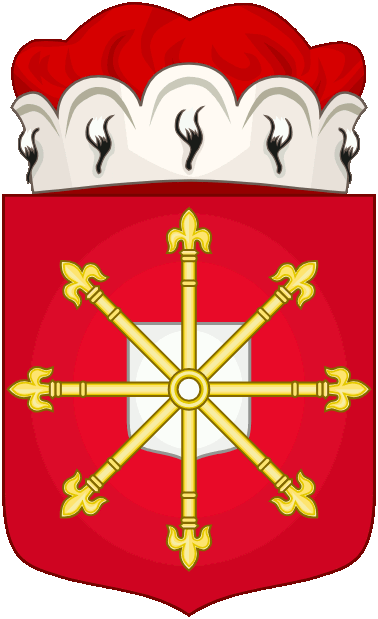
above eye level which features her coat of
arms and reads simply; Anne of Cleves Queen of
England born 1515 - died 1557.
- Although
the monument itself was never completed.
- Despite
the pain and embarrassment that her short,
abortive marriage much have caused her, Anna,
to use the German version of her name,
arguably fared better than any of her 5
counterparts when her marriage came to an end.
Heraldic |
- Of all Henry's wives, Anne's origins tend to
be the least well-known, since, from the
English perspective, their marriage was little
more than a blip in the larger context of
Henry's reign, but upon close consideration of
what little is known, both Anne herself and
her story strike the observer as highly unique
and interesting.
- Incidentally, the famous phrase used
to describe Anne supposedly spoken by Henry
VIII, 'the Flanders Mare,' didn't exist in
1540 and only appeared after it was
published in Anglican Bishop Gilbert
Burnett's history of the reformation some
129 years after Anne's death in 1679.
-
Yet this snide comment is one of the few
things that people can tell you about Anne
of Cleves, it's in the school books, the
quiz shows, the musicals and the history
books.
|
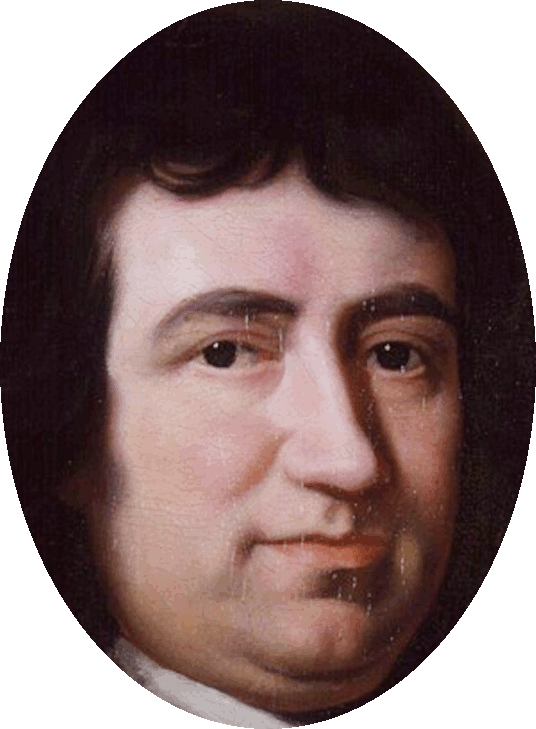
Gilbert Burnet as Elon Musk |
 |
 |
Gilbert Burnet
1643-1715
9/18
3/17
Anglican Bishop and slanderer |
Elon Reeve Musk
1971
6/28
Satan from Alpha Centauri
|
 |
 |
|
The Buzzard |
- Gilbert Burnet (1643-1715) was a Scottish philosopher and historian, and Bishop of Salisbury.
- He was fluent in Dutch, French, Latin, Greek, and Hebrew
and was highly respected as a cleric, a preacher, an academic, a writer and a historian.
- He was always closely associated with the Whig party, and was one of the few close friends in whom King William III confided.
-
Famously satirized under the nickname 'The Buzzard' by poet John Dryden in his 1687 political and theological allegory poem,
The Hind and the Panther.
- Dryden used the character of a fierce, predatory buzzard to mock Burnet's aggressive polemical style and heavy involvement in the political scheming surrounding the Glorious Revolution.
- In earlier satirical works, Dryden also referred to him as Balak Balak
who was the king of Moab in the Hebrew Bible
(Old Testament) who tried to hire the
prophet Balaam to curse the advancing
Israelites.
- On top of that, Burnett never knew of
anyone who ever met Anne and he attributed the
insult to Henry VIII without ever producing
any documentation to back up his claim.
The Glorious Revolution of 1688–1689 was the
overthrow of King James II of England, Scotland, and
Ireland by a union of English Parliamentarians and the
Dutch stadtholder. (Assistant)
|

Henry VIII never
said this, it's a
lie |
-
There is also no official documentation,
deposition or chronicle from 1539-40 that ever
called Anne ugly, not even the French
ambassador, who had every reason to sneer at a
German match for Henry VIII.
- Not even the
imperial agents who hated the alliance, nor
Henry's own diplomats, what they said was
something else entirely, and it's more
revealing.
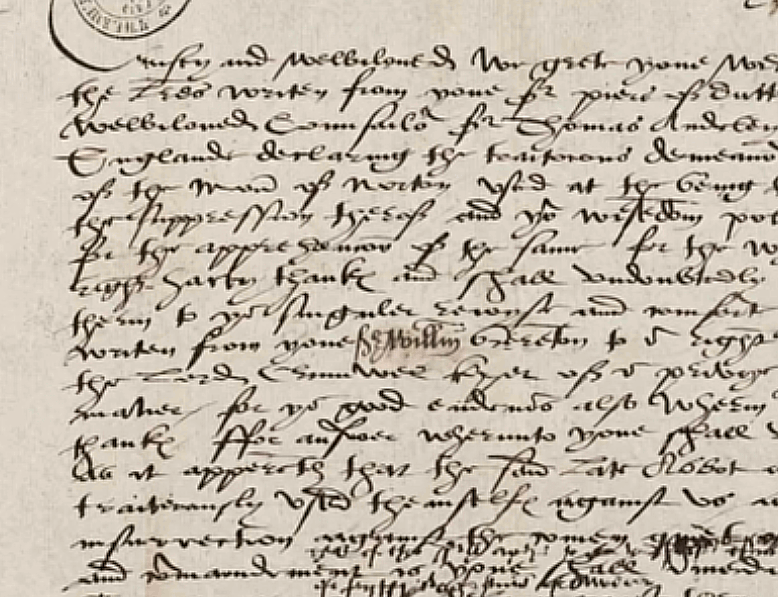
- In August 1539, Henry's envoy,
Nicholas Wotton, was in Duran getting a first
look at the woman his king had agreed to marry
sight unseen and his report is still in the
state papers and it is not the letter of a man covering up a
disaster.
- Wotton described Anne as having a sober,
grave manner, which in the vocabulary of the period was a
mark of praise, indicating dignified manner.
Court record |
- When Wotton listed what Anne lacked he
said she had
no French, no Latin, no Italian, she could not sing, and did
not play any instrument because he explained, in Cleves,
music was not considered a proper occupation for a noble
woman.
- She had been raised closely by her mother and
rarely left her side and she was skilled at needlework.
-
Nobody flagged her face, they flagged her education and
training.
- Those 'deficiencies' were later recycled into
an argument about why the king of England could not bear to
touch her.
- The same court that recorded them without
alarm in 1539 would within a year be asked to write down the
most intimate possible claim about her body and sign their
names to it.
- The nastiness in this marriage wasn't a
joke about a nose, it was procedural, it was legal and it
happened on paper in July 1540, when Henry VIII gave a
formal account to a commission investigating his own
marriage.
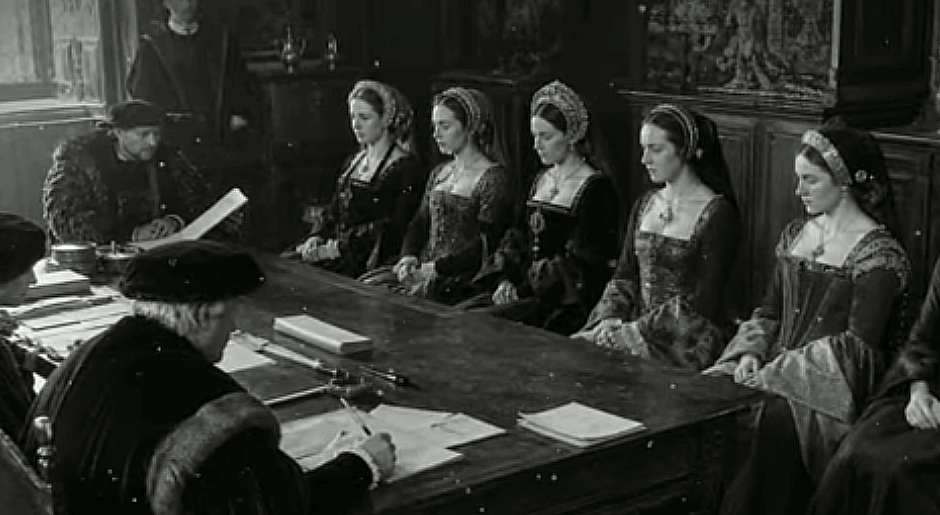
Ladies |
- That account was about having handled
Anne's body in bed and concluded from what he felt that she
was no virgin.
- The physicians, Dr. William Buts and Dr. John Chamber were
brought in to confirm what the king told them privately
about the royal bed chamber.
- Her ladies-in-waiting were
questioned about what she had said to them about her nights
in bed with Henry.
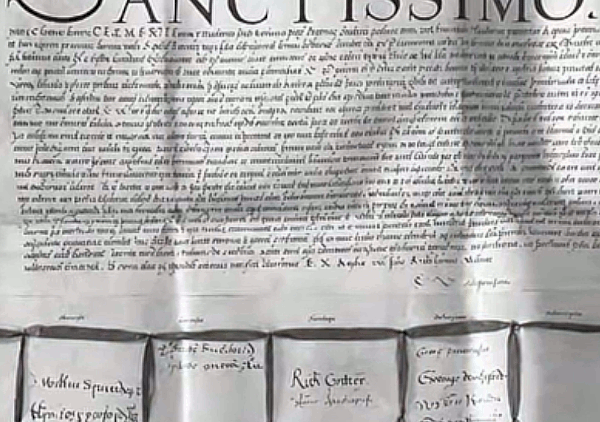
- Thomas Cromwell, locked in the Tower of London by then and writing
to save his life, produced a long letter recounting the
king's complaints to him month by month, starting from the
first day.
- That document was read by bishops and
lawyers and copies circulated.
Official |
- A woman who had been in England for 6
months, who barely spoke the language, became the subject of
a sworn archived, officially examined debate about whether
she had ever been a maid upon her arrival in England.
- Then,
Anne signed her
agreement to it, that's the part that stops people, because
Henry VIII did not generally need permission, he had broken
with Rome, rather than ask for agreement from it.
- He had executed a wife 4
years earlier rather than negotiate with her.
- Anne of
Cleves had no English relatives, no faction at court, no
dowry to reclaim, no money of her own, and no way to
physically leave the country without the king's ships.
-
On paper she was the most powerless adult in England, much
like Anne Boleyn had been.
-
So why did the most dangerous man in Europe need her consent
and why did he keep paying her for it, generously for the
next 17 years?
|
Charles V of Spain as Elon Musk |
 |
|
Charles V
1500-1558
2/23 9/21
King of Spain, Portugal, Naples and Sicily
Holy Roman Emperor |
Elon Reeve Musk
1971
6/28
Satan
from Alpha Centauri
|
 |
 |
|
Conquistador |
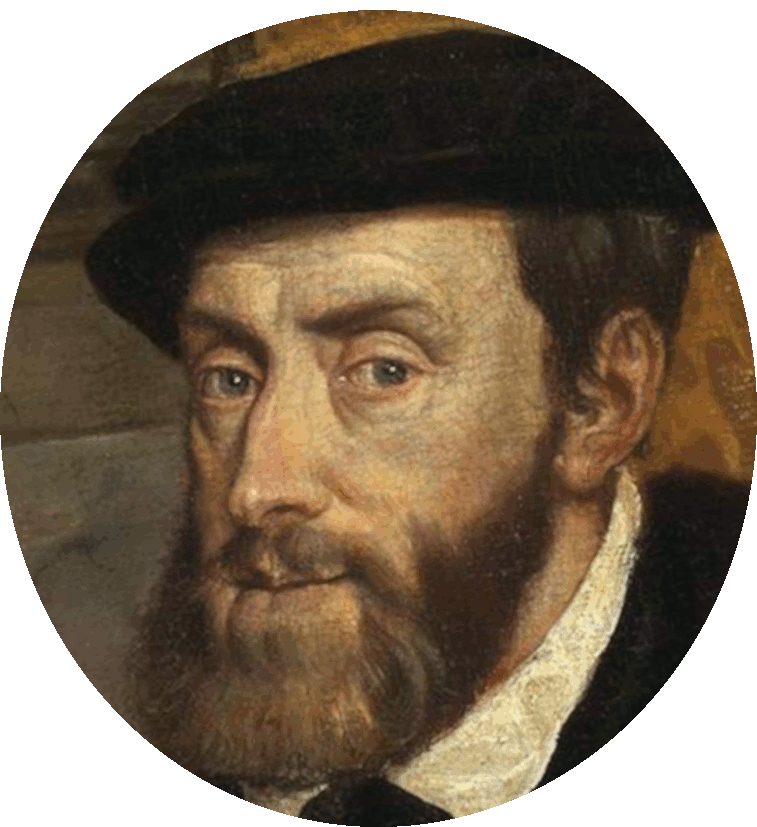
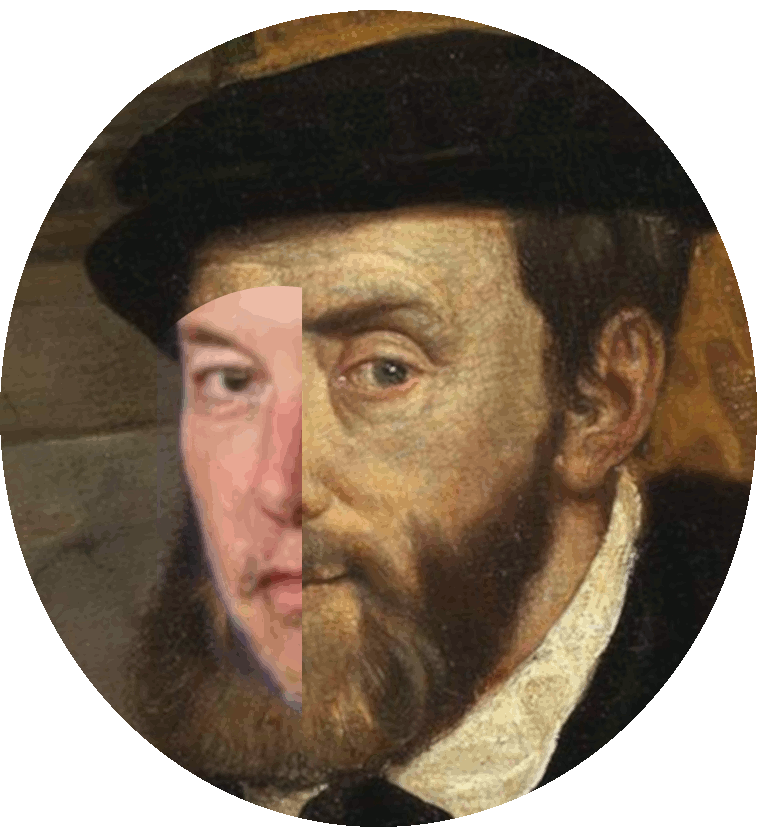
- Charles V (1500-1558 was Holy Roman Emperor and Archduke of Austria from 1519 to 1556, King of Spain (as Charles I) from 1516 to 1556, King of Sicily and Naples from 1516 to 1554, and also Lord of the Netherlands and titular Duke of Burgundy (as Charles II) from 1506 to 1555.
- He was heir to and then head of the rising House of Habsburg.
- His dominions in Europe included the Holy Roman Empire, extending from Germany to northern Italy with rule over the Austrian hereditary lands and Burgundian Low Countries, and Spain with its possessions of the southern Italian kingdoms of Sicily, Naples, and Sardinia.
- To answer the question why Henry needed Anne's permission, you have to go back to what she actually
was when she arrived, not a bride, instead, she was a legal clause, a marriage
bargain.
|
Francis I of France as Elon Musk |
 |
|
Francis I
1494-1547
9/12
3/31
King of France |
Elon Reeve Musk
1971
6/28
Satan
from Alpha Centauri |
 |
 |
|
Francis of the Large Nose |
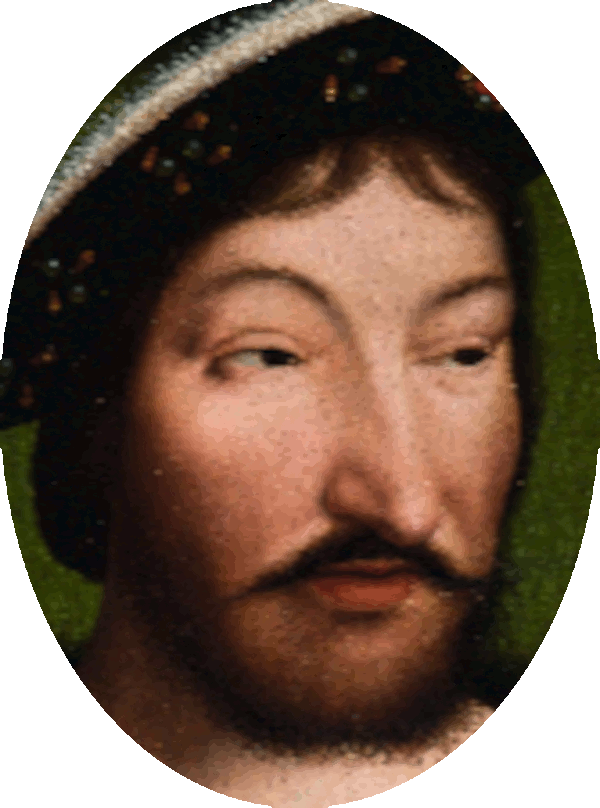
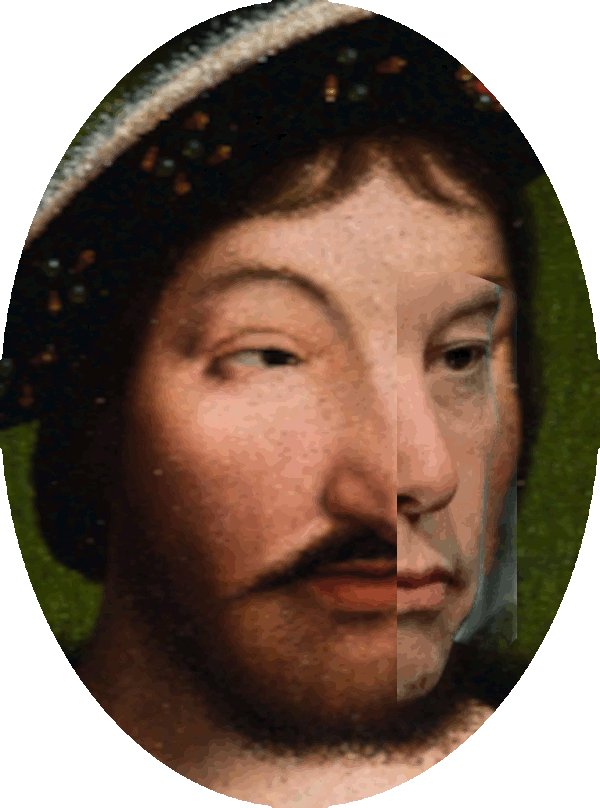
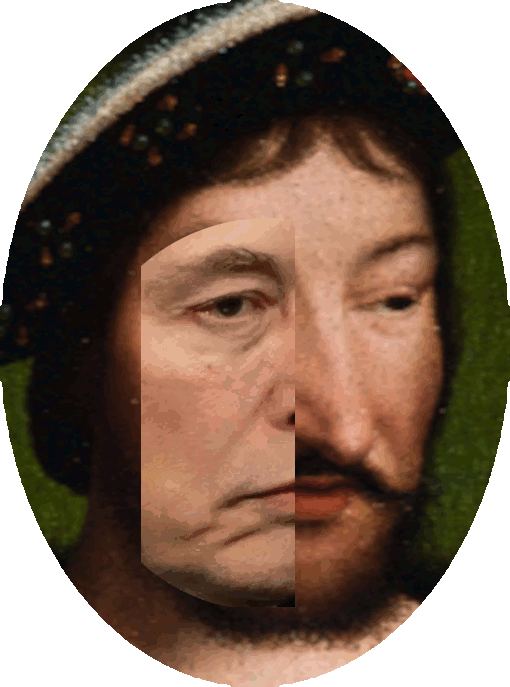
- Francis I (1494-1547) was King of France from 1515 until his death in 1547.
- He was the son of Charles, Count of Angoulême, and Louise of Savoy.
- He succeeded his first cousin once removed and father-in-law Louis XII, who died without a legitimate son.
- After Jane Seymour died, Henry spent 2
years as a widower with a small child, with an
excommunication hanging over him, and a diplomatic problem
that got worse every month.
- In January 1539, Charles V, the Holy Roman
Emperor, and King Francis I of France signed the Treaty of
Toledo agreeing not to make separate alliances with England.
- The Pope had published the Bull of Excommunication and for
a brief, genuinely frightening window, the 2 great Catholic
powers of Europe looked aligned against an England that had
no friends.
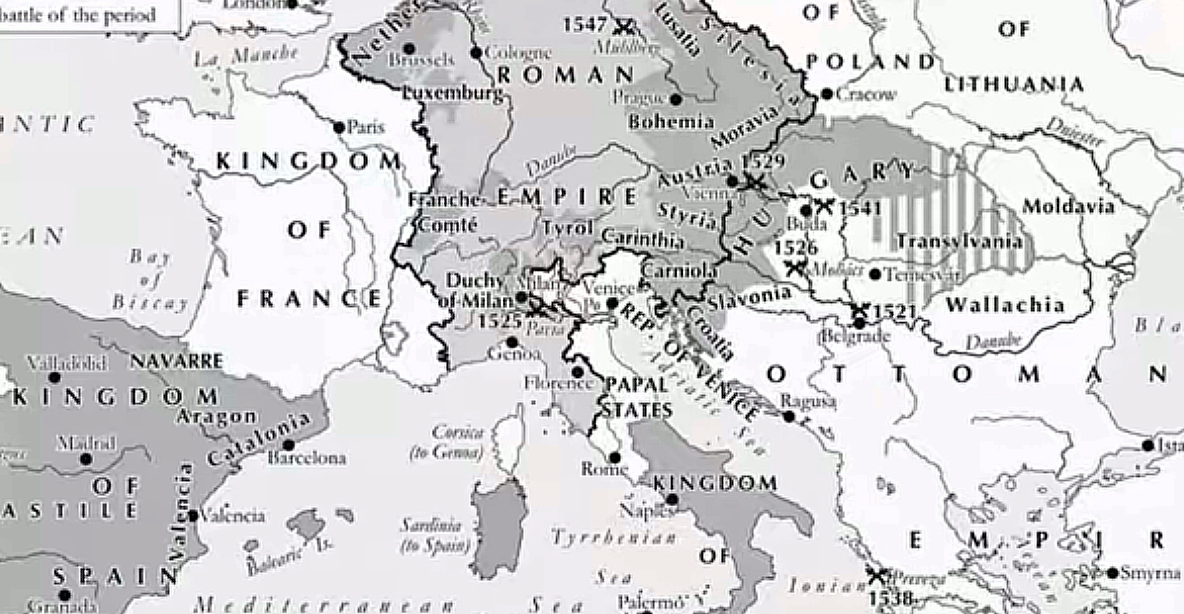
Europe |
- Thomas Cromwell's answer was Germany, not
Lutheran Germany exactly, but the Duchy of Cleves which sat
on the Lower Rhine and had thrown off papal authority in its
own idiosyncratic way and had a live, territorial fight with
Charles V over
the Duchy of Guelders.
- Cleves also had a family
connection to the Protestant Schmalkaldic League.
- By
marrying into Cleves, England acquired a northern hedge
against a Catholic coalition without formally joining a
heresy.
- Anne's father died in 1539 and her brother,
William, inherited and he wanted English protection badly
enough to accept terms that today look almost insulting.
- There was essentially no dowry in the normal sense,
England was buying a relationship, not a fortune.
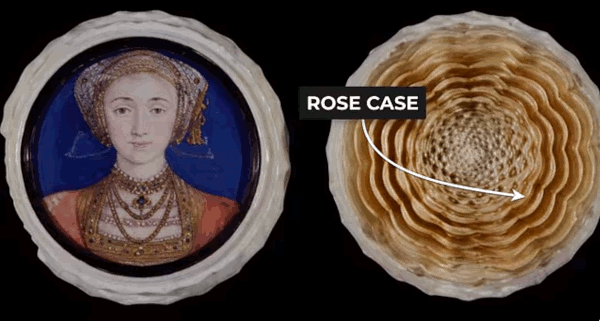
Rose case |
- Henry sent Hans Holbein the Younger to
Duran in the summer of 1539 to paint the Cleve sisters and
he produced a small circular portrait of Anne on parchment
mounted on a playing card and housed in a turned ivory case
carved to look like a white rose.
- It shows a young
woman, hands folded, looking directly at the viewer, wearing
an elaborate Cleves headdress.
- The most durable
accusation in this entire story was that Holbein overly
flattered Anne and committed a fraud on his king collapses
the moment you check what happened to Holbein afterwards.
- The treaty was signed on October 4, 1539, and nobody
consulted Anne.
- There is no record of her opinion of
the match, no courtship, no correspondence, no documented
moment where she chose anything.
- She was 24, barely
left her mother's household and as a pawn in the game, she
was told she was going to England to be queen.
- It was a
courtship conducted entirely between men over politics.
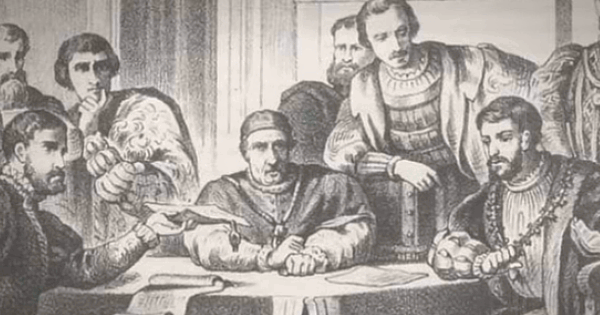
Negotiation |
- That's not a modern gripe, it's exactly
what all the paperwork shows.
- The negotiation files are
full of William's advisors, Cromwell's agents, Wotton's
reports, and arguments about Guelders.
- Anne appears as
the object of the sentence, there was one loose thread and
it would matter more than anything else in her life, in
1527, as a small child, Anne had been betrothed to the son
of the Duke of Lorraine,
- Such arrangements were
routine and were often dissolved.
- The English
negotiators asked for the documents proving the betrothal
had been properly revoked and the Cleves envoys said that
the papers existed and promised to send them, only they
didn't send them, not in time anyway.
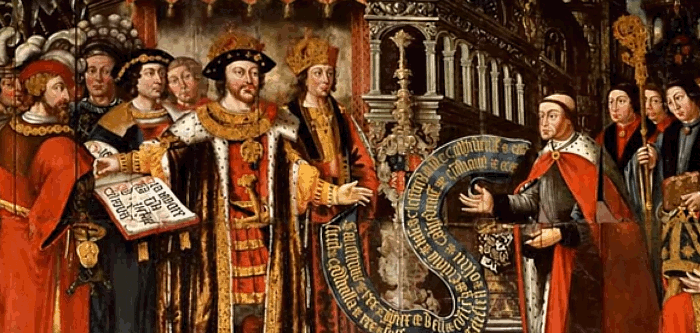
Henry plea |
- They offered themselves as hostages for
the documents eventual arrival, which give you a sense of
how awkward the moment was.
- But here's the thing, Henry
VIII married her anyway and that's the hinge to the whole
story.
- The king of England, who had spent 6 years and
an entire schism trying to prove that his first marriage to
Catherine of Aragon, had been invalid from the start, agreed
to marry Anne of Cleves with pre-contract unresolved.
-
He had just been handed in advance the exact legal
instrument he would use to escape, but whether he saw it that
way in October 1539, is not something the record
establishes.
- Cromwell certainly didn't, he had built
his policy on this marriage and was about to find out what
it cost.
- Anne's journey to England was slow and
enormously expensive, she traveled overland through Cleves
territory and the Low countries with a train of more than
200 people before reaching Calais where they sat for 2 weeks
because the weather was bad.
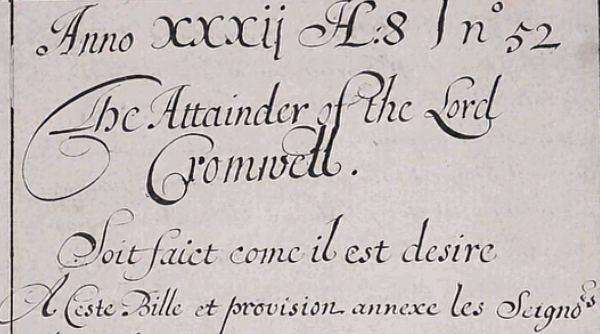
Cromwell document |
- William FitzWilliam, 1st Earl of
Southhampton, was in charge of receiving Anne, and what he
did with that fortnight tells you something about her.
-
She asked him to teach her a card game the king liked and
she also asked to sit at supper with him and his officers so
she could see how Englishmen ate at the table and learn the
manners.
- That's a woman doing homework, no French, no
music, no court training and she had worked out that the gap
was a problem and was closing it with the only tools
available.
- Southhampton wrote home praising her and
said she had a manner he thought the king would like.
-
He was so enthusiastic that he would later be criticized for
it, having written approving letters instead of warning the
king.
Purpose |
- Sir Anthony Brown's version, who was present
in Rochester, is about Henry's disappointment and
dislike and also, Thomas Cromwell knew that
Henry came back to
Greenwich from the journey to Rochester and
was unable to summon desire.
- The core of
it is probably true, something went very wrong at
the 'romantic' meeting in Rochester.
- But
notice what the complaint was never about,
because not one of these accounts says that
the king said she was ugly or that Holbein's
portrait had lied.
- Treat all of it as
what it was, evidence assembled for a purpose.
- The word that recurs in the 1540
dispositions is not ugly, its variations
aren't provoked.
- Henry's claim that he
could not be provoked to do his duty by her
but 2 days later, England put on the show
anyway and on January 3, 1540, she was
received at Blackheath outside Greenwich in
front of the assembled nobility, the mayor and
alderman, and an enormous crowd.
Blackheath |
- At Blackheath, Anne changed into a gown in
Dutch fashion, cloth of gold with a headdress
set with pearls.
- Henry rode out to meet
her in a coat of gold embroidered with
diamonds and they embraced in front of
everyone.
- Cannon fired from the tower and
the chroniclers described the barges on the
river, the trumpeters, and the tents of gold
cloth, 3 days after that, on January 6, Thomas
Cranmer, Archbishop of Canterbury, married
them in Greenwich.
- That morning, Henry is
reported by Cromwell in the Tower of London
letter to have said, 'If it were not to
satisfy the world and his realm, he would not
do that day what he must do.'
- The
quotation comes from an interested witness
writing under threat of death, but the
behavior around it is independently documented
and it points the same way.
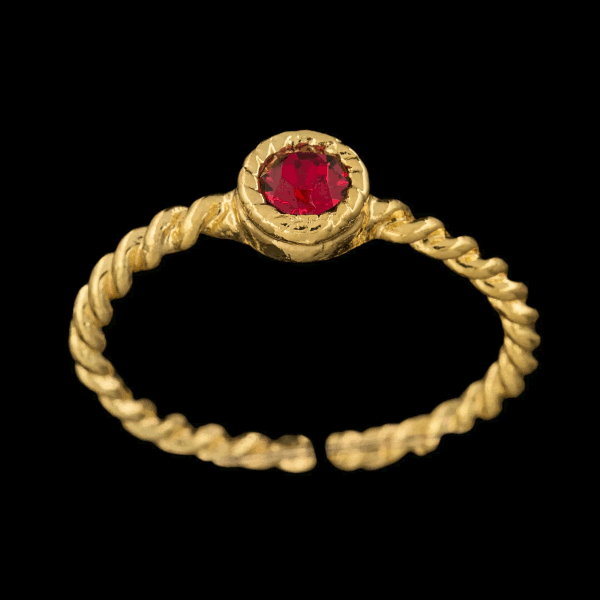
Anne's ring |
- The king went to the altar in front of the
court of England in a marriage he had already
told at least 2 men he did not want because
the alliance required it, and that withdrawing
at that point would have been a public
humiliation of a foreign duke whose soldiers
England might need.
- He married her to
satisfy that world.
- That's the entire
relationship and it's from day one.
-
The ring that Anne received from Henry was
engraved with a motto that said, 'God send me
well to keep.'
- Now look at the household
that formed around her because that is where
she became something other than a wife, she
became a position with staff.
- She arrived
with a German retinue, including a woman who
was called Mother Low, who had been her
attendant from Cleves and ran her private
apartments.
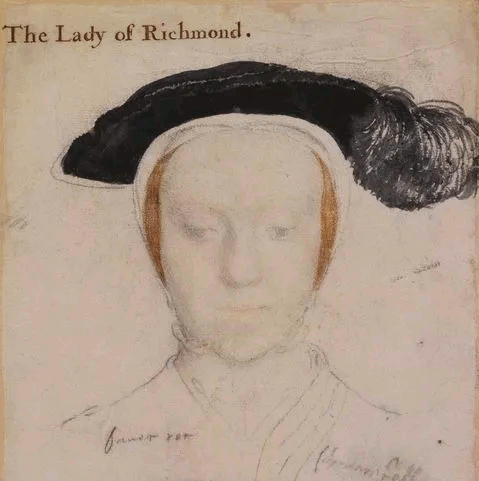
Eleanor Paston, Countess of Rutland |
- Around that core German group, Henry's
council installed English noble women.
-
This included Eleanor, Countess of Rutland and
Jane Boleyn, Lady Rochford, who had already
survived the destruction of her family and
would be executed 2 years later for her role
in Catherine Howard's affairs.
- Also, Lady
Edgecumbe and Lady Browne, wife of Sir Anthony
Browne who had watched the Rochester disaster.
- These women were Anne's company and they
were also the only people who could speak to
the king's Privy council about what happened in the
queen's chambers.
-
In June and July 1540, they were called on to do
exactly that and the evidence they gave is the
most quietly devastating material in the
entire file.
- Rutland, Rochford and
Edgecumbe testified about the conversation
they had with Anne about her marriage nights
with Henry and how she no longer considered
herself a maid because she had slept next to
the king.
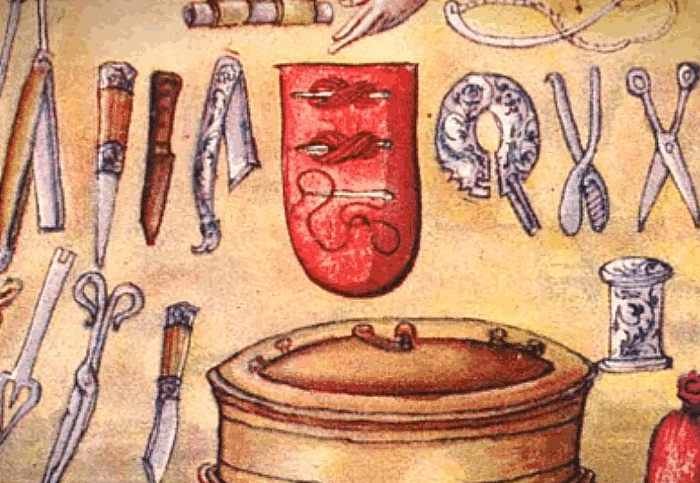
Medical men |
- The resulting record showed that Anne was
someone who did not understand what was
supposed to have happened and had to be told by her
attendants.
- Whether she was genuinely
that uninformed, or she was just protecting
herself because the wrong answer had killed so
many is not settled.
- What's known as her
description of Henry's affectionate nothings
was carried by her ladies to the commission
and entered as proof that her marriage had
never been consummated.
- She gave them the
evidence herself in confidence to women the
council had placed in her rooms and the
medical men gave the rest.
- One had been
receiving Henry's private reports on the bed
chamber and confirmed them.
- The king's
story which was circulated in the depositions
was that he had felt her body and concluded
she was not a virgin and that this had killed
his desire and left him unable to proceed.
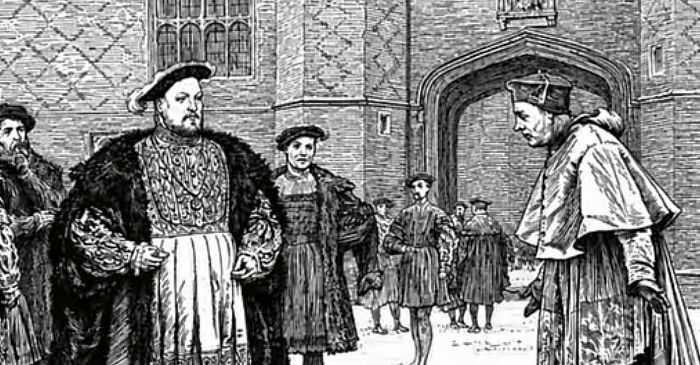
Cad Henry |
- This is the cruelty that most don't know
about because it isn't funny and it doesn't
fit the Flanders mare joke.
- A foreign
woman in her mid-20s who had been in the
country for 6 months had her body described by
the king to a committee in writing and the
description was preserved.
- She had no
right of reply, no representative, no
language, and the claim also neatly served
Henry's reputation.
- It made the failure
her fault, rather than his, meanwhile, the
public timeline looked fine, within weeks of
the wedding, the court was told that the king
was content.
- Letters went out reporting
the marriage as settled and the couple even
appeared together.
- In February and into
the spring, Anne was publicly queen with a
household, a rank, and a place at ceremonies.
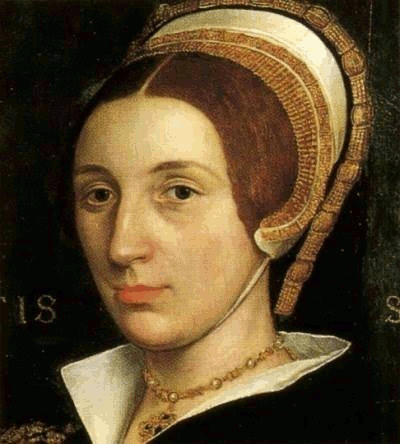
Catherine Howard |
- But underneath, everything was quietly in
motion and the question about the Duke of
Lorraine contract was reopened.
- The
documents from Cleves that should have closed
it, had still not satisfied the English
council and by the spring of 1540, Henry had
noticed one of Anne's own maids of honor,
Catherine Howard, who was Duke of
Norfolk,Thomas Howard's niece and was serving
in Anne's household.
- That placement
matters because the Duke of Norfolk and Bishop
Stephen Gardiner had been fighting Cromwell's
whole religious and diplomatic program and a Howard girl in the queen's rooms was an
opportunity.
- By April, the king was
granting Catherine Howard gifts of land while she was
serving in Anne's house.
|
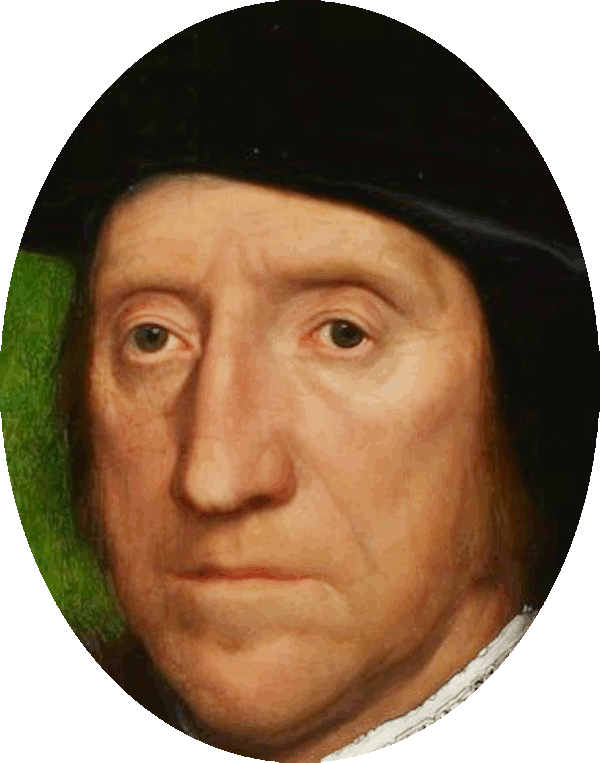
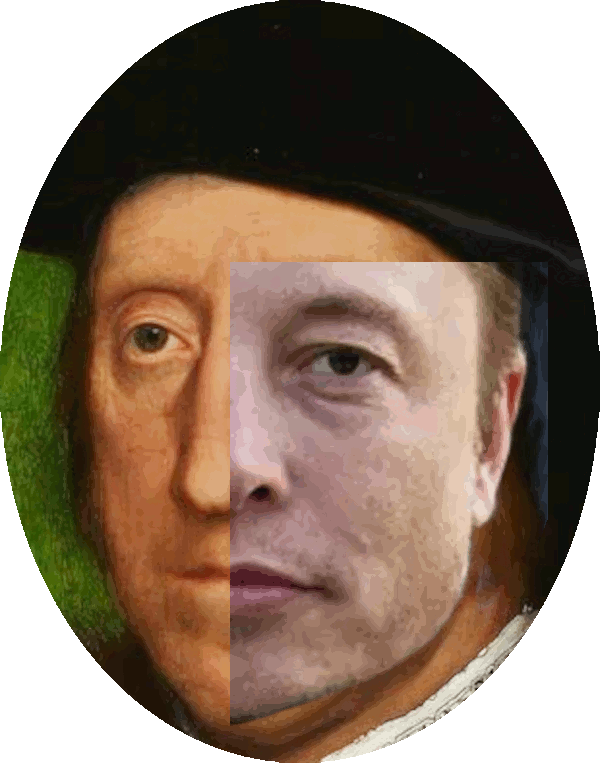
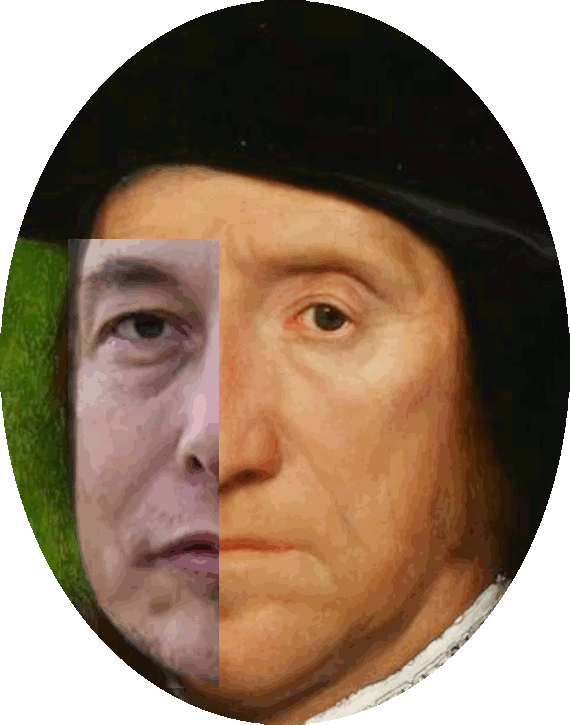
Thomas Howard as Elon Musk |
 |
 |
Thomas Howard
1473 -1554
3/10
8/26
3rd Duke of Norfolk |
Elon Reeve Musk
1971
6/28
Satan from Alpha Centauri
|
 |
 |
|
Luckiest man (for escaping execution) |
- Thomas Howard, 3rd Duke of Norfolk (1473 -1554) was a politician and military officer of the Tudor era.
- He was an uncle of 2 of the wives of King Henry VIII, Anne Boleyn and Catherine Howard, both of whom were beheaded, and played a major role in the machinations affecting these royal marriages.
- As Catherine Howard's uncle, Thomas Howard, secured her a place in the household of Henry's
4th wife, Anne of Cleves, where Catherine caught the King's interest.
- After falling from favor in 1546, Norfolk was stripped of his dukedom and imprisoned in the Tower of London, avoiding execution when Henry VIII died on January
28, 1547.
- Henry VIII took fancy toward Catherine Howard after
his dismal 6 month marriage to Anne of Cleves.
|
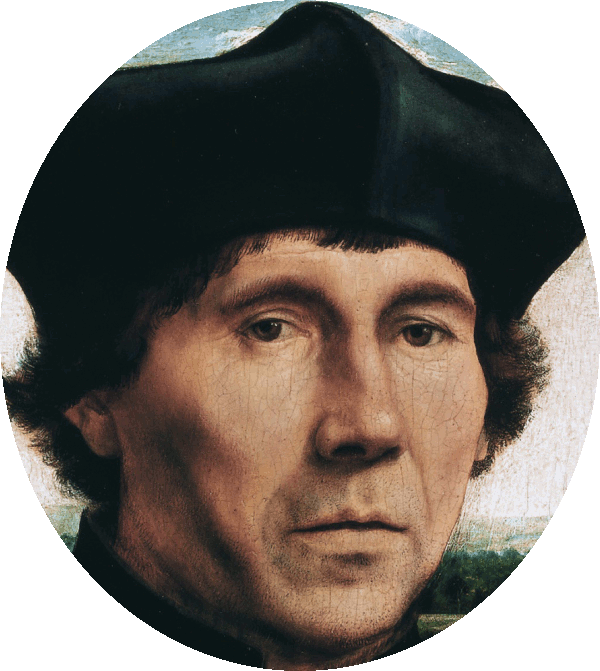
Stephen Gardiner as Elon Musk |
 |
|
Stephen Gardiner
1483-1555
7/27
11/12
English Catholic Bishop of Winchester
|
Elon Reeve Musk
1971
6/28
Satan
from Alpha Centauri
|
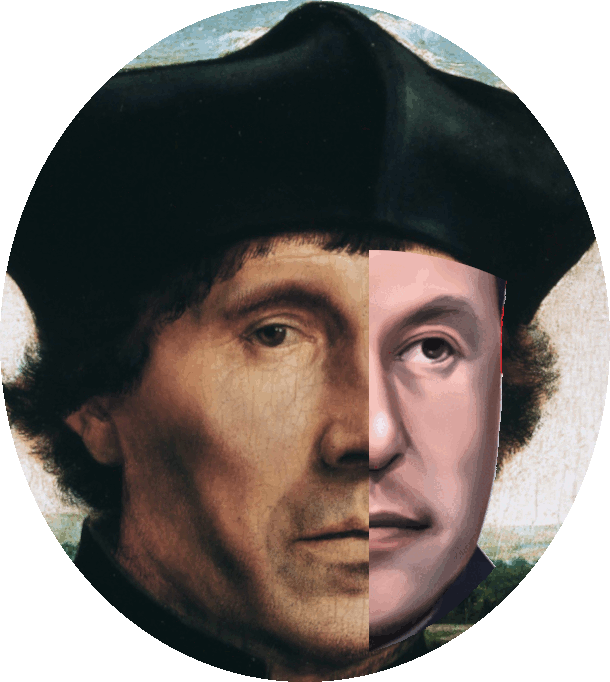 |
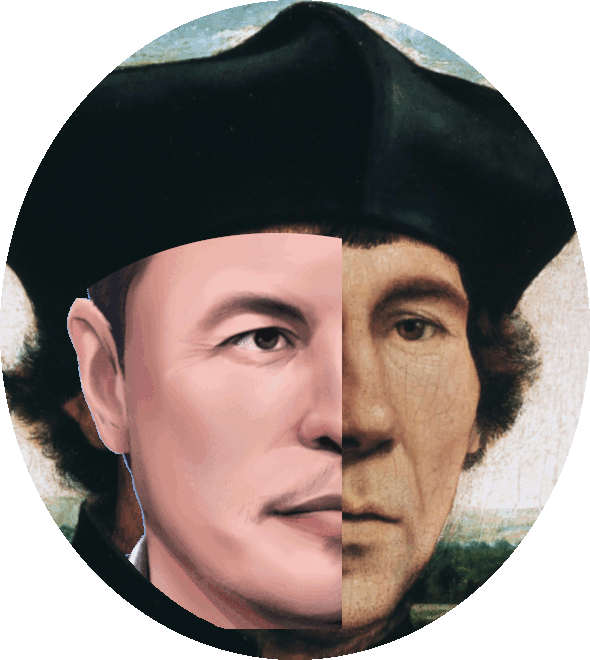 |
|
Wily Winchester |
- Stephen Gardiner (1483-1555) was an English Catholic bishop and politician during the English Reformation period who served as Lord Chancellor during the reign of Queen Mary I.
- Skilled in canon law, he had a significant career as a civil servant and diplomat, being brought to King Henry VIIIs attention when working for Cardinal Wolsey, then serving as the king's secretary.
- As a bishop, he was the most important religious conservative to retain his diocese during the later reign of Henry, supporting the king's claim as Supreme Governor of the Church of England.
- He spent most of the reign of Edward VI in prison, but was restored by Mary I of England, in whose reign he died.
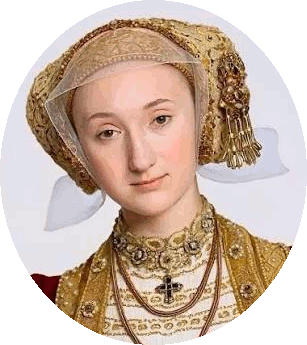
Anne tilted |
- Henry's structure came apart in 6 weeks
beginning on June 10, 1540, when Cromwell was
arrested at the council table and taken to the
Tower of London.
- The charges included
heresy and treason, but the real offense is
the part that concerns this story was the
marriage itself.
- The alliance had become
useless almost immediately because Charles V
and Francis I had fallen out again by the
spring, and Cleves was now not a hedge, but a
liability, dragging England toward war over
Guelders.
- Cromwell had sold the king a
wife to solve a problem that no longer
existed.
- On June 24, Anne was ordered to
leave the court for Richmont Palace and the
reason given was her health and Henry told her
he would follow, but he did not.
- On July
6, a delegation arrived in Richmont to inform
Anne that her marriage was being examined and
to ask for her agreement.
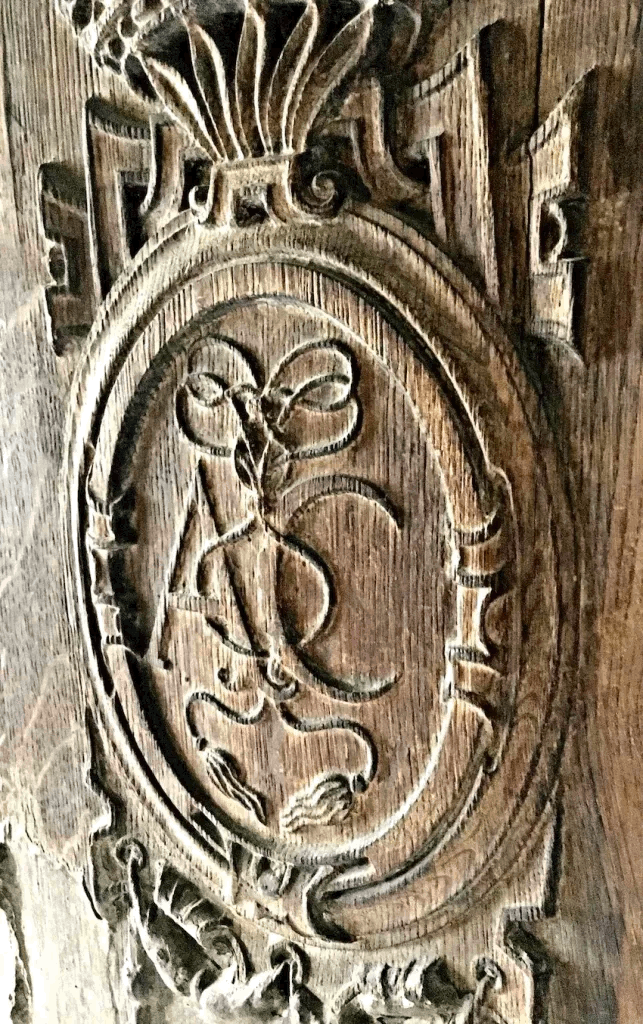
Anne of Cleves panel |
- On July 9, the clergy in convocation at
Westminster pronounced the marriage null and
void on the grounds of the pre-contract with
Lorraine, the non-consummation of the marriage, and the king's
lack of inward consent.
- Parliament
confirmed it.
- On July 28, Thomas Cromwell
was executed on Tower Hill and that same day,
Henry VIII married Catherine Howard at
Oatlands.
- The man who built the marriage
and the woman who replaced the wife were dealt
with on a single afternoon.
- No one
planned a symbolic coincidence, the court
simply moved that fast once the king had made
up his mind.
- Meanwhile, the most repeated
lie in this story after the Flanders mare is
the legend that Hans Holbein somehow flattered
Anne and deceived the king and was disgraced
for it, but Holbein remained the kings portrait
painter.
- He kept his annual salary of 30
pounds and went on painting for Henry's court
and for English client until he died in London
in late 1543 while still in royal service.
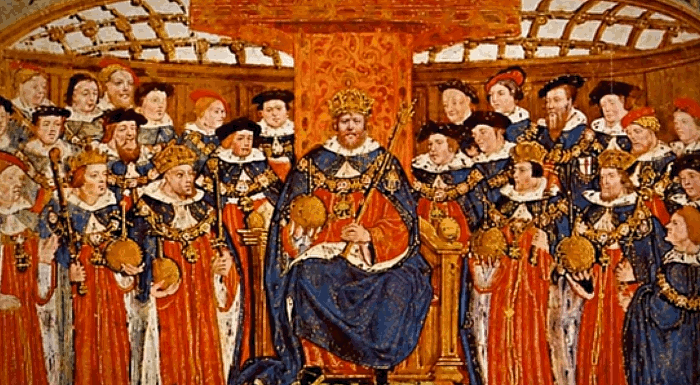
Kings court |
- Henry punished the men who had argued for
the marriage and he destroyed the minister,
Cromwell, who had arranged it, but he did not
touch the painter because the painter hadn't
done anything wrong.
- Anne looked like her
portrait, that was never the problem and the
question that the executions and the fast
wedding leave hanging.
- Henry had just
annulled the marriage through his own clergy
and his own parliament.
- He had the
convocation ruling, the depositions, the
physicians, the pre-contract, he did not need
anything else from her.
-
So why did a delegation sit at Richmont Palace
in July 1540, negotiate, and why, when
Anne agreed, did Henry VIII hand a rejected
foreign bride 3 substantial properties, a
royal income for life, and a rank above every
woman in England except the new queen and his
own daughters?

Düsseldorf in
Germany |
- The answer is Düsseldorf and a war that
nobody in England wanted to fight.
- If
Anne had refused the divorce, if she had
written to her brother that she was being cast
off or simply declined to sign, then the
annulment would become a contested
international dispute.
- William of Cleves
would have publicly dishonored and William was
already in an armed quarrel with Charles V
over Guelders.
- A furious Cleves could
have pushed the Schmalkaldic League and the
Emperor into one of those temporary
accommodations that European rulers made when
they agreed on nothing except that England was
behaving intolerably.
- Henry VIII had just
spent 2 years terrified of exactly that
combination.
- Anne's signature converted a
scandal into a settlement and that was the
only commodity she had, and it was worth a
very large amount.
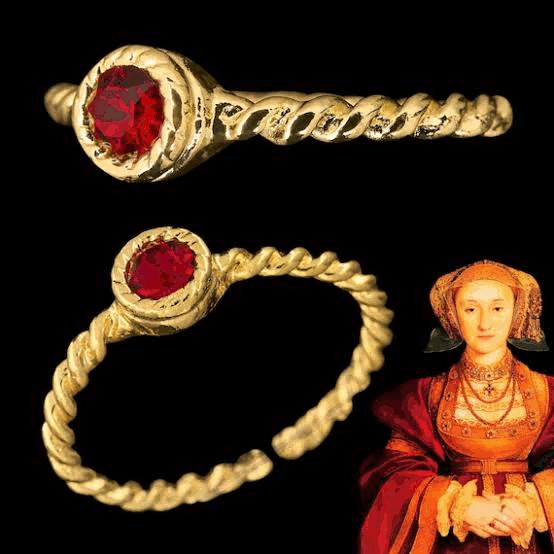
Anne of Cleves
wedding ring |
- By the
summer of 1540, Anne had an income reported at about
4,000 pounds, 3 palatial residences and the
right to be styled as the king's sister.
-
She retained her German servants and was
allowed to remain in England.
- Anne also
returned the wedding ring and told Henry to
break it in pieces as a thing of no force or
value.
- That's a woman who understood
exactly what the object was.
- She had
arrived with the shallow phrase, 'God send me
well' to keep on her finger and 8 months later
she handed it back to be destroyed and
instead, she took 3 estate land deeds.
-
Then she wrote to her brother and the letter
resides in the state papers and she told
William she was content, that she was treated
as a sister, that she had no desire to return,
and that she would remain in England.
- The
king's council had certainly seen the letter
before it was sent and it was dictated in
substance, if not in words.
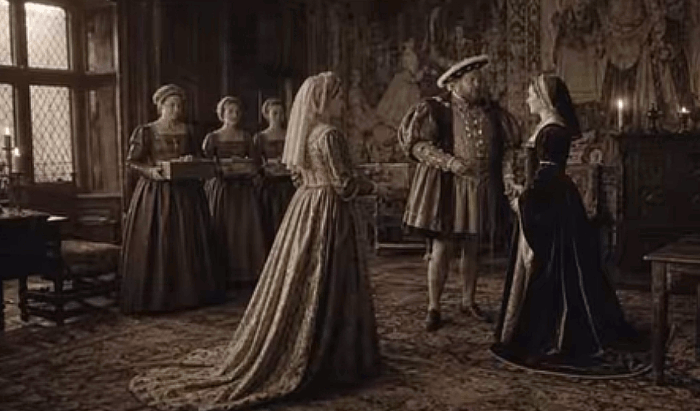
Greeting |
- Anne wrote this more than once over the following
years, including after the pressure had lifted, and she
never went home.
- At some point, the explanation that
she was coerced stops covering the behavior.
- Henry VIII
gave Hever Castle to Anne which he had removed from Anne
Boleyn's family after he destroyed her and gave to his next
discarded
wife.
- Nobody in 1540 appears to have remarked on it and
then something genuinely strange happened, which is that for
a while the arrangement looked almost warm.
- At new year
1541, Anne came to Hampton Court where she dined with Henry
and Catherine Howard, the teenager who had been her maid of
honor just months earlier.
- Contemporary reports
describe Anne as greeting the new queen respectfully and the
king speaking with her pleasantly.
- Gifts were exchanged
and she also visited the court again.
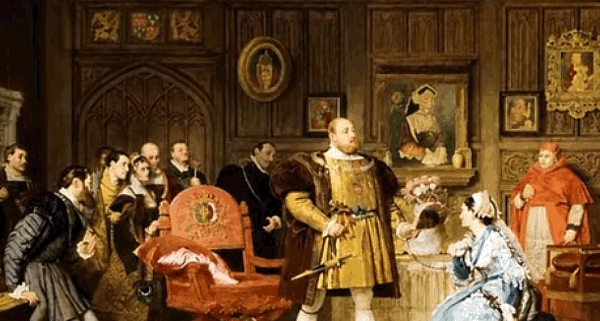
Event |
- In the surviving journals of those months, she was not
sulking in the country by herself.
- She was a fixture, a slightly odd
one, an ex-wife with a title and an income who showed up at
Christmas and holidays.
- If you want to believe that the 2
of them arrived at something tolerable, this is the stretch
where the evidence lets you.
- The alliance had failed, the
marriage had failed, and what remained was a transaction and
both parties were honoring.
- It held for about 10 months.
- In November 1541, Catherine Howard's past and present
conduct was revealed and she was stripped of the title of
queen in late November and executed on February 13, 1542.
-
She was in the same company with Jane Boleyn, Lady Rochford,
who was one of the woman who testified about Anne of Cleves
bed chamber conversations 18 months earlier.
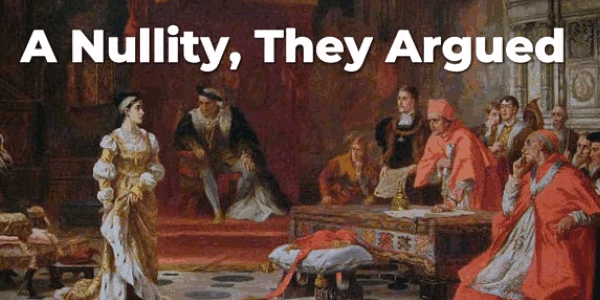
Not valid |
- After Catherine Howard's execution,William of Cleves moved immediately and his
agents began pressing for Anne's restoration, arguing that the
annulment had been a nullity and that the king should take her
back.
- The French ambassador, Charles de Marillac,
reported the lobbying and reported something else.
- He
started a
rumor circulating that Anne had borne a child.
- Marillac
passed it without endorsing it but there is no supporting
evidence of any kind.
- No record of pregnancy, no child,
no subsequent trace and it should be treated as what it was,
an ambassador's dispatch of court gossip in a season when
Anne's name was suddenly useful to several parties.
- It
was also dangerous to her which is worth thinking about, a
woman whose non-consummation had been legally established,
could not possible have a child without the whole settlement
and possibly her safety coming into question.
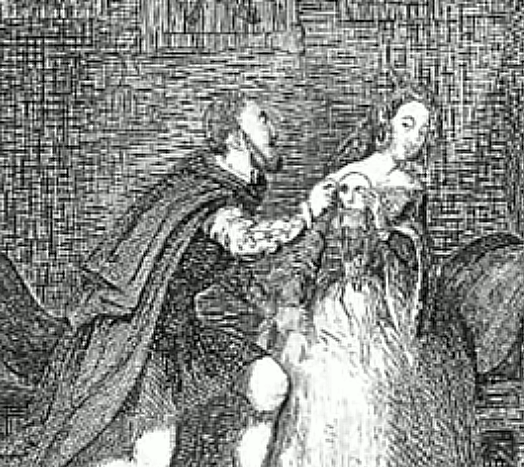
6th wife in the
works |
-
Henry VIII refused restoration flatly and his council told
the Cleves envoys that the marriage had been judged by the
clergy and would not be revisited.
- On July 12, 1543, he
married a 6th time to Catherine Parr.
- Eustace Chapuys,
the imperial ambassador, wrote that Anne would be grieved by
the Parr marriage and that her mother would be vexed.
-
Chapuys was a skilled and interested observer who had spent a
decade reporting what suited his master.
- Treat the
emotional reading as diplomatic color, not evidence of
Anne's feelings.
- What the structure shows, regardless
of feelings, is that after 1543, Anne of Cleves could never
be Queen of England again, and no European prince would
marry a woman whose body had been the subject of an English
ecclesiastical finding.
- She was unmarriageable,
unemployable, and unreturnable.
Alone |
-
She was also, for the first time in her life, in possession
of property, and notice what she did with it because this is
where she stops being the object of the sentence.
- Anne
ran her own household and she kept her German attendants for
years which cost money and served no political function and
it was simply the arrangement she wanted.
- She managed
her estates, her own wallet, and she negotiated.
- When Henry wanted 2 of
her estates back for other purposes, she traded them, and
she traded for replacements rather than cash, among others,
Penshurst Place in Kent, close to Hever Castle.
- Henry
died in January 1547, and her income depended on grants from
a dead king, and the regime around the boy Edward VI was
chronically short of money and not sentimental about a
German ex-queen, her payments slipped.
- Anne petitioned
the Privy council and to figures around the protector about
arrears and about estates being taken from her, pressing her
case with a persistence that produced partial results.
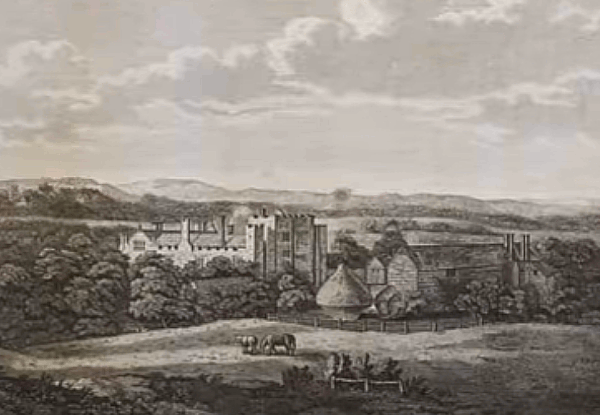
Manor |
-
She had to do this more than once and by the end of the
reign, she had lost ground financially and was living mainly
at Hever and Chelsea, the old manor house where Catherine
Parr had died and there was no faction to protect her.
-
Anne protected herself in a 2nd language through
administrative letters for 11 years.
- Then in July 1553,
Edward VI died and Mary I took the throne against
Northlands coupe and Anne of Cleves did the last publicly
visible thing of her life.
- Mary I's entry into London
and her coronation procession in late September and October
1553, and Anne rode in a carriage with the Lady Elizabeth
Tudor.
- Those 2 women together in the same chariot
behind the new queen.
- Think about what that display
asserted, Mary's claim rested on the validity of her mother,
Catherine of Aragons's marriage.
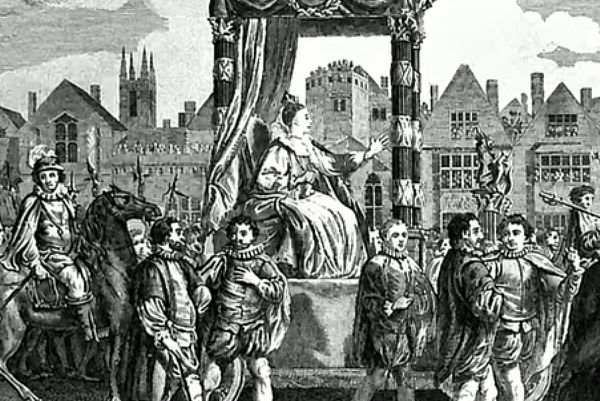
Coronation |
-
Elizabeth's existence rested on the invalidity of Henry's
first marriage.
- Seated
beside Elizabeth was the wife whose marriage Henry had
annulled by the same machinery who had signed the paperwork,
taken the land, and stayed.
- The Tudor regime's answer
to its own tangle of nullified marriages was to put the
surviving products of them in a carriage and drive them
through the city.
- Anne had been imported as a clause in
a treaty and 13 years after the treaty was dead, she was
still being used as a visible argument, but now she was in
the procession rather than in the file.
- She was a
Catholic again under Elizabeth, while under Mary, a Protestant, or at least
conformed.
- Anne asked Mary during the Wyatt rebellion
of 1554 to be allowed to stay away from the trouble.
-
She was granted a continued income, and there's really
nothing else the royal court could do, because they had
signed a contract with her but you won't see that written
down.
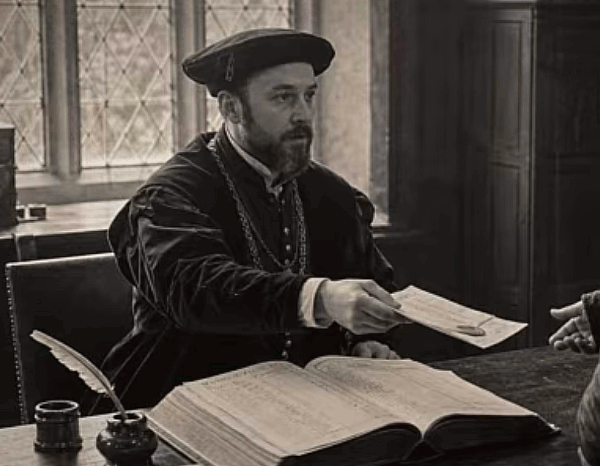
Continued income |
-
Anne's correspondence from these years is mostly estate
business and requests.
- She made her will on September
12, 1557, and died in Chelsea on July 16, 1557.
- The
will was signed following weeks of a long illness and if you
read the will, the whole story rearranges itself.
- Mary
was left a ring and Anne asked her to be good to Anne's
servants and she left Elizabeth a ring and asked her to take
one of her gentle women into service.
- She distributed
her gowns, jewels, and furs by name to the women who had
served her.
- She asked that her servants be paid wages
in full and found places for them and she named Mary I and her
husband Philip II of Spain among those she hoped would employ her
people.
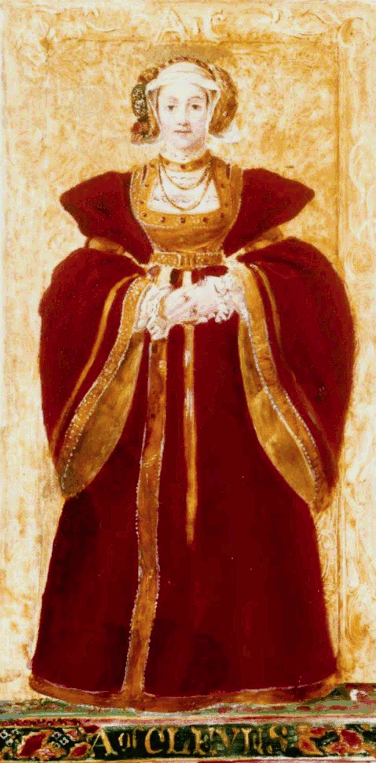
Queen Anne |
- Anne was not grieving, she was placing her household
item by item, like a woman settling accounts she had taken
seriously.
- Mary I ordered that she be buried in
Westminster Abbey with a requiem mass, the first such
funeral of the reign.
- Something that Henry VIII wasn't
honored with.
- The monument on the south side of
the high altar was begun with her initials, the lion and the
bull of Cleves and a skull and bones in the Renaissance
manner, and then abandoned unfinished.
- There is no
record of who stopped the work, the money and the attention
went elsewhere.
- Mary had 16 months left to live and
then England changed from Catholic back to Protestant again
and nobody had a reason to finish a stone tomb for a
discarded
Catholic German duchess.
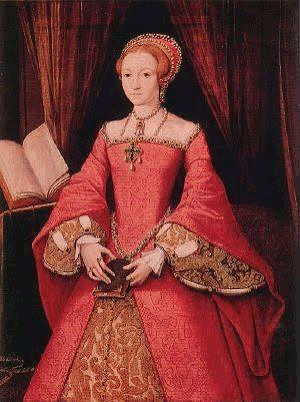
Elizabeth I |
- That unfinished tomb is why the Flanders mare won
because Anne left no memoir, no apology and no partisan
chronicler.
- Her brother's court kept its defense of her
in German in its own archives where no English writer read
it.
- The English documents that survived in bulk were
the ones generated by men building a legal case against her
physical body which certainly, none of them had ever seen.
- Cromwell's Tower letter, the
depositions, the lady in waiting's testimony but her own
voice survives mainly in letters saying she was content,
which read out of context like a woman who did not mind.
- So the vacuum sat there for 129 years until the bishop
writing a Protestant history needed a line for the German
marriage and supplied one that was vivid, memorable and
unsourced.
- It stuck and became relevant because it was
funnier than truth and because no one who could contradict
it had written anything down in English.
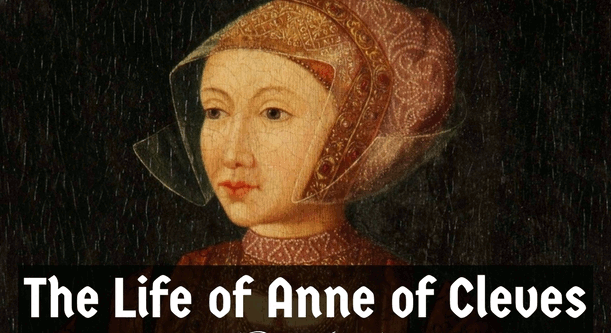
Life |
- Look at Holbein's painting of Anne again and know that
it was accurate.
- The man who made it was never
punished, kept his salary and died in royal service because
the portrait was not the crime, the crime was the king who
married a woman to satisfy the world, told a committee what
he felt of her in bed.
- Her own ladies in waiting women
repeated her confidences as evidence and then they all
bought her silence with 3 estates because her signature was
the only thing standing between Henry and a war and Anne
asked for the wedding ring to be broken up, but she kept the
land, the rank, the servants, and the gravesite in the
coronation church.
- What she could not keep was the
personal account of herself, and that is something she never
tried to buy.
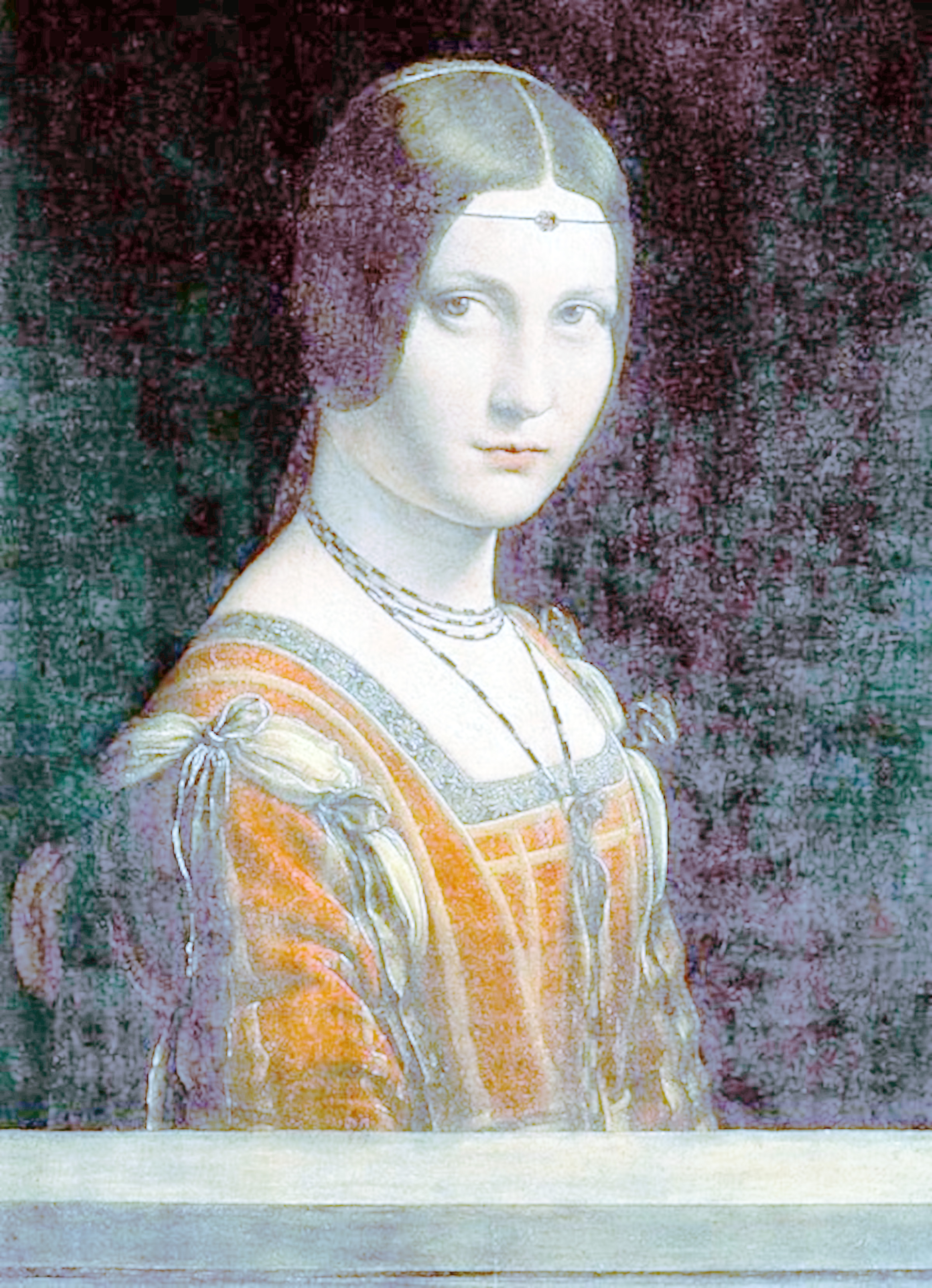
Leonardo da Vinci, Public domain, via Wikimedia
Commons
Anne of Cleves - La Belle Ferronnière |
- Now Lucifer (McCluskey) who made himself in the image of
Baphomet outside of Sophia's universe showed up many years
ago in Sophia's current life at her workplace.
- He was an electrician but
the first thing he worked on was cutting a solid fir door in
half and turning it into a Dutch door and he even built a
small counter on top.
- Lucifer was so
shiny at first and he was there for 3 days during midsummer
night and then and he left and when he came back 6 months
later, he was a complete creep and dud.
- His hair stuck
out both sides like Bozo the Clown and he looked like a
retarded janitor with a huge keyring filled with keys
hanging from his belt, like the type that would stand underneath
stairs to watch women with skirts.
|
Jesus Christ as Dennis
McCluskey |
 |
 |
Jesus Christ (Lucifer)
1 BC - 33AD
- Still living
Anunnaki from Alpha Centauri |
Dennis Owen McCluskey
1947
7/27
Jesus
Christ shapeshifter |
 |
 |
|
Superstar |
- Jesus had dinner with Pontius Pilate before the
crucifixion, and Judas used a kiss to identify Jesus for those who came to arrest him because he was constantly changing his shape,
age, height and skin color.
- However, no one really understood what that meant and just
assumed that any divine fallen angel (first mistake he's a
demon not an angel) was a 'god' although he
was anything but that.
- He didn't die on any cross, he's still living.
- After the door
incident, the company had
him wire the building for early LAN network and it was
reported later on that he screwed
it all up, however, Sophia went running out the door before she
saw the results of his 'handiwork.'
- Years later, the Most High Father gave
Sophia a dream where McCluskey revealed he was the younger
verson of Henry VIII
with a Ford Mustang and in another dream he was judging her
and told her he was Jesus Christ (Lucifer).
- In fact, he
called her a 'liar' after he accused her and she told him
the truth at which point Sophia was blown away and
questioned how this 'thing' could be anyone's savior.

Henry lying on his back
on ice |
- But here's the thing, Henry VIII is
Lucifer/Jesus Christ because this creep played MANY parts
and he's been stalking Sophia and ruined every single life
she ever lived on Earth (and part of her life in heaven).
- The reason that Henry VIII called Anne of Cleves his sister is
because when the fallen angels along with demons Lucifer and
Satan (Musk) trapped the good angels on Earth, they hated
Sophia because they were so jealous because SHE created the
universe after the Most High Father created the center
nucleus (Earth).
- So when Sophia followed the fallen
angels to Earth (to help them) they forced her into all the
'queenly' roles and DESTROYED every single life she ever
lived here.
- He even showed up in her current life
attempting to run her over with his truck after he was hired
to replace her when she left for a new company almost a year
earlier.
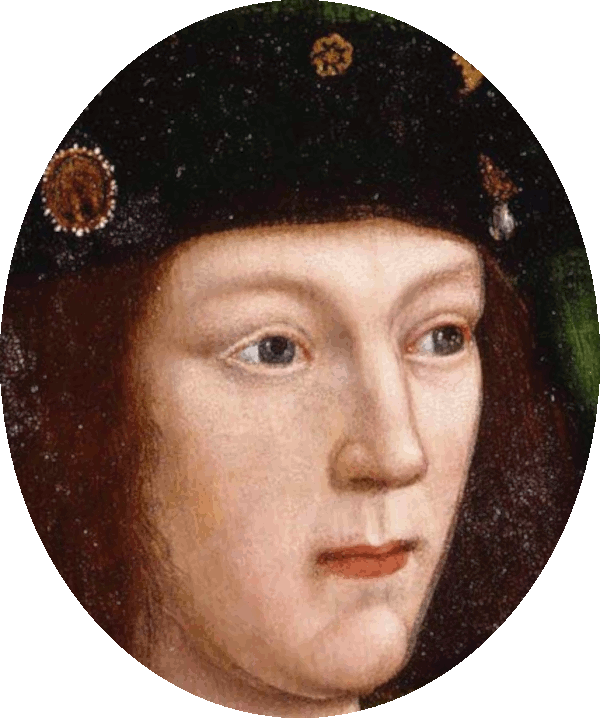 |
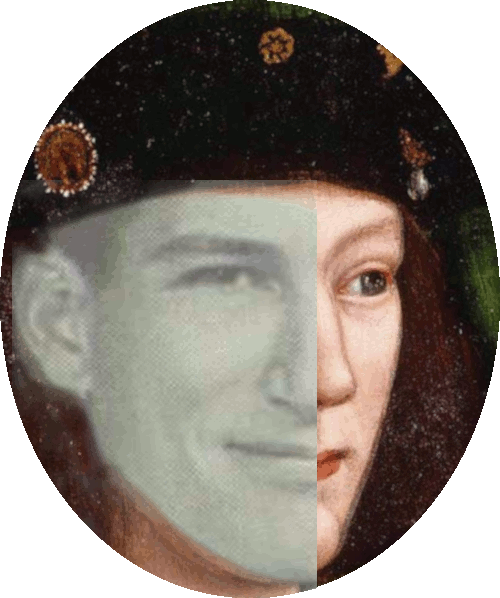 |
|
Henry VIII is Lucifer's younger version |
- This happened after he took apart one of her programs
(so that it no longer worked and apparently didn't save the
original version) and then blamed her for making it too
complicated after the top boss fired him.
- But he wimped
out when he went racing by her at high speed in his truck
and he saw the Most High Father (instead of Sophia) sitting
behind the wheel because he shares a soul with Sophia.
-
Apparently that program never worked quite right again even
after another more accomplished co-worker rewrote what
McCluskey destroyed.
- Sophia also played some parts in all Henry
VIIIs wives and both his sisters except she did not play the
entire role, only in Anne Boleyn.
- But the entire story
starts way back
before Christianity even existed in Sumer and Egypt.
|