|
PAST LIVES - TUDOR - END OF TUDOR - PAGE 8
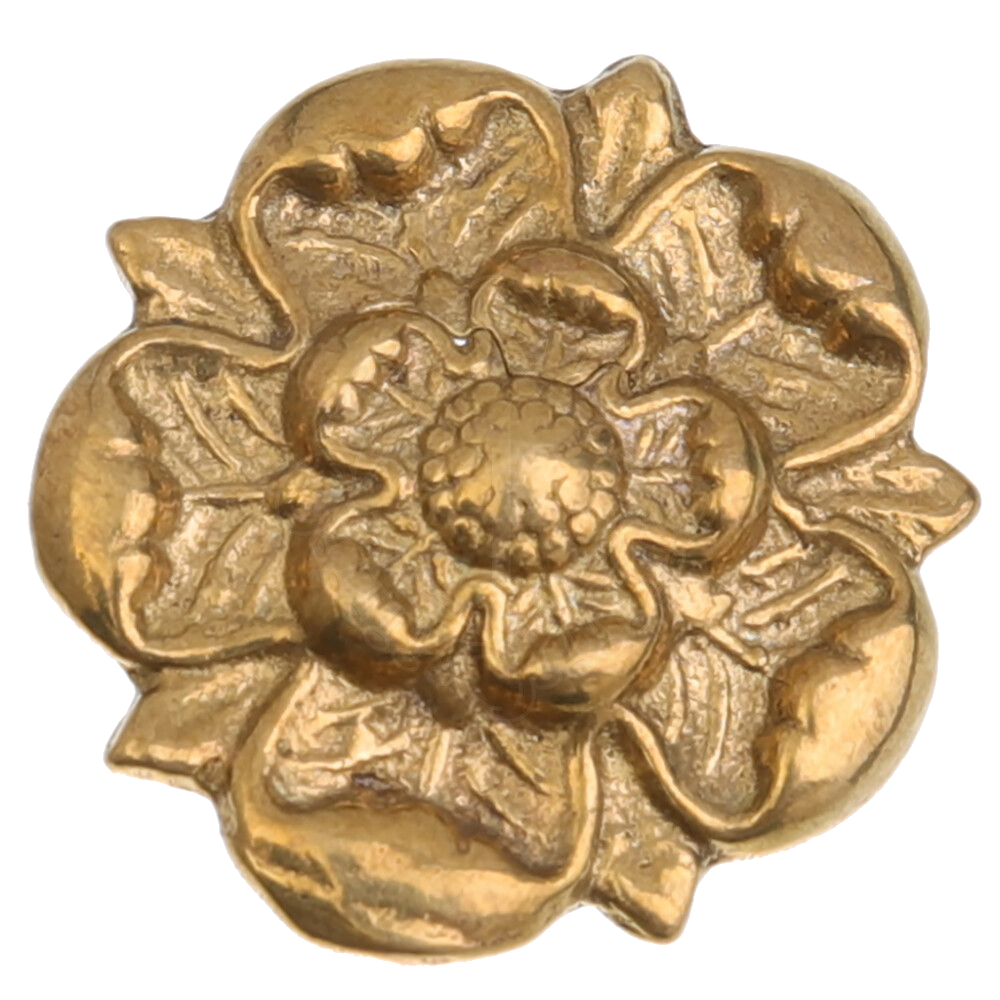
Rose |
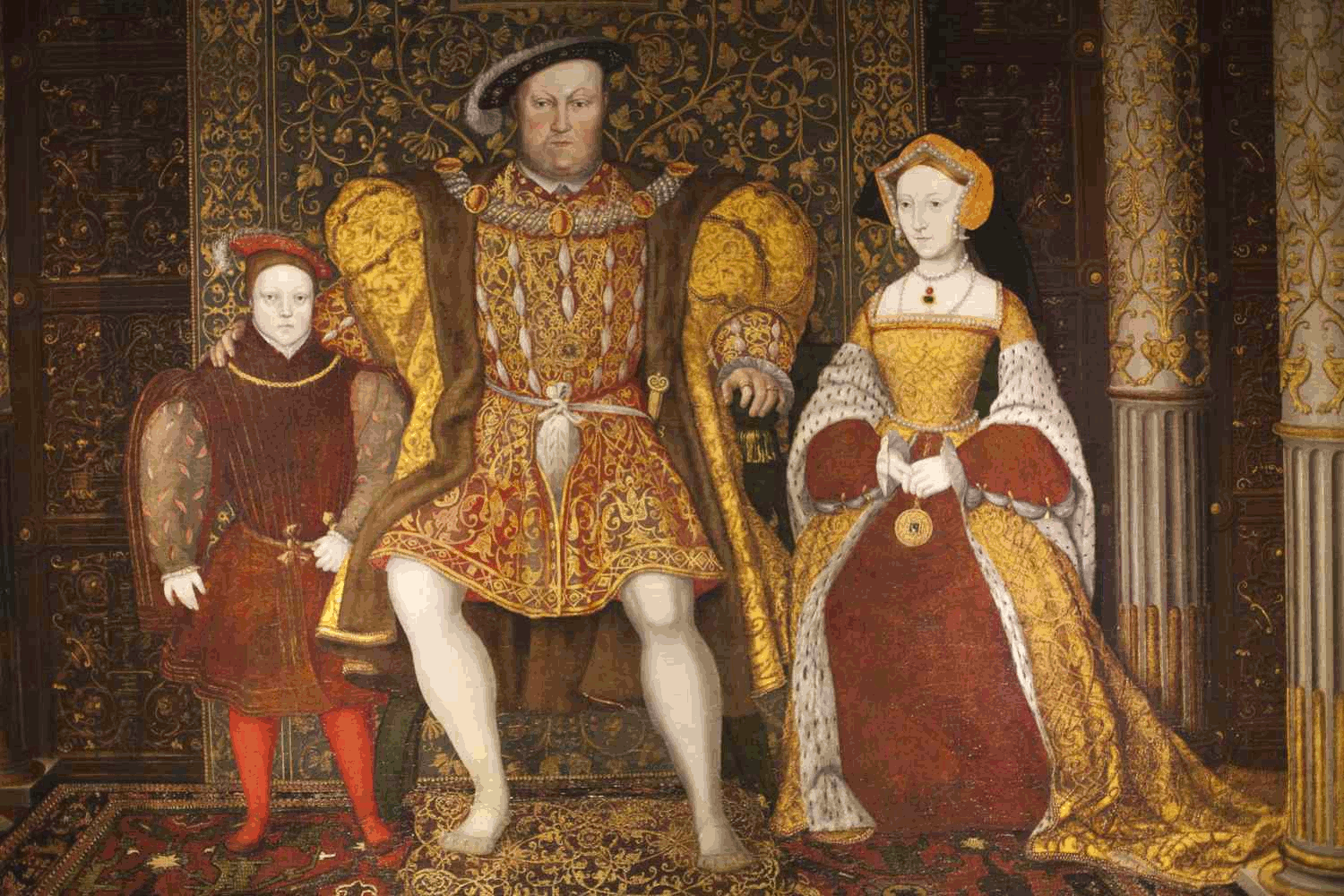
- After 28 years of yearning for a male heir, Henry VIII
finally had what he desired with the birth of Edward VI.
-
A child who was described by a chronicler as 'the most
beautiful boy ever seen, and a symbol of hope for the Tudor
dynasty.'
King Henry VIII of England
1509 - 1547

House of Tudor |
|
Bad Blood |
Bloodline |
- Henry
VIII didn't just fail to produce sons. he destroyed women
trying to get them.
- Six wives, 2 executions, a church
broken, a religion rewritten.
- After all of it,
after all that suffering, the sons kept dying and history
blamed the women every single time.
- But there's a detail
buried in the records, one the court tried to hide, that
points the blame somewhere else entirely.
- Not at any of
his wives, at the king himself.
- Something written in his
own blood, that no one in Tudor England had the language to
name, and no institution had the courage to say.
 |
|
|
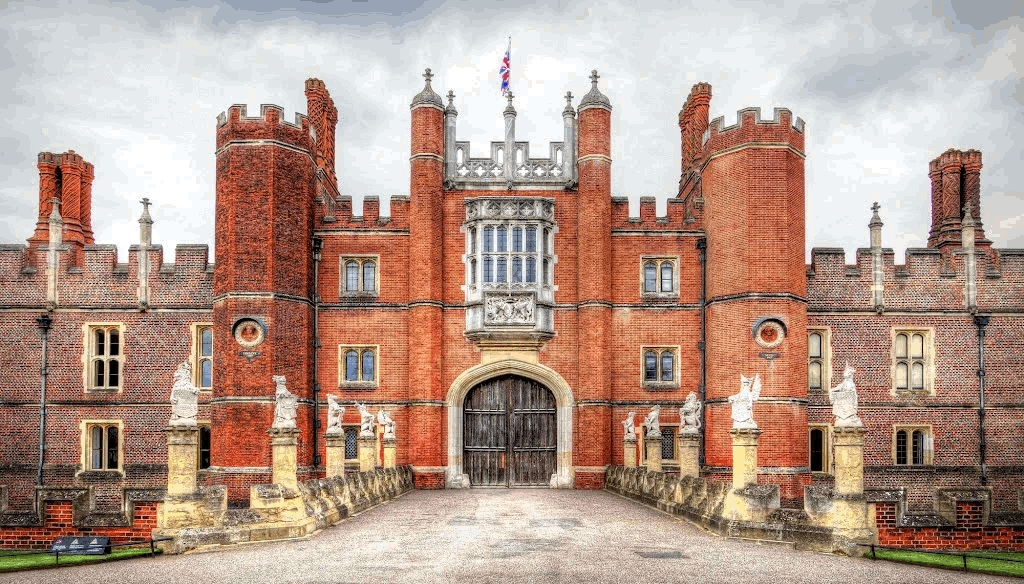
Hampton Court Palace |
- 11
pregnancies, 4 women, a pattern of loss that looks like
tragedy until you map it.
- Until you lay every single
death, every failed marriage, every desperate remarriage side
by side in order.
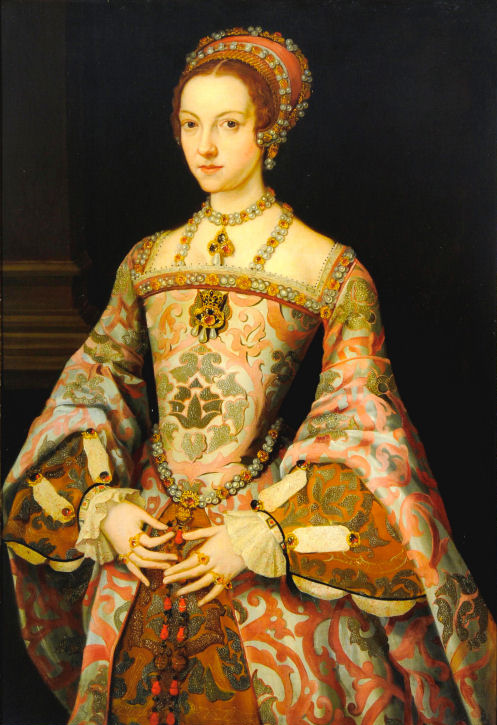
Queen Catherine
1543-1547 |
- A pattern so consistent, so
damning, that the whole story of Henry's reign starts to look
like one long cover-up.
- Designed to protect one man at
the expense of every woman who stood beside him.
- The
answer was closer to him than he ever realized.
 |
|
|
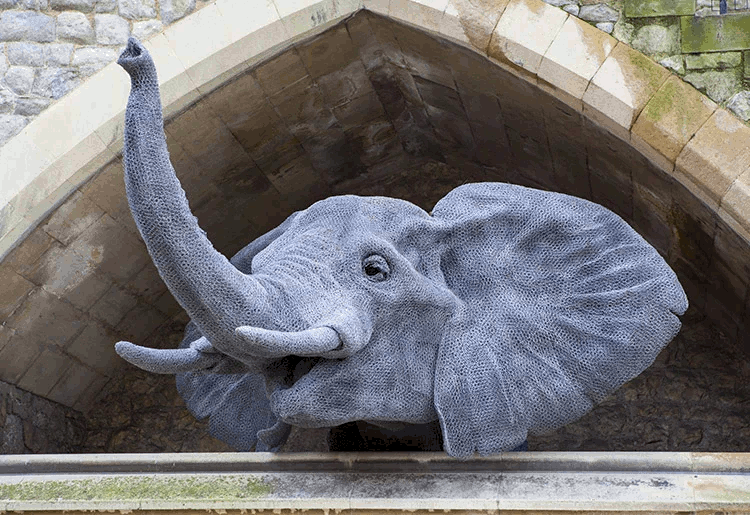
Tower of London Menagerie |
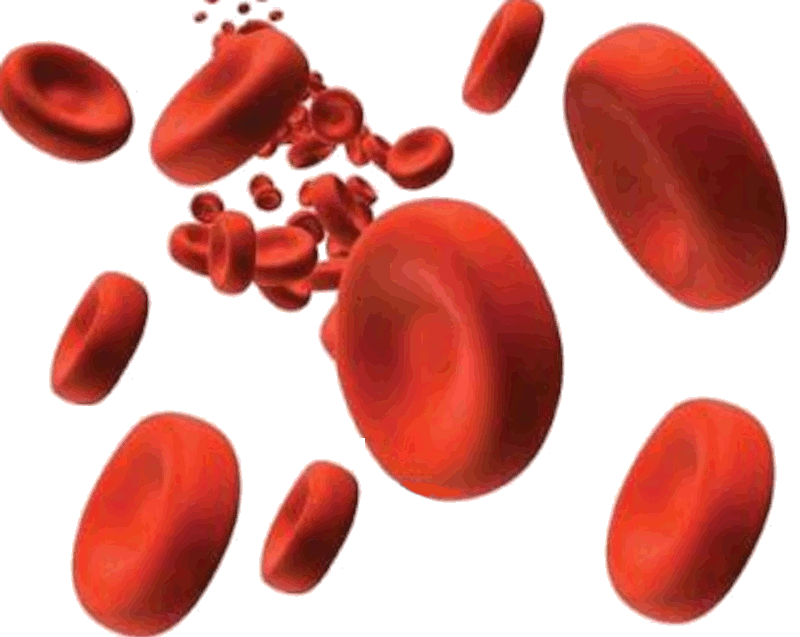
- Researchers have recently figured out that Henry VIII
was Kell Positive which means he carried a specific protein on
his red blood cells called the Kell antigen which is very
rare.
- When a Kell
positive man, and a Kell negative woman conceive a child, the
first pregnancy usually proceeds normally because the woman's
immune system has never encountered the Kell antigen so the
baby is born safely.
- But during that birth, blood from
the baby enters the mother's bloodstream and her immune system
encounters the Kell antigen for the first time and identifies
it as foreign.
 |
|
|
Red blood cells |
- Her immune system builds antibodies
against it and prepares to fight.
- From that point on, any Kell positive baby she
carries is under attack from inside her own body and the
antibodies cross the placenta and destroy the baby's red blood
cells.
- The fetus becomes anemic and growth slows and the
risk of miscarriage, stillbirth or death within days or weeks
of birth rises with every subsequent pregnancy and each loss
is worse than the last.
|
Kell incompatibility is an immune reaction that happens when a Kell-negative person is exposed to Kell-positive red blood cells, most often during pregnancy or a blood transfusion. The
Kell antigen is a specific protein found on the surface of red blood cells. People who have it are Kell positive, and those who do not are Kell negative. If a Kell-negative person's immune system encounters Kell-positive blood, it treats it as a foreign invader and creates antibodies (anti-Kell). (Assistant)
|
 |
|
|
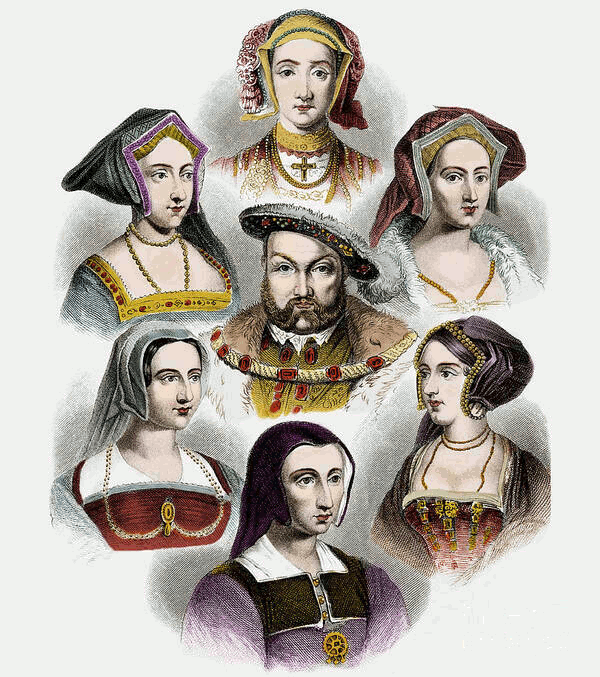
Miscarriages coupled with impotence |
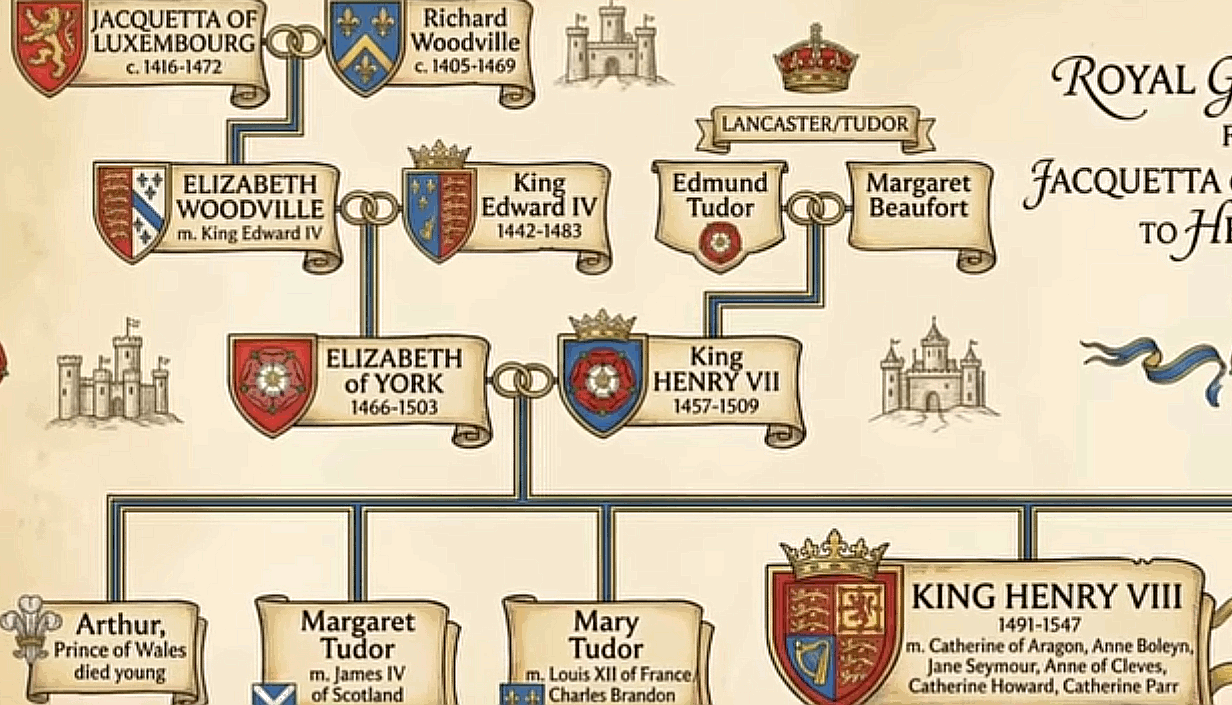
- That is why Henry VIIIs first wife, Catherine of Aragon experienced at least
6 documented pregnancies between 1509 and 1518, resulting in 5
infant losses and one surviving child, Queen Mary.
- In
fact, her 2nd child, Prince Henry, Duke of Cornwell was born
alive and died 52 days later, and 2 years later a stillborn
male was delivered, and again, within 3 years, another male
was born
prematurely and died shortly after.
- Babies born with Kell
don't always die immediately, they can survive for weeks as
anemia gradually overwhelms them.
- Catherine
gave birth to another 2 females, one died prematurely, and the
other stillborn.
- Her daughter, Mary survived very
possibly because she was Kell negative like her mother, so her
immune system saw no threat and the sons may have died because
they carried Henry's inherited Kell antigen.
 |
|
|
Family tree |
- Anne Boleyn had 2 unsuccessful
pregnancies, including a late term miscarriage of a boy at 15
weeks in 1536 before giving birth to Queen Elizabeth I.
-
Jane Seymour who had only one pregnancy gave birth to the future King Edward VI before
dying of complications in 1537 although the baby was
unaffected.
- Henry's mistress Bessie Blount had only one
pregnancy and successfully gave birth to another boy, Henry
Fitzroy who died at age 17.
- First pregnancies are always
shielded because the immune system hasn't been activated yet.
 |
|
|
Rh Factor |
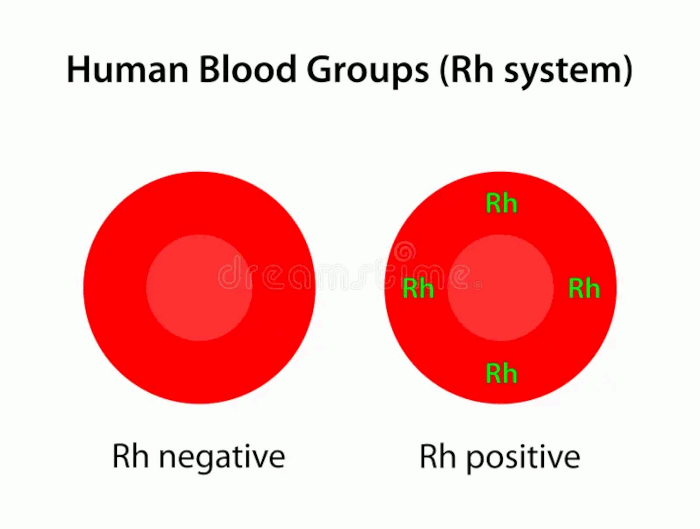
- But Rhesus
incompatibility works almost identically and may also have
been a factor because it's the same mechanism, just a
different antigen.
- In fact, the first pregnancy is
usually unaffected, however, later pregnancies store
antibodies that can attack a positive fetus' red blood cells.
- This can result in hemolytic anemia, organ damage, and fluid
buildup known as hydrops fetalis.
- Today, routine prenatal
blood tests can catch Rh status early.
|
Rhesus (Rh) incompatibility is a blood type mismatch that happens when an Rh-negative mother carries an Rh-positive fetus. The Rh factor is a protein on red blood cells. Having it means you are Rh-positive; lacking it means you are Rh-negative. If an Rh-negative mother is exposed to Rh-positive blood, her immune system treats the protein as a foreign invader and creates antibodies. (Assistant)
|
 |
|
|
McLeod Syndrome |
- The maternal line doesn't carry the Kell trigger, the
paternal line does and can often be seen in men after age 40
as the McLeod Syndrome which causes progressive physical
deterioration, muscle weakness, personality changes, and
cognitive decline.
- Henry during his 40s and 50s had
explosive rages, paranoia and the inability to reason through
problems that he didn't face when he was younger.
- But
since the young Henry was played by Lucifer (McCluskey) from
Alpha Centauri and the old Henry was played by Lucifer's clone
(Theotos/Trump) from Omega Centauri, that is a big part of the
reason for Henry.
- The body deteriorating far beyond what
age and injury alone seem to explain.
- Also, Donald
Trump's mother maiden name was Mary Anne MacLeod, a Scottish
version of the name and his family is a carrier of the
syndrome.
 |
|
|
Henry's mess |
- So was Henry VIII infertile?
- Not in the way the
word usually means because he conceived at least 11 times
across 28 years with 4 different women so there's no doubt he
was fertile.
- Although it was stated in court during Anne
Boleyn's show trial that he was impotent and couldn't perform.
- But what he almost certainly had was a blood
incompatibility, most likely Kell and possibly also Rhesus
coupled with the McLeod Syndrome.
- Also he had progressive
impotence which is the compound result of his worsening
physical and psychological health which explains the complete
lack of any pregnancy in the final decade of his life despite
his final 3 marriages.
- No wonder Trump's so screwed up and it was
all written into his biology at birth.
 |
|
|
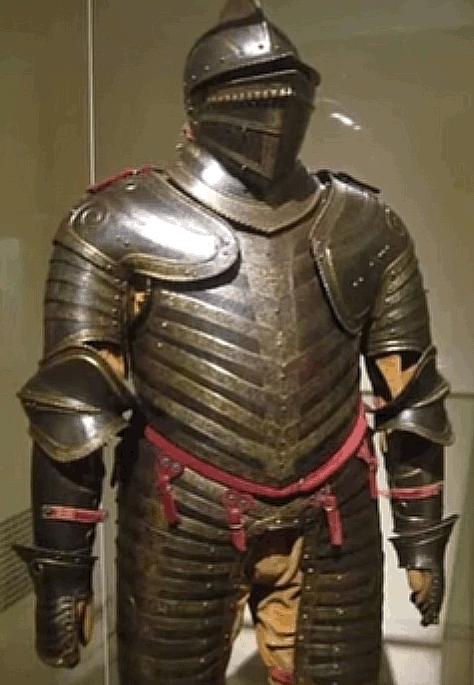
Armor with 54" waist |
- Although his wives were healthy and went on to have
healthy children proving he didn't have syphilis.
-
Henry's body was failing publicly by the 1540s and his
military armor shows the story, a waist that expanded decade
after decade from 37" until his courtiers were lifting him up
staircases and assisting him in the bathroom.
- His leg was
infected and oozing constantly, the smell was something people
had to brace themselves to endure.
- He moved around less,
ate more, and avoided physical exertion.
- His face
changed, his temperament changed, and with each successive
wife he was trying to prove he could still father a child.
- Henry could not tell the truth and admit that the
problem was his body was failing him because that would
undermine his claim to 'divine' favor which was politically
dangerous.
- As a result, he did what he always had done,
he blamed, rewrote history, and destroyed his wives.
 |
|
|
Traitor |
- Catherine of
Aragon became past her prime, defiant and obstinate, so he
divorced her and stripped her of her title and erased her.
- Her
body having borne the wreckage of 6 of his pregnancies which
may have been caused by his blood all along.
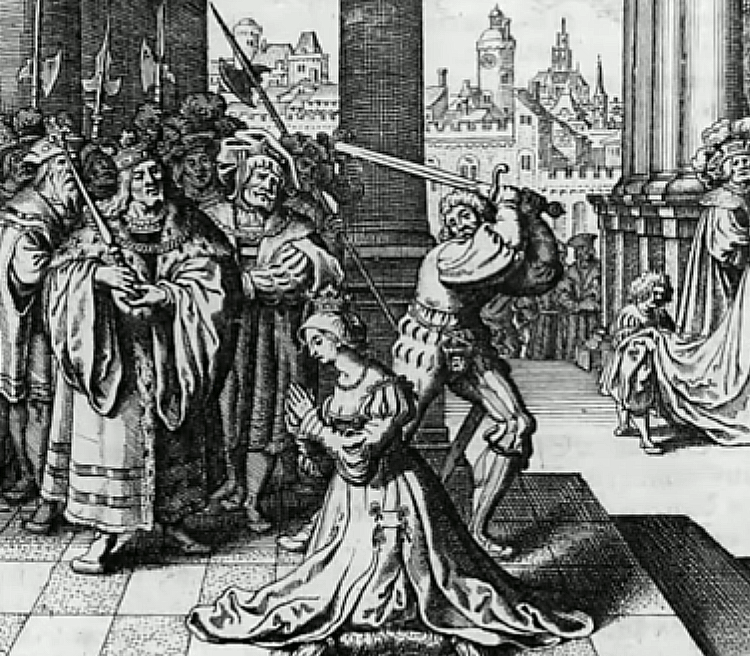
- Anne Boleyn
was labeled a witch, a seductress and a traitor.
- He
executed her on charges that everyone in that courtroom knew
were fabricated.
- Jane Seymour died before he had a chance
to turn on her so she became his 'perfect' queen but some
wonder what really happened to her because she died just as
she completed her 'job.'
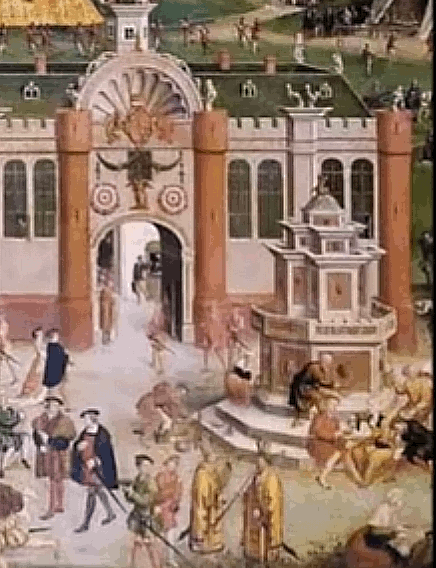
- Anne of
Cleves was called unattractive, humiliated into an annulment
and blamed for his own body's failure and she survived by
agreeing to his every indignity.
- Catherine Howard was
executed before she turned 20, whether the charges were true
or not, and Catherine Parr only survived because he died and
then she married again and conceived within months.
 |
|
|
Court |
- This is the pattern and what the record shows, not a
string of cursed women, not 6 failures in a row caused by
them, instead a biological reality he could not name or
accept.
- Resulting in a court, a church, a legal system,
an entire civilization constructed to insure that no one ever
said it aloud.
- The deepest wound in the story is what
happened to the women whose bodies became the battleground for
one man's terror.
- The medical establishment participated
fully with physicians who examined queens, pronounced them
responsible for their own miscarriages and never once
entertained the question of whether the king's own blood, age,
health, injuries, or biology, were the real cause.
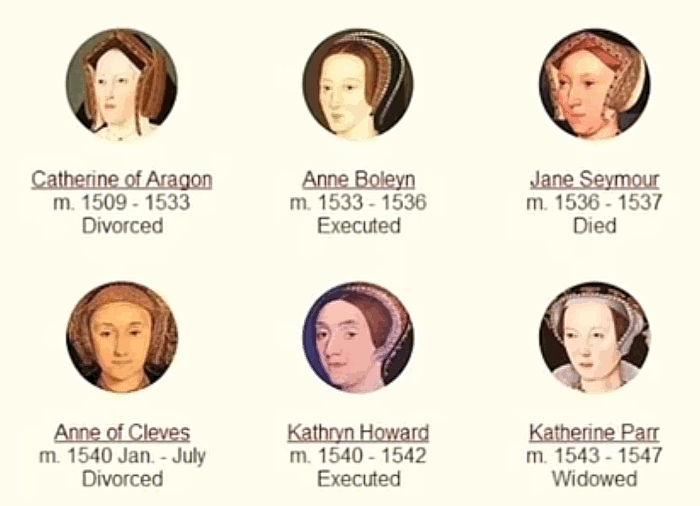
Six wives |
- All these wives were not just a victim of Henry, they
were victims of a system, a court, a church, a legal
structure, a medical establishment that had every reason to
protect the king, and none to question him.
- That looked
at evidence pointing in one direction and drew conclusions
pointing in another, evidence all falsely created by him.
-
A system that called women cursed, past their prime,
bewitching, obstinate and barren, because the alternative,
that the king's body was the source of the tragedy, was a
sentence that no institution in Tudor England was allowed to
say.
- The cover-up wasn't a conspiracy, it was
structural, automatic, and power protected itself by
constructing narratives that placed the blame on the
powerless.
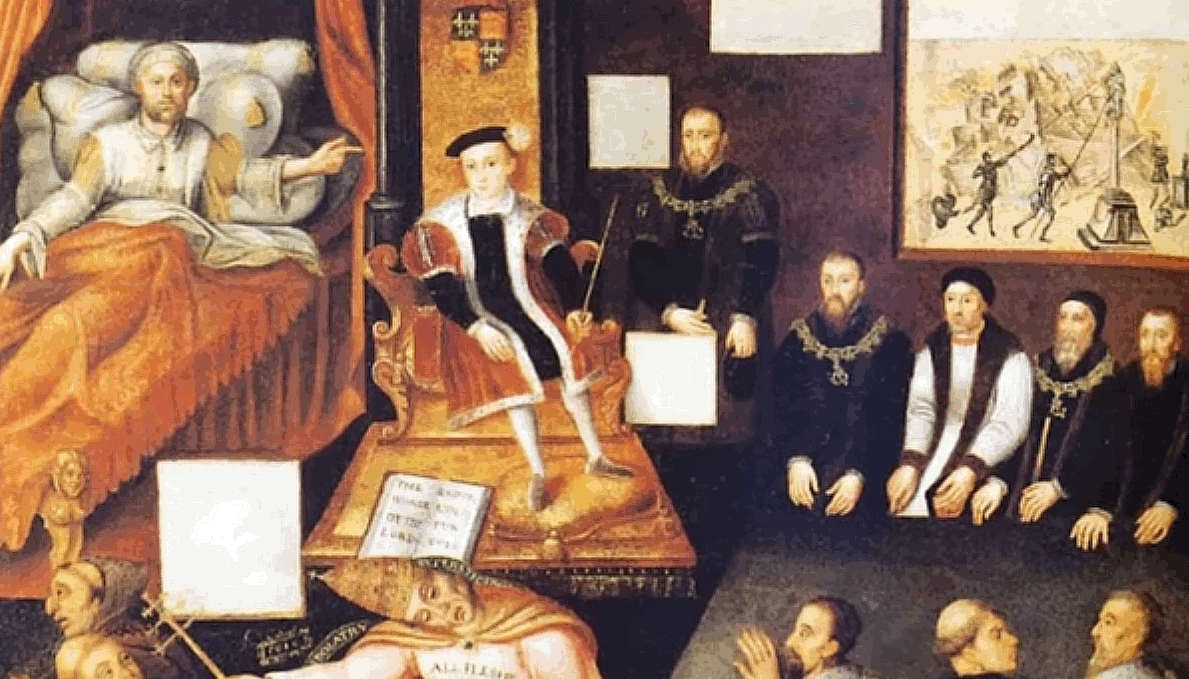
Succession crisis |
- No heirs, and the succession crisis that Henry VIII
had spent his entire life trying to prevent descended upon
England the moment Edward Vs last breath left him.
- Henry
VIIIs and Catherine of Aragon's daughter Mary I took the
throne next, the one surviving child from all the losses, and
who had been declared illegitimate and separated from her
mother and humiliated publicly for years.
- She wanted
desperately to have children to secure the Catholic
succession, to undo what her father destroyed, although none
of her pregnancies resulted in any live births.
- Whether
they were phantom pregnancies, or medical conditions mimicking
symptoms, or possibly the same blood incompatibility that
haunted her mother, no one knows.
- Mary died in
1558, childless and broken at age 42.
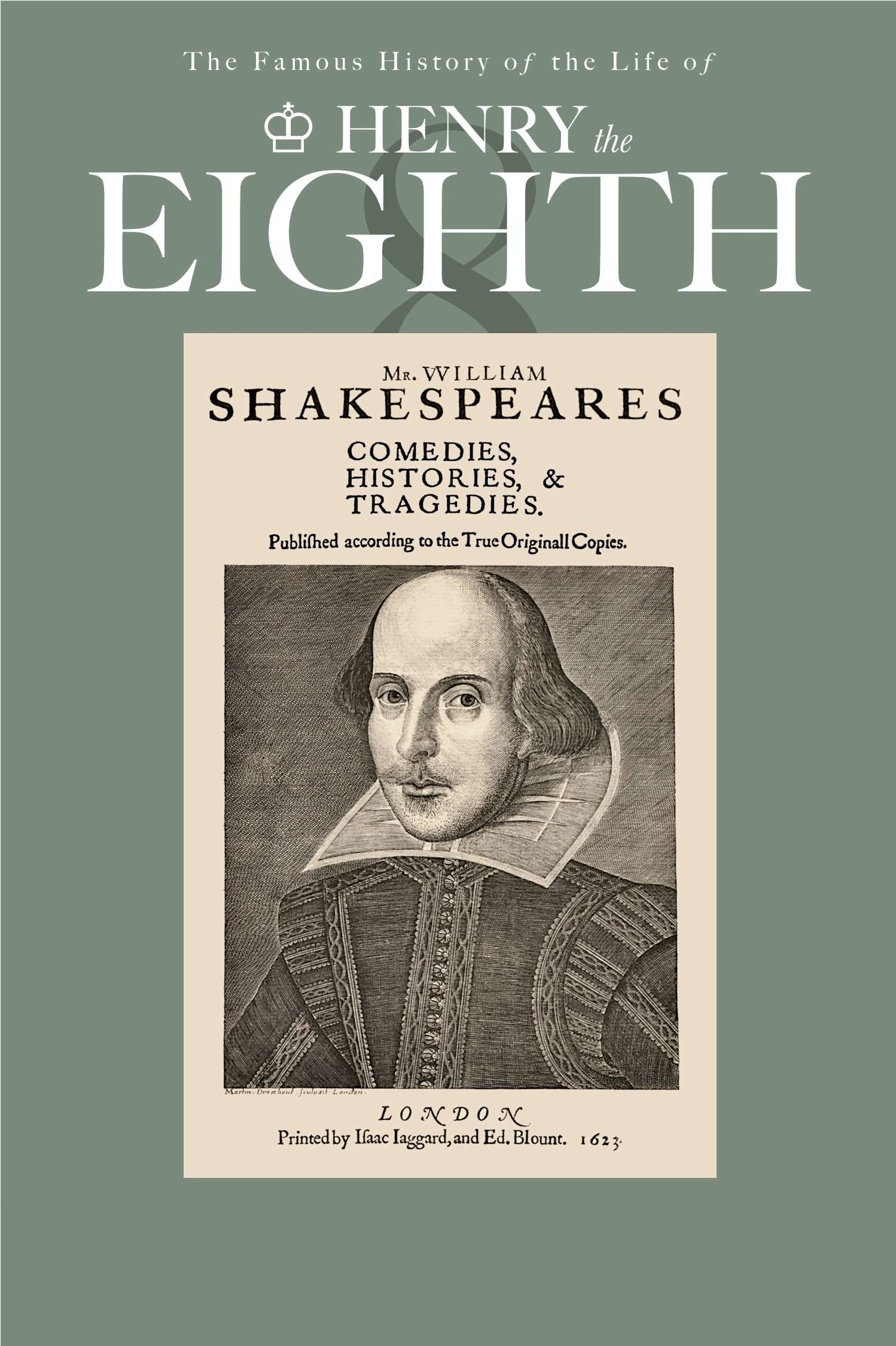
Shakespeare's Henry |
- And finally,
Elizabeth I, the daughter of the executed 'traitor' Anne
Boleyn, the girl Henry had considered proof of failure, proof
that Anne had not delivered and that his God had not blessed
him and that he had destroyed everything for just a
'worthless' daughter.
- Elizabeth I took the throne at 25
and ruled for 45 years and transformed England into a global
power.
- However, she died without an heir and ended the Tudor
succession and apparently was not willing to hand the throne
over to her illegitimate son, Edward de Vere.
- All that destruction, all that suffering, all
those women, ground down in service to a male heir for a
legacy that dissolved.
- Henry VIII spent his entire reign
being remembered as the king who ended his own bloodline.
-
Not the story that blames the women and moves on, to the one
that follows the evidence where it actually leads.
Bloody Henry |
- So the question whether Henry VIII was infertile is
much more complicated and more damning than a simple yes or
no.
- What his psychology, his power, his court and his
entire civilization built around him ensured that the blame
would never land where it belonged.
- He was not the
victim of a curse, he was the source of one, and 6 women paid
the price for a truth that Tudor England was never going to
say.
King Edward VI of England
1547 - 1553
House of Tudor |
|
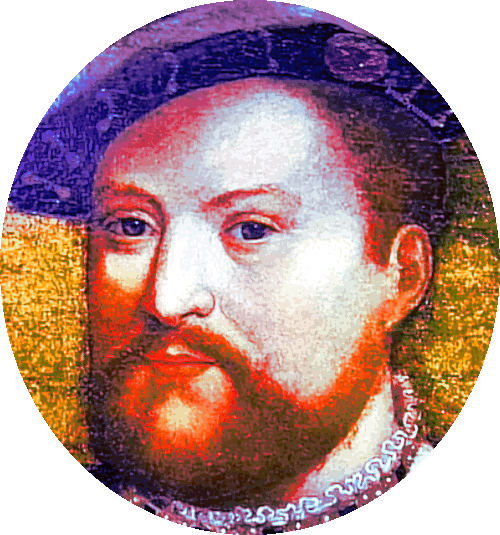
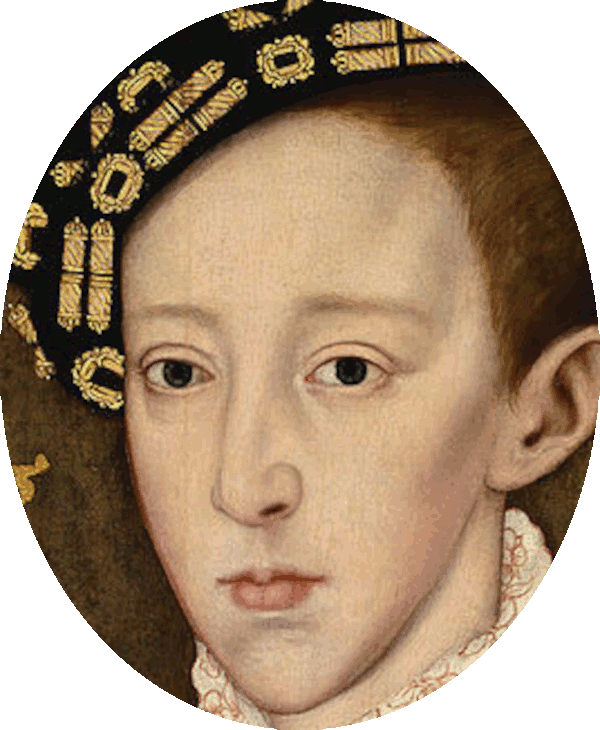
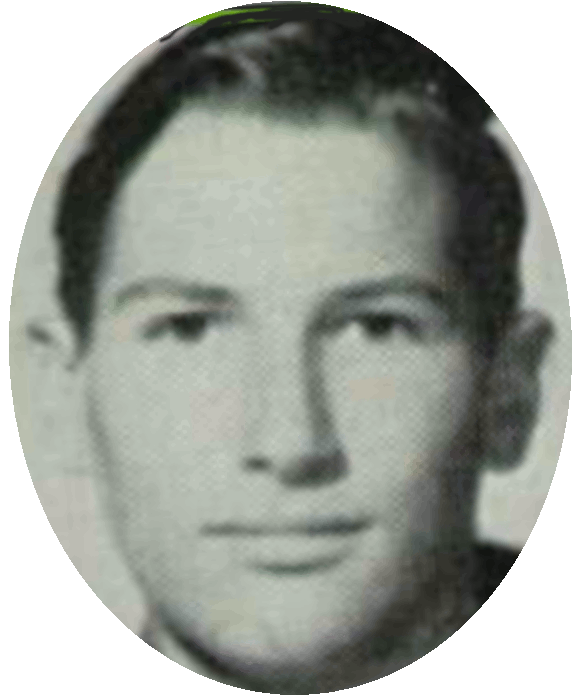
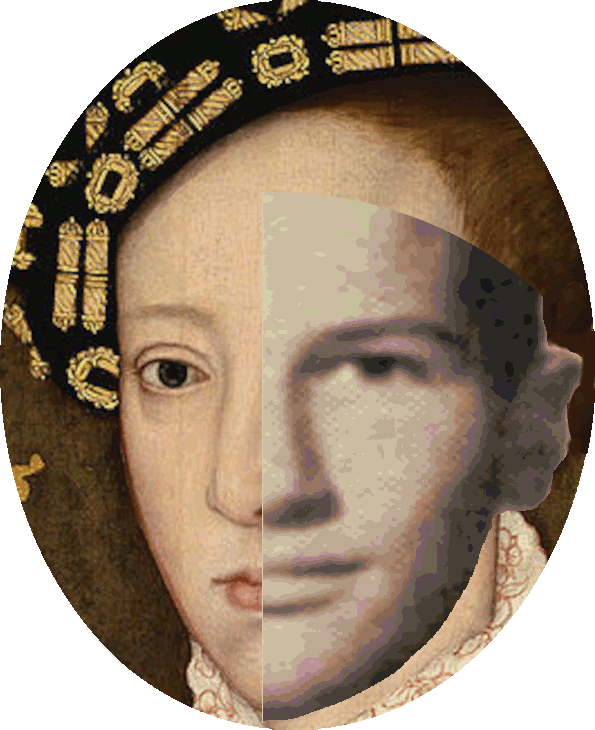
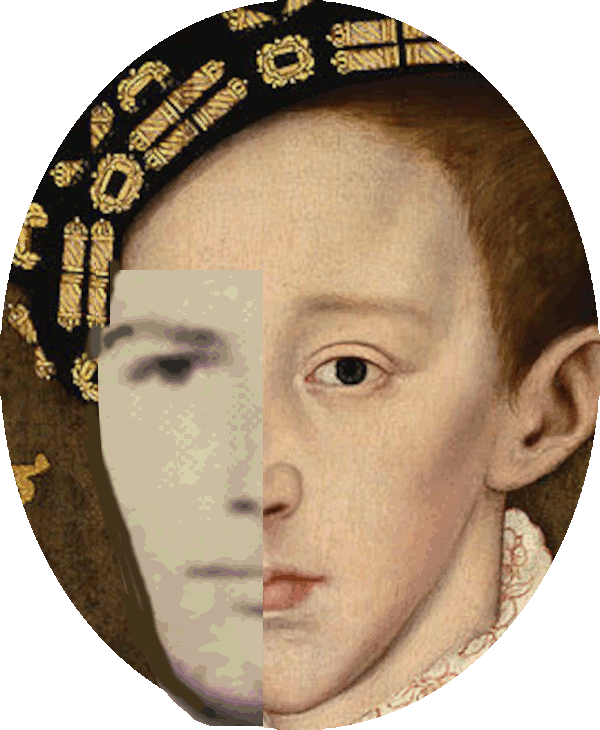
Edward VI as Dennis McCluskey |
 |
 |
Edward Tudor
1537-1553
10/12 7/6
King of England
|
Dennis Owen McCluskey
1947
7/27
Jesus
Christ/Lucifer shapeshifter from Alpha Centauri |
 |
 |
|
AI baby |
- Edward VI took the throne at age 9, a child king,
surrounded by political factions tearing at each other for
influence.
- Devoutly Protestant without knowing what
it really was, that all religion is fake and made up by
the fallen angels.
- Intelligent, but also ignorant and
fragile, Edward died in 1553 at age 15, after having
reigned for 6 years and leaving nothing of lasting
significance behind.
Father and son |
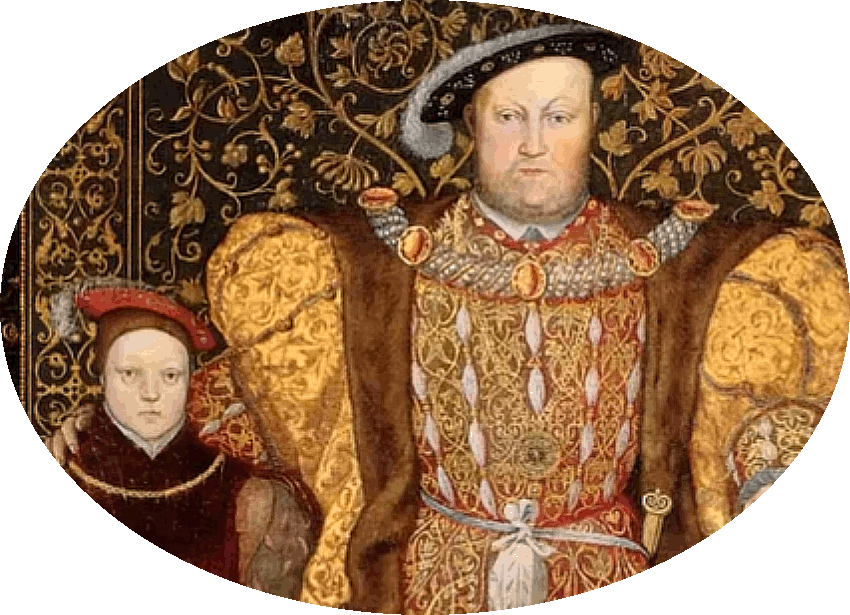
- Edward grew up motherless and essentially fatherless
too.
- Despite dearly loving his son, Henry VIII sent
Edward away almost as soon as the child was born and spent
very little time with him in the first few years of his
life.
- The boy was surrounded by women in infancy
under strict supervision of Lady Margaret Brian who also
cared for his 2 half-sisters, Mary and Elizabeth.
-
Access to Edward was severely restricted, only for the
elite, no rank lower than a knight, and visitors had to
kiss his hand to show reverence.
- In his early years,
Lady Brian reported that Edward was a very cheerful,
healthy and energetic child.
- Edward's closest childhood friends included the Duke
of Suffolk's sons and 2 Irishmen, including Barnaby
Fitzpatrick who remained Edward's most favored companion
throughout his life.
|
Barnaby Fitzpatrick as Elon Musk |
 |
 |
Barnaby Fitzpatrick
c. 1535-1581
?
9/11
Friend of Edward VI |
Elon Reeve Musk
1971
6/28
Satan
from Alpha Centauri |
|
Whipping Boy |
- Barnaby Fitzpatrick, 2nd Baron Upper Ossory
(c. 1535-1581) was educated at the court of Henry VIII of England with Edward, Prince of Wales.
- When he was a child he was Edward's friend and
'whipping boy' and that's the boy who was chosen to take
the punishment for the prince's wrongdoing.
- According to popular history, a whipping boy was a companion to a young prince or royal heir in early modern Europe. Because a tutor or commoner supposedly could not strike someone of higher royal status (or divine right), this companion would receive corporal punishment, like a whipping, in the prince's place when the prince misbehaved or failed his lessons.
-
Except boys chosen for this duty were very naughty so don't feel
bad for them because
they didn't choose good boys for this role.
- Barnaby
went on to kill his cousin, the rebel Rory O'More in 1578.
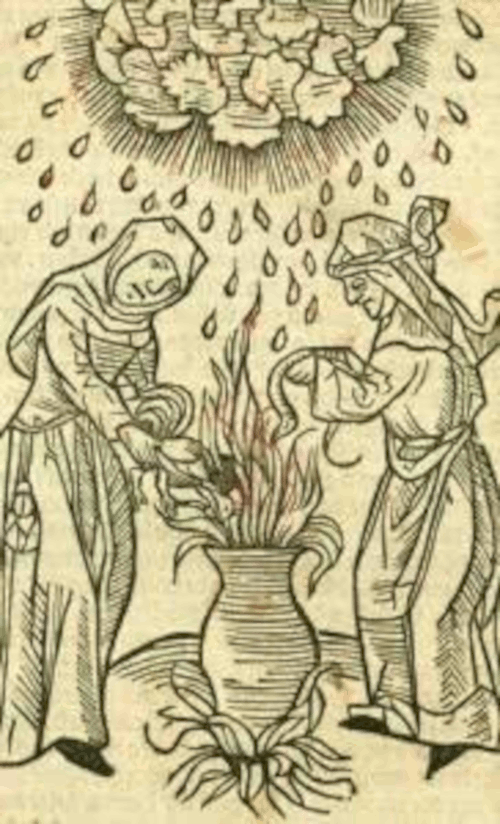
Witchcraft in Tudor times |
- Henry VIII spoiled Edward immensely, his
lesson books were even bound in gold and studded with jewels,
reflecting the extravagance and expectations placed on the
heir.
- However, tragedy struck right away, Edward's
mother, Jane Seymour and Henry's 3rd wife and the only one to
bear him a son died just 12 days after giving birth due to
complications.
- This was a devastating event, leaving the
child never knowing his mother's face.
- Ever since
childhood, Edward had a disturbing fondness for witchcraft
while his older half-sister Elizabeth had a strange obsession with magic and
astrology and they liked to recite spells together.
-
Was this just childish curiosity or an early sign of a mind
inclined to seek things beyond the ordinary, something
that would shape the person that he would later become?
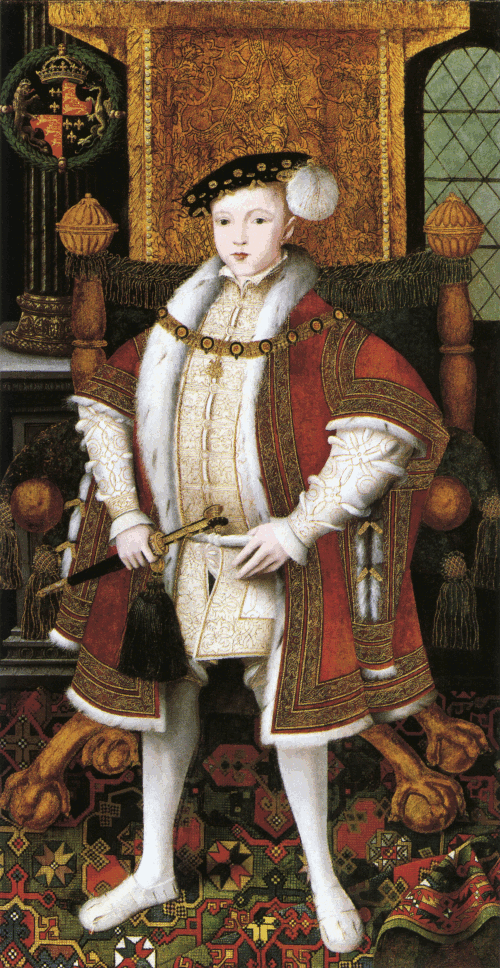
Minature Henry |
- Henry even replaced Edward's clothing with smaller
versions of his own and he hoped that he would be just
like him.
- But that did happen and Edward eventually
became almost as deranged and evil as his father.
- The
pressure to become like the heir his father craved
combined with strict education and brainwashing about
religion as well as intense isolation, shaped an
intelligent but potentially unstable boy.
- So how
would this carefully shielded boy steeped in radical
Protestantism and carrying the complex legacy of his
father become the king he meant to be when the throne
unexpectedly became his?
- Henry VIII died on January
28, 1547, at the age of 55 and his death marked the end of
a tumultuous reign.
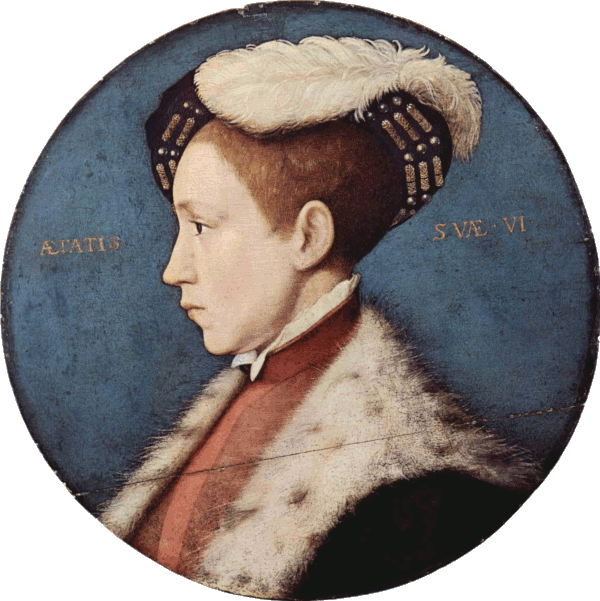
Public domain, via Wikimedia
Commons
Edward VI spoiled child |
- Edward VI was a young king who ascended to the throne
too soon, a tragic, pitiable figure, yet the truth is much
darker.
- He ascended the throne at age 9 and his
reign, like his fathers, quickly descended into chaos and
he was completely dominated by high-ranking political
figures..
- Henry VIII had left instructions for a
council to rule jointly but this collapsed in days as
counselors vied for power.
- Ultimately, Edward
Seymour, Edward VIs uncle and his mother's brother,
emerged victorious.
- He was granted the title of the
first Duke of Somerset to signify his preeminence.
-
Seymour was the one Henry VIII had sent to devastate
Scotland in the 'Rough wooing' and burn Edinburgh down.
|
The "Rough Wooing" (1543–1551) was a brutal military campaign launched by England to force Scotland into a marriage alliance. King Henry VIII of England wanted an infant Mary, Queen of Scots to marry his own son, Prince Edward (later King Edward VI).
(Assistant)
|
|
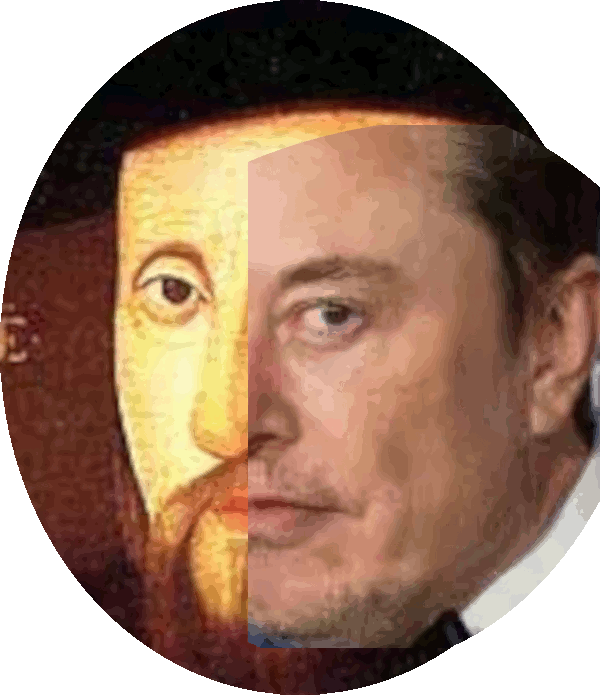
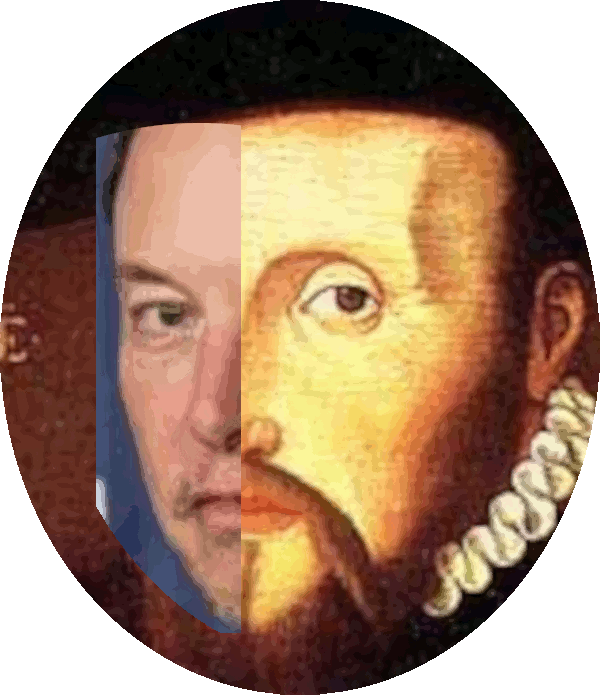
Edward Seymour as Elon Musk |
 |
 |
Edward Seymour
1500-1552
?
1/22
Lord Protector of England |
Elon Reeve Musk
1971
6/28
Satan
from Alpha Centauri |
 |
 |
|
Summer setting |
- Edward Seymour, 1st Duke of Somerset, 1st Earl of Hertford, 1st Viscount Beauchamp (1500[-1552) was an English nobleman and politician who served as Lord Protector of England from 1547 to 1549 during the minority of his nephew King Edward VI.
- After his sister Jane Seymour married Henry
VIII, Seymour had aimed for power and with his nephew
in place he quickly proved he would do anything to
increase his influence.
- Immediately after Henry
VIII died, Seymour began bribing and became Lord
Protector withing days.
- He ruled with an iron
fist and created countless enemies and quickly became
arrogant and careless and the most dangerous was
betrayal from within his own family.
- His brother,
Thomas Seymour attempted to bribe young Edward VI by
secretly giving him money.
|
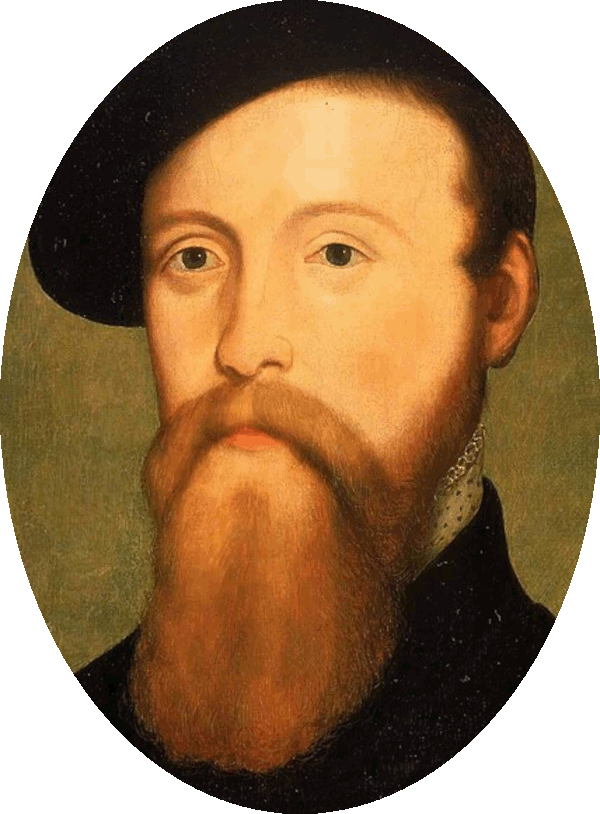
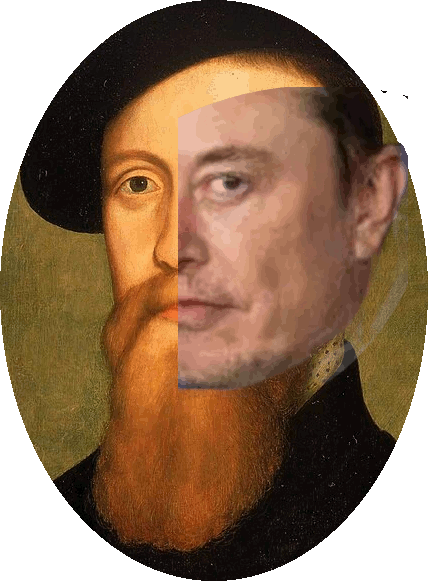
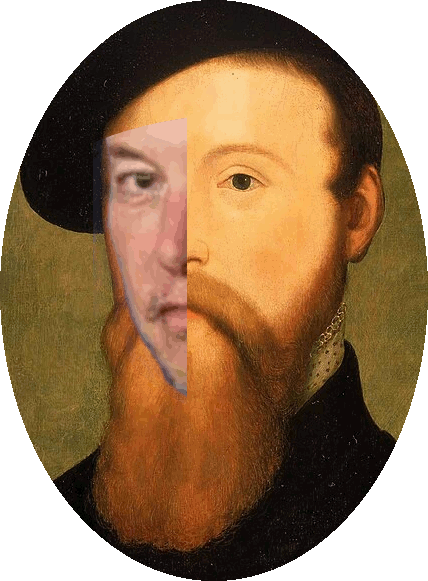
Thomas Seymour as Elon Musk |
 |
|
Thomas Seymour
c.1508-1549
?
3/20
1st Baron Seymour of Sudeley |
Elon Reeve Musk
1971
6/28
Satan
from Alpha Centauri |
 |
 |
|
Not a protector |
- Thomas Seymour, 1st Baron Seymour of Sudeley (c.1508-1549) was a brother of Jane Seymour, the3rd
wife of King Henry VIII.
- With his brother, Edward Seymour, 1st Duke of Somerset and Lord Protector of England, he vied for control of their nephew, the young King Edward VI (r. 1547–1553).
- In 1547, Seymour married Catherine Parr, the widow of Henry VIII.
- During his marriage to Catherine, Seymour involved the future Queen Elizabeth I (then 14 years old), who resided in his household, in flirtatious and possibly sexual behavior.
- He even intended on marrying Elizabeth and then
kidnap Edward VI and force him to abdicate so he could
seize power.
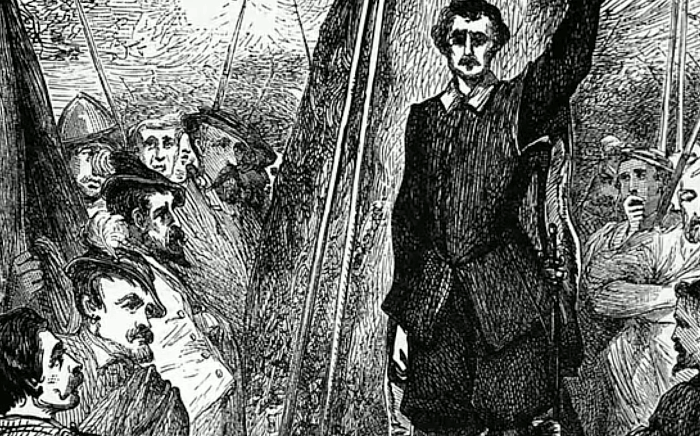
Ket's rebellion |
- The plan was exposed and Thomas Seymour was
caught trying to break into Edward's room and shot the
guard's dog and in a shocking move, Edward Seymour had
his brother executed for treason which damaged his
power.
- Edward VI recorded the incident in his
matter-of-fact style in his personal journal showing
no emotion.
- Regions of the country that were
Catholic also objected to Somerset Edward Seymour and
rebellions erupted across England in the summer of
1549, the Prayerbook rebellion and Ket's rebellion.
- Edward VI recorded all the details but showed a lack
of understanding and no empathy and was even thrilled
when 900 rebels were massacred.
- This revealed a
cold, calculating and even brutal side to the young
king.
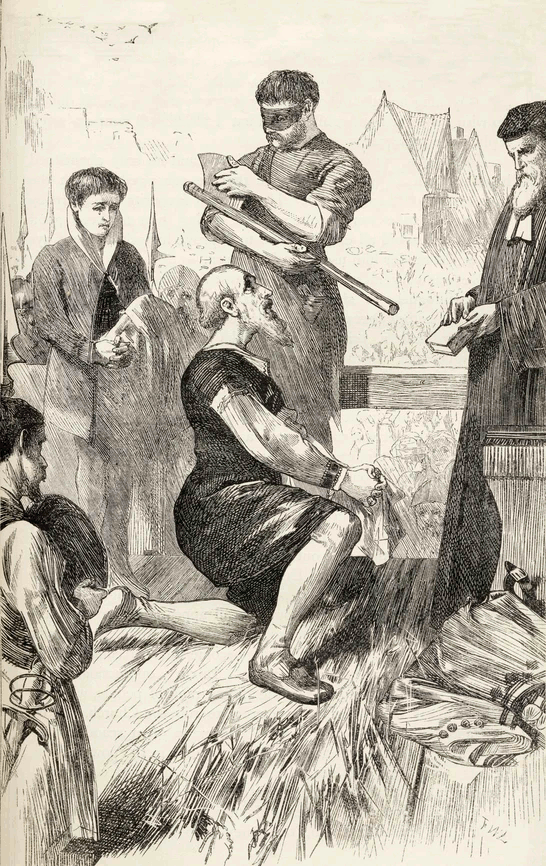
Seymour executed |
- By October 1549, the Privy Council no longer
supported Somerset and he fled with Edward VI but was
arrested on the suspicion of a new plot.
- As a
result, he was executed int he Tower of London on
January 22, 1552.
- Somerset's fall was a testament
to the brutality of the power struggle around Edward's
throne and also a dark stain on the reign of Edward
VI.
- If that's not bad enough, John Dudley, Earl
of Warwick, soon stepped into the limelight and was
the next head of government.
|
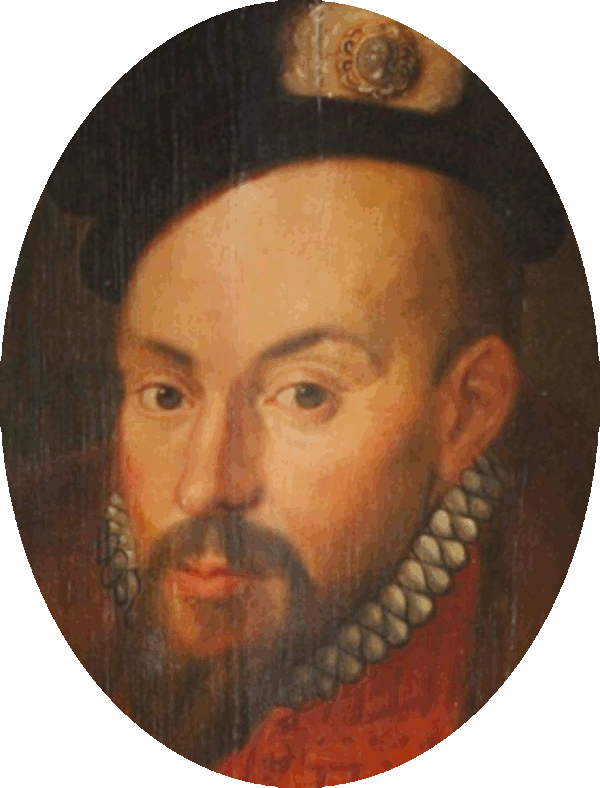
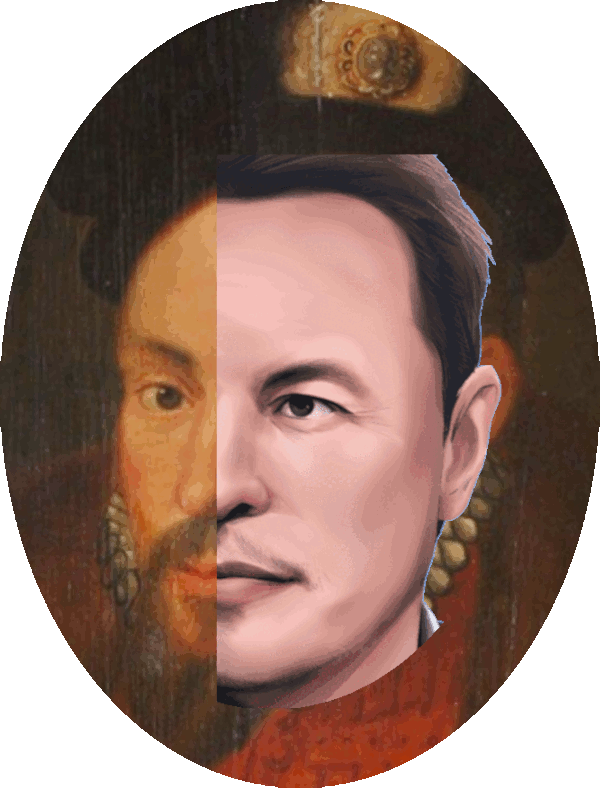
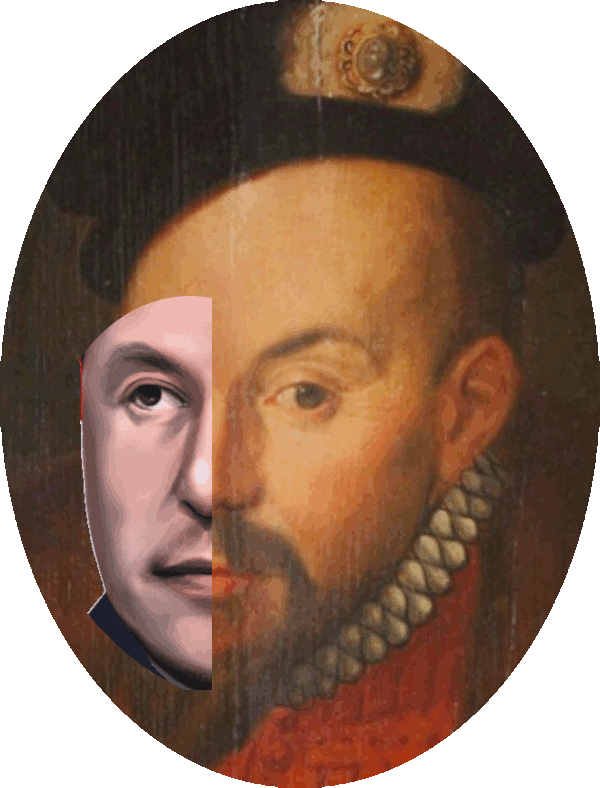
John Dudley as Elon Musk |
 |
|
John Dudley
1504-1553
?
8/22
1st Duke of Northumberland |
Elon Reeve Musk
1971
6/28
Satan from Alpha Centauri |
 |
 |
|
Wicked Duke |
- John Dudley, 1st Duke of Northumberland (1504-1553) was an English military officer and politician, who led the government of the young King Edward VI from 1550 until 1553, and unsuccessfully tried to install Lady Jane Grey on the English throne after the King's death.
- The son of Edmund Dudley, a minister of Henry VII executed by Henry VIII, John Dudley became the ward of Sir Edward Guildford at the age of
7.
- Dudley is described by some sources as a brutal
tyrant, however, he would never hold as much power as his
brother, Somerset.
- There were 2 main reasons, first
the council was unwilling to trust any single individual
after the experience with Somerset, and second, and more
importantly, was the change in Edward V himself.
|
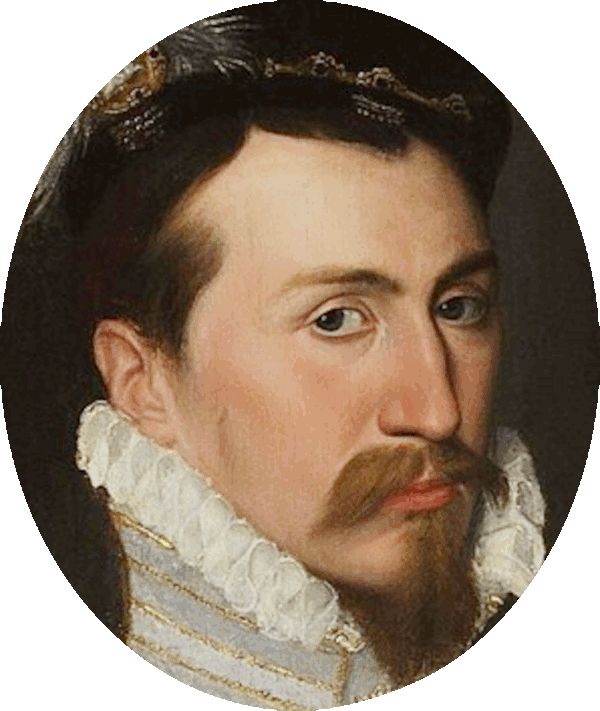
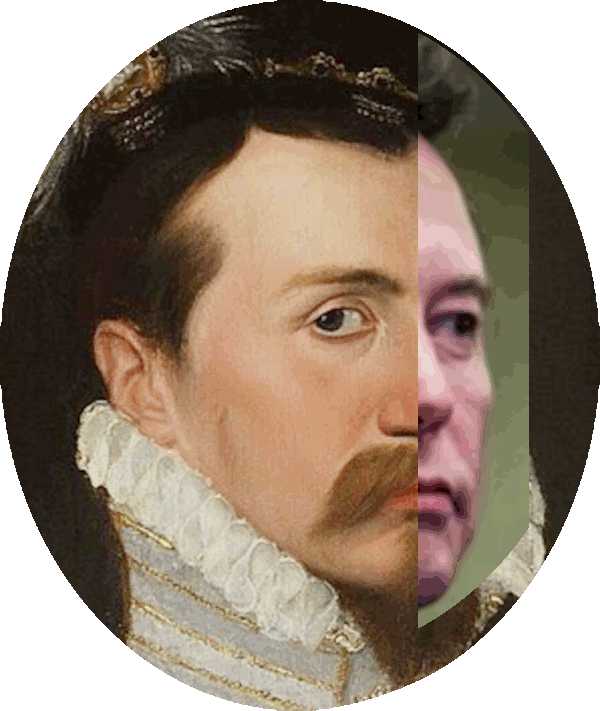
Robert Dudley as Elon Musk |
 |
 |
Robert Dudley
1532-1588
6/24
9/4
1st Earl of Leicester
|
Elon Reeve Musk
1971
6/28
|
 |
 |
|
Eyes |
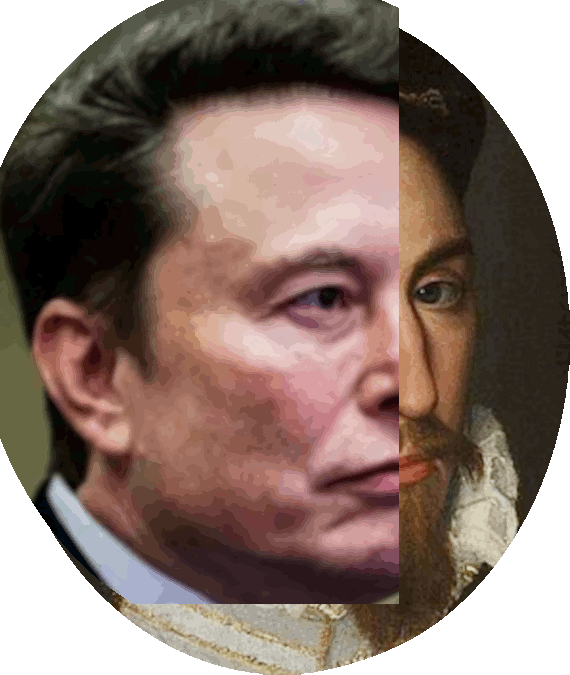
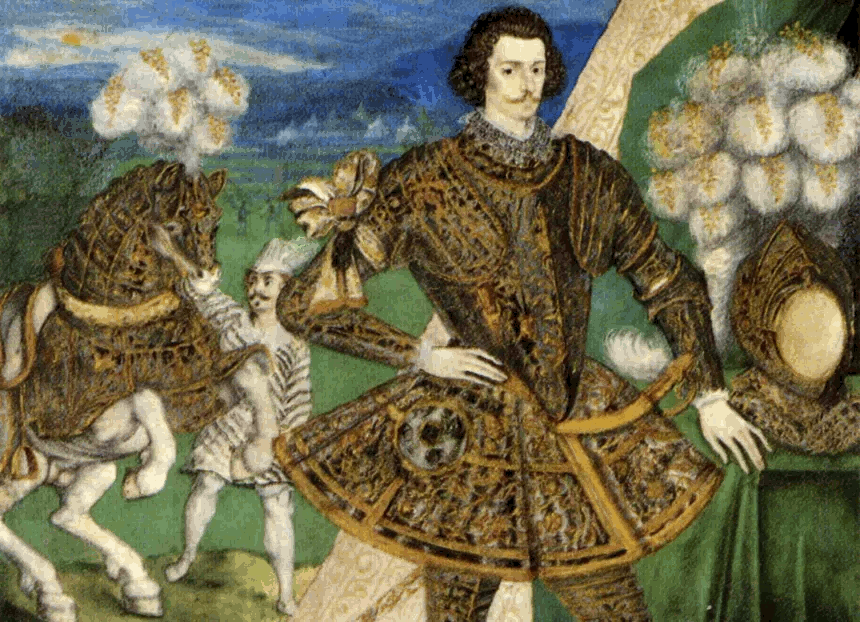
- Robert Dudley, 1st Earl of Leicester (1532-1588) was an English statesman and the favorite of Elizabeth I from her accession until his death.
- He was a suitor for the queen's hand for many years.
- Dudley's youth was overshadowed by the downfall of his family in 1553 after his father, the Duke of Northumberland, had failed to prevent the accession of Mary I.
Robert Dudley at war |
- Under Robert Dudley, England faced military defeat
when the French defeated him in the field.
- Dudley sought
to escape war through a marriage through a peace treaty with
France and Scotland in 1550 was considered shameful as England
had to withdraw its forces from both France and Scotland.
-
To formalize the treaty, Edward VI was agreed to marry
Princess Elizabeth of Valois, however, this arranged love
story was doomed from the start and never materialized.
-
The main concern after the war was restoring government
finances.
- Edward was involved in these efforts and Robert
Dudley, with his support implemented many measures including
France paying 180,000 pounds for Bologna, a currency reform
and efforts to improve the value of the pound.
Personal letters |
- Around 1551, as Edward began to enter his teenage
years, he began to develop his own awareness and
determination to rule alone.
- He increasingly
stamped his own personal mark on the government and
there is evidence of disagreements with the council
and letters reprimanding officials when they didn't
follow his wishes.
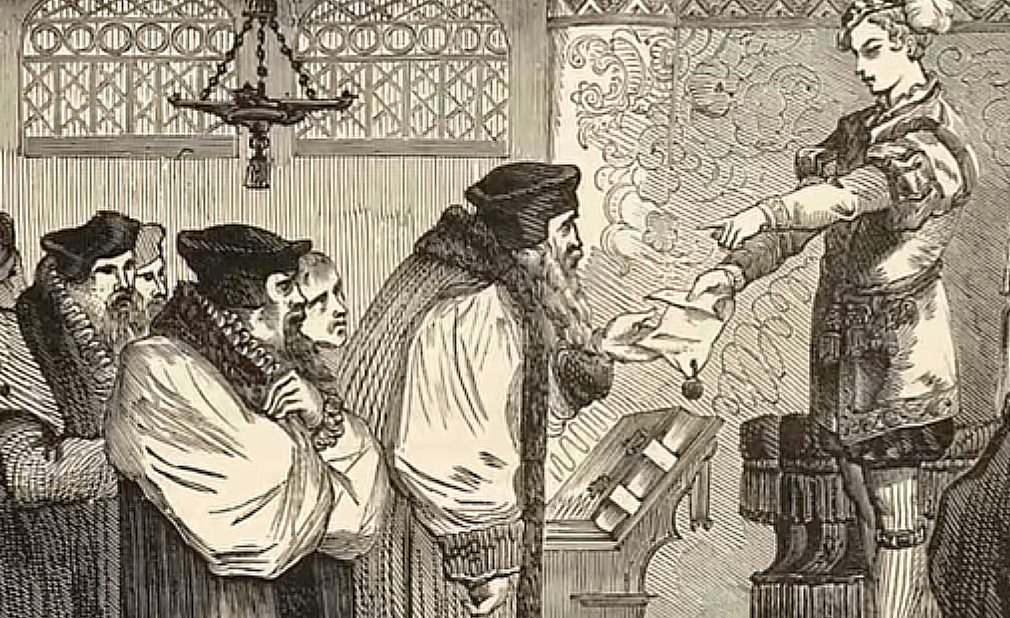
- For example, Edward personally
stamped out references in the oath of Bishop John
Hooper, showing his firmness on religious matters.
- Here was a Henry VIII in the making, Edward was
beginning to show the strong will, decisiveness and
centralizing tendencies similar to his father.
- No
longer a timid boy but a king full of potential to be
evil.
Countrymen |
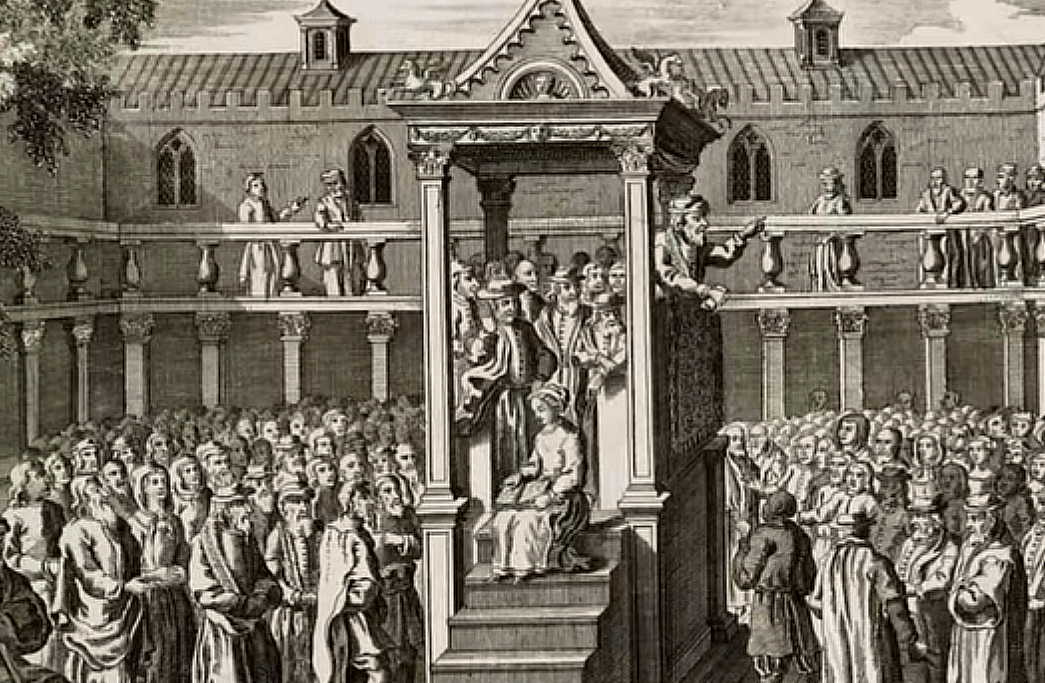
- In the summer of 1552, Edward and his retinue
undertook a royal progress along the old road between
Salisbury and Wilton.
- This was his first
opportunity to inspect his England, particularly to
assess the state of the country he had begun to shape
towards Protestantism.
- During this journey Edward
showed deep interest in managing the country and he
directly participated in managing money, expressing
distress at the almost bankrupt financial situation
due to the previous council's incompetence and
corruption.
- He was anxious and tried to find ways
to rescue the national treasury.
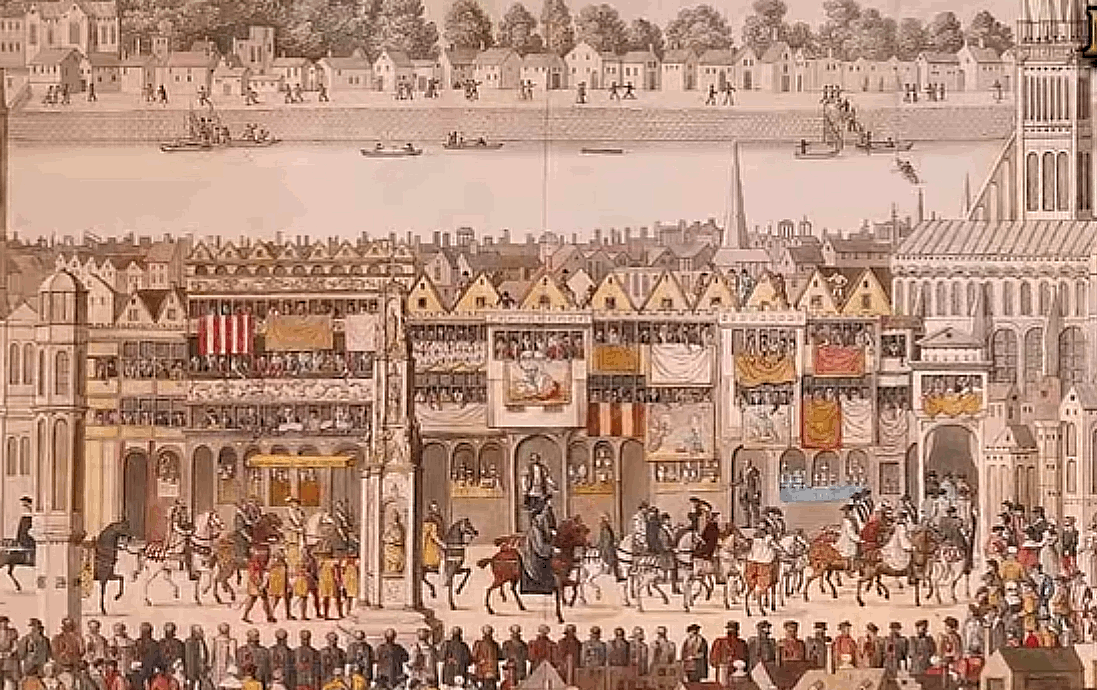
Edward inspection |
- The royal party traveled down the south coast at
Portsmouth where Edward inspected his father's naval
military works with a cold, expert eye.
- He
examined South Sea Castle and proposed improvements
and at Portsmouth, he was enthusiastic about the
harbor, but less so about the two forts, poorly built,
outdated, misplaced.
- Edward ordered them
immediately rebuilt and he was a great modernizer.
- He believed in planning, central control, and
efficiency.
- The journey also showed that he was
capable of enjoying himself through hunting, fine
food, beautiful homes, and rural landscapes.
-
Unlike France, he was uninterested in ravaging the
territories of friends or neighbors, he only cared
about consolidating and protecting his own country.
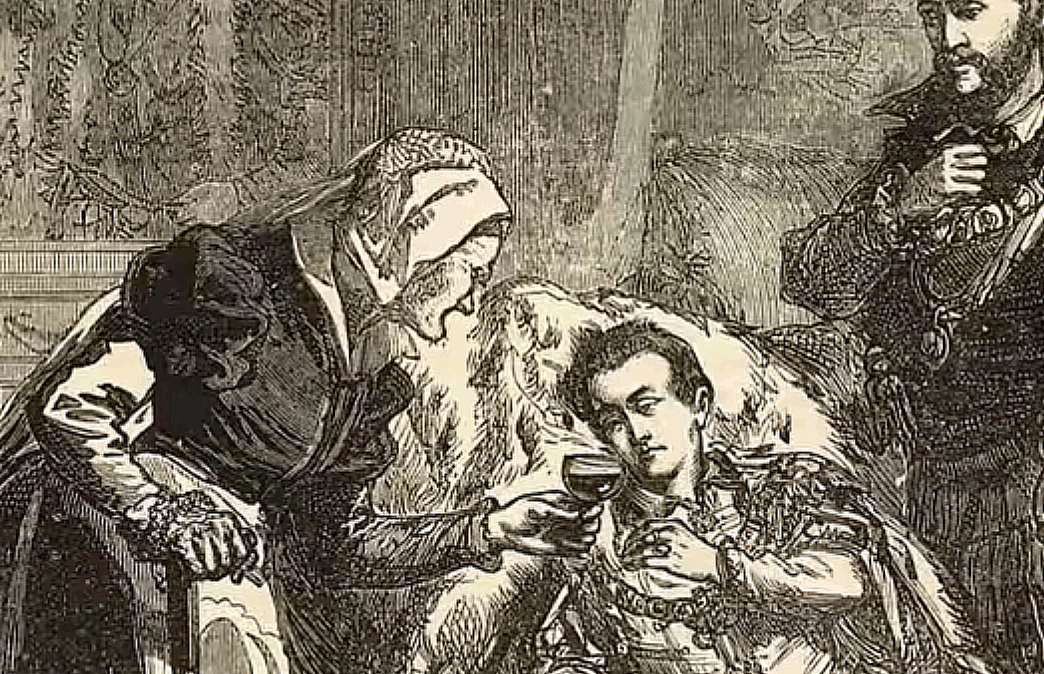
Illness |
-
But April 1552, marked the beginning of his health
decline when he contracted measles.
- He recovered
but the illness had completely destroyed his immune
system.
- Edward was also affected by the outbreak
of the sweating sickness that same year which caused
the deaths of his 2 closest childhood friends, Henry
and Charles Brandon.
- When the next illness came,
Edward's immune system had nothing left to fight.
-
He began coughing in February 1553, and by March, he
was visibly weak and thin and by April, the situation
worsened.
- Edward began vomiting blood and liquids
that were yellow, black or green.
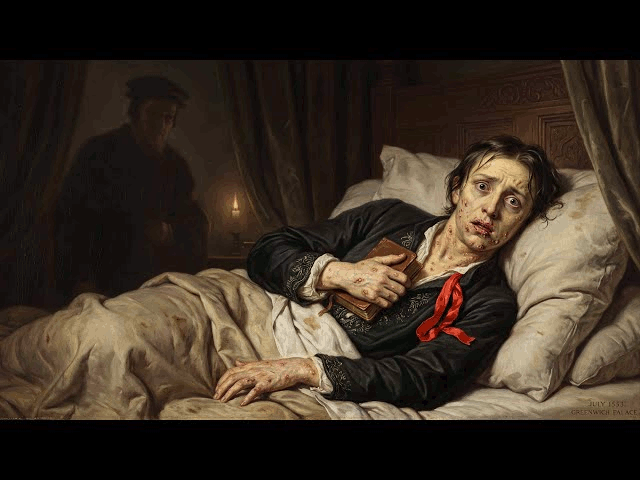
Death bed |
- Doctors diagnosed him with purulent lung
infection, which was then often called tuberculosis,
despite all efforts, they could do nothing.
-
Initial symptoms were flu-like, but quickly
deteriorated, leaving Edward in pain for months but in
May he seemed to show signs of recovery, bringing a
glimmer of hope.
- However, within days, the cough
returned, more violent than ever and his body rapidly
wasted away.
- He became swollen and painful sores
appeared all over his skin.
- Although his body was
weakened, Edward VIs mind remained mentally sharp until the
last moment.
- Knowing that he was dying, Edward
thought of only one thing, insuring that his sisters,
especially the Catholic, Mary, never ascended the
throne.
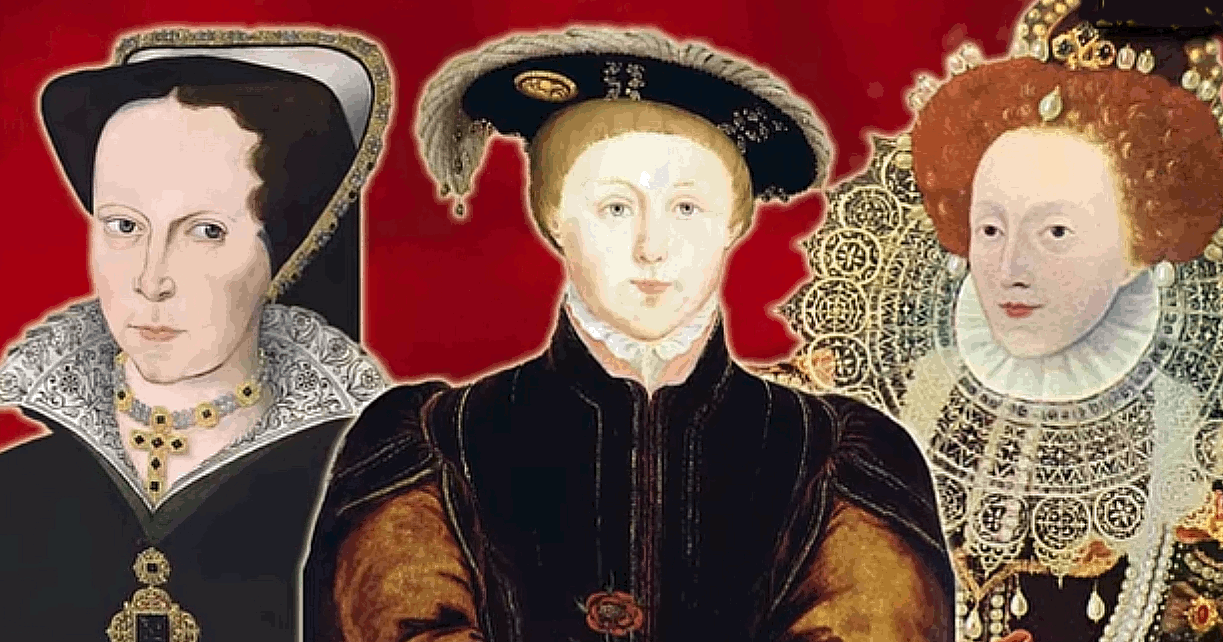
Siblings |
- The close relationship he had with his sisters
in childhood had deteriorated as he grew older,
especially with Mary a staunch Catholic and set to
overturn his Protestant achievements was the clearest
reason for Edward wanting to exclude her.
-
Although the reason for hating the Protestant
Elizabeth was unclear, perhaps because she was firm on
legal principles and wouldn't simply replace Mary as
Edward wished.
- There is a theory that Edward's
death was caused by poisoning by John Dudley or
Mary, who had motives to eliminate him, however, in
reality it's very likely the cause was tuberculosis or
a similar illness.
- Edward knew he was gravely
ill, perhaps near death, and desperation fueled his
final actions.
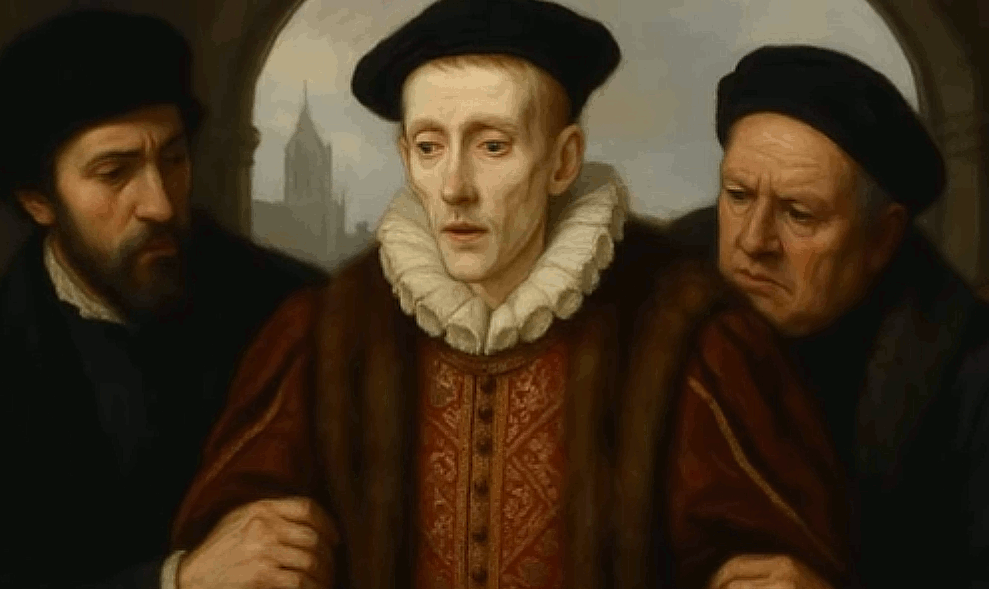
Physical decline |
- On July 1, 1553, he made his last public
appearance and the sight of him sent shivers down the
spines of those who witnessed him because the crowd
realized that Edward was dying.
- Amidst the pain
and physical decay, Edward was recorded whispering to
his closest attendant, 'I am glad to die.'
- He
died on July 6, 1553, at just 15 years old.
- His
death was kept secret, even from his sisters, as not
to hinder his and his supporters plan to protect
Protestant England.
- But his final act while
alive, would ignite an unprecedented succession
crisis.
- Would his death be enough to change the
course of English history.
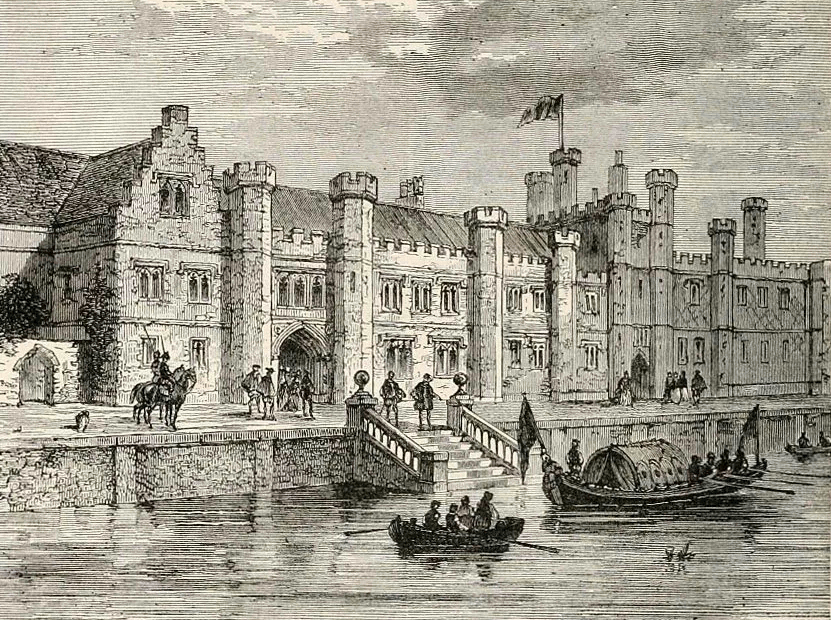
Greenwich Palace |
- According to Henry VIIIs will, the order of
succession was Edward, then Mary, finally Elizabeth,
however, in an effort to protect the achievements of
the Reformation he wanted to exclude both his sisters.
- Initially believing that women should not rule, he
left the crown to the son of his niece, the
descendants of his aunt, Mary Tudor, sister of Henry
VIII.
- But realizing he didn't have much time
left, Edward revised the plan and he changed it to
Lady Jane Grey, his aunt's granddaughter, and her male
heirs the heir to England.
- John Dudley exploited
Edward's weakness to persuade him to disinherit his
sisters because Jane Grey was his daughter-in-law and
he was planning a dangerous game, staking his family's
entire future.
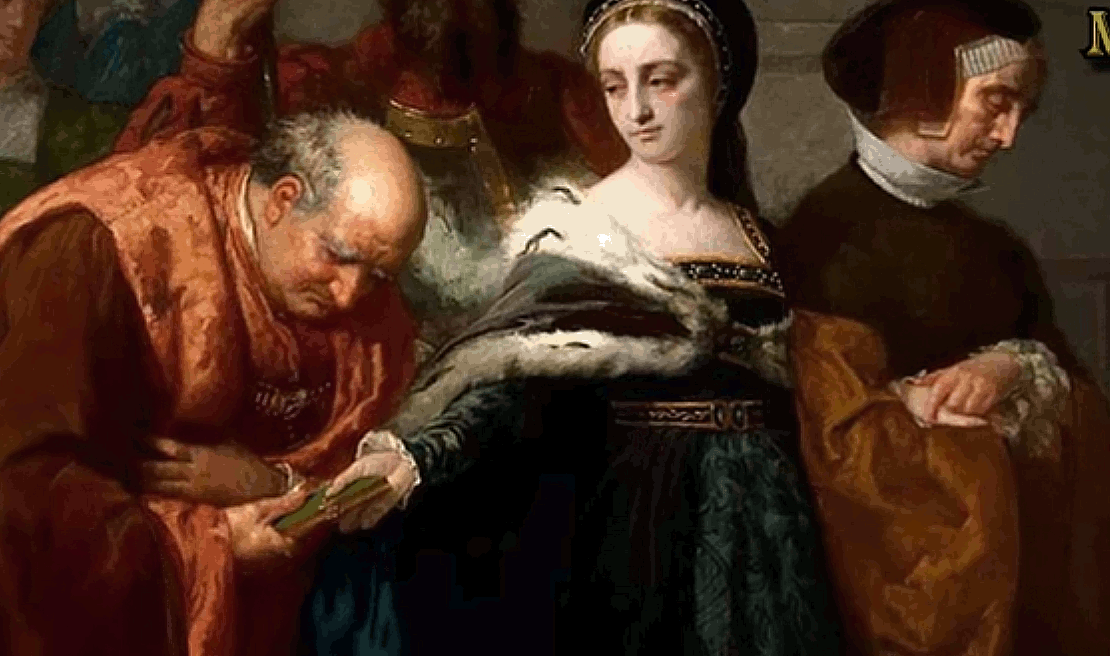
Lady Jane |
- However, both Edward's and Dudley's plans failed
because Mary had a much stronger claim to the throne
and she quickly gathered thousands of supporters.
-
Mary disposed Jane Grey who reigned for a mere 9 days
and is known as the 9-day Queen.
- She declared
herself as Queen of England and Jane and her husband
were imprisoned in the Tower of London for almost a
year and after Wyatt's Rebellion in 1554 she was
executed by beheading.
- Mary also took revenge on
John Dudley and he was executed and the angry crowd
demanded his blood.
- Despite his last ditch
effort, Edward's succession plans failed miserably,
the English wanted a true Tudor as their next monarch.
- Although it's unclear why.
Public domain, via Wikimedia
Commons
Edward VI spoiled child |
- His death at age 15 was described as
horrible, with a body swollen like overripe fruit and
painful sores covering his skin was perhaps a blessing for
England.
- Because even at a very young age, Edward
showed he was almost as twisted as Henry VIII, maybe even
more twisted and he wasn't just a 'frail' boy.
- But
how did a boy who was hailed as the 'most beautiful boy
ever seen' and called the 'most precious jewel of this
realm' by his father come to such a painful end and leave
behind such a controversial legacy?
- England dodged a
major bullet when he died so young.
- He was not the
innocent, tragic figure that history might lead one to
believe.
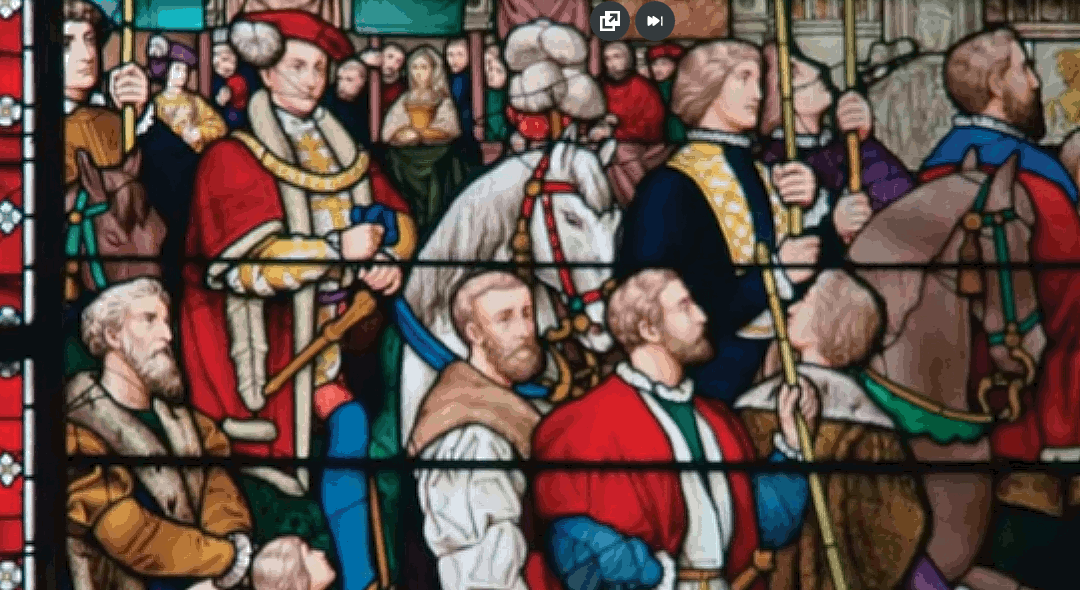
Puritan religion |
- The truth is much darker, he is described as a
spoiled child with a bad temper but he had a malicious
temper and showed disturbingly cruel actions from a young
age.
- The most shocking detail is that in a rage,
Edward tore a living falcon into 4 pieces with his bare
hands, revealing a frightening dark side to his
personality.
- If he had survived, then England would
have been a different place, it would have been even more
heavily militarized with a massive standing army and an
efficient network of fortifications.
- But most
importantly, he would create a radical religion, a Puritan
religion that would be strictly enforced, intolerant of
any descent, whether Catholic, or even more moderate forms
of Protestantism, more akin to Prussia or Sweden.
-
Extremely authoritarian, religiously intolerant and
extremely brainwashed by his father.
|
I am faint; Lord have mercy upon me, and take my spirit.
(Edward VI)
|
Queen Mary I of England
1553-1558
House of Tudor |
|
Mary I |
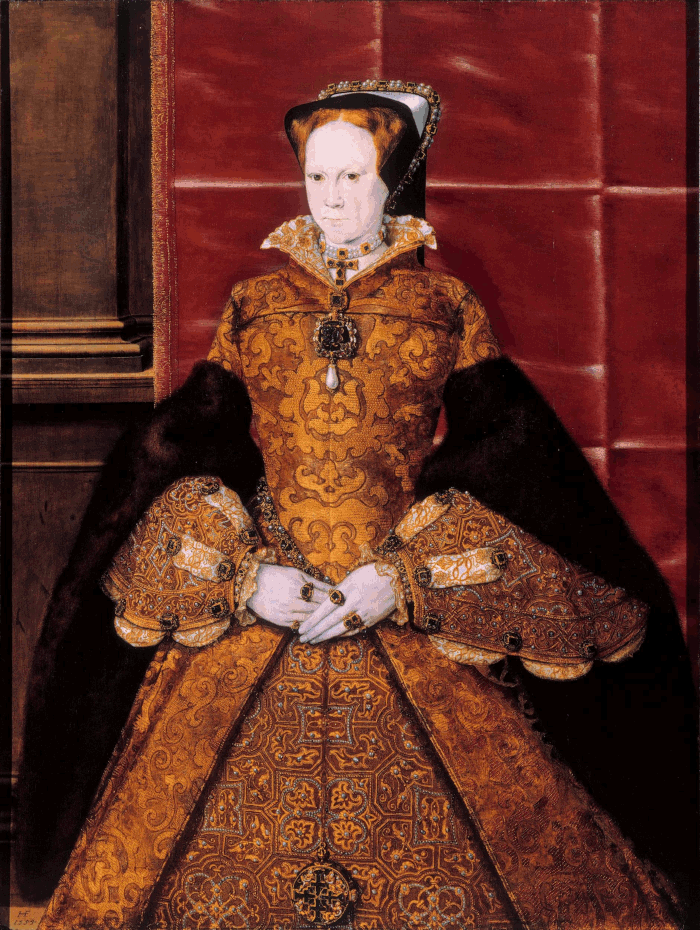
Marian Restoration of Catholicism |
- Mary I (1516-1558) was Queen of England and Ireland from July 1553 and Queen of Spain as the wife of King Philip II
(1527-1598) from January 1556 until her death in 1558.
- She made vigorous attempts to reverse the English Reformation, which had begun during the reign of her father, King Henry VIII.
- Her attempt to restore to the Church the property confiscated in the previous
2 reigns was largely thwarted by Parliament but, during her
5-year reign, more than 280 religious dissenters were
burned at the stake, in what became known as the Marian
persecutions, leading later commentators to label her
'Bloody Mary.'
- Most of the dissenters didn't end up bloody, she burned
them at the stake.
- The title given to her is very unfair considering the thousands upon
thousands that Henry VIII murdered.
- Mary took the
brunt of the wrath for the Reformation it appears.
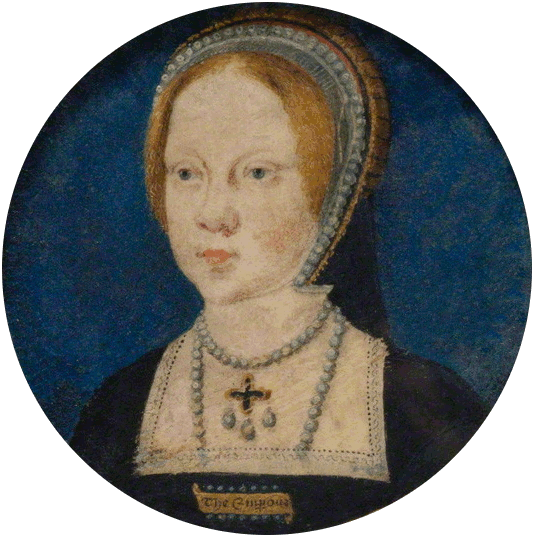
Princess Mary |
- Born a princess, Mary
Tudor was declared illegitimate
by her father, Henry VIII when he divorced her mother,
Catherine of Aragon (1485-1536), in his desperate attempt to father a
male heir.
- When her younger half-brother, Edward VI,
age 15, died he passed her over and named their cousin,
Lady Jane Grey (1537-1554) also known as Jane Dudley, queen instead
when she was 15-years-old.
- But the people of
England supported Mary and she rode to London and had her
usurper was beheaded.
- Now the first unquestioned
regnant Queen of
England, she undid her father and her brother's work to
convert the nation to Protestantism and she reverted back
to Catholicism.
- In doing so, she burnt 280 Protestants at
the stake.
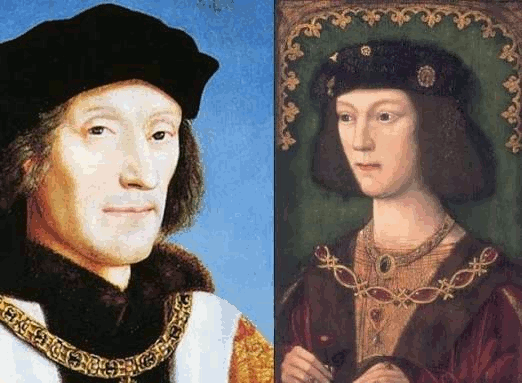
Henry VII and his son Henry VIII |
- Henry VIII was only the 2nd Tudor king of England after
his father, Henry VII had defeated King Richard III at the
Battle of Bosworth and taken the crown with a somewhat
shaky genealogical claim.
- But Henry was a powerful
king and cemented his authority on the throne with the help
of his wife, Catherine of Aragon, who was Mary's mother.
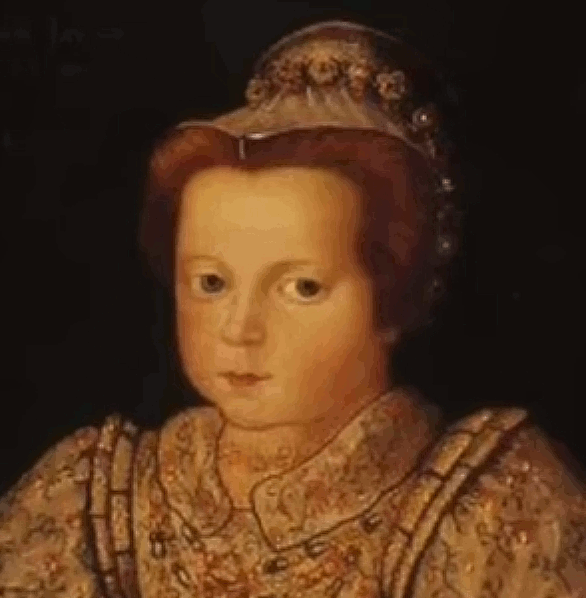
Princess Mary
as a child |
- Henry VIII didn't have any brothers to follow him in
succession so to him, having a son was absolutely
imperative.
- He did comfort Catherine of Aragon after
Mary's birth on February 18, 1516, and told her she had
many years to produce a son and besides, girls could be
used as bargaining chips in the European marriage market.
-
Except within the 7 years that followed, after 6 pregnancies, no sons were ever born and
Mary, who was named after Henry's favorite sister, was the
only child who lived.
Public Domain, via Wikimedia Commons
Margaret
Pole, Countess of Salisbury |
- As was customary, Mary was raised away from her parents
and she had her own household with servants by age 9.
-
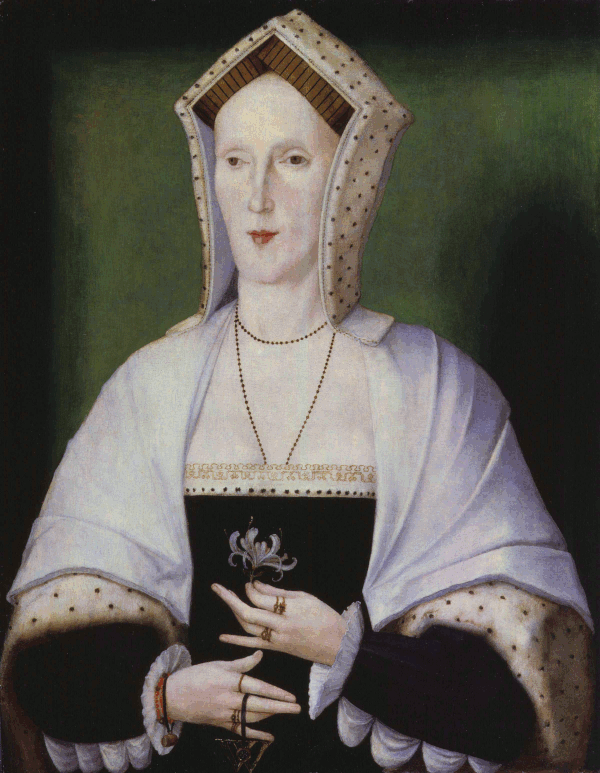
Henry's cousin, Margaret Pole (1473-1541), a Plantagenet, was appointed to be her
governess and was the central figure in Mary's childhood.
- At age 2, Mary was betrothed to the 6 month old Dauphin Francis
who son of
King Francis I of France.
- The engagement was arranged
to secure a political alliance between England and France,
but the contract was canceled 3 years later and he was
betrothed to Mary Queen of Scots, King James Vs daughter
when she was 9 months old and he was age 4.
- Holy Roman Emperor Charles V,
her mother's nephew, was later betrothed to Mary when she was
6 years old and he was 22, though he eventually called off the match.
- He decided he couldn't wait to start his own dynasty and
married Isabella of Portugal who was closer to his own
age.

Ludlow Castle traditional seat of the Prince of
Wales |
- Mary received a much better education than most royal
girls after her mother had a treatise on education
created.
- She was a serious child and studied
religiously and could read and write in Latin by age 9 and
she also learned French, Spanish and Greek.
- Henry
VIII at that time doted on her and she was his spitting
image with Tudor reddish gold hair, a fair complexion and
ruddy cheeks and he claimed she was his rightful heir.
- Although she was never given an official title of an
heir as Henry was still holding out hope for a son.
-
But by now, her mother, Queen Catherine was 40 and had not
become pregnant after Mary's birth.
- Although Henry had
fathered a son, Henry FitzRoy (1519-1536) with his mistress Bessie
Blount so he still felt confident and believed that the
fertility problems were his wives.
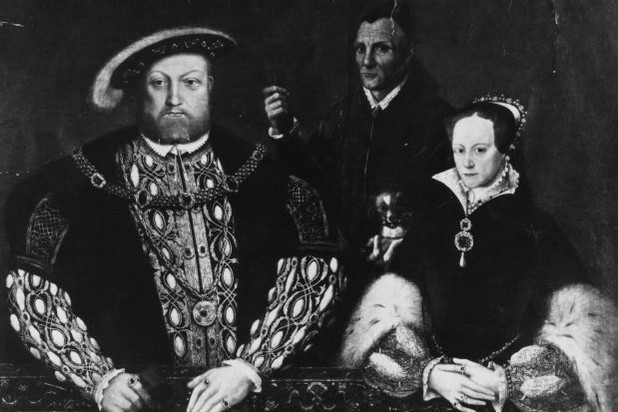
Henry VIII and Mary I |
- Henry then asked Catherine to retire to a convent and
allow him to remarry.
- Had Catherine of Aragon agreed,
Mary would have remained legitimate and remained in the
line of succession but the Queen refused to give up her
place.
- Henry VIII obsessed over a biblical passage
that stated that it was a sin to marry your brother's
widow and that such a couple would be childless, but
Catherine noted that the marriage was not childless
showing how little Henry thought of the value of the
female gender.
-
By that time, Henry was already infatuated with Anne Boleyn
(1501-1536)
and used
the Protestant movement to end the marriage to Catherine with
annulment.
- He also dissolved the monasteries and made
himself rich by looting their wealth.
- Much to the
horror of Catherine and by 1531 she was banished and her
jewels were given to Anne Boleyn.
Margaret Pole executed |
- Catherine went to Windsor to be with Mary who had
been ill and suffering depression, likely due to anxiety
about her and her mother's precarious position.
- After
spending one last summer together, mother and daughter
would never see each other again.
- In 1531, Henry VIII
married Anne Boleyn and required everyone to swear the
Oath of Supremacy that he was the one, supreme head of the
church, that his marriage to Catherine was invalid, and
that Mary was illegitimate.
- Those who refused to
swear were executed, this included the woman who raised
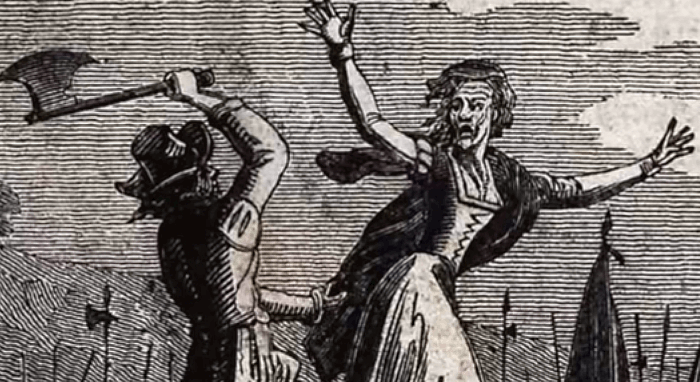
Mary, Countess Margaret Pole who refused to kneel and the
executioner raised his axe and chased her all around the
scaffold and finally hacked her to death.
- Mary was
downgraded from Princess to the Lady Mary and her servants
were dismissed and she was sent to wait on her new
half-sister, Elizabeth.
Royal daughter |
- Despite the danger, the 17-year-old refused to swear
the oath and she was headstrong.
- Father and daughter
exchanged many furious letters and didn't see each other
for 3 years.
- When Henry VIII went to visit his
daughter Elizabeth, he
refused to see Mary and would not allow
her to set foot in his royal court.
- Catherine and Mary were
not allowed to exchange letters and when Catherine died at age
50, Mary was not allowed to attend her funeral.
-
Within 3 years, Anne Boleyn was beheaded for failing to
deliver a child and Princess Elizabeth was also declared
illegitimate and removed from the succession.
- And 11
days later, Henry married Jane Seymour (1508-1537) who had been a maid
of honor to Queen Catherine and she felt kindly toward
Mary.
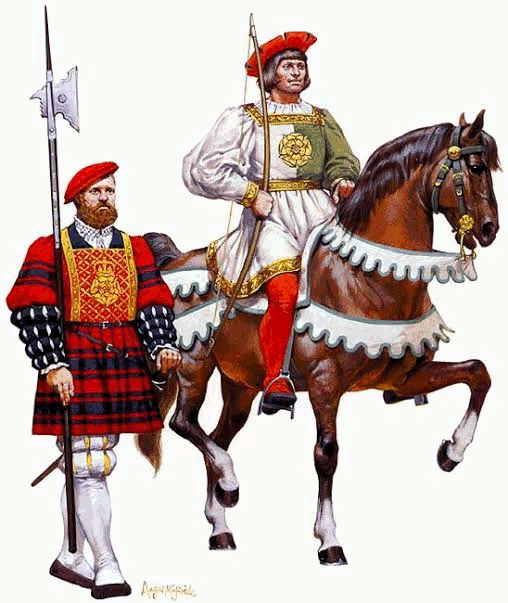
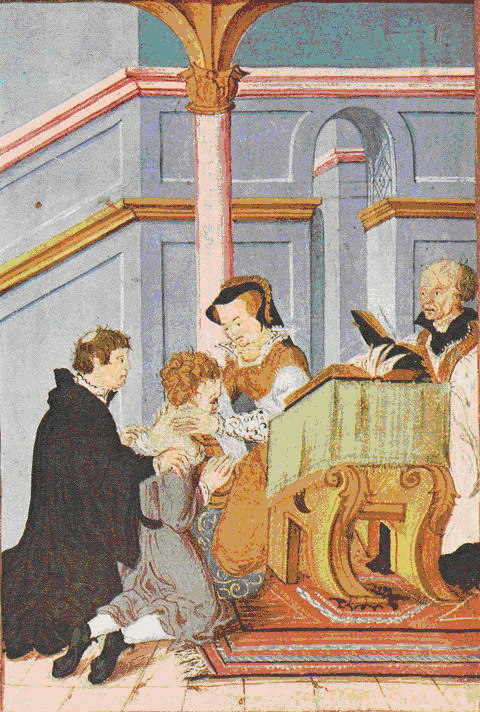
Knights came to bully Mary |
- Jane urged Henry to make peace with Mary, and he
agreed, if Mary would swear the oath.
- Mary wrote back that
she would submit to his authority as far as God and her
conscience would permit her.
- Meaning she didn't
agree, so Henry sent some of his men to
bully her and they threatened to beat her to death.
-
Realizing her dire predicament, Mary finally signed a document agreeing to all his demands
and once she agreed, he welcomed her back in court and
allowed her fine clothes. a generous allowance and the return of her
household.
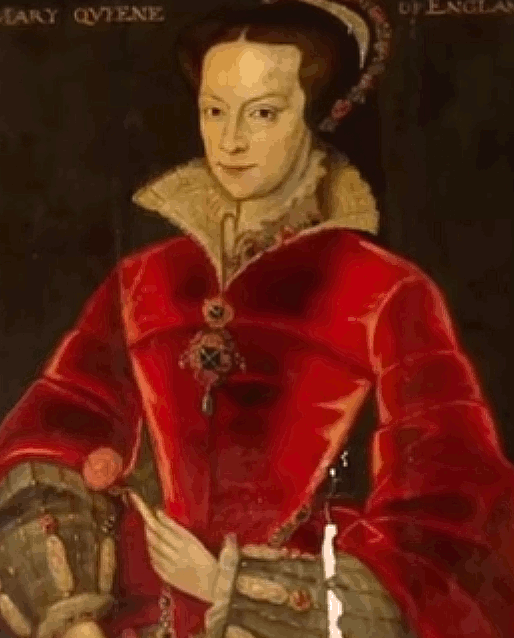
Happy years |
- During these happy years, Mary enjoyed music,
playing cards and she even became a trendsetter and was
very popular with the people of England.
- But
rebels in the north acted out against Henry's Oath of
Supremacy and one of their demands was that Mary be made
legitimate during the Pilgrimage of Grace, which was ruthlessly
suppressed by Henry and many were executed.
- In 1537, Queen Jane Seymour
finally gave birth to Edward VI and secured Henry's
dynasty, but she died 12 days later and Edward was raised
motherless.
- Mary was now 23
and past her prime in the Tudor marriage market but
her lack of a title made her matrimonial prospects
challenging.
|
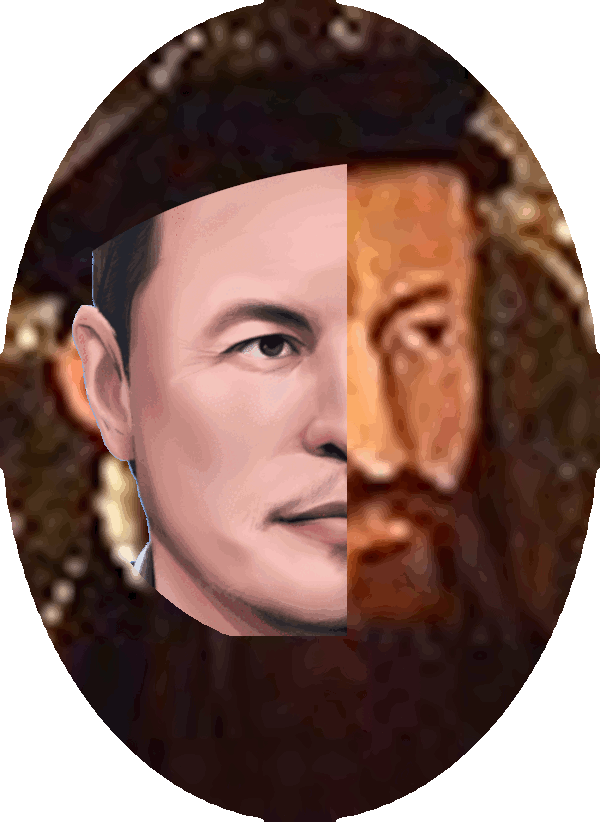
William of Cleves as Elon Musk |
 |
 |
William, Duke of Jülich-Cleves-Berg
1516-1557
7/28 1/5
Duke of Jülich-Cleves-Berg |
Elon Reeve Musk
1971
6/28
Satan
from Alpha Centauri
|
 |
 |
|
Rich Reiche |
-
William of Jülich-Cleves-Berg (1539–1592), was a Duke of Jülich-Cleves-Berg.
- He was born in and died in Düsseldorf and was the
only son of John III, Duke of Jülich-Cleves-Berg, and
Maria, Duchess of Jülich-Berg.
- William took over rule of his father's estates (the Duchy of Cleves and the County of Mark) upon his death in 1539.
- Despite his mother having lived until 1543, William also became the Duke of Berg and Jülich and the Count of Ravensberg.
- A potential marriage treaty for Mary was signed with
William of Cleves (1516-1557), however, Henry saw a portrait of his sister,
Anne of Cleves (1515-1557), he decided that their marriage should be
the one in the treaty instead.
- But the marriage to
Anne of Cleves only lasted 6 months and his next wife, Catherine
Howard (1523-1542) was also beheaded.
Catholic mass |
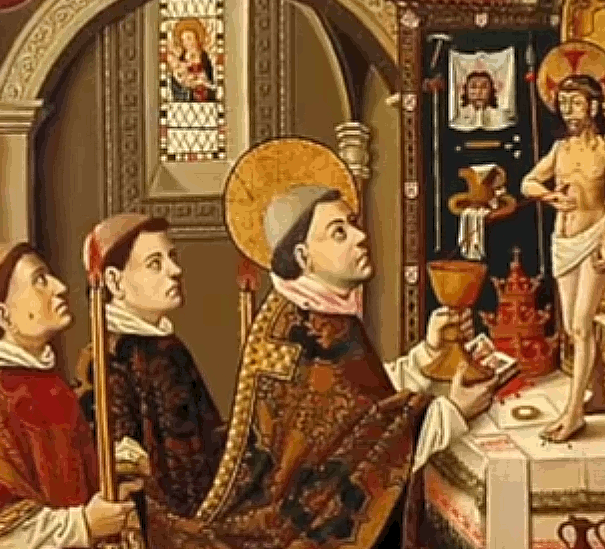
- At the Christmas celebration in 1542, Henry had his eye
on one of Mary's lady in waiting, Catherine Parr
(1512-1548) who he
made his 6th and final wife.
- She urged him to
reconcile with both his daughters and both Mary and
Elizabeth were added back to the succession line after
their brother, Edward VI, but they remained illegitimate
and without the title of Princess.
-
In 1547, Henry VIII died at age 55 and Edward VI took the
throne.
- Mary was left a wealthy woman with estates in
Norfolk, Suffolk and Essex.
- Henry was still basically
a Catholic and had done little to reform the church, but
Edward VI went heavy duty into Protestantism and banned
the Catholic mass.
- Mary was not raised to be
especially devout but in loyalty to her mother and defiant
to Edward, she remained faithful to Roman Catholicism.
|
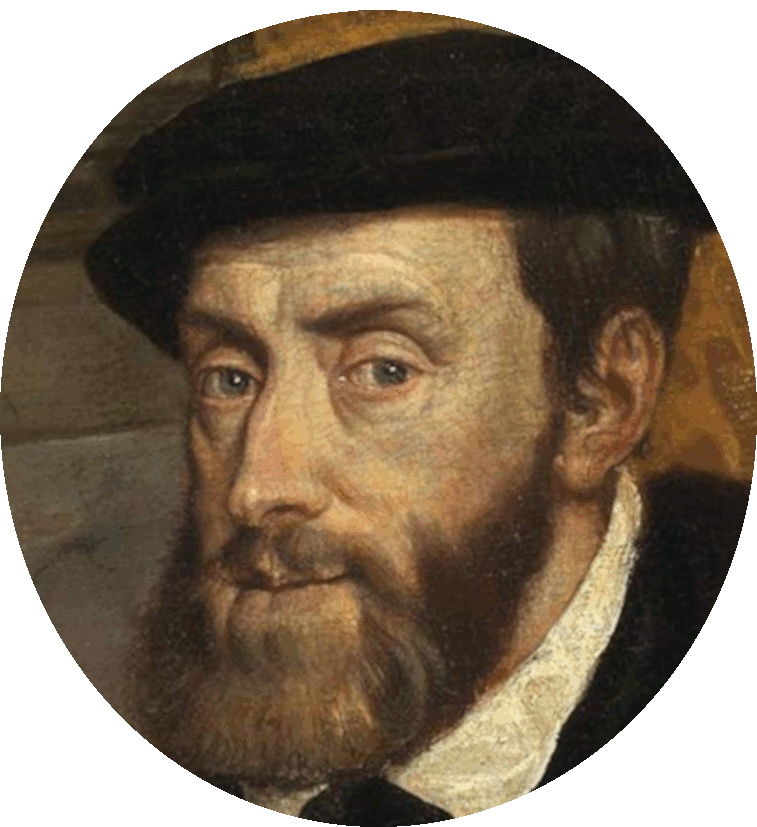
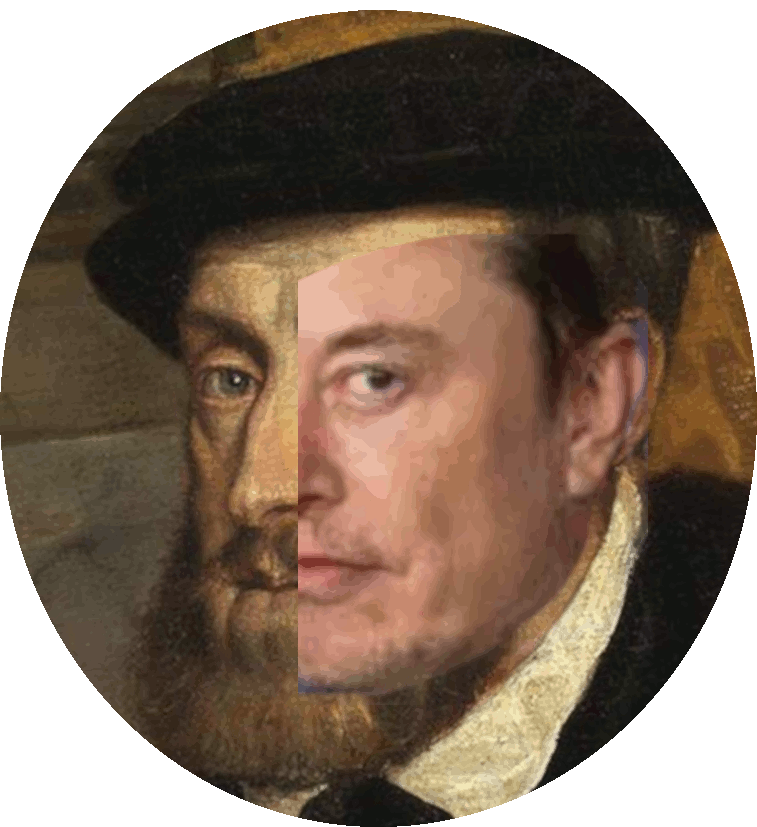
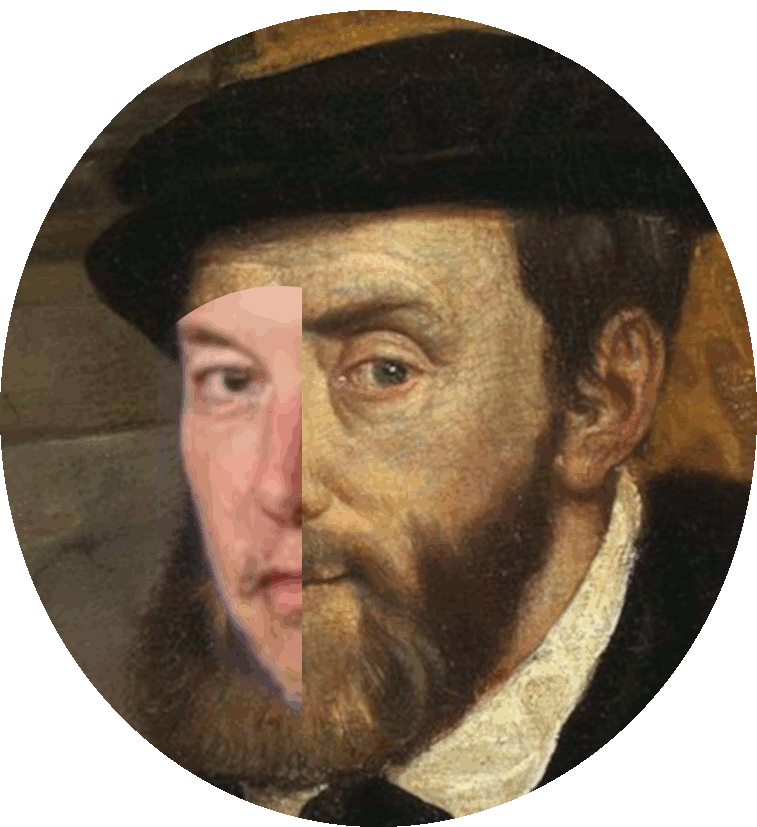
Charles V of Spain as Elon Musk |
 |
|
Charles V
1500-1558
2/23 9/21
King of Spain, Portugal, Naples and Sicily
Holy Roman Emperor |
Elon Reeve Musk
1971
6/28
Satan
from Alpha Centauri
|
 |
 |
|
Conquistador |
- Charles V (1500-1558 was Holy Roman Emperor and Archduke of Austria from 1519 to 1556, King of Spain (as Charles I) from 1516 to 1556, King of Sicily and Naples from 1516 to 1554, and also Lord of the Netherlands and titular Duke of Burgundy (as Charles II) from 1506 to 1555.
- Edward VI argued frequently with Mary over her
refusal to convert and Mary asked her cousin, Emperor
Charles V for diplomatic pressure.
- Charles V even
sent ships to rescue her from England but she didn't want
to leave her wealth behind.
- In 1550, at the Christmas
celebration, Edward brought her to tears by reproving her
in front of his entire court for ignoring his religious
laws.
Cousin Jane Grey |
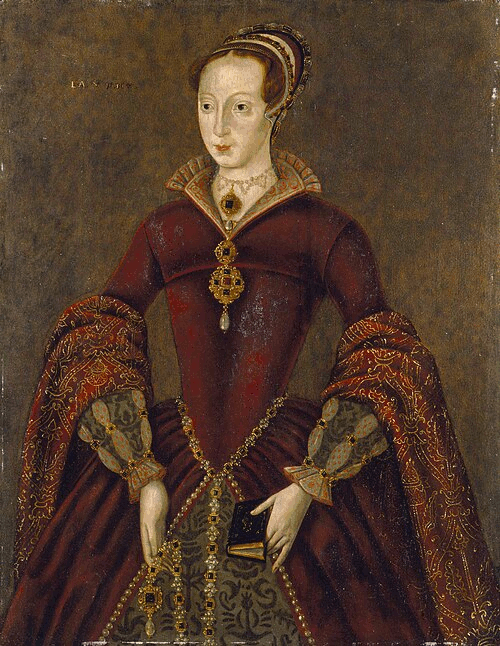
- At 15, after Edward fell seriously ill and died, he
changed the succession order and appointed 16-year-old
cousin, Lady Jane Grey as the next queen.
- Mary was
summoned to court to see her dying brother, but she was
warned that the visit was a trap to prevent her from
claiming the throne, which was rightfully hers.
- She
fled to East Anglia where she had many Catholic supporters
and upon Edward's death, she wrote to the Privy council
demanding that she be made queen per her father's will.
- Jane Grey, was declared queen by the council instead, but
the council underestimated the people's loyalty to Mary,
and they felt the throne had been stolen from her.
Protestants arrested |
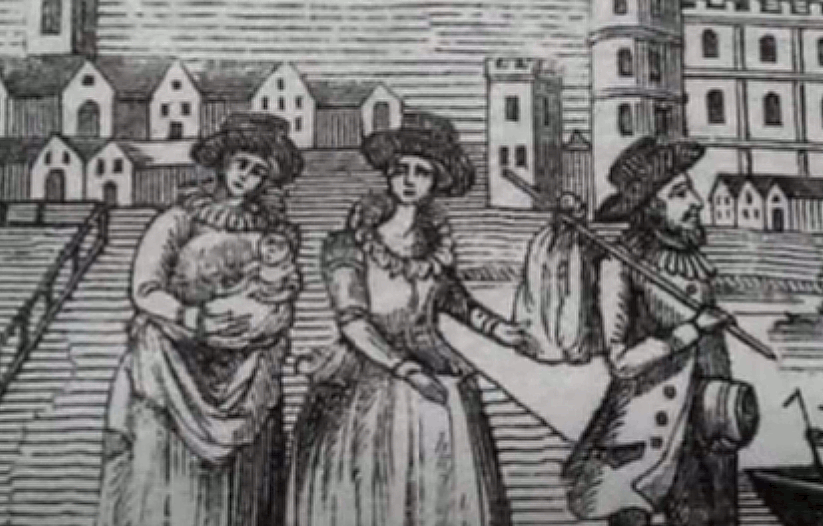
- Mary marched toward London and gathered an army of
20,000 and as a result, Jane Grey only served for 9 days
and she was imprisoned in the Tower of London and later
executed.
- Mary rode into London on August 3, 1553,
and claimed the throne.
- She felt bad for Jane Grey
and didn't want her executed and she made a
proclamation that she would not force her subjects to
follow her religion.
- But within months, the
Protestants caused so many problems, she ordered
the arrests of a number of prominent Protestants.
- Her
first Parliament declared her parents marriage valid and
herself legitimate, abolished Edward VIs religious laws
and made peace with the Pope.
-- She also reinstated
the heresy laws that Henry VIII had overturned which
allowed those who went against the Catholic faith to be
burned at the stake.
|
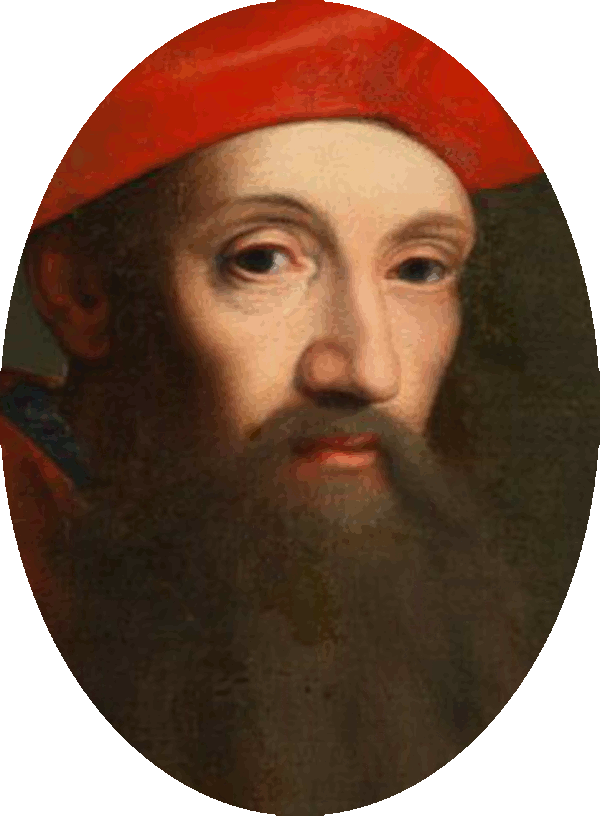
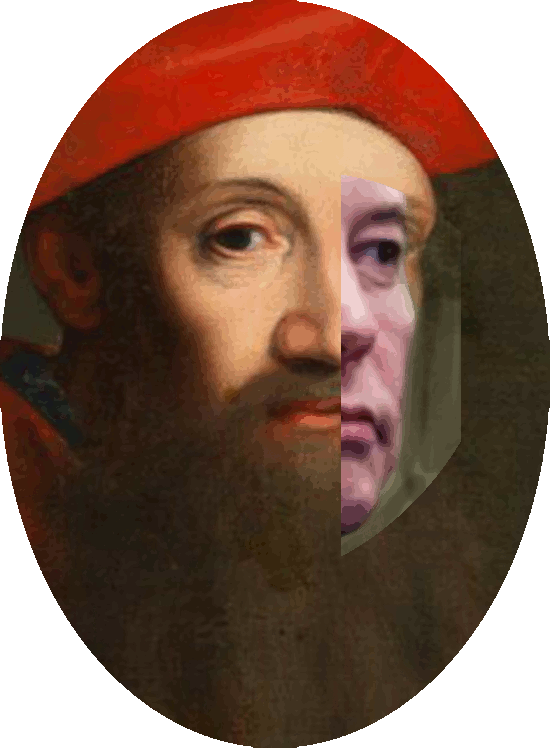
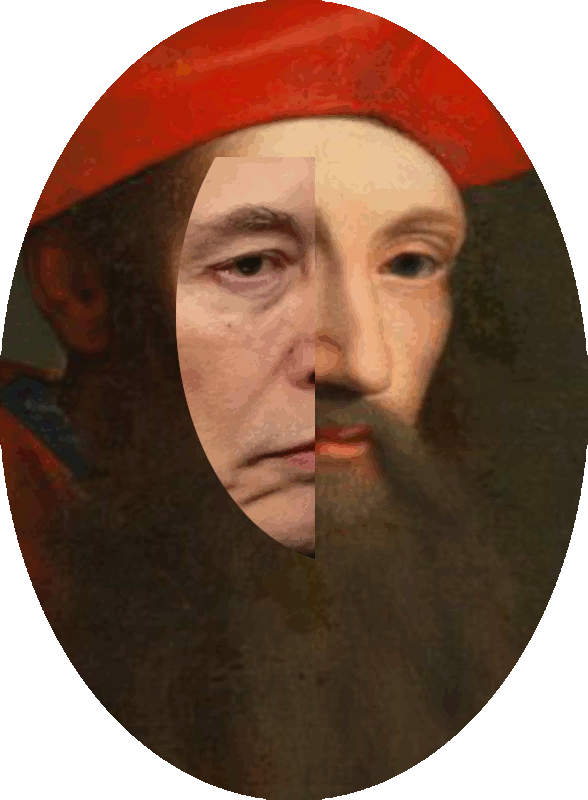
Reginald Pole as Elon Musk |
 |
 |
Reginald Pole
1500-1558
3/12
11/17
English cardinal and the last Catholic
Archbishop of Canterbury |
Elon Reeve Musk
1971
6/28
Satan
from Alpha Centauri |
 |
 |
|
Angelic Cardinal |
-
Reginald Pole (1500-1558) was an English cardinal and the last Catholic Archbishop of Canterbury, holding the office from 1556 to 1558 during the Marian Restoration of Catholicism.
- Now aged 37, Mary turned her attention to finding a husband and producing an heir, which would prevent Elizabeth
who was still next in line under the terms of Henry VIII's will and the Act of Succession of 1544 from succeeding to the throne.
- A number of suitors came forward, including Reginald
Pole, but Mary wanted to marry a royal.
- Her former
fiance, Charles V, suggested she marry his only son,
Philip II of Spain who was heir to vast territories in Europe and
the New World.
- The resulting marriage was very
unpopular with the English because according to law, a
wife's possession and titles rightfully belonged to her
husband.
- Plus, the English did not want to be
swallowed up by the vast Habsburg Empire.
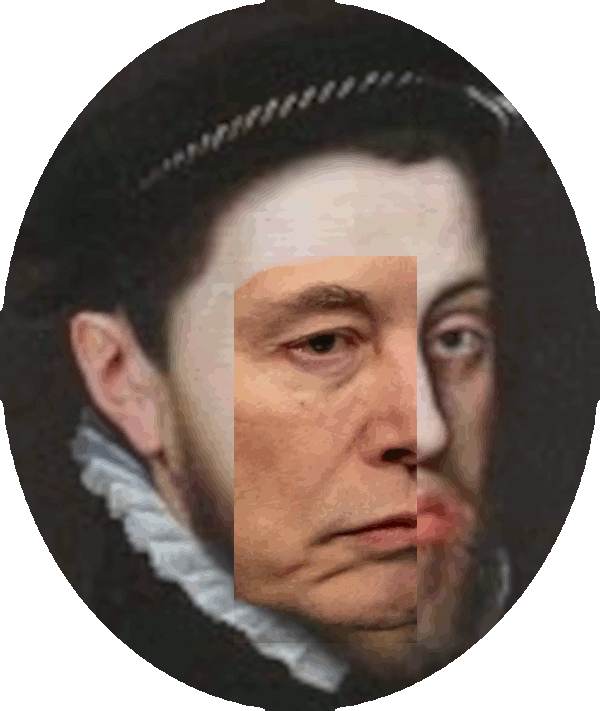
|
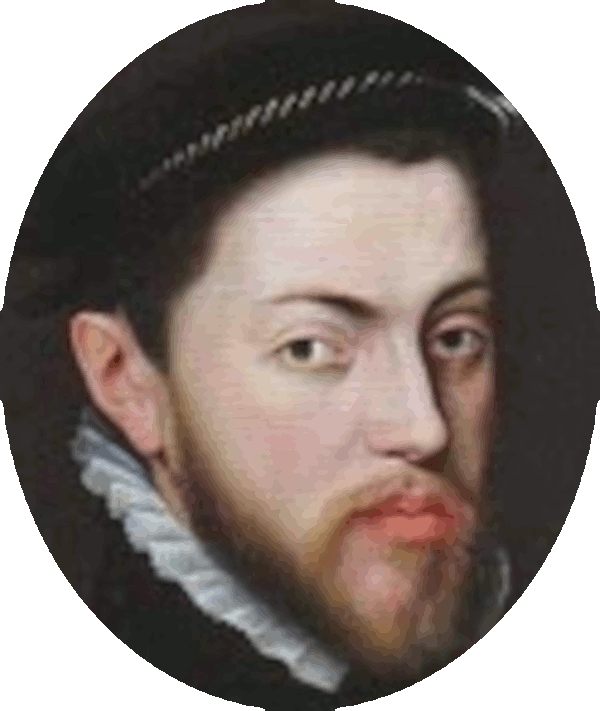
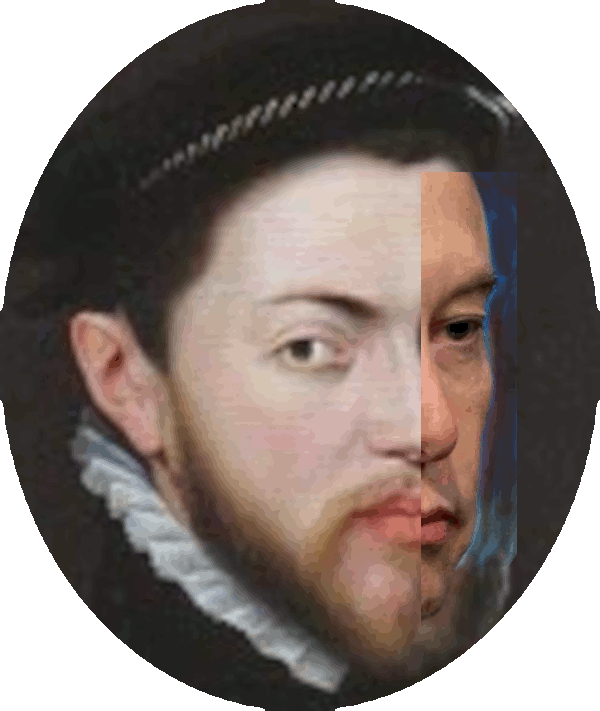
Philip II of Spain as Elon Musk |
 |
|
Philip II
1527-1598
5/21
9/13
King of Spain, Portugal, Naples and Sicily |
Elon Reeve Musk
1971
6/28
Satan
from Alpha Centauri
|
 |
 |
|
Prudent |
-
Philip II (1527-1598), sometimes known in Spain as Philip the Prudent, was King of Spain from 1556, King of Portugal from 1580, and King of Naples and Sicily from 1554 until his death in 1598.
- He was also jure uxoris King of England and Ireland from his marriage to Queen Mary I in 1554 until her death in 1558.
- Further, he was Duke of Milan from 1540 and from 1555, he was Lord of the
17 Provinces of the Netherlands.
- When Mary insisted on marrying her cousin, Philip, riots
broke out and one in particular, Wyatt's Rebellion counted
Jane Grey's father as one of its leaders.
- He wanted
to put Jane back on the throne and Mary faced the fact
that as long as her cousin was alive she would be a threat
so she unwillingly had Jane beheaded.
- Desperate for a child,
Mary decided on an
unpopular marriage to Philip II of Spain.
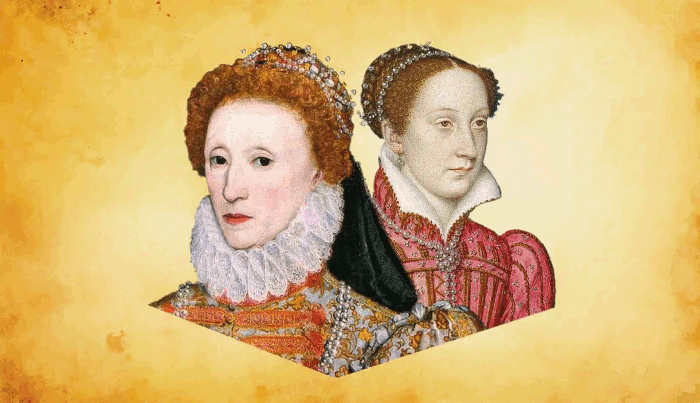
Intense rivalry between Elizabeth and Mary |
- Princess Elizabeth was also implicated in the
rebellion plot and she was interrogated and imprisoned in
the Tower of London.
- Mary didn't trust her sister who
was also a rallying point for Protestants.
- She let
her out of the Tower 2 months later but kept her under
house arrest and surveillance.
- Philip finally arrived
in England with 70 ships and 2 days later, on July 25,
1554, the wedding took place at Winchester Cathedral.
-
He was only 26 and she was 37 and he had no interest in his bride aside from
the political advantages the marriage brought because he
became a King of England.
- But England was not
obligated to provide military support to his father and
Spain, and Philip could not act without Mary's consent.
- He was a man who didn't care for her and
over the years she suffered 2
humiliating false pregnancies.
Protestants burned at the stake |
- Charles V appointed his son to the crown of Naples
as well as the kingdom of Jerusalem in order to elevate
him to Mary's level and she also became queen of both.
-
Philip could not speak English so they conversed in a
mixture of French, Spanish and Latin.
- Mary suffered a
false pregnancy and Philip left her to wage war on the
continent and heartbroken, she fell into a deep
depression.
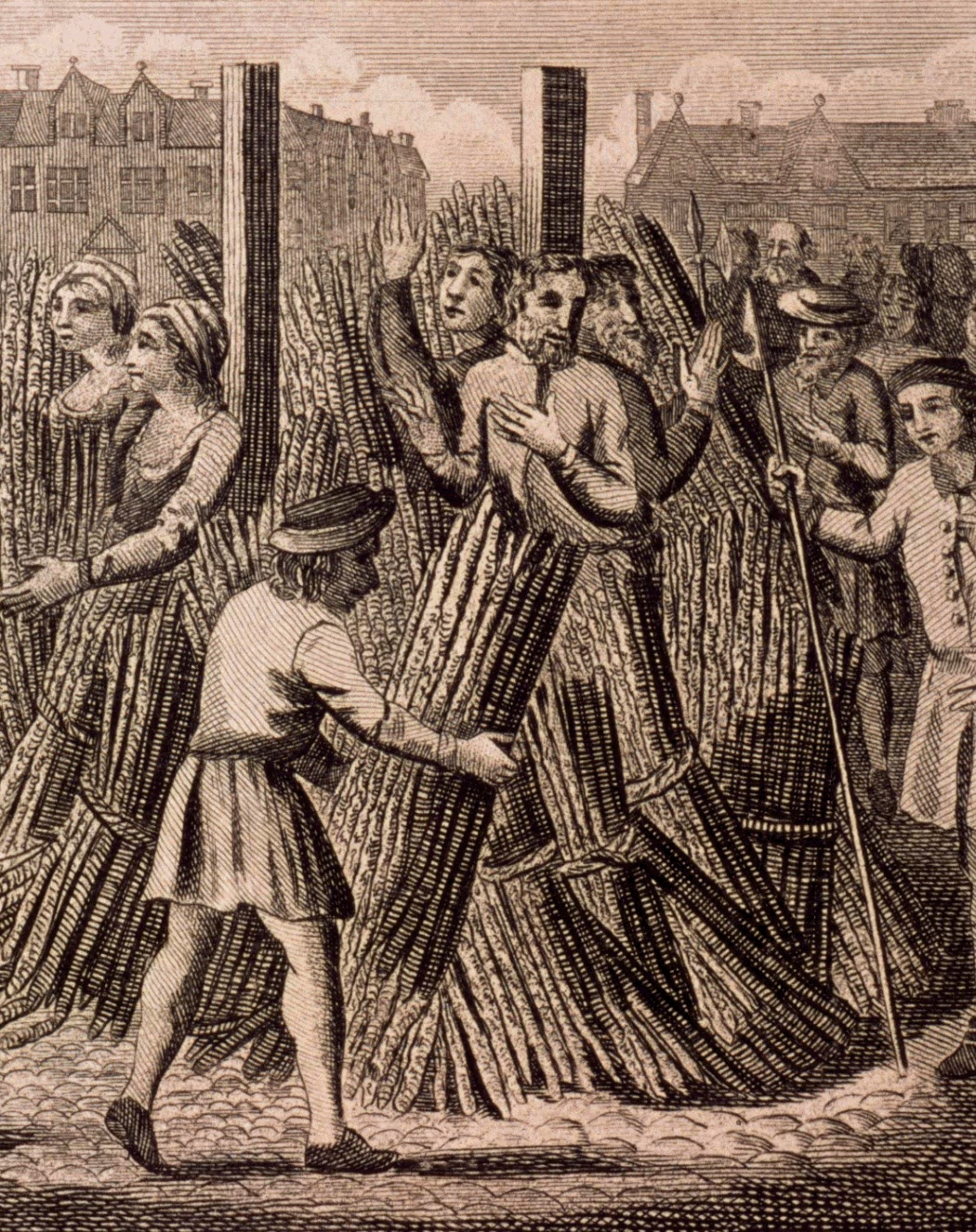
- Considering it God's punishment for
allowing heretics, she ordered 3 prominent Protestants
burned at the stake including Thomas Cranmer who had
facilitated the Act of Supremacy.
- As a result, 800
rich Protestants fled the country and she named Reginald
Pole as the new Archbishop of Canterbury.
- Those who
remained became targets of persecution and local
governments used the heresy laws to burn men, women and
even children in a Witch hunt atmosphere.
- All
together, 280 Protestants were burned at the stake.
Spanish Armada |
|
- Although Henry VIII executed 70,000 and Elizabeth
executed many hundreds of people, including her cousin,
Mary Queen of Scots.
- Charles V abdicated and made
his son Philip II king of Spain and Mary wrote to him begging
him to return.
- He did so, but only to beg her for
troops for his war with France which she agreed to, but
eventually lost the
last British possession in France as a result and was
humiliated.
- She took action to improve the lives of
her people and promoted education and economic reform,
most of what was not realized until after her death.
- Elizabeth was implicated in yet another plot to
overthrow Mary but Philip asked Mary to spare her sister's
life.
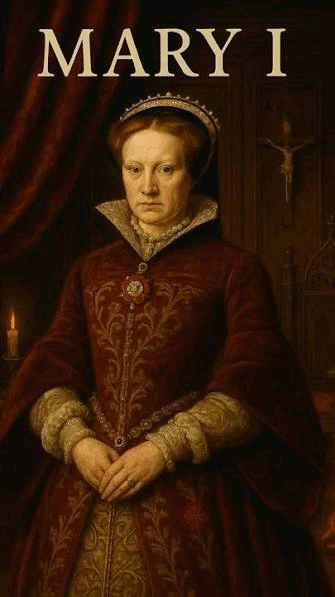
Queen |
|
- Within a few months, Philip left again, and Mary had
another false pregnancy but it was really ovarian cancer.
- Desperately ill and confined to her bed, she named
Elizabeth as her heir knowing that she would undo all her
Catholic reforms.
- Mary died in her sleep at age 42,
on November 17, 1558, passing the throne to her
younger sister, Elizabeth I, who's 45 year reign overshadowed her
for the rest of history.
- Elizabeth spent an
equivalent of over $2 million on her funeral in
Westminster Abbey and Philip II sent a marriage proposal
to her but Elizabeth rejected him.
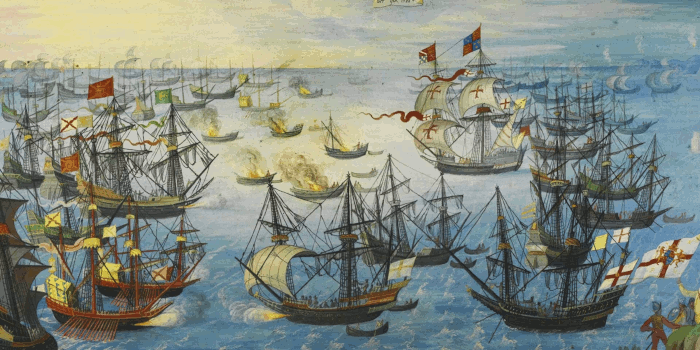
- 30 years later,
Philip II attempted to invade England with the Spanish
Armada but Elizabeth won an unlikely victory.
Queen Elizabeth I of England
1558-1603
House of Tudor |
|
Elizabeth I |
Virgin
Queen |
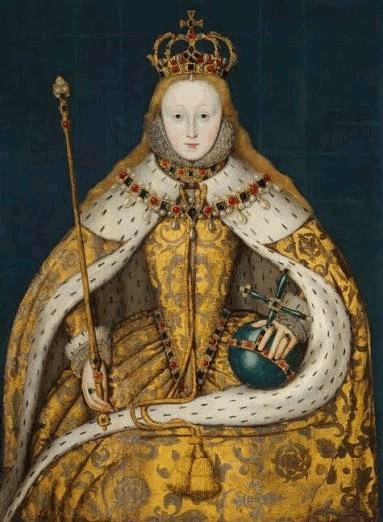
- Elizabeth I (1533-1603) was Queen of England and Ireland from November
17, 1558, until her death in 1603.
- She was the last and longest reigning monarch of the House of Tudor.
- Her eventful reign, and its effect on history and culture, gave name to the Elizabethan era.
- Elizabeth I reigned for 45 years of economic
gains for England.
- But some of her actions were dubious,
such as invading America even though it's been glorified,
and the artistic 'revolution' she was credited with such
as Shakespeare and Marlowe were in truth, mocking her.
- Elizabeth died on March 24, 1603. and was buried on top of Mary in Westminster Abbey
and an inscription was placed on their shared tomb.
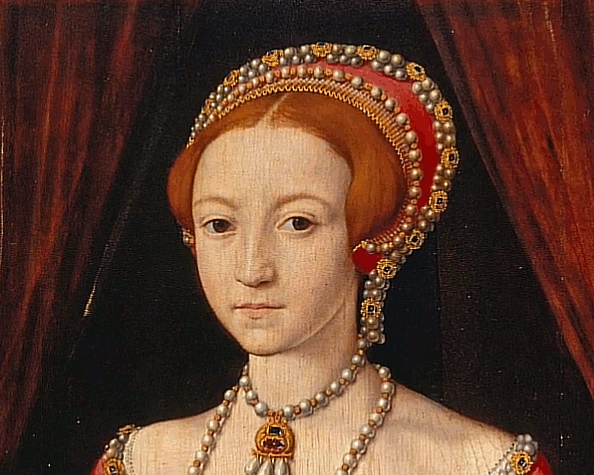
Princess |
|
- Queen Elizabeth I was known as the Virgin Queen and its
believed that she never had a lover throughout her reign
as Queen of England.
- This has been debated and she
was incredibly close with one man, Robert Dudley who was
the Earl of Leicester.
- Many historians have claimed
that she and Dudley were intimate and the pair would
exhibit their relationship to the court on a daily basis.
- But as much as she possibly loved Dudley, the two never
married and they would never have a legitimate child meaning that
Elizabeth was the last Tudor monarch.
-
Elizabeth never married, but unfortunately, Dudley remained the
great heartbreak of her life.
Shakespeare
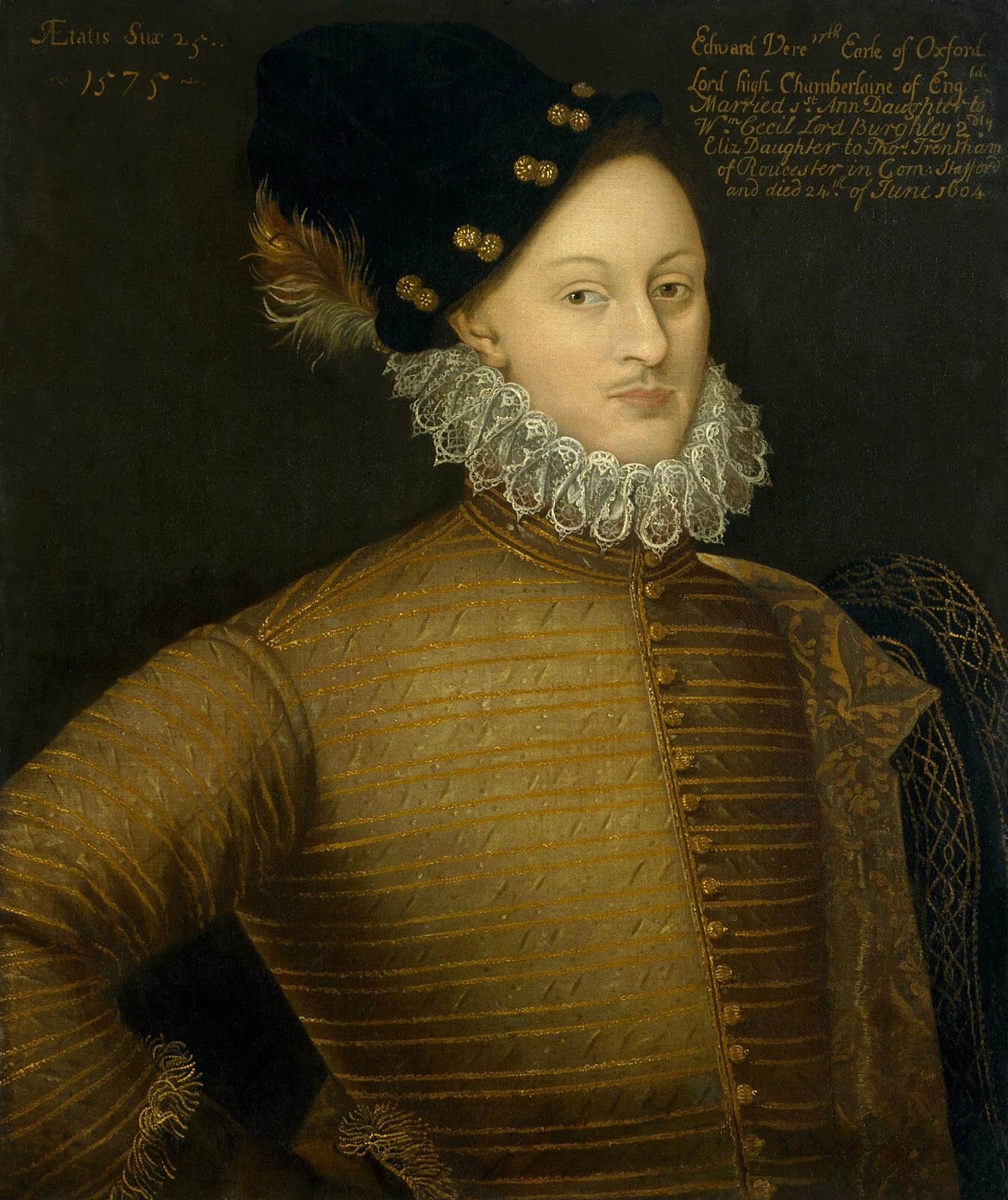
Public domain, via Wikimedia Commons
Edward de Vere |
- Edward de Vere (1550–1604) was the 17th Earl of Oxford, an
Elizabethan courtier and poet who is famous as the author of
Shakespeare's works, which he wrote with help from Francis
Bacon's sophisticated printing press.
- He thought it all
up, and Bacon typed it in, although much like Bacon's Bible,
it was mainly sarcastic gibberish, riddles and rhymes.
- He was also the illegitimate son of Queen Elizabeth I but
he wasn't supposed to know that, meaning that he was next in
line for the throne but was denied.
- She stole his inheritance before he even reached
adulthood by first looting his father and then after his
father died, she looted his estate.
-
She gave birth to Edward de Vere who was fathered by Robert
Dudley but gave him up for adoption at birth.
-
It was the
Queen
Elizabeth’s mismanagement of de Vere’s wardship and the stranglehold which she held over his finances during his entire lifetime which led inevitably to his financial ruin
and she was unwilling to make him heir to her Tudor throne.
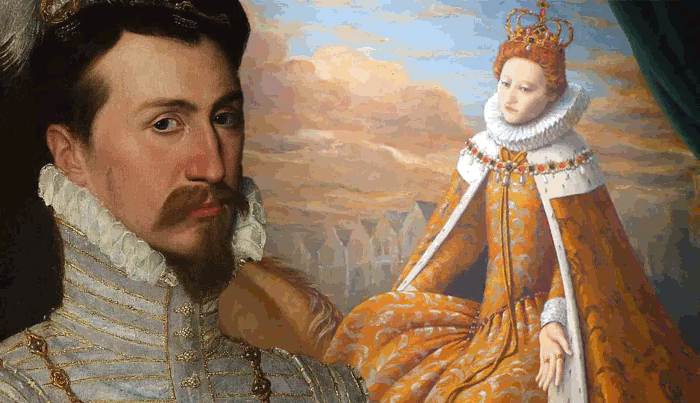
Heel |
- Except the real story is that she wanted to marry
Robert Dudley and she gave birth to his son, Edward de
Vere, but Dudley was unwilling to marry her or give his
son his name.
- Then Dudley remained (hung out) in her court and the
reason she stripped Edward de Vere of his wealth was to
spite Dudley who she dropped as a romantic partner.
-
In fact, over the years, Elizabeth gave birth to a total
of 4 children who she gave up for adoption to prominent
families.
- They'll all be coming out of the woodwork
soon.
- With her the
Tudor line of kings and queens died out, but throughout
her reign there were a number of men who tried to court
and charm Elizabeth and become her husband.
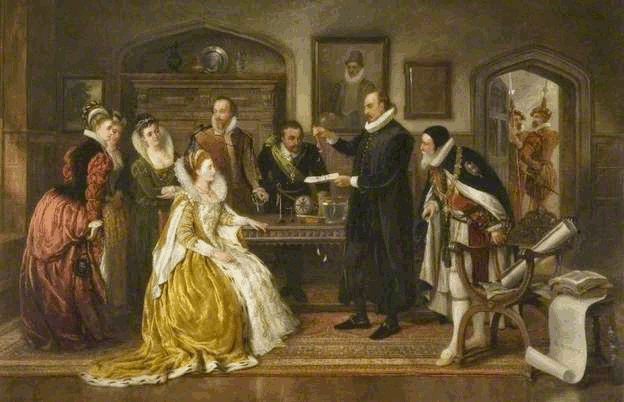
Loves |
- Even her former brother-in-law, Philip II of
Spain, sought to marry Elizabeth after her sister Mary I
died.
- But he proposed to her because he was trying to
seize power in England.
- Elizabeth stated that she was
married to her country, but much is known about her
relationship with Dudley.
- But who were the other men
that sought to catch the eye of the Queen?
- At the
time of her crowning, many feared having a queen on the
throne and they were concerned that a woman would not be
able to ward off the huge threats from the Spanish Armada.
-
Except Elizabeth was the monarch who did just that.
|
Robert Dudley as Elon Musk |
|
|
|
Robert Dudley
1532-1588
6/24
9/4
1st Earl of Leicester
|
Elon Reeve Musk
1971
66/28
|
|
|
|
|
Eyes |
- Robert Dudley, 1st Earl of Leicester (1532-1588) was an English statesman and the favorite of Elizabeth I from her accession until his death.
- He was believed to be a suitor for the queen's hand for many years.
- Dudley's youth was overshadowed by the downfall of his family in 1553 after his father, the Duke of Northumberland, had failed to prevent the accession of Mary I.
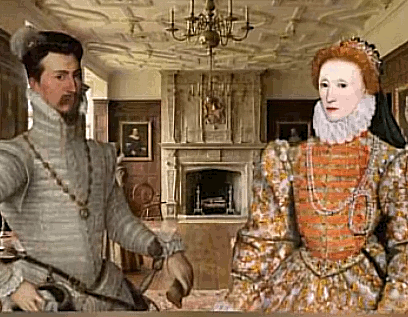
Master of the Corset |
|
- Dudley was Elizabeth Is favorite obsession and he
had been since the day she took the throne and possibly
even since her childhood.
- Their relationship was the
defining emotional bond of Elizabeth's life.
- Elizabeth's possessiveness
over Dudley was absolute public and ferocious but
obviously it became a power struggle.
- She
had spent years dangling the prospect of marriage before
him without ever committing.
- She ruled a kingdom but couldn't
marry the man she loved but their relationship spurred
gossip and speculation in her court.
- Their
relationship was marked by loyalty, friendship and a
shared passion for the arts and culture.
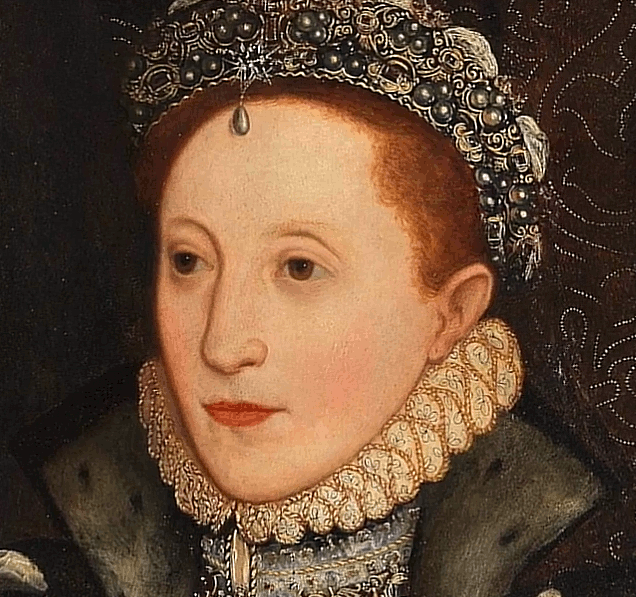
Never married |
- The two were friends from childhood and when she
became queen, their closeness shocked the court.
- Ambassadors claimed that they behaved like a
married couple, and many believed she would wed
him.
- There was one obstacle, he was already
married to a noblewoman named Amy Robsart.
- In
1560, Amy Robsart was found dead at the bottom of
a staircase and rumors spread across England that
it was an accident, or something darker, such as
Dudley pushed her.
- This scandal ended any
chance of a royal marriage but obviously that
chance had already ended with the birth of Edward
de Vere.
- Years later,
Dudley secretly married Lettice Knollys, the
queen's cousin and lady-in-waiting.
- When
Elizabeth discovered the marriage, she was furious
and Lettice was banished from court for life.
|
They married in secret in September 1578 without Queen Elizabeth I's knowledge or permission.
They kept the marriage hidden because Dudley feared the violent reaction of Queen Elizabeth I, who was Dudley's close confidante and former suitor, as well as Lettice's cousin.
(Assistant)
|
Many |
- But there were many reasons why Elizabeth I
didn't want to get married.
- First, she had a
traumatic childhood witnessing her father's
tumultuous marriages which ended with her mother, Anne
Boleyn, being executed.
- Then as a teenager,
she was allegedly abused by Thomas Seymour which
may have left her with lasting trauma (from being
caught).
-
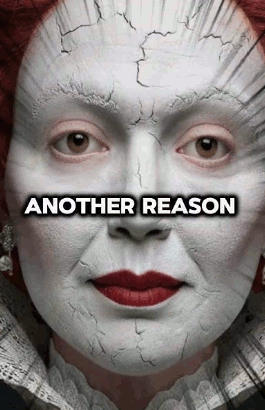
Another reason was that the queen believed that
she wasn't very attractive which led her to use
mercury to cover her face.
- But the main
reason was political and she worried that marriage
would mean sharing power or being subordinate to
her husband.
- There's also a rumor that she
didn't want to marry because she was actually a
man, but that's not true and all those rumors were
started because the males didn't want a female ruler
so they had to demean her.
|
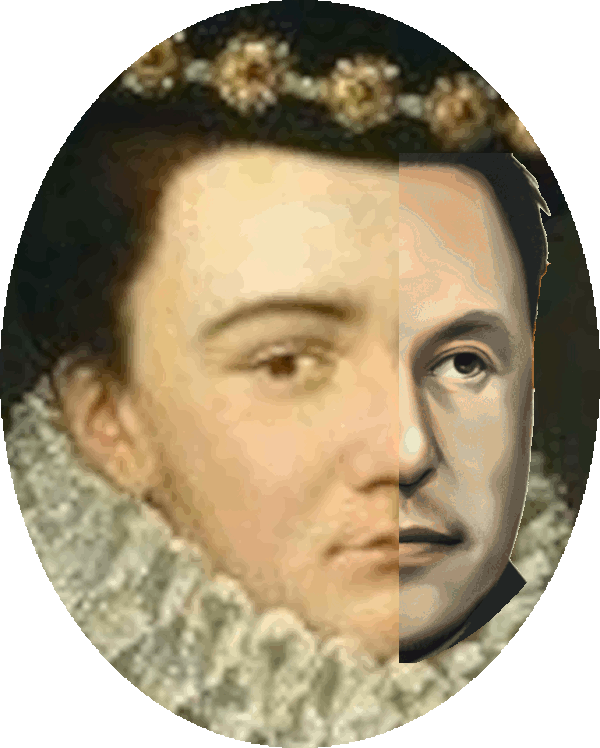
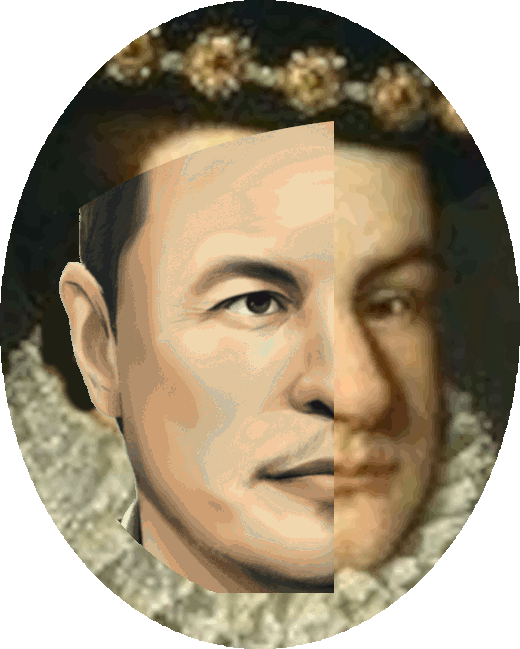
Francis Duke of Anjou as Elon Musk |
 |
|
Monsieur François
1555-1584
3/18
6/10
Duke of Anjou and Alençon
|
Elon Reeve Musk
1971
6/28
Satan from Alpha Centauri
|
 |
 |
|
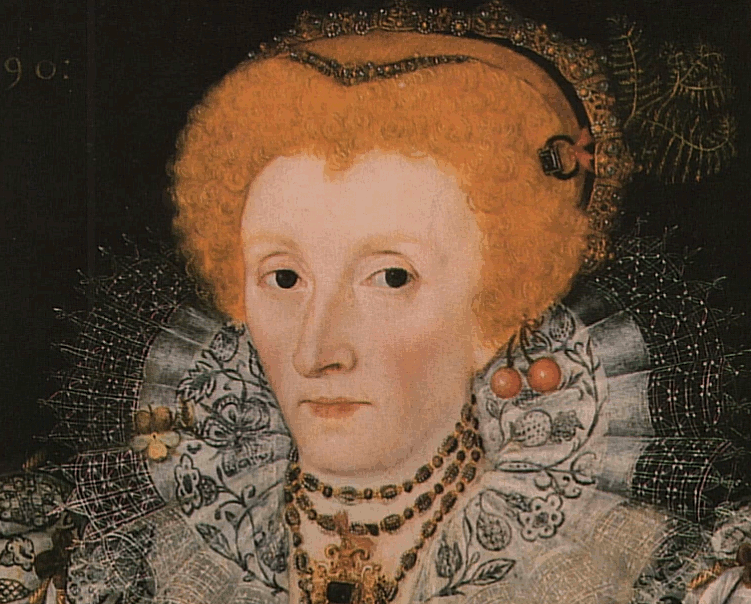
Hercule |
-
Monsieur François, Duke of Anjou and Alençon (1555-1584) was the youngest son of King Henry II of France and Catherine de' Medici.
- Early years
he was scarred by smallpox at age 8, and his pitted face and slightly deformed spine did not suit his birth name of Hercule.
- He changed his name to Francis in honor of his late brother Francis II of France when he was confirmed.
- There have been throughout
Elizabeth Is reign a lack of husband,
and marriage negotiations in the latter part of her reign
were not considered following the potential match with
Francis, the Duke of Anjou, who Elizabeth referred to as
her little frog.
Status |
-
However, there were constant rumors about the queen's
relationship status, and many people were accused at the
time of sleeping with the queen.
- One of the people
who was linked to Elizabeth was a man named Thomas
Heneage, who it's believed had the least cause to take the
bed of the queen.
- He was a minor politician from a
family of the minor nobility, but in the mid-1560s he
became a courtier and was close with Robert Dudley and
William Cecil.
- It was through these men, Heneage would
find himself in the good books of Elizabeth I, however, he
then became a gentleman of the Privy Chamber.
- In
Elizabeth's circle, opportunities for men like this were
limited and Thomas Heneage was given a rare position
granting him intimate access to the Queen and there were
rumors of an affair.
|
Thomas Heneage as Elon Musk |
 |
|
Thomas Heneage
1532-1595
?
10/17
Courtier
|
Elon Reeve Musk
1971
6/28
Satan from Alpha Centauri
|
 |
 |
|
My Thomas |
-
Sir Thomas Heneage (1532-1595) was an English politician and courtier at the court of Elizabeth I.
- Heneage the Younger was born at Copt Hall, Epping, Essex, the son of Sir Robert Heneage and Lucy Buckton.
- Robert and his brother Thomas were members of Henry VIII's Privy Chamber, the latter holding the important office of Groom of the Stool.
- He was educated at Queens' College,
Cambridge.
-
In 1554 Heneage married Anne Poyntz, daughter of Sir Nicholas Poyntz and Joan Berkeley.
- Their only daughter Elizabeth married Sir Moyle Finch and was created Countess of Winchilsea.
- Following Anne's death in 1593, he married Mary Browne, Countess of Southampton on May
2, 1594; this marriage was childless.
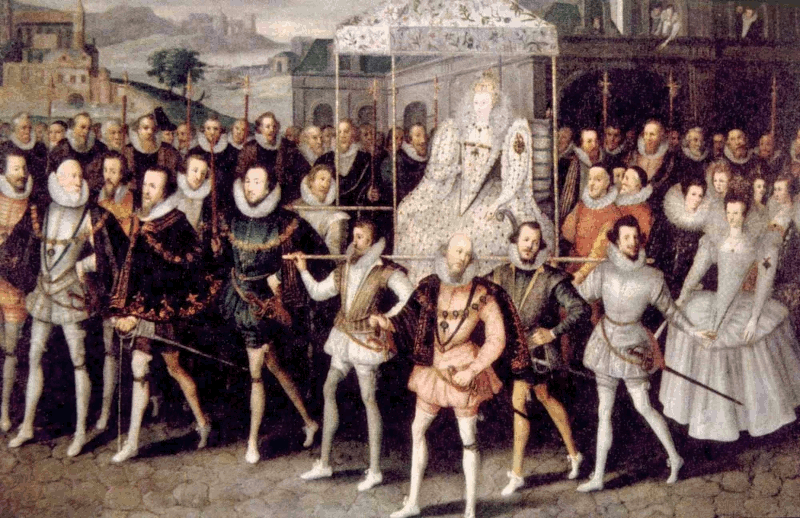
Royal court |
-
Despite being close friends with Robert Dudley, when she
wanted to make him jealous, she would flirt with Heneage
and with this many heads in court were gossiping.
-
Elizabeth openly flirted with Heneage to make the true
purported love of her life Dudley jealous and now you
understand why.
- When
Dudley and Heneage argued, Elizabeth only liked him more.
- But he was there to make Dudley jealous, however, Heneage was
married before he came to court.
- He also wasn't the
most likely person to have an affair with the Queen
despite her flirtations.
- He remained friends with
Dudley, but he was then chosen by Elizabeth to go to
Dudley to revoke a number of jobs that Dudley had.
-
There was also at this time another gentleman at court who
was rising through the ranks, and this was Christopher
Hatton.
|
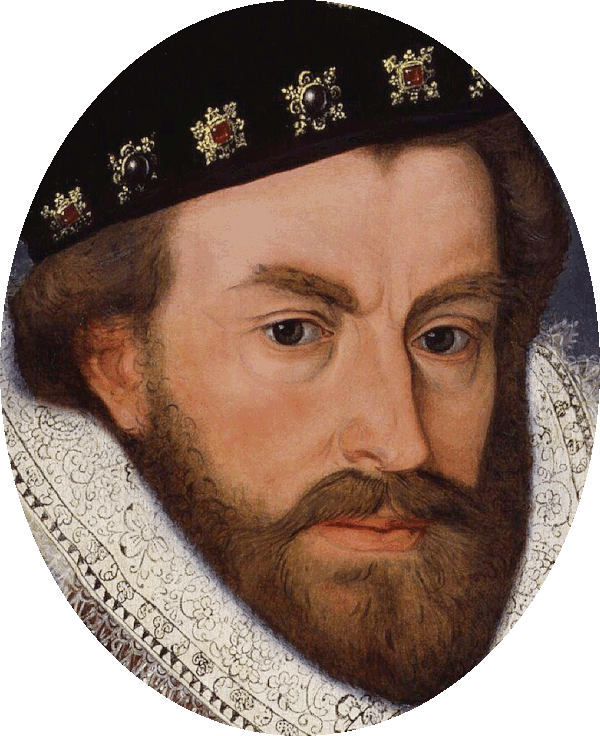
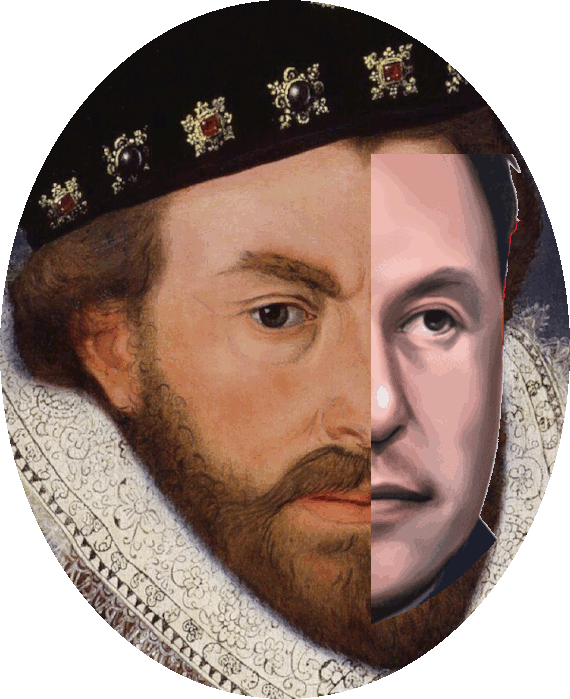
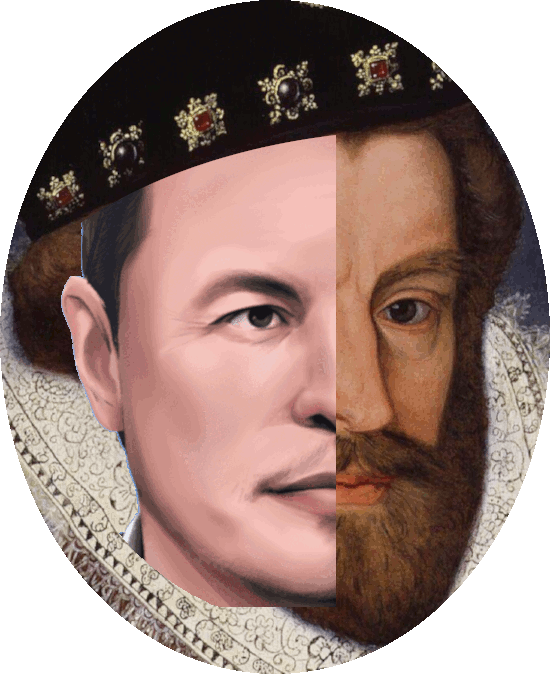
Christopher Hatton as Elon Musk |
 |
|
Sir Christopher Hatton
1540-1591
12/12
11/20
Lord Chancellor of England
|
Elon Reeve Musk
1971
6/28
Satan from Alpha Centauri
|
 |
 |
|
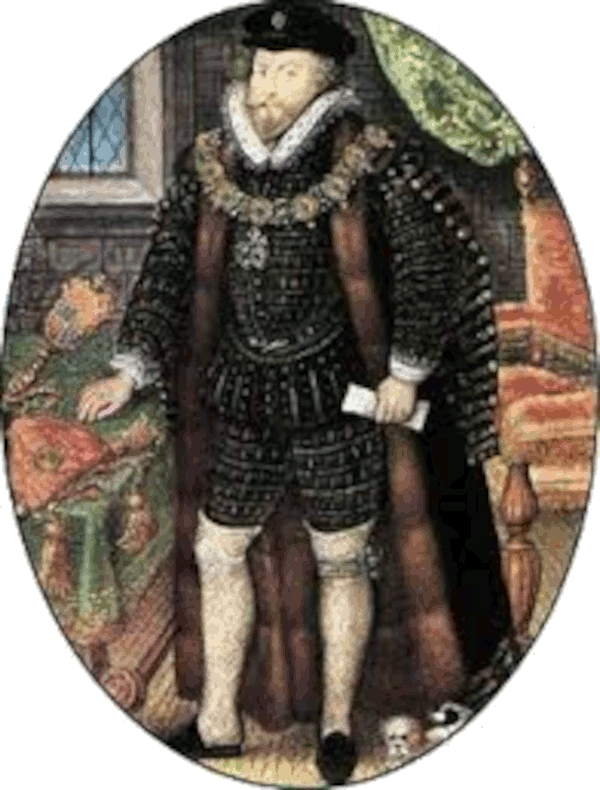
Mutton |
-
Sir Christopher Hatton (1540-1591) was an English politician, Lord Chancellor of England and a favorite
of Elizabeth I.
- He was one of the judges who found Mary, Queen of Scots guilty of treason.
- Hatton came to the queen's attention when he was
commended for his brilliant dancing at a court ball and he
had a close relationship with Elizabeth until he died.
- But according to a historian, it was said that a
delighted Elizabeth could be forgiven for concluding that
here was a man who really might die for love of her.
Hatton at court |
- Hatton sent many letters to Elizabeth which
were considered love letters, and Mary Queen of Scots even
accused her of having an affair with Hatton.
- He may
have been in love with the Queen, and he never married and
his letters to her were excessively romantic.
- Also,
he was a constant defender of Elizabeth, and he led
prayers for her health and safety inside of the House of
Commons.
- He was Elizabeth's spokesman for Mary Queen
of Scots and he spent a huge amount of time with her at
court.
- But then he managed to set to work building a
huge amount of property and working as an architect
building brilliant house across the country.
- One
letter Hatton said to Elizabeth said, 'No death, no, not
hell, shall ever win of me my consent so far to wrong
myself again as to be absent from you today.'
- When he was in his dying moments, Elizabeth I visited
Hatton.
|
' I lack that I live by, the more I find this lack, the further I go from you. To serve you is heaven, but to lack you is more than hell's torment. Would God I were with you but for one hour.My
wits are overwrought with thoughts. My mind is filled
with thoughts, bear with me, my most deat, sweet Lady.
Passion overcome me, I can write no more. Love me, for
I love you. Love me forever.'
(Sir Christopher Hatton)
|
|
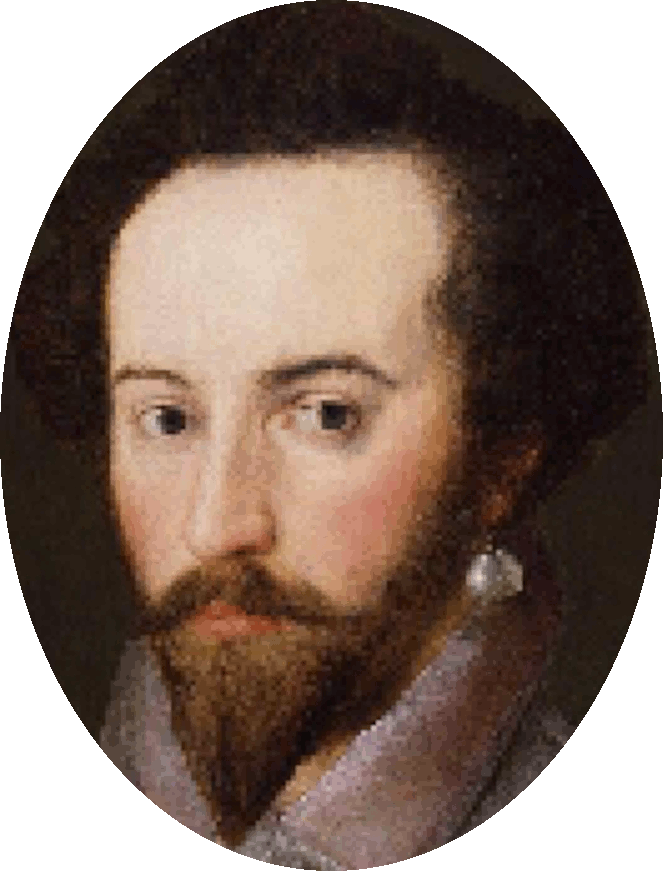
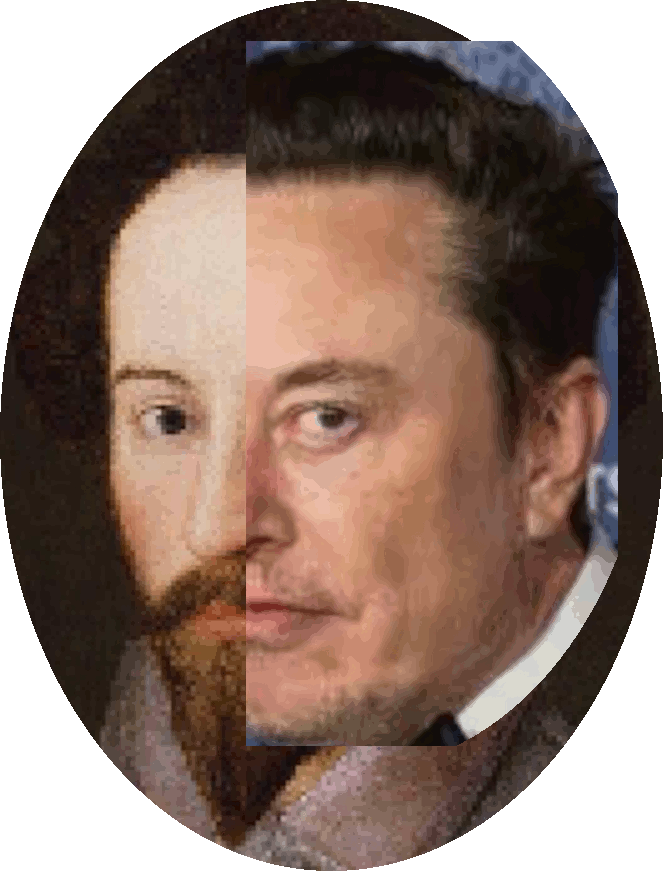
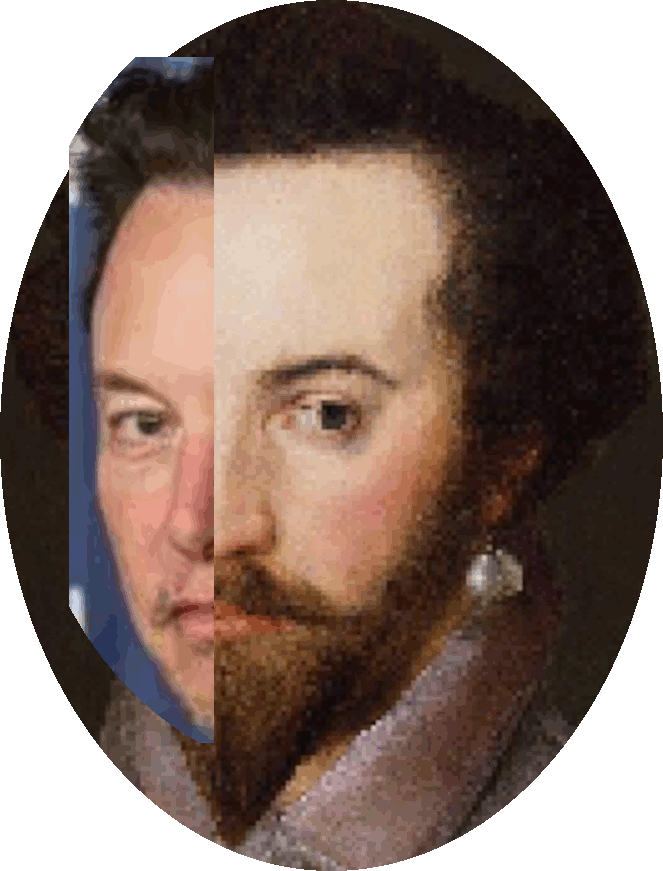
Sir Walter Raleigh as Elon Musk |
 |
|
Walter Raleigh
c.1553-1618
?
10/29
English statesman, soldier, writer and explorer |
Elon Reeve Musk
1971
6/28
Satan
from Alpha Centauri
|
 |
 |
|
Fails at everything |
- Sir Walter Raleigh (c.1553-1618) was an English statesman, soldier, writer and explorer.
- One of the most notable figures of the Elizabethan era, he played a leading part in English colonization of North America, suppressed rebellion in Ireland, helped defend England against the Spanish Armada and held political positions under Elizabeth I.
- Raleigh was born to a landed gentry family of Protestant faith in Devon, the son of Walter Raleigh and Catherine Champernowne, daughter of Sir Philip Champernowne.
- He was the younger half-brother of Sir Humphrey Gilbert and a cousin of Sir Richard Grenville.
- Raleigh was another man who is also known to have flirted
with the Queen a lot and he became infamous for his
explorations.
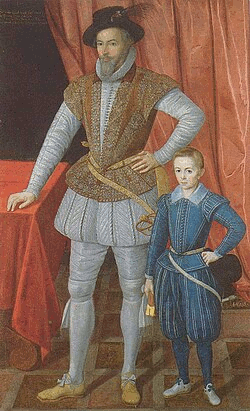
Sir Walter Raleigh |
-
Raleigh was also known for laying his cloak across a puddle
so that Elizabeth did not get her feet wet, and the
relationship with him has been a subject of films.
-
But Raleigh did not come to the Queen's attention through
the normal routes of court life, instead, he attracted her
attention through his actions for the English realm.
- He rose
from being a commoner to the royal circles, and he came to
her attention in the 1580s when he returned from a voyage
to America.
- Raleigh was known to be rather handsome, and he flaunted
his looks.
- He wore the Queen's colors, and her favorite
jewels to appeal to her.
- Raleigh was then given a number
of positions at court including being appointed the
Captain of the Queen's Guard.
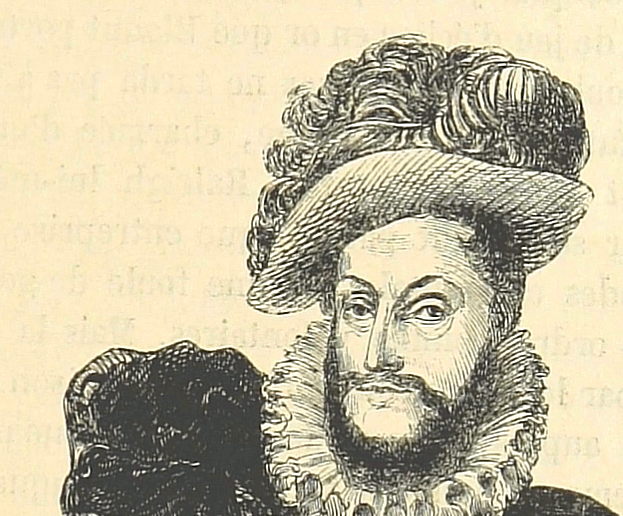
Raleigh quite a dandy |
- Then he was granted access to the Queen's
private chambers and he was allowed to be with her when
she wasn't wearing heavy make-up, showing how close the
pair were.
- There were also rumors that the pair were
lovers, and Raleigh was devoted to the Queen, and she was
enamoured with him.
- However, then he began an affair
with her friend and lady, Bess, Throckmorton, and when she
fell pregnant, the pair married in secret.
- When
Elizabeth found out she was furious and sent Raleigh to
the Tower of London and Bess would never come back to
court, and was banished forever.
- Elizabeth kept a close
watch on her women and she was outraged that the
information got past her.
- Following Raleigh's downfall there would be another
young man who would enter the fray of Elizabeth's
affections.
|
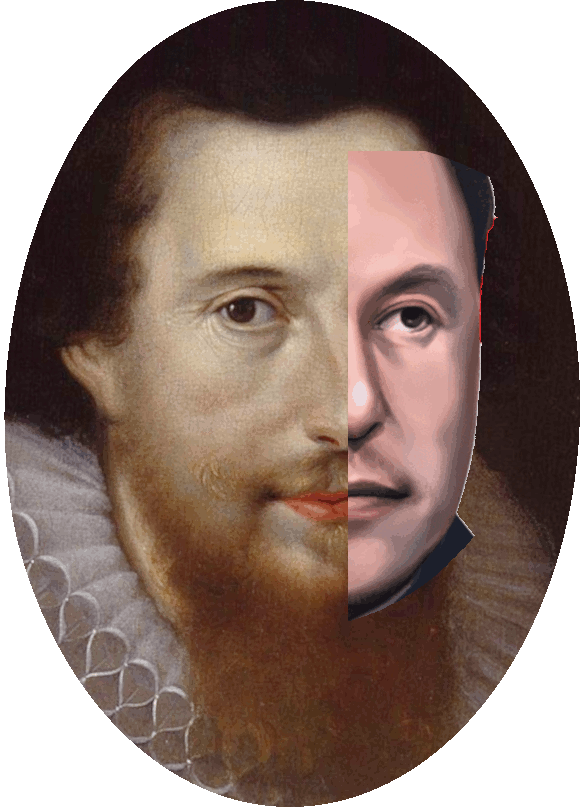
Robert Devereux as Elon Musk |
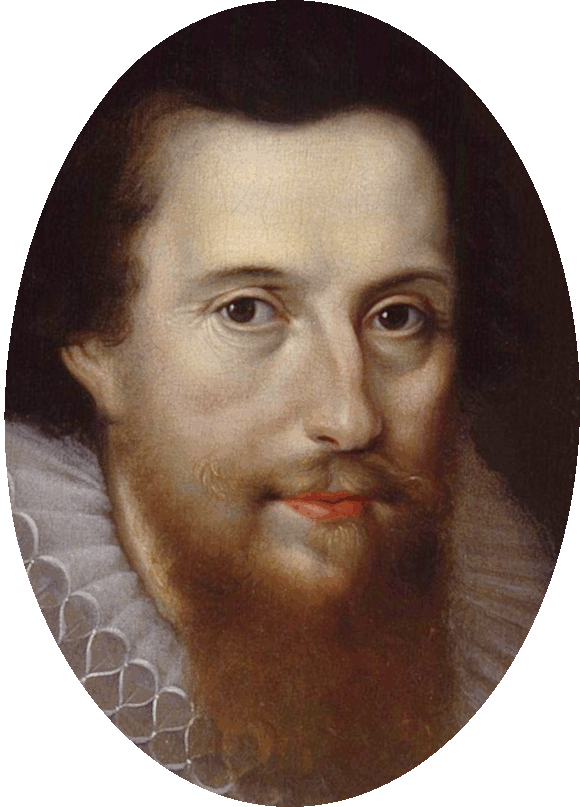 |
|
Robert Devereux
1565-1601
11/10
2/25
English nobleman and army officer |
Elon Reeve Musk
1971
6/28
Satan
from Alpha Centauri
|
 |
 |
|
Essex |
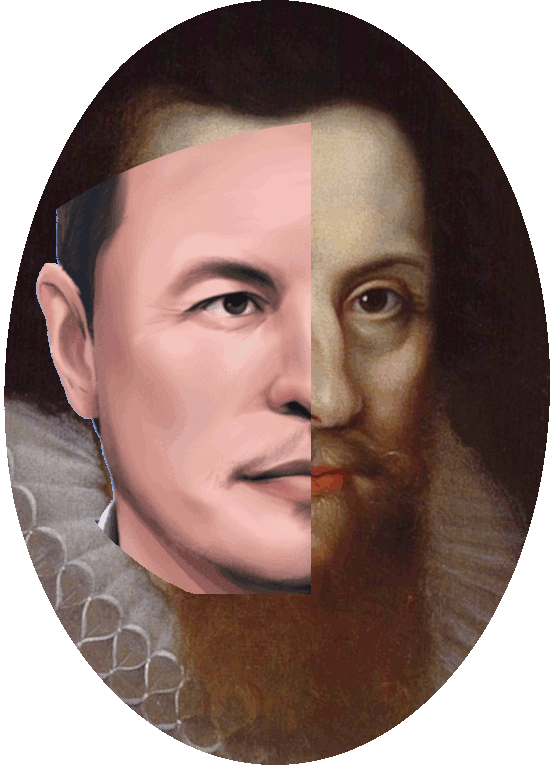
- Robert Devereux, 2nd Earl of Essex (1565-1601) was an English nobleman and army officer who was a favorite of Queen Elizabeth I.
-
A charismatic and ambitious youth, Essex grew up in a family of courtiers with strong ties to the Queen, who was his distant cousin.
- He became a royal ward following his father's death in 1576.
- Devereux (Essex) entered court in 1585 as a member of his stepfather Robert Dudley, 1st Earl of Leicester's entourage.
- Essex rose quickly at court and developed a close personal relationship with the Queen.
- He played a prominent role in England's military campaigns during the Anglo-Spanish War and Eighty Years' War, including expeditions to Portugal and the Azores, particularly a victory at Cádiz, which gave him celebrity status among the London elite.
-
Essex was
very young and was said to have had good looks and his
personality captivated the Queen.
Devereux |
-
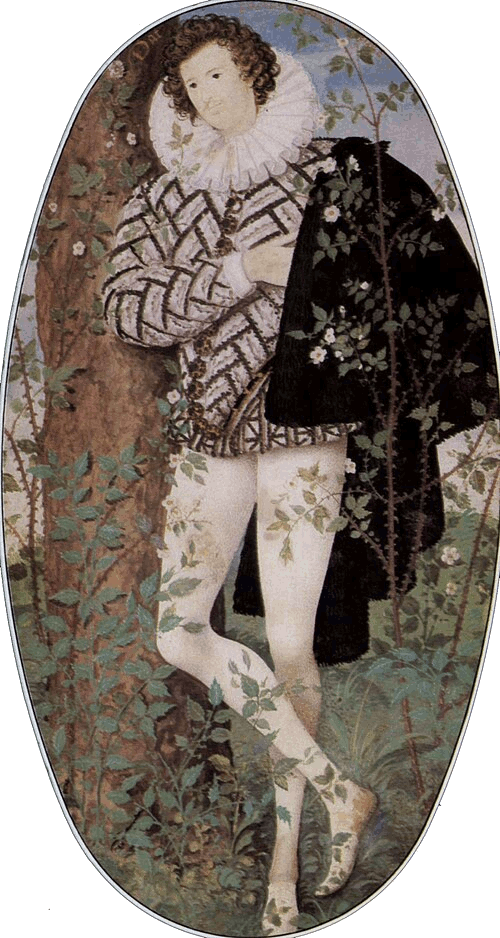
Devereux was a replacement in her affections for
Dudley and was then appointed the Master of the Horse.
-
Although he wasn't the best suited to these jobs, he took
them for the Queen's favor, however, he didn't always
respect Elizabeth.
- One time he argued with her and the
Queen slapped Devereux, and then he drew his sword on her
which caused chaos.
- But he was then restored to favor,
and despite the 35-year age gap, there were rumors that the
pair were lovers.
- They would stay up all night and
would play cards and read poetry together.
- He then went too far, and was involved in a rebellion that resulted
in his execution by axe after being found guilty of treason.
- However, it was suggested that Devereux was not fully
aware that courtly love was a game to Elizabeth, and he
believed that she loved him and that he might become the
King.
Devereux youth |
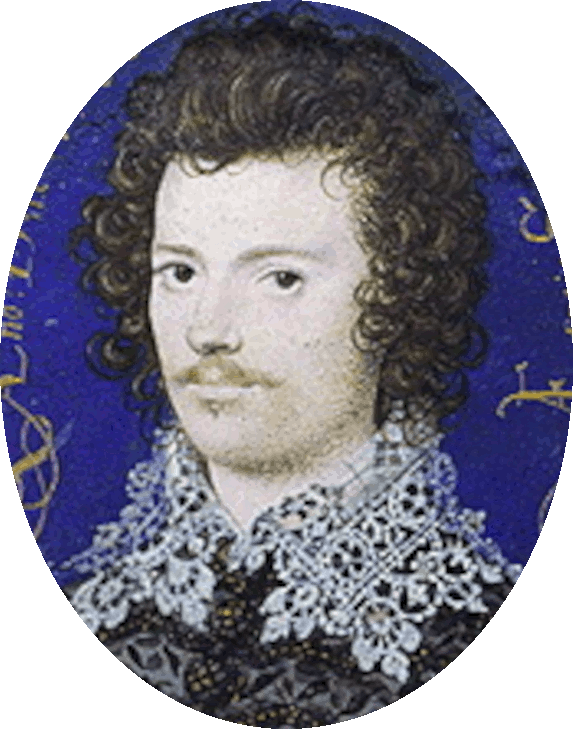
- But we don't know necessarily if the Queen
took to the bed of these men and even Devereux.
- One
thing that counts against it is the fact Raleigh and Essex
were both married in the early years, meaning that if they
were engaged in a physical relationship with the Queen it
would have been adultery at the highest level which would
have been shocking.
- Devereux himself had no shame
in regards with the Queen, as he would burst into her
quarters while she was not dressed appropriately.
- However, did these
men sleep with Elizabeth?
|
Three can keep a secret if two of them are dead.
(Benjamin Franklin)
|
|
Thomas Seymour as Elon Musk |
|
|
|
Thomas Seymour
c.1508-1549
?
3/20
1st Baron Seymour of Sudeley |
Elon Reeve Musk
1971
6/28
Satan
from Alpha Centauri |
|
|
|
|
Not a protector |
- Thomas Seymour, 1st Baron Seymour of Sudeley (c.1508-1549) was a brother of Jane Seymour, the3rd
wife of King Henry VIII.
- With his brother, Edward Seymour, 1st Duke of Somerset and Lord Protector of England, he vied for control of their nephew, the young King Edward VI (regent 1547–1553).
- In 1547, Seymour married Catherine Parr, the widow of Henry VIII.
- During his marriage to Catherine, Seymour involved the future Queen Elizabeth I (then 14 years old), who resided in his household, in flirtatious and sexual behavior
(which was initiated by Elizabeth).
- Elizabeth had stepped over the line with the Thomas
Seymour debacle in her youth, and many would believe
that she was a victim of grooming by Seymour.
-
This possibly turned her off to romantic relationships
with men, as far as marriage went, and her title as the Virgin Queen
was upheld by Elizabeth throughout her life, although
only as a guise.
Promiscuous or just busy? |
-
Elizabeth I, the 'Virgin Queen,' crafted an image of chastity to bolster her authority in a male-dominated world.
- Her public persona hinged on being married to her kingdom, yet whispers of secret romances most notably with Robert Dudley, Earl of Leicester persisted
and were true in the early days.
- The architecture of Tudor palaces, designed with private
'secret chambers,' helped shield her personal life from scrutiny.
- She was the mother of Edward de Vere
and 3 other children who she placed with good
homes.
- Was Elizabeth I sexually active?
-
Absolutely.
|
Farewell (sweet place) where virtue then did rest,
And all delights did harbour in her breast,
Never shall my sad eyes again behold
Those pleasures which my thoughts did then
unfold.
(Aemilia Lanyer)
|
- As Queen, Elizabeth would have a number of beds, sumptuously furnished in bright colors and luxurious fabrics, all ostentatiously decorated and individually designed, each fit for a queen.
- At Richmond Palace, Elizabeth might sleep in an elaborate boat-shaped bed with curtains of ‘sea water green’ and quilted with light-brown tinsel.
- At Whitehall her bed was made from an intricate blend of different colored woods and hung with Indian-painted silk.
- Her best bed, which was taken with her when the court moved from place to place, had a carved wooden frame which was elaborately painted and gilded, a valance of silver and velvet, tapestry curtains trimmed with precious buttons and gold and silver lace, and a crimson satin headboard topped with ostrich feathers.
|
Thou English goddesse, empresse of our sex.
(Anne Bradstreet, 1672)
|
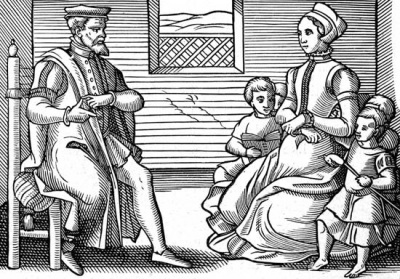
Elizabethan woman |
- An unmarried queen heightened fears.
- Women were expected to marry and Elizabeth’s decision to remain unwed ran counter to society’s expectations.
- It was generally believed that women were inferior to men and so subject to them by divine law.
- Women who ignored religious precepts and did not submit to male authority were potentially a source of disorder and sexual license.
- Medical discourse regarded women’s bodies as being in a constant state of flux and so possessing dangerously unstable qualities.
- Such medical axioms were influenced by theology, with the belief that Eve’s moral and intellectual weakness had been the primary cause of the Fall of Man and succeeding generations of women were similarly flawed.
|
Now say, have women worth? or have they
none?
Or had they some, but with our Queen is’t gone?
Nay masculines, you have thus taxed us long,
But she, though dead, will vindicate our wrong;
Let such as say our sex is void of reason,
Know ’tis a slander now, but once was treason.
(Anne Bradstreet, 1672)
|
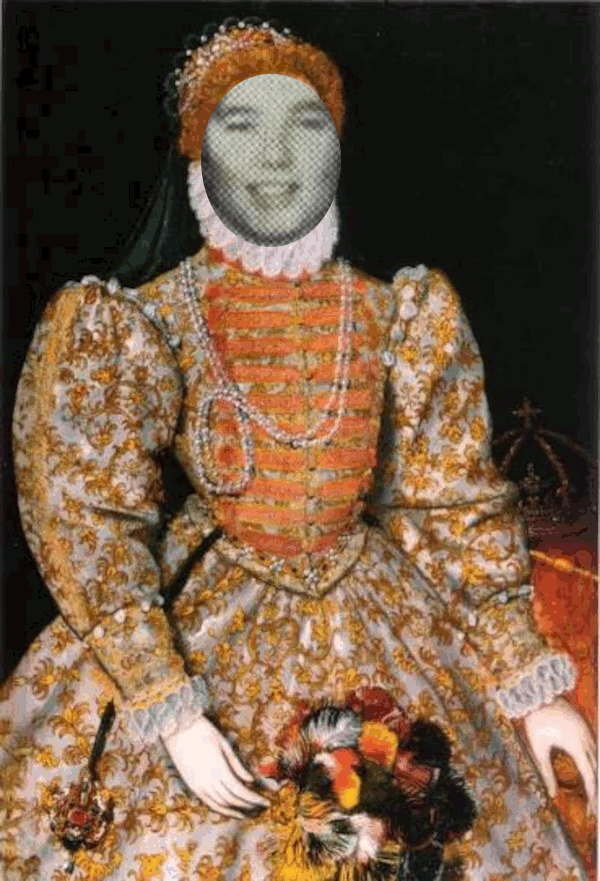
Queen Elizabeth I as
family member |
- Elizabeth I not only ripped her son Edward de Vere off, she
also ripped off her current day family in the form of their
inheritance.
- It all came to Sophia in a very vivid dream
given to her by the Most High Father who's waking her up.
- She was Sophia's daughter and now she is her
sister in this life.
- What you need to know as that she
was the angel in heaven who was perverted by Lucifer (Jesus
Christ) and Satan (Musk) who were not from the Most High
Father and Sophia's universe.
- Lucifer made both of them
outside the universe in the image of Baphomet.
- Anyway,
when the Most High Father banished both of them from Omega
Centauri, Elizabeth I followed them down and then 200 angels
from Omega Centauri followed Elizabeth I down because she
perverted all the males.
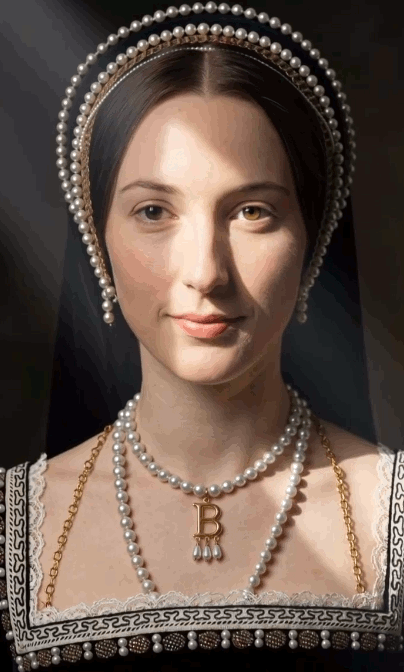 |
|
|
Mother of Queen Elizabeth I |
- When Elizabeth I first came to Earth she
played the part of Ereshkigal was was the ancient Mesopotamian goddess and queen of the underworld, known in Sumerian mythology as Irkalla or Kurnugia.
- Her name translates to 'Queen of the Great Below' or 'Lady
of the Great Place.'
- She has been following Sophia around
through all her lives and helping to destroy them but the
thing is, in truth underneath all this, she really does have a
good, well-meaning heart, but greed gets in the way.
-
Also, if you're wondering what happened to all Anne Boleyn's
portraits, it wasn't Henry VIII who destroyed them, it was
Elizabeth.
|