 |







|
|
|
ABEL GRIMMER - FESTIVITIES IN A GARDEN - PAGE
2
|
Fascists
Built Our Education
System |
Schoolhouse |
- We live in a world run by shape shifting fallen angels
who are all falling into the Hell they built for us.
- Here
are a few of the scams they've been involved in to take
America and the rest of the world down and they've been
working on this plan for 2,500 years.
|
Dumbing Down |
Archway |
- People are noticing that the manner in which mathematics
and arithmetic are taught today are much different than how
they were taught 150 years ago, making them much harder to
learn today.
- Is this why our children are so confused
and hate math so much?
- It's a purposely induced
difficultly to make them feel like it's too hard to learn when
it shouldn't be.
Sink or swim |
- This is the Deliberate Dumbing Down of Americans
and Charlotte Thomson Iserbyt who was the senior advisor for
the Department of Education wrote about this in detail in the
1999 and she documented everything.
- Mr. O.A Nelson
provided the links between the old and new textbooks and the
involvement of the Council on Foreign Relations!!!
- This is about the gradual
transformation of our once academically successful education
system into one devoted to training children to become
compliant human resources to be used by government and
industry for their own purposes.
- This is how
fascist-socialist societies train their children to become servants of their government masters.
|
Charlotte Iserbyt is to be greatly commended for having put together the most formidable
and practical compilation of documentation describing the “deliberate dumbing down” of
American children by their education system. Anyone interested in the truth will be shocked
by the way American social engineers have systematically gone about destroying the intellect
of millions of American children for the purpose of leading the American people into a socialist
world government controlled by behavioral and social scientists. (Deliberate Dumbing Down of Americans)
|
Beats down |
-
The successful implementation of this new philosophy of education will spell the end of the
American dream of individual freedom and opportunity.
- The government will plan your life
for you, and unless you comply with government restrictions and regulations your ability to
pursue a career of your own choice will be severely limited.
- One of the interesting insights revealed by these documents is how the social engineers
use a deliberately created education 'crisis' to move their agenda forward by offering radical
reforms that are sold to the public as fixing the crisis, which they never do.
|
What is so mind boggling is that all of this is being financed by the American people
themselves through their own taxes. In other words, the American people are underwriting
the destruction of their own freedom and way of life by lavishly financing through federal
grants the very social scientists who are undermining our national sovereignty and preparing
our children to become the dumbed-down vassals of the new world order. It reminds one of
how the Nazis charged their victims train fare to their own doom. (Deliberate Dumbing Down of Americans)
|

Change agents |
- The new reforms simply set the stage for the next
crisis, which provides the pretext for the next move forward.
-
This is the dialectical process at work, a process our
behavioral engineers have learned to use very effectively.
- Its
success depends on the ability of the 'change agents' to continually
deceive the public which tends to believe anything the experts tell them.
-
And so, our children continue to be at risk in America’s
schools. They are at risk academically because of such
programs as whole language, mastery learning, direct
instruction.
|
Mrs. Iserbyt has
dealt extensively with the root causes of immorality in our society and the role of the public
schools in the teaching of moral relativism (no right/no wrong ethics). She raises a red flag
regarding the current efforts of left-wing liberals and right-wing conservatives (radical center)
to come up with a new kid on the block—“common ground” character education—which
will, under the microscope, turn out to be the same warmed-over values education
alert parent groups have resisted for over fifty years. This is a perfect example of the
Hegelian Dialectic at work. (Deliberate Dumbing Down of Americans)
|
Drugging our
children |
- Skinnerian operant conditioning, all of which have
created huge learning problems that inevitably lead to what is
commonly known as Attention Deficit Hyperactivity Disorder (ADHD) and the drugging
of 4 million children with the powerful drug Ritalin.
- If we wish to stop this juggernaut toward a socialist-fascist system, then we must restore
educational freedom to America.
- Americans forget that the present government education
system started as a Prussian import in the 1840’s–’50’s.
- It was a system built on Hegel’s belief
that the state was 'God' walking on earth.
|
Attention Deficit Hyperactivity Disorder (ADHD) is a common neurodevelopmental disorder characterized by persistent patterns of inattention, hyperactivity, and impulsivity that interfere with daily functioning. Often diagnosed in childhood, it persists into adulthood for many, with symptoms including trouble focusing, restlessness, and acting without thinking. (Assistant)
|
Education system |
- The only way to restore educational freedom,
and put education back into the hands of parents where it belongs, is to get the federal
government, with its coercive policies, out of education.
- The billions of dollars being spent by
the federal government to destroy educational freedom must be halted, and that can only be
done by getting American legislators to understand that the American people want to remain a
free people, in charge of their own lives and the education of their children.
|
Modern
Broken Math |
School to Homeschool |
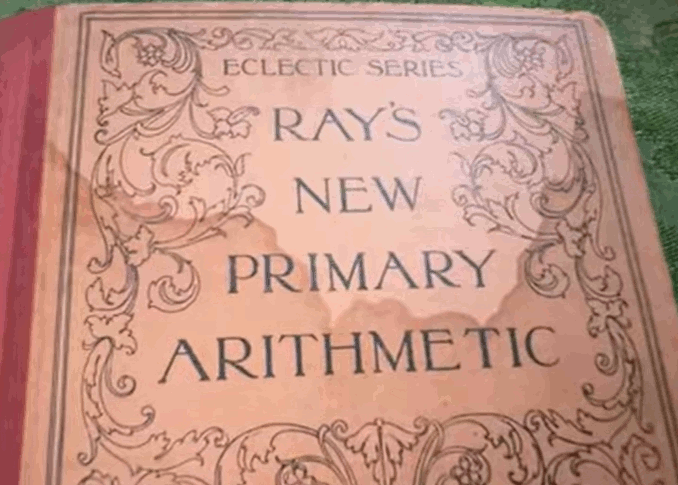
- A homeschooler who removed her 6 children from public
schools when she decided to home school them discovered this
when she found an old textbook used in 1877 called
Ray's New Primary Arithmetic.
- The text was written
by Joseph Ray who was a 19th-century teacher and he became a
doctor as well as a professor.
- Ray started teaching
arithmetic and mathematics at a local school at age 16, was
later a college professor and created a series of books to
teach basic arithmetic.
- We're starting at the
beginning in 1st and 2nd grade arithmetic compared to a modern
textbook.

Hole |
- But this also involves the history of the U.S.
education system and the deeper you dive, the more disgusting
it gets.
- It's obvious a major shift happened in education
during the 20th-century and it wasn't for the better.
- The
radical change was called 'new math' and the purpose was to
confuse students to the point they could not apply anything
they learned to real life situations when they left school.
- The most radical change was introduced in 1952 and it is the
model in use today so if pupils come out of high school not
knowing any math, don't blame them.

Set up to fail by
the elites |
- The Ray textbook starts with a one-page of suggestions to
teachers and it recommends that the very first thing that
children should learn is how to count with actual objects.
- Throughout the book the author has the students use actual
objects to learn arithmetic and that is things like marbles,
or small things like kernels of corn they can easily see and move around
on their desk.
- They
should learn to use an abacus to count the items.
- He
also suggests that the children should learn to combine
numbers (add) up to 20 and the children should come up with
their own combinations and share them with the class.
|
An abacus is an ancient, hand-operated calculating tool with beads or counters on rods, used for arithmetic by sliding them to represent numbers and perform operations like addition, subtraction, multiplication, and division, offering a tangible, visual way to learn math and enhance focus, especially for children. It originated in ancient Near East, China, and Europe, with modern versions often featuring colorful beads on wires in a frame, teaching place value through a carry system similar to written math. (Assistant)
|

Overwhelmed |
- Also, that one thing at a time should be taught until it
is understood thoroughly and this is not what modern math
teachers do, they rapidly move through about one theory a week
and overwhelm the students, especially in higher mathematics
like Algebra.
- Once the student falls behind, there's no
way to catch up and yet in Asia, they teach math the old way,
dwelling on one topic until its completely understood before
moving on to the next topic.
- As a result, the Eastern
nations produce students much more competent and confident in
mathematics.
Counting and
writing |
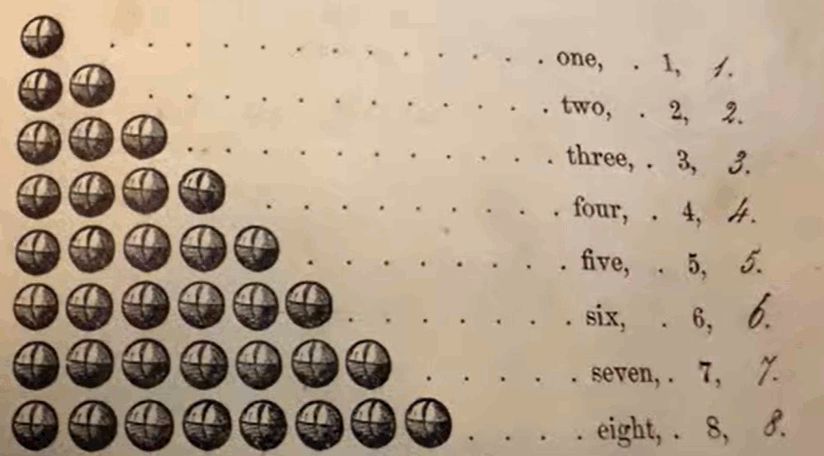
- The first 6 lesson in Ray's book are about writing and
counting numbers and figures from 1 to 100.
- So the child
has to count objects and then they have to write the word for
that number as well as the number itself.
- The
second section gets into some oral exercises and next the book
moves on to addition, then subtraction, then simple multiplication
and division.
- Next the text goes into real life word
problems and it finishes with measurements.
Counting |
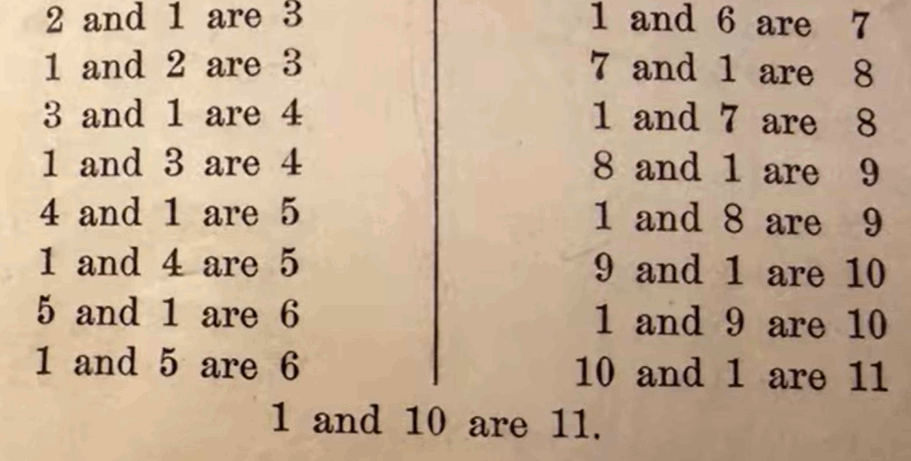
- Let's look at some of the oral exercises that comprise
the second section.
- These exercises are used with
counters of some kind, kernels, marbles, etc. which should be
arranged in distinct groups to represent each number
indicated.
- As example; How many are 1 and 1?; One taken
away from 2 leaves how many?; How many 1s in 2?; How many are
2 times 1?
- The text continues on through all the numbers
up to 5.
- In the next lesson, goes from 5 through 8 and so
forth.
- Then Ray starts with basic addition, then moves to basic
subtraction and multiplication, and these are just the oral
exercises which proceed all the way up through 10.
Addition |
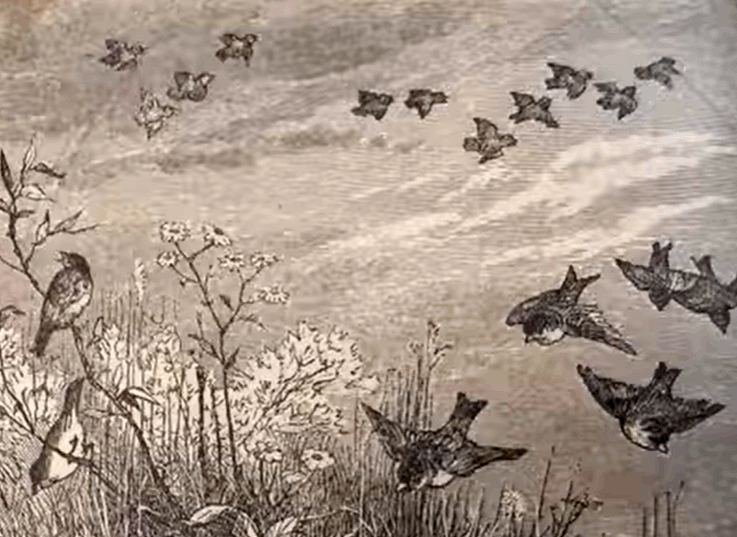
- Next, Ray moves on to actual addition using pictures and the students
are asked questions like, how many in the flock that seem to
be lighting (landing), and how many birds in each of the
flocks? How many birds are 7 and 4 birds?
- Then the text
proceeds to ask them to count the different flocks mentioned
in the questions.
Adding up |
- Very simple questions and then Ray moves into adding 3
numbers written down.
- From there it goes to oral word
problems things like, 'John has 1 raisin and his sister gave
him 2, how many does he have?'
- So the child is
incorporating oral exercises with addition and this is
followed by subtraction in the same manner.
- From there
the instruction discusses multiplication about halfway through
the text and from there it gets more heavily into
multiplication.
- So the multiplication begins very basic,
but then gets into more complicated multiplication.
Multiplication |
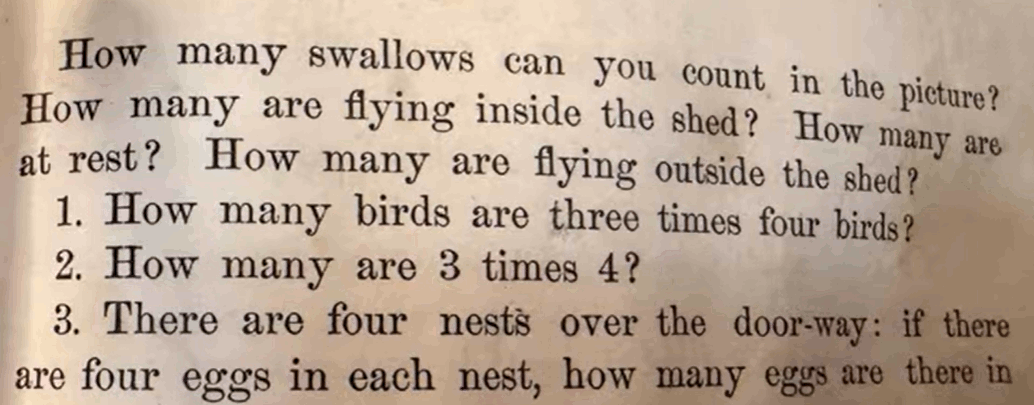
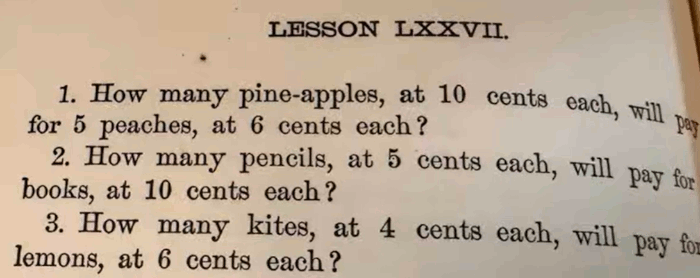
- Pictures are used throughout the text asking how many of
this or that and then asks the student to multiply each of the
examples in the artwork.
- But this is all where the modern
text starts the discussion, skipping over the fundamental
drill.
- This is about halfway through Ray's textbook and
you wonder why so many children are lost in math?
- Because
the modern text picks up right as the 1877 textbook starts
going into more complicated multiplication and division and
skips the counting exercises.
Algebra |
- From there the Ray text goes into measurements and
penmanship and it also talks about money.
- Toward the end
of the book, it goes into basic algebraic word problems and
the student is introduced to more complex thought.
- The
book itself is very small, not more that half an inch thick
and about 6-inches tall, for 1st and 2nd graders and would
have been used in the one room schoolhouse.
- It the child
had the capacity to move through the book quickly, they would
have been automatically moved to the next text in the series,
even if they were a 1st grader.
- Ray's text was also very inexpensive for the time so
families were able to afford their own copy.
5th Grade - Volume
2 Workbook |
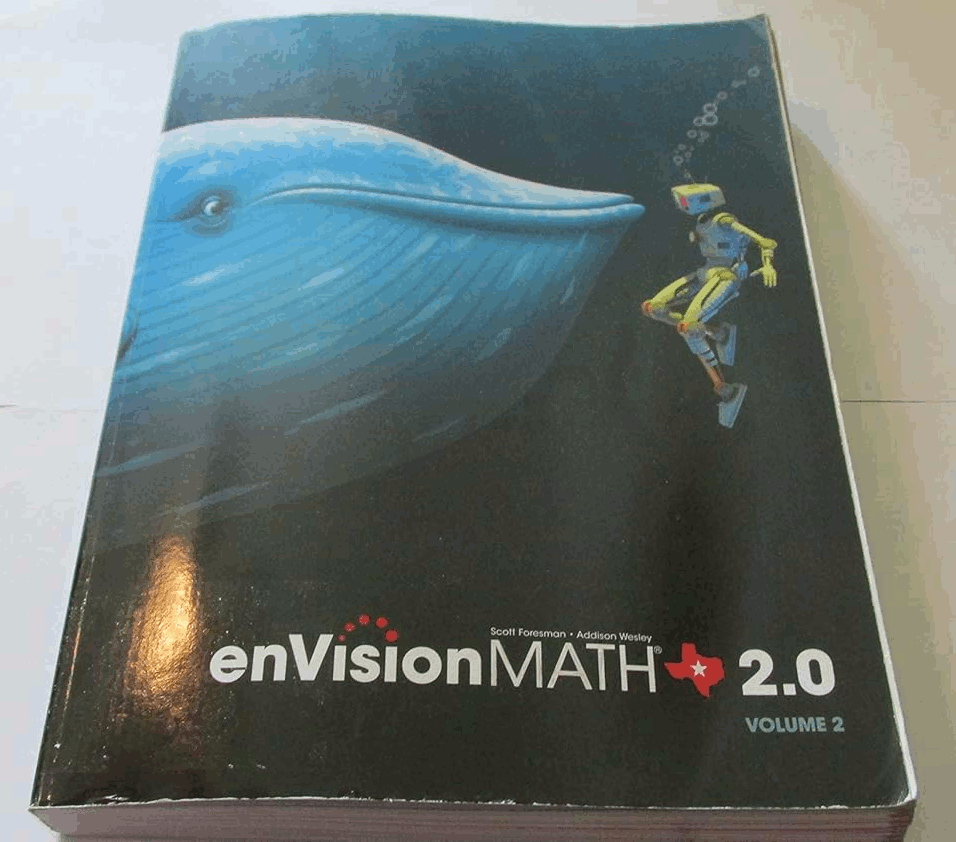
- Compared to
a modern text from public schools the student is learning from
two thick volumes (over 1-inch thick each and 10-inch tall) by
Envision Math 2.0 for the 2nd grader.
- Volume One
has 13 different authors and there are mathematicians and
consultants involved as well, as well as Common Core State
Standard Reviewers.
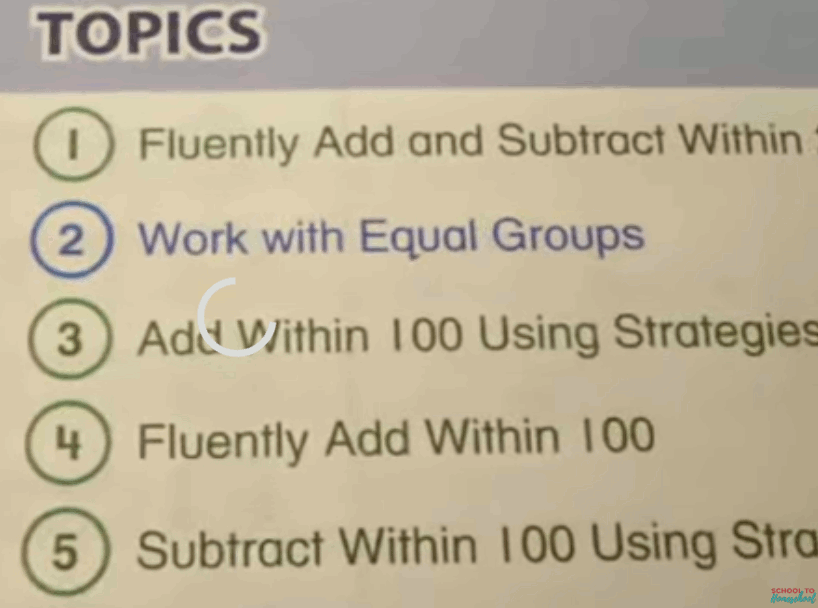
- It also provides digital resources
and finally takes you to the topics in the Table of Contents.
- And there are also thick workbooks that go along with the 2
textbooks.
Counting |
- The topics are all about 'fluently' and 'strategy.'
-
Fluently add and subtract within 100 and it goes all the way
down to graphs and data, shapes and their attributes, all at
the very beginning of a 2nd grade book.
- From there is
goes into Common Core Standards which is several pages of more
nonsense, all for a child who can barely read yet.
- It
goes on to emphasize, 'Make sense of problems, persevere in
solving them, reason abstractly and quantitatively, viable
arguments and critique the reasoning of others.'
- These
are the Common Core standards for a 2nd grader, 'model with
mathematics, use appropriate tools strategically, attend to
precision, look for and make use of structure.'
|
The Common Core State Standards (CCSS) are a set of
clear, evidence-based, and rigorous academic benchmarks for K-12 English Language Arts (ELA) and Mathematics designed to ensure college and career readiness. Adopted by 41 states and several territories, these standards aim to provide consistent, high-quality education nationwide. Key principles include fostering critical thinking, problem-solving, and analytical skills rather than rote memorization, with an emphasis on real-world application.
(Assistant)
|
Baffle them with
bull |
- All for the 2nd grader who has no clue what a ruler is
used for or what a compass and protractor even are.
- This
all happens before you even get to lesson one, 'I'm good
enough, I'm smart enough.'
- Every problem has 'thinking
habits' included at the bottom of the page like, 'what do I
need to find?, what do I need to know?, what's my plan for
solving the problem?, What else can I try if I get stuck?, how
can I check that my solution makes sense?'
- Setting the
student up for failure by removing self-confidence.
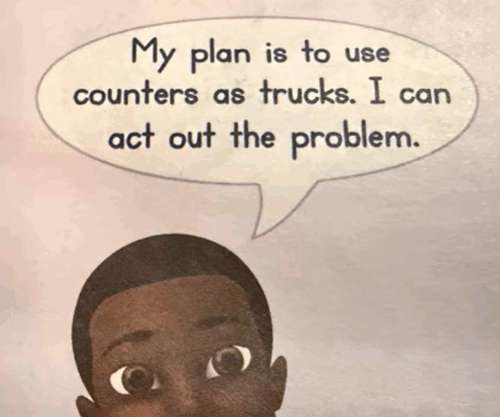
Wide-eyed and
already overwhelmed |
- Then it gets into a counting exercise using different
colored dots and asks the child to 'reason abstractly and
quantitatively.'
- Another wide-eyed Asian child says, ' I
completed part-part-whole model, it shows how things in the
problem are related.'
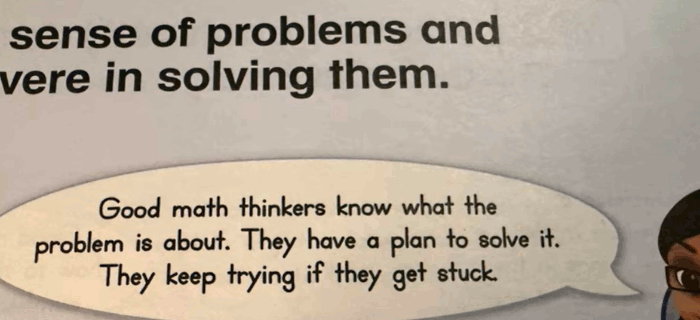
- Good math thinkers know how to
think about words and numbers to solve problems!!!
- The
former public school teacher who is now home schooling her 6
children says, 'I must be a bad math thinker because I don't
have any idea what you want from me.'
Abstract thinking |
- The befuddling text goes on to ask, 'what do numbers
stand for?, how are the numbers in the problem related?, how
can I show a word problem using pictures or numbers?, how can
I use a word problem to show what an equation means?'
-
Then it asks the equation, 'Tony has 10 apples, 6 are red, the
rest are green, how many apples are green?'
- And it asks
the student to reason abstractly and quantitatively in 2nd
grade instead of just figuring out the simple answer.
- The reasonable teacher knows that we don't even
develop abstract thinking until about age 8, and most children
can't do that until age 9 or 10.
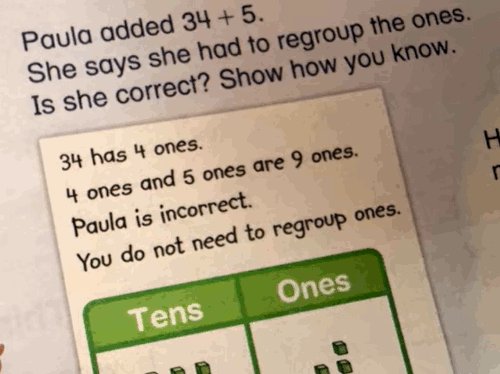
Viable arguments? |
- So they're trying to force these 2nd graders, age 6 and
7, to reason abstractly at the very beginning of 2nd grade
when their brain might not even be that developed yet.
-
Lesson 3, construct viable arguments; 'Paula added 34 and 5,
she says she has to regroup the ones, is she correct? show how
you know.'
- 34 has 4 ones, four 1s and five 1s are nine
1s, Paula is incorrect, you do not need to regroup 1s!!!!
-
So it's showing the poor confused student the wrong answer
first.
- '35, 34 and 5 equals 39, I can use place value
blocks to check Paula's thinking, my answer is clear and
complete.'
Confused and
irritated teacher |
- But none of this text is clear and complete and there's
several pages of this drivel.
- Supposedly giving what
'good math thinkers do.'
- Next it gets into more thinking
habits and a picture of a confused little guy and then gives
the equation in the center of the page.
- Then it goes into
the problem solving guide and moves next into science math and
the science project.
- So they can do a math and science
project by lesson 3 in a 2nd grade text (volume one)!!!
-
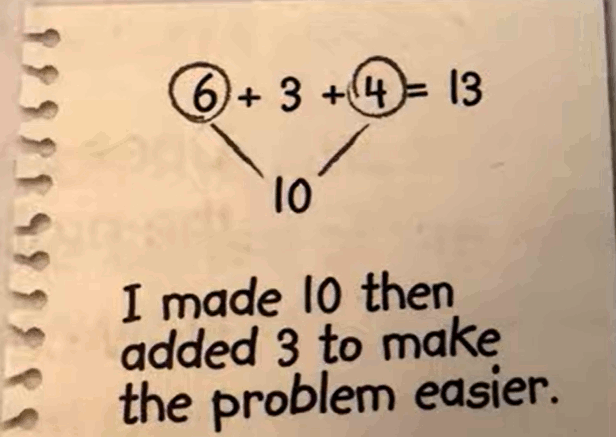
Next it goes into vocabulary and 'what you know so you're
going to circle the symbol for equals, circle the circle for
minus.'
- And some little review problems the student can
do.
Show your work and
explain your answer |
- Then the student cuts out word cards and there's the
workbook they have to figure out more problems.
- By now
the home schooling teacher finds the whole mess entirely
confusing and admits it takes even her a minute to figure out
what they are even asking.
- You're working in the workbook
with your children once they arrive home and it's several
worksheets.
- By the end of volume one they get into shapes
and that is the end of the first book for a 2nd grader.
-
Once you get into volume two, it's more of the same nonsense
and tells the student to 'show your work and explain.'

Teacher holds up
both textbooks |
- The homeschooling teacher wants to show you both books
just for 2nd graders (and they are 10-inch tall books plus
there are workbooks that go along with the text).
- We're
talking about a 4-inch stack of books.
-
She then compares it to the 6-inch tall, 1/2-inch thick Ray textbook
for both 1st and 2nd graders as comparison which is very
straightforward and uncomplicated.
- The acknowledgement
that this is all very overstimulating and overwhelming for the
poor student.
- And so much for teaching one thing at a
time until the student understands it thoroughly.
- If your
children arrive home confused and can't figure out their
arithmetic, now you know why.
- Ray's text are in the
public domain and you can check them out online for free.
|
The narrowing (dumbing down) of intellectual freedom had begun. Lifeboat exercises
epitomize the shift in education from academic education (1880–1960) to values education
(1960–1980). In the deliberate dumbing down of America writer Charlotte Iserbyt chronicles
this shift and the later shift to workforce training “education” (1980–2000). (Sarah
Leslie)
|
|
Fascists get
involved |
Foreign relations |
-
For over a 25-year period the research used in Charlotte
Thomson Iserbyt's chronology has been collected
from many sources: the U.S. Department of Education; international agencies; state
agencies; the media; concerned educators; parents; legislators, and talented researchers.
- In the process of gathering this information two beliefs that most
Americans hold in common became clear:
1) If a child can read, write and compute at a reasonably proficient level, he will be
able to do just about anything he wishes, enabling him to control his destiny to the
extent that God allows (remain free);
2) Providing such basic educational proficiencies is not and should not be an expensive
proposition.
|
Since most Americans believe the second premise—that providing basic educational
proficiencies is not and should not be an expensive proposition—it becomes obvious that it
is only a radical agenda, the purpose of which is to change values and attitudes (brainwash),
that is the costly agenda. In other words, brainwashing by our schools and universities is
what is bankrupting our nation and our children’s minds. (Charlotte
Thomson Iserbyt)
|
Huge amount of
money moving to the
fascists |
- When Iserbyt was compiling her data which she published
in 1999, by 1997 there were 46.4 million public school students.
- During 1993–1994 (the latest
years the statistics were available) the average per pupil expenditure was $6,330.00 in
1996 constant dollars.
- Multiply the number of students by the per pupil expenditure
(using old-fashioned mathematical procedures) for a total K–12 budget per year of $293.7
billion dollars.
- If one adds the cost of higher education to this figure, one arrives at a total
budget per year of over half a trillion dollars.
- The sorry result of such an incredibly large
expenditure.
|
Achievement of Students, Key Points: U.S. twelfth graders scored below the international
average and among the lowest of the 21 TIMSS nations in both mathematics and science
general knowledge in the final year of secondary school. (U.S. Department of Education)
|

Obscured |
- Obviously, something is terribly wrong when a $6,330 per pupil expenditure produces
such pathetic results.
- Iserbyt visited private schools which charged $1,000 per year
in tuition which enjoyed superior academic results.
- Parents of home-schooled children spend a
maximum of $1,000 per year and usually have similar excellent results.
- There are many talented and respected researchers and activists who have carefully
documented the 'weird' activities which have taken place 'in the name of
education.'
|
Public K-12 school funding in the U.S. averaged approximately $20,322 per student annually as of 2023, with figures varying significantly by state, ranging from lower amounts to over $30,000 in high-spending areas like New York. (Assistant)
|
Shady |
- The desire by 'resisters' to prove their case has been so strong that they have continued
to amass over a 30 to 50-year period, what amounts to tons of materials
containing irrefutable proof, in the education change agents’ own words, of deliberate,
malicious intent to achieve behavioral changes in students/parents/society which have
nothing to do with commonly understood educational objectives.
- Upon delivery of such proof,
'resisters' are consistently met with the 'shoot the messenger' stonewalling response by
teachers, school boards, superintendents, state and local officials, as well as the supposedly
objective institutions of academia and the press.
|
The reason Americans do not understand this war is because it has been fought in
secret—in the schools of our nation, targeting our children who are captive in classrooms. The
wagers of this war are using very sophisticated and effective tools:
• Hegelian Dialectic (common ground, consensus and compromise)
• Gradualism (two steps forward; one step backward)
• Semantic deception (redefining terms to get agreement without understanding). (Charlotte
Thomson Iserbyt)
|
Wall |
- The Hegelian Dialectic
is a process formulated by the German philosopher Georg Wilhelm Friedrich Hegel (1770–1831) and used by Karl Marx in codifying revolutionary
Communism as dialectical materialism.
- Internationalist change agents worked on abolishing local control in order
to restructure our schools from academics to global workforce training.
- Funding of education with the property tax allows local control, but it
also enables the change agents and teachers’ unions to create
higher and higher school budgets paid for with higher taxes,
thus infuriating homeowners.
|
Eventually, property owners accept the change
agents’ radical proposal (the “Anti- thesis”) to reduce their property taxes by transferring
education funding from the local property tax to the state income tax. Thus, the change
agents accomplish their ultimate goal; the transfer of funding of education from the local
level to the state level. When this transfer occurs it increases state/federal control and
funding, leading to the federal/internationalist goal of implementing global workforce training
through the schools. (Charlotte
Thomson Iserbyt)
|
John Dewey
1859-1952
Major educational reformer |
B.F. Skinner
1904-1990
Developed behavior analysis |
c
T.H. Bell
1921–1996
Secretary of Education
under Ronald Reagan |
William Spady
1926
Outcome-Based Education (OBE) |
David W. Hornbeck
1941
Carnegie Foundation
Maryland Public Schools |
Lamar Alexander
1940
Secretary of
Education under George H.W. Bush |
|
New World Order |
- These are the main culprits in this attempt to break
American education although not all educators are bad people,
nor were all of them for the increased socialism in schools
and many schoolteachers protested because of the strict rules
and measures placed on schooling.
- A more comprehensive
list would include many others, and you will see all their
names multiple times in their list of projects on page 3
because they were the 'change agents' forcing all this on
school districts in all 50 states and abroad.
|
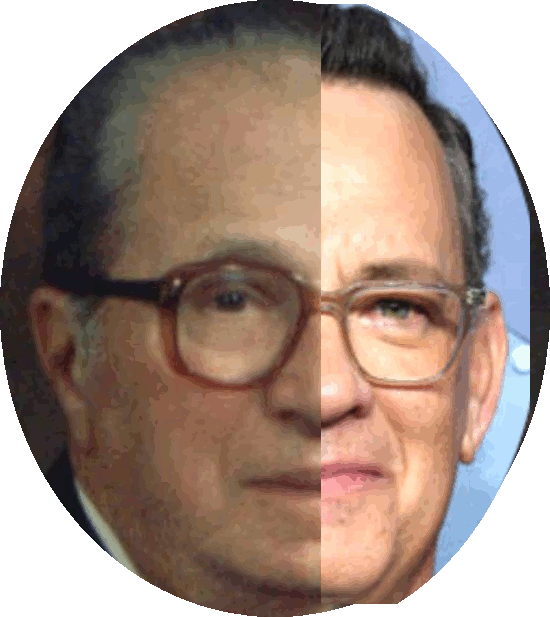
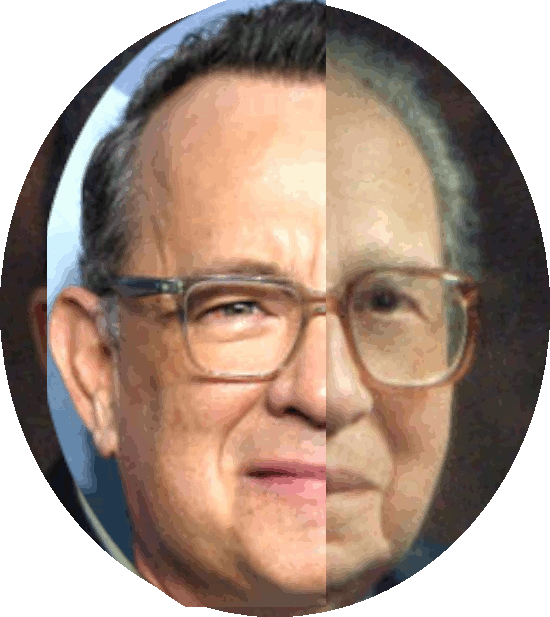
Mortimer Adler as Tom Hanks |
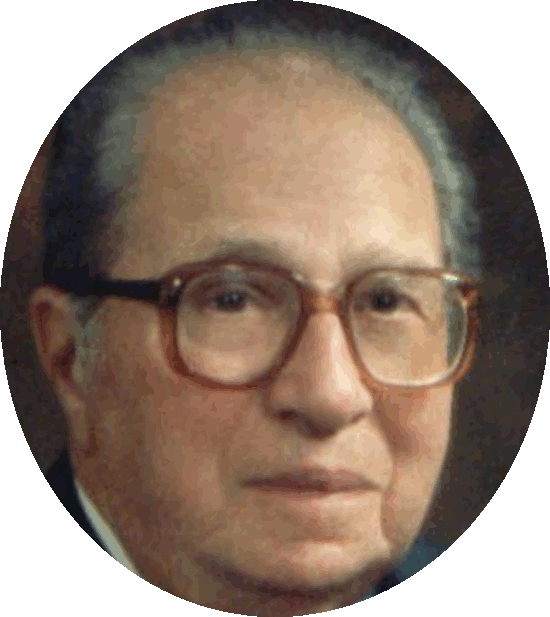
Mortimer Jerome Adler
PhD
1902-2001
Philosopher and educator
the most significant reformer of teaching
and learning in modern American education |

Thomas Jeffrey Hanks
1956
Hollywood
|
 |
 |
|
Peeping Thomist |
- Some of the
biggest proponents of this global approach to American
education were:
- Mortimer Adler: Philosopher and educator, the most significant reformer of teaching and learning in modern American education.
- Larmar Alexander: Secretary of
Education under George H.W. Bush, 45th governor of Tennessee.
-
T.H. Bell: United States commissioner of education
under Nixon and Ford, Secretary of Education
under Ronald Reagan.
- William J.
Bennett: Secretary of Education under Ronald Reagan, Drug Czar under
H.W. Bush.
- Ernest L. Boyer: Chancellor of the State University of New York, U.S. Commissioner of Education, and President of the Carnegie Foundation for the Advancement of Teaching.
-
George H.W. Bush, Barbara Bush: 41st
President.
- George W. Bush: 43rd President.
-
Jimmy Carter: 39th President.
- G. Brock Chisholm: Founding director-general of the World Health Organization (WHO), Canadian Surgeon General,
President of the World Federation of Mental Health.
-
William Jefferson Clinton, Hillary Clinton:
44th President.
- John Dewey: Major educational reformer,
Professor at University of Chicago.
- Dwight
Eisenhower: 34th President.
- Chester Finn: Professor and former Assistant Secretary for Research and Improvement at the U.S. Department of Education.
- John I. Goodlad:
Educational researcher and theorist, Dean of University of
California, Los Angeles Graduate School of Education.
-
Mikhail Gorbachev:
General Secretary of the Communist Party, President of USSR.
- Ronald G. Havelock: Director of the Knowledge Transfer Institute, Professor and research scientist at the University of Michigan, American University in Washington, D.C.
-
David W. Hornbeck: Carnegie Foundation and
Maryland Public Schools, Philadelphia Public
Schools.
- Herbert Hoover: 31st President.
- Lyndon Baines Johnson: 36th President.
- Bruce Joyce: University of Delaware, University of Chicago, and Teachers College, Columbia University, where he directed the laboratory school and the elementary teacher education program.
- Alfred Kinsey: Institute for Sex Research at Indiana University.
- Ronald Reagan: 40th President.
-
Theodore Sizer: Leader of educational reform,
President (Emeritus) of the Essential Schools Movement, Dean of the Harvard Graduate School of Education.
-
B.F. Skinner: Developed
behavior analysis, Father of operant conditioning, Professor
of Psychology at Harvard University.
-
William S. Spady: Outcome-Based Education (OBE).
- Thomas Sticht: President and Senior Scientist at Applied Behavioral and Cognitive Sciences Inc., UNESCO'S Mahatma Gandhi Medal for his 25 years of service and dedication,
Professor Harvard University.
- Harry Truman: 33rd
President.
- Marc S. Tucker: president and CEO of the National Center on Education and the Economy
1988-2019.
|
A Thomist is a philosopher, theologian, or scholar who follows the teachings of the 13th-century Dominican friar St. Thomas Aquinas. This tradition integrates Aristotelian philosophy with Christian theology, asserting that faith and reason are complementary, and serves as a foundational pillar of Roman Catholic intellectual thought. (Assistant)
|
|
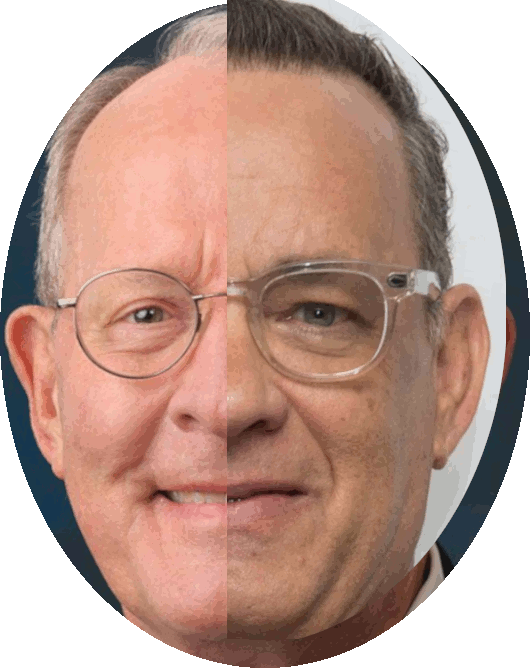
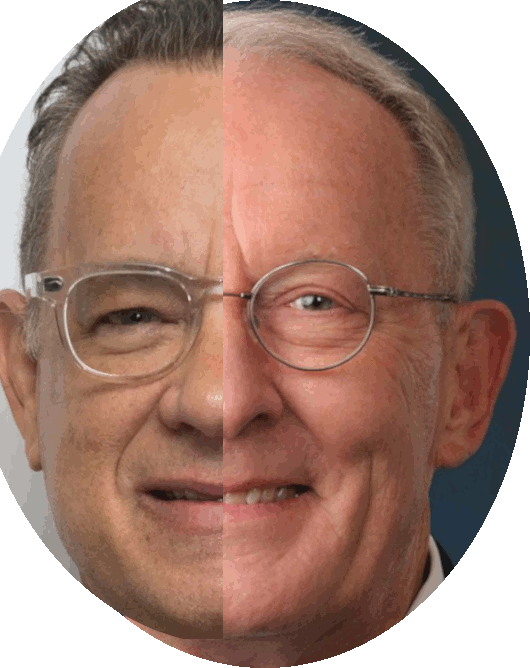
Lamar Alexander as Tom Hanks |
Andrew Lamar Alexander
1940
Secretary of
Education under George H.W. Bush
45th governor of Tennessee |
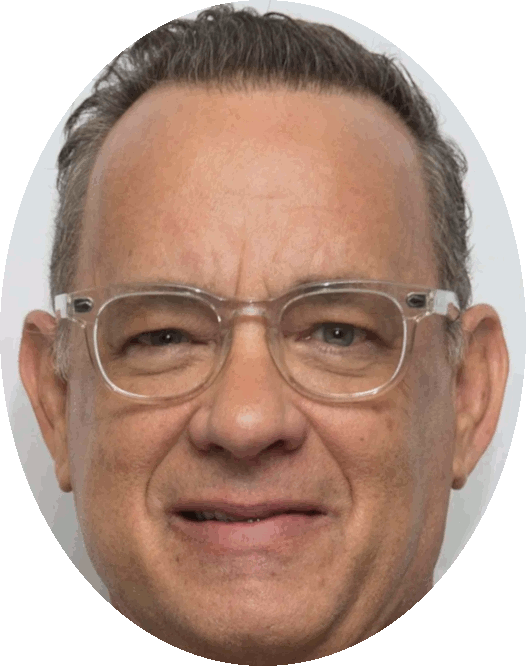
Thomas Jeffrey Hanks
1956
Hollywood
|
 |
 |
|
America 2000 |
-
|
T.H. Bell as Tom Hanks |
Terrel Howard Bell
Ph.D
1921–1996
Secretary of Education
under Ronald Reagan
Utah State Superintendent of Public Instruction |
Thomas Jeffrey Hanks
1956
Hollywood
|
 |
 |
|
The Thirteenth Man |
-
|
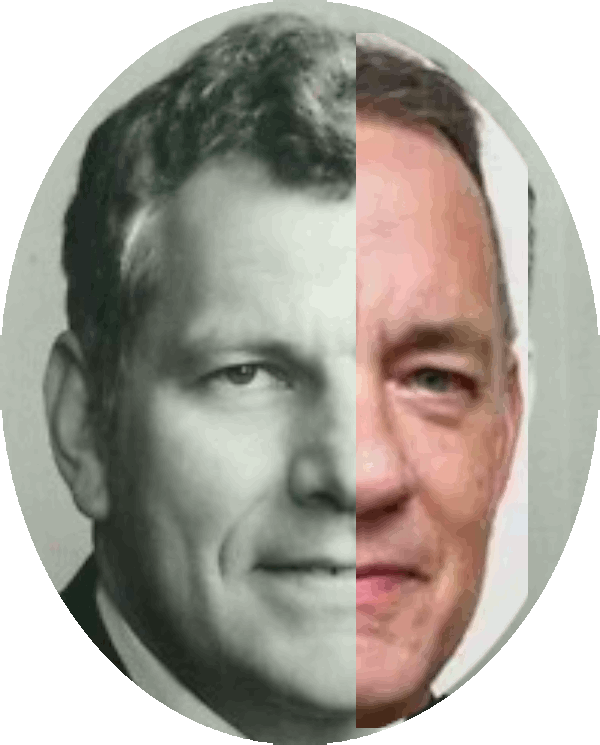
William Bennett as Tom Hanks |
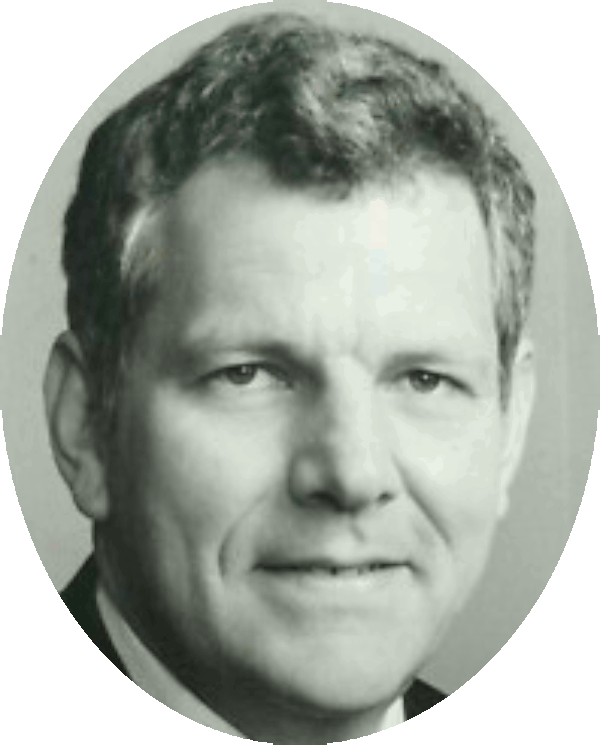
William John Bennett
Ph.D
1943
Secretary of
Education under Ronald Reagan
Drug Czar under
H.W. Bush |

Thomas Jeffrey Hanks
1956
Hollywood
|
 |
 |
|
Tried By Fire |
-
|
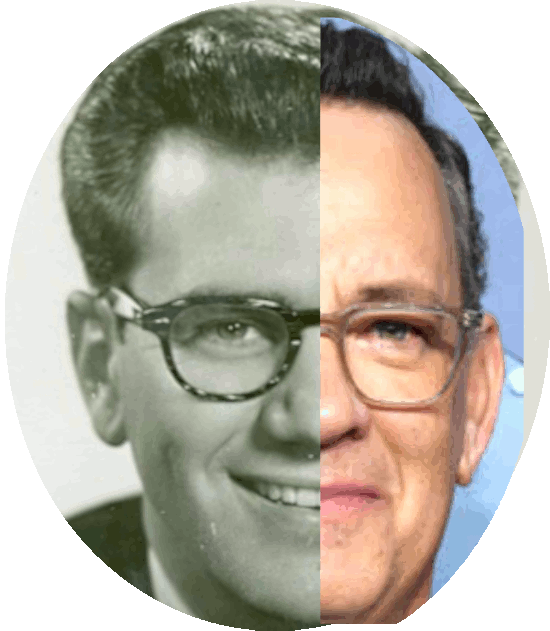
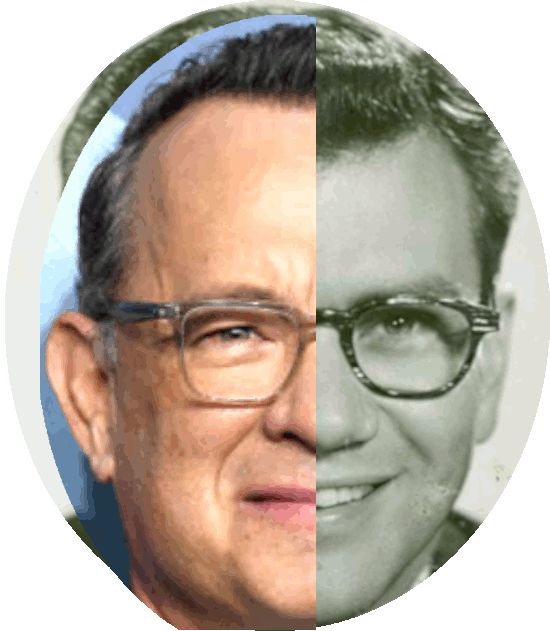
Ernest L. Boyer as Tom Hanks |
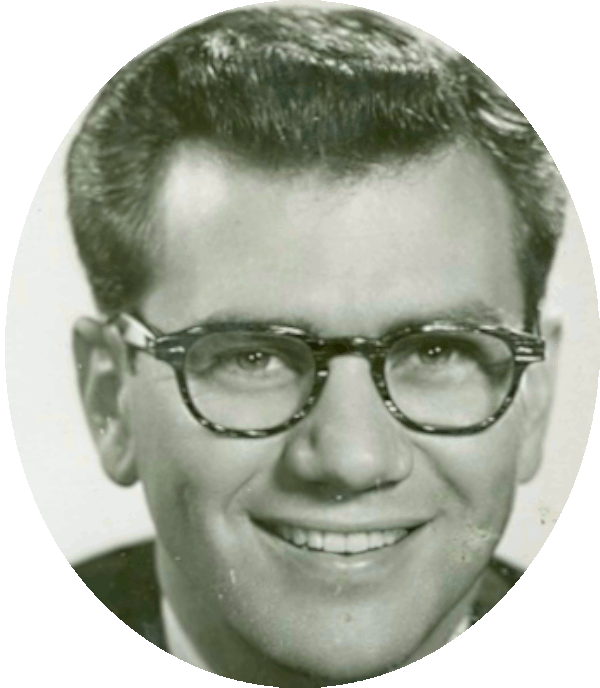
Ernest LeRoy Boyer
1928-1995
U.S. Commissioner of Education
under Jimmy Carter
Chancellor of the State University of New York,
President of the Carnegie Foundation for the
Advancement of Teaching
|
Thomas Jeffrey Hanks
1956
Hollywood
|
 |
 |
|
Basic School |
-
|
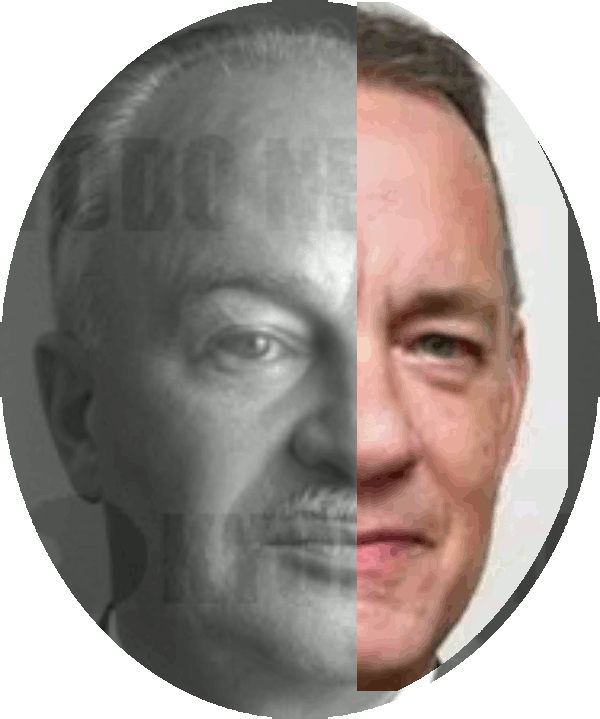
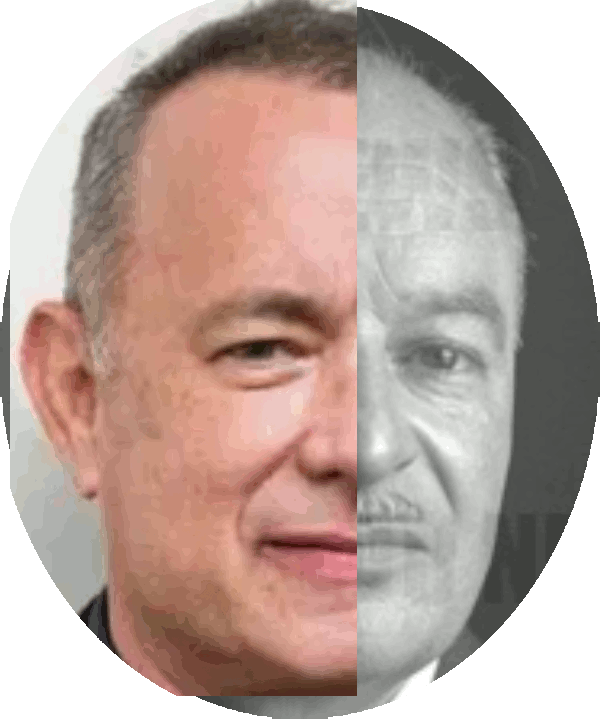
G. Brock Chisholm as Tom Hanks |
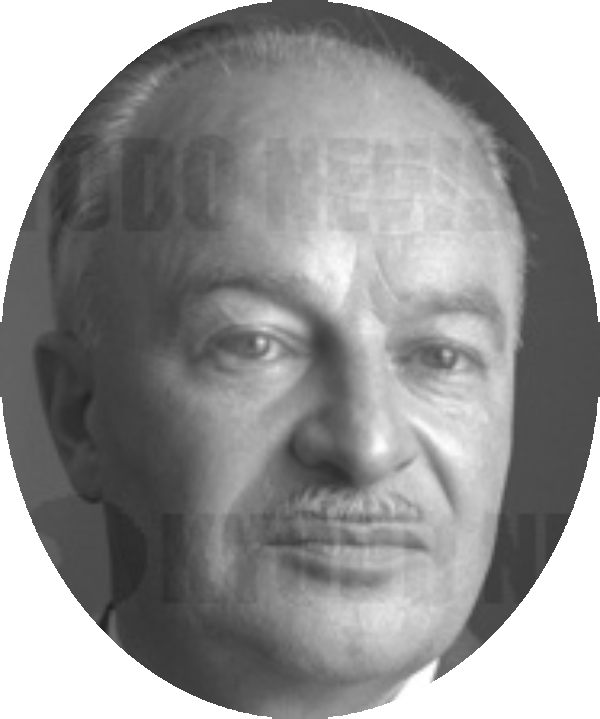
Dr.
George Brock Chisholm
1896-1971
Founding director-general of the World Health Organization (WHO)
Canadian Surgeon General
President of the World Federation of Mental Health
|
Thomas Jeffrey Hanks
1956
Hollywood
|
 |
 |
|
Nemo |
-
|
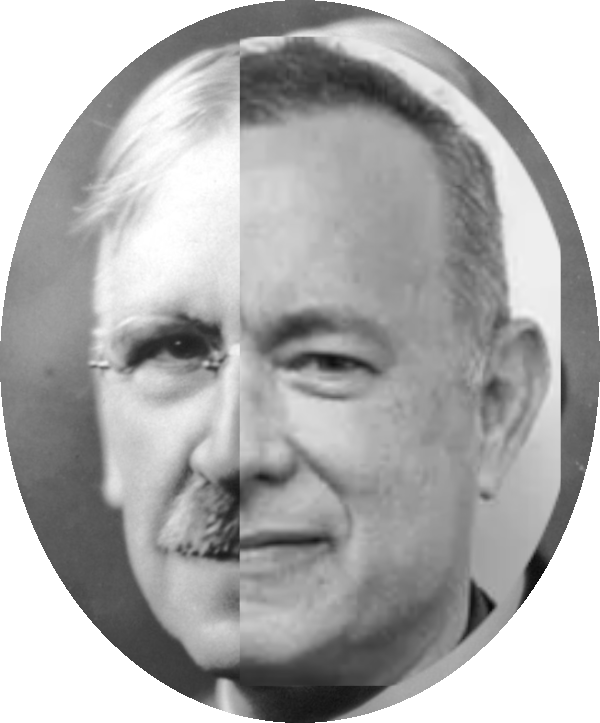
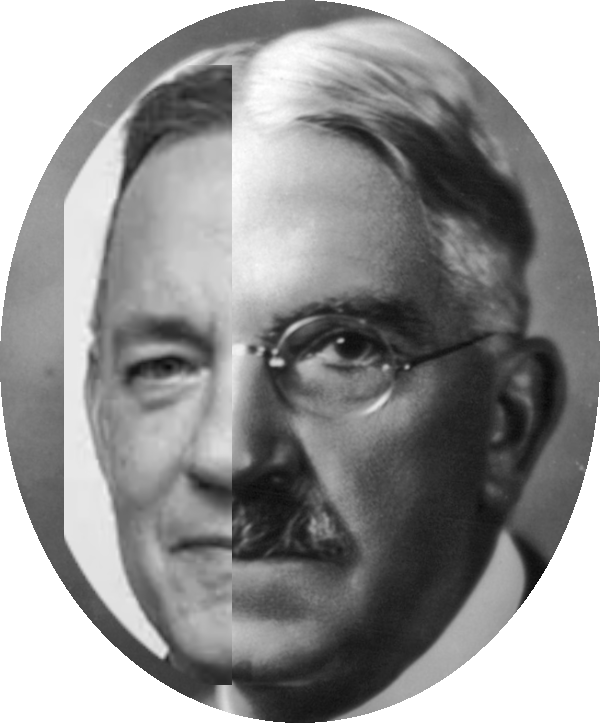
John Dewey as Tom Hanks |
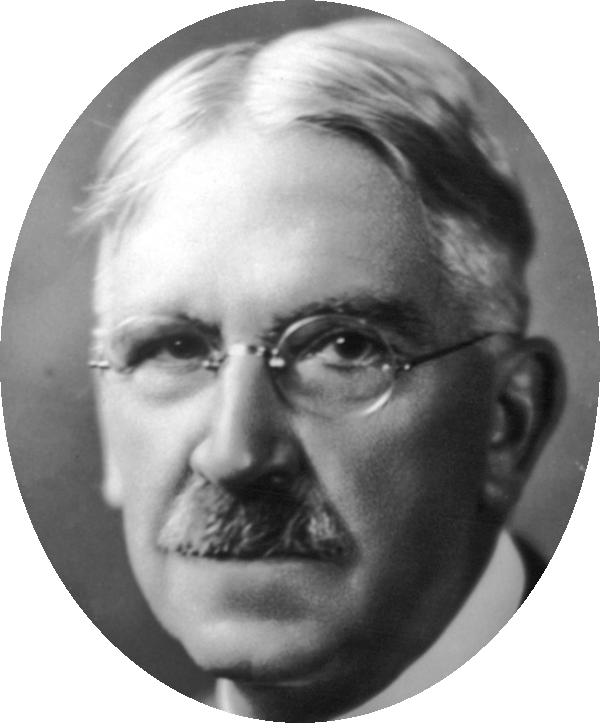
John Dewey
Ph.D
1859-1952
Major educational reformer
Professor at University of Chicago |

Thomas Jeffrey Hanks
1956
Hollywood
|
 |
 |
American Confucius (Confuse-us)
Experimental Education |
-
|
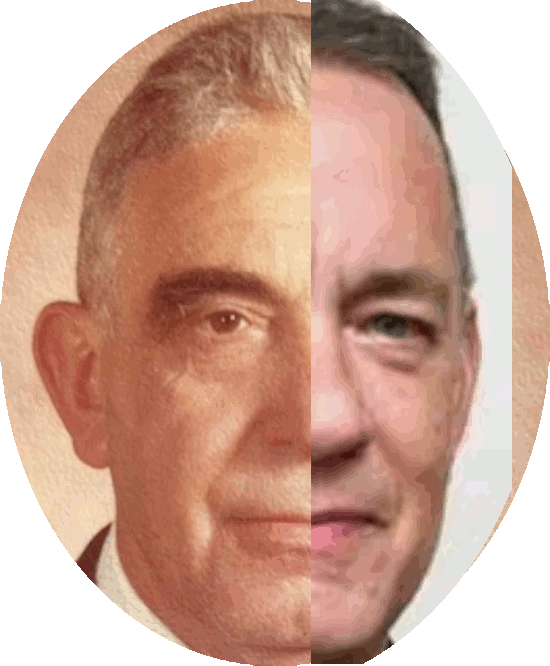
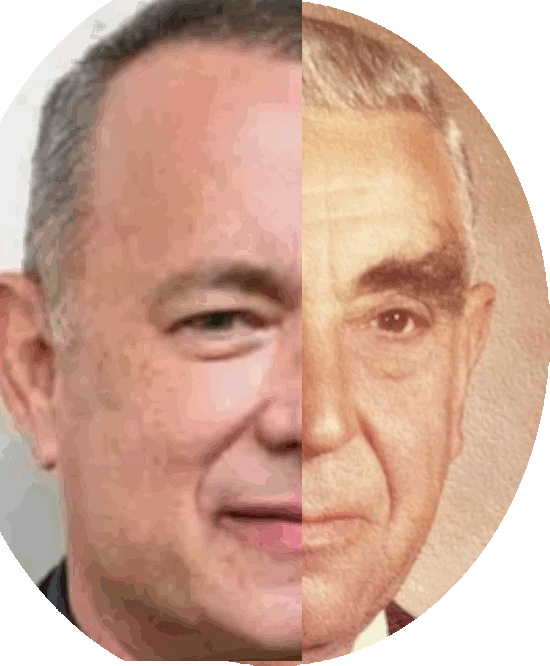
Chester Finn as Tom Hanks |
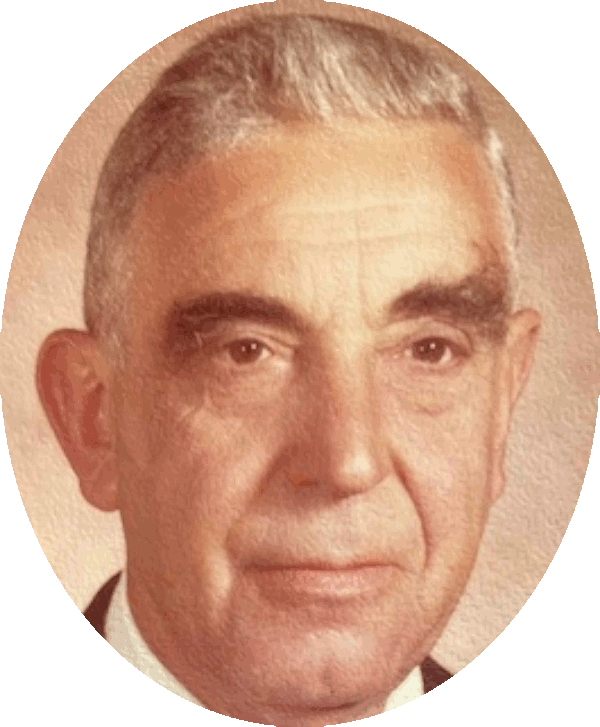
Chester Evans Finn, Jr.
1900-1993
Professor and former Assistant Secretary for Research and Improvement at the U.S. Department of Education
|
Thomas Jeffrey Hanks
1956
Hollywood
|
 |
 |
|
Checkers |
-
|
John Goodlad as Tom Hanks |
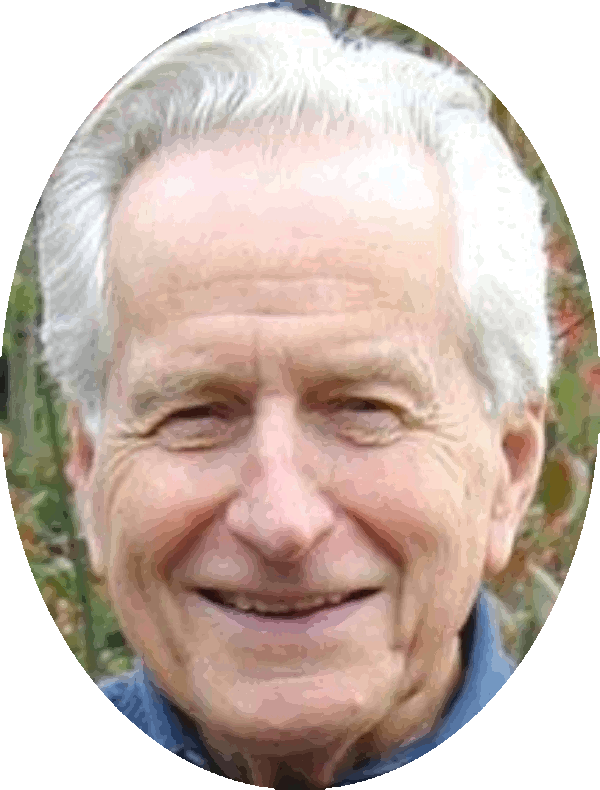
John I. Goodlad Ph.D
1920-2014
Educational researcher and theorist
Dean of University of California, Los Angeles Graduate School of Education. |
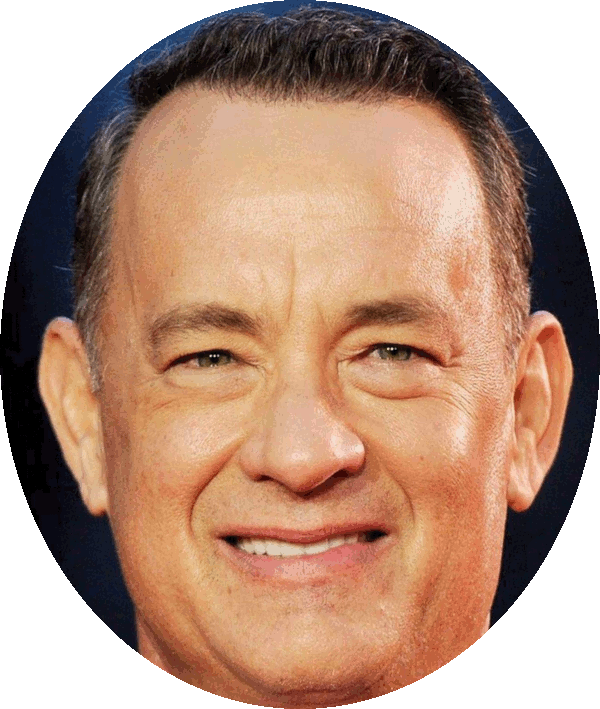
Thomas Jeffrey Hanks
1956
Hollywood
|
 |
 |
|
Sleepless in Seattle |
-
|
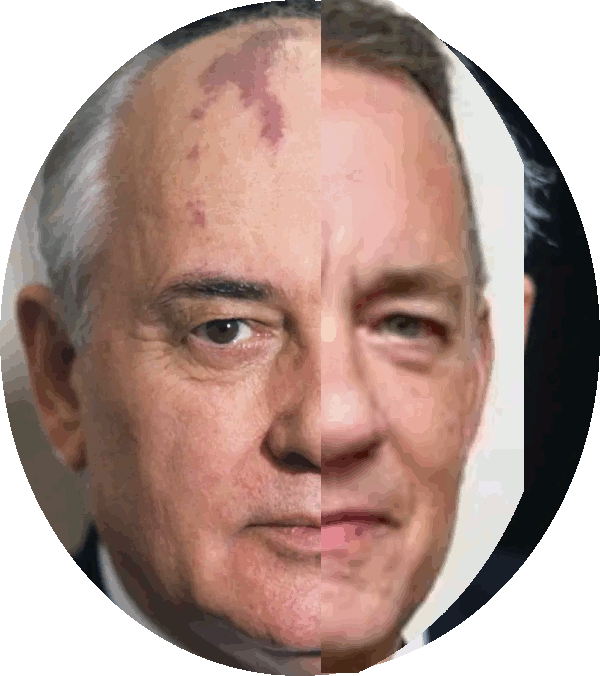
Mikhail Gorbachev as Tom Hanks |
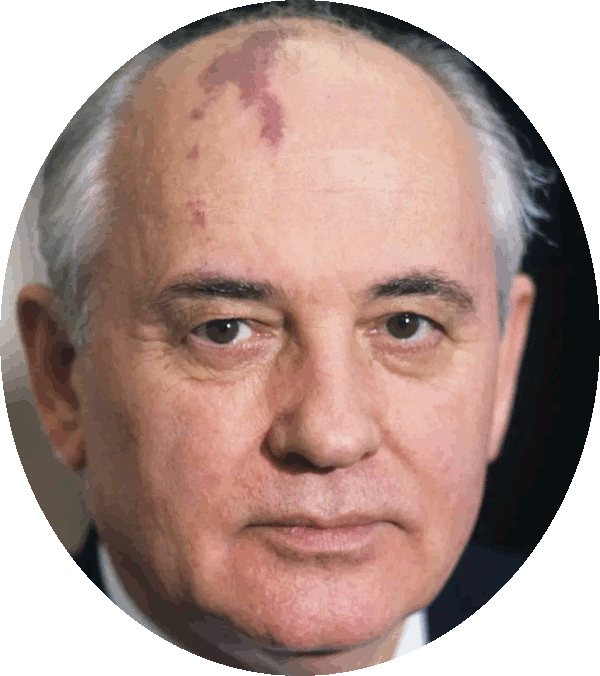
Mikhail Sergeyevich Gorbachev
1931-2022
General Secretary of the Communist Party
President of USSR |
Thomas Jeffrey Hanks
1956
Hollywood
|
 |
 |
|
The Marked One |
-
|
Ronald G. Havelock as Tom Hanks |
Ronald G. Havelock
Ph.D
Professor and research scientist at the University of Michigan
American University in Washington, D.C.
Director of the Knowledge Transfer Institute |
Thomas Jeffrey Hanks
1956
Hollywood
|
 |
 |
Change Agent's Guide
Shady Side |
-
|
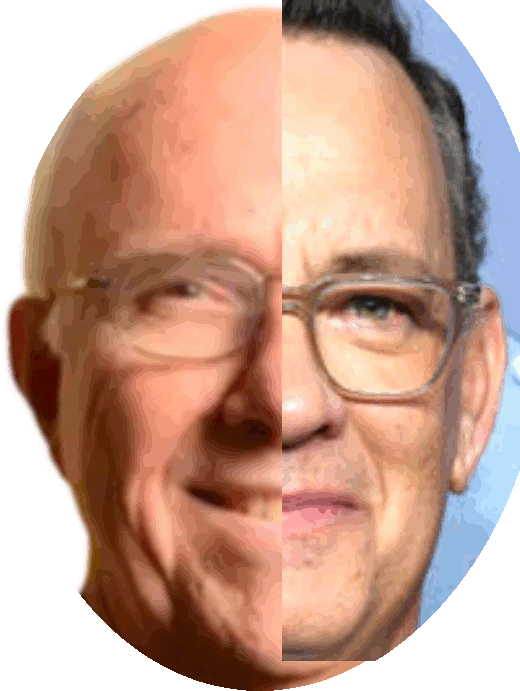
David Hornbeck as Tom Hanks |
David W. Hornbeck
Ph.D
1941
Carnegie Foundation
Maryland Public Schools
Philadelphia Public Schools |
Thomas Jeffrey Hanks
1956
Hollywood
|
 |
 |
|
Philadelphia |
-
|
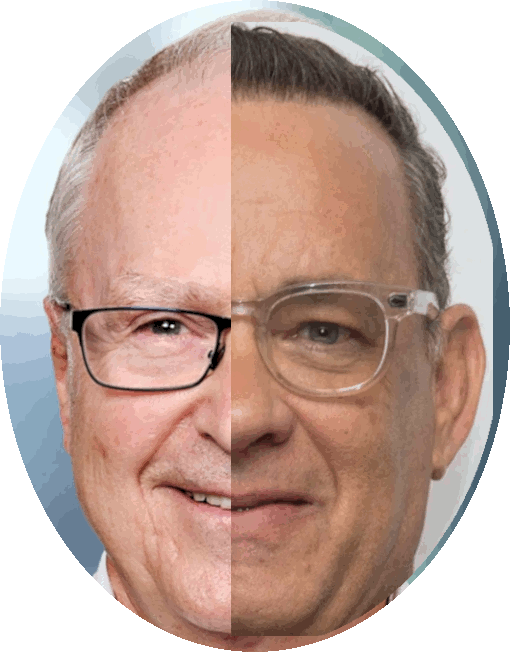
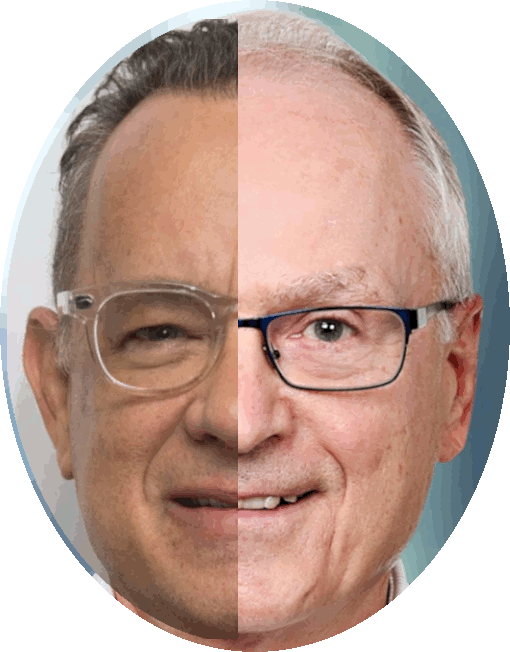
Bruce Joyce as Tom Hanks |

Bruce R. Joyce
University of Delaware,
University of Chicago, and Teachers College, Columbia University, where he directed the laboratory school and the elementary teacher education program |
Thomas Jeffrey Hanks
1956
Hollywood
|
 |
 |
|
Models of Teaching |
-
|
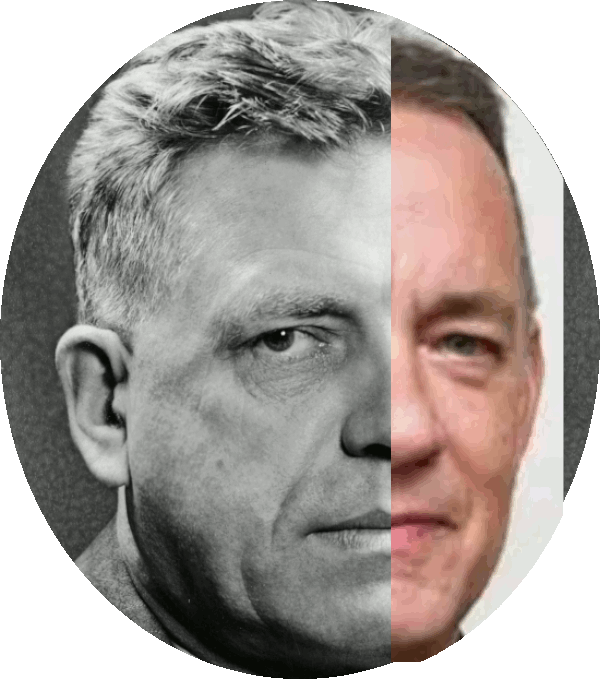
Alfred Kinsey as Tom Hanks |
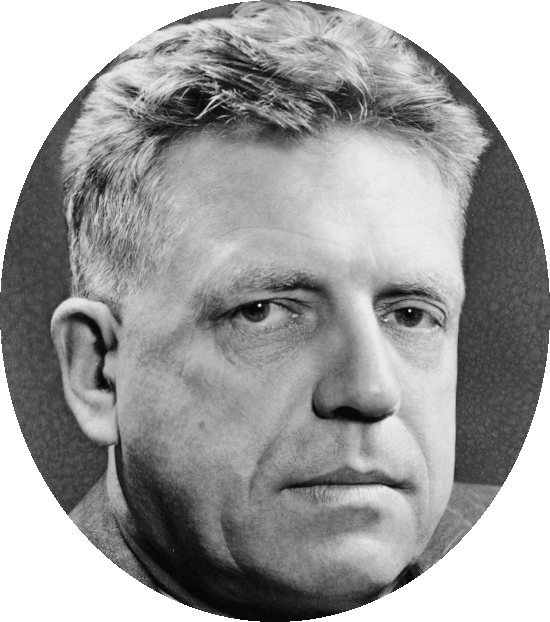
Alfred Charles Kinsey
Ph.D
1894-1956
Institute for Sex Research at Indiana University |
Thomas Jeffrey Hanks
1956
Hollywood
|
 |
 |
|
Sexology Sex Doctor |
-
|
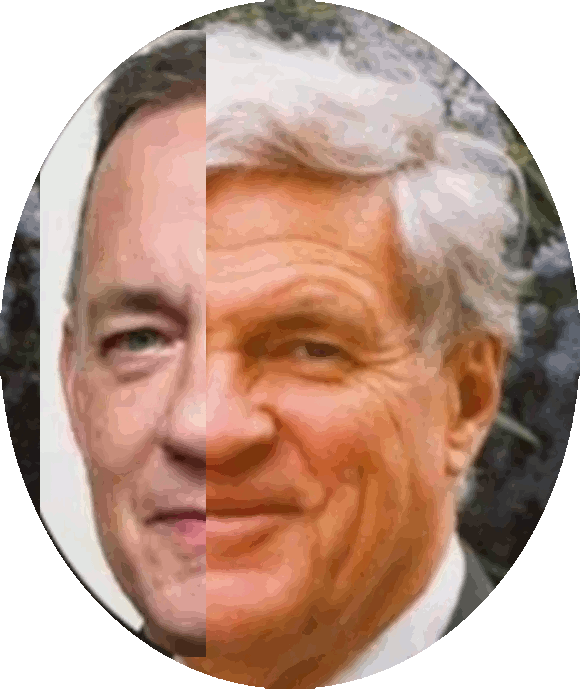
Theodore Sizer as Tom Hanks |
Theodore Ryland Sizer
1932-2009
Leader of educational reform
President (Emeritus) of the Essential Schools
Movement
Dean of the Harvard Graduate School of Education |
Thomas Jeffrey Hanks
1956
Hollywood
|
 |
 |
|
Tubby |
-
|
B.F. Skinner as Tom Hanks |
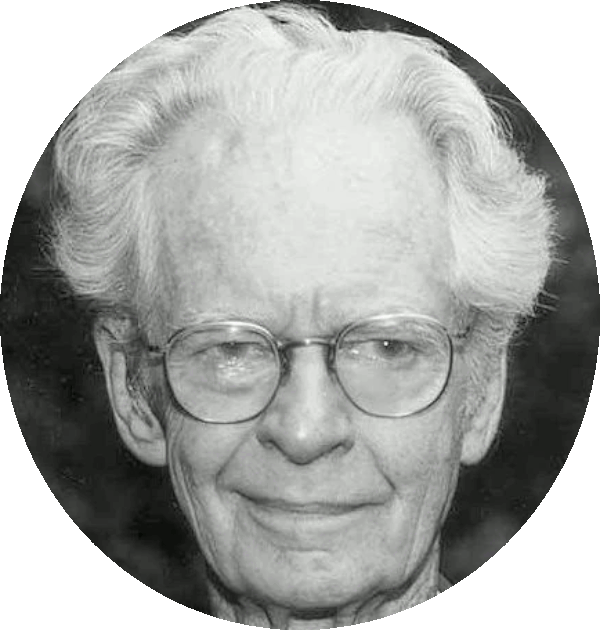
Burrhus Frederic Skinner
Ph.D
1904-1990
Developed behavior analysis
Father of operant conditioning
Professor of Psychology at Harvard University |
Thomas Jeffrey Hanks
1956
Hollywood
|
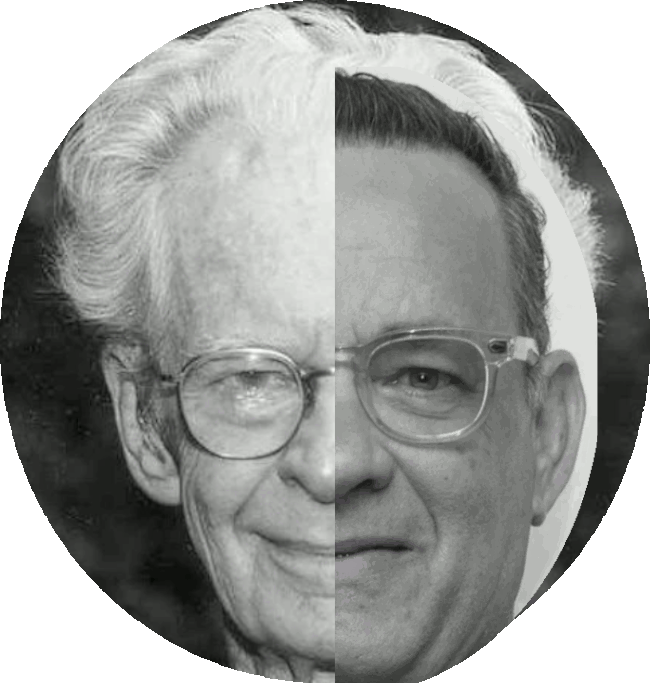 |
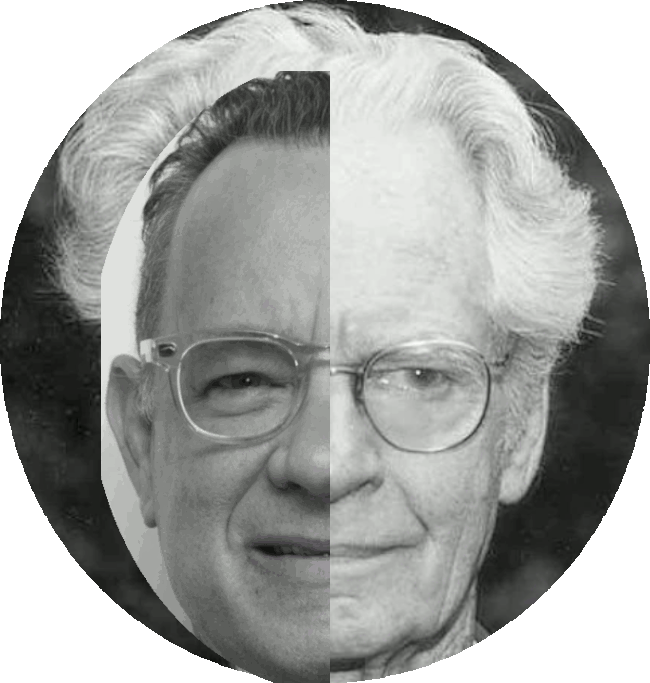 |
The Man with One Red Shoe
Skinner Box |
-
|
William Spady as Tom Hanks |
William G. Spady
Ph.D
1926
Educational
Psychologist
Outcome-Based Education (OBE) |
Thomas Jeffrey Hanks
1956
Hollywood |
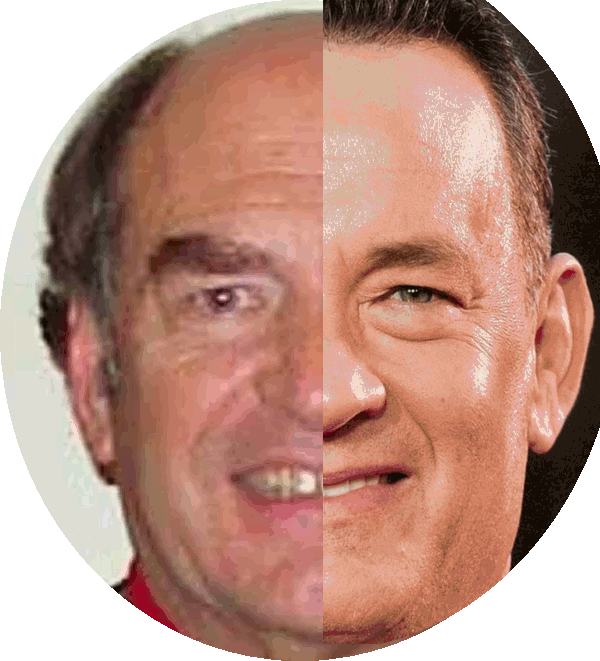 |
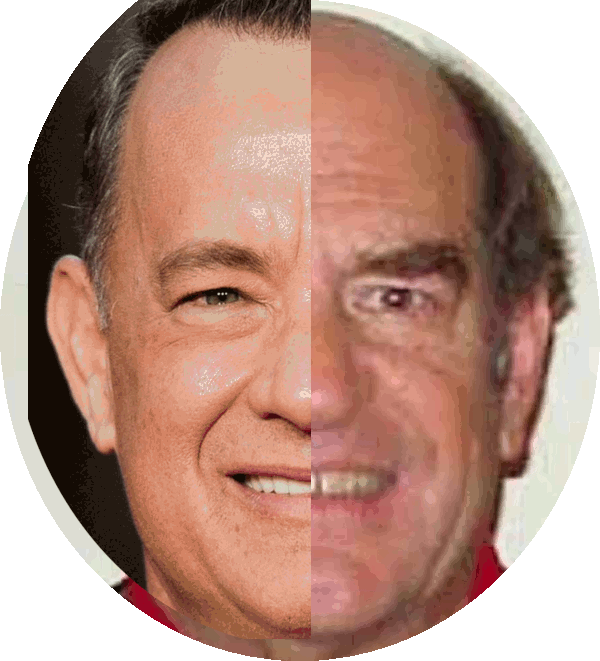 |
|
Father Christmas |
-
|
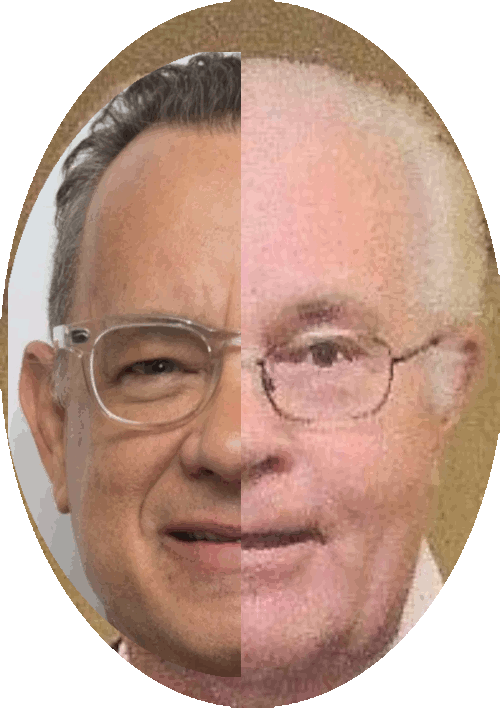
Thomas Sticht as Tom Hanks |
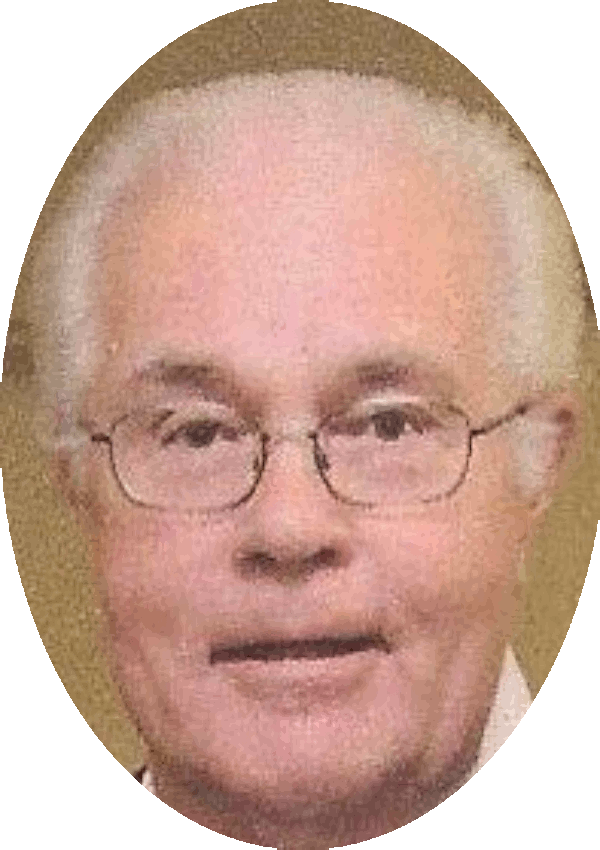
Thomas G.
Sticht
1936-2010
President and Senior Scientist at Applied Behavioral and Cognitive Sciences Inc.
UNESCO'S Mahatma Gandhi Medal for his
25 years of service and dedication
Professor
Harvard University |
Thomas Jeffrey Hanks
1956
Hollywood
|
 |
 |
|
Cognitive Science |
-
|
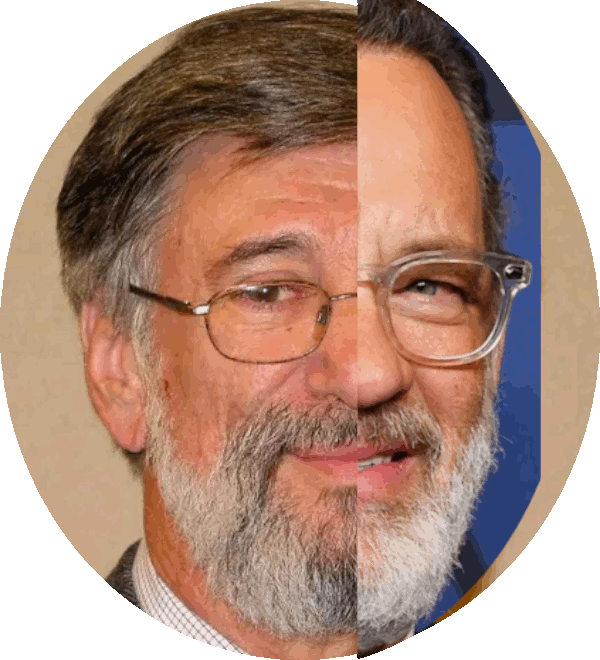
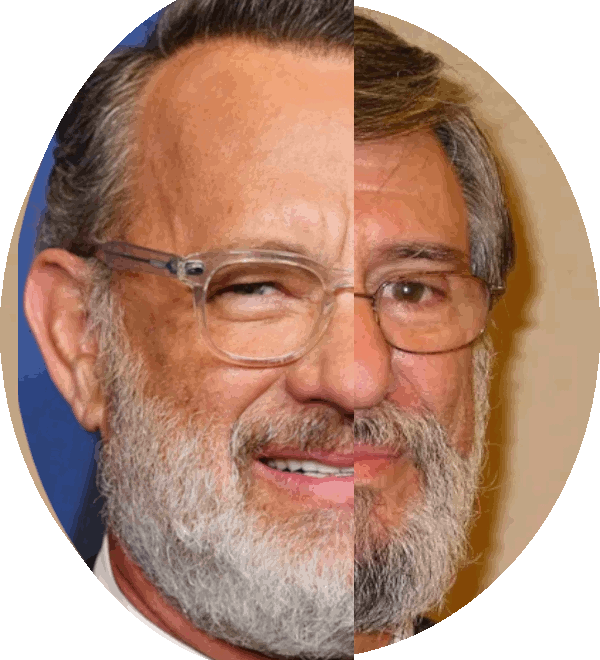
Marc Tucker as Tom Hanks |
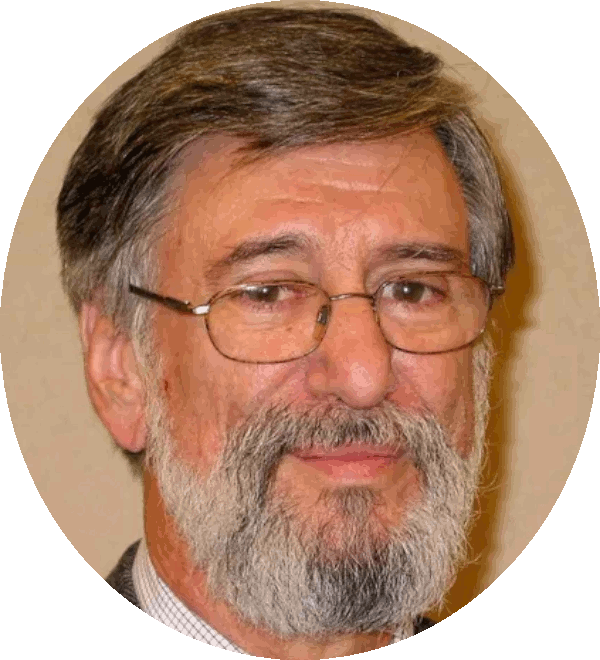
Marc S. Tucker
1939
President and CEO of the National
Center on Education and the Economy from 1988
until 2019
University of Rochester |
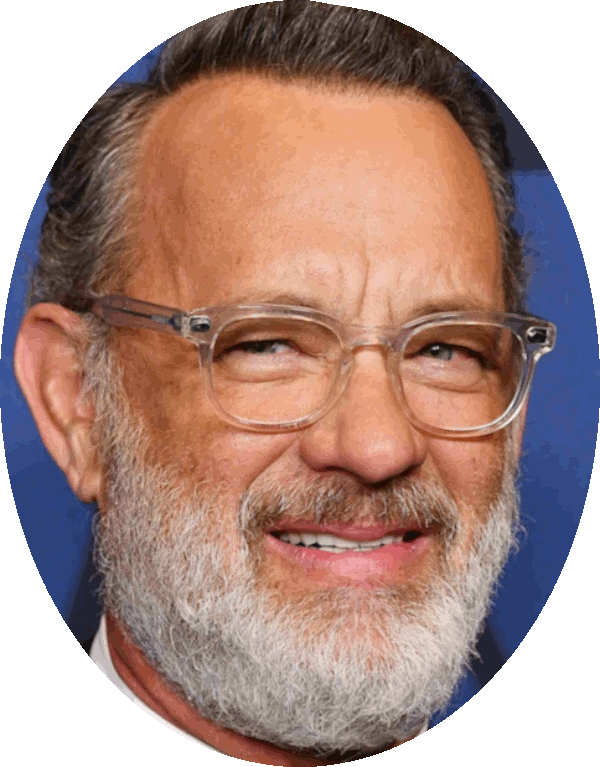
Thomas Jeffrey Hanks
1956
Hollywood
|
 |
 |
|
Pinocchio |
-
|
|
|
Learning is the only thing the mind never exhausts,
never fears, and never regrets.
Leonardo DaVinci

| |
 |
 |

