|
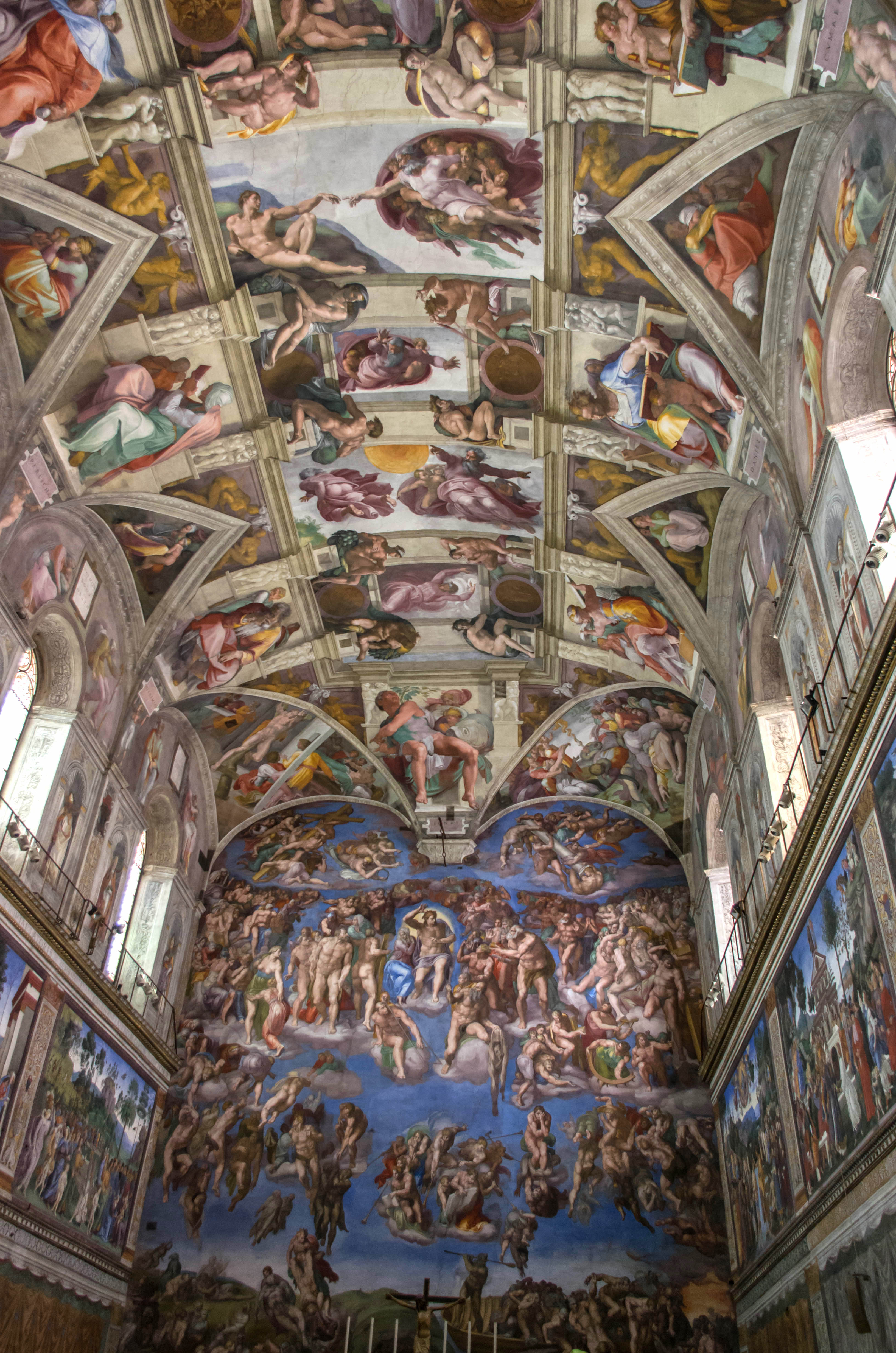
MICHELANGELO - SISTINE CHAPEL
Public
domain, via
Wikimedia Commons.
The interior of the Sistine Chapel 1508-1512
Michelangelo |
- The Sistine Chapel ceiling (Italian:
Soffitto della Cappella Sistina), painted in fresco by
Michelangelo between 1508 and 1512, is a cornerstone work of High Renaissance art.
- The Sistine Chapel is the large papal chapel built within the Vatican between 1477 and 1480 by Pope Sixtus IV, for whom the chapel is named.
|
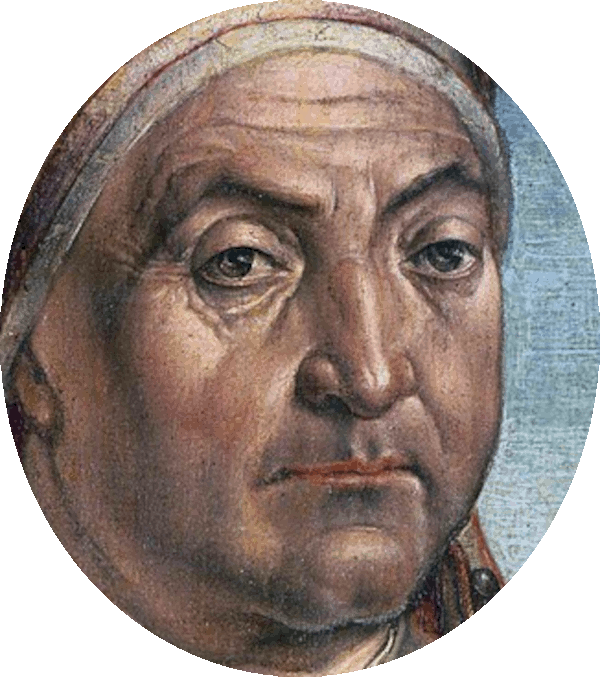
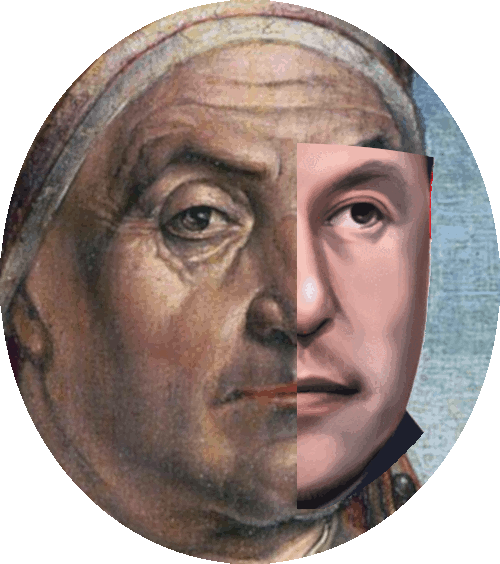
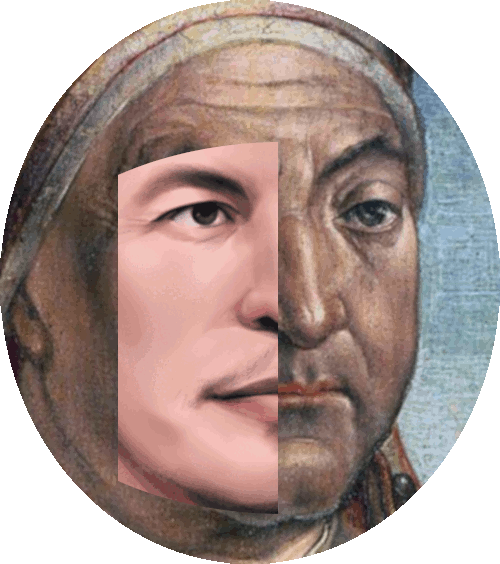
Pope Sixtus IV as Elon Musk |
 |
 |
Francesco da Savona later della Rovere
1414-1484
7/21
8/12
Pope 212
|
Elon Reeve Musk
1971
6/28
Satan
|
 |
 |
|
Bloody Pope |
-
Pope Sixtus IV or Xystus IV, Italian: Sisto IV who was born Francesco da Savona later della Rovere; (1414-1484) was head of the Catholic Church and leader of the Papal States from August
9, 1471, until his death in 1484.
- Sixtus IV's accomplishments as pope included the construction of the Sistine Chapel and the creation of the Vatican Library.
- A patron of the arts, he brought together the group of artists who ushered the early Renaissance into Rome with the first masterpieces of the city's new artistic age.
|
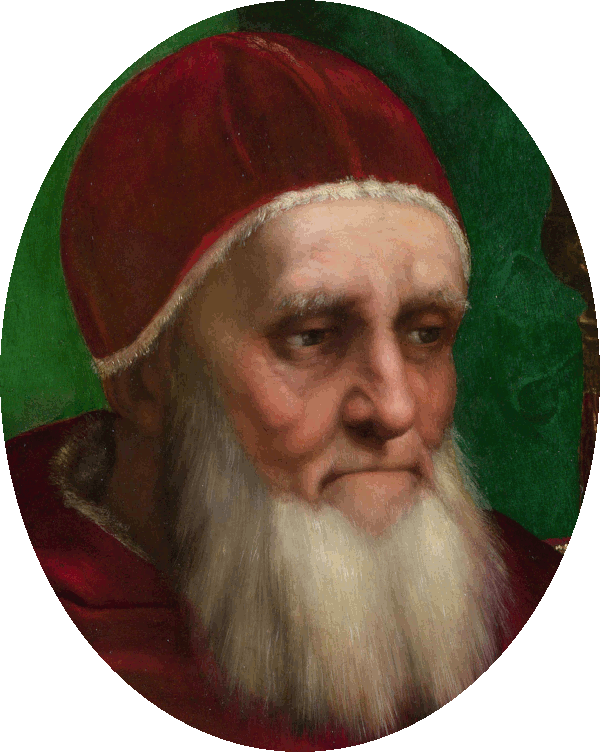
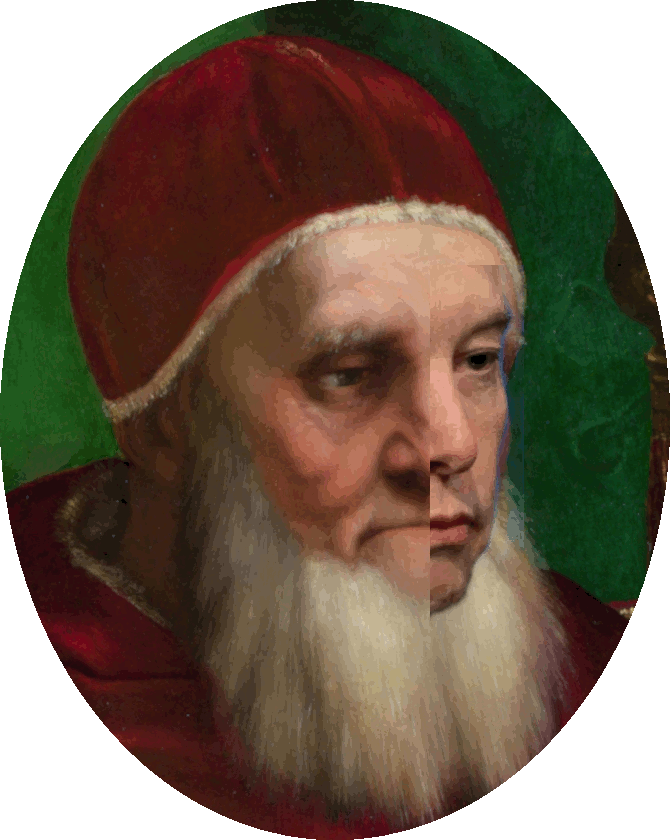
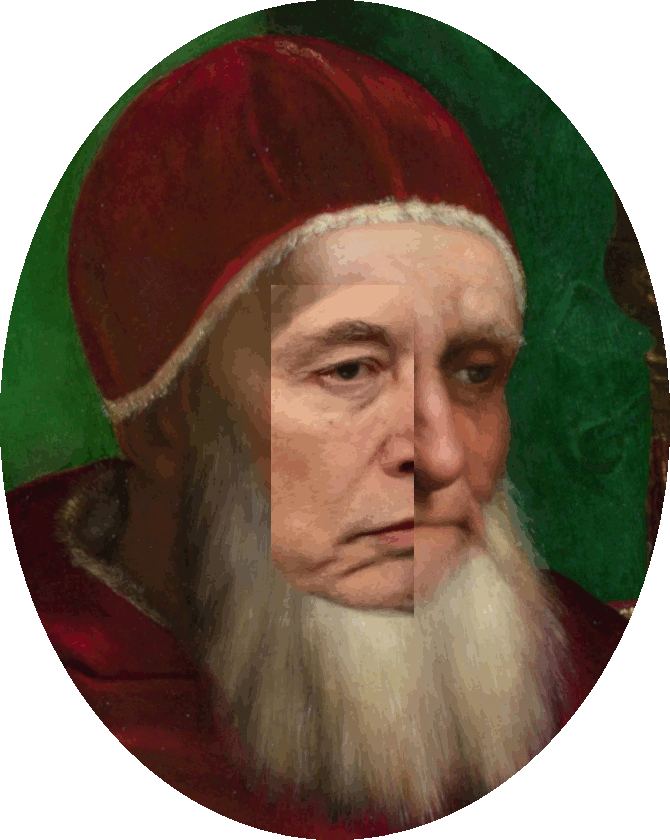
Pope Julius II as Elon Musk |
 |
 |
Giuliano della Rovere
1443-1513
12/5
2/21
Pope 216 or 217
|
Elon Reeve Musk
1971
6/28
Satan
|
 |
 |
|
Warrior Pope |
-
Pope Julius II who was born Giuliano della Rovere (1443-1513) was head of the Catholic Church and leader of the Papal States from 1503 to his death, in February 1513.
- Nicknamed the Warrior Pope, the Battle Pope or the Fearsome Pope, it is often speculated that he had chosen his papal name not in honor of Pope Julius I but in emulation of Julius Caesar.
- One of the most powerful and influential popes, Julius II was
a central figure of the High Renaissance and left a significant
cultural and political legacy.
- The ceiling was painted at the
commission of Pope Julius II and various painted elements form part of a larger scheme of decoration within the chapel.

Sandro Botticelli, Public domain, via Wikimedia Commons
From Trial of Moses 1482
Moses flees |
- Prior to Michelangelo's contribution, the walls were painted by several leading artists of the late 15th-century including
Sandro Botticelli,
Domenico Ghirlandaio, and
Pietro Perugino.
- The
Trial of Moses is also called the Youth
of Moses and was completed by Sandro Botticelli in 1482.
- It is located in the Sistine Chapel (Cappella Sistina, Vatican).
Sandro Botticelli, Public domain, via Wikimedia Commons
From Trial of Moses 1482
Moses flees |
- After the ceiling was painted, Raphael created a set of large
tapestries (1515–1516) to cover the lower portion of the wall.
- Michelangelo returned to the chapel to create The Last Judgment, a large wall fresco situated behind the altar.
- The chapel's decoration illustrates much of the doctrine of the Catholic Church, serving as the setting for papal conclaves and many other important services.
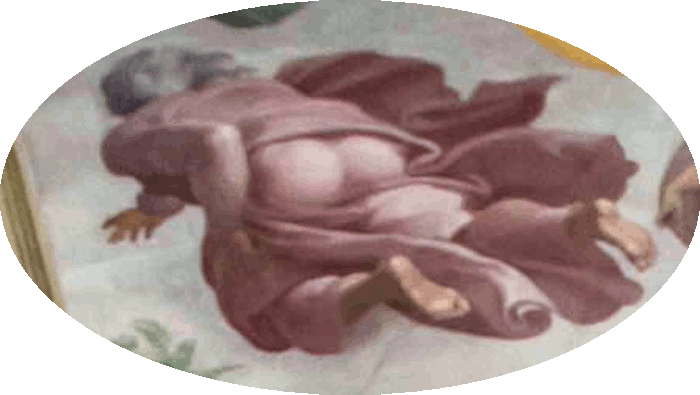
Michelangelo, Public domain, via Wikimedia Commons
Yahweh flees |
- Yahweh fleeing he can't hide his ass and he also played the
part of Jesus Christ in the New Testament.
|
Central to the ceiling decoration are nine scenes from
the Book of Genesis, including The Creation of Adam. The complex design includes several sets of figures, some clothed and some nude, allowing Michelangelo to demonstrate his skill in depicting the human figure in a variety of poses. The ceiling was immediately well-received and imitated by other artists, continuing to the present. It has been restored several times, most recently from 1980 to 1994.
(Wikipedia)
|
|
|













