|
HIDDEN REALM - GRECO-ROMAN
Architecture |
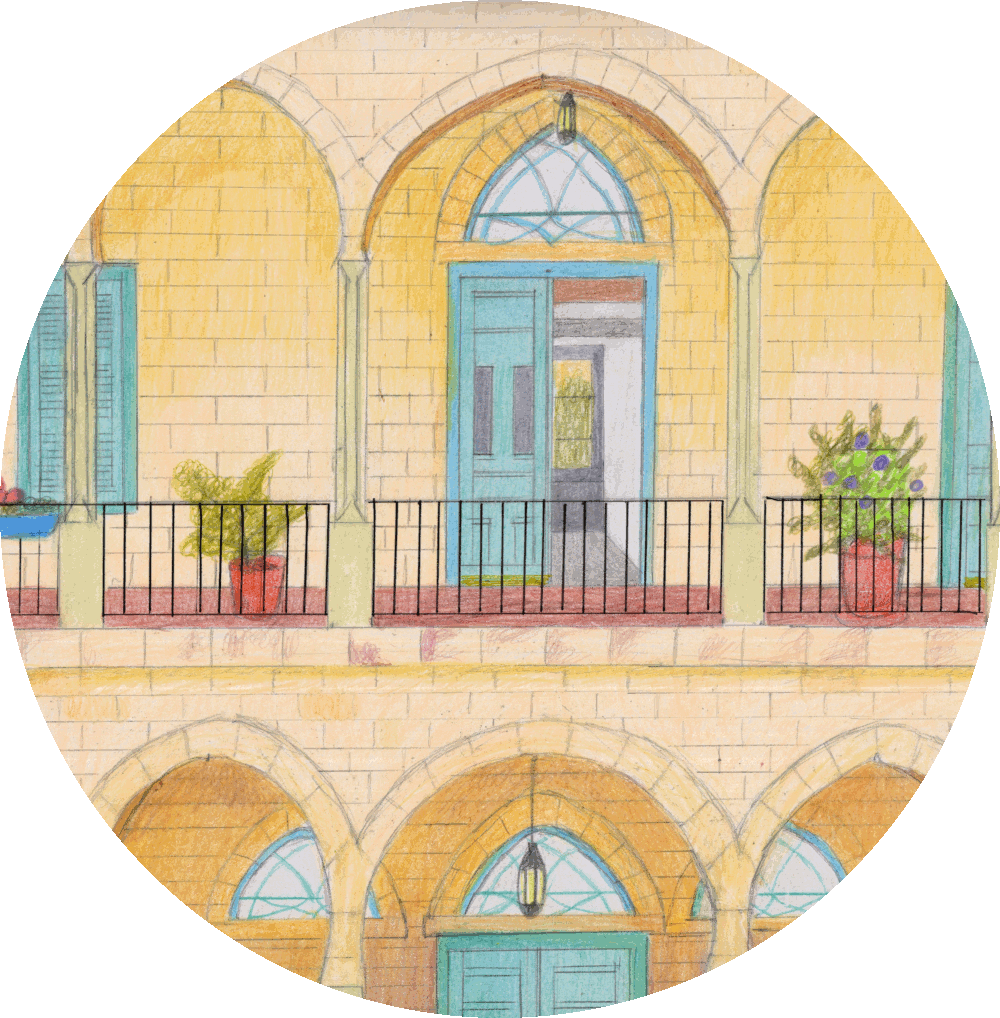
- Ancient Greek architecture was the first to introduce a standardized set of architectural rules that went on to influence Roman architecture and, as a result, architecture to this day.
- Greece and Rome were never part of 'Tartary' because that
was a made up name that the fallen angels called everything
that the Most High Father designed when he first built the Earth
over a period of 1,000 years, almost 2 million years ago.
-
So the name 'Tartaria' is a smear, because in the fallen
angels occult
Bible, Tartaria was hell.
- However, Greece and Rome were
the beginning of the Most High Father's worldly reign, and they set the
architectural standard for the beautiful cities that influenced the
entire world.
- Which is the
reason the fallen angels that run everything had to devalue
his accomplishments.
- After Father went back to heaven,
the fallen angels took over everything and claimed it as their
own and added all their bunkers underground.
Greco-Roman
influence |
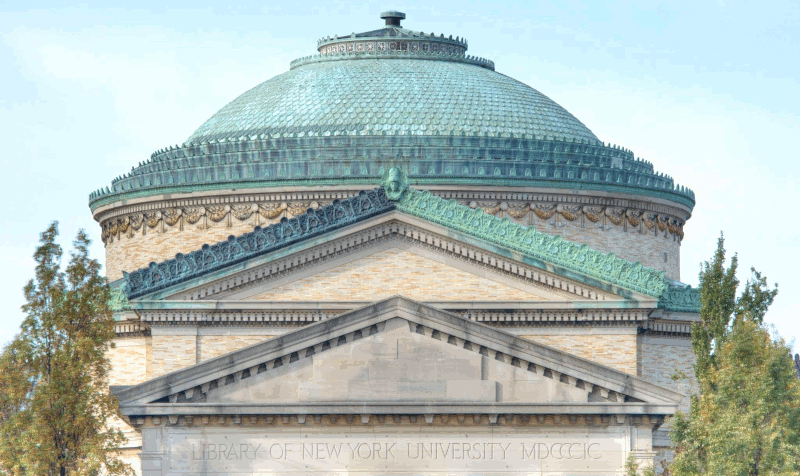
- Greek and Roman classical architecture spans the globe, defined by Greek post-and-lintel harmony and Roman arches, vaults, concrete, and domes.
- Found across Europe, the Mediterranean, and global revival movements, this style shaped Western civic design.
- You can find Greek and Roman influence throughout the Mediterranean
and Europe in temples, arenas, and basilicas that stretch from The Roman Forum in Italy to the Maison Carrée in France and the Library of Celsus in Turkey.
- In the Americas and globally, Neoclassicism: Revival styles use grand columns and pediments for government buildings, such as the United States Capitol and Supreme Court.
Greek architecture |
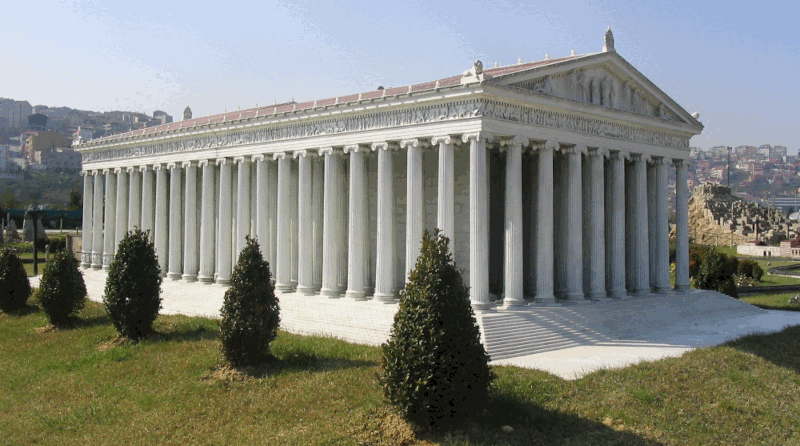
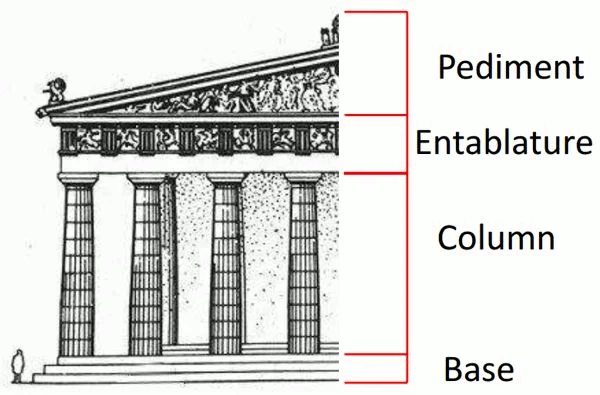
- Ancient Greek architecture is defined by harmony, symmetry, and rectangular temple designs.
- Its major features include the
3 classical column orders (Doric, Ionic, and Corinthian), horizontal entablatures, triangular pediments, and optical illusions like entasis that made massive stone buildings look straight and grand.
- Most often found in Greek temples, open air theaters, and
long walkways.
Key Structural
Elements |
- Entablature: The horizontal beam system above the columns, split into the architrave, frieze, and cornice.
- Pediment: The low triangular space above the short sides of a temple, often filled with statues.Cella (Naos):
for instance, the inner central room of a temple that held the statue of the god.
- Entasis: A slight outward curve built into column shafts to correct the optical illusion that straight lines look thin or hollow.
Roman architecture |
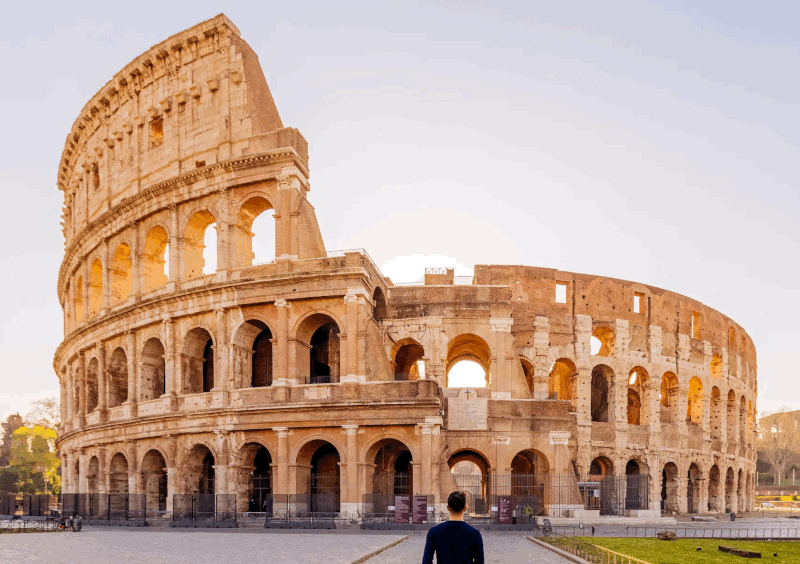
- Ancient Roman architecture is defined by the heavy use of concrete, circular arches, barrel and groin vaults, and grand domes.
-These engineering breakthroughs allowed the Romans to enclose massive interior spaces, build towering public works like aqueducts, and adapt Greek column styles for monumental civic design.
- Most often found in amphitheaters, aqueducts and arches.
Design and Aesthetic
Elements |
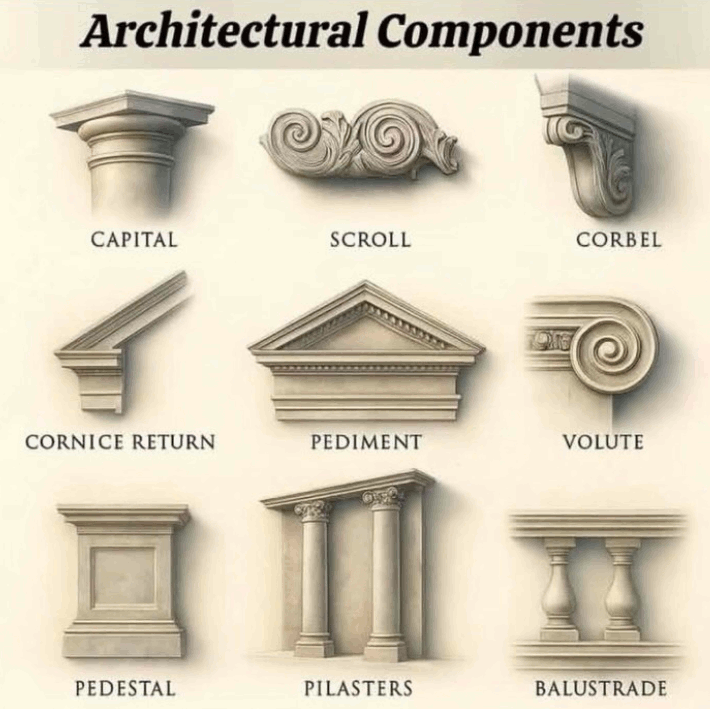
- Embellished Columns: Borrowed Greek Doric, Ionic, and Corinthian orders, often adding local Tuscan and Composite styles.
- Engaged Columns and Pilasters: Used decorative half-columns stuck flat against walls rather than holding real weight.
- Marble Veneers and Mosaics: Covered rough concrete cores with bright stone panels, frescoes, and floor mosaics.
The 3 Orders of Ancient Greek Architecture |
|
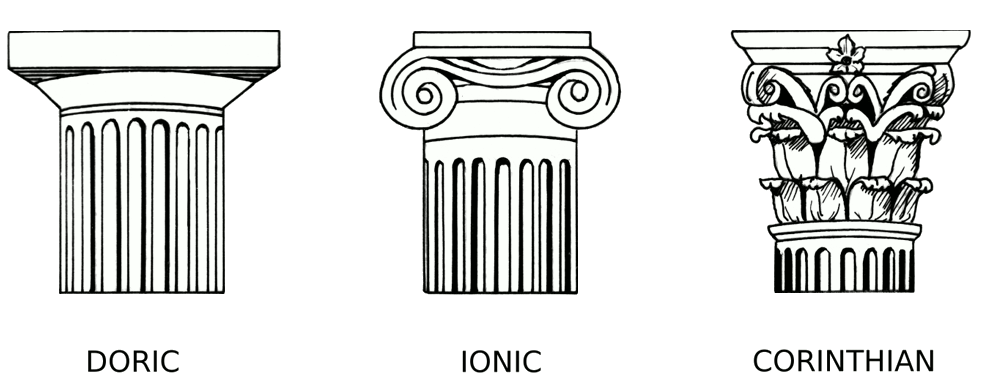
- At the start of what is now known as the Classical period of architecture, ancient Greek architecture developed into three distinct orders: the Doric, Ionic, and Corinthian orders.
- Each of the orders displayed distinct features in their columns, a staple for formal, public buildings such as libraries and gymnasiums, stadiums, theaters, and civic buildings.
|
Doric Order |
|
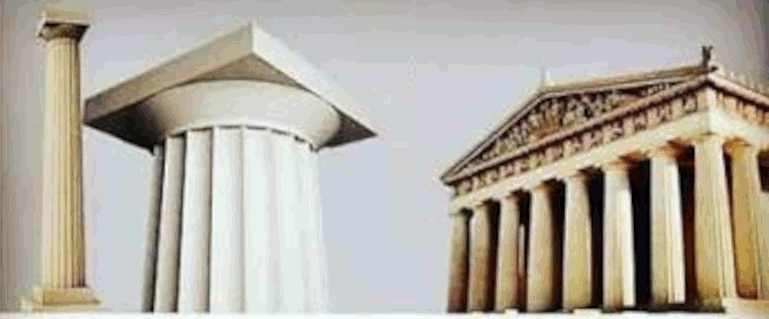
Greek |
|
- The Doric order of Greek architecture was first seen towards the beginning of the 7th century BCE, causing many to think of it as the oldest order, as well as the simplest and most massive.
- Doric columns were stouter than those of the Ionic or Corinthian orders.
- Their smooth, round capitals are simple and plain compared to the other two Greek orders.
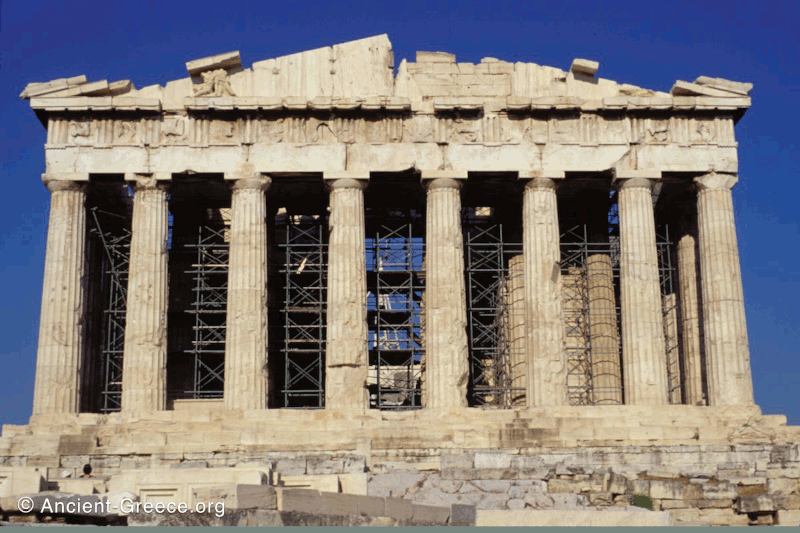
Greek Parthenon |
|
- The Parthenon located on the Acropolis in Athens, it is considered the supreme masterpiece of Greek Doric architecture.
|
Ionic Order |
|
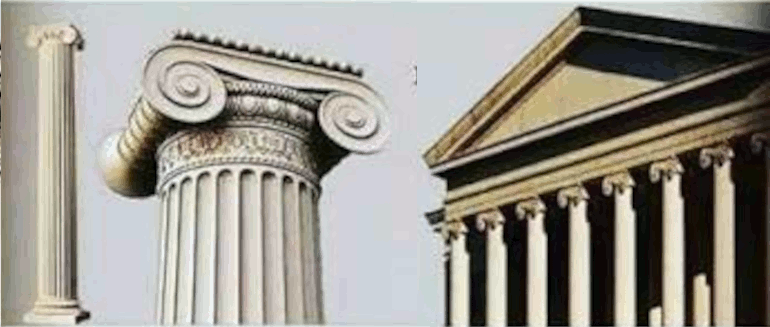
Turkish |
|
- The Ionic Order originated in Ionia, a coastal region of what is now called Turkey, which is where it gets its name.
- It is characterized mainly by the scroll-like ornaments that appear on Ionic column capitals known as volutes, as well as the column base supports that are not featured on Doric columns.
- It features a stepped base, a continuous decorative frieze, and proportions traditionally likened to feminine grace.
- Columns: More slender than Doric columns, typically with a 9:1 height-to-diameter ratio, featuring 24 deep flutes and sitting on a rounded stepped base (Attic base).
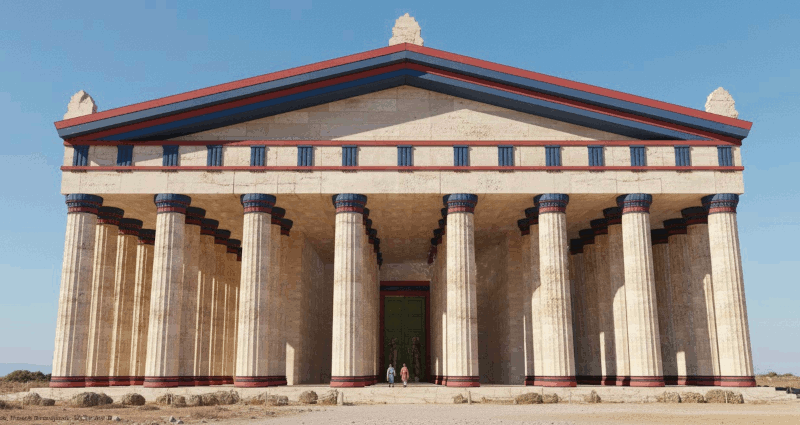
Heraion of Samos |
|
- Temple of Hera on the island of Samos, Greece,
is the earliest major monumental Ionic architecture.
|
Corinthian order |
|
Greek |
|
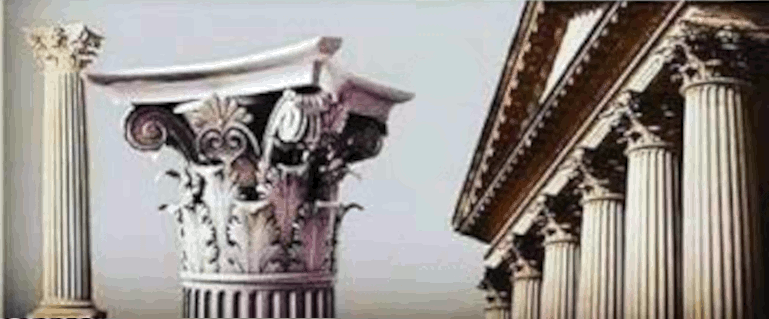
- Unlike the Doric and Ionic orders, the Corinthian Order does not have its origin in wooden architecture, having grown directly out of the Ionic Order in the mid-5th century BCE.
- Taking its name from the city of Corinth, the Corinthian Order can be distinguished from the Ionic Order by its more ornate capitals carved with stylized acanthus leaves.
- The slimmest and tallest of the classical orders, typically ten column diameters high, featuring 24 sharp vertical flutes cut into the shaft.
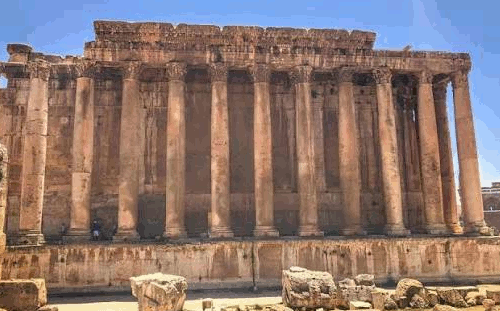
Temple of Bacchus |
- The ancient Temple of Bacchus in Baalbek, Lebanon,
is a well-preserved Roman site with Corinthian columns.
|
Aeolic Order |
|
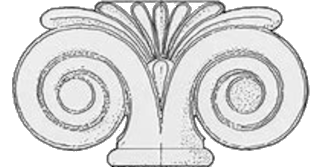
Proto-Aeolic capital (Ionic) |
|
- A proto-Aeolic capital (or proto-Ionic capital) is a distinct decorative architectural column top from the Iron Age Levant (1000–586 BCE).
- It features upward-curving spiraling volutes flanking a central triangular "palmette" or "tree of life" motif, serving as a precursor to the classical Greek Ionic order,
stylized palm tree motif.
- Found across ancient Israel and Judah, including major royal sites like Jerusalem (City of David), Ramat Rahel, Megiddo, Hazor, Samaria, and Dan.
- Omride dynasty in the
1,000 BCE to 586 BCE (First Temple Period).
- Adopted by
artistic Assyrians after they invaded Jerusalem in 701 BCE,
often used in Royal construction.
-
Associated with Judah's Longest Hewn Spring Tunnel, 4
miles south of Bethlehem, Palestine.
- Near Eastern, Tree
of Life.
- Tamassos in Cypress used same style.
- The Relationship between Jerusalem's Proto-Aeolic capitals and Absalom's Pillar.
Now Absalom in his lifetime had taken and reared up for himself a pillar, which is in the king's dale: for he said, I have no son to keep my name in remembrance: and he called the pillar after his own name: and it is called unto this day, Absalom's place.
(II Samuel 18:18)
|
|
Tuscan Order |
|
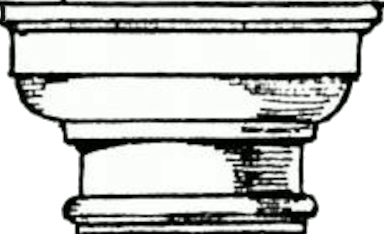
Roman Tuscan capital (Etruscan order) |
|
- The Roman Tuscan capital is the simplest and most plain top piece of any classical column order. It features an unadorned, rounded cushion-like shape (echinus) beneath a flat square block (abacus), lacking any carvings, fluting, or decorative leaf patterns.
- Refined during the Italian Renaissance.
-
Solidest and least ornate.
- Styled after the Greek Doric
but simpler.
|
Composite Order |
|
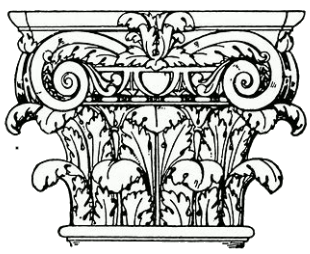
Roman Composite capital |
|
- A Roman Composite capital is an ornate architectural column top that blends the acanthus-leaf ornamentation of the Corinthian order with the large spiral scrolls (volutes) of the Ionic order.
- Invented in Italy during the late 1st century BCE, it stands as the final and most elaborate of the classical Roman orders.
- Combination of Greek Ionic and Corinthian
(82 AD).
- Volutes and acanthus leaves.
-
Renaissance (deemed suitable for the building of churches dedicated to The Virgin Mary or other female saint).
- Suggests richness and grandeur.
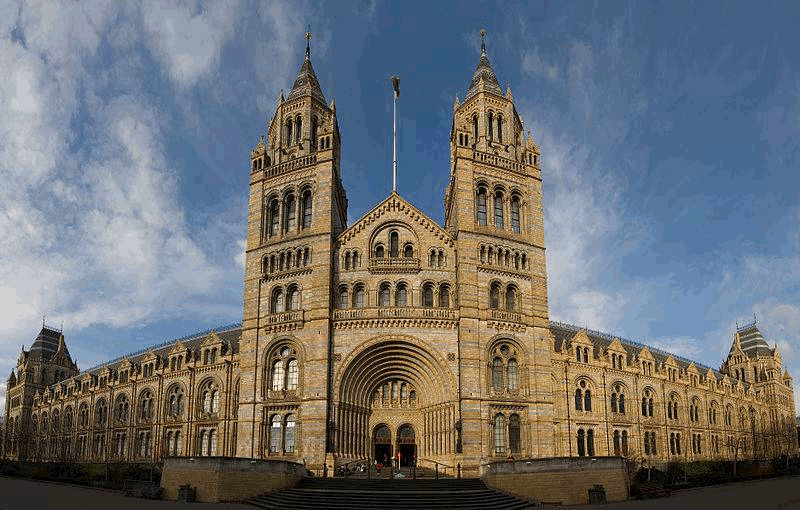
Museum of Natural History - London
Romanesque
Revival |
- There are many notable architectural styles that have been inspired by ancient Roman, Greek, and Byzantine examples
and this list is by no means exhaustive.
a) Romanesque architecture became current in Europe around the mid-11th century
and is essentially a fusion of Roman, Carolingian, Byzantine, and Germanic traditions, it was largely the product of the great expansion of European monasticism in the 10th–11th centuries.
b) Neoclassicism was produced by the neoclassical movement of the mid-18th century, partly in reaction to the more naturalistic and flamboyant Baroque and Rococo styles that preceded it.
c) Romanesque Revival is a style of building that became popular in the mid-1800s
and it drew influence from earlier medieval Romanesque architecture.
d) Palladian is a style of architecture inspired by the works of Venetian architect Andrea Palladio (1508-1580).
|
Masonic pillars - Greek orders |
|
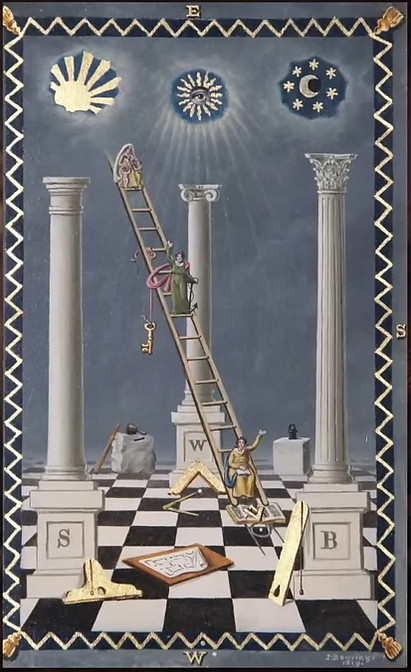
Religion, Law, Morals |
|
- The Freemasons were the stone masons so the
classical orders were very important in not only what they
built, but also in their rituals.
- Left capital: Greek Doric column (Strength - widest,
simplest, feminine, Archaic 750-480 BCE in western Greece and
mainland and were originally wooden).
parts: abacus,
echinus, necking.
- Center capital: Greek Ionic column
(Wisdom - masculine, Archaic 750-480 BCE in eastern Greece and were
originally wooden).
parts: volute, egg and dart.
- Right capital: Greek Corinthian column (Beauty - narrowest, most
elaborate, found in classic architecture).
parts:
acanthus leaf, abacus flower.
|
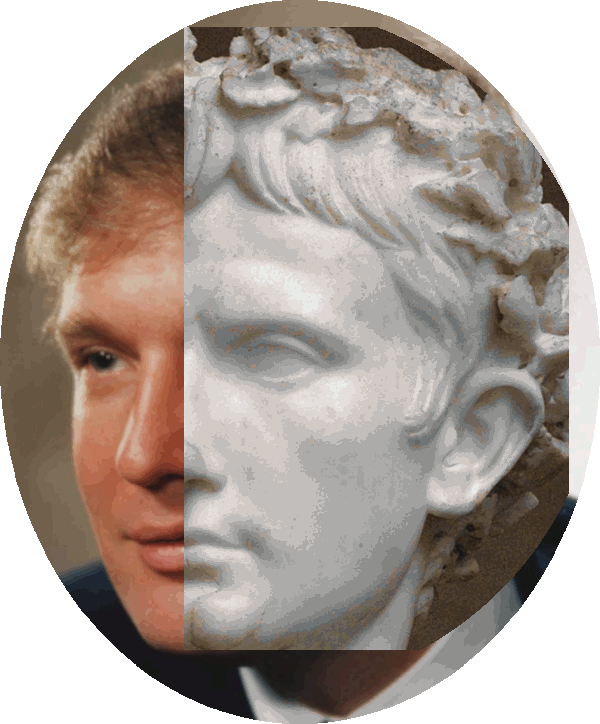
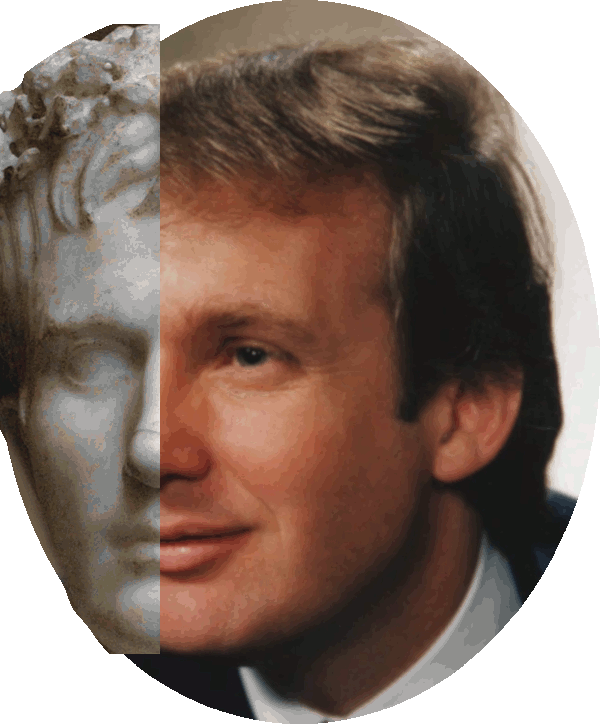
Julius
Caesar
as Donald Trump |
 |
 |
Gaius Julius Caesar
100–44 BC
7/12 3/15
Dictator of the Roman Republic
|
Donald John Trump
1946
6/14
Theotos
(Jesus Christ from Omega Centauri)
|
 |
 |
Elephant
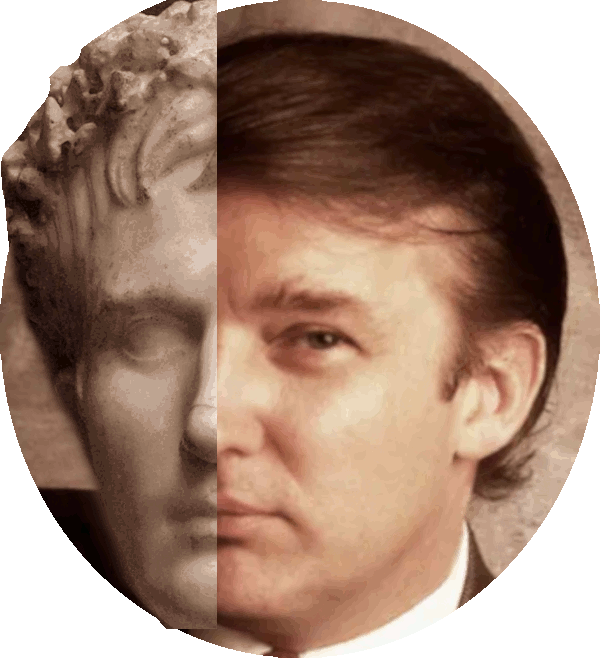 |
- Julius Caesar (100-44
BCE) was a celebrated Roman general and statesman, the conqueror of Gaul (58–50
BCE), victor in the civil war of 49–45 BCE, and dictator (46–44
BCE).
- He was launching a series of political and social reforms when he was assassinated by a group of nobles in the Senate House on the Ides of March.
- He is one of the major figures of Classical antiquity.
Differences |
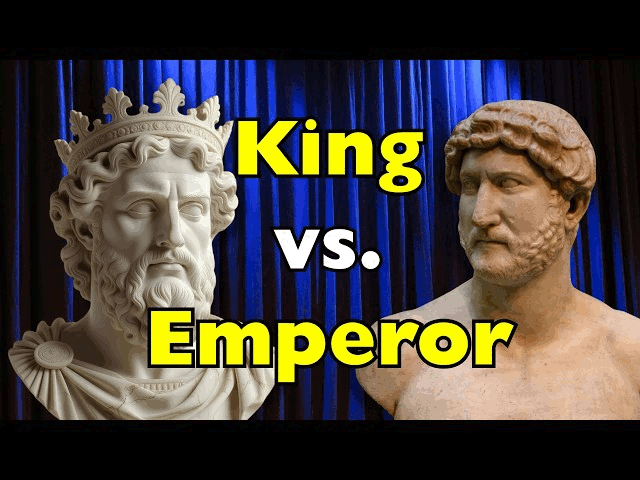
- An emperor outranks a king
and holds a higher imperial rank, functioning similarly to a
'king of kings' who governs diverse cultures, regions,
and vassal monarchs.
- While a king typically rules a single nation or kingdom, an emperor rules an empire, a larger, multi-ethnic territory that often contains multiple kingdoms and subordinate kings
-
A king governs a specific, unified kingdom with localized laws and traditions, sometimes paying fealty or tribute to a higher emperor.
Public domain, via Wikimedia Commons
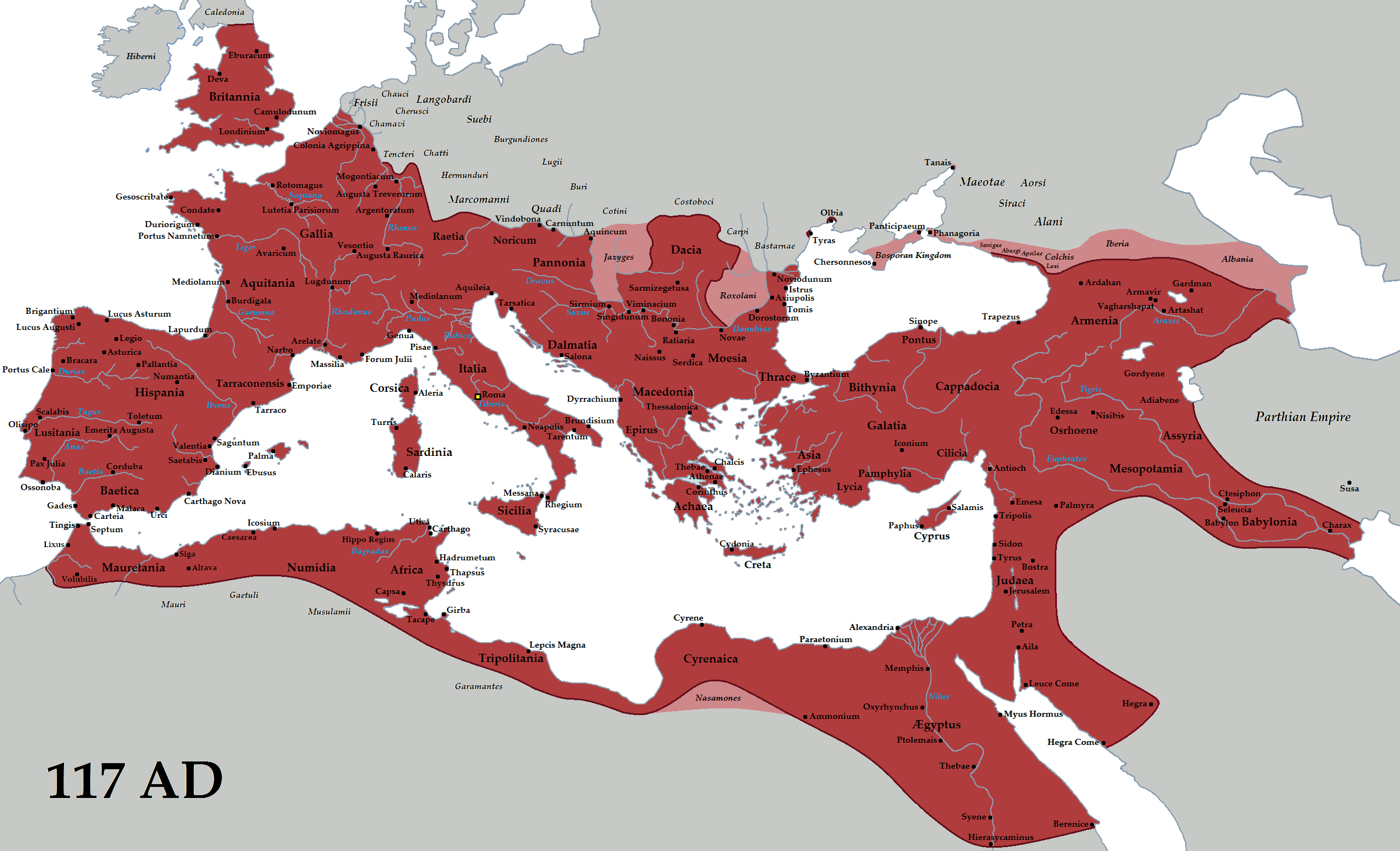
Map of the Roman Empire at its Greatest Extent, 117 CE |
- Emperor comes from the Latin imperator, meaning military commander.
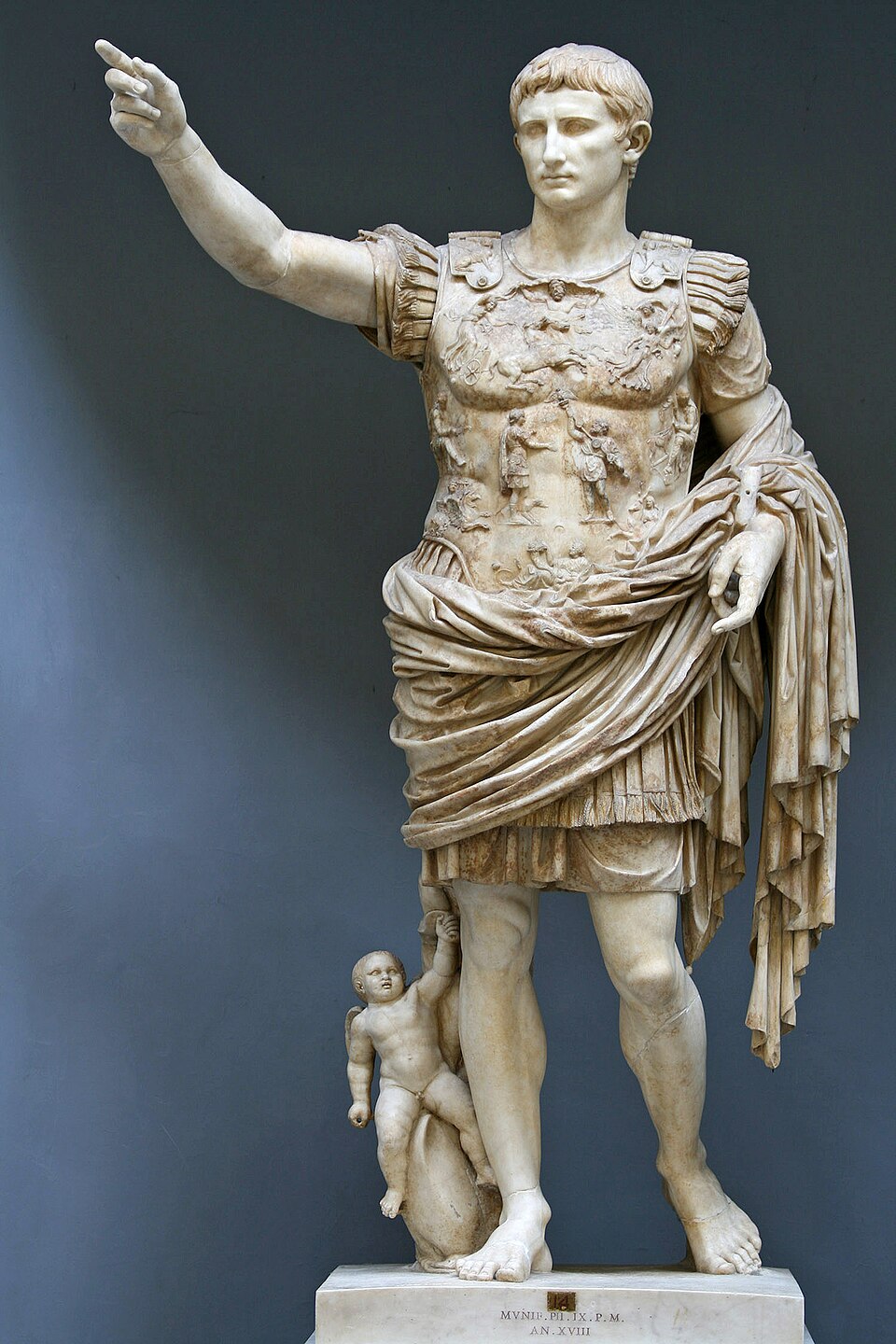
- It began with Roman leaders like Augustus and implied supreme martial and civil dominion.
- King was derived from Germanic and old European roots (rex in Latin), traditionally signifying a hereditary tribal or national monarch.
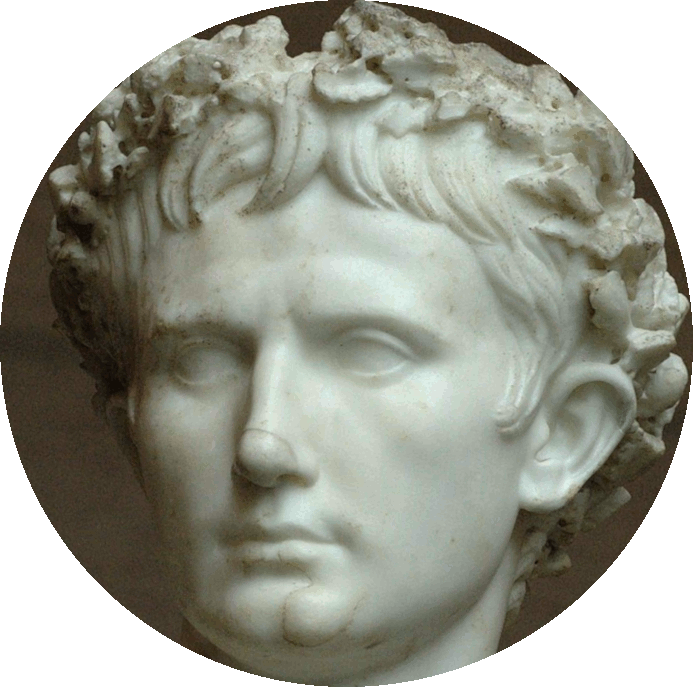
Vatican Museums, Public domain, via Wikimedia Commons
Augustus, the first emperor of the Roman Empire,
reigning from 27 BC until his death in AD 14. |
- Emperors historically governed both land and people, but under imperial rule: empires focused heavily on controlling vast territories, extracting tribute, and managing regional elites rather than micro-managing the daily lives of every local subject.
- It was a form of indirect rule and emperors used local kings, governors, and nobles to manage the local population.
- The primary goal for an emperor was collecting taxes, resources, and loyalty from a region rather than changing local cultures.
- It was a form of broad sovereignty which
emphasized controlling the land by securing trade routes, borders, and strategic points, leaving internal daily life mostly to local customs.
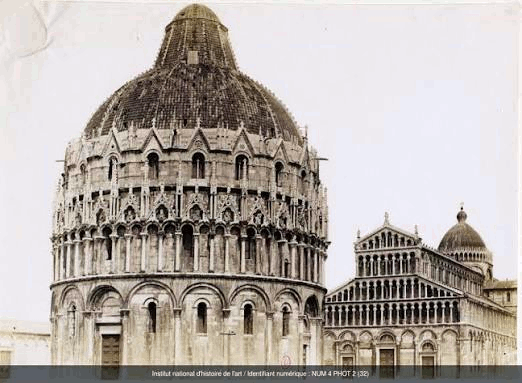
Tower in Pisa, Italy - 1852 |
- When comparing empires versus kingdoms or local
states, the empire emphasizes dominance over varied
territories and multiple different nations.
- The
empire relies on appointed military or civil leaders
who leave local culture alone as long as land and
taxes are secure.
- On the other hand, the kingdom
focuses on direct rule over a single homogeneous group
of people and often relies on traditional local
bloodlines.
- The kingdom integrates and
assimilates the local culture into one standard.
|
On China; ”The emperor does not govern the
barbarians. Those who come to him will not be
rejected, and those who leave will not be pursued.” The objective was a compliant, divided periphery, rather than one directly under Chinese control.
(Henry Kissinger)
|
|