|
ABEL GRIMMER - THE LOST CASTLE - PAGE 3
|
Before the
Storm |
The Politics of
Things
|
- The United States as a sovereign nation that was born of
the British, began with the English colonization of the Americas
during the reign of Queen Elizabeth I.
- Though early attempts, such as the Roanoke colony, ultimately failed, they laid the groundwork for future ventures and established England's claim to territories in North America.
Relationships |
-
The Pilgrims founded the Plymouth Colony, later called Massachusetts,
and there were 13 colonies and each had a charter from the English King.
which defined the relationship between the colony and the English government.
- Unlike the French, who were treated to the rule of a single royal family with
4 monarchs (the Bourbons), the British government or ruling royal houses changed
6 times and had 12 separate heads of state during the colonial
period.
- The history of U.S. presidents' dealings with the British government spans from early
early diplomatic relations, including the unpopular
Jay's Treaty, to the modern 'special relationship' forged during WWII and continued through numerous state visits and collaborations.
|
Jay's Treaty was a 1794 agreement between the United States and Great Britain to settle outstanding issues from the Revolutionary War and avoid a new conflict. The treaty, negotiated by John Jay, required Britain to withdraw its military forts from American soil and granted the U.S. some trading rights, but was widely unpopular with Americans who felt it was too favorable to the British. Despite the intense public backlash and political division, the treaty was ratified and successfully averted war, though it contributed to later tensions with France and was a factor leading up to the War of 1812.
(Assistant)
|

Charles Barry, Public domain, via Wikimedia Commons |
- The Parliament of the United Kingdom of Great Britain
and Northern Ireland is the supreme legislative body of the United Kingdom, and may also legislate for the Crown Dependencies and the British Overseas Territories.
- Since 1999, varying degree of powers have been devolved to the devolved national parliaments of Northern Ireland, Scotland, and Wales.

Swapnil1101, Public domain, via Wikimedia Commons
|
- The House of Commons is comprised of 650 Members of Parliament (MPs) elected by the public every
5 years.
- It is the primary legislative body that approves taxes, holds the government accountable, and forms the government based on the majority party.
- This party has the dominant power and can make decisions on financial
bills.

Swapnil1101, Public domain, via Wikimedia Commons
|
- The House of Lords is composed of appointed life peers, some hereditary peers, and senior bishops (Lords Spiritual).
- Members are appointed by the monarch on the advice of the Prime Minister, with nominations vetted by an independent commission.
- They can delay bills, but cannot block financial
legislation, in one word, politics.
Spinning the wheel |
- A new United Kingdom government is formed when the leader of the political party with the most seats in the House of Commons after a general election is invited by the monarch to become Prime Minister and form a government.
- So in essence, every Prime Minister creates a new
government under the approval of the monarch.
- The new Prime Minister then appoints ministers, who form the Cabinet, and the monarch gives formal approval.
- This process follows the established conventions outlined in the Cabinet Manual.
Descendant
|
- The monarch is of course, is the king/queen, and the prime minister of the United Kingdom is the head of government.
- The prime minister advises the sovereign on the exercise of much of the royal prerogative, chairs the Cabinet, and selects its ministers.
-
Succession to the throne is regulated not only through descent, but also by Parliamentary statute.
- One such example was when Henry VIII created laws through
the actions of the Privy Council that his daughter Elizabeth I
could not marry unless she had the council's approval.
- As
a result, Elizabeth never married, however, she left no
legitimate descendants to pass the Tudor crown down, so he undermined his
own rule.
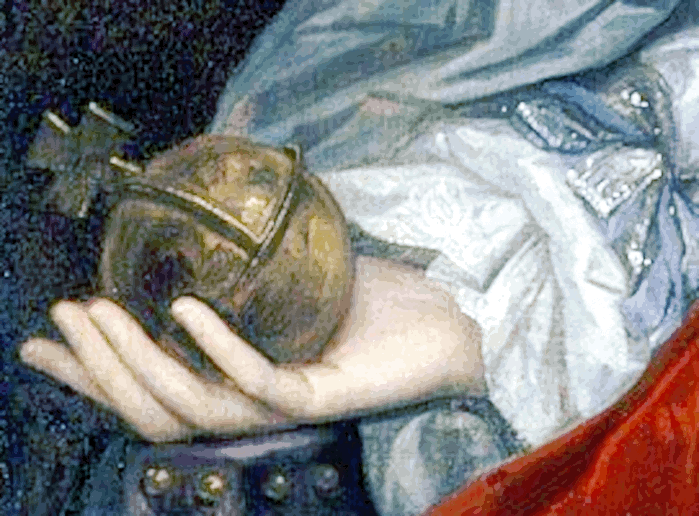
Evolving control |
- The relationship between the British Crown and the American colonies was one of evolving control, shifting from initial autonomy to increased royal authority that ultimately led to conflict.
- Initially, colonies enjoyed self-governance, but the Crown gradually asserted more control by converting many into royal colonies, which were directly administered by the king's appointees.
- The Crown's attempts to impose greater taxation and control, particularly after the
French and Indian War, were met with increasing resistance from colonists who felt they lacked representation and the right to self-government.

Oversight and
control |
- Charter colonies: These were self-governing colonies where the King granted a charter to a joint-stock company, which then set up its own independent governing system. Examples include Connecticut and Rhode Island.
- Proprietary colonies: The Crown granted ownership of a colony to an individual or a group. The owner typically appointed a governor but often allowed for an elected assembly. Examples include Pennsylvania, Delaware, and Maryland.
- Royal colonies: These colonies were directly owned and administered by the Crown. By the time of the American Revolution,
8 of the 13 colonies had become royal colonies (Virginia, New Hampshire, New York, Massachusetts, New Jersey, South Carolina, North Carolina, and Georgia):
this was often a consequence of the Crown reasserting control over colonies that had been poorly administered or were seen as troublesome.
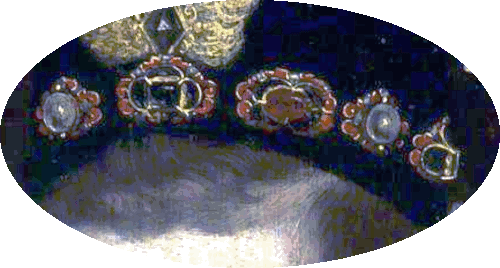
Monarch |
-
British kings, from James I through George III, chartered and granted colonies in America, initially fostering them with royal permission.
- Over time, the relationship soured as colonists resented control from afar and the British crown and Parliament imposed taxes to manage the empire, leading to the
American Revolution.
- By the 1770s, the focus of colonial anger shifted from the king to Parliament's policies, which were perceived as violating their liberties, though King George III became the symbolic figure of their rejection of British sovereignty.
House of
Tudor
1485 - 1603
Welsh |
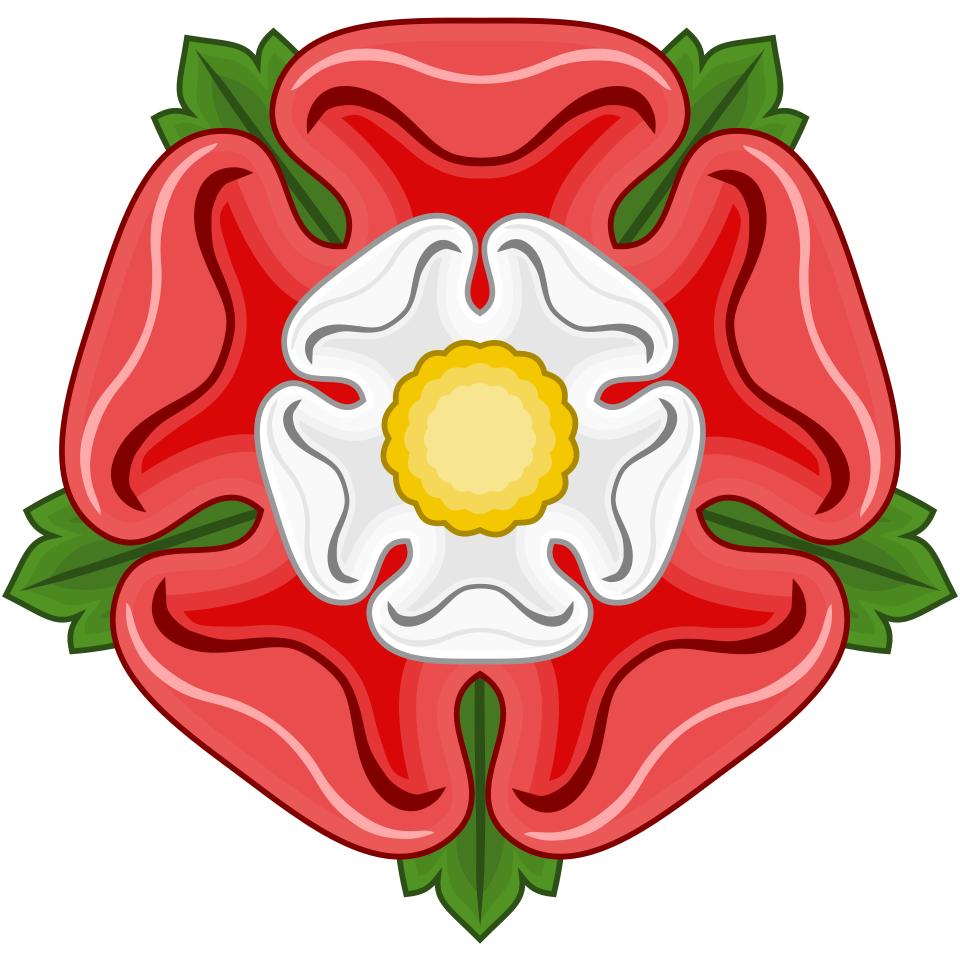
Public domain, via Wikimedia Commons
Tudor Rose |
- The House of Tudor was an English and Welsh dynasty that
held the throne of England from 1485 to 1603.
- They descended ultimately from Ednyfed Fychan and the Tudors of Penmynydd, a Welsh noble family, and Catherine of Valois.
- The Tudor monarchs were also descended from the House of Lancaster.
- They ruled the Kingdom of England and the Lordship of
Ireland (later the Kingdom of Ireland) for 118 years with five
monarchs: Henry VII, Henry VIII, Edward VI, Mary I and Elizabeth I.
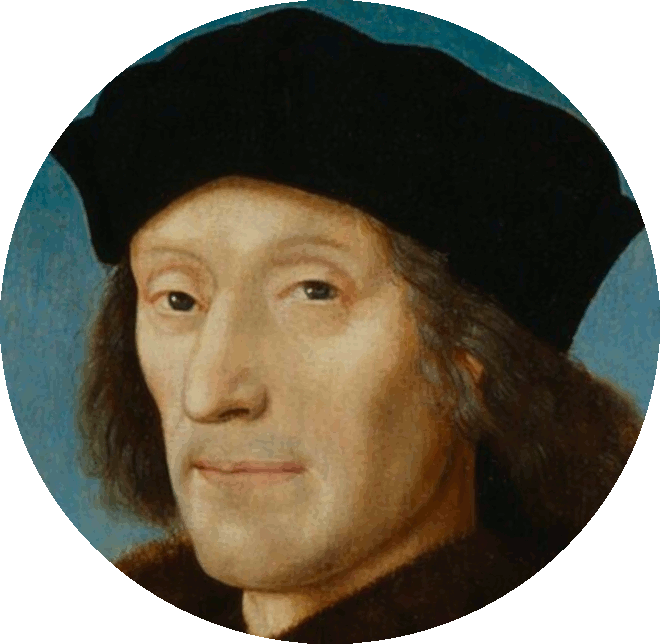
King Henry VII
of England
1485 -
1509
House of Tudor |
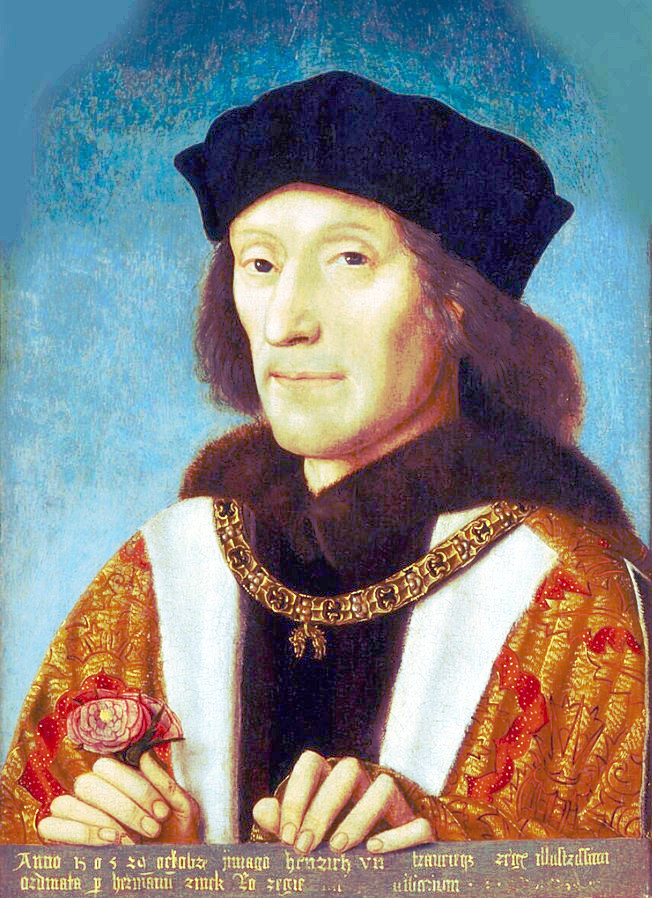
National Portrait Gallery, Public domain, via Wikimedia Commons
c. 1505-09 |
- Henry VII was King of England and Lord of Ireland from his seizure of the crown on August
22, 1485, until his death in 1509.
- He was the first
monarch of the House of Tudor.
- Born as Henry Tudor
(1457-1509) on January 28, 1457, he was the only child of Lady Margaret Beaufort, who was 13 years old at the time, and Edmund Tudor, 1st Earl of Richmond, who, at 26, died
3 months before his birth.
- His primary claim to the
throne came through his mother, who was a great-great-granddaughter of John of Gaunt, Edward IIIs son.
- However, the line through the Beauforts was originally illegitimate, and while it was later legitimized by a Papal decree, it was explicitly barred from inheriting the throne by an Act of Parliament passed during Henry IV's reign.
|
Lack of Direct Royal Lineage: His father, Edmund Tudor, was a half-brother to King Henry VI through their shared mother, Catherine of Valois, which provided some minor connection but no direct claim to the ruling Plantagenet male line. At the time he invaded, other individuals had stronger theoretical blood claims to the throne, including his own mother and his future
wife, Elizabeth of York. Some sources place him as low as 17th or 34th in the line of succession.
(Assistant)
|
War horse |
- The Wars of the Roses began in 1455 under Henry V, two years before
Henry VII was born in 1457, and it ended in 1487, which was
only 2 years after Henry VII took the throne.
- This was known at the time and in following centuries as the
Civil Wars, and also the Cousins' War, were a series of armed confrontations.
-
Henry V's war was primarily the continuation of the Hundred Years' War against France, launched in 1415 to assert his claim to the French throne.
- His military campaign is famous for the decisive English victory at the
Battle of Agincourt in 1415, which allowed Henry V to conquer Normandy and secure the
Treaty of Troyes in 1420 that recognized him as the heir to the French throne, creating a union between the two crowns.
|
Henry V claimed the title of King of France based on
his great-grandfather, Edward III. Conquest of Normandy: Following his victory at Agincourt, Henry went on to conquer much of northern France. Marriage to Catherine of Valois: The treaty also arranged for Henry
V to marry Catherine, the daughter of the French King Charles VI.
(Assistant)
|

Henry VII at war |
-
Henry VII was involved in several wars, most notably winning the
Battle of Bosworth Field in 1485 to end the Wars of the Roses.
-
In 1487, Henry's forces defeated the final major rebellion, led by
pretender Lambert Simnel who claimed to be the Earl of Warwick,
in the Battle of Stoke Field solidifying his rule and
ending the wars permanently.
- During his early reign, Henry VII also fought in the War with France
after he was drawn into a conflict to prevent the duchy of
Brittany from being absorbed into the French kingdom.
-
The Treaty of Etaples in 1492 ended the war and
France recognized Henry's dynasty and paid him a pension!!
|
Henry VII sent an army and found himself briefly allied with Spain and the Holy Roman Emperor against France. He soon realized war was too expensive and risky for his still-insecure throne, making peace in 1492 with the Treaty of Etaples, which granted him a substantial pension and French recognition of his dynasty.
(Assistant)
|
Golden fleece |
- Tensions arose in 1496 when King James IV of Scotland supported the most significant Yorkist pretender, Perkin Warbeck, and launched a small invasion into northern England.
- Henry VI responded diplomatically and ended the conflict
by 1497, which ultimately led to a peaceful resolution and the eventual marriage of his daughter Margaret to James IV.
- The Cornish Rebellion of 1497 was a tax revolt when
Cornishmen marched on London and Henry VII's forces ended in
the Battle of Deptford Bridge.
|
Henry VII was not a "warrior king" like his son, Henry VIII, and preferred to let experienced commanders lead his forces in battle, focusing instead on the strategic and financial aspects of his rule to ensure a stable dynasty.
(Assistant)
|

Commoner
and usurper |
- Henry VII is considered a usurper because he overthrew the reigning king, Richard III, and took the throne through military conquest at the
Battle of Bosworth in 1485.
- Although he ended the Wars of the Roses by defeating Richard III and later married Elizabeth of York to unite the houses of Lancaster and York, his claim to the throne was initially considered weak, and he faced challenges to his legitimacy throughout his reign.
- His own claim to the throne was distant and tenuous, and his seizure of power was considered illegitimate by many.
- Additionally, his link to the Crown is laughable when you
study the genealogy and it's hard to believe that his English
'subjects' would approve of this.
|
To secure his position, Henry VII dated his reign from the day before the battle, making all those who fought for Richard III guilty of treason. He also strategically married Elizabeth of York, the sister of the murdered Princes in the Tower, to unite the rival houses of Lancaster and York under the new Tudor dynasty.
(Assistant)
|

Pinched fingers |
- During Henry VII's lifetime, the nobility often criticized him for re-centralizing power in London and, later, the 16th-century historian Francis Bacon was ruthlessly critical of the methods by which he enforced tax law.
- It is equally true that Henry VII was diligent about keeping detailed records of his personal finances, down to the last halfpenny
pincher.

Pinched lips |
- We're still looking
for the 2 lost Princes of
the Tower, what does Henry know about it?
-
The 'lost princes' refer to the sons of Edward IV who were
next in line for the throne.
- Edward V and his younger brother, Richard, Duke of York,
simply disappeared from the Tower of London in 1483.
- While their fate is a historical mystery, the traditional theory is that their uncle, King Richard III, had them murdered to secure his claim to the throne.
- Alternatively, Henry VII, the first Tudor monarch, is also a suspected murderer
and he has been credited with promoting the narrative that Richard III was to blame.
- Henry VIIs rise to the throne benefited from the princes' disappearance
as they were a potential threat to his reign.
|
A confession by Sir James Tyrrell, who was imprisoned in the Tower of London in 1502, suggested that he arranged the killings, and some historians argue he did so on Henry's behalf. The question of who killed the princes remains one of the most enduring mysteries in English history, and the debate over Henry VII's possible involvement continues to this day.
(Assistant)
|
His Majesty's Secret |
- Long before his granddaughter, Elizabeth I, formally
established the British intelligence wing, Henry VII had
already built an extensive network of spies and informers.
- Sir Charles Somerset was his one of his master's of
intelligence, a 'man of Flanders,' otherwise known as His
Majesty's Secret Service.
- The king kept detailed logs of all his financial
transactions and thousands of pounds (on a regular basis) of
gold bullion that he paid to unknown dignitaries from foreign
lands.
- Henry VII used his intelligence wing to map the
political loyalties of his subjects, putting under
surveillance those who were likely to cause him problems.
-
This is where his son, Henry VIII learned all the tricks of
the trade.
Hang out our banners on the outward walls. (Shakespeare, Macbeth)
|

Ruthless |
-
Historical evidence suggests that Henry VII was a complex figure who was both effective and ruthless.
- He is credited with restoring stability to England after the
Wars of the Roses and strengthening the monarchy through administrative, economic, and diplomatic initiatives.
- However, some of his methods were seen as harsh and paranoid, particularly his focus on accumulating wealth and his mistrust of the nobility, which led to him alienating potential supporters and ruling with a degree of tyranny, especially in the latter part of his reign.
|
Some historians describe his methods as ruthless, and a contemporary source called him "terrifying" due to his paranoia.
Focused on wealth: He was known for his obsession with accumulating wealth, which made him unpopular with many. He is also accused of mistreating his own family members, including his mother-in-law, Cecily Neville.
(Assistant)
|
|
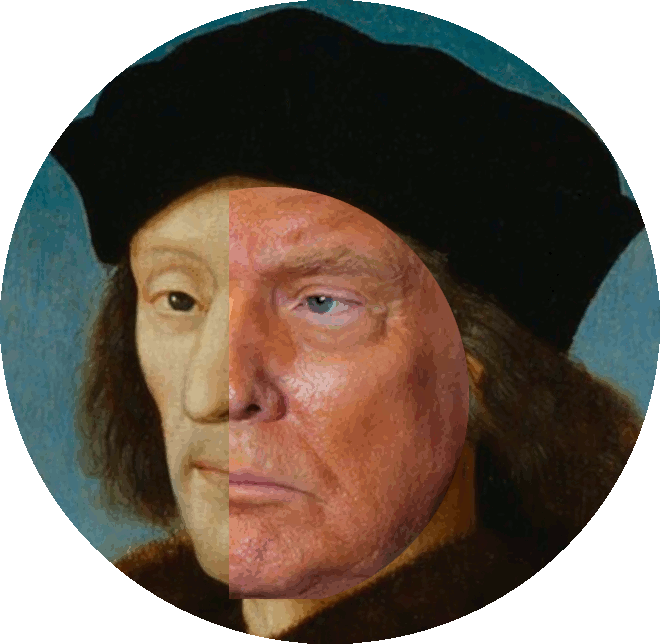
Henry VII as Donald Trump |
 |
 |
Henry Tudor
1457-1509
1/28
4/21
monarch |
Donald John Trump
1946
6/14
tyrant |
 |
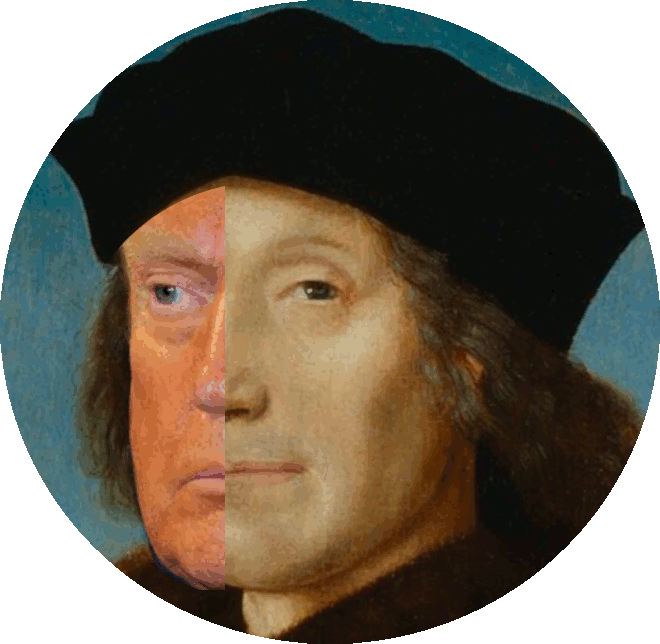 |
The spin
starts here
Henry with a little more meat on
his bone
Usurper of the throne |
- Henry VIIIs medical recipes included unconventional
ingredients like earthworms, and he was busy putting worms in
peoples eyes but not for any good reasons, that's for sure.
-
Earthworms and nightshade and lead
and mercury, oh my! Henry VIII’s poisonous medical recipes.
- Henry VII died of tuberculosis at Richmond Palace on April
21, 1509.
|
In 1502, Henry VII's life took a difficult and
personal turn in which many people he was close to
died in quick succession. His first son and heir
apparent, Arthur, Prince of Wales, died suddenly at
Ludlow Castle, very likely from a viral respiratory
illness known at the time as the "English sweating
sickness". This made Henry VII's second son, Henry,
Duke of York, heir apparent to the throne. The King,
normally a reserved man who rarely showed much emotion
in public unless angry, surprised his courtiers with
his intense grief and sobbing at his son's death.
(Wikipedia)
|
King Henry VIII
of England
1509 - 1547
House of Tudor |
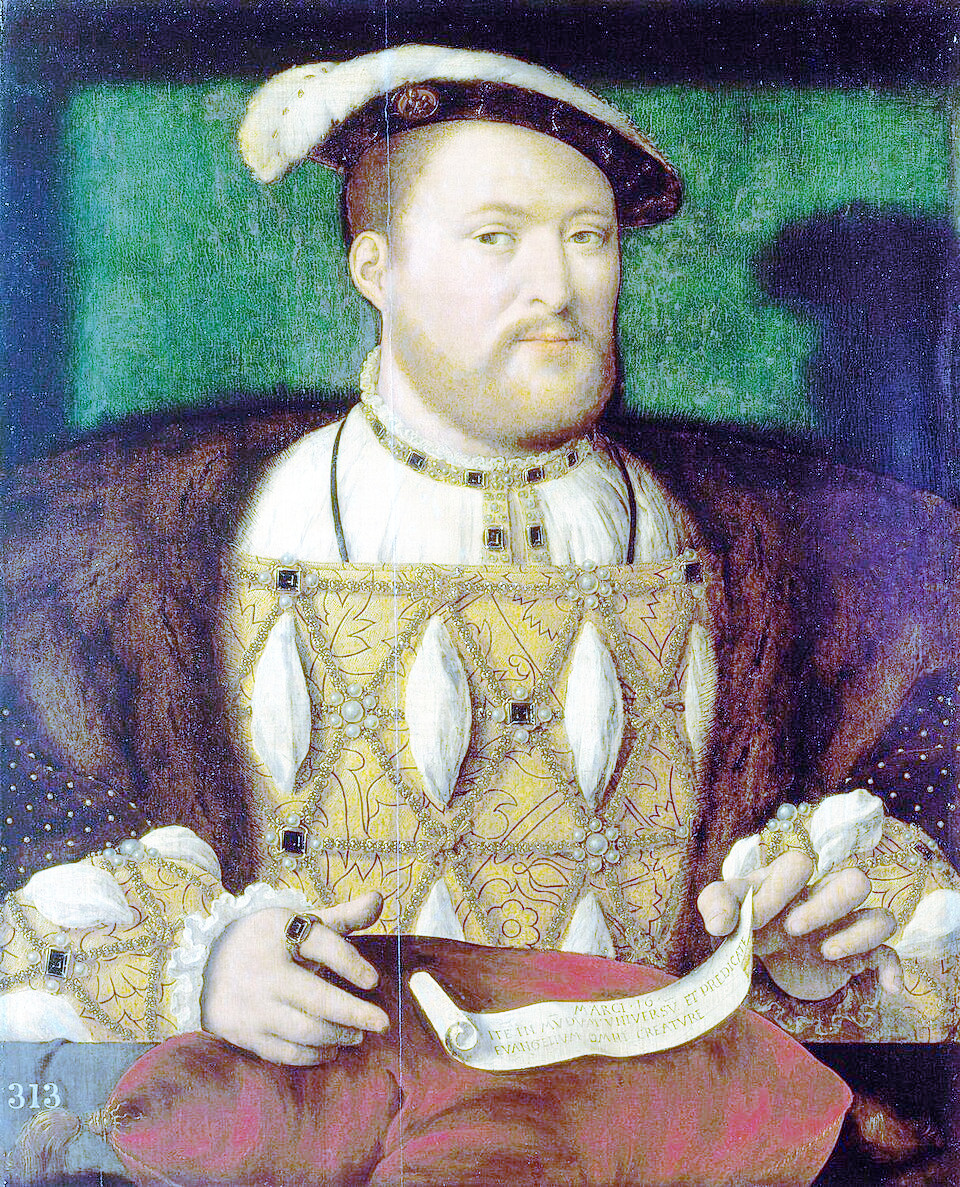
Joos van Cleve, Public domain, via Wikimedia Commons
c. 1531 |
- Henry VIII was King of England from April 22, 1509, until his death
on January 28, 1547.
- Born as Henry Tudor (1491-1547) on
June 28, 1491, he was the son of Henry VII of England and
Elizabeth of York.
- Henry was a dominant and forceful monarch.
- His legitimate tie to the throne came through his mother,
however, it was tenuous so he needed a male heir to cement
the Tudor dynasty.
- Henry VIII is
also known for his 6 marriages and his efforts to have his
first marriage, to Catherine of Aragon, annulled.
- He
began flirting with the new Protestant faith that came out
of Germany after the Pope wouldn't grant a divorce.
- The
decision was made to split with the Vatican not only to gain
a divorce, but to acquire all the riches of the church in
England, Wales and Ireland.
|
We all are men, in our own natures frail, and capable of our flesh; few are angels.
(Shakespeare, Henry VIII)
|
War horse |
- Henry VIII fought numerous wars, primarily against France, which were a mix of conventional conflicts and attempts to reclaim English territory in France.
- The French Wars were a series of conflicts that took place between 1512–1546
and Henry VIIIs main objective was to reclaim parts of France for England, a policy influenced by his hero-worship of earlier English kings like Henry V.
-
Italian Wars (Holy League) from 1512–1514 took place
early in his reign, after Henry VIII joined the Holy League
(an alliance with Spain, the Holy Roman Empire, and the
Papacy) and he allied with the Holy Roman Emperor Charles V
against Francis I of France.
-
Battle of the Spurs of 1513 was a brief campaign
where English forces captured the French towns of Thérouanne and Tournai
and it was a great propaganda victory for the king.
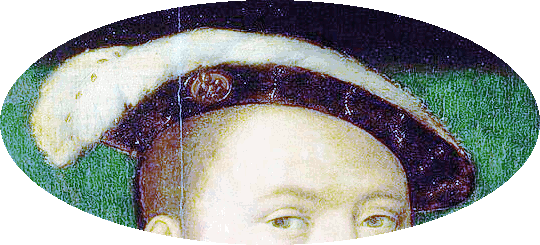
Feather in his cap |
- Henry VIII also engaged in wars against Scotland to prevent the Anglo-Scottish union, and in Ireland to assert English control over the island.
- The Battle of Flodden Field in 1513 began after Henry was in France,
and King James IV of Scotland invaded England and the English army, overseen by Queen Catherine of Aragon, decisively defeated the Scots, and James IV was killed in the battle.
- The Siege of Boulogne from 1544–1546 was the last major military action of Henry
VIIIs reign
and England successfully captured Boulogne, but the long-term goal of establishing a lasting foothold
in France proved difficult to maintain.
|
In response to the capture of Boulogne, the French launched an attempted invasion of the Isle of Wight and Portsmouth. A naval battle ensued in the Solent, primarily remembered for the sinking of the English warship Mary Rose. The invasion attempt ultimately came to nothing.The war ended in a stalemate with the Treaty of Ardres in 1546, which allowed Henry to keep Boulogne for a period, though the conflict left the crown deeply in debt.
(Assistant)
|
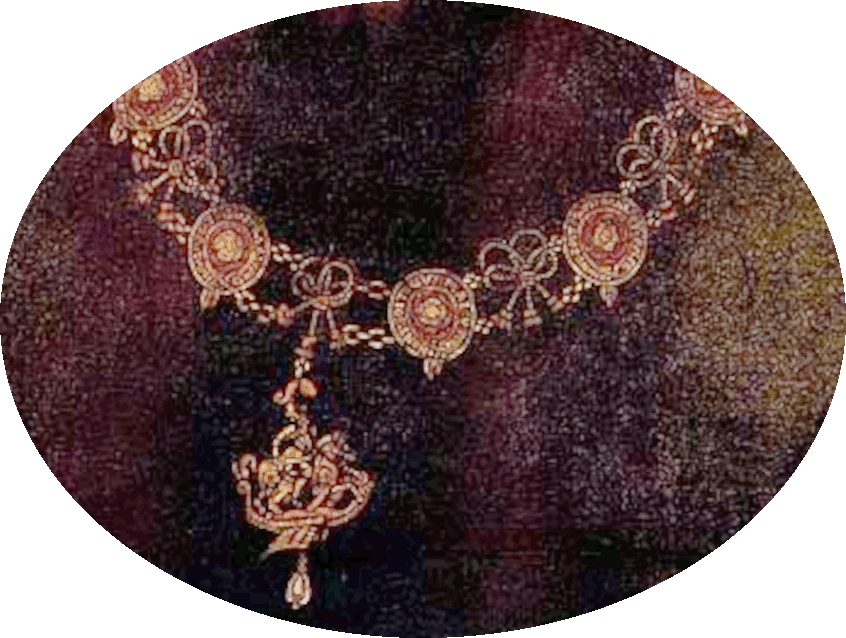
Royal jewels |
-
Many years later,
Rough Wooing took place from 1543–1550 and was a series of conflicts in a direct attempt to force the marriage of Henry's son, Edward
(VI), to Mary, Queen of Scots after the Treaty of
Greenwich was signed to seal the deal.
- The ultimate goal was to bring Scotland under English control and break the long-standing alliance between Scotland and France.
- The Rough Wooing did break the Auld Alliance
between Scotland and France but was ultimately unsuccessful in its primary goal of forcing a marriage and failed to break the Franco-Scottish alliance.
|
The Auld Alliance (Scots for "Old Alliance") was an alliance between the kingdoms of Scotland and France against England made in 1295. The Scots word auld, meaning old, has become a partly affectionate term for the long-lasting association between the two countries. The alliance was never formally revoked, although it is considered by some to have ended with the signing of the Treaty of Edinburgh in 1560.
(Assistant)
|
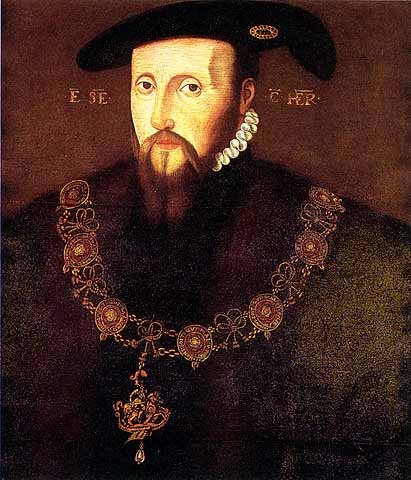
Artist unknown. Uploaded by Qp10qp., Public domain, via Wikimedia Commons
Edward Seymour - 1537 |
- Edward Seymour, 1st Duke of Somerset, 1st Earl of
Hertford, 1st Viscount Beauchamp (1500-1552) was an English nobleman and politician who served as Lord Protector of England from 1547 to 1549 during the minority of his nephew King Edward VI.
- He was the eldest surviving brother of Queen Jane Seymour, the
3rd wife of King Henry VIII and mother of King Edward VI.
- Seymour grew rapidly in favor with Henry VIII following Jane's marriage to the king in 1536, and was subsequently made Earl of Hertford.
- On Henry's death in 1547, he was appointed protector by the Regency Council on the accession of the
9-year-old Edward VI.
- Rewarded with the title
Duke of Somerset, Seymour became the effective ruler
of England and his position was precursor to the
formal position of Prime Minister.
|
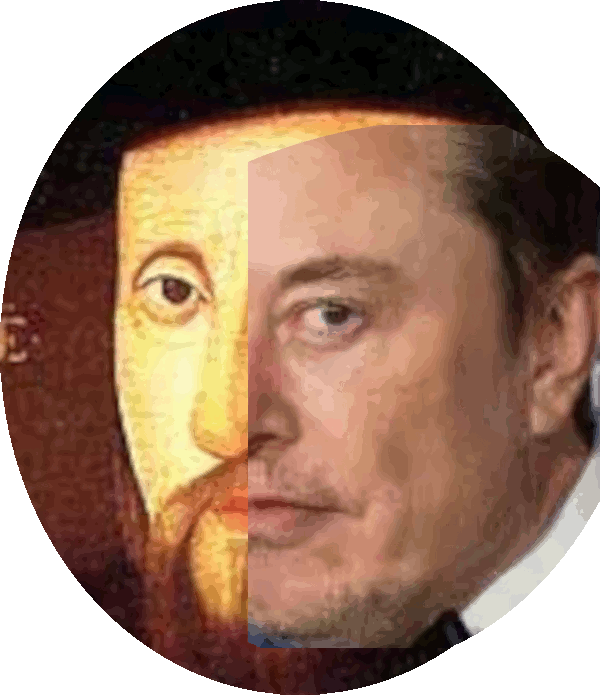
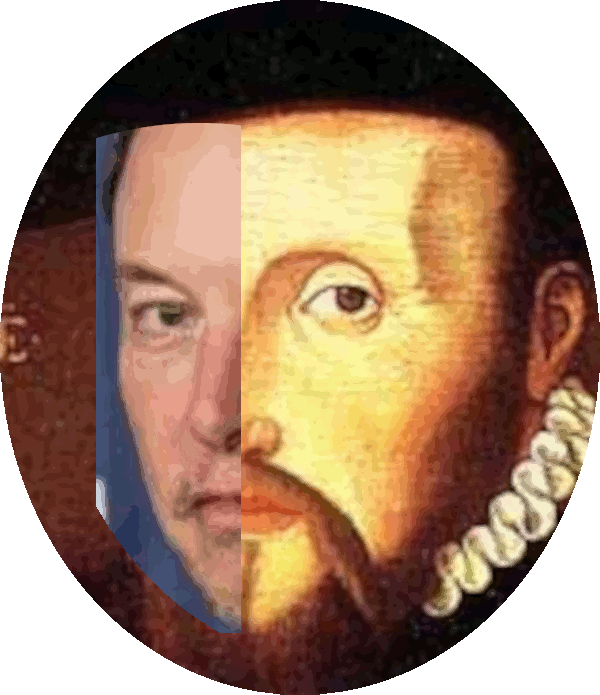
Edward Seymour as Musk |
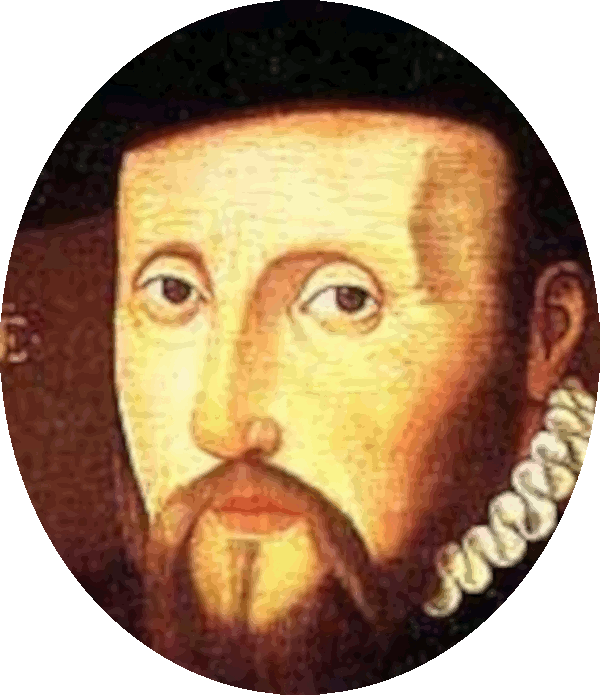 |
 |
Edward Seymour
1500-1552
?
1/22
Lord |
Elon Reeve Musk
1971
6/28 |
 |
 |
|
Summer setting |
- Somerset continued Henry's military campaign against the Scots and achieved a sound victory at the
Battle of Pinkie, but ultimately he was unable to maintain his position in Scotland.
- Domestically, Somerset pursued further reforms as an extension of the English Reformation, and in 1549 imposed the first
Book of Common Prayer through the Act of Uniformity, offering a compromise between Protestant and Roman Catholic teachings.
- He was eventually executed after imprisonment
in the Tower of London by John Dudley, Earl of
Warwick, and was hung in January 1522.
|
The unpopularity of Somerset's religious measures, along with agrarian grievances, resulted in unrest in England and provoked a series of uprisings (including the Prayer Book Rebellion and Kett's Rebellion). Costly wars and economic mismanagement brought the Crown to financial ruin, further undermining his government.
(Wikipedia)
|
|
Jeweled |
- Henry VIII also had difficulties in Ireland when he attempted to establish English control
after declaring Ireland a kingdom in its own right in
1542.
- He sought to impose English law and feudal systems on the Irish clans.
- The
Nine Years' War from 1593–1603 was the final and most significant phase of the Tudor conquest of Ireland, led by Gaelic lords like Hugh O'Neill against the English Crown.
-
Despite fierce resistance, the Irish forces were eventually defeated, particularly after their defeat at the
Battle of Kinsale.
- The war ended with the English solidifying their control over the island, leading to the
'Flight of the Earls' and the end of the Gaelic order and
resulted in widespread destruction and weakened the power
of Irish lords.
|
The Tudor conquest aimed to establish English sovereignty over Ireland through conquest, coercion, and colonization.
The conflict was a response to the English Crown's growing control and advances into the territory traditionally held by the Gaelic nobility.
The conflict was a rebellion against English encroachment on Gaelic lands, escalating into a full-scale war supported by Spanish forces. The war was devastating for Ireland and concluded with an English victory, which cemented England's control and led to the end of the Gaelic order.
(Assistant)
|

Watch their water |
- In 1509, Henry VIII commissioned
England's first gunship, the Mary Rose.
- His reign was marked by costly and often unsuccessful diplomatic ventures, and a significant investment in the English navy, most notably through the construction of the Mary Rose.
-
Henry VIII increased the number of battleships from 5 to 60, and built
many coastal fortresses in England by 1540.
- He
greatly expanded the British Royal Navy in 1545, which his
father, Henry VII established in 1485, an event that is
considered to mark the beginning of the British Empire that
terrorized the world.
- During his reign, Henry spent a lot
of time fighting France and during the Battle of the Solent
in 1545, the Mary Rose famously sank during this action
against the French fleet in the Solent.
|
The naval Battle of the Solent took place on 18 and 19 July 1545 during the Italian Wars between the fleets of Francis I of France and Henry VIII of England. On 19th July 1545 the Mary Rose sank in the Solent during an engagement with a French invasion fleet. Of the estimated 500 men on board, only 35 are thought to have survived. The hull and her crew remained largely undisturbed on the seabed for over four centuries until the rediscovery of the site in the early 1970s
(Assistant)
|
Pilgrimage of Grace
uprising |
- The
Pilgrimage of Grace uprising which began in Yorkshire and spread to Cumberland, Northumberland and Lancashire was the most serious of rebellions during Henry
VIII’s reign.
- It was a spontaneous mass protest and rebellion against the policies of the Crown associated with
hiss advisor Thomas Cromwell.
- The rebellion was initiated after a poor harvest in 1535 led to high food prices.
- Due to King Henry VIII’s Reformation, which saw many monasteries dissolved, the poor were unable to turn to them for food and shelter.
|
Love thyself last: cherish those hearts that hate thee...
(Shakespeare, Henry VIII)
|
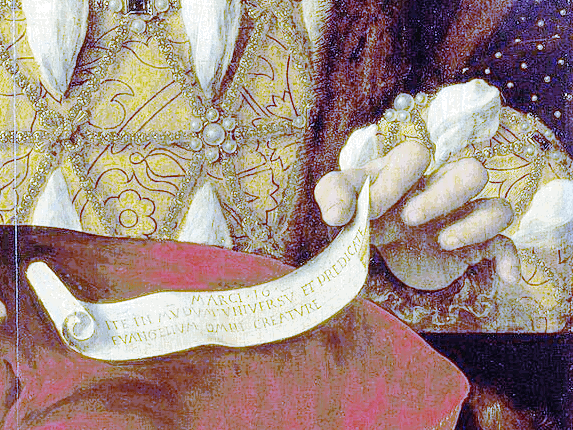
Divine rights
BS
Pinched
fingers |
- Born in Greenwich, Henry VIII brought radical changes to the Constitution of England, expanding royal power and ushering in the theory of the divine right of kings,
which is a Jewish mythology, in opposition to papal supremacy,
which is Christian mythology.
- This is a bad thing because
just because you're a bully, that doesn't give you the
right to create corrupt laws to give yourself more rights than
everyone else.
- No matter that it was the corrupt pope he was
doing it to, essentially, Henry considered himself as the head of everything.
Henry VIIIs reign saw a strong embrace and assertion of the divine right of kings, a theory that monarchs rule by God's will and are accountable only to God. This was particularly evident when he broke from the Roman Catholic Church and established the Church of England, declaring himself its Supreme Head. By asserting this divine authority, Henry positioned himself as a divinely ordained ruler over both spiritual and secular matters, a deliberate political move to consolidate his power and shape the nation's spiritual order. (Wikipedia)
|
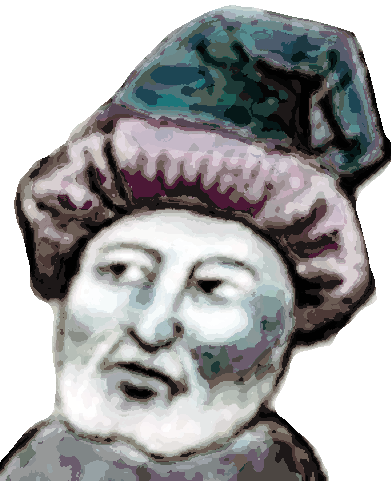
Henry VIII |
- Henry VIIIs primary motivation for seeking an annulment from Catherine was his need for a male heir to secure the Tudor dynasty,
however, the Pope wouldn't grant him an annulment.
- Catherine was the aunt of Holy Roman Emperor Charles V, and his influence on the Pope was a major obstacle.
- His disagreement with Pope Clement VII about such an annulment led Henry to initiate the English Reformation, separating the Church of England from papal authority.
|
My drops of tears I'll turn to sparks of fire.
(Shakespeare, Henry VIII)
|
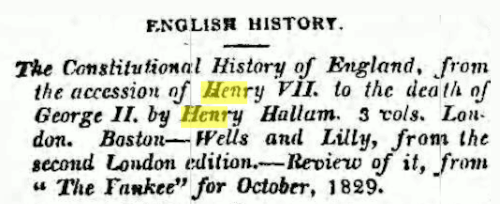
Washington National
Intelligencer -
November 3, 1829
History of England
in the early days |
- Henry VIII appointed himself Supreme Head of the Church of England and dissolved convents and monasteries, for which he was excommunicated by the
Pope.
- Although, unknown to everyone, this was not a bad thing,
because there is no valid 'religion,' since it's all just
philosophy, and there are many of those.
- Every religion
on earth is just
someones personal beliefs.
- However, Henry VIII was a
tyrant who considered himself 'divine' and more important
than everyone else.
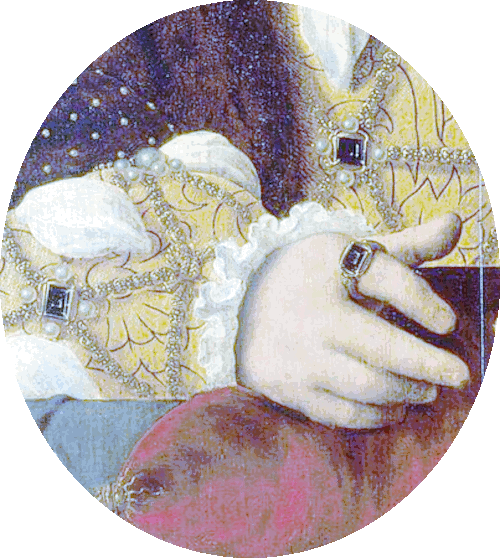
Royal pomp and
masonic hand sign |
- Henry VIII frequently used charges of treason and heresy to quell dissent, and those accused were often executed without a formal trial using bills of attainder.
- He achieved many of his political aims through his chief ministers, some of whom were banished or executed when they fell out of his favor
including; Thomas Wolsey, Thomas More, Thomas Cromwell, and Thomas Cranmer.
- Historically,
the index finger was reserved for rings that symbolized power and high social status, such as signet rings.
|
A bill of attainder is a legislative act that singles out a person or group for punishment without a judicial trial, a practice prohibited by the U.S. Constitution. This prohibition serves to protect individual rights and uphold the separation of powers by preventing the legislature from acting as a court. Examples of historical punishments included the death penalty, confiscation of property, and exclusion from certain professions.
(Assistant)
|
English black pope |
- Henry VIII responded by declaring himself the Supreme Head of the Church of England, effectively separating the English Church from papal authority.
- This break with Rome, fueled by both political and personal reasons, triggered the English Reformation
in 1534, a period of significant religious and political change.
- Amazingly though, Henry remained rather Catholic.
- He did not remain a Catholic
in practice because he broke with the Pope and created the Church of England, but he died a Catholic in his personal beliefs despite this schism.
Another one bites
the dust |
- Henry VIII then chose Anne Boleyn (1501-1536) as his 2nd
queen, however, it took 7 years for his official separation from
Catherine which finally occurred in May 1533, and he married
Anne 5 days later.
- When a child arrived in September
1533, it was another girl, Elizabeth, as a result, Henry had the
marriage annulled on trumped up charges of adultery and other
crimes and Anne was beheaded on May 19, 1536.
- Anne's
reign as queen lasted not quite 3 years and in the end, her
'crime' was the same as Catherine because she produced no male
heirs, although she wasn't given much time to accomplish the
feat.
- Henry didn't wait long to marry his 3rd wife, Jane
Seymour some 11 days later, who finally produced a male heir,
Edward VI, but she died 12 days after his birth, suffering an
extremely difficult childbirth of 3 days.
|
There was no formal inquisition in England under Henry VIII in the way it existed in Spain or other parts of Europe. While Henry VIII did break with the
Catholic Church and established the Church of England, his actions were more about consolidating his own power and wealth than about rooting out heresy through a formal inquisitorial process. He used charges of treason and heresy to eliminate opposition, but this was done through acts of Parliament and other legal mechanisms rather than a dedicated inquisition.
(Assistant)
|
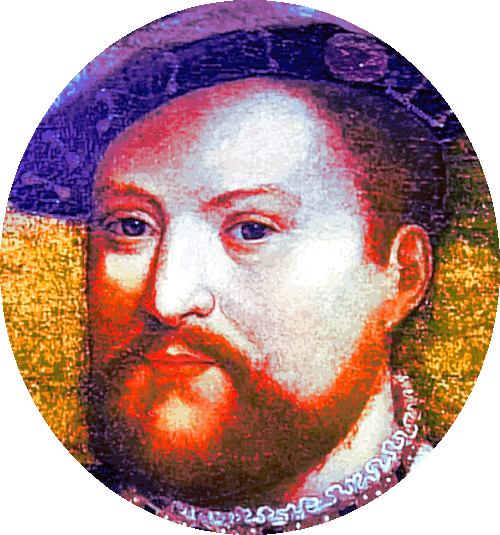
Bloody Henry |
-
If anyone dared to go against Henry, they were also against
'God' or whatever it was he worshiped (himself).
- Such an offense was dealt with by the relatively humane swift swing of the axe.
- But for those accused of heresy, witchcraft and treason a far worse fate was in store for condemned victims through the barbaric acts of being burned at the stake or hanged, drawn and quartered.
- It is interesting to note that members of aristocracy and gentry could not be legally tortured unlike commoners.
Victims of Henry VIII’s turbulent reign
(57,000 to 72.000 of them), who were either executed by him or killed in his name, fell into three principal categories - Heresy, Treason and Denial of his Royal Supremacy as Head of the English Church. Simply broadcasting or discussing an opinion against the paranoid king could put even the most influential of citizens, including nobility in the Tower of London. (history.co.uk) |

REDRUM
kiss of death |
- The victims of Henry’s displeasure and rage represent only a small proportion of executions which increased in volume during and after the English Reformation.
- Royal killings included Queen Anne Boleyn (1501-1536), George Boleyn (Viscount Rochford) (1503-1536), Jane Boleyn (ne Parker) Viscountess Rochford (1505-1542).
Queen Catherine Howard (1523-1541), Francis Dereham (1506- 1541) and Thomas Culpepper (1514-1541).
Anne Boleyn was King Henry’s second and possibly most infamous wife for whom the King changed England’s religion and separated from the Church of Rome to marry and sire a much longed-for male heir with. Having failed in delivering a son Anne found herself in the midst of a conspiracy concocted by Henry’s advisor Thomas Cromwell and accused of infidelity with five men including her own brother George Boleyn (Viscount Rochford) and sentenced to death. Anne was famously dispatched by a French swordsman while her brother and the four other accused, Sir William Brereton, musician Mark Smeaton, Henry Norris and Sir Francis Weston, were beheaded by the axe on Tower Hill on the 17 May 1536. (history.co.uk) |
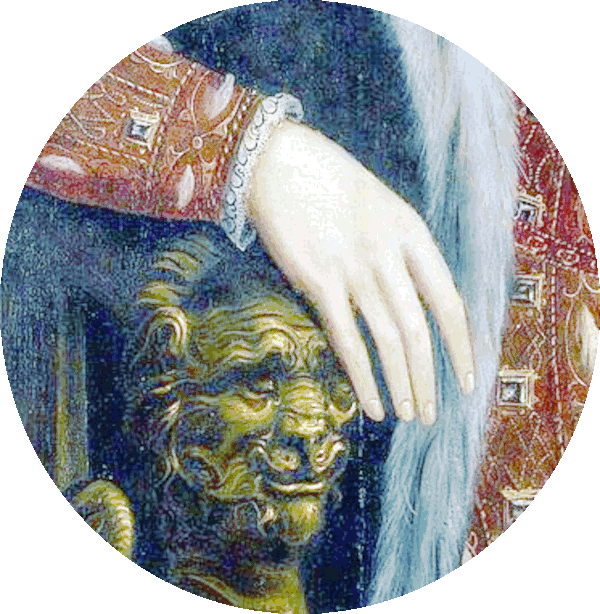
Right hand men |
- He also murdered his 'right hand men' including Sir Thomas More (1478-1535)
and Thomas Cromwell (1485-1540), and there were 'heretics'
killed such as Elizabeth Barton, Anne Askew (1521-1546) and Mabel Brigge (1506-1536).
- Whether these unfortunates were once adored royal wives, close friends, respected advisors or simply perceived as enemies of the state, they all contribute to a tally of death that makes Henry VIII the most prolific
serial killer England has ever known.
One of the most barbaric examples of annihilation was at the London Charterhouse (today in Charterhouse Square) where most members of the house were arrested, interrogated and when found guilty left to face agonizing deaths. Monks were disemboweled while still alive, beheaded and quartered with the body being hacked into four pieces. Arrests and executions took place in four main stages targeting Charterhouses between 1535 -37. (history.co.uk) |
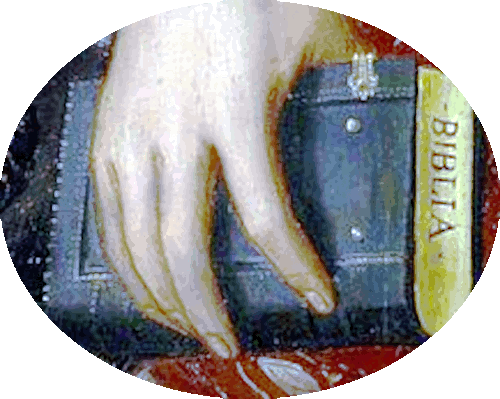
Masonic hand sign |
-
During the Reformation, there were some monks who refused to comply with Henry VIII’s Act of Supremacy and executed for maintaining their allegiance to the Pope.
- Houses of the Carthusian monks was such an order and
they paid a heavy price in all
10 of their monasteries in the British Isles.
- The Order founded in 1054 by St Bruno was systematically persecuted and banned.
- Many of its monks (also known as hermits) who refused to sign the
Oath of Supremacy (accepting Henry as the Head of the English Church) were tortured, burned at the stake and left to starve to death in cells.
- Henry VIII had his own version of the book, called the
Plaid Bible.
Other condemned monks from Charterhouse of St Michael in Hull, Yorkshire, were found guilty on
trumped-up charges of treason and were hanged in chains on York’s battlements until dead. One monk, Sebastian Newdigate, was a friend of the King who visited the monk twice in prison to try and persuade him to renounce his faith and accept the Oath, but all in vain. The remaining twenty hermits and lay brothers at London Charterhouse were arrested and taken to Newgate prison in May 1535. Chained standing to posts they were left to starve to death. (history.co.uk) |
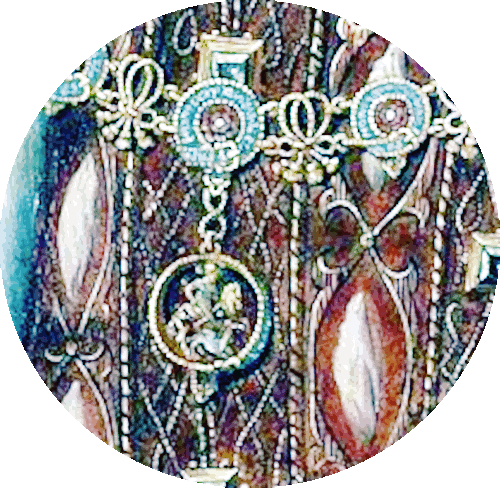
Merciless
authorities |
- The merciless authorities then turned to monks at the London house who, after their arrest and interrogation, were painfully held hanging from chains in prison for
13 days before being hanged at Tyburn.
- And the list
just goes on, John Fisher, a Catholic bishop and the most
high ranking of clergy in the country was silenced.
-
Fisher had risen to Bishop of Rochester and served as Chancellor of the University of Cambridge
and was possibly targeted by Henry, because he had passionately supported Henry’s first wife Catherine of Aragon.
Fisher was tried by a court of seventeen which included Henry’s right-hand man, Thomas Cromwell, and Anne Boleyn’s father Thomas Boleyn. Because Fisher was deprived of his status as Bishop of Rochester he was tried as a commoner and feared the worst kind of execution. Public outcry resulted in the original sentence of hanging, drawing and quartering to a more humane beheading on the scaffold. At Tower Hill on 22 June 1535 Fisher faced his execution with impressive calm and dignity although his headless body was stripped and left naked on the scaffold before being thrown into a rough grave. His head was placed on a pole on London Bridge. (history.co.uk) |
Margaret Pole |
-
Beatified as a martyr for the Catholic Church, Margaret Pole’s treatment by Henry VIII was particularly cruel, particularly in light of the Countess of Surrey’s advancing age.
- As described in Burke’s Peerage, the killing was carried out by a 'blundering youth' rather than a skilled executioner who hacked at the Countess’ head and shoulders to pieces while she had tried to escape.
- One account which may be apocryphal described the axeman chasing the distraught Countess before striking her.
On the 27 May 1541 the now 67-year-old Countess was told she was to be executed within the hour. In what has become as one of the most infamous of executions of a noblewoman, the baffled Margaret was led to a corner of the Tower where, instead of a scaffold, the executioner’s wooden block, raised a few inches from the ground awaited the terrified woman. Refusing to lay her head on the block she is alleged to have challenged the executioner to ‘take it as he could’. (history.co.uk) |
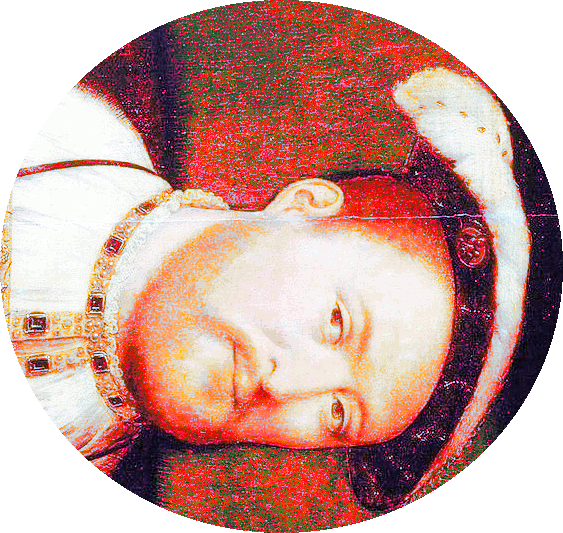
Henry's last violent
act |
-
Henry VIIIs last execution was Henry Howard, Earl of Surrey (1517-1547),
a nobleman, soldier and founder of English Renaissance poetry was a first cousin of both Queen Anne Boleyn and Queen Catherine Howard.
- Unfortunately, he followed them in their tragic footsteps
to the chopping block.
- Surrey had taken steps to
overthrow the king and he was arrested on charges of
treason.
- Together with Surrey, the enraged king also had his father the Duke of Norfolk arrested and imprisoned on charges of treason.
On 19 January 1547 the Earl of Surrey was beheaded on Tower Hill days before the planned execution of his father the once trusted right-hand man to Henry who was spared death due to the kings own death. (history.co.uk) |
|
Henry VIII as Donald Trump |
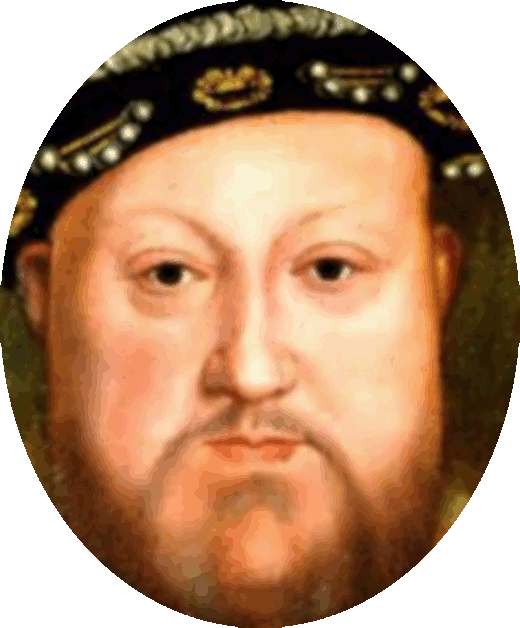 |
 |
Henry Tudor
1566-1625
6/19
3/27
monarch |
Donald John Trump
1946
6/14
pompous tyrant |
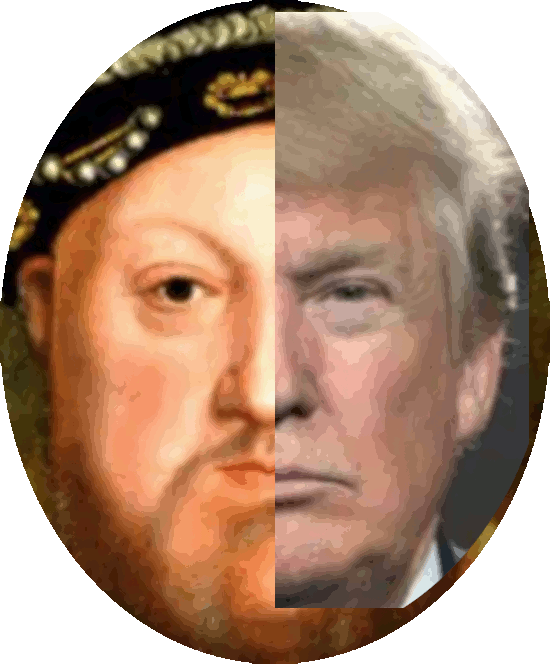 |
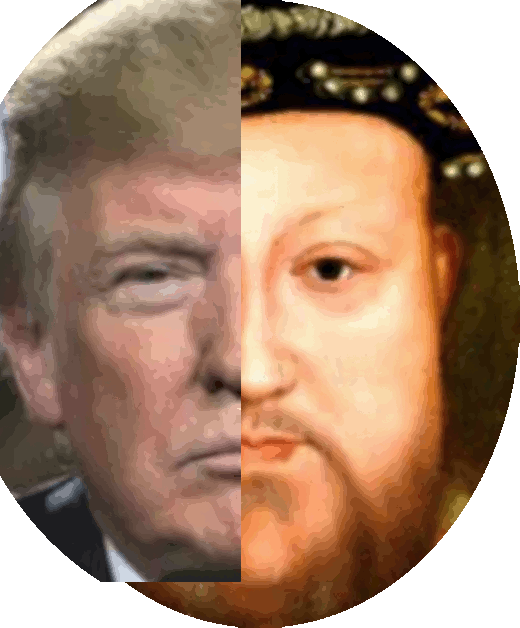 |
|
The spin |
-
Henry VIII and Donald Trump: two larger-than-life leaders, centuries apart, yet eerily alike in power, image, and disruption.
-
It's all about multiple wives, self-image and abuse of power.
- Both Henry VIII and Trump have a history of multiple wives, two of whom were, in both men’s cases, foreigners.
- Both can be seen to have a rather disposable attitude to spouses, who were removed after their respective
'expired by' dates.
|
So farewell to the little good you bear me Farewell! a
long farewell, to all my greatness!
(Shakespeare, Henry VIII)
|
|
Henry VIII as Donald Trump |
 |
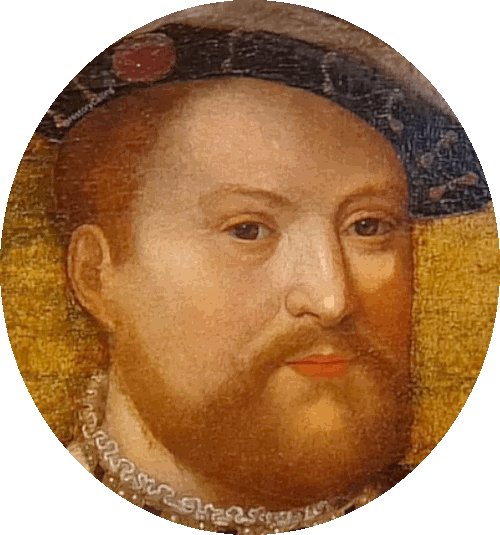 |
Donald John Trump
1946
6/14 |
Henry Tudor
1566-1625
6/19
3/27
monarch |
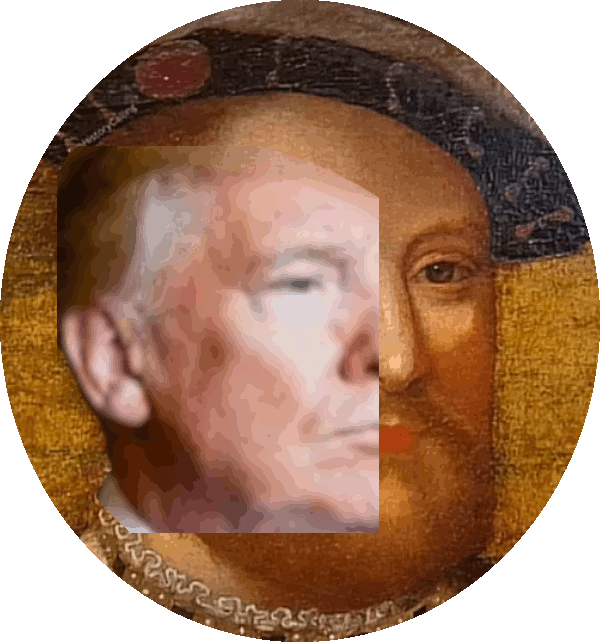 |
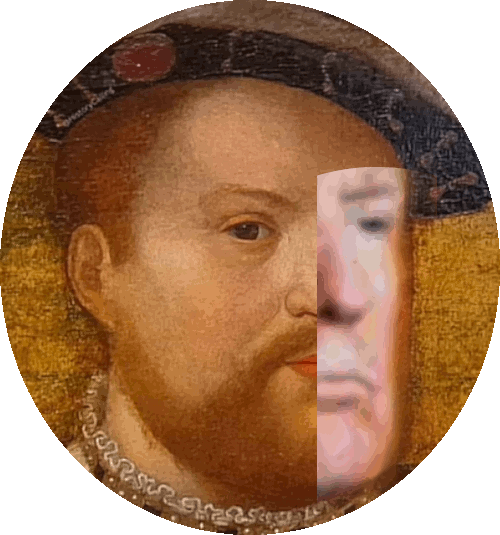 |
|
The spin |
- Of course, Trump hasn’t had two young wives executed, as Henry did,
we don't really know, the parallels don’t always hold.
- He did bury his late first wife, after he threw her
away, in one of his golf courses so he could receive the
'tax breaks' which he claims are legal.
- Both Trump and
Henry VIII are obsessed by self-image and have masters degrees in
public relations and the 'spin.'
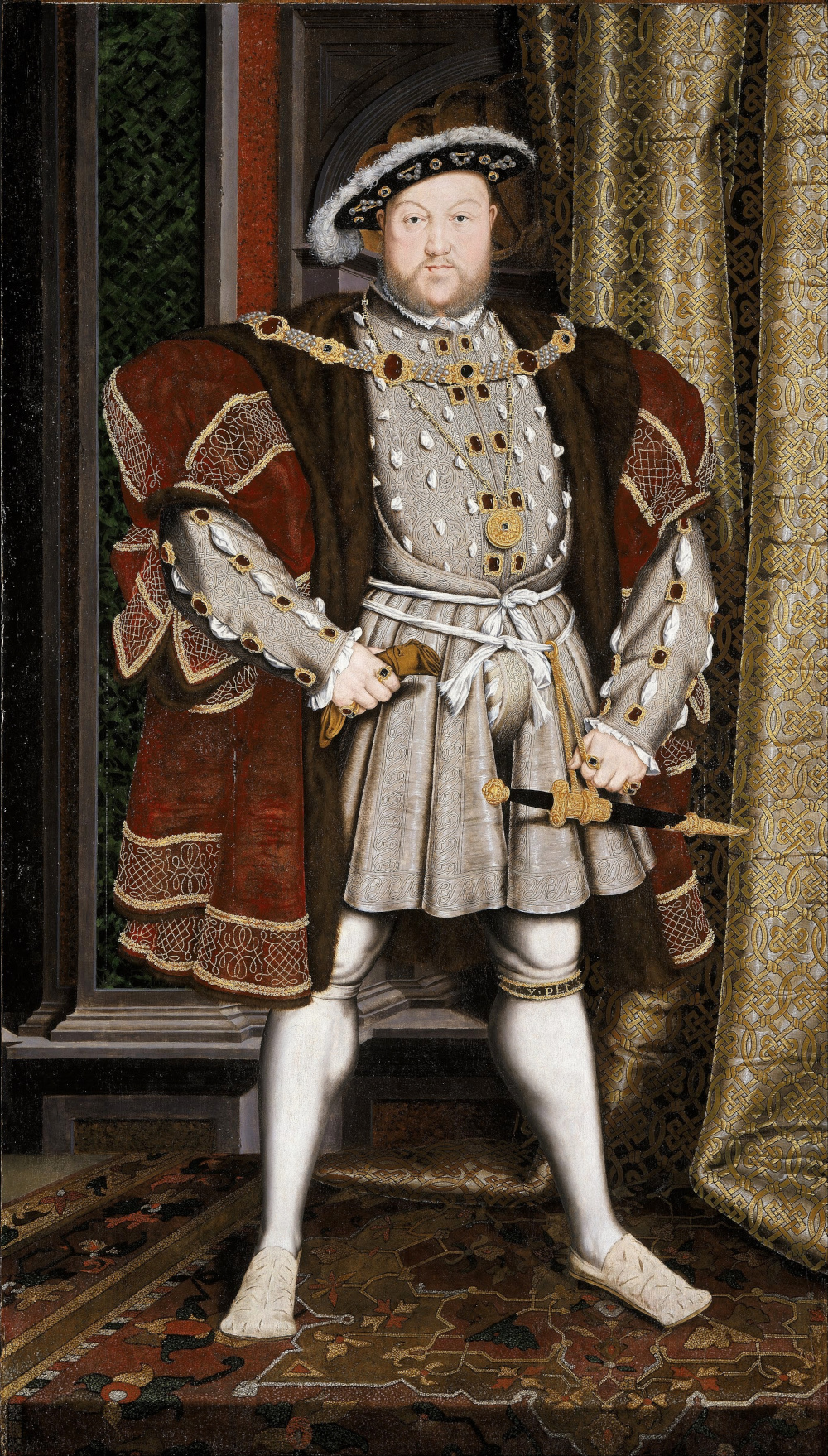
After Hans Holbein the Younger, Public domain, via Wikimedia Commons
Henry VIII and his
disgusting codpiece |
-
A standard tactic used in 'spinning' is to reframe or modify the perception of an issue or event to reduce any negative impact it might have on public opinion.
- King Henry VIIIs codpiece, especially the exaggerated metal version in his armor and clothing, was a prominent 16th-century fashion and political statement symbolizing masculinity, power, virility, and royal authority, evolving from a simple cloth flap to an emphasized display of male potency and wealth, sometimes even speculated to hide signs of syphilis.
|
Holbein’s famous portrait of a colossal manspreading Henry is reminiscent of the faux-glamorous images of Trump on his digital trading cards. Both enjoy sport and certainly in their youths, glamorous and, to many, handsome. One should also concede both undoubtedly had that key characteristic of leaders – charisma. Both, in my view, lack empathy and are basically cruel.
(Ian Richardson)
|

Chainlink world |
- Henry VIIIs biggest political 'accomplishment' was
transitioning England from feudal concepts to imperial
concepts.
- Feudalism was social and economic systems
where land was a primary source of wealth and power for
nobles, who owned vast estates and peasants (serfs) worked the
land.
- A strict hierarchy existed, with kings or monarchs at
the top, and local lords ruling individual territories.
-
Imperialism is the centralization of power where monarchs
weakened the nobility and centralizing authority; instead of
relying on local leaders, the monarch established royal
courts, bureaucracies, and standing armies.
Dog will have his day. (Shakespeare) |
Junkyard |
- Henry VIIIs
Act of Appeal in 1553 was huge in limiting the power of
nobility and allowed the government to vastly increase their
wealth.
- All these lower ego archons and their systems
ruling over us creating Big Brother to steal everything,
especially our freedom.
-
From there, they work
steadily on military expansion and wealth accumulation.
-
Robotic 'men in black' from the demonic agencies watching over
your life, the watcher's are fallen angels who think they're
giants and gods.
There where my fortune lives, there my life dies.
(Shakespeare, King Lear) |
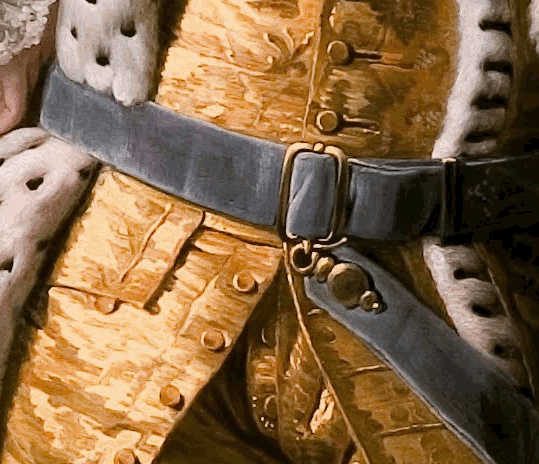
Kingly Order of the Garter |
- Henry VIII likely died from a combination of complications, including a severe, chronic infection stemming from a serious jousting accident, along with kidney failure and heart failure.
- His health was significantly impacted by obesity, chronic leg ulcers, and a likely fever, which worsened in his final months.
- It was a slow death and it took place on January 28, 1547.
He jests at scars that never felt a wound. (Shakespeare) |
King Edward VI of England
1547 - 1553
House of Tudor |
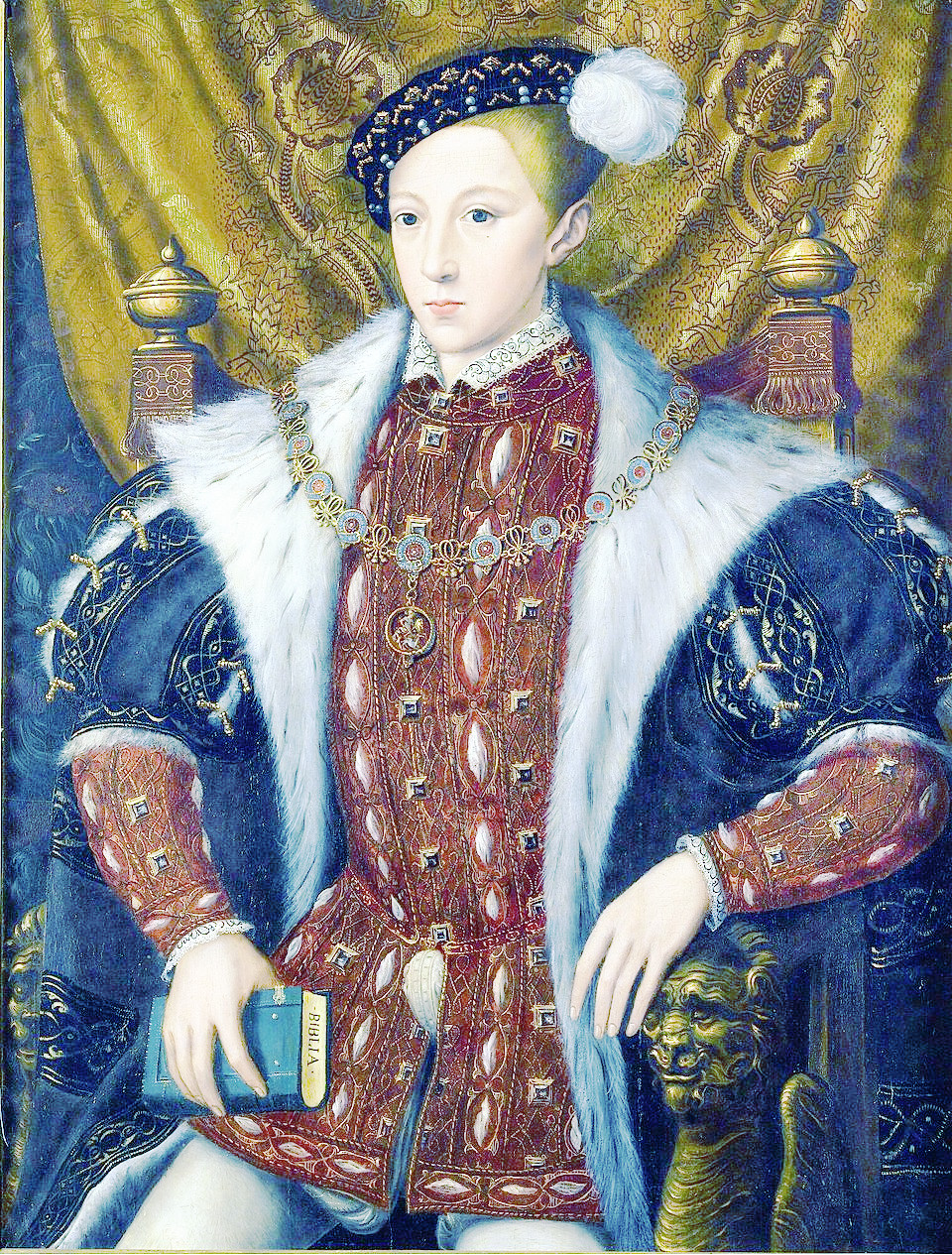
Circle of William Scrots, Public domain, via Wikimedia Commons
c. 1550 |
- Edward VI was King of England and Ireland from January
28, 1547, at age 9, until his death on July 6, 1553, at
age 15.
-
Born as Edward Tudor (1537-1553) on October 12, 1537, he
was the only surviving son of Henry VIII by his third wife, Jane Seymour.
- Edward was the first English monarch to be raised as a Protestant.
- During his reign, the realm was governed by a regency
council because Edward never reached maturity.
- As
example in current day; Trump the ‘Bully’: How Childhood & Military School Shaped the Future President.
- By the late Tudor period, the Lord High Treasurer was
regarded as one of the Great Officers of State, and was
often (though not always) the dominant figure in government:
Edward Seymour, 1st Duke of Somerset or lord high treasurer,
from 1547–1549, served as lord protector to his young nephew
King Edward VI.
When Edward died six years later, in 1553, he attempted to subvert his father’s wishes by leaving the crown to a Protestant cousin, Jane
Grey, excluding those next in line in the succession: Mary and her younger half-sister, the future Elizabeth I.
(Meilan Solly) |
War horse |
- During his reign, Edward VI was involved in conflicts with Scotland and France, primarily driven by his father's policies and his advisors' ambitions.
- The most significant event was the Battle of Pinkie Cleugh in 1547, where English forces, led by the Earl of Hertford (later Duke of Somerset), defeated the Scottish army in the
War of the Rough Wooing.
- Despite this victory, the war was costly and eventually ended with peace treaties in 1550 and 1551, which included the return of the English-held city of Boulogne to France and the abandonment of the proposed marriage between Edward and Mary, Queen of Scots.
- Internal conflicts also occurred such as Kett's Rebellion
in 1549 when a large peasant uprising in the east of England seized control of Norwich:
although the rebellion was eventually suppressed by government forces.
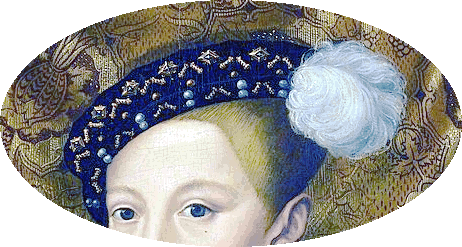
Teenage murderer |
-
Edward VI: why the forgotten Tudor king had the makings of a monster.
- Although his reign was short, it was far from insignificant, heralding some of the most significant religious reforms that England has ever seen.
- Edward and his advisers, notably Thomas Cranmer, Archbishop of Canterbury, would lay the foundations for the modern Church of England.
-
As a result, Edward, had 2 radical Protestant Anabaptists burned at
the stake during his 6-year reign, and he was only a
teen-ager.
- In 1549, he sanctioned the suppression of the
Prayer Book Rebellion, resulting in the deaths of up to 5,500 Catholics.
|
Love thyself last: cherish those hearts that hate thee...
(Shakespeare, Henry VIII)
|
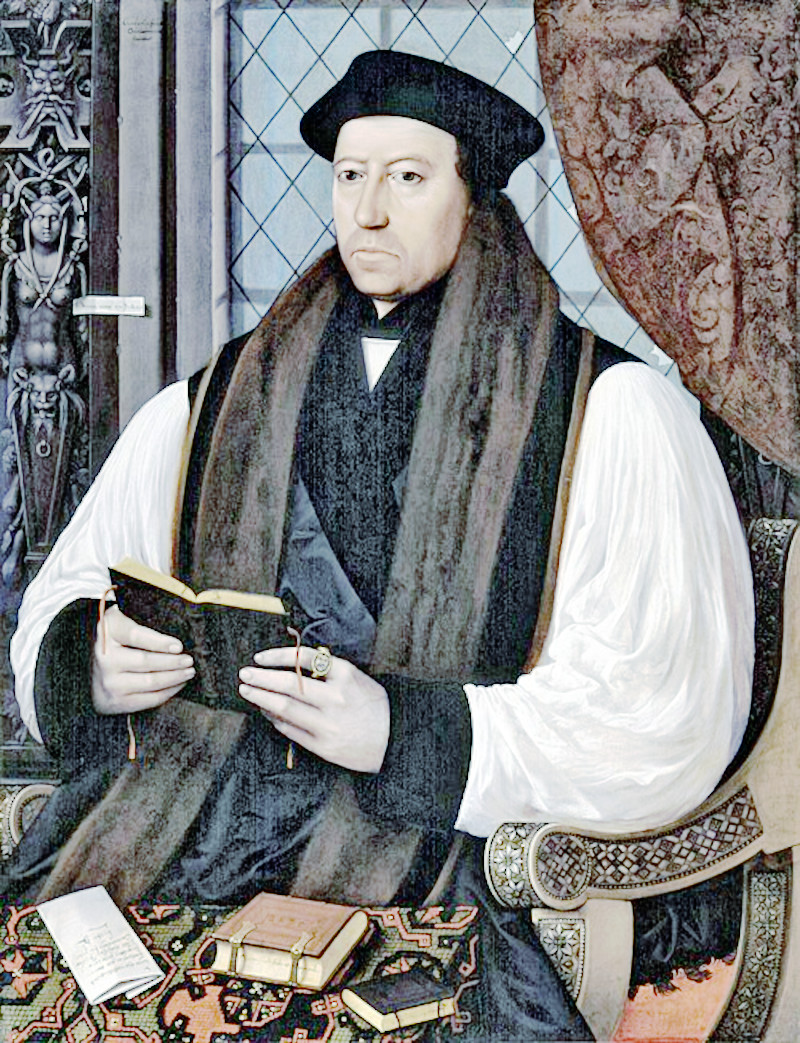
Gerlach Flicke, Public domain, via Wikimedia Commons
Thomas Cranmer - Archbishop of Canterbury |
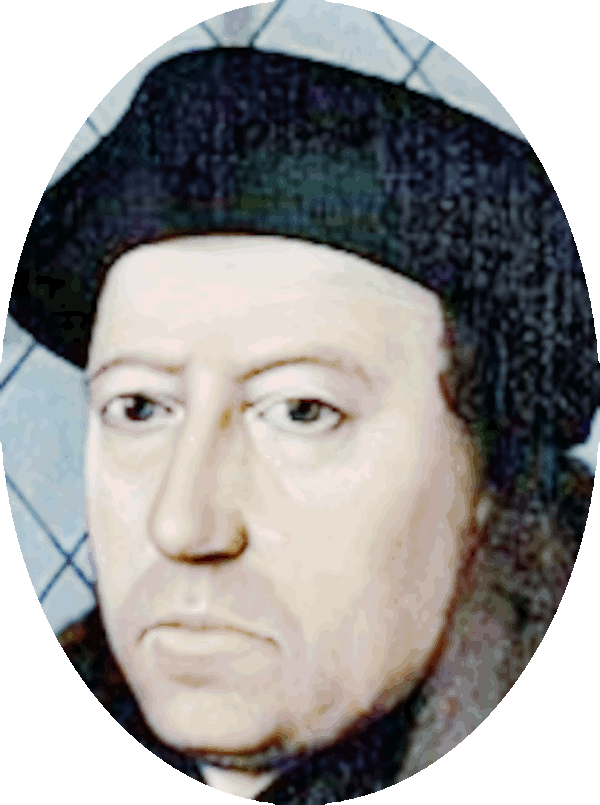
-Thomas Cranmer (1489-1556) was a theologian, leader of the English Reformation and Archbishop of Canterbury during the reigns of Henry VIII, Edward VI and, for a short time, Mary I.
- Cranmer helped build the case for the annulment of Henry
VIIIs marriage to Catherine of Aragon, which was one of the causes of the separation of the English Church from union with the Holy See.
- Along with Thomas Cromwell, he supported the principle
of royal supremacy, in which the king was considered
sovereign over the Church within his realm and protector of his people from the abuses of Rome.
|
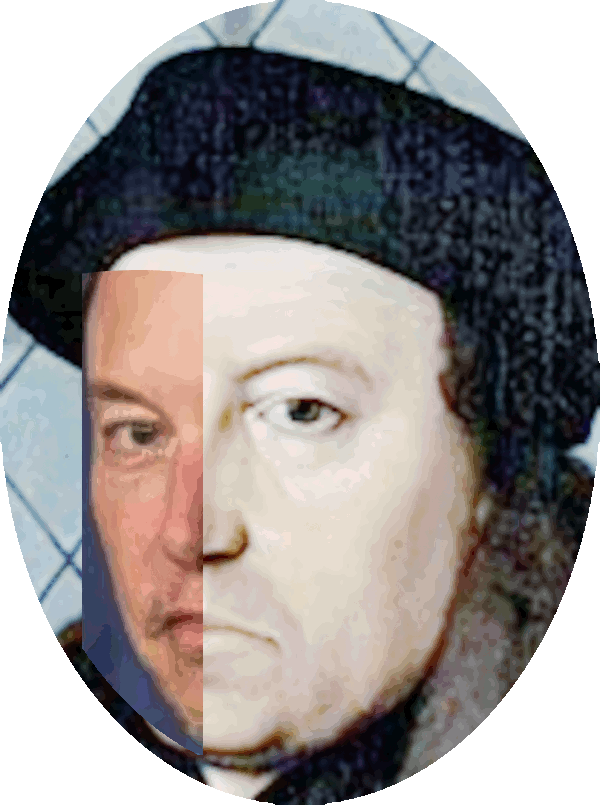
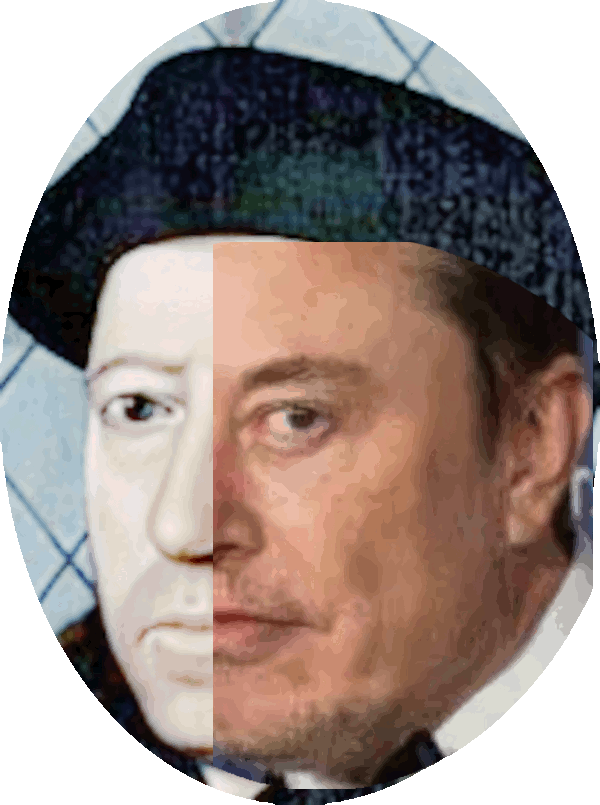
Thomas Cranmer as Musk |
 |
|
Thomas Cranmer
1489-1556
7/2
3/21
Archbishop |
Elon Reeve Musk
1971
6/28 |
 |
 |
|
Church and state |
- When Edward VI, who was devout and had been raised in the tenets of a reformed Church, came to the throne, Cranmer was able to promote faster changes.
- He wrote and compiled the first 2 editions of the Book of Common Prayer, a complete liturgy for the English Church, turning to the language of the people.
- With the assistance of several Continental reformers to whom he gave refuge, he changed doctrine or discipline in areas such as the Eucharist, clerical celibacy, the role of images in places of worship, and the veneration of saints.
- Cranmer promulgated the new doctrines through the prayer book, the
Homilies and other publications.
- He is honored
as a martyr in the Church of England!!!
After the accession of the Catholic Mary I, Cranmer was put on trial for treason and heresy. Imprisoned for over two years and under pressure from state and Church authorities, he made several recantations and reconciled himself with the Catholic Church. (Wikipedia) |
|

Secret codes and messages
Masonic hand sign |
- During the Renaissance period, hands were as important a focus of attention as the face was, because they were the only other visible area of the body.
- Hence, representation of the position of the hands became a decorative element that was almost as important as the face.
- Thus, given its high visibility, hand gestures in portraits and paintings have been one of the most effective ways of conveying secrets, codes and messages.
Far from being dominated by ambitious councillors, Edward had all the makings of a tyrant. Neither was Edward the fragile boy that he has so often been portrayed as. He enjoyed robust health for most of his young life, and had a will of steel to match. Far from being dominated by ambitious councillors such as the Dukes of Somerset and Northumberland, he had strong opinions, ideas of his own and all the makings of a tyrant. In short, he was a chip off the old block. (historyextra.com) |
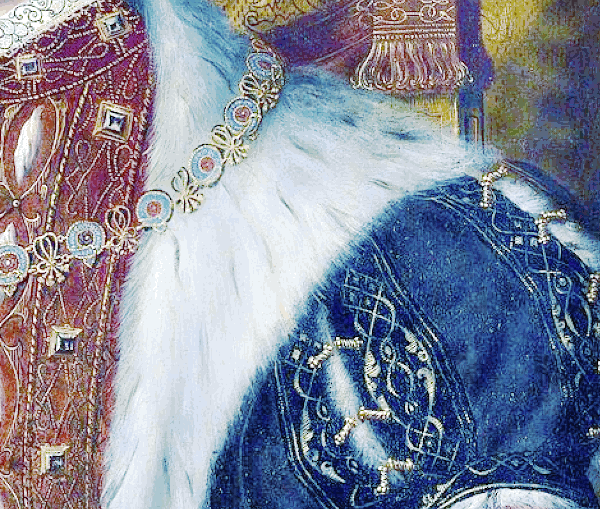
Royal robe |
- As was common practice for royal children, Edward
VI was raised among women for the first few years of his life.
- But upon reaching his 6th birthday, his life underwent a dramatic transformation
because the Tudors considered this the age at which a child became an adult!!
- As a result, Henry VIII ordered that his son’s apartments be remodeled so that they exactly mirrored his own, including Flemish tapestries showing the same classical and Biblical scenes that the King favored.
- The Prince was also given a new wardrobe of clothes so that he could dress like his father.
- Including an over-exaggerated and boastful codpiece.
|
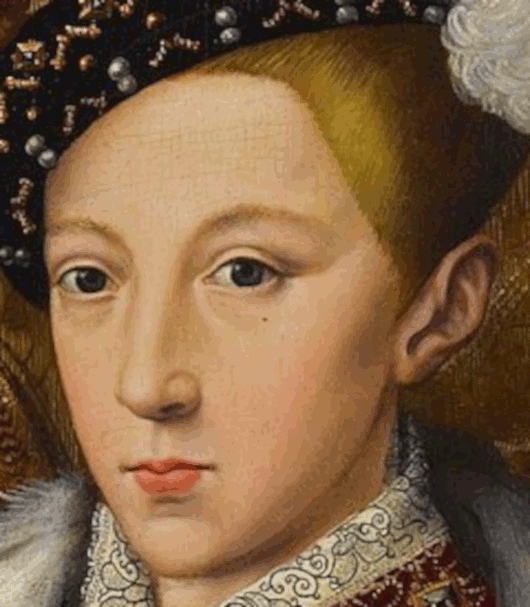
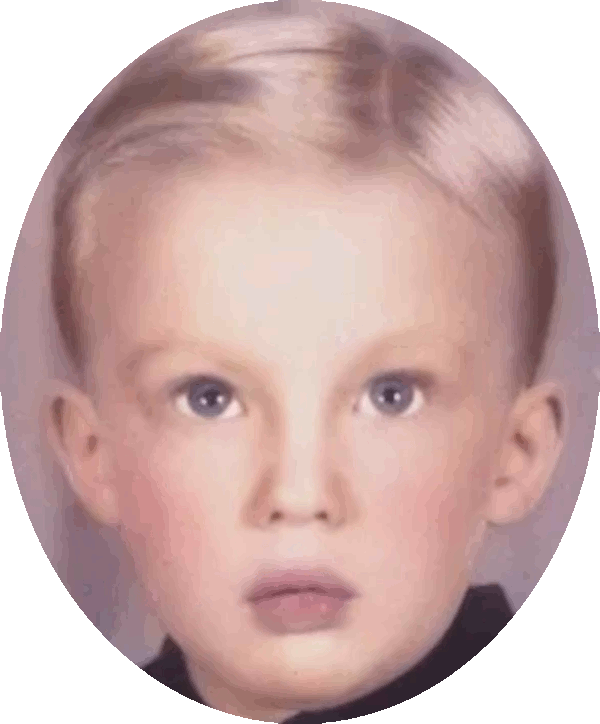
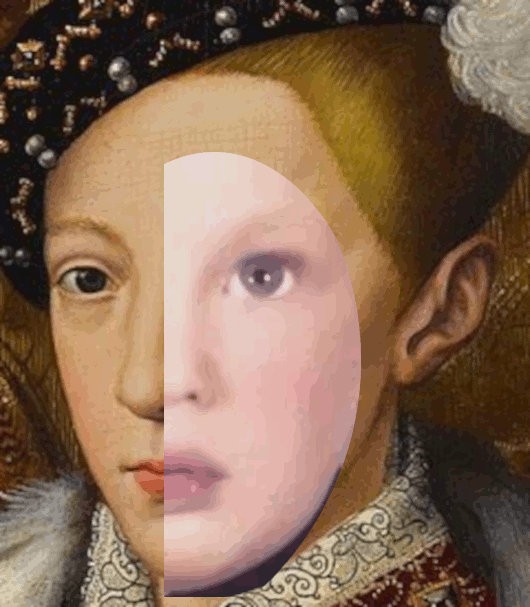
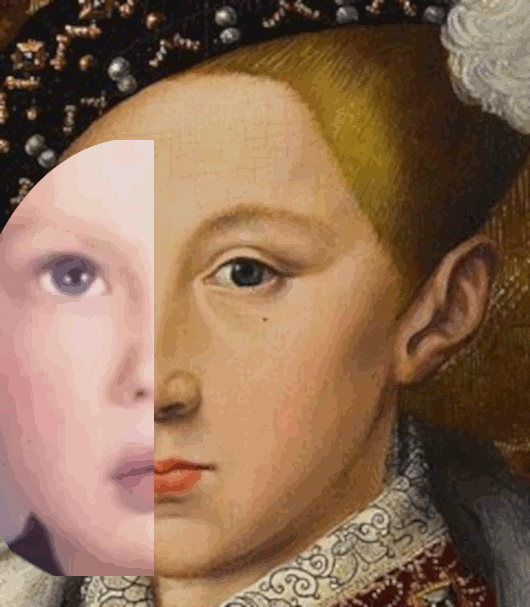
King Edward VI as Trump |
 |
 |
Edward Tudor
1537-1553
10/12 7/6
monarch |
Donald John Trump
1946
6/14 |
 |
 |
|
AI baby |
- Toying with it because Trump's 'baby' photos seem to be
AI generated.
It is one of the great ironies in history that the boy upon whom Henry lavished so much care and attention, and in whom all his hopes were vested, would reign for just six and a half years.
(historyextra.com) |
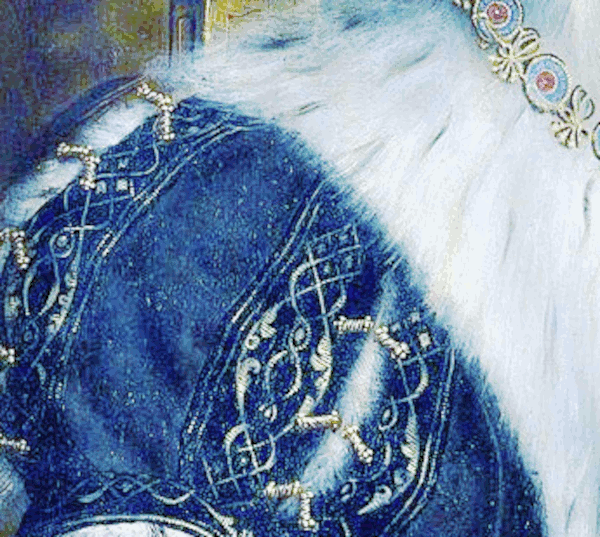
Final days |
- It is noted that Edward moved much faster and much further than the majority of the population wanted,
by removing a great deal that was familiar and depriving the congregation
of their chosen church.
- Because Protestantism was the
'religion of an educated minority,' not a universally adopted doctrine.
- At its core, historians have suggested, England was still a fundamentally Catholic country when Mary
I took the throne.
- Lady Jane Grey, the 'nine days queen' ruled briefly following the death of Edward VI until she was usurped by the former king's sister, Mary I.
- Although it's hard to agree that she usurped the throne
since she was the first in line of succession and Edward
usurped the proper order by naming Lady Jane.
Edward VI likely died from tuberculosis. He was 15 years old and died on July 6, 1553, at Greenwich Palace. While other theories like arsenic poisoning or syphilis have been mentioned, tuberculosis is the most widely accepted cause of death. (Assistant) |
Queen Mary I of England (Bloody Mary)
1553 -
1558
House of Tudor |
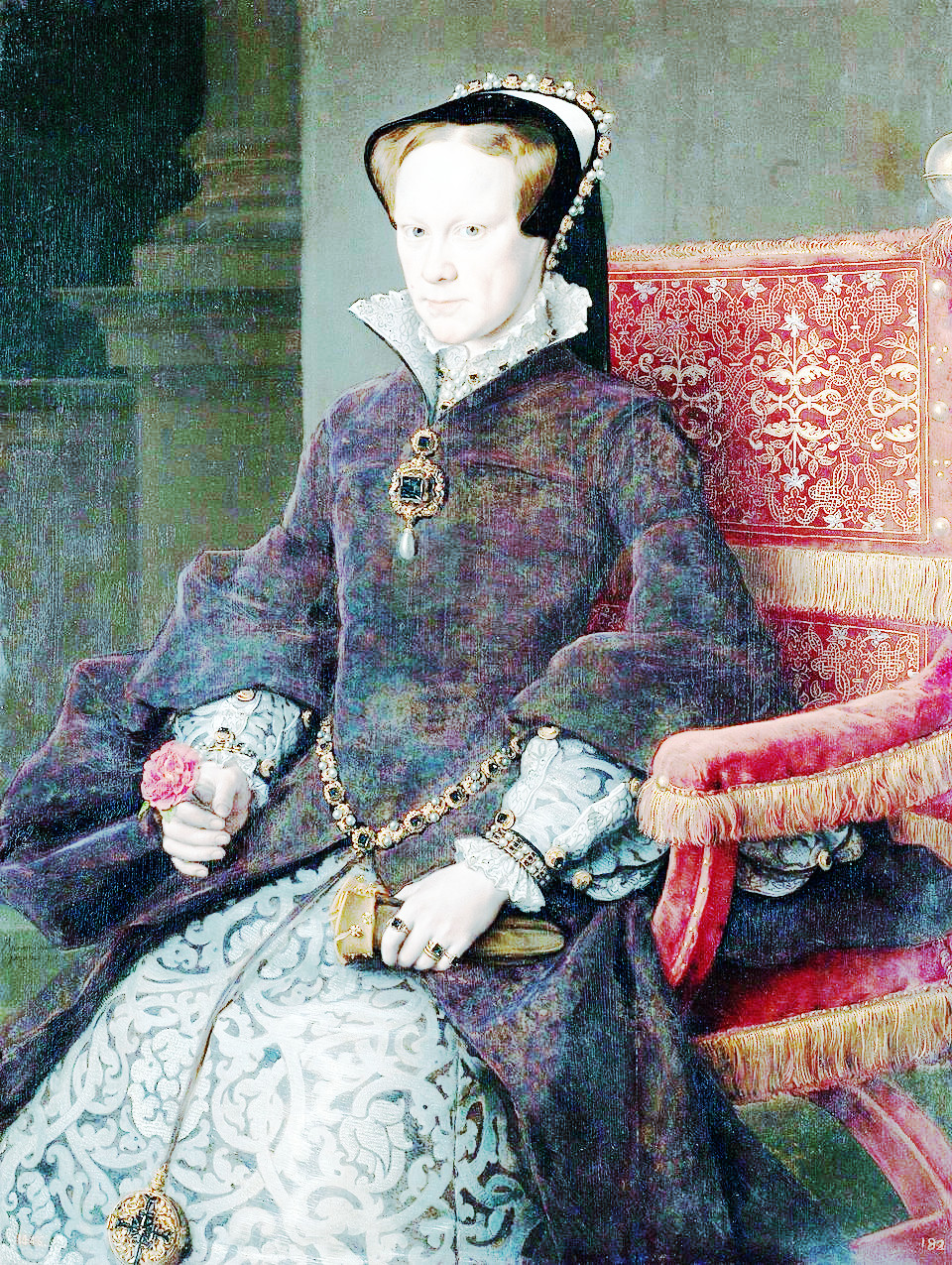
Antonis Mor, Public domain, via Wikimedia Commons
c. 1554 |
- Mary I was Queen of England and Ireland from July 1553, and Queen of Spain as the wife of King Philip II from January 1556, until her death
on November 17, 1558.
- Born as Mary Tudor (1516-1558)
on February 18, 1516, she was the only child of King Henry VIII and his first wife, Catherine of Aragon to survive infancy.
- The first woman to rule England in her own right didn’t simply inherit the throne,
she seized it with unprecedented ambition from those who sought to thwart her
(men).
- She made vigorous attempts to reverse the English Reformation, which had begun during the reign of her father, King Henry VIII.
Historian Sarah Gristwood describes the ascension of Mary I as a “staggeringly bold” course of action undertaken with little chance of success. After unseating Lady Jane Grey, the Nine-Day Queen, Mary rode into London on August 3, 1553, to widespread acclaim. In the words of one contemporary chronicler, “It was said that no one could remember there ever having been public rejoicing such as this.”
(Meilan Solly) |
War horse |
- Queen Mary I's reign was primarily defined by domestic religious persecution rather than extensive warfare, though England was involved in a brief, disastrous war with France between 1557 and 1558
called the French War.
- This war, influenced by her husband Philip II of Spain, resulted in the loss of Calais, England's last French territory.
- Domestically, her attempts to restore Catholicism led to
the Marian persecutions, where a number of Protestants were executed.
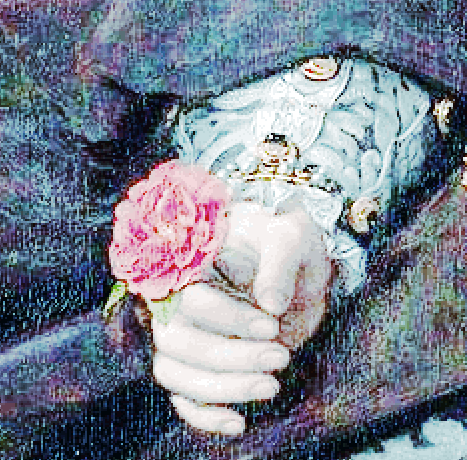
Rose
between pinched fingers |
- After Henry VIII finally dumped her mother, Mary was declared illegitimate, downgraded from the title of
'princess' to 'lady' and separated from her mother.
- Mary refused to acknowledge the validity of her parents’ divorce or her father’s status as head of the Church of England.
- It was only in 1536, after Anne Boleyn’s execution and Henry’s marriage to Jane Seymour, that Mary finally agreed to her mercurial father’s terms.
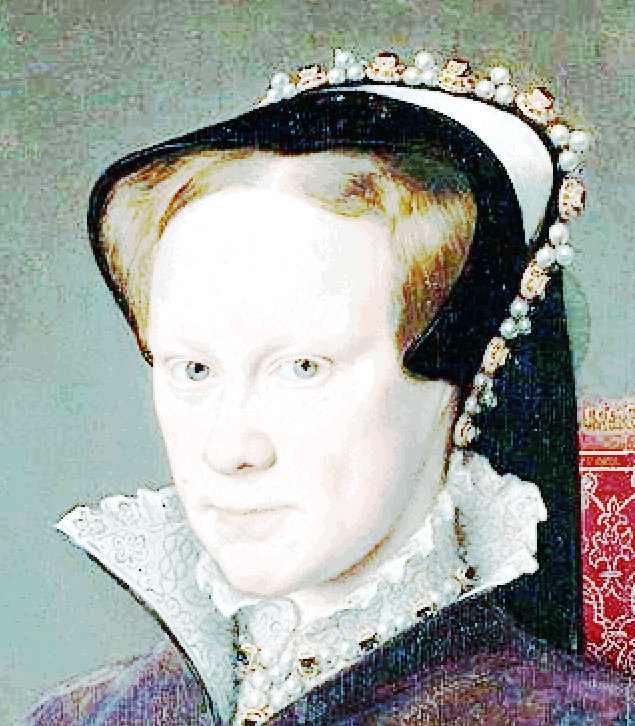
Defiant Queen Mary I |
- Welcomed back to court, she survived Henry VIII and 3 more stepmothers, only to see her younger half-brother, Edward VI, take the throne
(instead of her) in 1547 as a Protestant reformer, adopting a stance anathema to her fervent Catholicism.
- However, Edward VI died after 6 short years on the
throne.
- Though Mary could have sought refuge with relatives in Spain, she chose to remain in England and fight for what was rightfully hers.
- Eluding the armies of her antagonists, she rallied support from nobles across the country and marched on London.
- Mary and Elizabeth rode into England’s capital side by side, one as a queen and the other as a queen-in-waiting.
She’s simultaneously being lambasted for being vindictive and fierce” and “spineless and weak,” criticized for such actions as showing clemency to political prisoners and yielding authority to her husband, Philip. Most experts agree that the Spanish marriage had an adverse effect on Mary’s reputation, painting her, however unfairly, as an infatuated, weak-willed woman who placed earthly love ahead of the welfare of her country. (Meilan Solly) |
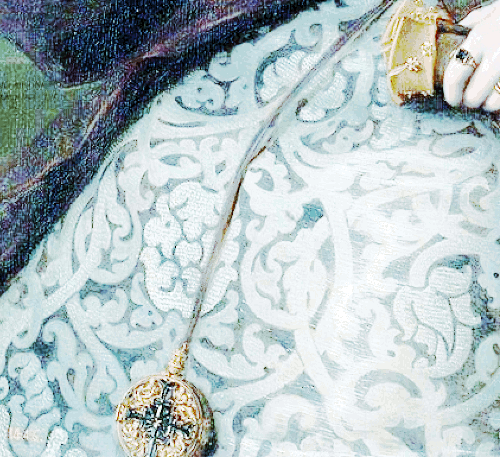
Royal hand in things |
- Mary I's attempt to restore to the Church the
property confiscated in the previous 2 reigns was largely
thwarted by Parliament.
- These initiatives grew more controversial following the queen’s marriage to Philip II of Spain in July 1554, at which point they were
associated in the public mind with Spanish influence.
- In the first year of Mary’s reign, many prominent Protestants fled abroad, but those who stayed behind, and persisted in publicly proclaiming their beliefs, became targets of heresy laws that carried a brutal punishment: burning at the stake.
Mary and her advisers hoped the initial spate of burnings would serve as a “short, sharp shock” warning errant Protestants to return to the fold of the “true” faith. As the queen explained, executions should be “so used that the people might well perceive them not to be condemned without just occasion, whereby they shall both understand the truth and beware to do the like.” But Mary had grossly underestimated Protestants’ tenacity—and their willingness to die for the cause.
(Meilan Solly) |

Divinely ordained authority |
- Heretics were deemed guilty of treason, as questioning a monarch’s established religious policies was tantamount to rejecting their
'divinely' ordained authority.
- The assumption that
they were somehow 'divine' or 'godly' is ludicrous because
they're not, especially since her grandfather, Henry VII,
usurped the throne through war, there's nothing divine
about it.
- During her 5-year reign, more than 280 religious dissenters were burned at the stake in what became known as the Marian persecutions, leading later commentators to label her
'Bloody Mary.'
During her five-year reign, Mary navigated the manifold challenges associated with her status as the first English queen to wear the crown in her own right, rather than as the wife of a king. She prioritized religion, implementing reforms and restrictions aimed at restoring the Catholic Church’s ascendancy in England. Most controversially, she ordered around 280 Protestants burned at the stake as heretics—a fact that would later cement her reputation as “Bloody Mary.”
(Meilan Solly) |
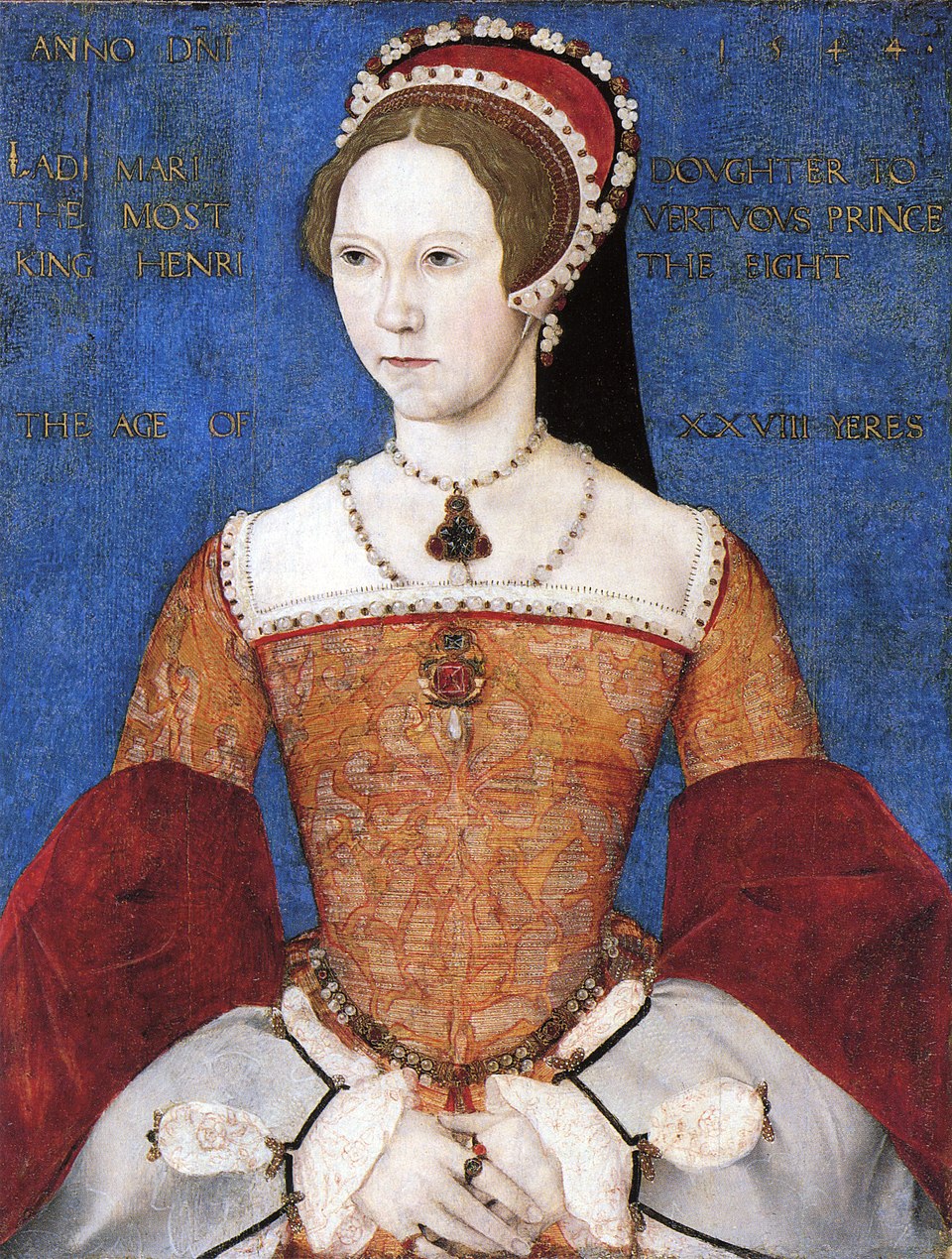
National Portrait Gallery, Public domain, via Wikimedia Commons
1544
Mary myth |
- But the real truth is that her father,
Henry VIII, murdered thousands of people, including 2
wives, during his reign and no one ever called him
'Bloody.'
- It is estimated that during his 36 years of rule over England
that Henry VIII executed as many as 57,000-72,000 people, many of whom were either members of the clergy or ordinary citizens and nobles who had taken part in uprisings and protests
throughout the country.
- History remembers Mary I as a murderous monster who burned hundreds of her subjects at the stake, but the real story of the Tudor monarch is far more nuanced.
Centuries later, however, the Tudor queen is remembered as one of the most reviled figures in English history: “Bloody Mary.” This is the story of how a heroic underdog became a monarch who was then mythologized as a violent despot, despite being no bloodier than her father, Henry VIII, or many other English monarchs. It’s a tale of sexism, shifting national identity and good old-fashioned propaganda, all of which coalesced to create the image of an unchecked tyrant that endures today.
(Meilan Solly) |
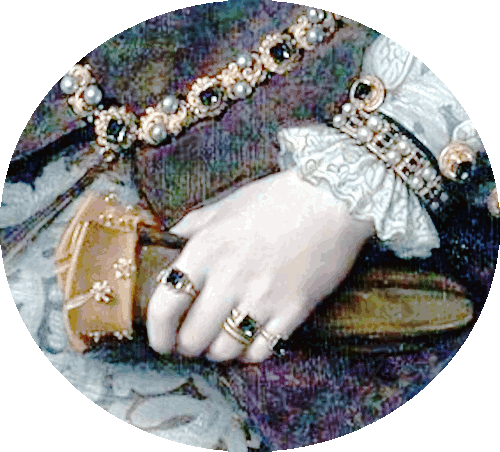
No heirs
|
- Despite all, Mary failed to fulfill arguably the most important duty of any monarch: producing an heir
during her marriage to King Philip II of Spain.
- When she died at age 42 in 1558 of an ailment alternatively identified as uterine cancer, ovarian cysts or influenza,
her younger sister, Elizabeth claimed the throne.
Several recurring themes persist. As England’s first queen regnant, Mary
I faced the same challenge experienced by female rulers across the continent—namely, her councilors’ and subjects’ lack of faith in women’s ability to govern, a dilemma best summarized by contemporary Mary of Hungary: “A woman is never feared or respected as a man is, whatever her rank. … All she can do is shoulder the responsibility for the mistakes committed by others.” (Meilan Solly) |
|












