|
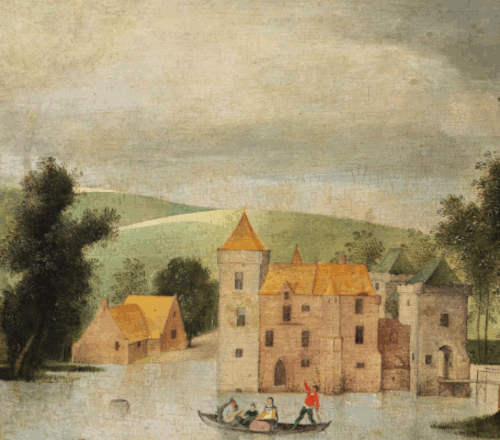
ABEL GRIMMER - THE LOST CASTLE - PAGE 4
|
Britain in
the Western World |
Land Ho!
|
-
When Elizabeth I took the crown in 1558, Britain was an impoverished country divided by religious conflict and facing economic recession and foreign threats.
- She inherited a large debt, a disputed succession, and an unstable kingdom, but her reign ultimately led to greater stability, prosperity, and cultural flourishing for England.
The country was deeply divided between Catholics
and Protestants. Elizabeth's first major act was to
establish a religious settlement that made England
Protestant again while remaining a compromise between
Roman Catholicism and Protestantism.
(Assistant) |
Queen Elizabeth I of England
1558
- 1603
House of Tudor |
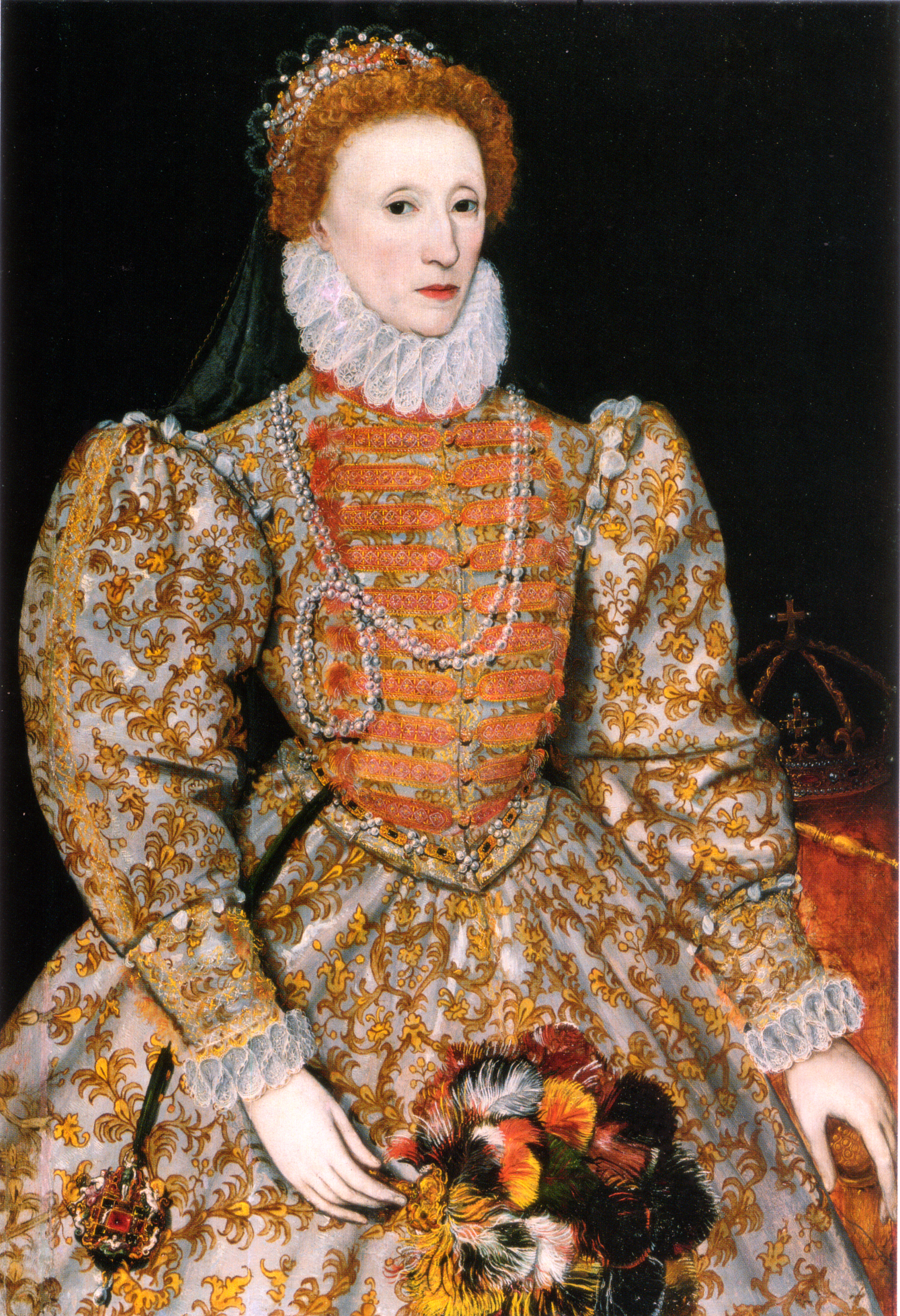
Unidentified painter, Public domain, via Wikimedia Commons
c. 1575 |
-
Elizabeth I was the Queen of England and Ireland from November
17, 1558, until her death on March 24, 1603.
- She was the last and longest reigning monarch of the House of Tudor.
-
Born as Elizabeth Tudor (1533-1603) on September 7, 1533,
she was the only surviving child of Henry VIII and his second wife, Anne Boleyn.
- When Elizabeth was 2 years old, her parents' marriage was annulled, her mother was executed.
- William Cecil, 1st Baron Burghley or lord high treasurer,
from 1572–1598), was the dominant minister to Queen Elizabeth I; Burghley's son Robert Cecil, 1st Earl of Salisbury, succeeded his father as Chief Minister to Elizabeth
from 1598–1603 and was eventually appointed by King James I as lord high treasurer
from 1608–1612.
War horse |
-
The Anglo-Scottish Border War were conflicts occurred during her early reign, stemming from the complex relationship and power dynamics between England and Scotland.
- Elizabeth I also faced internal threats from Catholic plots to overthrow her, most notably during the plots associated with Mary, Queen of Scots, whom Elizabeth had executed in 1587.
-
Her army also fought in the Anglo-Spanish War
from 1585–1604, the most famous conflict being the defeat of the Spanish Armada in 1588.
- She was also involved in conflicts like the Anglo-Scottish Border Wars
and ongoing tensions with Spain that included supporting Dutch rebels against Spain, leading to raids on Spanish colonies.
- The war stemmed from multiple causes, including Philip II of Spain's disapproval of Elizabeth's Protestant rule.
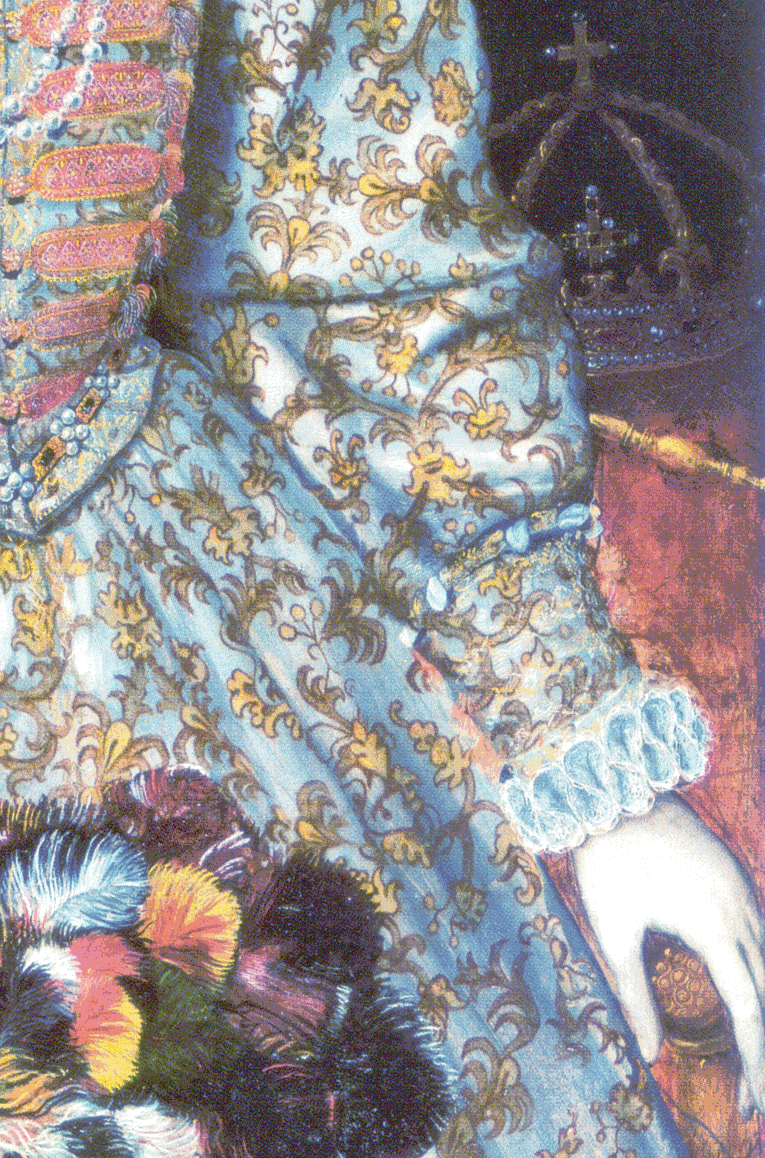
Elizabeth rule |
-
Following the defeat of the Spanish Armada, Queen Elizabeth I sent an English fleet, known as the
English Armada or Counter Armada, to raid the Spanish coast in Portugal
in 1589.
- Despite the victory, the prolonged conflicts, particularly with Spain, were financially draining and left England with significant debts.
- Elizabeth's reign also saw English privateers, like Sir Francis Drake, attack Spanish treasure ships and colonies in the Americas.
A privateer was a privately owned and armed ship commissioned by a government to raid enemy shipping during wartime. Unlike pirates who acted illegally, privateers operated under a government-issued letter of marque, which gave them legal authority to attack enemy vessels. This practice allowed governments to supplement their navies by enlisting privately owned ships to disrupt enemy trade and capture enemy ships and cargo for profit.
(Assistant) |
|
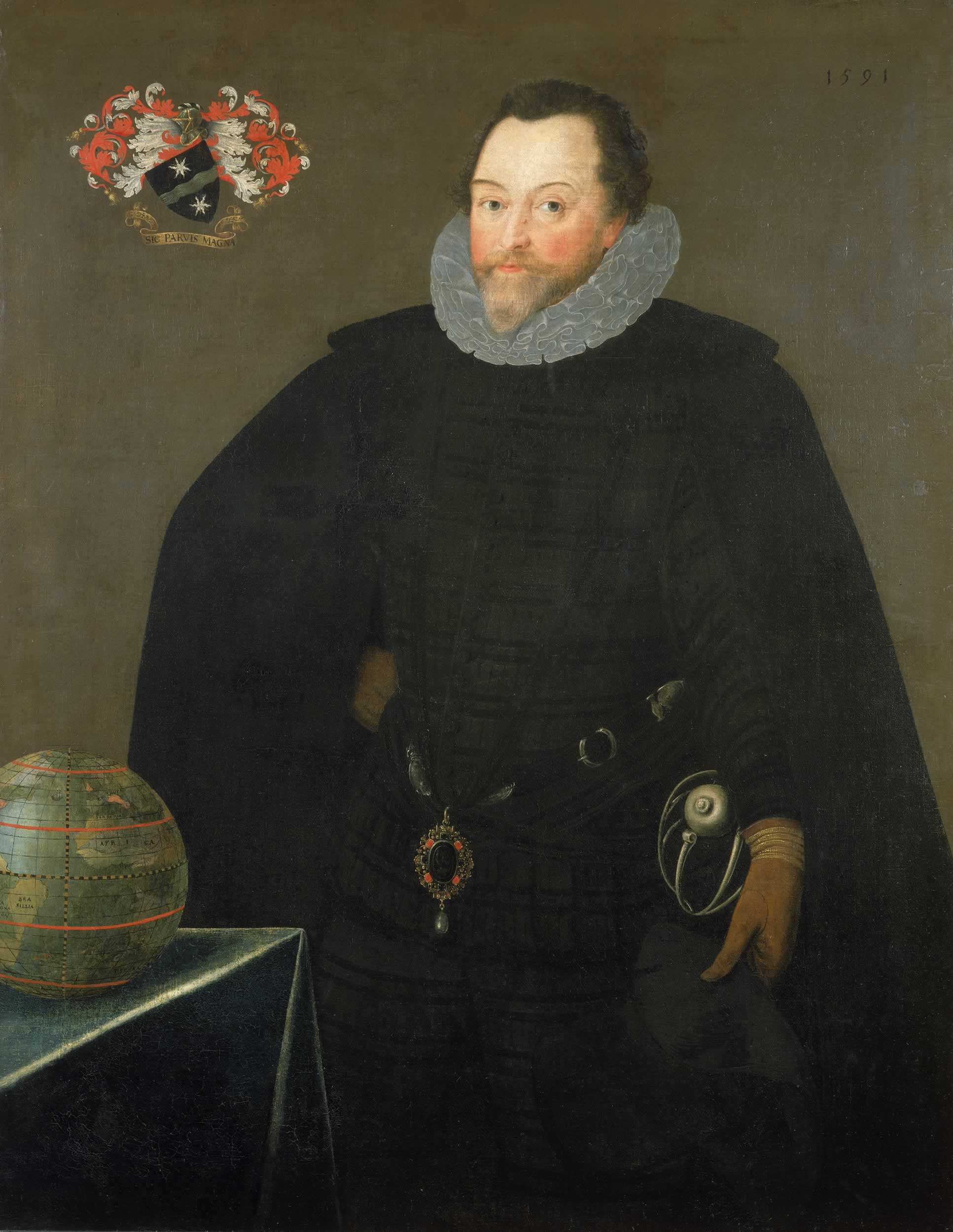
Marcus Gheeraerts the Younger, Public domain, via Wikimedia Commons
Sir
Francis Drake - 1591 |
- Sir Francis Drake (c. 1540-1596) was an English explorer and privateer best known for making the second circumnavigation of the world in a single expedition between 1577 and 1580
and he was the first English expedition to accomplish this.
- He is also known for participating in the early English slaving voyages of his cousin, John Hawkins, and John Lovell.
- Having started as a simple seaman, in 1588 he was part of the fight against the Spanish Armada as a vice admiral.
|
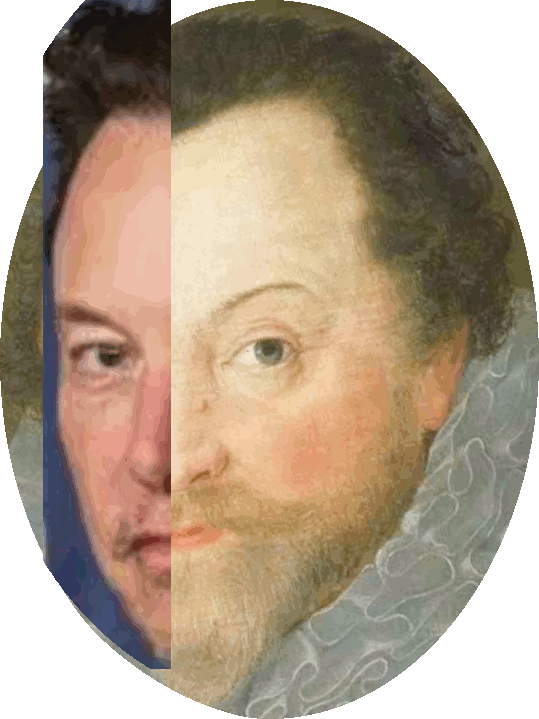
Sir Francis Drake as Musk |
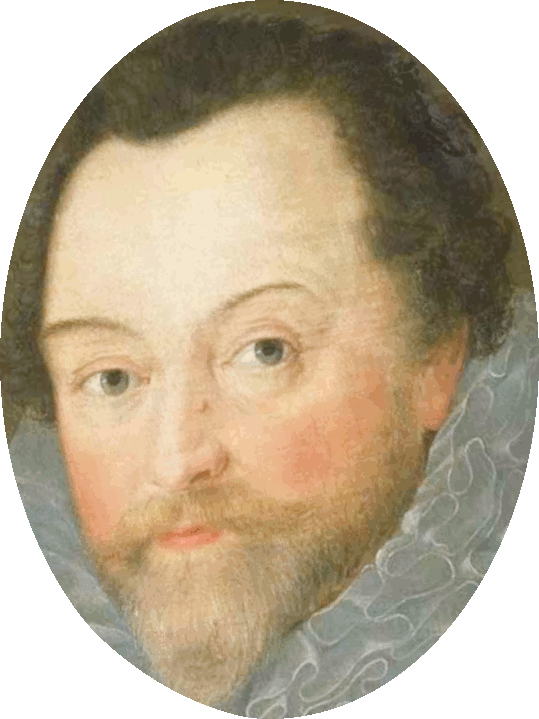 |
 |
Francis Drake
1540-1596
?
1/28
explorer |
Elon Reeve Musk
1971
6/28 |
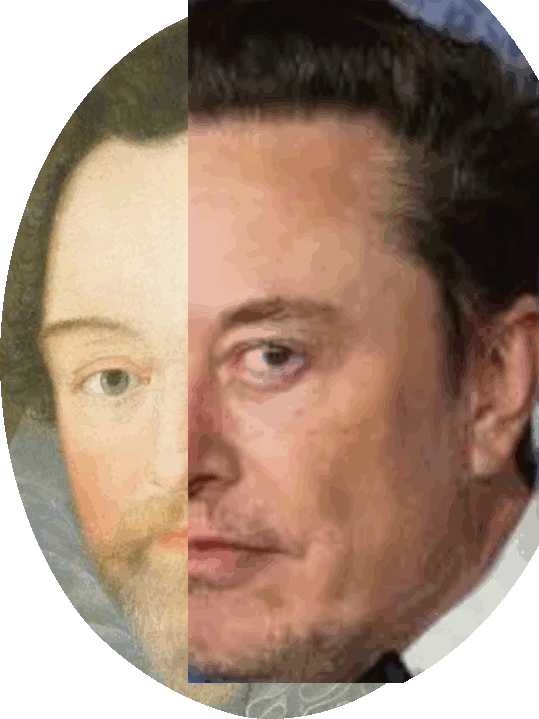 |
 |
|
Golden Hind |
- At an early age, Drake was placed into the household of a relative, a prominent sea captain in Plymouth.
- In 1572, he set sail on his first independent mission, privateering along the Spanish Main.
- Drake's circumnavigation began on December 15, 1577,
and he crossed the Pacific Ocean, until then an area of exclusive Spanish interest, and laid claim to New Albion, plundering coastal towns and ships for treasure and supplies as he went.
- He arrived back in England in September 1580, and Elizabeth I awarded Drake a knighthood in 1581 which he received aboard his galleon the
Golden Hind.
When Philip II sent the Spanish Armada to England in 1588 as a precursor to its invasion, Drake was second-in-command of the English fleet that fought against and repulsed the Spanish fleet. A year later he led the English Armada in a failed attempt to destroy the remaining Spanish fleet.
(Wikipedia) |
|
Throne |
- Elizabeth I faced constant threats from rivals to the throne, most notably her cousin, Mary, Queen of Scots, who was a Catholic with a claim to the English crown.
- This led to plots and a climate of conspiracy throughout her reign.
-
Elizabeth burned 5 Anabaptists at the stake during her 45-year reign.
- She also ordered the executions of around 800 Catholic rebels implicated in the 1569
Rising of the North; and had at least 183 Catholics, the majority of whom were Jesuit missionaries, hanged, drawn and quartered as traitors.
If numbers are the main reasoning behind such sobriquets as “Bloody Mary,” then why aren’t Mary’s family members dubbed “Bloody Henry,” “Bloody Edward” and “Bloody Bess”? Why has the myth of “Bloody Mary” persisted in Great Britain’s collective imagination for so long? And what did Mary do that was so different from not only other Tudor monarchs but also other kings and queens across early modern Europe?. These questions are complex and predictably fraught.
(Meilan Solly) |
Elizabethan era |
- Her eventful reign, and its effect on history and culture, gave name to the Elizabethan era.
- England during Elizabeth I's reign was a formidable naval power with a distinct shipbuilding and naval artillery tradition.
- This era is often called a 'golden age' in English history due to its naval triumphs, economic expansion, and flourishing of arts and literature.
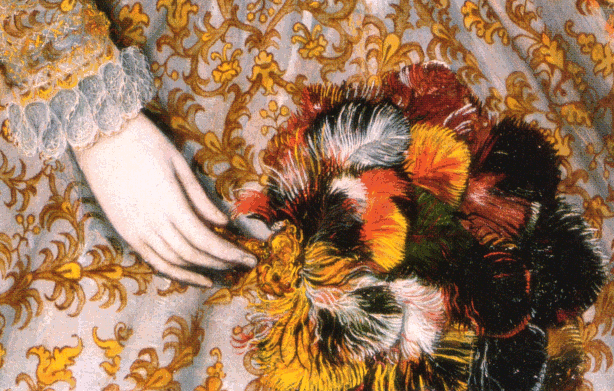
The "Darnley Portrait" of Elizabeth I of England. It was named after a previous owner. Probably painted from life, this portrait is the source of the face pattern called "The Mask of Youth" which would be used for authorized portraits of Elizabeth for decades to come. Recent research has shown the colors have faded. The oranges and browns would have been crimson red in Elizabeth's time. (Wikipedia)
|
Bannerman arms |
- England became a major naval power under Elizabeth I, defeating the Spanish Armada in 1588.
- The cannons used during this time were diverse, ranging from brass, bronze, and iron guns to different shot sizes.
- The Elizabethans made a technological leap: their guns were of standard size, and made from stronger cast iron.
- Instead of a large number of small guns, they had a small number of bigger guns.
- They had longer range and a consistent rate; their effectiveness meant that naval tactics remains essentially unchanged for
200 years afterwards.
- And they also no longer used stones
as ammunition.
At the time of Elizabeth's father, Henry VIII, shipboard cannon were a motley collection of different types of artillery. Some were made of brass, some of bronze, others of wrought iron. They fired shot (stone or metal) of various different sizes. Some of the guns were designed for ships; others were originally built to be used on land, but pressed into naval service. We know a lot about artillery in Henry's day from guns recovered from the wreck of his favorite ship, the Mary Rose, sunk by the French in 1545. (Wikipedia)
|

Eyeball of the world |
-
Elizabeth I officially founded British Intelligence in 1569
after she formally funded it, although, it was all begun
by her grandfather, Henry VII decades earlier.
-
However, she did have a fledgling spy network in Tudor England
that used kidnappings, codes and moles to ensure the Protestant Queen's longevity.
"This marked the beginning of a kind of mechanization of war," says naval historian Professor Eric Grove of Salford University for the program. "The ship is now a gun platform in a way that it wasn't before."
(David Hamnlin)
|

Greening of America |
- Under the guidance of Sir Walter Raleigh, a document advocating colonization of North America
was drafted in 1584 and Elizabeth sent him to colonize
Virginia that same year.
- Elizabeth I supported the first English colonization efforts in North America, primarily through her patronage of Raleigh and his expeditions.
- She
provided symbolic support, however, very little funding.
|
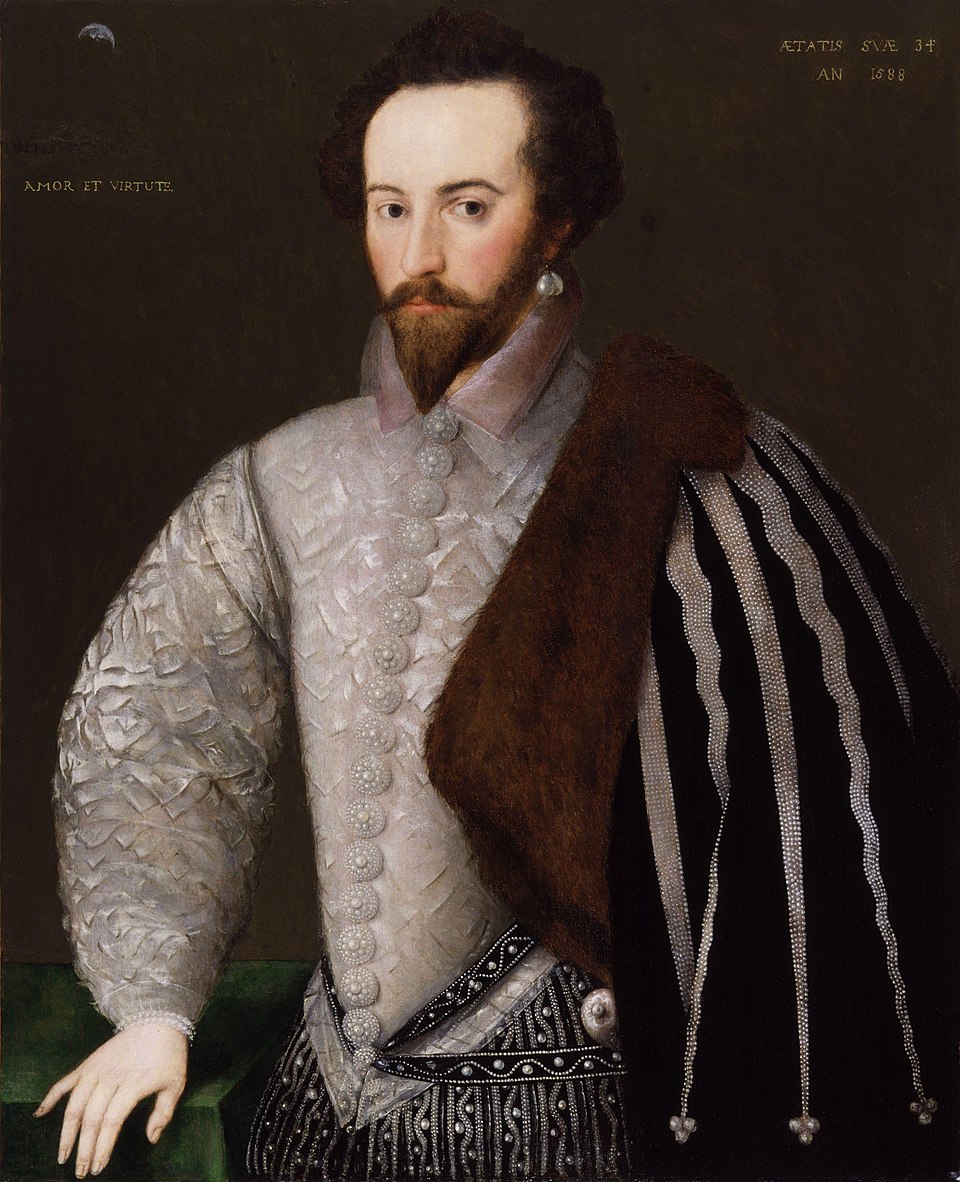
National Portrait Gallery, Public domain, via Wikimedia Commons
Sir
Walter Raleigh 1599 |
- Sir Walter Raleigh (1553-1618) was an English statesman, soldier, writer and explorer.
- One of the most notable figures of the Elizabethan era, he played a leading part in English colonization of North America, suppressed rebellion in Ireland, helped defend England against the Spanish Armada and held political positions under Elizabeth I.
- The 1580s were a time of growing rivalry between England and Spain.
- Elizabeth's support for exploration was partly motivated by a desire to expand England's influence and wealth, as well as to disrupt Spanish treasure ships.
While she granted Raleigh the patent and knighted him, she did not provide significant financial backing for the expeditions, leaving the primary financial burden on Raleigh. (Assistant) |
|
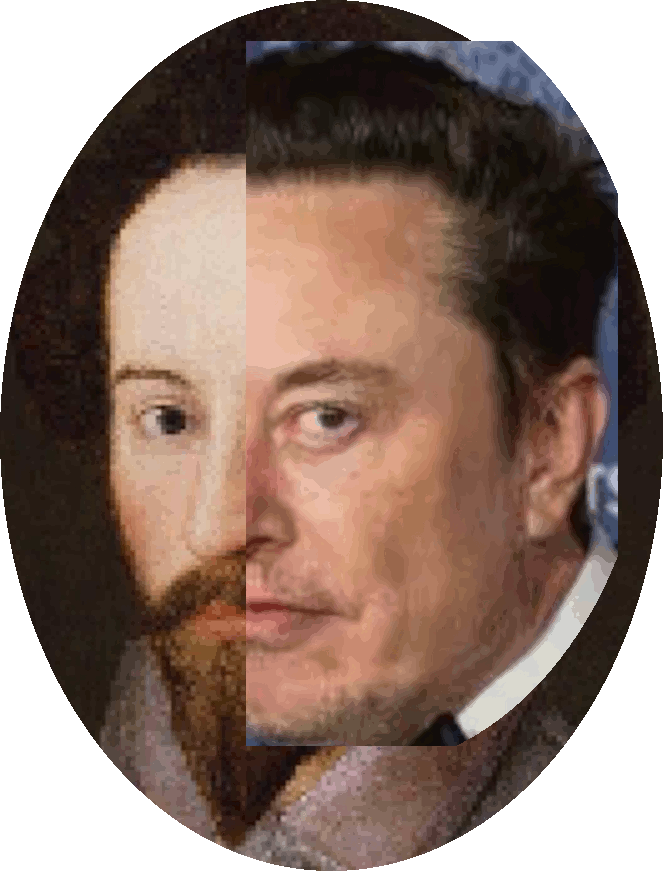
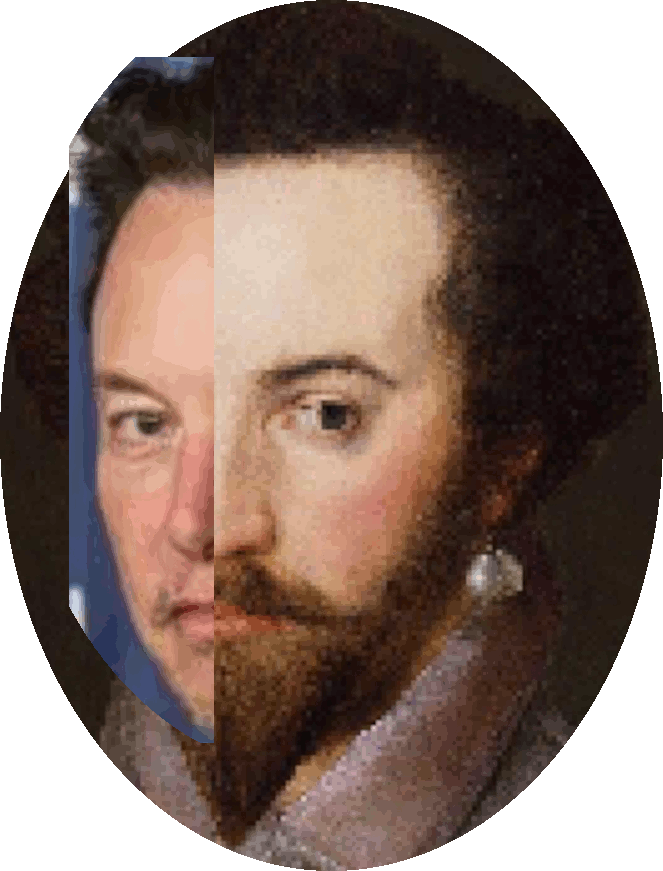
Sir Walter Raleigh as Musk |
 |
|
Walter Raleigh
1553-1618
?
10/29
explorer |
Elon Reeve Musk
1971
6/28 |
 |
 |
|
Fails at everything |
-
Raleigh was executed by beheading on October 29, 1618, by King James I.
- His execution was for treason, stemming from his alleged involvement in the Main Plot against the king years earlier.
- Although his death sentence was commuted to
imprisonment after his initial conviction.
- Raleigh was released in 1616 to lead an expedition to find El Dorado.
- The failure of this expedition and the death of his son led the king to reinstate the original sentence, and he was beheaded in the Old Palace Yard at the Palace of Westminster.
From 1579 to late 1580, Raleigh took part in the suppression of the Desmond Rebellions. He was present at the siege of Smerwick, where he led the party that beheaded some 600 Spanish and Italian soldiers who had surrendered.
(Wikipedia) |
|
Royal mystery |
- Elizabeth I's reign saw the attempted founding of the Roanoke Colony, which was named Virginia in her honor as the
'Virgin Queen,' however, it was abandoned by 1590.
- The settlement is famous because the colonists disappeared, a mystery known as the Lost Colony of Roanoke.
- In the early 1600s trading posts
were established in Japan and Indonesia.
- The efforts during her reign, particularly the naming of Virginia, laid the groundwork for future English colonization in North America.
The initial colonists left England in 1587 and were found missing by 1590, leaving behind only the word "CROATOAN" carved into a post.
The fate of the 117 colonists, including the first English child born in America, Virginia Dare, remains unsolved. (Assistant) |
FXD.jpg)
Attributed to Marcus Gheeraerts the Younger, Public domain, via Wikimedia Commons
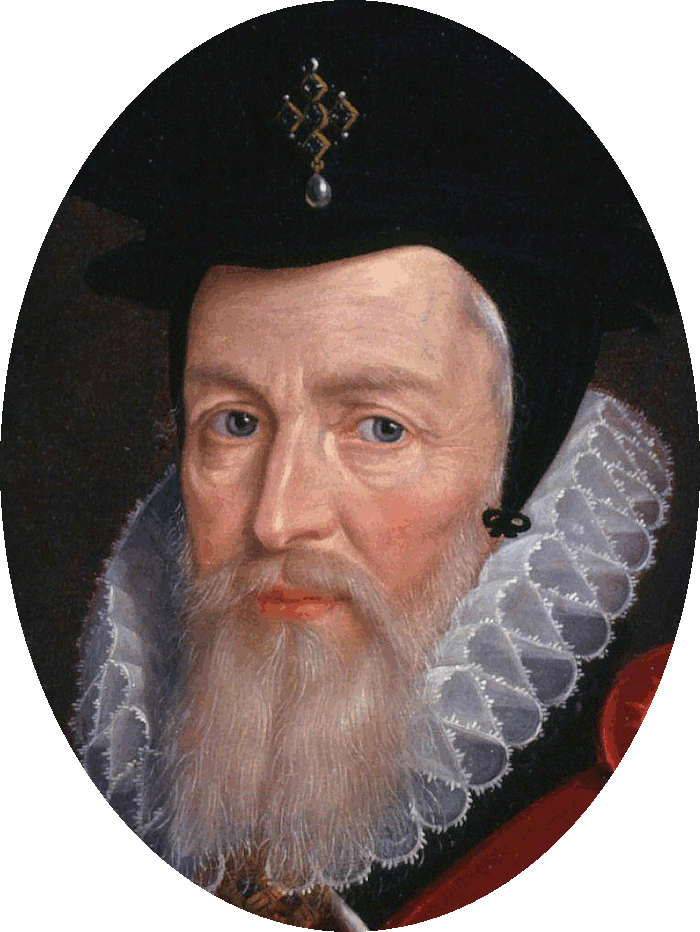
William Cecil |
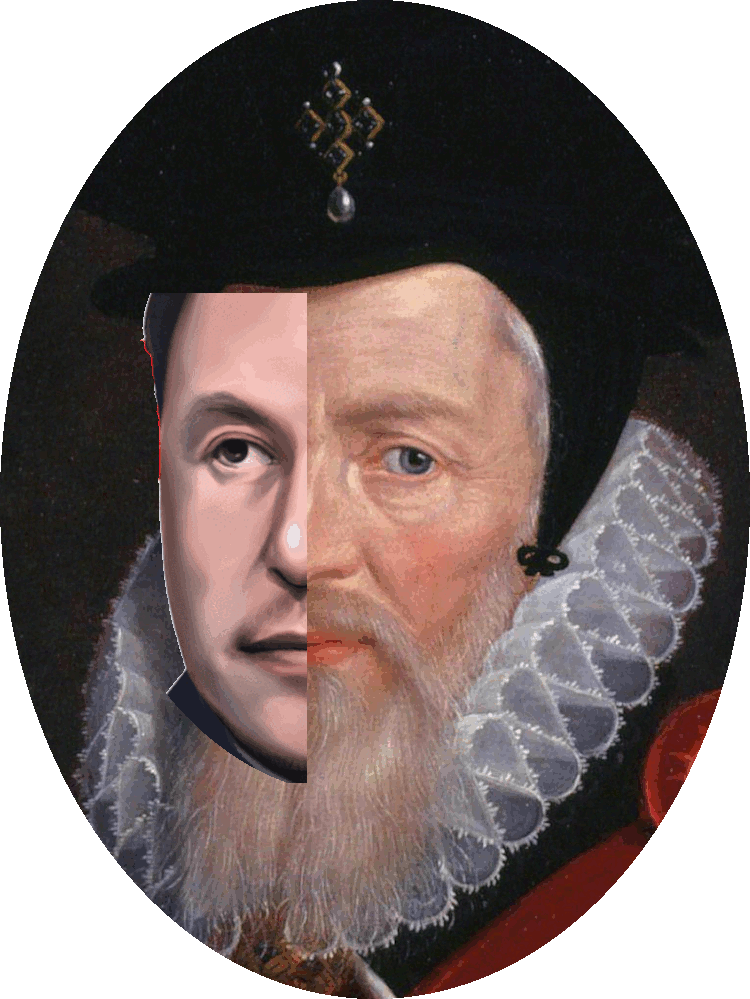
- William Cecil, 1st Baron Burghley (1520-1598) and lord high treasurer
from 1572–1598, was the dominant minister to Queen Elizabeth I.
- Burghley's son Robert Cecil, 1st Earl of Salisbury, succeeded his father as Chief Minister to Elizabeth
from 1598–1603 and was eventually appointed by King James I as lord high treasurer
from 1608–1612.
- From 1558 forward
40 years, the biography of Cecil is almost indistinguishable from that of Elizabeth and from the history of England.
|
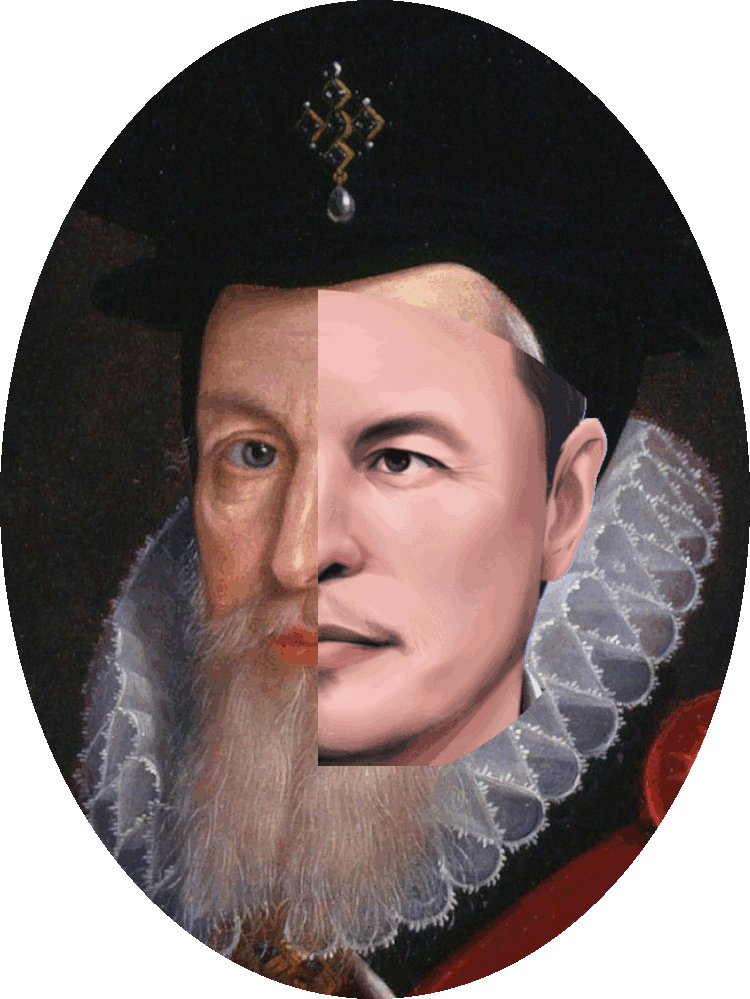
William Cecil as Elon Musk |
 |
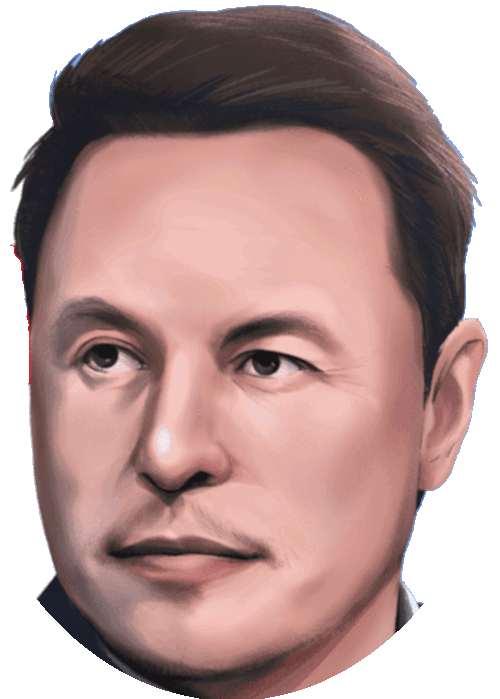 |
William Cecil
1520-1598
9/13
8/4
Chief minister |
Elon Reeve Musk
1971
6/28 |
 |
 |
|
Friction |
- Cecil set as the main goal of English policy the creation of a united and Protestant British Isles.
- His methods were to complete the control of Ireland, and to forge an alliance with Scotland.
-However, he failed to convince Queen Elizabeth I to marry and produce an heir, a major concern for securing the Tudor succession, and his aggressive anti-Catholic policies sometimes alienated her.
- While he ultimately secured
Mary Queen of Scots execution (a success for Protestant succession), he faced Elizabeth's intense reluctance and anger, even being banished temporarily, and his persistent pressure created friction.

Virgin queen |
-
Elizabeth never wed, perpetually playing the game of courtly love and ensuring power stayed in her hands alone.
- Though she eventually won acclaim as England’s
'virgin queen,' her decision to remain unmarried infuriated her advisers, who believed women were unfit to rule without the guiding influence of a husband.
- But unlike Mary I who was lambasted for getting
married, Elizabeth was attacked for not getting married.
- When Elizabeth died childless in 1603, leaving the crown to James VI of Scotland, the son of her longtime rival Mary, Queen of Scots, she effectively ended the Tudor dynasty after just three generations.
- Elizabeth died
in 1603 and as she refused to name an heir, William Cecil
named King James VI of Scotland.
House of
Stuart
1603 -
1714
Scottish |
.svg.png)
Public domain, via Wikimedia Commons
Coat of Arms of the Kingdom of England |
- The House of Stuart was a royal house that ruled Scotland from 1371 and later ruled England, Scotland, and Ireland from 1603 until 1714.
- The Stuart period saw significant upheaval, including a civil war, the execution of Charles I, and the brief establishment of a republic under Oliver Cromwell.
- The Act of Settlement in 1701 ensured that only Protestants could inherit the throne and designated the Protestant House of Hanover as the next in line to prevent Catholic Stuarts from reclaiming power.
- In 1503, James IV married Margaret Tudor, thus linking the reigning royal houses of Scotland and England.
 |
-
During the Stuart period, England's involvement in North America expanded, leading to more colonies and further development of the political, religious, and social landscape of what would become the United States.
- The House of Stuart ruled the British Isles during the critical period of English colonization in North America.
- While they never physically ruled in America, their reigns directly influenced the establishment and naming of many colonies.
-
In total, 9 Stewart/Stuart monarchs ruled Scotland alone from 1371 until 1603, the last of whom was James VI, before his accession in England.
- Two Stuart queens ruled the isles following the Glorious Revolution
in 1688: Mary II and Anne.
- Monarchs include James I, Charles I (who was executed), Charles II, James II, William III, Mary II, and Anne.
Since the early 19th century, when the James II direct line failed, there have been no active claimants from the Stuart family. The current Jacobite heir to the claims of the historical Stuart monarchs is a distant cousin Franz, Duke of Bavaria, of the House of Wittelsbach.
(Wikipedia)
|
King James
VI and I of
England and Scotland
1603 - 1625
House of Stuart |
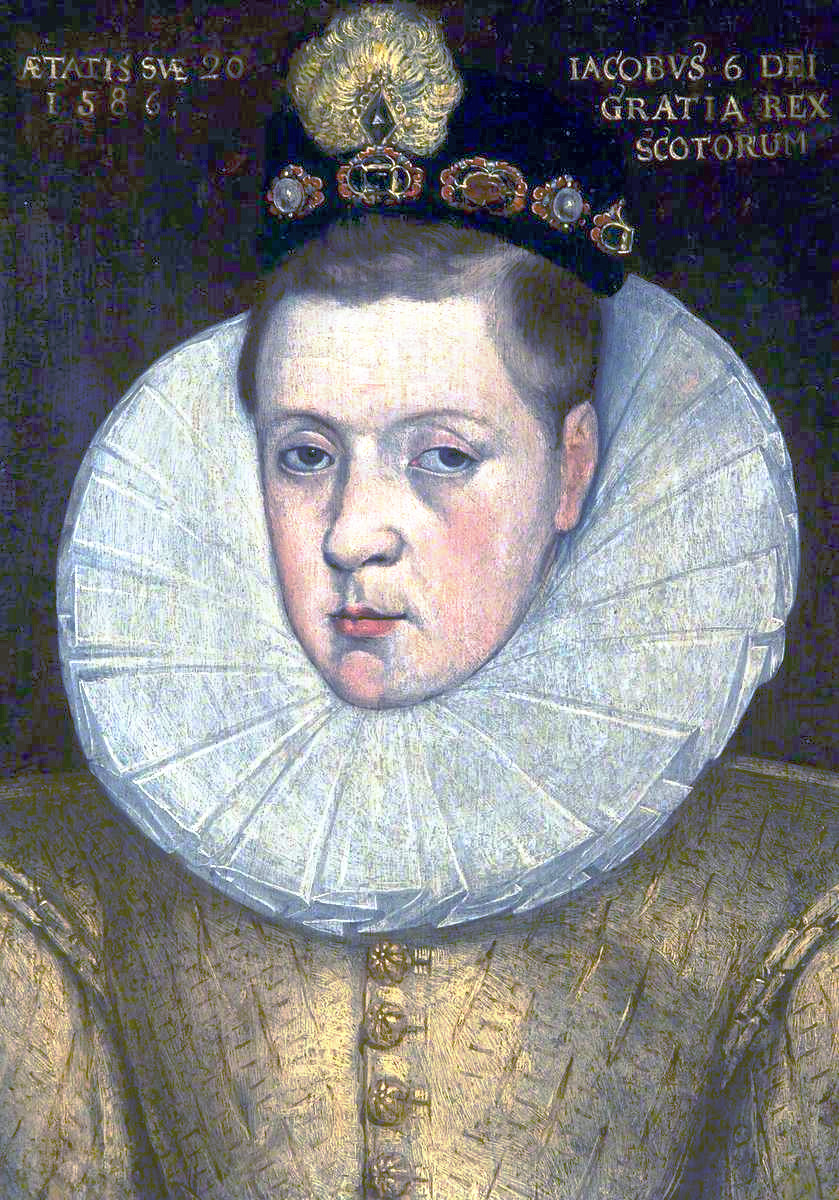
Unknown artist of the Scottish school, Public domain, via Wikimedia Commons
King James VI of
Scotland in 1586, age 20
King James I
of England and
Ireland
1586 |
-
James VI and I, ruled from 1603-1625, and succeeded his cousin Elizabeth I, the last Tudor monarch of England and Ireland, who died childless.
-
When Elizabeth I died
in 1603 she refused to name an heir so William Cecil
named King James VI of Scotland and he became King James I of
England and Scotland.
- He was born as
James Charles Stuart (1566-1625) on June 19,
1566, and was the son of Mary, Queen of Scots, and a great-great-grandson of Henry VII, King of England and Lord of Ireland, and thus a potential successor to all three thrones.
- He was the grandson of Henry VIII.
- James was
the first member of the Scottish House of Stuart that
ruled England after he married Margaret Tudor in 1503,
thus linking the reigning royal houses of Scotland and
England.
- By the late Stuart period, the Treasury was often run not by a single individual
such as the lord high treasurer, but by a commission of
lords of the Treasury, led by the first lord of the
Treasury.
War horse |
-
James VI and I's reign was characterized by a strong commitment to peace, and he is most known for successfully ending the long war with Spain in 1604 and maintaining peace throughout his reign to avoid expensive wars.
- While he aimed to avoid major conflicts, he faced pressure from factions pushing for war, especially during the escalating
Thirty Years' War in Central Europe, which ultimately led to criticism and accusations of weakness.
- His efforts to find a peaceful solution to the European religious conflict, which included attempting to arrange a marriage between his son and the Spanish Infanta, were ultimately unsuccessful in preventing
future conflict.
He pursued marriage alliances, such as the "Spanish match," to maintain peace with Spain, but the negotiations for his son's marriage to the Infanta Maria Anna were protracted and ultimately failed to secure a peaceful resolution to the larger European conflict.
Criticism: His avoidance of major wars and attempts at diplomacy led to criticism, with some accusing him of cowardice and failing to act as a strong military leader.
(Assistant)
|
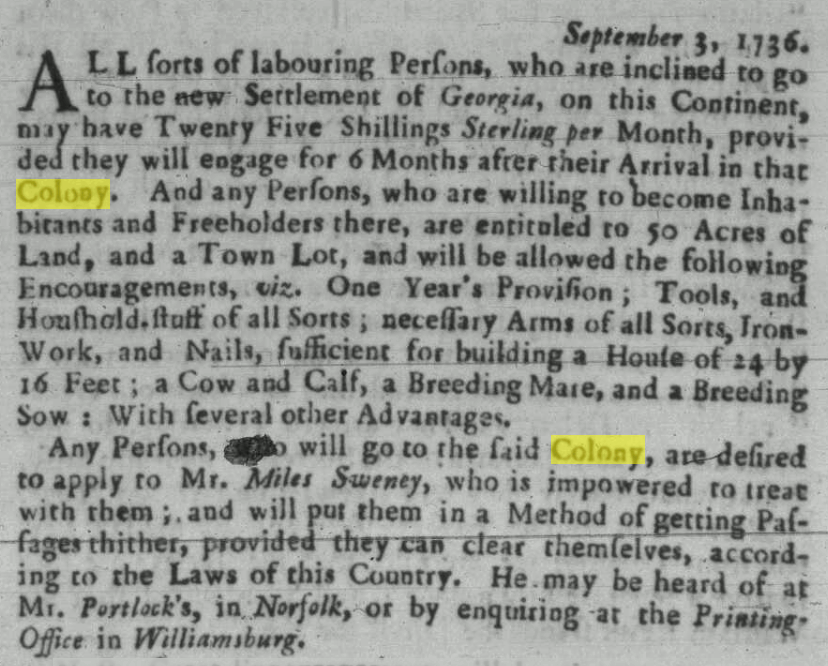
Williamsburg Virginia
Gazette - September 24, 1736
Settlement of
Georgia |
- The Virginia Company of London was an English trading company that was chartered by King James I on April 10, 1606, with the objective of colonizing the eastern coast of America.
-
In 1606, James granted a royal charter to the Virginia Company of London, followed by another to the Plymouth Company in the same year.
- In the late 1580s, Sir Walter Raleigh attempted to plant Roanoke Colony for England in present-day Dare County, North Carolina, which was unsuccessful and often referred to as The Lost Colony.
- This made the English crown wary of investment, however, King James I of England, Scotland and Ireland, decided to try again in 1606.
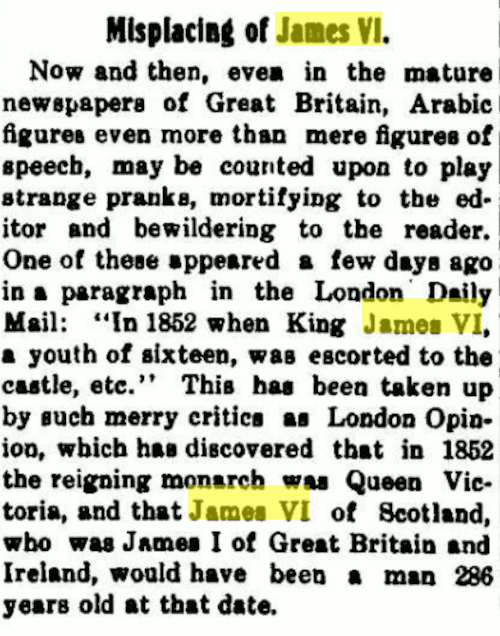
Jeffersonville Daily
Reflector - September 12, 1912
Shape-shifting no
doubt |
- Under James, the 'Golden Age' of Elizabethan literature and drama continued, with writers such as William Shakespeare, John Donne, Ben Jonson, and Francis Bacon contributing to a flourishing literary culture.
- James I granted charters to companies like the Virginia Company to establish settlements, laying the foundation for the first permanent English colonies
in America.
He sponsored the translation of the Bible into English (later named after him, the Authorized King James Version), and the 1604 revision of the Book of Common Prayer.Contemporary
courtier Anthony Weldon claimed that James had been
termed "the wisest fool in Christendom" (wise in small
things, foolish otherwise), an epithet associated with
his character ever since. (Wikipedia)
|
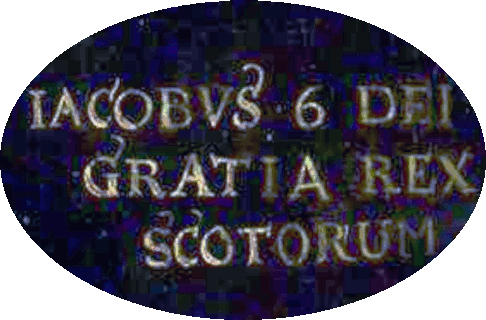
Jamestown charter |
- James I: The first Stuart king to rule over both Scotland and England, he approved the charter for the first permanent English settlement, Jamestown, named in his honor.
- The Virginia Company established the first permanent English settlement in North America in 1607 in the Chesapeake Bay.
- The settlers named it Jamestown in honor of the king, and the main river the James.
In 1606 King James I of England granted a charter to the Virginia Company of London to colonize the American coast anywhere between parallels 34° and 41° north and another charter to the Plymouth Company to settle between 38° and 45° north. In 1607 the Virginia Company crossed the ocean and established Jamestown. (Assistant)
|
|
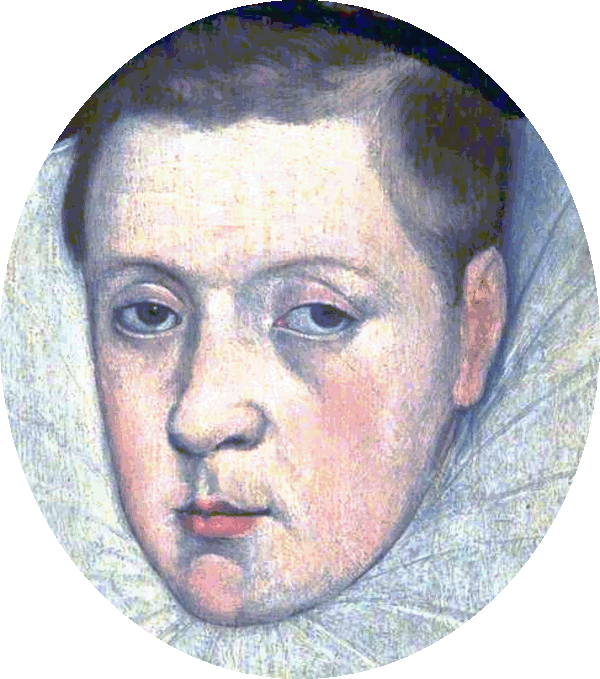
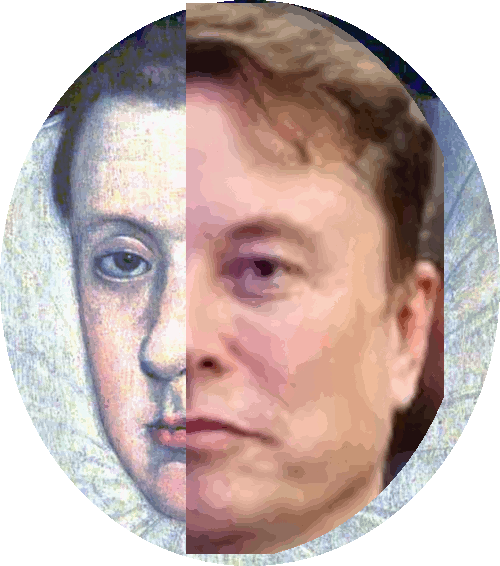
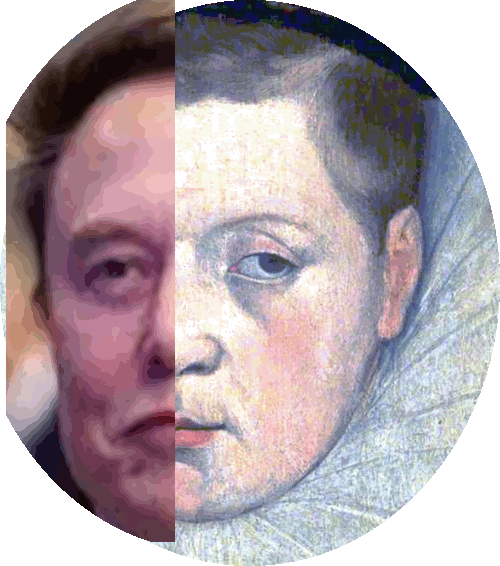
King James VI as Elon Musk |
 |
 |
James Charles Stuart
1566-1625
6/19
3/27
monarch |
Elon Reeve Musk
1971
6/28 |
 |
 |
|
Scottish school |
- Divine Right of Kings is associated with Henry VIII of England (and the Acts of Supremacy), James VI and I of Scotland and England, Louis XIV of France, and their successors.
- Tyrants enable themselves, how handy,
writing fake 'laws' to accommodate their tyranny (using your
wallet).
- Great Chain of Being (perfect tool for tyrants).
- Whites, Blacks, and Apes in the Great Chain of Being.
- Macbeth is a usurper, someone who has murdered his rightful king and stolen the throne for himself.
.jpg)
Public domain, via Wikimedia Commons
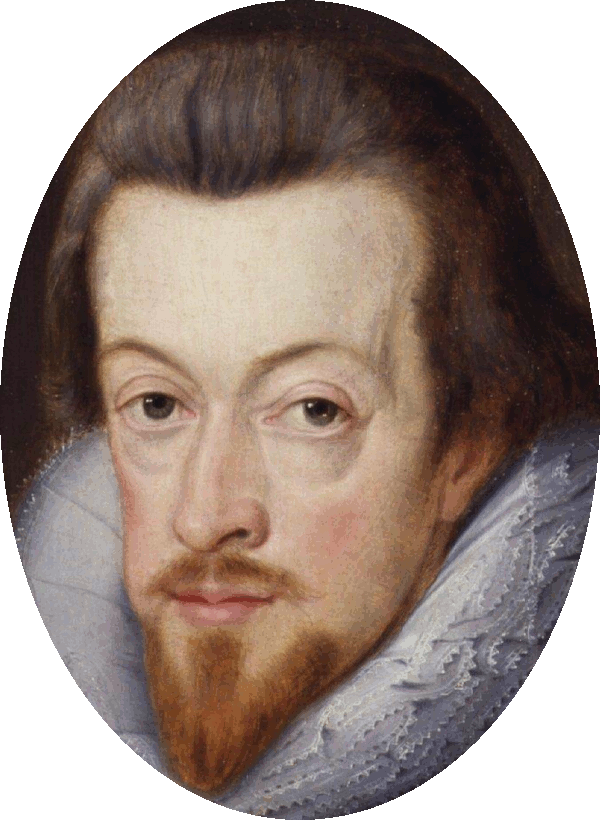
Robert Cecil |
- Robert Cecil, 1st Earl of Salisbury, KG, PC (1563-1612) was an English statesman noted for his direction of the government during the Union of the Crowns, as Tudor England gave way to Stuart rule
in 1603.
- Lord Salisbury served as the Secretary of State of England
from 1596–1612 and Lord High Treasurer from 1608–1612, succeeding his father,
William Cecil, as Queen Elizabeth I's Lord Privy Seal and remaining in power during the first
9 years of King James I's reign until his own death.
|
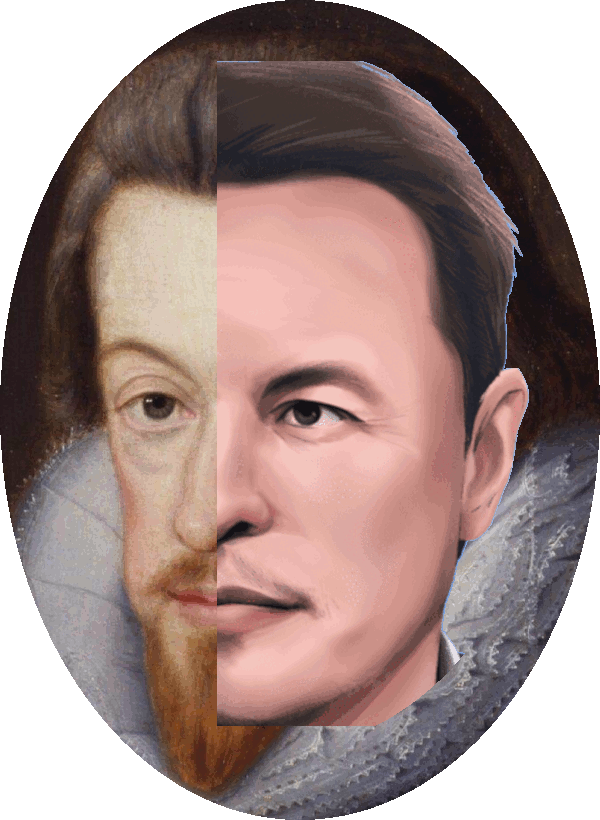
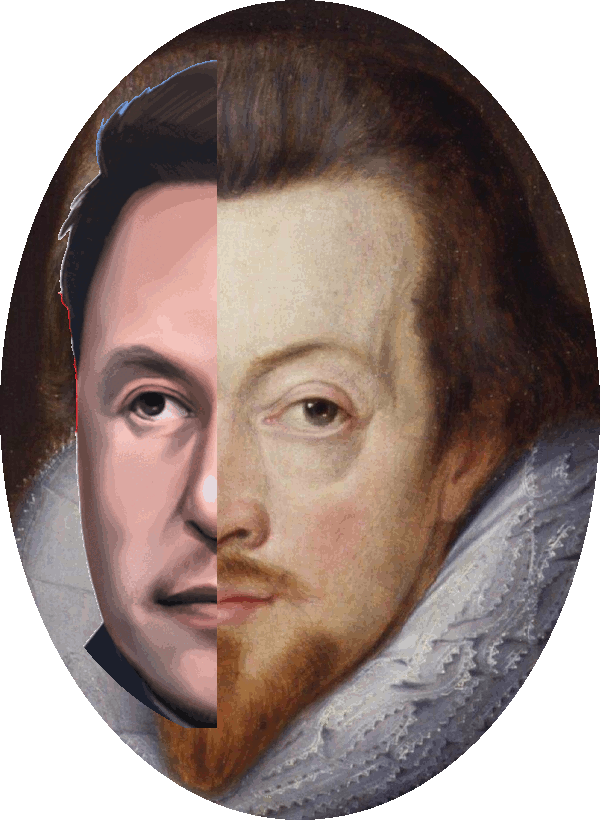
Robert Cecil as Elon Musk |
 |
|
Robert Cecil
1563-1612
6/1 5/24
Chief minister |
Elon Reeve Musk
1971
6/28 |
 |
 |
|
Pygmy |
-
The principal discoverer of the Gunpowder Plot of 1605, Robert Cecil remains a controversial historic figure as it is still debated at what point he first learned of the plot and to what extent he acted as an agent provocateur.
The Gunpowder Plot of 1605, in earlier centuries
often called the Gunpowder Treason Plot or the Jesuit
Treason, was an unsuccessful attempted regicide
against King James VI of Scotland and I of England by
a group of English Catholics, led by Robert Catesby.
The plan was to blow up the House of Lords during the
State Opening of Parliament on Tuesday 5 November
1605, as the prelude to a popular revolt in the Midlands during which King James' nine-year-old daughter, Elizabeth, was to be installed as the new head of state. (Wikipedia)
|
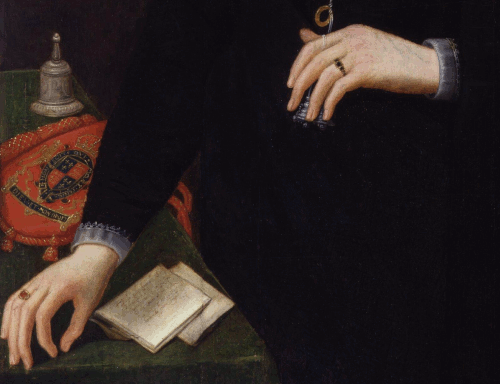
Spymaster
Masonic
hand sign |
- He inherited and expanded England's intelligence network
as spymaster for Queen Elizabeth I and King James I, known for managing the Tudor-Stuart succession, developing sophisticated espionage, and foiling major threats like the
Gunpowder Plot, using informants, codes, and double agents to secure the Protestant succession and stability.
- His intelligence network uncovered the 1605 plot to blow up Parliament, making him a national hero.
The Rainbow Portrait of Elizabeth I at Hatfield House has been seen as reflecting Cecil's role as spymaster after the death of Sir Francis Walsingham, due to the eyes and ears in the pattern of the dress. (Wikipedia)
|
|
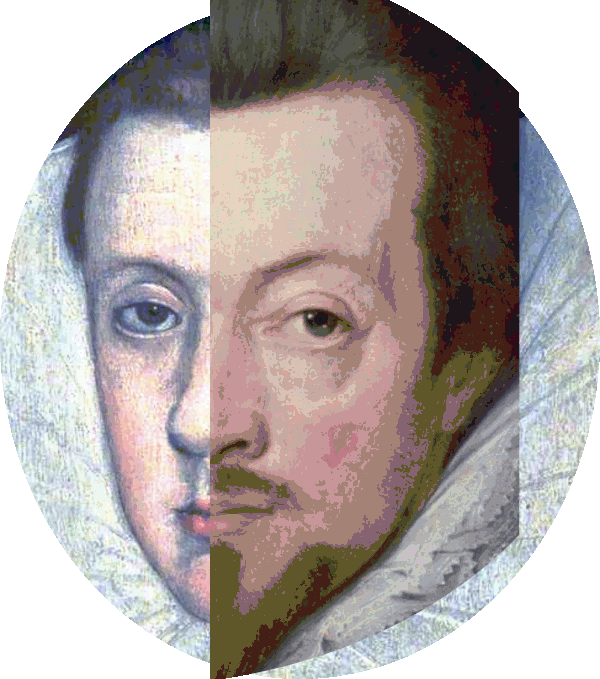
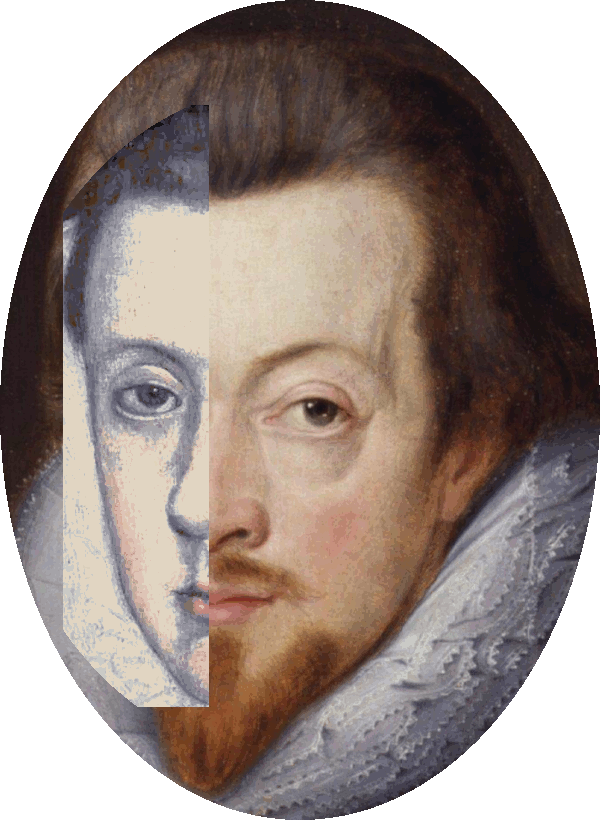
Robert Cecil as King James VI |
|
|
|
Robert Cecil
1563-1612
6/1 5/24
Chief minister |
James Charles Stuart
1566-1625
6/19
3/27
monarch |
 |
 |
|
Spymaster |
- Robert Cecil was 5 ft 4 in (163 cm) tall, had scoliosis, and was hunchbacked.
Passion for hunting |
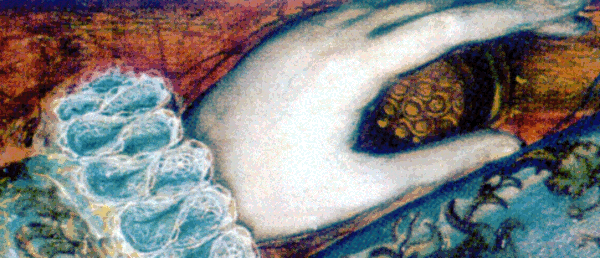
- James
I's reign was marked by religious conflict, including the
assassination attempt called the Gunpowder Plot of 1605.
- This, along with his clashes with Parliament over his beliefs in absolute monarchy, led some religious groups, such as the Pilgrims and Puritans, to seek refuge in America.
- His death in 1625 is often attributed to his illness and potential mistreatment by his favorite, George Villiers, who administered a quack remedy that some believe may have killed him, though official records point to natural causes.
The most persistent rumor is that George Villiers, the Duke of Buckingham, murdered James I. Buckingham was a close confidant who administered an unnamed "medicine" to the king shortly before his death, leading to widespread suspicion.
There is no definitive evidence to prove Buckingham poisoned the king, intentionally or unintentionally. It remains a subject of debate, and many modern historians dismiss the claim. (Assistant)
|
King Charles I of
England, Scotland
and Ireland
1625
- 1649
House of Stuart |
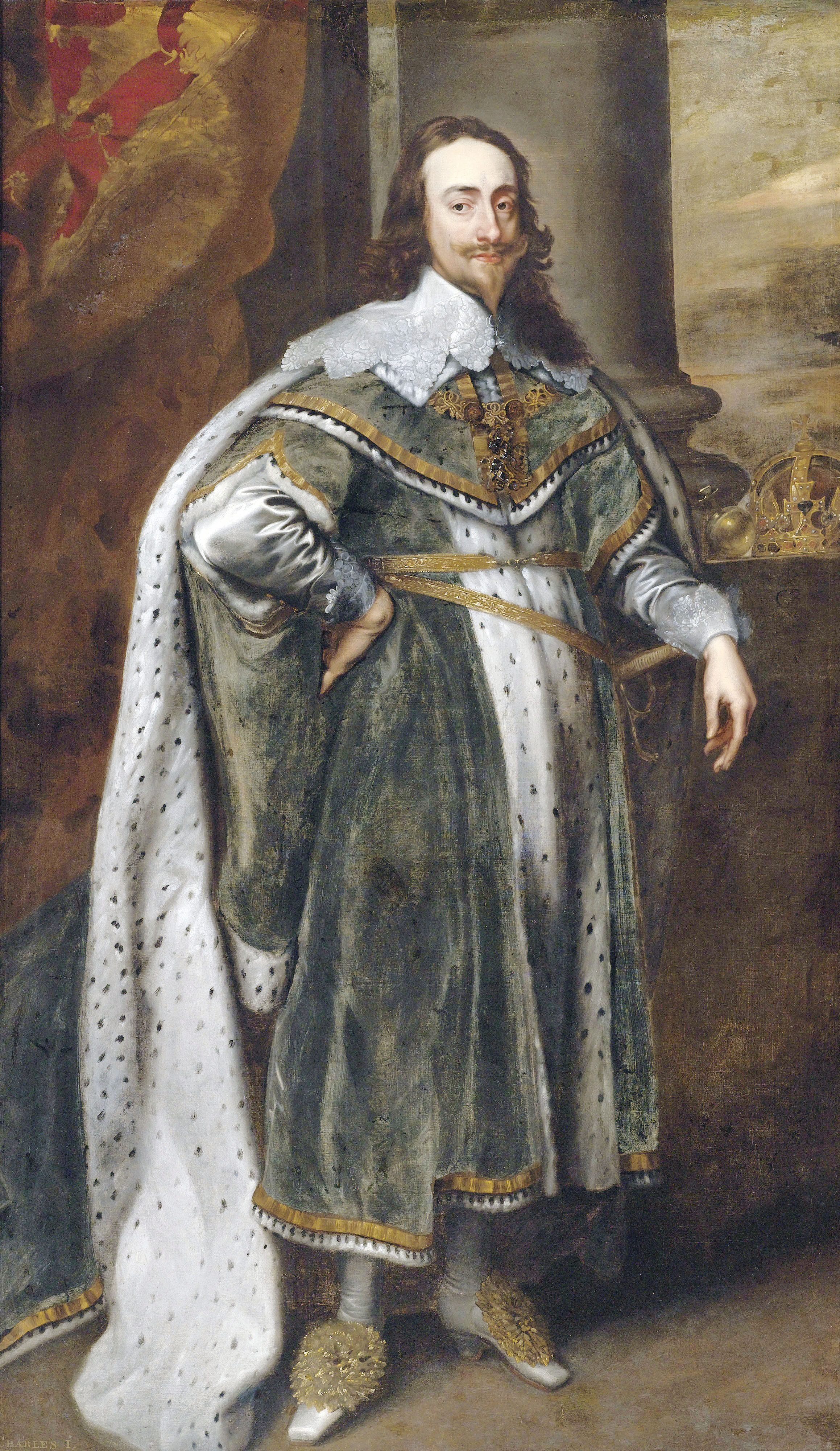
Workshop of Anthony van Dyck, Public domain, via Wikimedia Commons
Charles I -
1636 |
- Charles I was King of England, Scotland, and Ireland from March
27, 1625, until his execution on January 30, 1649.
- Born
as Charles Stuart (1600-1649) in Dunfermline Palace, Fife,
on November 19, 1600, he was the second son of King James VI of Scotland and Anne of Denmark.
- After his accession in 1625, Charles quarreled with the English Parliament, which sought to curb his royal prerogative.
Many of the colonies were named after the rulers of England including the Carolinas (for King Charles I), Virginia (for the Virgin Queen Elizabeth), and Georgia (for King George II). (Assistant)
|
War horse |
-
Charles I's reign was marked by several wars, most notably the
English Civil Wars from 1642–1651, which were a series of conflicts fought between his
Royalist supporters (Cavaliers) and the Parliamentarians
(Roundheads) over royal power, taxation and religion.
- These wars were part of the larger Wars of the Three Kingdoms, which also included fighting in Scotland.
- The Bishops' Wars, starting in 1639
began after Charles I attempted to impose religious reforms, leading to Covenanters gaining control of Scotland and briefly occupying northern England.
-
The Irish Confederate Wars, starting in 1641 were a simultaneous conflict in Ireland that was part of the larger
Wars of the Three Kingdoms.

Hand in things |
-
The First English Civil War from 1642–1646 began after Charles I raised his army against Parliament's will
and included battles like Edgehill.
- It ended with Charles' surrender to the Scots in 1646.
- Followed by the Second English Civil War from 1648–1651 which
began after Charles I's refusal to make concessions led to a renewed outbreak of fighting after he made a secret deal with the Scots.
- He was defeated by Parliamentarian forces and captured.
- Ultimately, Charles I was defeated, executed in 1649, and the monarchy was replaced by a republic known as the Commonwealth.
The Commonwealth in 1649 refers to the republican government established in England after the execution of King Charles I, declaring England a "free state" governed by Parliament, not a monarch, marking the start of the English Interregnum. This period (1649-1660) saw England, then later Scotland and Ireland, ruled by Parliament and the Council of State (executive body) under figures like Oliver Cromwell, before the monarchy was restored. (Assistant)
|
_-_Google_Art_Project.jpg)
Royal Collection, Public domain, via Wikimedia Commons
Charles I in Three Positions
The
shape-shifters all take turns
playing him |
-
Charles I religious policies, coupled with his marriage to a Catholic,
generated antipathy and mistrust from Reformed religious
groups such as the English Puritans and Scottish Covenanters,
who thought his views too Catholic.
- He supported high church Anglican ecclesiastics and failed to aid continental Protestant forces successfully during the
Thirty Years' War.
His attempts to force the Church of Scotland to adopt high Anglican practices led to the Bishops' Wars, strengthened the position of the English and Scottish parliaments, and helped precipitate his own downfall. (Wikipedia)
|
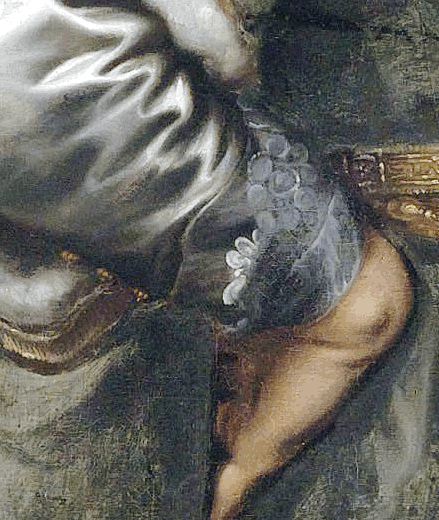
Masonic hidden hand |
- In 1632, Charles I set a tract of about 12 million acres of land at the northern tip of the Chesapeake Bay aside for a second colony in America.
-
During his reign, King Charles I granted charters for several colonies, most notably the proprietary colony of Maryland to the Calvert family and the vast territory of Carolana (which would later become the Carolinas) to his attorney general, Sir Robert Heath.
- He also granted charters for the Caribbean island of Barbados, which became an important source of wealth for England through sugar production.
- These actions reflect his efforts to expand English influence and control in the Americas.
- The British monarchy were passing acreage in America out like it was
candy.
Freemasonry or Masonic membership and rank.
According to this hypothesis, the gesture was a secret sign used to recognize masonic followers each other. The enigmatic posture of the hand has fascinated a lot of scholars of hidden societies, who cryptically connoted the unusual splayed fingers with the letter M, which indicated not only Masonic membership and rank, but also possession of occult secrets. (pmc.ncbi.nlm.nih.gov)
|
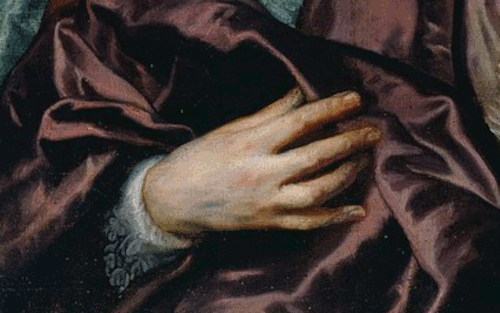
Crypto-Jew (Marranos) recognition |
-
This gesture was a secret sign used by crypto-Jews to
recognize each other.
-
One historian suggested that the hand gesture was a type of a 16th-century secret sign used in Toledo,
Spain, among the crypto-Jews (false Christians) to recognize each other.
although it is not definitely known, it was shown in a lot of
paintings.
According to this hypothesis, the gesture was a secret sign conveying satanic meanings. The hand gesture may be read as the letters M and W, which may be interpreted as multiple V’s and I’s to symbolize 666. This is because the letter V is pronounced as ‘waw’ in Hebrew and ‘vav’ in Gematria and is the 6th letter in both alphabets. However, there is no evidence to show that Renaissance, Mannerist and Baroque art had any connection with Satanism. (pmc.ncbi.nlm.nih.gov)
|
|
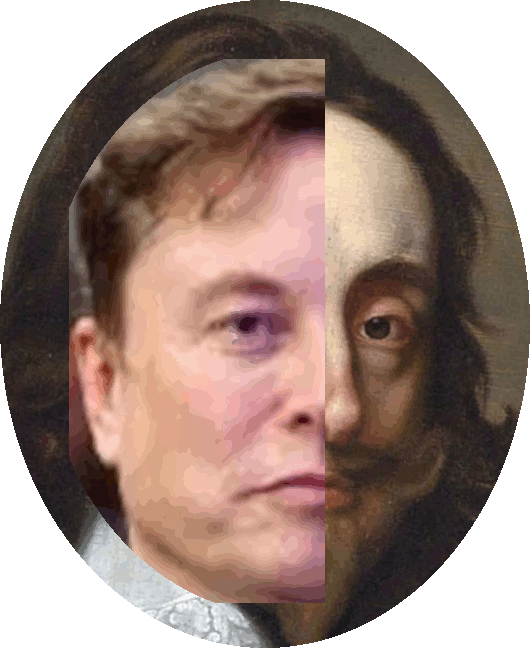
King Charles I as Elon Musk |
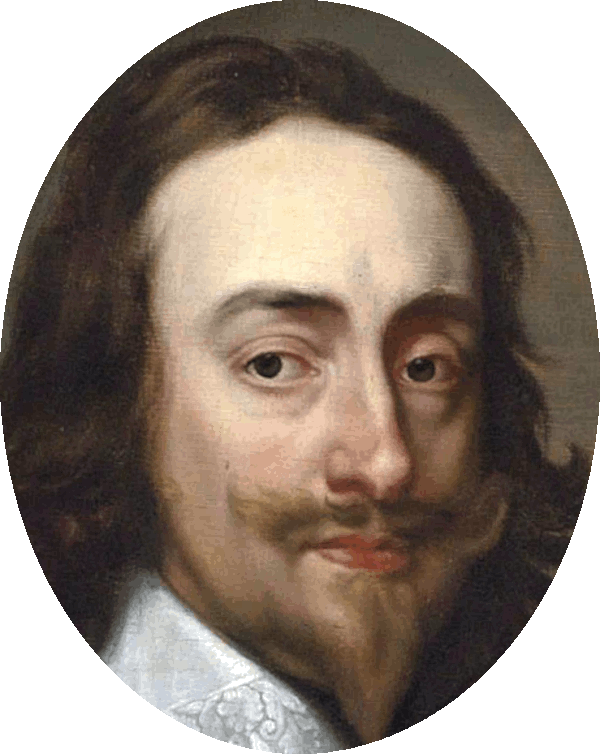 |
 |
Charles Stuart
1600-1649
3/27
1/30
monarch |
Elon Reeve Musk
1971
6/28 |
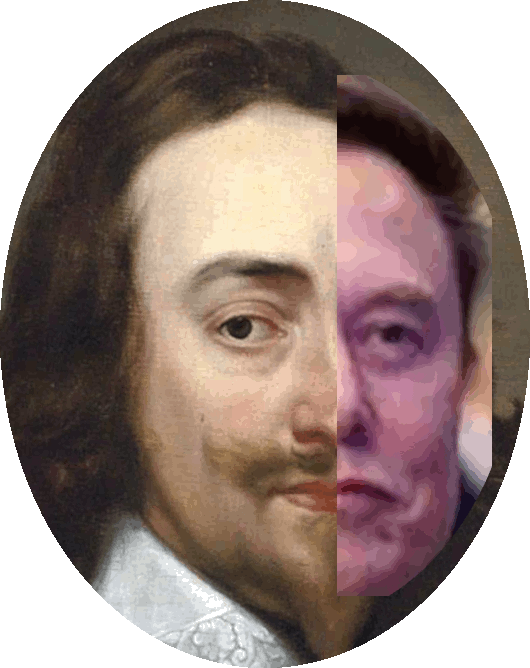 |
 |
|
Crypto |
- Charles I, a Catholic sympathizer, was in favor of Lord Baltimore's plan to create a colony that would demonstrate that Catholics and Protestants could live together peacefully.
- In late 1633, both Protestant and Catholic settlers left England for the Chesapeake, arriving in Maryland in March 1634.
|
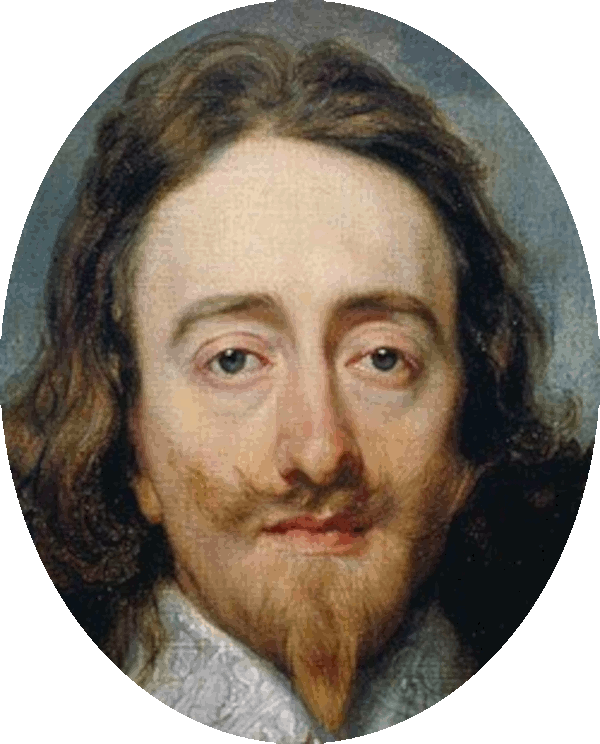
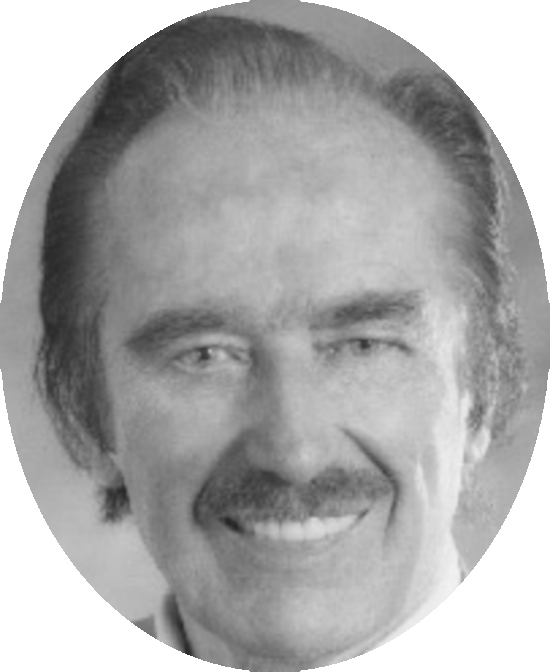
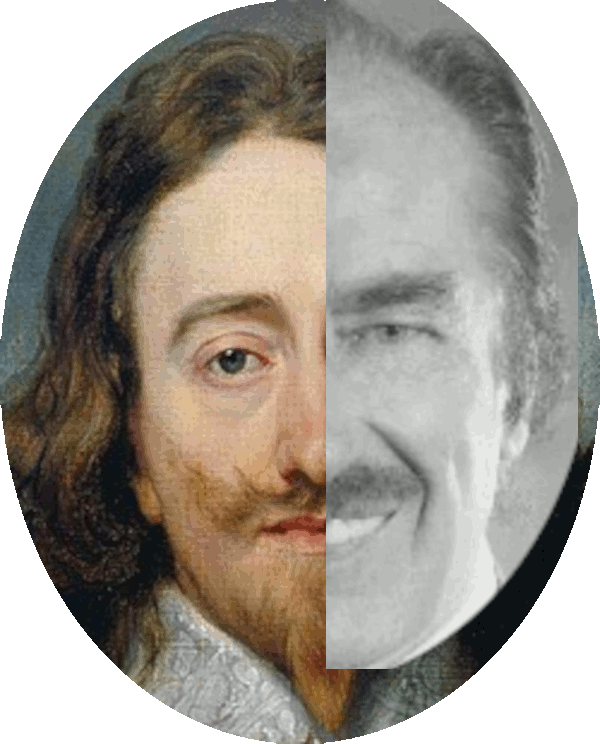
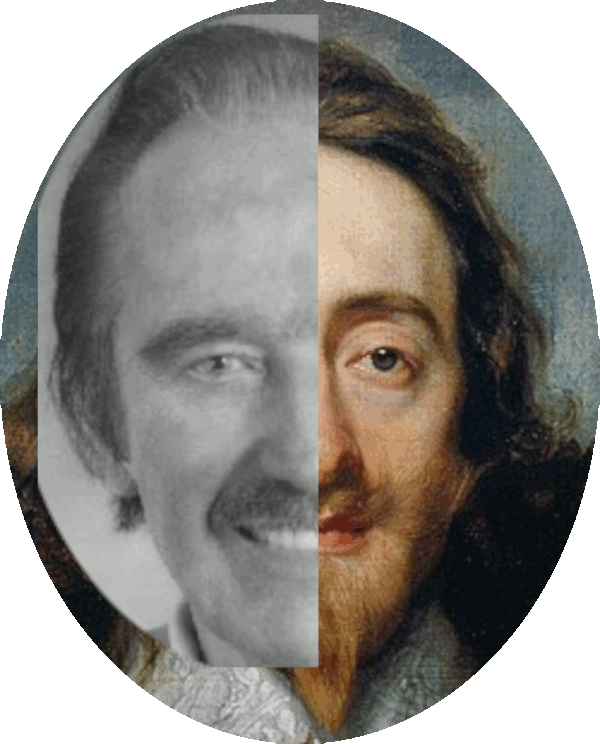
King Charles I as Fred Trump |
 |
 |
Charles Stuart
1600-1649
3/27
1/30
monarch |
Frederick Christ Trump Sr.
1905-1999
10/11
6/25
Real estates |
 |
 |
|
Definitely Crypto |
- He believed in the divine right of kings and was determined to govern according to his own conscience.
- Many of his subjects opposed his policies, in particular
the levying of taxes without Parliamentary consent, and
perceived his actions as those of a tyrannical absolute
monarch.
.jpg)
Gerard Soest, Public domain, via Wikimedia Commons
Cecil Calvert, 2nd Lord Baltimore, with his grandson, Cecil (1667–1680), son of Charles Calvert |
-
Cecil Calvert, 2nd Baron Baltimore (1605-1675) was an English politician and lawyer who was the first proprietor of Maryland.
- Born in Kent, England in 1605, he inherited the
proprietorship of overseas colonies in Avalon (Newfoundland)
along with Maryland.
- This occurred after the 1632 death of his father, George Calvert, 1st Baron Baltimore (1580–1632), for whom it had been originally intended in a vast land grant from King Charles I (1600–1649),
who reigned from 1625–1649.
Calvert's right hand is holding a map of Maryland that he first published in 1635 to promote his colonization plan. A slave of unknown identity appears in the background of the painting to highlight Calvert's wealth. (Wikipedia)
|
|
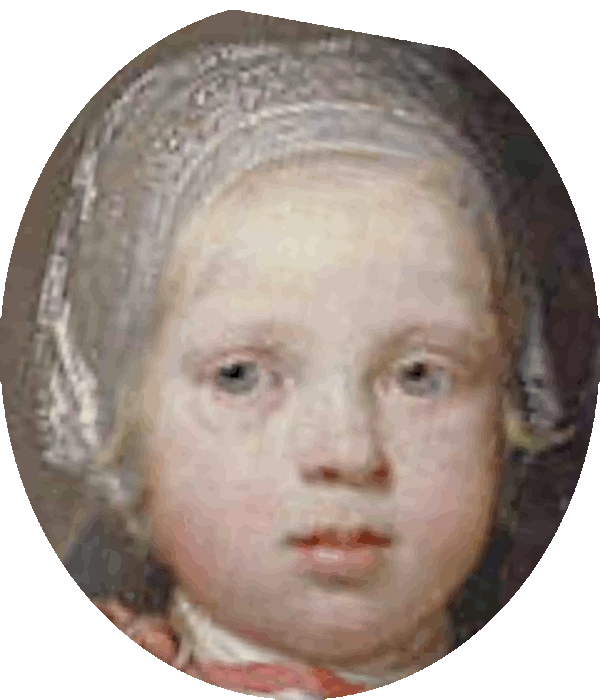
Cecil Calvert Jr. as Trump |
 |
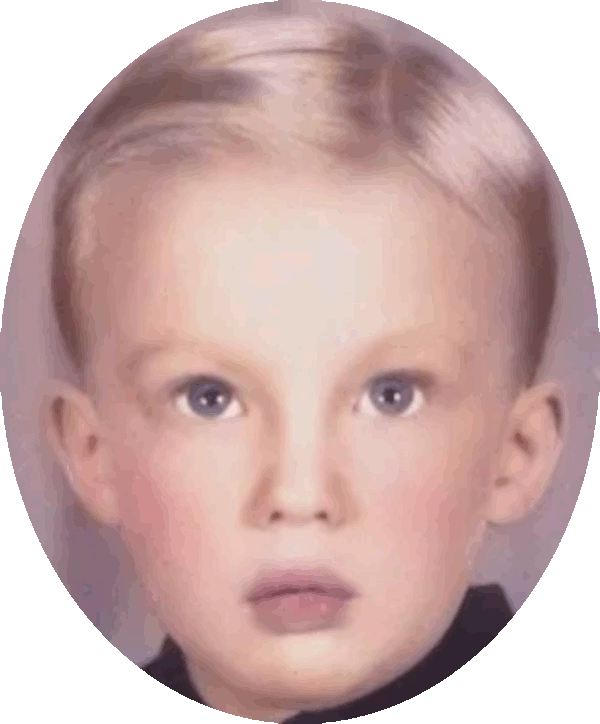 |
Cecil Calvert Jr
about age 2 |
Donald John Trump
1946
6/14 |
- Cecil Calvert proceeded to establish and manage the Province of Maryland as a proprietary colony for English from his English country house of Kiplin Hall in North Yorkshire.
- As a Catholic, he continued his father's legacy by promoting religious tolerance in the colony.
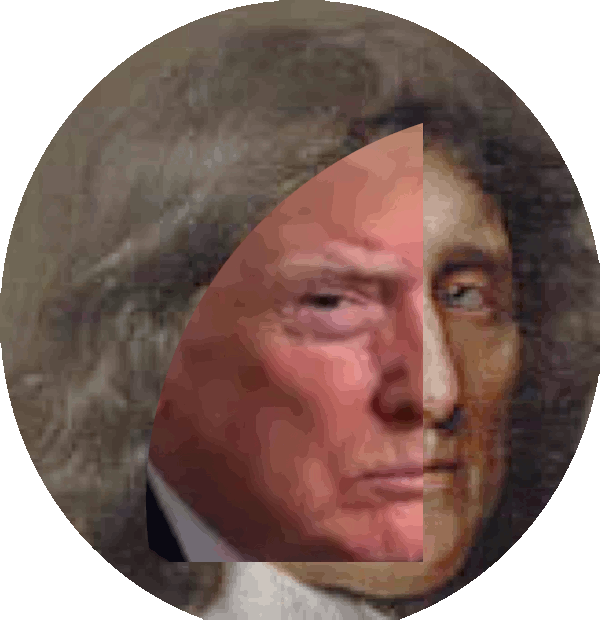
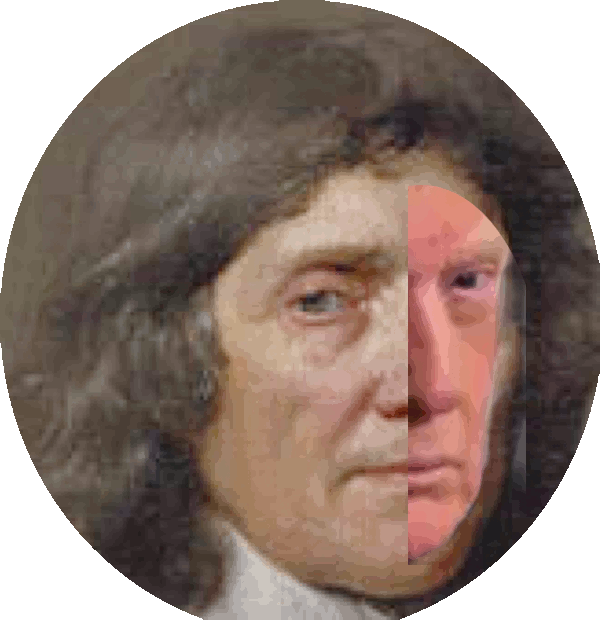
|
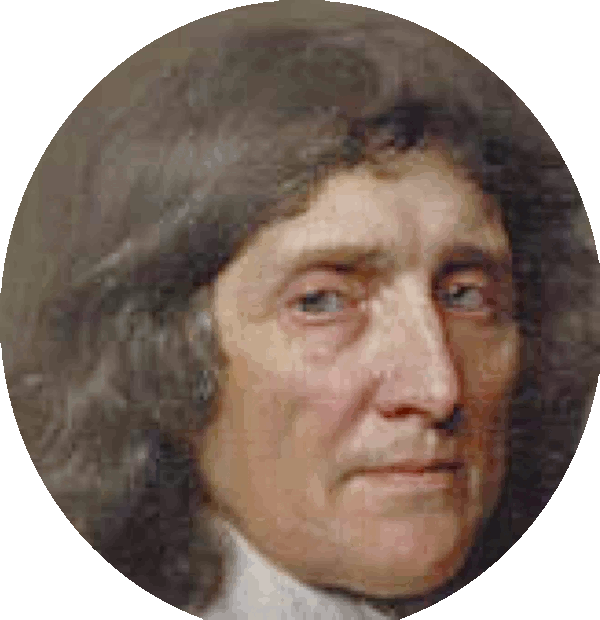
Lord Baltimore as Trump |
 |
 |
Cecil Calvert
1605-1675
8/8 11/30 |
Donald John Trump
1946
66/14
|
 |
 |
|
Avalon |
- Tobacco plantations were a major source of wealth for the colony, mirroring other Southern colonies.
-
King Charles I, and his son, Cecil Calvert, actually founded and governed the colony from England, never visiting it in person.
|
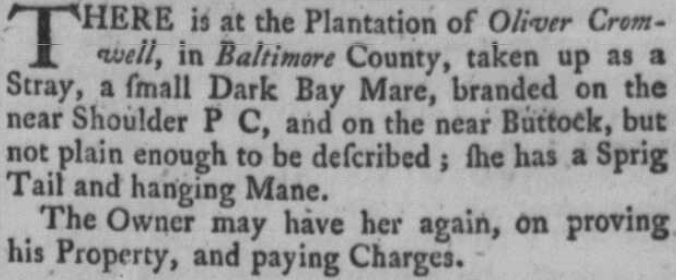
Annapolis Maryland
Gazette - October
12, 1758 |
- Between 1638 and 1648, a series of conflicts pitted King Charles I and his supporters (called Cavaliers) against groups who opposed his rule, the Covenanters in Scotland and the Parliamentarians (or Roundheads) in England.
- Charles I’s armies were defeated by Parliamentarian troops in 1645 and again in 1648.
- The king was taken prisoner in 1648 and in January 1649, stood trial before a court established by the Rump Parliament.
- After being found guilty of high treason, Charles I was executed on January 30, 1649.
The "rump parliament" was the remnant of the English Long Parliament that sat from 1648 to 1653. It was named for being the "rump" or "remnant" after Pride's Purge, when the New Model Army removed
members of Parliament (MPs) who opposed the plan to try King Charles I for treason. This small body subsequently executed the king, abolished the monarchy and the House of Lords, and established the English Commonwealth. (Assistant)
|
|
Oliver
Cromwell
Commonwealth |
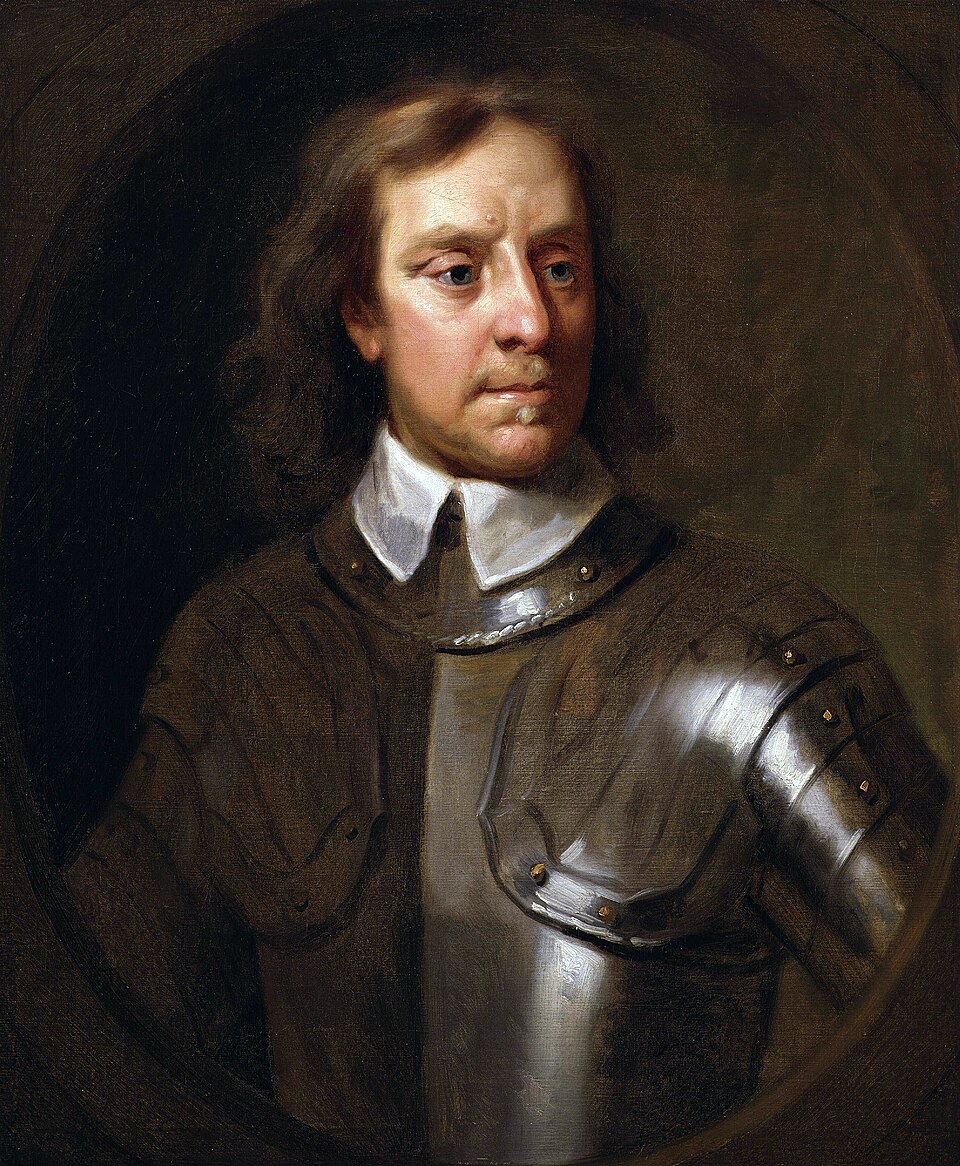
After Samuel Cooper, Public domain, via Wikimedia Commons
Oliver Cromwell |
-
The English Civil War in the 1640s was a conflict that ended with the deposing and execution of Charles I and the creation of a short-lived republic under the commander of Parliament’s army, Oliver Cromwell.
-
After Charles I was executed, a republican government called the Commonwealth, ruled by Parliament, replaced the monarchy.
- The Commonwealth pursued economic and imperial policies that linked its colonies more closely to England.
- Virginia initially resisted this regime, proclaiming Charles II king, but was forced to surrender to Parliament on March 12, 1652.
|
Oliver Cromwell as Charles I |
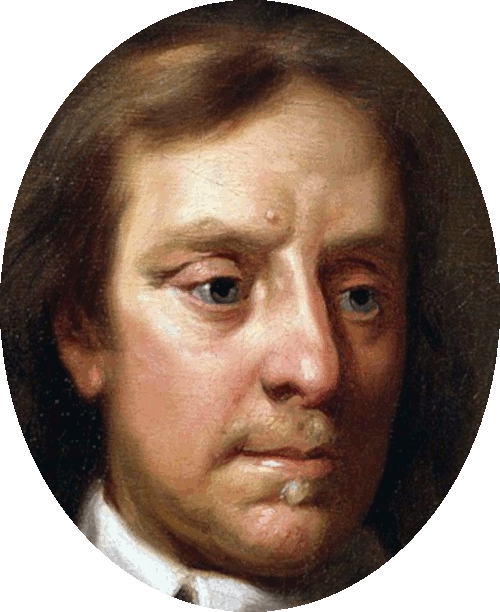 |
|
Oliver Cromwell
1599-1658
4/25 9/3 |
Charles Stuart
1600-1649
3/27
1/30
monarch |
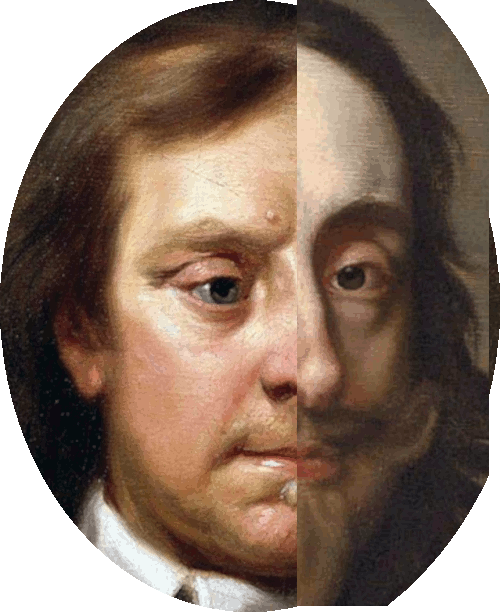 |
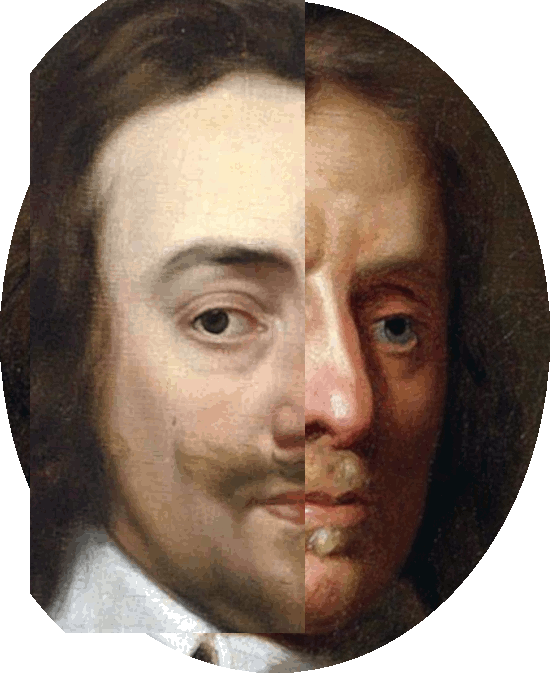 |
|
Stuart |
- Oliver Cromwell
(1599-1658) was an English statesman, politician and soldier, widely regarded as one of the most important figures in British history.
- He came to prominence during the Wars of the Three Kingdoms, initially as a senior commander in the Parliamentarian army and later as a politician.
|
Oliver Cromwell as Elon Musk |
|
|
 |
Oliver Cromwell
1599-1658
4/25 9/3 |
Elon Reeve Musk
1971
6/28 |
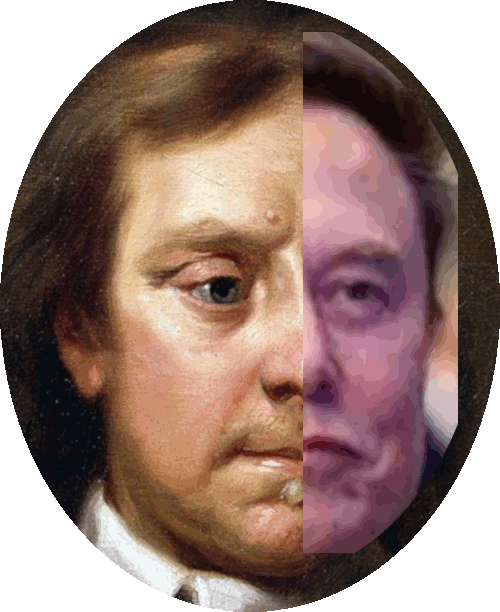 |
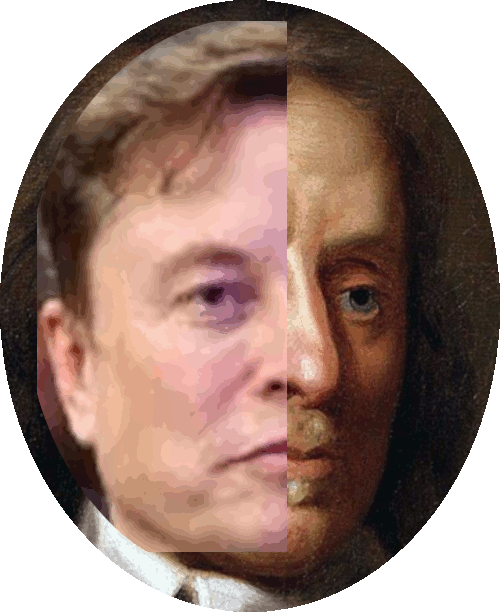 |
|
Beheaded after death |
- The death of Charles I and exile of his son Charles II, followed by military victories in Ireland and in Scotland, firmly established the Commonwealth and Cromwell's dominance of the new regime.
- In December 1653,
Cromwell was named Lord Protector, a position he retained until his death, when he was succeeded by his son Richard, whose weakness led to a power vacuum.
-
Cromwell died of natural causes on September 3, 1658, likely from complications of malaria and pneumonia.
- This culminated in the 1660 Stuart Restoration, after which Cromwell's body was removed from Westminster Abbey and re-hanged at Tyburn on January
30, 1661.
- His head was cut off and displayed on the roof of Westminster Hall
where it remained until at least 1684.
Cromwell is still a divisive figure today. While some view him as a champion of parliamentary power and religious liberty (for Protestants), others remember the harshness of his military campaigns, especially in Ireland, and the authoritarian nature of his rule. (Assistant)
|
|
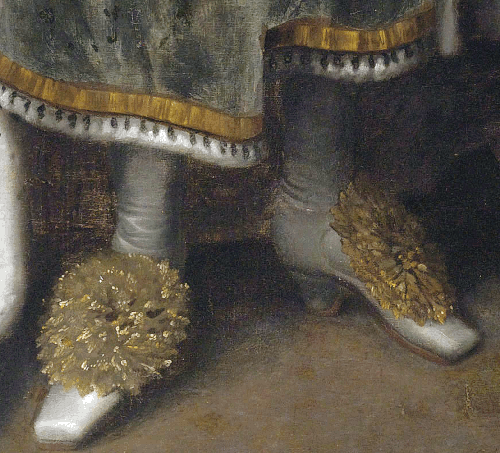
Charles I beheaded |
- The English Civil Wars (1642–1648) were fought in England and in the colonies.
- They set King Charles I and his supporters against supporters of the English parliament, which opposed his policies.
- These wars and the resulting changes to English and colonial government affected Virginia, Maryland, New York, and and New England (in particular) in a number of ways.
- The home government itself was in turmoil from 1640 to 1660 during the
English Civil Wars and again beginning in 1688 with the
Glorious Revolution.
The Glorious Revolution, also known as the Revolution of 1688, was the deposition of King James II Stuart (James II of England and Ireland and James VII of Scotland) in November 1688. (Wikipedia)
|
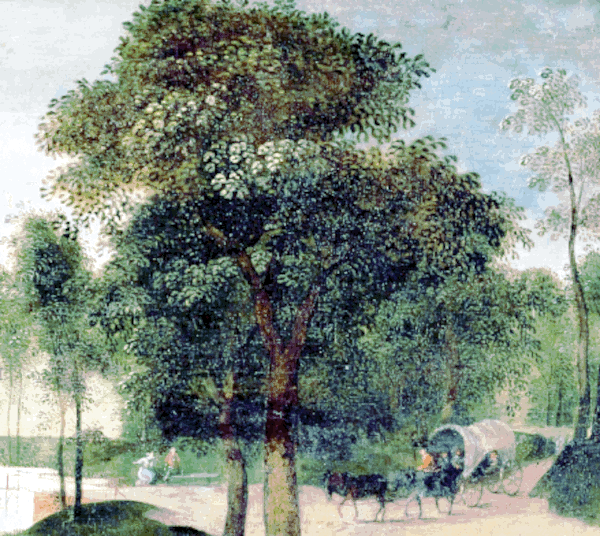
Westward bound |
-
Charles I reign saw a rise in religious and political tensions that led many dissenters to seek refuge in the colonies, significantly influencing the makeup of American society.
- His contentious relationship with Parliament and belief in
the Divine Right of Kings contributed to the English Civil
War, prompting a mass migration of religious dissenters (such
as the Puritans) to the American colonies.
These almost continuous political and social upheavals figured prominently in the history of all the English colonies. Several major battles were fought between Royalists and Roundheads on Maryland soil, and ships of war from both sides exchanged cannon fire within sight of Boston and Plymouth. As many as one-third of all the able-bodied male Puritans in Massachusetts returned to England in this period to support the Parliament. (James M. Volo)
|

Royal pit |
-
The execution of King Charles I produced a range of political, religious, and social reactions across the English Atlantic colonies.
- Responses depended on local politics, religious composition, economic ties to England, and the presence of settlers personally invested in royal authority.
- Not all of the new citizens of America were seeking
religious freedom, many were hoping to expand the territory
and resources of their beloved Great Britain.
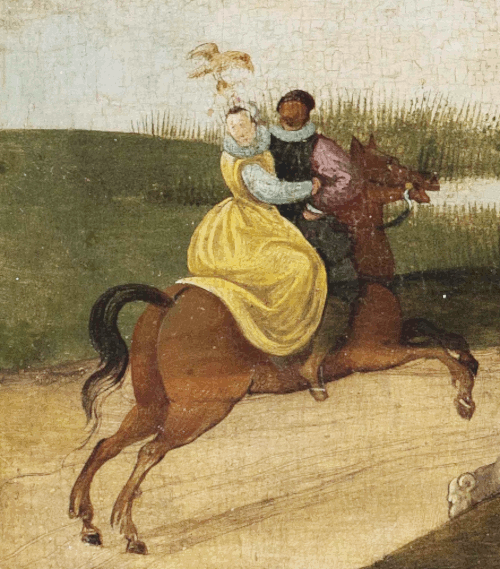
Bewildering changes |
-
Without a consensus about which government in England was lawful
(Charles I or Cromwell) during the periods of unrest, the colonies generally reverted to the last form of legitimate governance
until such time as the question had been resolved in England.
- There was so much confusion in the administration of the military, as well as civil affairs,
this brought abrupt and bewildering changes.
- With Royalist planters controlling the southern colonies and Puritans predominating in New England, leaders, both public and military, took sides in these disputes, and many soldiers deserted their posts.
The ruling sequence in England /Britain is as follows: Tudor, Stuart, Puritan Republic, Stuart, Orange, Stuart, and Hanover. The heads of state: Elizabeth I, James I, Charles I, Oliver Cromwell, Richard Cromwell, Charles II, James II, William III, Anne, George I, George II, George III. The French Bourbon dynasty featured an uninterrupted succession: Henry IV, Louis XIII, Louis XIV, and Louis XV. (James M. Volo)
|
King Charles
II of England,
Scotland and Ireland
1649 - 1685
House of Stuart |
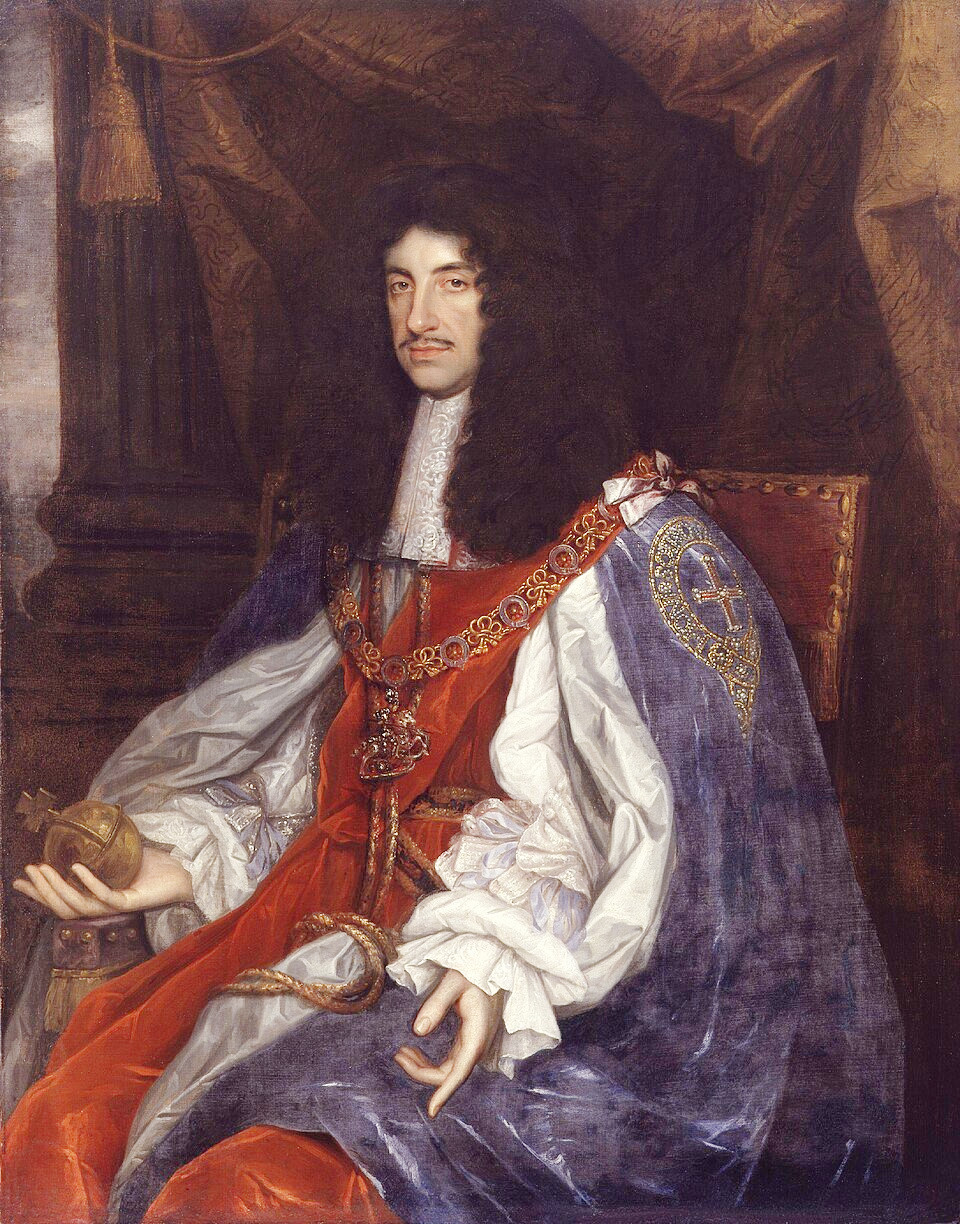
John Michael Wright, Public domain, via Wikimedia Commons
Charles II |
-
Charles II was King of Scotland from 1649 until 1651 and King of England, Scotland, and Ireland from the 1660 Restoration of the monarchy until his death
on February 6, 1685.
- Born as Charles Stuart (1630-1685)
on May 29, 1630, he was the son of Charles I of England and Henrietta Maria of France.
- He is known for the Restoration of the monarchy in 1660 after the period of republican rule.
-
After the execution of King Charles I in 1649 and death of Oliver Cromwell in 1658, public unrest in Britain was rife, with increasing chaotic scenes in government and a growing desire for the return of the exiled King.
War horse |
- Charles II was involved in the wars of the English Civil Wars
from 1642–1651, specifically the Anglo-Scottish War
from 1650–1652 as a claimant to the throne.
-
As the son of the executed Charles I, Charles II was crowned King of Scotland and led a Scottish-Royalist army into England.
- During the civil wars, he allied with the Scots and was defeated by Oliver Cromwell at the
Battle of Worcester in 1651, which ended the conflict and led to his exile before his restoration to the throne in 1660.
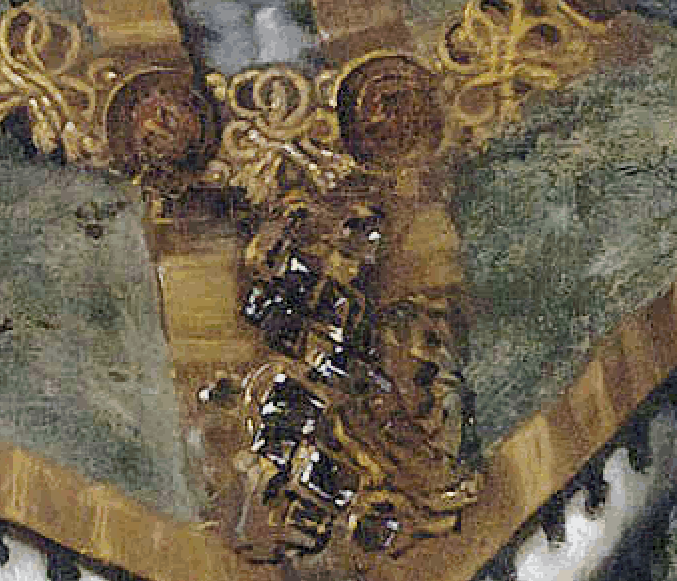
Golden chains |
- He later faced the Second Anglo-Dutch War from
1665–1667 as king and his reign saw naval conflicts with the Dutch, driven by commercial interests.
-
This was a naval war that was fought between England under Charles II and the Dutch Republic over commercial disputes.
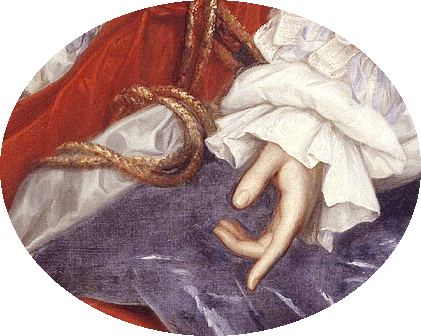
Masonic hand sign |
- The Third Anglo-Dutch War from 1672–1674 was Charles IIs desire for revenge for the Dutch Raid on the Medway in the
Second Anglo-Dutch War and led to another conflict with the Dutch.
.jpg) |
 |
Philippe de Champaigne, Public domain, via Wikimedia Commons
Charles II - 1653 |
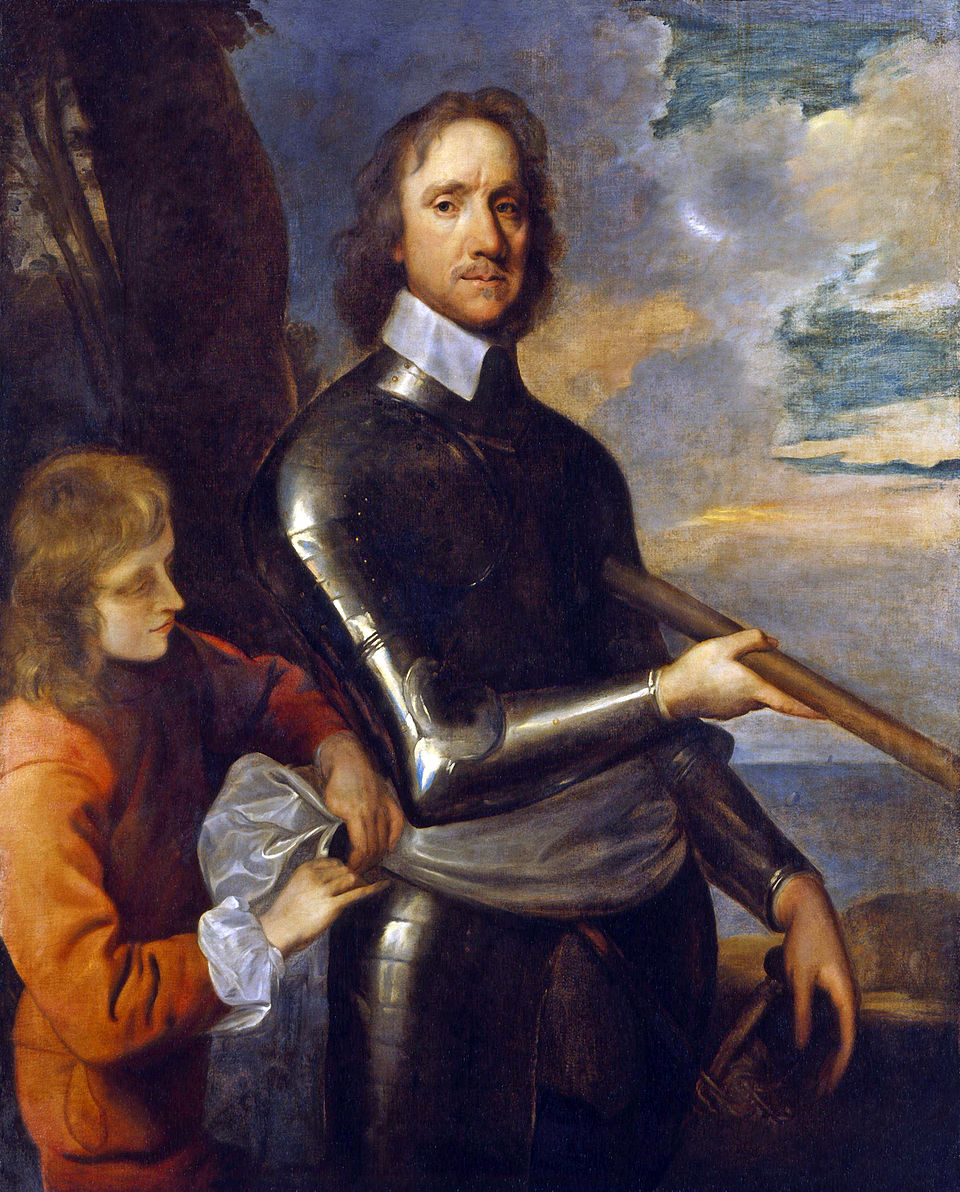
Robert Walker, Public domain, via Wikimedia Commons
Oliver Cromwell
- 1649
|
-
Charles II supported his father in the English Civil Wars and
after his father’s execution, he invaded England in 1651 but was defeated at Worcester.
- At that time, Generals refused to take orders from civilian
politicians and the civil authorities tried to retain control
of the army.
- Many people feared the restoration of the
monarchy, although they hadn't fared any better under
Cromwell, so Charles II created a declaration to restore confidence.
-
Charles II had spent years in exile until Oliver Cromwell died and conditions favored a return to the monarchy.
- His Declaration of Breda paved the way for him to be proclaimed king in May 1660,
which was called the Restoration.
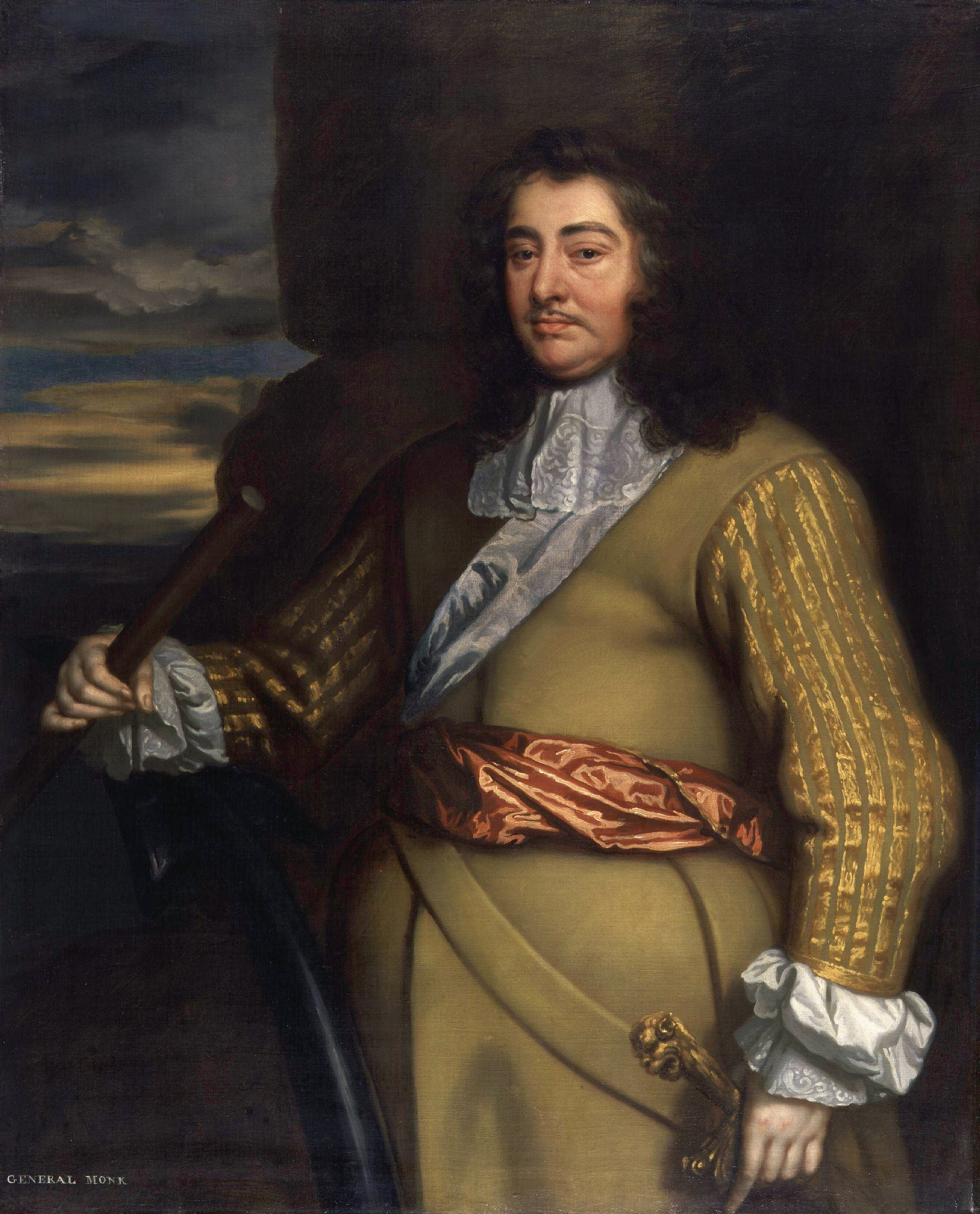
Workshop of Peter Lely, Public domain, via Wikimedia Commons
George Monck 1st Duke of Albemarle |
-
George Monck, 1st Duke of Albemarle (1608-1670) was a professional soldier from Devon who fought on both sides during the
Wars of the Three Kingdoms.
- A prominent military figure under the Commonwealth, his support was crucial to the 1660 Stuart Restoration of Charles II.
- Monck began his military career in 1625 and served in the
Eighty Years' War until 1638, when he returned to England.
-
Monck's support for The Protectorate was based on his personal regard for its leader
(whoever paid him the most).
- Posted to Ireland as part of the army sent to suppress the
Irish Rebellion of 1641, he quickly gained a reputation for efficiency and ruthlessness.
Monck became a professional soldier, a common career choice for younger sons of impoverished gentry. (Wikipedia)
|
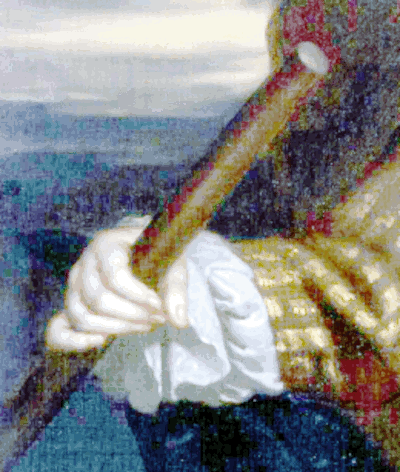
Big stick
Wielding the true power of the kingdom |
-
So many monarchs and their subjects display sticks in their
portraits
and this is no regular stick, it;s the baston (cane) of marshal, the highest military rank in many
European countries.
- Monck proved his loyalty to Parliament by refusing to take part in the
Second English Civil War and requiring all his officers to sign a declaration of support,
however, he flip-flopped and later Monck agreed to a secret truce with Eoghan Ó Néill, the Catholic leader in Ulster, which he did not communicate to Parliament until
later.
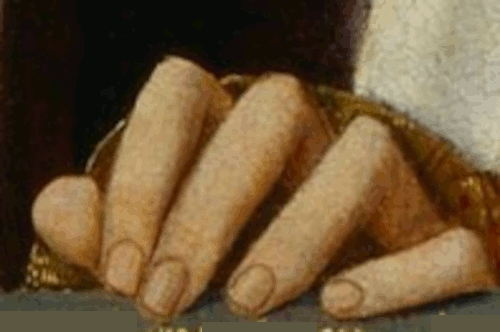
Parliamentary
Pinched fingers |
- Recalled to London, Monck was reprimanded by a
Parliamentary committee, although they privately
recognized the desperate circumstances which made it
necessary (his enemies planned on killing him).
- Although some mistrusted Monck as a former Royalist, Oliver Cromwell gave him command of a regiment in the 1650 to 1651
Anglo-Scottish War, which fought at Dunbar, then stormed Dundee, an action in which 800 civilians were allegedly killed.
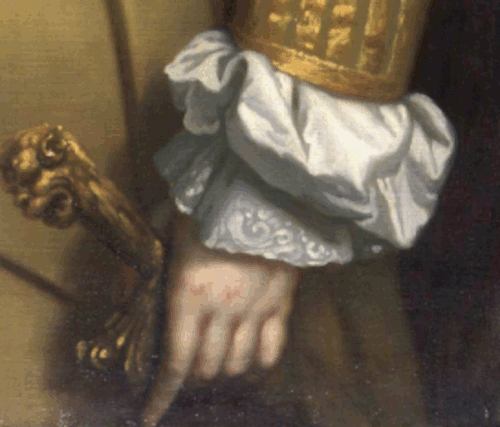
Masonic hand sign
|
- After Charles I agreed to a truce with the Catholic Confederacy in September 1643,
Monck was captured fighting for the Royalists at Nantwich in January 1644, and remained a prisoner for the next
2 years.
- Released in 1647, Monck was named Parliamentarian commander in Eastern Ulster, fought in Scotland under Oliver Cromwell in the 1650 to 1652
Anglo-Scottish War, and served as General at sea during the 1652 to 1654
First Anglo-Dutch War.
- From 1655 to 1660, he was army commander in Scotland, and his support for moderates in Parliament who wanted to restore the monarchy proved decisive in Charles II regaining his throne in May 1660.
- After years in exile following the execution of his father, Charles I, Charles II was restored to the throne
with Monck's help, ending the period of republican government under Oliver Cromwell.
Charles made the Declaration at Breda, in the Netherlands a strict Protestant country. He declared his wish for a ‘general amnesty’’, ‘liberty of conscience’, fair settlement of land disputes, and full payment of arrears to the army. (nationalarchives.gov.uk)
|
|
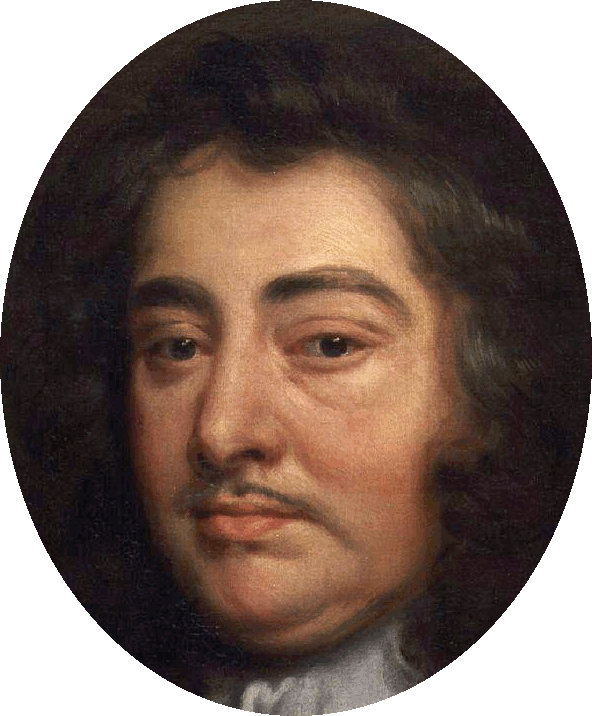
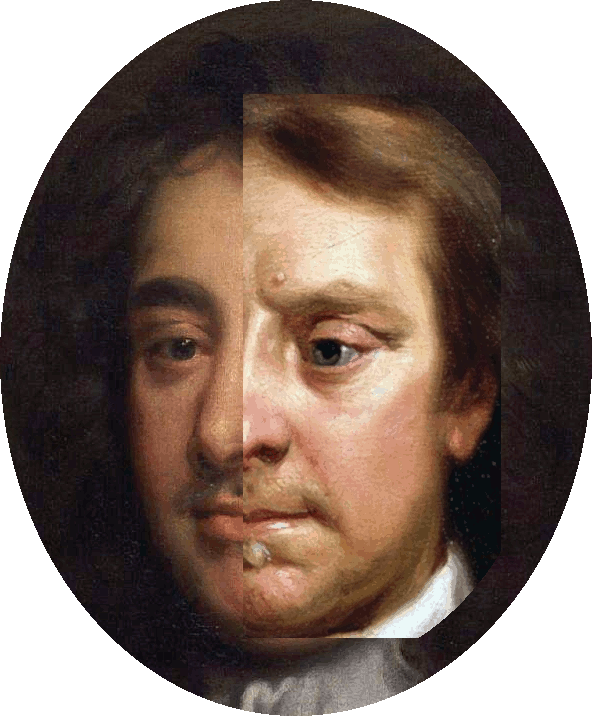
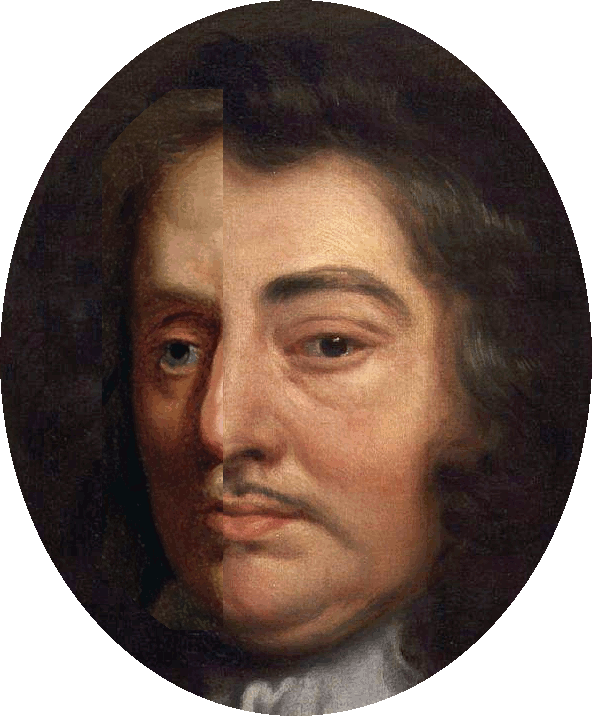
General Monck as Oliver Cromwell |
 |
|
George Monck
1608-1670
12/6
1/3
Mercenary |
Oliver Cromwell
1599-1658
4/25 9/3 |
 |
 |
|
Fought on both sides |
- For his help reinstating Charles II, Monck was rewarded by being made Duke of Albemarle and given various senior positions.
- Illness and lack of interest in politics meant he faded into the background after 1660, but returned to sea during the
Second Anglo-Dutch War.
- He played an important leadership role during the 1665 Great Plague of London, as well as the 1666 Great Fire of London, and died in January 1670.
Character in a mobile strategy game, named George Monk, known for his high stats and the "monster" or "beast" synergy in the game. Historically, General George Monck was a real English commander famous for his role in the Restoration of the Stuart monarchy, not a mythical creature. The confusion likely arises from the similar-sounding names and the game character's strong, high-power stats often associated with "monsters" in games. (Assistant)
|
|
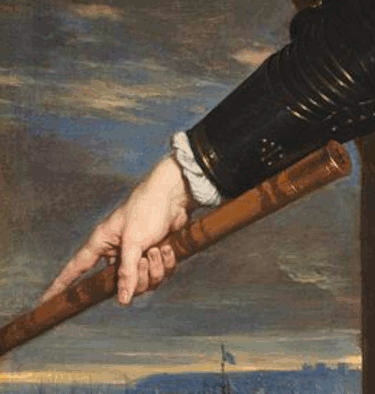
Masonic hand with
big stick |
- King Charles II is also famous for being 'the Merry Monarch' due to the lively court he fostered
and he had a reputation for philandering and fathering
numerous illegitimate children but had no legitimate heirs.
- Charles II was interested in science, he was a founder of the Royal Society, and
also was known for his expansion of English colonies in America, such as New York and Carolina.
- The Great Fire of London in 1666 burned everything down.
- During his reign, he navigated significant religious
unrest and played a key role in government oppression.
- Charles II
created proprietary American colonies, where land was granted to individuals or groups who then governed them, although still under the Crown.
The Great Fire of London was a major conflagration
that occurred in central London from Sunday 2
September to Wednesday 5 September 1666, gutting the
medieval City of London inside the old Roman city
wall, while also extending past the wall to the west.
The death toll is generally thought to have been
relatively small, although some historians have challenged this belief. (Wikipedia)
|
|
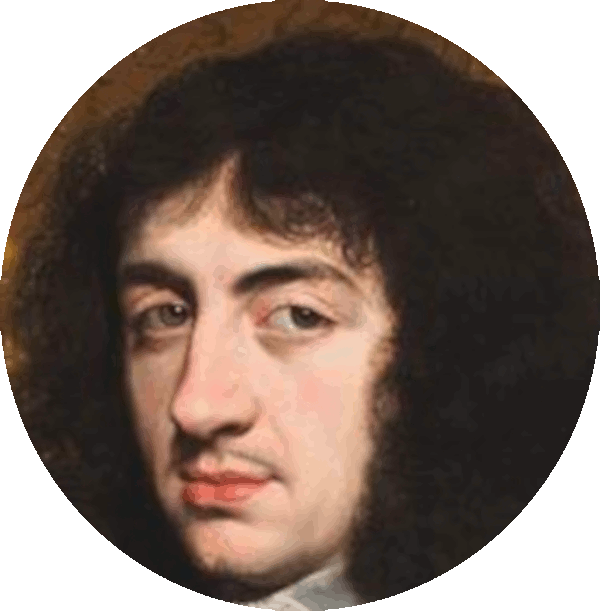
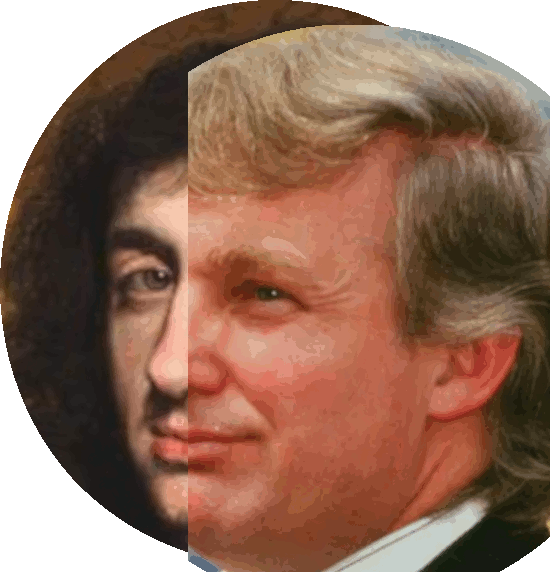
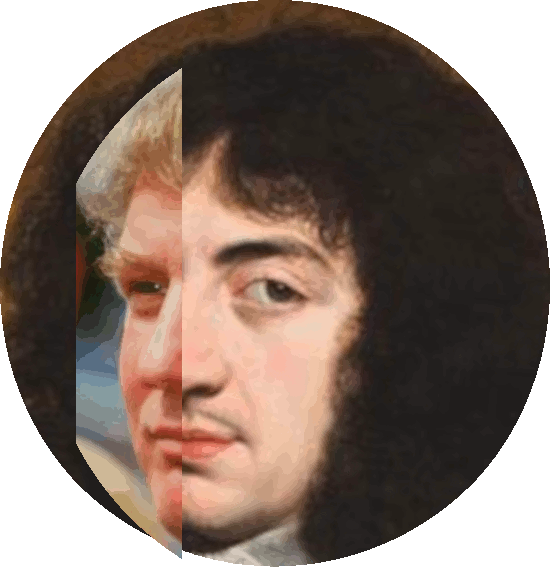
Charles II as Donald Trump |
 |
 |
Charles Stuart II
1630-1685
5/29 2/6
monarch |
Donald John Trump
1946
6/14 |
 |
 |
|
The walls of the kingdom |
-
Charles IIs government also passed the Navigation Acts, which helped secure Britain's future as a sea power.
- His reign was marked by controversy, such as the Popish Plot hysteria and his secret alliances with France.
-
He fathered at least 14 illegitimate children but no legitimate heirs with his wife, Queen Catherine of Braganza, which led to uncertainty about the succession and fueled the political crises of his reign.
- The
Popish Plot: A Case Study in the Political History of Fear.
The Popish Plot was an imaginary conspiracy against the crown of Great Britain on the part of English Roman Catholics, fabricated in 1678 by Titus Oates as a means of gaining power. (Assistant)
|

America endures
royal control |
- The monarchy was restored with his return from exile.
-
Charles II reign saw a blossoming of colonial trade and a period where royal control in the colonies was strengthened.
King James
II and VII of
England, Scotland
and Ireland
1685
- 1688
House of Stuart |
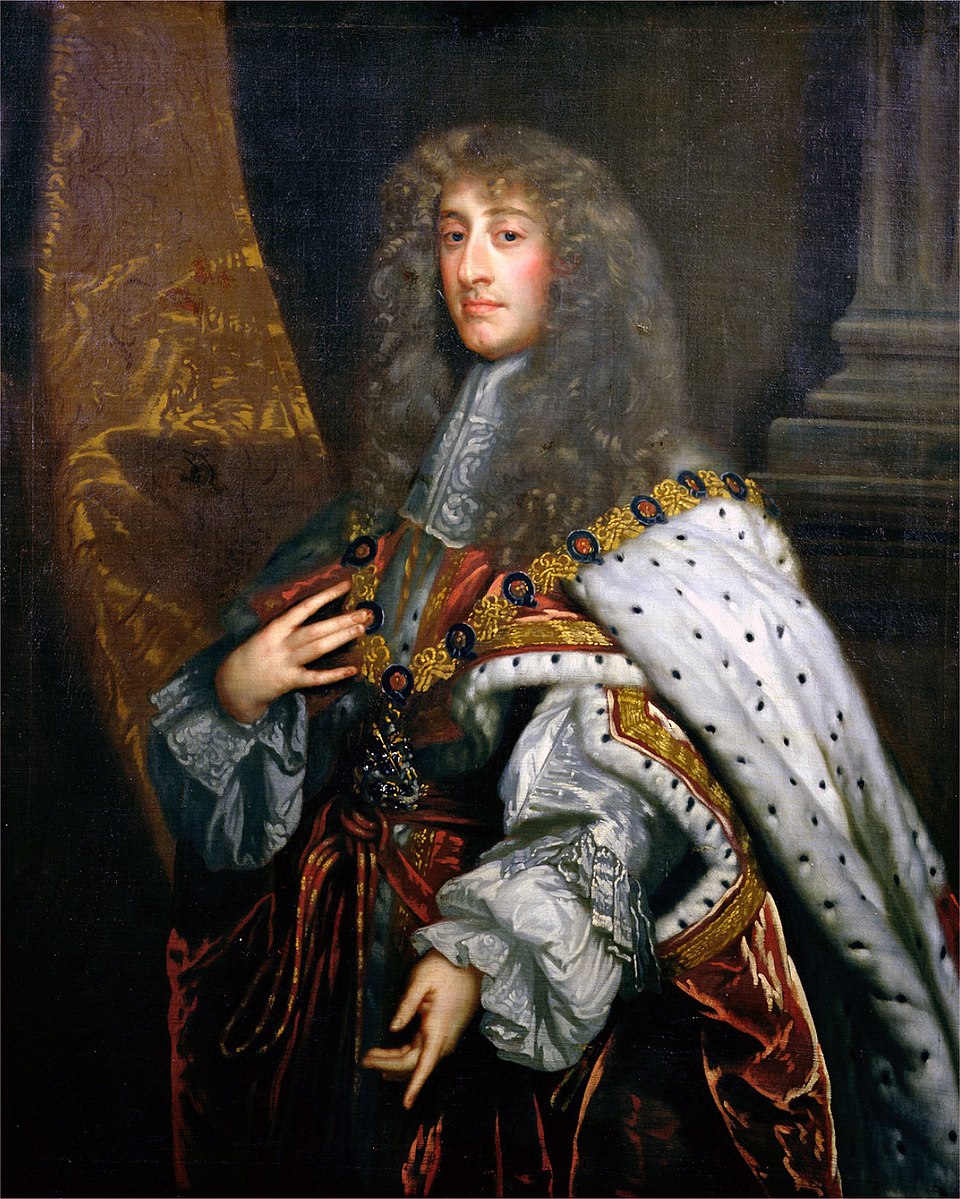
School of Peter Lely, Public domain, via Wikimedia Commons
King
James II of England
and Ireland
King
James VII of
Scotland
c. 1650-1675 |
- James II and VII was King of England and Ireland
as James II and King of Scotland as James VII from February
1685, until he was deposed in the 1688 due to the Glorious
Revolution (1688–89) and replaced by William III and Mary II.
- He was the last Stuart monarch in the direct male line.
- Born as James Stuart (1633-1701) on October 14, 1633, he was
the son of Charles I of England and Henrietta Maria of France.
- The revolution
was engendered by James’s Roman Catholicism and permanently established Parliament as the ruling power of England.
- He was the last Catholic monarch of England, Scotland, and Ireland, his reign is remembered primarily for conflicts over religion.
War horse |
- The main war involving James II and VII was the Williamite War in Ireland
from 1689–1691, which was a civil war but also part of the larger Nine Years' War.
- After being deposed in the Glorious Revolution of 1688, James landed in Ireland to try to regain his throne, leading a Jacobite force against the Williamite forces of his successor, William III.
- The conflict ended with James' defeat at the Battle of the Boyne in 1690, after which he fled back to France.
Glorious Revolution (1688–1689): James II was deposed and replaced by his Protestant daughter Mary II and her husband, William III. He fled to France but attempted to return to power from Ireland. (Assistant)
|
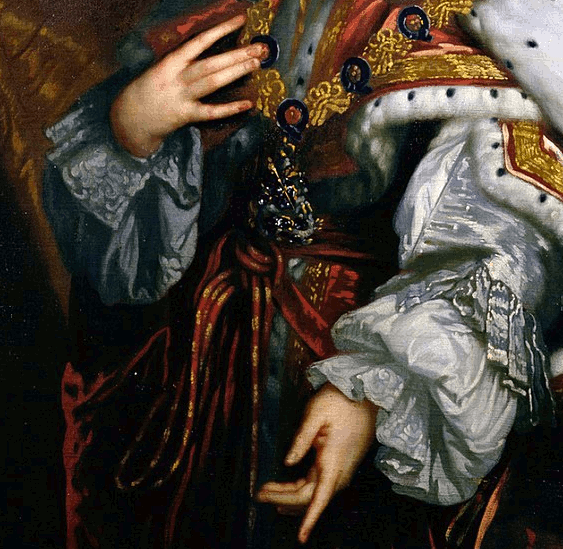
Masonic hand signs |
-
James II and VII inherited the throne on Charles IIs death in 1685 with little opposition in Scotland.
- A rising led by the Earl of Argyll was easily suppressed, although suspicions increased that James was trying to introduce Roman Catholicism when he made grants of religious toleration and converted the Abbey Church of Holyrood into a Roman Catholic Chapel Royal.
- The chapel was also planned to be the Chapel of the Order of the Thistle, which James revived in 1687.
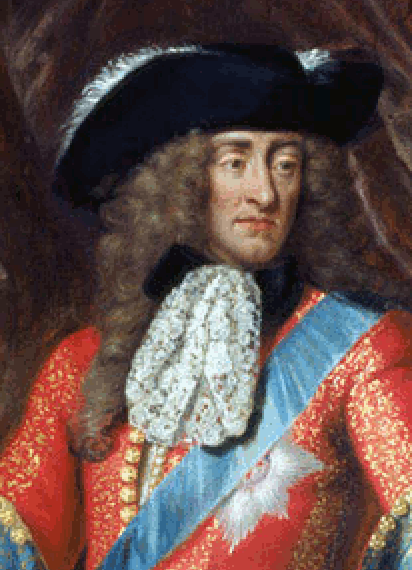
A hat that would
make Paul Revere
envious |
- However, it also involved struggles over the principles of absolutism and divine right of kings, with his deposition ending a century of political and civil strife by confirming the primacy of the English Parliament over the Crown.
- James IIs deposition during the
Glorious Revolution of 1688 led to a transfer of power to Parliament.
- This event had a significant impact on colonial governance and the idea of parliamentary supremacy.
|
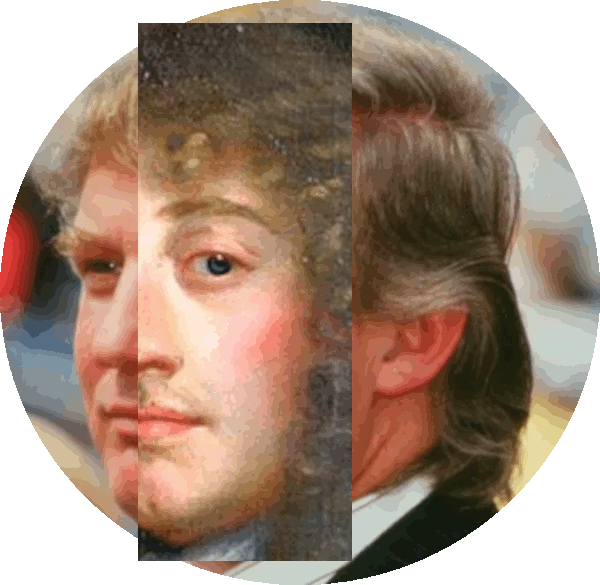
King James II and VII as Trump |
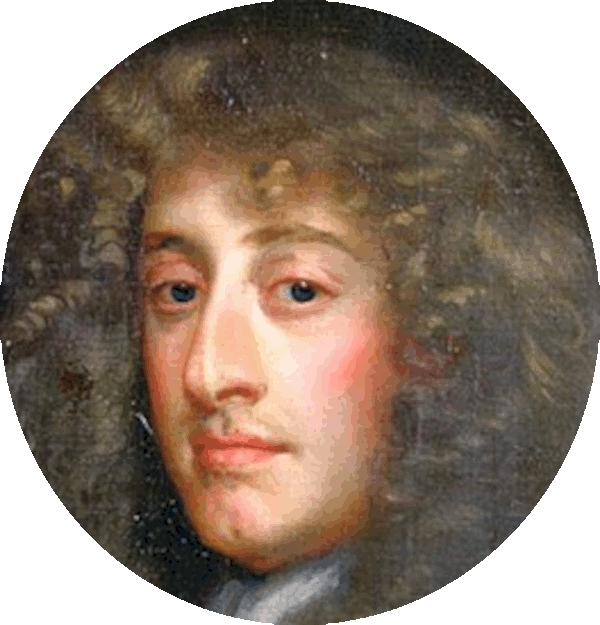 |
|
James Stuart
1633-1701
10/14 11/16
monarch |
Donald John Trump
1946
6/14 |
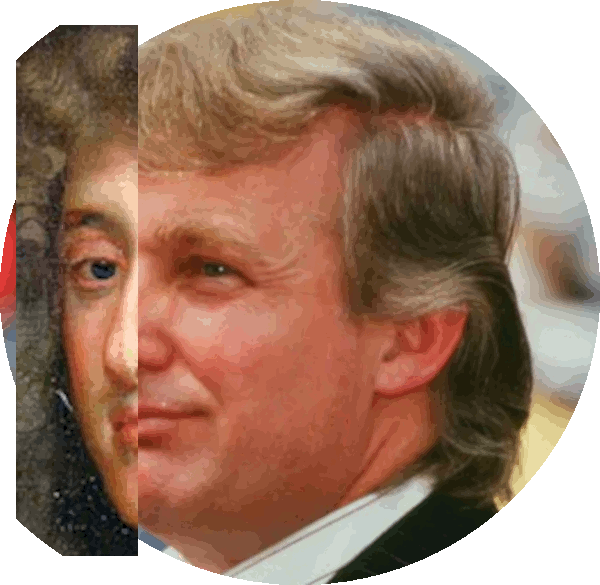 |
 |
|
Not so glorious |
-
Both the English and Scottish parliaments refused to pass measures viewed as undermining the primacy of the Protestant religion.
- His attempts to impose them by absolutist decrees as a matter of his perceived divine right met with opposition.
- Defeated by William II and III at the Battle of the Boyne in 1690,
James II and VII spent the rest of his life in exile in France, and died there in 1701.
- The Glorious Revolution resulted in the overthrow of
James II and VII in 1688 and the subsequent joint rule of William and Mary influenced colonial politics and the relationship between Britain and its North American subjects.
Scotland played a largely passive role in the revolution of 1688 until news of events in England and James' flight were followed by the collapse of the Scottish administration in late December.
A mob drove the Jesuits from Holyrood, sacked the Chapel Royal and desecrated the royal tombs. Constitutionally, however, James remained king until 4 April 1689, when the Convention of Estates voted that he had forfeited the crown and offered the throne jointly to William and Mary. (royal.uk)
|
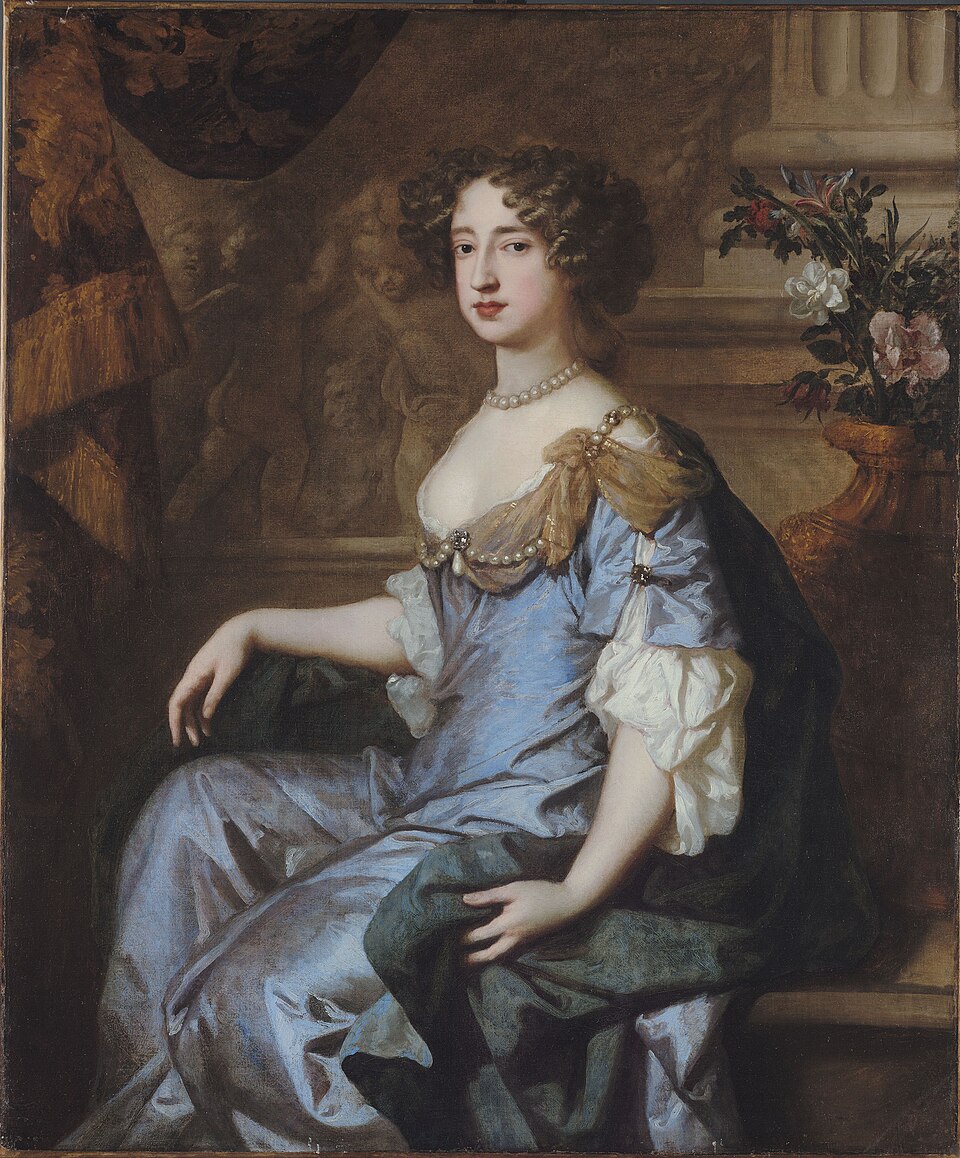
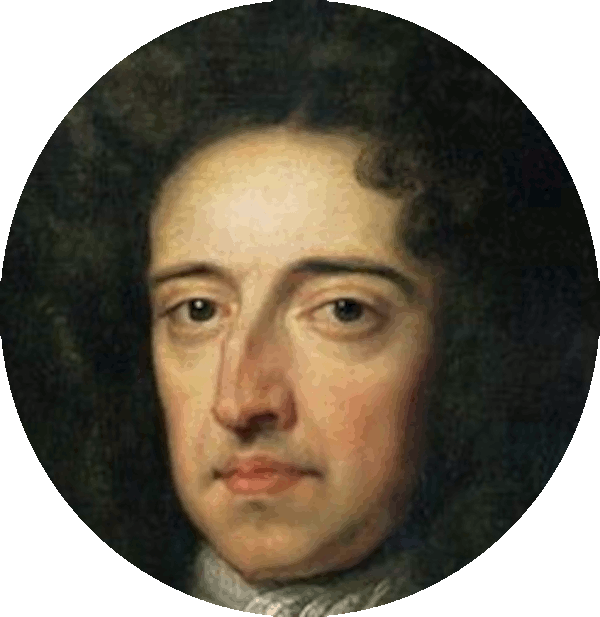
William and Mary of England, Scotland and
Ireland
1689 - 1702
House of Stuart
|
|
King
William III and II |
Queen
Mary II |
.jpg) |
 |
|
Godfrey Kneller, Public domain, via Wikimedia Commons - 1690 |
Peter Lely, Public domain, via Wikimedia Commons
- 1677 |
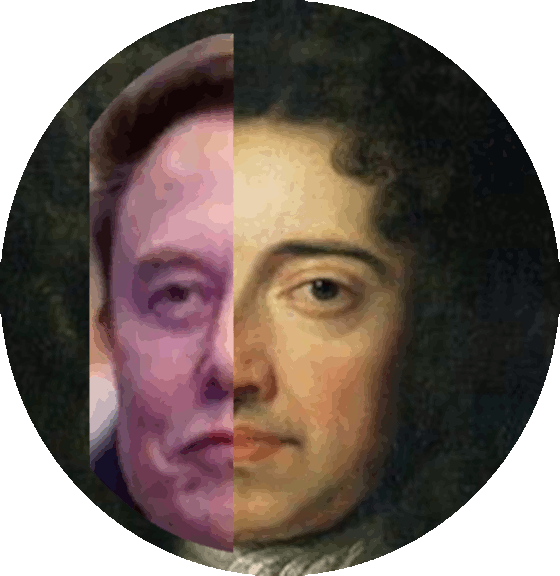
- William III and II, also known as William of Orange, was the sovereign Prince of Orange from birth, Stadtholder of Holland, Zeeland, Utrecht, Guelders, and Overijssel in the Dutch Republic from 1672, and King of England, Ireland, and Scotland from 1689 until his death
on March 8, 1702.
- He ruled England, Scotland, and Ireland with his wife, Queen Mary II, and their joint reign
(co-monarch) is known as that of William and Mary.
|
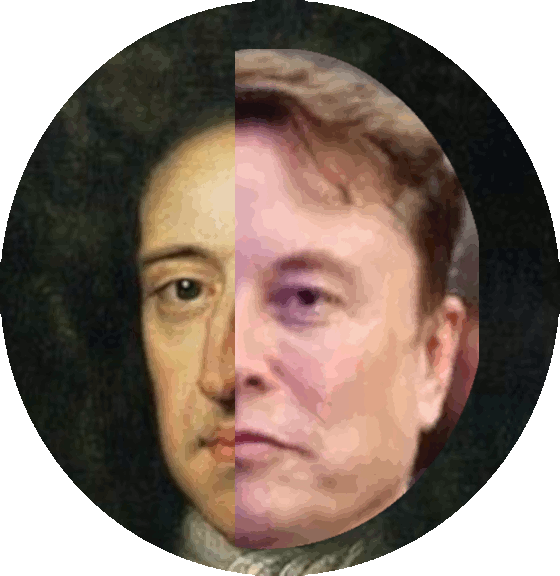
King
William III and II as Musk |
 |
|
William Orange-Nassau
1650-1702
11/4
3/8
monarch |
Elon Reeve Musk
1971
6/28
Chief thief |
 |
 |
|
Orange |
- William Orange-Nassau (1650-1702), who was born on November 4, 1650, was the only child of William II, Prince of Orange, and Mary, Princess Royal, the daughter of King Charles I of England, Scotland, and Ireland.
- His father died before his birth, making William III the prince of Orange from birth.
- In 1677, he married his first cousin Mary, the elder daughter of his maternal uncle James, Duke of York (later King James
II).
Their joint monarchy arose in response to fears over James IIs attempts to bolster royal authority and restore Catholicism—culminating in a crisis following the birth of James' son, which threatened to establish a Catholic dynasty. (ebsco.com)
|
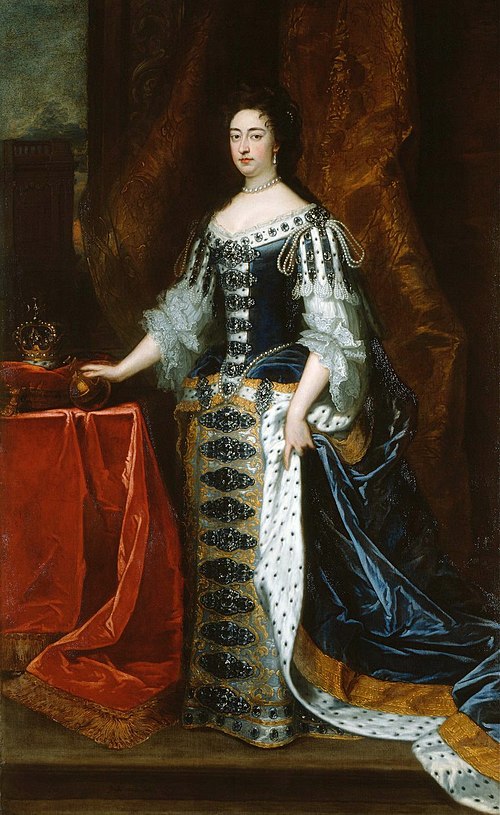
Godfrey Kneller, Public domain, via Wikimedia Commons
Mary II - 1690
|
- Mary II was Queen of England, Scotland, and Ireland with her husband, King William III and II, from 1689 until her death
in 1694.
- Born as Mary Stuart (1662-1694) on April 30, 1662,
she was the daughter of James II of England and Anne Hyde.
- She was also Princess of Orange following her marriage on November
4, 1677.
- Her joint reign with William over Britain is known as that of William and Mary.
- Initially, the marriage was not very happy, and Mary was particularly dismayed by her husband’s frequent infidelities.
- Mary died on December 28, 1694, and William was sole ruler
until his death on March 8, 1702.
War horse |
-
William and Mary were involved in wars related to their 1688 invasion of England, which overthrew King James II and led to the
Glorious Revolution.
- Their reign was marked by conflicts, most notably the
Nine Years' War from 1688-1697 against France and the wars in Ireland that secured their throne, including the
Battle of the Boyne.
- The transition was not bloodless outside of England; a series of battles occurred in Ireland between William's and James' supporters, which continued until 1691
and was called the War in Ireland.
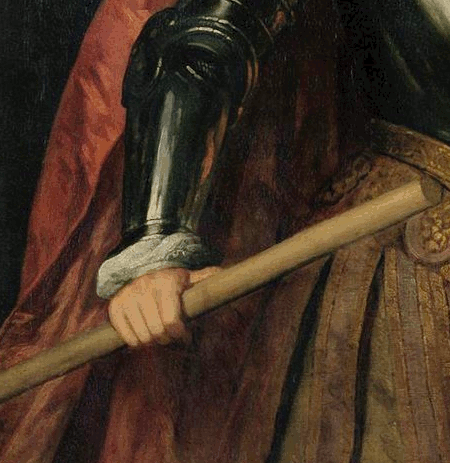
King William's War |
- King William's War was the North American theater of the
Nine Years' War (1688–1697).
- It was the first of
6 colonial wars (the 4 French and Indian Wars,
Father Rale's War and Father Le Loutre's War) fought between New France and New England along with their respective Native allies before France ceded its remaining mainland territories in North America east of the Mississippi River in 1763.
- It is also known as the Second Indian War,
Father Baudoin's War,
Castin's War, or the First Intercolonial War in France.
King William's War, also known as the Second Indian War, was a conflict in North America that lasted from 1689 to 1697, emerging as part of the broader Nine Years' War between France and a coalition of European powers, including England. (Assistant)
|
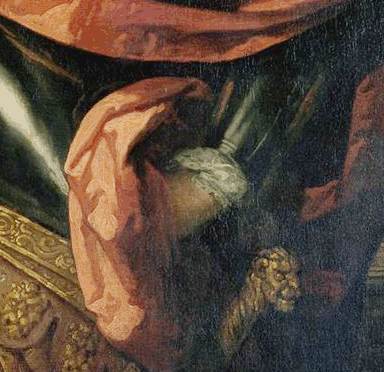
Masonic hidden hand |
- The English settlers were more than 154,000 at the beginning of the war and outnumbered the French 12 to 1.
- However, they were divided in multiple colonies along the Atlantic coast, which were unable to cooperate efficiently, and were engulfed in the
Glorious Revolution, which created tension among the colonists.
- The reign of William and Mary, which began with their ascension to the throne during the
Glorious Revolution of 1688-1689, marked a significant shift in English governance and the balance of power between the monarchy and Parliament.
- There seemed to be nothing but non-stop wars with the
British in charge of everything.
Queen Anne of Great Britain
1702 - 1714
House of Stuart |
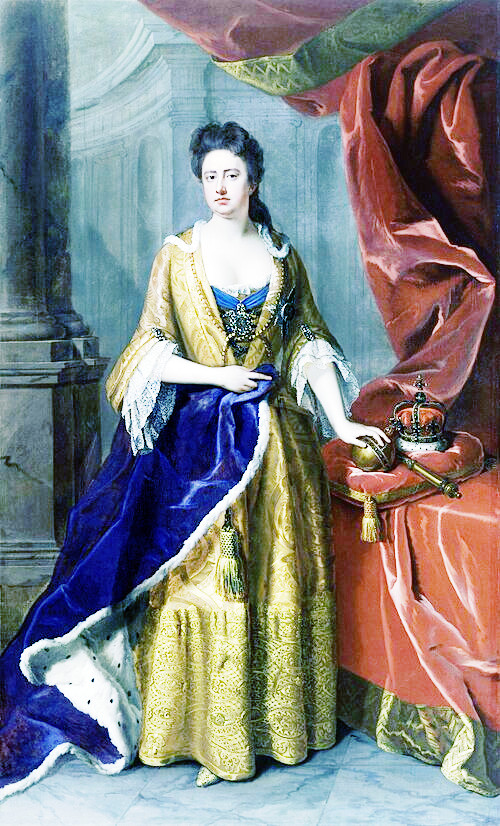
Michael Dahl, Public domain, via Wikimedia Commons
c. 1705 |
- Anne was Queen of England, Scotland, and Ireland from March
8, 1702, and Queen of Great Britain and Ireland following the ratification of the
Acts of Union 1707 merging the kingdoms of England and Scotland, until her death
on August 1, 1714.
- Born as Anne Stuart (1665-1714) on
February 6, 1665, she was the daughter of James II of
England and Anne Hyde.
-
Her sister, Mary II married her Dutch Protestant cousin, William III of Orange, in 1677, and Anne married Prince George of Denmark, a Lutheran, in 1683.
- She was also known as Anne of Denmark.
- The last lords high treasurer, Sidney Godolphin, 1st Earl
of Godolphin from 1702–1710 and Robert Harley, 1st Earl of
Oxford from 1711–1714, ran the government of Queen Anne
(and this 'job' was later replaced by the creation of prime
ministers).
Anne was born during the reign of her uncle King Charles II. Her father was Charles' younger brother and heir presumptive, James, whose suspected Roman Catholicism was unpopular in England. On Charles' instructions, Anne and her elder sister Mary were raised as Anglicans. (Wikipedia)
|
War horse |
- During Queen Anne's reign, England was primarily involved in
Queen Anne's War from 1702–1713, which was the North
American theater of the larger European War of the Spanish
Succession which was fought to prevent a union of the
French and Spanish thrones.
- The war was fought between
the British and French colonial forces, along with their
respective Native American allies, over control of North
America.
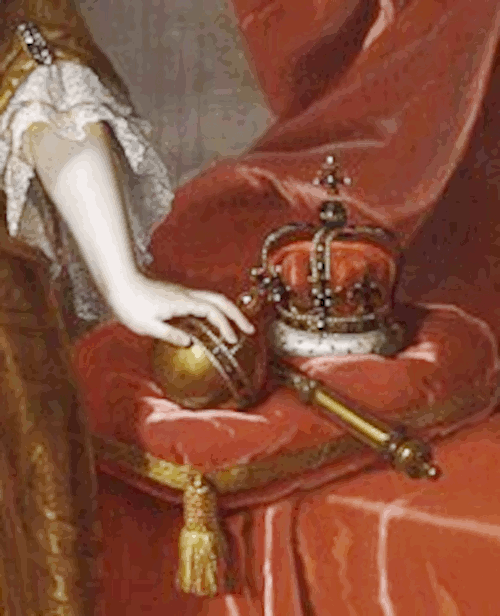
Masonic hand |
- Anne's war in 1702 was the second in a series of French and Indian Wars
fought in North America involving the colonial empires of Great Britain, France, and Spain.
- In the United States, it is regarded as a standalone conflict under this name.
- Elsewhere it is usually viewed as the American theater of the
War of the Spanish Succession.
- It is also known as the Third Indian War, and
in France it
was known as the Second Intercolonial War.
Territorial gains |
- Key
events included raids on settlements like the Raid of
Deerfield in 1704, a failed English battle called
the
Siege of St. Augustine in 1792, and retaliatory attacks
on both sides.
- There was also a failed French/Spanish attack on Charles Town
in 1706 when a combined Spanish and French force from Havana attacked Charles Town, South Carolina, but was repelled by colonial forces.
- The conflict concluded with the Treaty of
Utrecht in 1713, which resulted in significant
territorial gains for Great Britain in North America.
France ceded Acadia, Newfoundland, and the Hudson Bay territory to Great Britain, significantly expanding English control in North America. (Assistant)
|
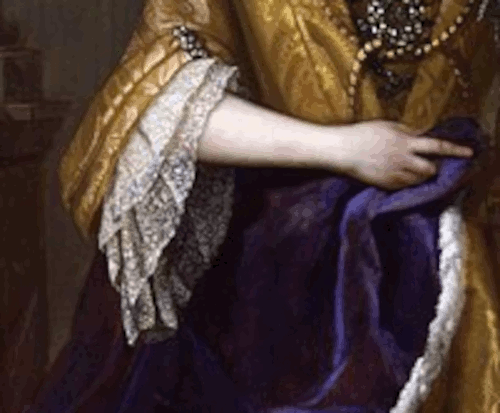
Masonic hand |
- Anne oversaw the Acts of Union in 1707 which united England and Scotland into Great Britain.
- Her personal life was marked by tragedy, as she experienced numerous failed pregnancies, with none of her children surviving to adulthood, and was known for her complex relationships with women at her court, most notably Sarah Churchill.
- Her reign was marked by the
War of the Spanish Succession and significant political rivalries, and she was succeeded by George I of Hanover due to her childlessness.
|
Queen Anne as Musk |
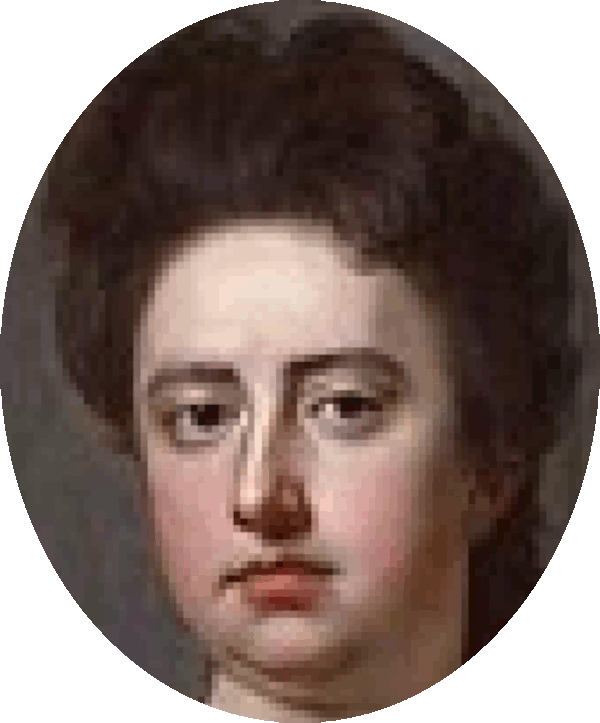 |
|
Anne Stuart
1665-1714
2/6
8/1
monarch |
Elon Reeve Musk
1971
6/28
girly boy |
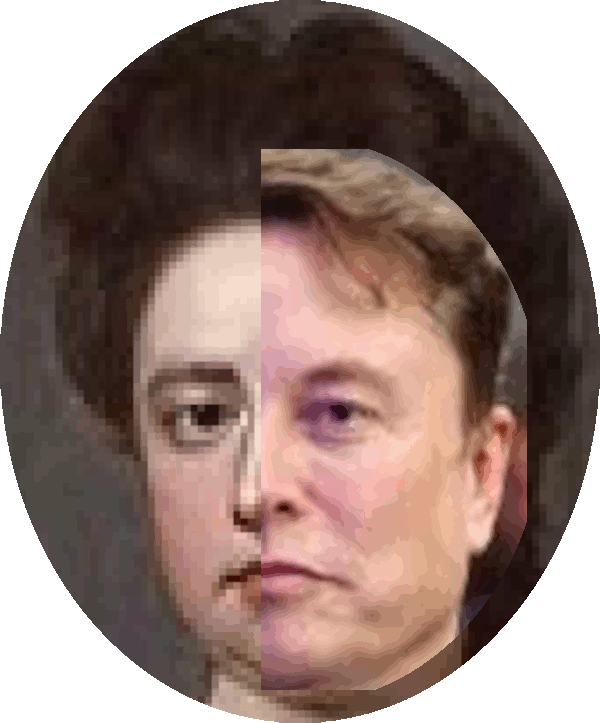 |
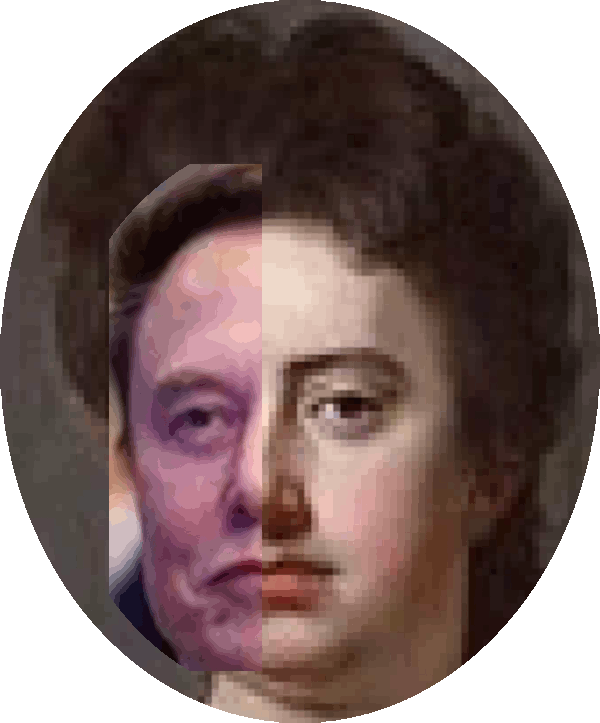 |
|
A real beaut |
-
Anne's reign saw the dominance of both the Whig and Tory parties, which helped shape Britain's two-party political system.
- We all know how well that worked out.
- No wonder
Anne was throwing all those demonic masonic hand signs, she
wasn't a woman.
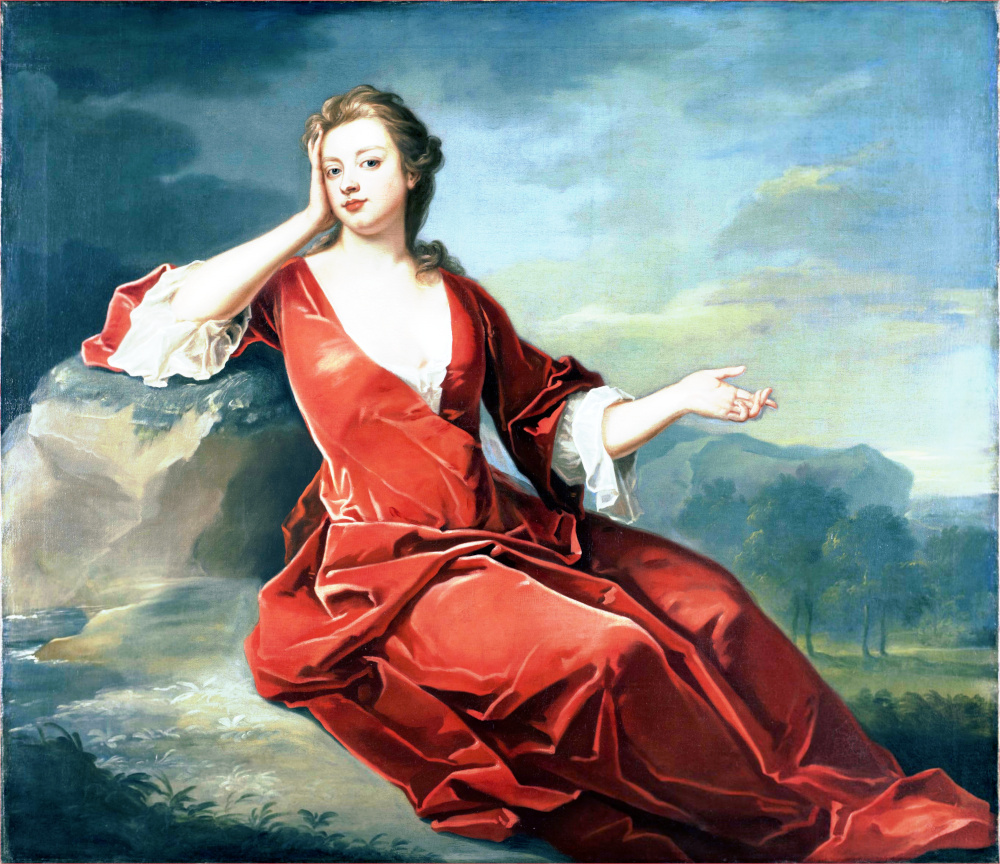
Charles Jervas, Public domain, via Wikimedia Commons
Sarah Churchill |
- Sarah Churchill, Duchess of Marlborough (née Jenyns, spelled
as Jennings; 5 June 1660 – 18 October 1744), was an English courtier who became one of the most influential women of her time through her close relationship with Anne, Queen of Great Britain.
- Churchill's influence on Anne was widely known, and leading public figures often turned their attentions to her, hoping to attain favor from the queen.
- Churchill enjoyed a 'long and devoted' relationship with her husband of more than 40 years, the general John Churchill, 1st Duke of Marlborough.
- After Anne's father, King James II, was deposed during the
Glorious Revolution, Churchill acted as Anne's agent, promoting her interests during the reigns of William III and Mary II.
- When Anne came into power after William's death in 1702, John Churchill and Sidney Godolphin, 1st Earl of Godolphin, rose to head the government, partly owing to the Duchess.
.jpg)
Godfrey Kneller, Public domain, via Wikimedia Commons
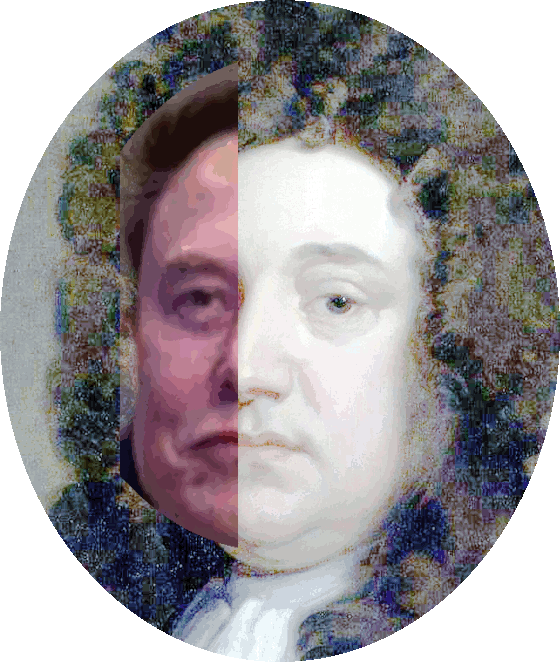
Sidney Godolphin
|
-
Sidney Godolphin, 1st Earl of Godolphin, KG, PC (1645-1712) was a British Tory statesman.
- He was a Privy Councillor and Secretary of State for the Northern Department before he attained real power as First Lord of the Treasury.
- He was instrumental in negotiating and passing the Acts of Union 1707 with Scotland, which created the Kingdom of Great Britain.
- He had many other roles, including that of Governor of Scilly.
- By the late Stuart period, the Treasury was often run not by a single individual
but by a commission of lords of the Treasury, led by the first lord of the Treasury.
- The last lords high treasurer, Sidney Godolphin, 1st
Earl of Godolphin (1702–1710) and Robert Harley, 1st Earl of
Oxford (1711–1714), ran the government of Queen Anne.
|
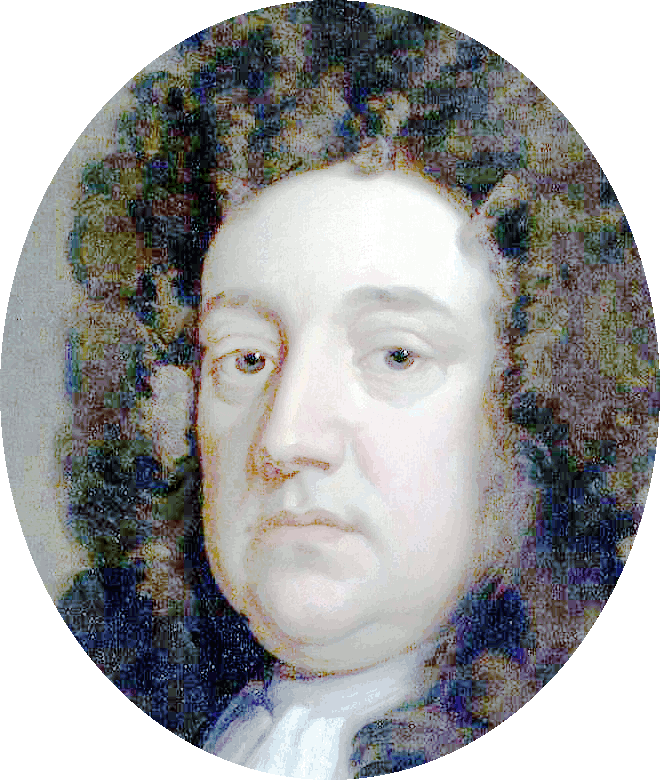
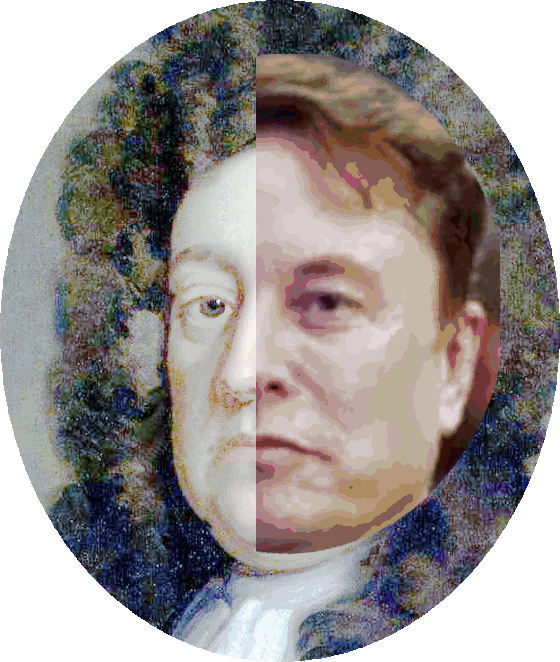
Sidney Godolphin as Elon Musk |
 |
 |
Sidney Godolphin
1645-1712
6/15 9/15
Chief minister |
Elon Reeve Musk
1971
6/28 |
 |
 |
|
Whiggish |
- Secretary of the Treasury from 1702-1710.
- Godolphin was a brilliant financier, providing crucial funds for
Marlborough's campaigns and helping establish the Bank of
England, ensuring fiscal stability during a major war!!!!
- How wide of him.
.jpg)
Godfrey Kneller, Public domain, via Wikimedia Commons
Robert Harley |
-
Robert Harley, 1st Earl of Oxford and Earl Mortimer, KG, PC, FRS (1661-1724) was a British statesman of the late Stuart and early Georgian periods.
- He began his career as a Whig, before defecting to a new Tory ministry.
- Harley was raised to the peerage of Great Britain as an earl in 1711.
- Between 1711 and 1714 he served as Lord High Treasurer, effectively Queen Anne's chief minister.
- He has been called a prime minister, although it is generally accepted that the de facto first minister to be a prime minister was Robert Walpole in 1721.
|
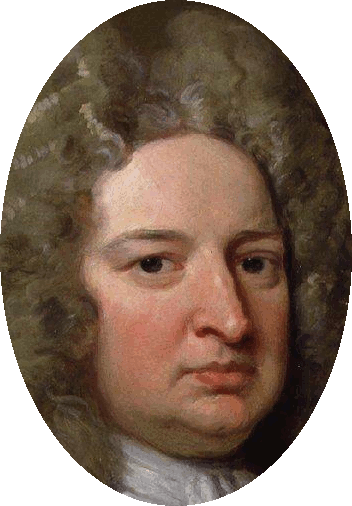
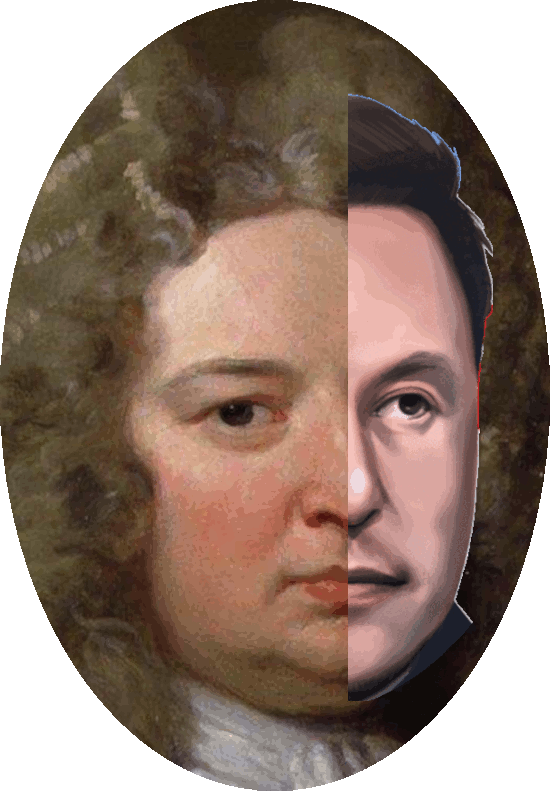
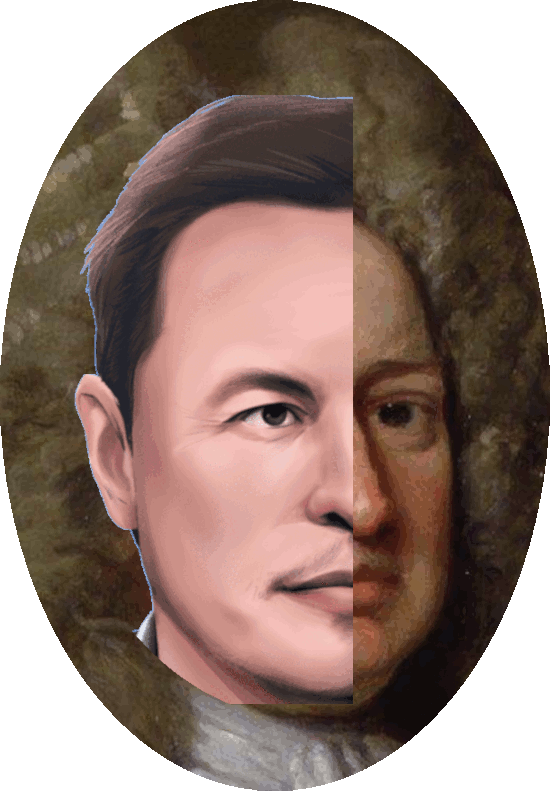
Robert Harley as Elon Musk |
 |
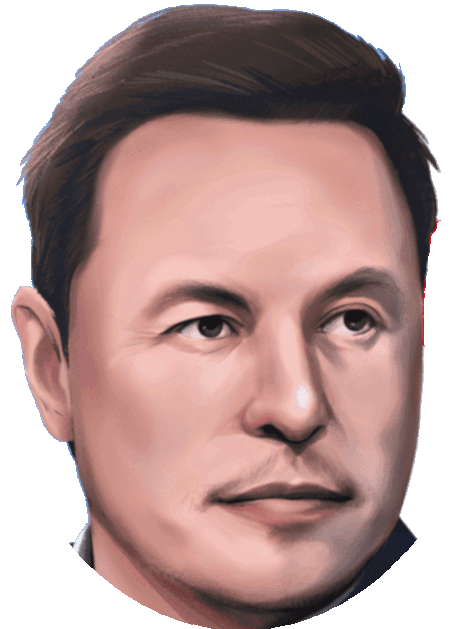 |
Robert Harley
1661-1724
12/5 5/21
Chief minister |
Elon Reeve Musk
1971
6/28 |
 |
 |
|
Secret agent |
-
One of his secret agents, the notorious William Greg, was later exposed as an agent of the French government and cost Harley not only his reputation for astuteness, but his post as Secretary of State.
- Harley's secretaryship of state shows how by the early 18th‐century, espionage had become an essential part of the routine of the early modern state.
What nice square
shoulders |
- Anne had 17 pregnancies, but all of her children died
before reaching adulthood, no wonder.
- Queen Anne died on August 1, 1714,
at Kensington Palace at the age of 49.
-
Because she had no surviving heirs, the end of her reign marked the conclusion of the Stuart dynasty and paved the way for the House of Hanover to take the throne.
Whilst we know that Anne did have close friendships with women, there's no evidence to suggest these relationships were sexual. A notable friendship was with Duchess of Marlborough Sarah Churchill. The pair referred to each other as 'Mrs Morley' and 'Mrs Freeman' to make them feel equal when talking to each other. (Assistant)
|
Winding road |
- This marked the end of the era of pre-colonial and
colonial ruling kings.
- However, their rule in Britain, from 1603 to 1714, had a significant impact on America, including the naming of the first permanent English settlement, Jamestown, in honor of King James I.
- The Stuarts also presided over a period of colonization and conflict that helped shape the early development of the American colonies.
- They also approved the use of slavery in the colonies.
|












